
So many libertarians […] have a simplistic, dare I say dualistic notion about bad-things-done-by-private-business and bad-things-done-by-the-state. One is met with “so start up a rival company” the other with “an outrageous example of state overreach that must be opposed politically.”
And in an ideal world, yes, that makes sense. We do not live in anything resembling an ideal world.
In an era when three (two really) credit card companies and a handful of payment processors have an off-switch for pretty much any on-line business they take a dislike to (unless they are called Apple or Amazon), as more and more of the economy goes virtual, what we have is turn-key tyranny for sale to the highest bidder, and the highest bidder is always going to be a state. I am uncertain what the solution is, but as we do not live in a “free market”, not convinced “so go set up your own global credit card and payment processing network” adds anything meaningful to the discussion. It is a bit like saying when the local electric provider turns off the power in your office (or home) because they disapprove of what you are doing “so go set up your own electric supply company”, as if that would be allowed to happen.
Perry de Havilland, “This is what so many libertarians cannot understand …”, Samizdata, 2021-08-22.
November 25, 2021
QotD: Corporate coercion can be just as dangerous as state coercion
November 24, 2021
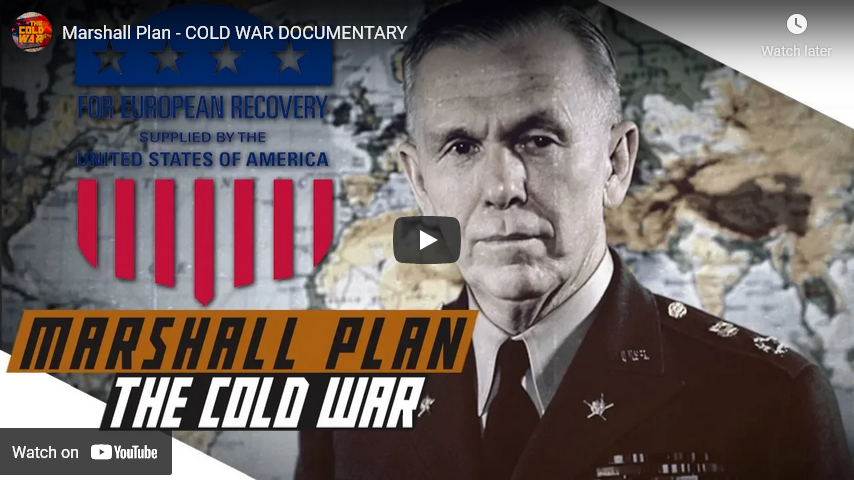
The Marshall Plan
The Cold War
Published 6 Jul 2019Our series on the history of the Cold War period continues with a documentary on the Marshall Plan and how the USA was able to help in the rebuild of the post-War World and gained valuable allies while doing it
Consider supporting us on Patreon: https://www.patreon.com/thecoldwar
Rousseau versus “original sin” in modern-day culture
In UnHerd, Mary Harrington ponders the two irreconcilable camps struggling for cultural supremacy in western countries, as most recently highlighted by the Kyle Rittenhouse trial in Kenosha, Wisconsin:

Portrait of Jean-Jacques Rousseau (1712–1778) by
Maurice Quentin de La Tour, circa 1753.
Wikimedia Commons.
The Rittenhouse argument is just such a case. It’s powered by a profound disagreement about human nature: one that fuels many of the most intractable modern culture wars, from Mumsnet bunfights about babycare to arguments about classroom discipline and what the police force is for.
Are humans naturally good given the right circumstances? Or are we flawed and in need of threats and guidelines to keep us on the straight and narrow? The split is a legacy of radical ideas stretching back to the revolutionary 18th century.
Perhaps the most famous proponent of intrinsic human goodness is Rousseau, who claimed in Emile (1762) that children are born virtuous. As Rousseau sees it, we only need freedom, love and the right environment to spontaneously come to an understanding of what’s right.
When Emile was first published, it stood in stark challenge to the then-dominant view, emerging from the Christian tradition, that humans are tainted by “original sin”. From this vantage point, we’re naturally flawed, and must always struggle against our less virtuous instincts. Rousseau’s claim so appalled adherents of this then-dominant view that copies of his book were burned in the street.
Today, though, the boot is on the other foot. The high-status view among contemporary elites is unmistakeably Team Rousseau.
At the tiniest scale, it’s expressed in the school of parenting that believes it’s wrong or even cruel to teach children how to live. I’ve written before about the currently popular ideas of “attachment parenting” and “gentle parenting”, which emphasise self-discovery in a loving environment over routine, authority or punishment — and about how these views skew wealthy and liberal.
In education settings, the same idea appears as “child-centred pedagogy”, an approach that emphasises individual pathways and discovery over rote learning and teachers as authority figures. And at the biggest scale, it crops up as the claim that all the root causes of crime are external to humans: poverty, trauma, discrimination and so on. From this perspective, if we could only replace policing with tailored community services that eliminated these root causes, there would no longer be any crime.
Even outbreaks of mass public disorder are treated by Team Rousseau as an unfortunate-yet-understandable response to bad governance: when BLM protesters in Baltimore toppled a statue of Christopher Columbus last year, the Democrat politician Nancy Pelosi responded by shrugging it off as a natural expression of that community’s wishes. If the community doesn’t want the statue, she said, “the statue shouldn’t be there”. From this vantage point, public unrest is something akin to the weather: a naturally-occurring phenomenon in which leaders must strive to create the conditions for goodness, or else “people will do what they do”.
Tank Chats #133 | Renault UE Chenillette | The Tank Museum
The Tank Museum
Published 6 Aug 2021In this weeks Tank Chat, Curator David Willey talks about the Renault UE Chenillette. A light tracked armoured carrier produced by France between 1932 and 1940.
(more…)
QotD: Homeopathy
Colby Cosh, “Two researchers fashion a tapestry of GoFundMe desperation”, National Post, 2019-01-09.
November 23, 2021
Conquering the Arctic: HMCS Labrador and her air wing, the Piasecki HUP-3 Retriever and Bell HTL-4
Polyus Studios
Published 10 Nov 2021Support me on Patreon – https://www.patreon.com/polyusstudios
In 1954 the Canadian military deployed its first and only icebreaker. With it they would help to secure sovereignty over the Arctic and map the fabled Northwest passage. It was the first deep-draught ship to transit the Northwest Passage and the second vessel ever to accomplish the feat in one season.
HMCS Labrador‘s contributions to opening up sea navigation in Canada’s Arctic were monumental. In four years of operating in dangerous and uncharted waters she never ran aground or was seriously damaged in any way. She explored and charted thousands of kilometres of coastline in some of the least hospitable places in the world. Its faithful helicopters pushed the limits of what was possible with a ship at sea.
While almost forgotten today, HMCS Labrador and her Peasecki HUP-3, and Bell HTL-4 helicopters helped to shape Canadian sovereignty to this day.
0:00 Introduction
0:31 Quest to secure Canadian arctic sovereignty
3:05 HMCS Labrador is built to assert sovereignty over the Arctic
5:19 Bell HTL-4
5:58 Piasecki HUP-3 Retriever
7:12 Deployment history
12:59 HMCS Labrador retired from RCN
13:57 Retirement of HUPs and other uses
14:51 Retirement of HLTs, and other uses
15:17 ConclusionMusic:
Denmark – Portland Cello ProjectResearch Sources:
Footage Sources:
BOLD JOURNEY ROYAL CANADIAN NAVY LABRADOR THROUGH NW PASSAGE – https://youtu.be/B7wOv5s0-F4#Arctic #CanadianAerospace #PolyusStudios

Tucker Carlson’s new book The Long Slide
Wilfred M. McClay reviews Carlson’s collected essays for First Things:
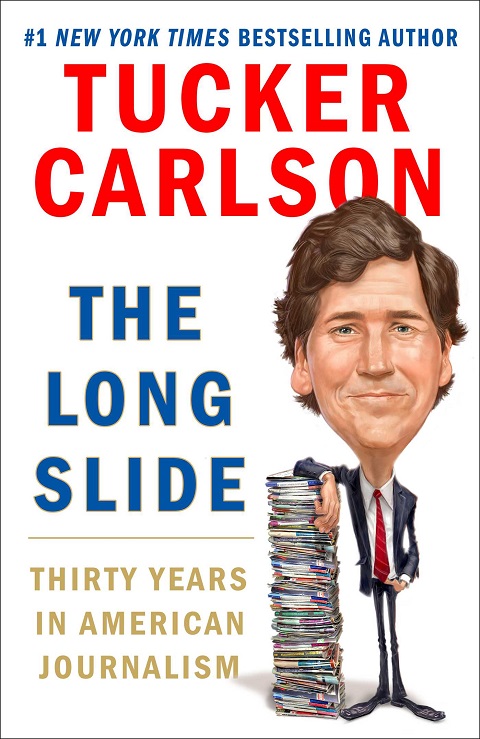
Tucker Carlson has become such a fixture in the world of cable-television news that it’s easy to forget he began his journalistic career as a writer. And a very good one at that, as this wide-ranging and immensely entertaining selection of essays from the past three decades serves to demonstrate. Carlson’s easygoing, witty, and compulsively readable prose has appeared everywhere from The Weekly Standard (where he was on staff during the nineties) to the New York Times, the Spectator, Forbes, New Republic, Talk, GQ, Esquire, and Politico, which in January 2016 published Carlson’s astonishing and prophetic article titled “Donald Trump is Shocking, Vulgar, and Right”. That essay has been preserved for posterity in these pages, along with twenty-two other pieces, plus a bombshell of an introduction written expressly for the occasion. More of that in a moment.
The first response of many of today’s readers, particularly those who don’t like the tenor of Carlson’s generally right-populist politics or the preppy swagger and bubbly humor of his TV persona, will be to dismiss The Long Slide as an effort to cash in on the author’s current notoriety by recycling old material to make a buck. That was my assumption when I first opened this collection. But the book has an underlying unity, and a serious message. It evokes a bygone age, an era of magazine and newspaper journalism that seems golden in retrospect, and is now so completely gone that one must strain to imagine that it ever existed at all. The simple fact is that almost none of these essays could be published today, certainly not in the same venues: They are full of language and imagery and a certain brisk cheerfulness toward their subject matter that could not possibly pass muster with the Twittering mob of humorless and ignorant moralists who dictate the editorial policies of today’s elite journalism.
Carlson’s writing style reflects the influence of the New Journalists such as Tom Wolfe and Hunter Thompson, who brought a jaunty, whiz-bang you-are-there narrative verve and high-spirited drama to the task of telling vividly detailed stories about unusual people and places, generally relating them in the first person. Carlson’s prose is not as spectacular as Wolfe’s or as thrillingly unhinged as Thompson’s. But it has its own virtues, being crystal clear, conversational, direct, and vigorous, never sending a lardy adjective to do the work of a well-chosen image, and never using gimmicky wild punctuation or stretched-out words to fortify a point. He’s a blue-blazer and button-down-collar guy, not a compulsive wearer of prim white suits or a wigged-out drug gourmand wearing a bucket hat and aviator glasses. But many of Carlson’s writings give the same sense of reporting as an unfolding adventure, a traveling road show revolving around the reactions and experiences of the author himself.
Carlson usually shows a certain fundamental affection for the people he writes about, even if he also ribs or mocks them in some ways. In particular, there is none of that ugly contempt for the “booboisie” and ordinary Americans that one finds, for example, in the pages of H.L. Mencken, and in a great deal of prestige journalism. Instead, he reserves his contempt for the well-heeled know-it-alls who genuinely deserve it. In that sense, the Carlson of these essays does not seem very different from the Carlson of today. He always has been a bit of a traitor to his class, and commendably so.
Canadian Army Newsreel – Baby Flat-Tops Protect Convoys
canmildoc
Published 18 Nov 2012Newsreels shot between 1940 and 1946 by the Canadian Army Film Unit for presentation to servicemen and women. A unique document of Canada’s role in the war on the front lines as well as on the home front.
Tags: Canadian Army Film Unit, Canadian Army, war, World War II, front lines, home front, servicemen, servicewomen, newsreel, military, WWII

QotD: Generation X and the 1990s
I’m referring, of course, to Gen X’s patented brand of “irony”. We’ve talked about this before, but here’s a quick recap: Every middle-class kid born after about 1965 was raised to believe that Authenticity was the thing, the only thing. Just do what you feel. Question authority. Don’t listen to The Man!
The problem, of course, is that we were told this by The Man.
It had a weird, telescoping effect. On campus, you were surrounded by people who actually were hippies, plus a whole bunch of wild-eyed fanatics who were sure they would’ve made truly excellent hippies if they hadn’t been in elementary school at the time, plus a bunch of kids — these would be your classmates — who thought of “Woodstock” as a brand name, a kind of backpacking-through-Europe, taking-a-year-off-to-find-myself experience that everyone has as a matter of course before settling down to the serious business of making partner at the law firm.
In short: Our parents were stuck in adolescence, and, being adolescents ourselves, we didn’t understand that “Rebellion” wasn’t something the hippies invented. We wanted to experience sex, drugs, and rock’n’roll, too, but since the Baby Boomers treated those as their exclusive property instead of what they actually are — i.e. the natural impulses of teenagers in all times and places — we had to be all, like, you know, whatever about it. […]
That was the 1990s. Faced with a paradox that everything your parents say, do, and believe is lame — according to your parents! — the only safe way is to make sure nobody can figure out exactly what your attitude is at any given instant. You might end up working 90 hour weeks at the office to pay the nut on the McMansion and the Volvo the same way they did, but at least you’d be, you know, ironic about it. The ketman of the suburbs.
See what happens when you listen to your elders, kids?
Severian, “The Virtue of Hypocrisy”, Rotten Chestnuts, 2019-01-19.
November 22, 2021
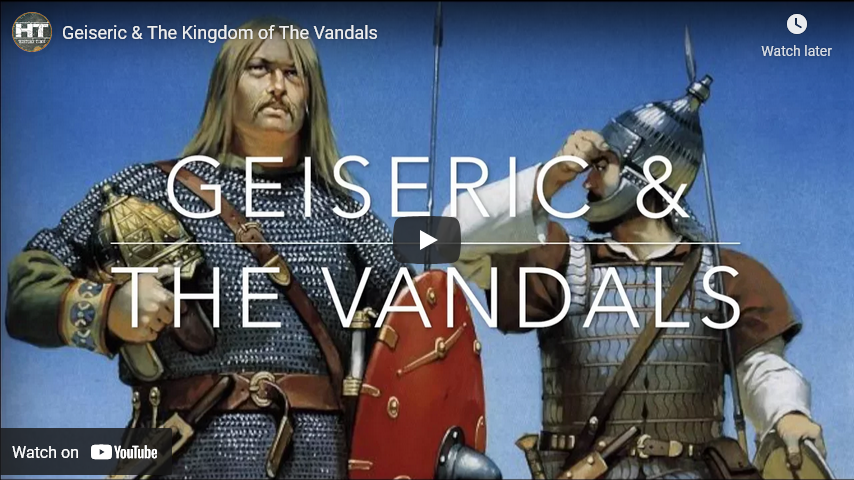
Geiseric & The Kingdom of The Vandals
History Time
Published 5 Sep 2017A brief look at Geiseric and the Vandals
Further reading:-
Edward Gibbon, The Decline and Fall of the Roman Empire
Walter Goffart, Barbarian & Romans
Peter Heather, The Fall of the Roman Empire
Andrew Merrills, The VandalsMusic:-
Morning Light – “Deep Thoughts” https://www.youtube.com/watch?v=1tXOL…
Peter Gundry – “Víðbláinn” https://www.youtube.com/watch?v=ZnCML…
Kevin MacLeod – “Ossuary 2: Turn” https://www.youtube.com/watch?v=e6jZS…If you liked this video and have as little as a dollar to spare then please consider supporting me on Patreon for more and better content in the future:-
http://www.patreon.com/historytimeUKAre you a budding artist, illustrator, cartographer, or music producer? Send me a message! No matter how professional you are or even if you’re just starting out, I can always use new music and images in my videos. Get in touch! I’d love to hear from you.
I’ve also compiled a reading list of my favourite history books via the Amazon influencer program. If you do choose to purchase any of these incredible sources of information, many of which form the basis of my videos, then Amazon will send me a tiny fraction of the earnings (as long as you do it through the link) (this means more and better content in the future) I’ll keep adding to and updating the list as time goes on — https://www.amazon.com/shop/historytime
I try to use copyright-free images at all times. However if I have used any of your artwork or maps then please don’t hesitate to contact me and I’ll be more than happy to give the appropriate credit.
—Join the History Time community on social media:-
Patreon — https://www.patreon.com/historytimeUK
Instagram — https://www.instagram.com/historytime…
Twitter — https://twitter.com/HistoryTimePete
A new study may show that “Justinian’s plague” reached Britain before Constantinople
Instapundit linked to a news release on a recent Cambridge study on the plague which devastated the Byzantine Empire during the reign of Justinian I, but which may have come through an as-yet undiscovered northern European path that reached the British Isles well before appearing within the Eastern Roman territories:
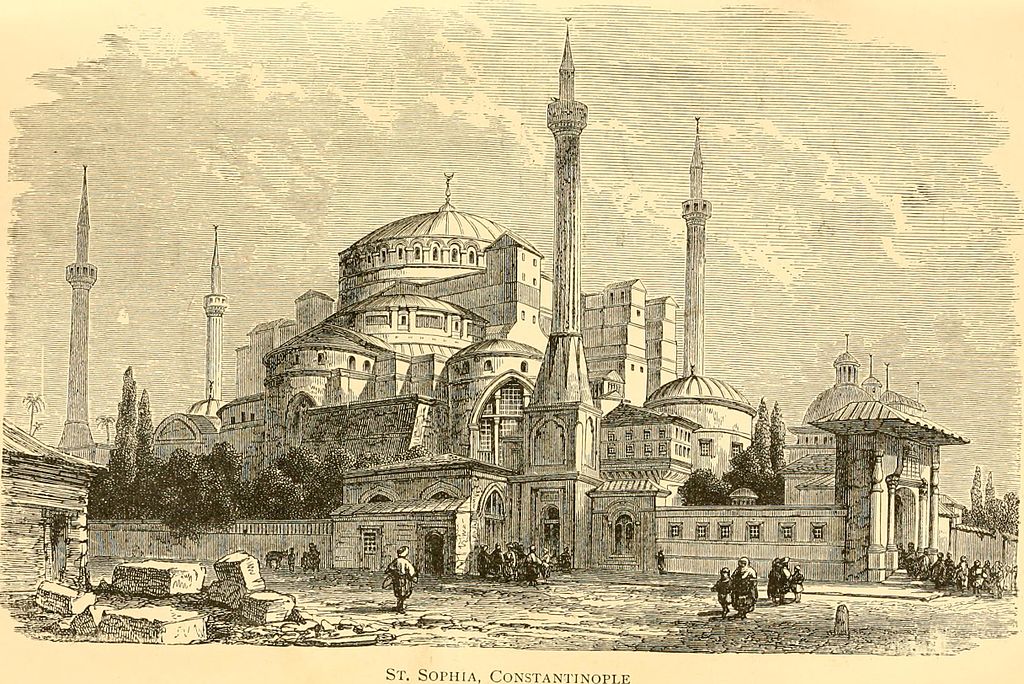
Illustration of the Hagia Sophia from European History: An outline of its development by George Burton Adams, 1899.
Wikimedia Commons
“Plague sceptics” are wrong to underestimate the devastating impact that bubonic plague had in the 6th–8th centuries CE, argues a new study based on ancient texts and recent genetic discoveries.
The same study suggests that bubonic plague may have reached England before its first recorded case in the Mediterranean via a currently unknown route, possibly involving the Baltic and Scandinavia.
The Justinianic Plague is the first known outbreak of bubonic plague in west Eurasian history and struck the Mediterranean world at a pivotal moment in its historical development, when the Emperor Justinian was trying to restore Roman imperial power.
For decades, historians have argued about the lethality of the disease; its social and economic impact; and the routes by which it spread. In 2019-20, several studies, widely publicised in the media, argued that historians had massively exaggerated the impact of the Justinianic Plague and described it as an “inconsequential pandemic”. In a subsequent piece of journalism, written just before COVID-19 took hold in the West, two researchers suggested that the Justinianic Plague was “not unlike our flu outbreaks”.
In a new study, published in Past & Present, Cambridge historian Professor Peter Sarris argues that these studies ignored or downplayed new genetic findings, offered misleading statistical analysis and misrepresented the evidence provided by ancient texts.
Sarris says: “Some historians remain deeply hostile to regarding external factors such as disease as having a major impact on the development of human society, and ‘plague scepticism’ has had a lot of attention in recent years.”
Sarris, a Fellow of Trinity College, is critical of the way that some studies have used search engines to calculate that only a small percentage of ancient literature discusses the plague and then crudely argue that this proves the disease was considered insignificant at the time.
Sarris says: “Witnessing the plague first-hand obliged the contemporary historian Procopius to break away from his vast military narrative to write a harrowing account of the arrival of the plague in Constantinople that would leave a deep impression on subsequent generations of Byzantine readers. That is far more telling than the number of plague-related words he wrote. Different authors, writing different types of text, concentrated on different themes, and their works must be read accordingly.”
History of Wine: Ancient Rome
History of Wine
Published 20 Apr 2014How was wine was made in Ancient Rome?
What did wine taste like in Ancient Rome?
Convivium and customs of drinking.
Wine Tasting.

QotD: Canadian values
Robert Fulford, quoted in “Canada takes a new look at ‘fable’ of its image”, New York Times, 2005-05-25. (Link updated thanks to MILNEWS.ca in the comments.)
November 21, 2021
The Red Army Kicks Ass – Operation Uranus! – WW2 – 169 – November 20th, 1942
World War Two
Published 20 Nov 2021After months of stubborn defense the time has finally come for the Soviet counterstroke, but is it in time to save Stalingrad? And can the Allies reach Tunis and take all of North Africa before the Axis can reinforce?
(more…)
British Columbia’s annus horribilis
In The Line, Jen Gerson does a distressingly good imitation of Cassandra’s warnings … and just like Cassandra, her words are probably going to be ignored until things get much worse:
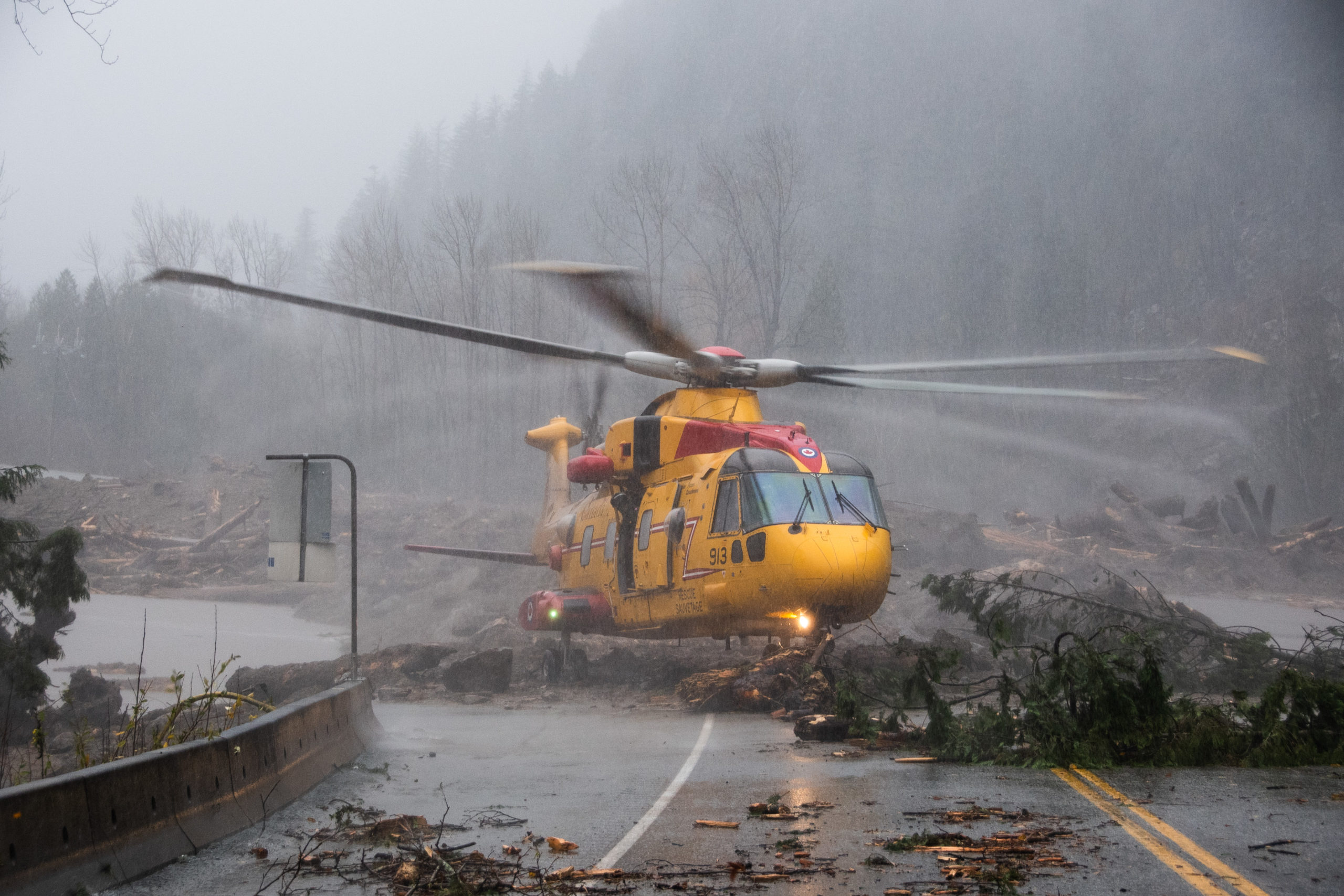
“A job well done by @RCAF_ARC’s 442 Transport & Rescue Squadron. Using 3 CH149 helicopters and supported by a CC115 Buffalo, the Sqn evacuated 311 people, 26 Dogs and a Cat to safety in Agassiz after being trapped by landslides on roads in BC.
RCAF Operations, Nov 16, 2021 (https://twitter.com/RCAFOperations/status/1460664604648947721)”
So now here it is. We have flooding so acute that we are airlifting food supplies to small towns in British Columbia cut off by destroyed transport routes that it may take weeks to repair. The damage has cut off rail and road links from the city of Vancouver to the rest of Canada. Not only does this trap all the rail and truck resources now stranded in the isolated areas, it also cuts off one of the largest ports in North America in the midst of a global supply chain crisis.
On top of that, many of those economists who told us inflation was not going to happen are now hedging their bets. Oh, and we are still dealing with a pandemic, and its lingering health and economic damage.
Once again we have proven ourselves utterly dependent on the military to manage a domestic crisis — a military that is so profoundly underfunded and under equipped that it has reached a state of generational decline. (For more on that, read Matt Gurney’s piece in The Line from yesterday [linked here].)
Meanwhile, we’ve been writing here at The Line about the utter collapse of our institutional capacity; the unavoidable fact that our governments seem totally unable to anticipate obvious, immediate, and pressing disasters. A recent example of that came from the federal government’s failure to sound the alarm on COVID-19 back in 2020. However, the residents of British Columbia sure didn’t get the same kind of notice of imminent danger that their American counterparts surely did.
God help us if a really bad winter storm hits somewhere in this country over the next six to eight weeks. Another severe ice storm, or a real blizzard; I genuinely fear we would have people starving to death in their homes for lack of resources to spare to dig them out.
I am a 37-year-old woman who had never seen an empty shelf in a grocery store until COVID-19. Now I’m seeing scenes out of Kamloops supermarkets that look like something out of The Walking Dead. No serious shortages in 35 years — and now I’ve seen two episodes of panic buying clearing out the shelves in the past two.
We keep on acting as if this disaster is the peak. This is the worst year ever, and we’re going to get back to normal any minute now.
Maybe.
But what if we don’t?


