Quotulatiousness

January 6, 2025

If you’ve ever been in any military organization, you’ve encountered this

Filed under: Bureaucracy, Cancon, Military — Tags: , , , — Nicholas @ 04:00

Shady Maples on the frequent issue needing a particular piece of equipment, but … bureaucracy:

Have you heard the one about the soldier and supply technician?

    Soldier: I need a sleeping bag.

    Supply Tech: We’re not issuing sleeping bags right now.

    Soldier: I can see a sleeping bag on the shelf right there.

    Supply Tech: But that’s my last sleeping bag! If I issued that one then I wouldn’t have any left in stock. I need to keep at least one sleeping bag in stock in case someone needs it.

    Soldier: Yes! That someone is me! I need the sleeping bag!

    Supply Tech: Look, my job is to keep the shelves stocked. See the sign on the door? It says Stores, not Gives. If I give you that sleeping bag then we’ll be out of stock.

    Soldier: But I need the sleeping bag.

    Supply Tech: You’ll have to come back after we restock.

    Soldier: Fine, when are you restocking sleeping bags?

    Supply Tech: When we’ve depleted our current stock.

This is barely a joke, I’m convinced it’s a script that supply techs learn in Borden.1 A common variant involves a soldier trying to get a piece of kit ahead of a training exercise. The supply tech tells them they can’t have the kit because they don’t need it. If the soldier needed the kit then it would be issued to them and since it’s not issued to them they don’t need it. I have personally had that conversation multiple times with everyone from lowly supply techs to quartermasters up to Life Cycle Material Managers in ADM(Mat). A notable one involved asking the depot in Montreal to send my unit a specific piece of optical equipment2 which we desperately needed, only to be told that they could not release that kit to us because the Army divesting it. My unit had just taken on a new capability that required this kit, why were they throwing this equipment away? “Nobody uses it anymore.” But I’ll use it, I’m telling you that I’m going to use it! My appeal failed, the depot had to divest because no one used the kit and they wouldn’t let us use the kit because they had to divest. I subsisted by borrowing equipment from other units off-the-books.

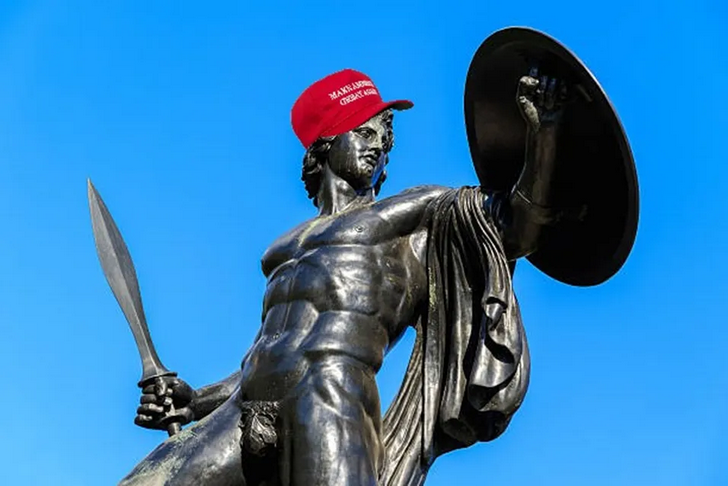
Pic related, from Patrick McKenzie.

There is a deep and difficult-to-articulate emotion that I feel whenever I have interactions like this. It’s a middle shade of anger, frustration, sadness, and loathing triggered by a people who so are so lost in process that they stop caring about real-world outcomes. Via Scott Alexander’s Links For December, I just learned? that Scott Aaaronson coined the term “blankface” for people like this:

    What exactly is a blankface? He or she is often a mid-level bureaucrat, but not every bureaucrat is a blankface, and not every blankface is a bureaucrat. A blankface is anyone who enjoys wielding the power entrusted in them to make others miserable by acting like a cog in a broken machine, rather than like a human being with courage, judgment, and responsibility for their actions. A blankface meets every appeal to facts, logic, and plain compassion with the same repetition of rules and regulations and the same blank stare — a blank stare that, more often than not, conceals a contemptuous smile.

Once, my 2IC3 was trying to access a childcare benefit intended to reimburse members for babysitting when they are in the field or called in for overnight duties. My 2IC enquired about reimbursement but word came down from Ottawa that she wasn’t eligible since since had not used a licenced childcare provider. Nevermind that there are no licenced providers offering overnight childcare in our geographic area. When my 2IC submitted a grievance for her exclusion from the policy, the grievance analyst rejected it on the grounds that, since she never applied for the benefit (after being told she wasn’t eligible), she had not technically been denied anything. The analyst recommended applying for the benefit in order to be denied and then submitting another grievance based on that denial. At a time when the CAF is desperately trying to attract and retain female leaders, you know what really makes our case? Nickle-and-diming single moms over $70 of childcare. The analyst’s rejection letter made me feel like maybe Ted Kacynski had a point.

In his blog post, Scott Aaronson used Dolores Umbridge as the canonical example of a blankface. Umbridge is conspicuous do-gooder who uses her positional authority to make life miserable for everyone around her. As the story progresses and she accrues more power to her office, it becomes apparent that her virtuous posturing conceals a cruel authoritarian heart. Scott noted that:

    The most despicable villain in the Harry Potter universe is not Lord Voldemort, who’s mostly just a faraway cipher and abstract embodiment of pure evil, no more hateable than an earthquake. Rather, it’s Dolores Jane Umbridge, the toadlike Ministry of Magic bureaucrat who takes over Hogwarts school, forces out Dumbledore as headmaster, and terrorizes the students with increasingly draconian “Educational Decrees”. Umbridge’s decrees are mostly aimed at punishing Harry Potter and his friends, who’ve embarrassed the Ministry by telling everyone the truth that Voldemort has returned and by readying themselves to fight him, thereby defying the Ministry’s head-in-the-sand policy.

Voldemort is evil, yes, but he is a moral agent who chooses and sacrifices according to his principles. The series pits his perverse will-to-power against the protagonists heroic defence of good. Unlike Voldemort, Umbridge doesn’t have any vision or principles, her only goal appears to be rigorous application of Ministry rules and procedures. She is not an agent of evil so much as its midwife, allowing evil to spread by obstructing any effort to stop it.


    1. CFB Borden is the home of Canadian Forces Logistics Training Centre, a place that nobody says anything good about, especially the loggies.

    2. This piece of kit was specialized enough that I would effectively dox myself if I told you what it was.

    3. 2IC: Second-In-Command.

The rape gangs in Britain were enabled and protected by “good people” who didn’t want to be accused of racism

Tom at The Last Ditch confesses his early complicity with the official culture of silence that protected and encouraged the exploitation of girls and young women in Britain for decades:

Everyone who ever participated in the leftist orthodoxy of identity-politics is to blame for the near-total impunity of the Muslim rape gangs in Britain. As I reported here, when I was a young solicitor in Nottingham, a police sergeant told me I was “part of the problem.” I had a choice between believing what he told me about “honour killings” in that city or preserving my good standing as an anti-racist liberal. I chose the latter. I feared my career prospects and social standing would be jeopardised (they would have been) if I accepted his honest account. I called a good man a racist (mentally equating him with the likes of Nick Griffin and recoiling in fear from the association) when he was just horrified (as any decent human should be) by young women being murdered.

In that moment, I very much was “part of the problem” and I am profoundly ashamed of that. It is fortunate that – unlike the politicians, local councillors, social-workers and police officers who should have brought the rape gangs or the “honour” killers to justice (or prevented both phenomena altogether) – I had no occasion ever to make any real life choices on the matter. I believe – faced with actual evidence – I would have made better ones, but the way I failed the good sergeant’s test that long-ago day in the early 1980s proves I would have wanted to look the other way, just as they actually did.

I am not still playing the stupid rainbows and unicorns game of cultural moral equivalence (still less the foul Critical Race Theory game of cultural moral hierarchy) when I make the point that the young white working class girls in our cities have not been the only victims of multiculturalism. Those murdered Muslim girls who (so the sergeant told me) had paraffin poured over them and were burned to death were victims too. It was racist to refuse to consider that their Muslim dads, uncles and brothers might murder them because of their primitive religious and cultural notions. It was racist for our authorities to treat Muslim men who gang-raped white girls differently than they would have treated others. It was racist to cover up these horrors in order to protect the myth – shamefully repeated just days ago in his annual Christmas message by His Majesty the King – that multiculturalism has been an overall benefit to Britain.

Some of us have been making these points as best we can for a long time. Many of us had given up, if we’re honest. It was clear that the official narrative that we were racists and that these stories were disinformation – a “moral panic” as Wikipedia puts it – was going to prevail. Until recently the key social media market of ideas – Twitter – was controlled by the Left and attempts to raise the issue were likely to be memory-holed by their private sector woke equivalent of Orwell’s MiniTru.

Miraculously, Elon Musk – a modern Edison, with plenty to occupy him besides our concerns about free speech – bought Twitter and (in one of history’s greatest acts of philanthropy) set it free at his own personal expense. He told advertisers who sought to maintain its old Newspeak regime to “go fuck themselves.” Miraculously he got involved in the issue not just in America (where the Constitution gives him some basis for hope) but in Britain too.

My British Constitution textbook at law school illustrated the supremacy of our Parliament by jokingly saying that it could – in law – make a man into a woman. Little did its authors know that dimwit politicians would later prove the educational point of their joke by making it real. Our constitution – as a result of centuries of struggle with the monarchy, which Parliament decisively won – can be summarised in just three words – “Parliament is supreme”

See Inside the Last British Heavy Tank | Conqueror | Tank Chats Reloaded

Filed under: Britain, History, Military, Weapons — Tags: , , , — Nicholas @ 02:00

The Tank Museum
Published 6 Sept 2024

After the shock appearance of the Soviet IS-3 Heavy Tank, NATO armies set about designing their own heavies to deal with the threat. For the US Army, this was the M103, for the British, this tank – FV 214 Conqueror.

In this film, we explore Conqueror inside and out and talk to ex-Sgt. John Chappell, a former tank commander about his experiences as a Conqueror crewman as part of the British Army of the Rhine in the 1960s.

00:00 | Introduction
02:58 | The FV 200 Series
04:51 | Conqueror
11:35 | See Inside
20:48 | Success? Or Waste of Resources

This video features archive footage courtesy of British Pathé.

#tankmuseum

QotD: The right to bear arms

Filed under: Law, Liberty, Quotations, USA, Weapons — Tags: , , , — Nicholas @ 01:00

Thomas Jefferson’s question, posed in his inaugural address of 1801, still stings. If a man cannot be trusted with the government of himself, how can he be trusted with the government of others? And this is where history and politics circle back to ethics and psychology: because “the dignity of a free (wo)man” consists in being competent to govern one’s self, and in knowing, down to the core of one’s self, that one is so competent.

And that is where ethics and psychology bring us back to the bearing of arms. For causality runs both ways here; the dignity of a free man is what makes one ethically competent to bear arms, and the act of bearing arms promotes (by teaching its hard and subtle lessons) the inner qualities that compose the dignity of a free man.

It is not always so, of course. There is a 3% or so of psychotics, drug addicts, and criminal deviants who are incapable of the dignity of free men. Arms in the hands of such as these do not promote virtue, but are merely instruments of tragedy and destruction. But so, too, are cars. And kitchen knives. And bricks. The ethically incompetent readily (and effectively) find other means to destroy and terrorize when denied arms. And when civilian arms are banned, they more readily find helpless victims.

But for the other 97%, the bearing of arms functions not merely as an assertion of power but as a fierce and redemptive discipline. When sudden death hangs inches from your right hand, you become much more careful, more mindful, and much more peaceful in your heart — because you know that if you are thoughtless or sloppy in your actions or succumb to bad temper, people will die.

Too many of us have come to believe ourselves incapable of this discipline. We fall prey to the sick belief that we are all psychopaths or incompetents under the skin. We have been taught to imagine ourselves armed only as villains, doomed to succumb to our own worst nature and kill a loved one in a moment of carelessness or rage. Or to end our days holed up in a mall listening to police bullhorns as some SWAT sniper draws a bead …

But it’s not so. To believe this is to ignore the actual statistics and generative patterns of weapons crimes. “Virtually never”, writes criminologist Don B. Kates, “are murderers the ordinary, law-abiding people against whom gun bans are aimed. Almost without exception, murderers are extreme aberrants with lifelong histories of crime, substance abuse, psychopathology, mental retardation and/or irrational violence against those around them, as well as other hazardous behavior, e.g., automobile and gun accidents.”

To believe one is incompetent to bear arms is, therefore, to live in corroding and almost always needless fear of the self — in fact, to affirm oneself a moral coward. A state further from “the dignity of a free man” would be rather hard to imagine. It is as a way of exorcising this demon, of reclaiming for ourselves the dignity and courage and ethical self-confidence of free (wo)men that the bearing of personal arms, is, ultimately, most important.

This is the final ethical lesson of bearing arms: that right choices are possible, and the ordinary judgement of ordinary (wo)men is sufficient to make them.

We can, truly, embrace our power and our responsibility to make life-or-death decisions, rather than fearing both. We can accept our ultimate responsibility for our own actions. We can know (not just intellectually, but in the sinew of experience) that we are fit to choose.

Eric S. Raymond, “Ethics from the Barrel of a Gun”.

January 5, 2025

Everything humans build starts with human and social capital. This includes everything economic.”

Lorenzo Warby explains why he has always disagreed with the “standard model” of economic growth, as it fails to include the biggest cultural variables that matter enormously for economic development:

“Hyderabad bazaar” by ruffin_ready is licensed under CC BY 2.0 .

The seminal theory of economic growth is the Solow Growth Model (technically, the Solow-Swan model). The model can be easily expressed mathematically.

I have never liked the model, nor its later variations.1 The intuition behind my dislike was that societies — and indeed different ethnic groups within societies — obviously varied enormously in their capacity to use, to “put together”, the factors of production. They also vary enormously in their capacity to generate factors of production: specifically capital, the produced means of production. The model implies that there will be a general convergence between economies that has not happened.

Updating the model by including human capital was a gesture in that direction but did not fix the problem with the model, which is much more basic. The update attempted to grapple with the failure of investment to flow to poorer countries and, by implication, the long-term, systematic failures of foreign aid. The failures of foreign [aid] also supported my intuition.

The most recent (2024) Nobel memorial was for work that also directly supports my intuition — how much institutions matter for economic growth. The long-term economic growth literature — identifying culture as very much mattering for economic growth — also supports my intuition.

Skills and knowledge (human capital) are basic

To explain why the entire approach — basically, fiddling with some version of the Cobb-Douglas production function — is fundamentally mistaken, we need to go back to the origins of human economic growth. I mean, right back — all the way to foragers.

What are the original forms of capital? Well, there are tools, which are the original form of physical capital. But without the skills to make and use the tools, they either do not exist, or they are useless.

So, we start with skills and knowledge, with human capital. It takes almost 20 years to train a young human forager to be a subsistence adult — that is, to forage as much nutrition as they consume. The need to stuff the human brain with skills and knowledge — and the need to grow a brain that can be so stuffed — is why we have the most biologically expensive children in the biosphere. The need to impart skills to biologically expensive children is fundamental to the dynamics of all human societies.

Human capital — skills and knowledge — is not an “add on”. It is basic.

So are social connections (social capital)

Foragers do not live as atomistic individuals. They live in families and (fluid) foraging bands. Families and foraging bands are vehicles for our highly cooperative subsistence and reproduction strategies.

That we are the tool-making and tool-using species lacking tearing teeth and claws with the most biologically expensive offspring is why we have highly cooperative subsistence and reproduction strategies. It is also why we are so much the normative species — enabling robust cooperation based on convergent expectations — and why we have prestige and propriety as forms of status.

Both these forms of status represent currencies of cooperation. Prestige grants people status for doing things which are risky, clever, hard, entertaining. It is status by conspicuous competence. It provides a way to reward people for engaging in activities which generate wider social benefits — what economists call positive externalities. It also encourages people to want to associate with you.2

The other form of status — propriety — grants status to those who uphold the norms of the group. In particular, it wields stigma against those deemed to have violated those norms. It provides a way to punish people for engaging in activities which generate wider social costs — what economists call negative externalities. It helps solve the free-rider problem regarding the effort to enforce norms.

Reversing (i.e. perverting) status patterns so that people get prestige from victimhood — extending to various forms of failures of competence or even wildly anti-social behaviour — while stigmatising people who conspicuously successful (as oppressors or exploiters) is deeply destructive of human flourishing.3 We can see this pattern currently operating in “progressive” US states, and especially cities, but murderous versions of it operated in various Communist states. These things affect economic activity, but cannot be discerned by a Cobb-Douglas production function.

It is not true that scientists have never discovered Homo economicus. Unfortunately, Homo economicus is not a member of genus Homo. It is Pan troglodytes (chimpanzees) playing strategy games in a lab. It is precisely because we Homo sapiens are more normative, allowing us to encapsulate the social conquest of the Earth, that there are billions of us and only a few thousand of them.

We — as a highly social, indeed ultra-social, species — engage in both individual and social calculations. Different cultures notoriously generate different patterns for, and balances between, such calculations.


    1. The model has some utility for short-term calculations of growth.

    2. As with any social benefit, the knock-on dynamics of prestige can be complex, but status from conspicuous competence is at the heart of it.

    3. The November 2014 Shirtgate controversy — where a rocket scientist who had led the technically incredibly difficult task of landing a probe on a comet was publicly humiliated over the shirt he wore (a gift from a female friend it turned out) — represented conspicuous achievement (prestige) being trumped by feminist stigmatisation (propriety).

Four Waffen SS Tigers vs 50 T-34s – Prokhorovka Part 4

Filed under: Germany, History, Military, Russia, WW2 — Tags: , , , , — Nicholas @ 04:00

World War Two
Published 4 Jan 2025

A mass of Soviet armour charges at the Leibstandarte Division, it looks like they might smash through the German lines. Then, Michael Wittmann’s Tiger tanks go into action. Will the Waffen SS be able to turn the tide at Prokhorovka? Indy reveals all.
(more…)

German democracy hanging by a thread after vicious attacks by Elon Musk

Filed under: Germany, Media, Politics — Tags: , , , , , — Nicholas @ 03:00

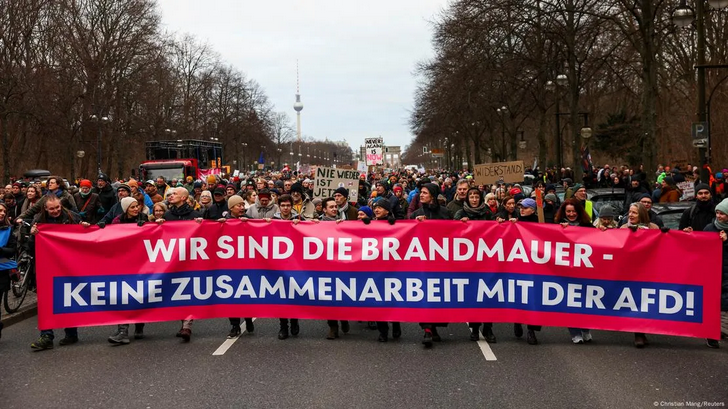
German politicians are growing ever more desperate as evildoers like Elon Musk continue to undermine the political stage by calling for antidemocratic things like free speech:

Alice Weidel, the federal leader of Germany’s “far-right” AfD, has approximately the same policy prescriptions as Donald Trump. Chiefly they are to return to the bourgeois habits that used to make free market states prosperous. But she subscribes to these in mainland Europe, which has been easily spooked since the Nazis offered policies that were not bourgeois.

“Humankind cannot bear very much reality,” as the far-right poet, T. S. Eliot, wrote in Burnt Norton, now the better part of a century ago. (He was arguably plagiarizing the far-right German poet, Johann Wolfgang von Goethe.)

One could recommend that my readers look her up on YouBoob, or better search for print, and form their own opinion on this Frau Weidel. (Who speaks English, and Chinese, fluently.)

Compare her, for instance, to the British prime minister, Keir Starmer, who rose to power as the prosecutor protecting Muslim “grooming gangs”, and now puts people in gaol who protest on behalf of their rape and murder victims. The idea that Mr Starmer should have a rôle in the government of a civilized country, is as absurd as the idea that the 14-year-old narcissist who has ruled Canada, or the 82-year-old senescent who has ruled the United States, are respectable members of the human race.

And closer to the scene of crisis, eugyppius reports on the latest Muskian outrage against peace-loving German politicians:

For days, the German establishment have been in an absolute uproar over Elon Musk’s profoundly antidemocratic election interference. You cannot turn on the television or open any newspaper without enduring all manner of wailing about the grave danger Musk poses to German democracy.

The naive and the simpleminded will say that all of this is crazy and that the Federal Republic has become an open-air insane asylum – a strange playground of political hysterics the likes of which the Western world has never seen before. That is because they don’t understand what’s at stake here. Musk did not just say the odd nice thing about Alternative für Deutschland, oh no. He also said various German politicians were fools and traitors, he called for resignations and he published an untoward newspaper editorial. It is amazing the German democracy has not yet collapsed in the face of this unrelenting campaign, and still the absolute madman shows no signs of stopping.

Elon Musk’s frontal assault on the German constitution began on 7 November, when he tweeted four antidemocratic words – “Olaf ist ein Narr” (“Olaf [Scholz] is a fool”) – in response to news that the German government had collapsed. Three days later, he tweeted the same thing about Green Economics Minister and chancellor candidate Robert Habeck, after Habeck gave a speech calling for widespread internet censorship.

Thereafter, all was quiet for a time. German democrats allowed themselves to hope these were but isolated indiscretions and that Musk would allow them to get back to their arcane business of promoting feminism abroad, changing the weather and eliminating “the extreme right”. Lamentably, the peace turned out to be a false one. Musk renewed his campaign against democracy with a vengeance on 20 December, tweeting in the wake of the Magdeburg Christmas market attack that “Scholz should resign immediately” and that he is an “incompetent fool”. That very same day, Musk tweeted for the first time that “Only the AfD can save Germany”, a sentiment he repeated also on 21 December and on 22 December, delighted at the nationwide freakout his casual remarks had incited.

In the course of this freakout, German President Frank-Walter Steinmeier hinted darkly that “outside influence” constitutes “a danger for democracy”:

    Outside influence is a danger for democracy – whether it is covert, as was recently apparent in the elections in Romania, or open and blatant, as is currently being practised with particular intensity on the platform X. I strongly oppose all external attempts at influence. The decision on the election is made solely by the eligible citizens in Germany.

The indefatigable Naomi Seibt, who appears to be Musk’s primary informant about German politics, brought these remarks to the evil fascist billionaire’s attention, and he promptly responded that “Steinmeier is an anti-democratic tyrant”. Musk then delivered his coup-de-grace the next day, with an editorial in Welt am Sonntag – the most devastating piece of political prose that Germany has witnessed since Hitler penned Mein Kampf.

By my count, Musk may have directed as many as 700 words against the noble if surprisingly rickety edifice of German democracy – an assault few political systems could withstand. The self-appointed guardians of our liberal order accordingly declared a five-alarm fire, and they have betaken themselves to their keyboards to defend what remains of our free and eminently democratic political system, where anybody can say anything he likes and vote for any party he wishes, so long as what he likes and those for whom he votes have nothing to do with major political parties supported by millions of Germans like Alternative für Deutschland.

How to Make a Wallclock | Episode 3

Filed under: Tools, Woodworking — Tags: , , — Nicholas @ 02:00

Paul Sellers
Published 16 Aug 2024

With the main body of the clock together, all the grooves formed, and the rails made ready, we now focus on the remaining four joints — the stub tenons fitting into the grooves.

The precision needed here is essential, and the shoulder lines must be taken directly from the assembled clock to ensure no gaps at these intersections of combined joinery.

Once done, we size, cut, and square the panel to size, ready for beveling or raising the panel later.
(more…)

QotD: The customary Dictatorship in the Roman Republic before 82BC

Filed under: Europe, Government, History, Quotations — Tags: , , , — Nicholas @ 01:00

It’s important to note at the outset that the Romans had no written constitution and indeed most of the rules for how the Roman Republic functioned were, well, customary. The Roman term for this was the mos maiorum, the “custom of the ancestors”, but Roman practice here isn’t that different from how common law and precedent guide the functioning of something like the British government (which also lacks a written constitution). Later Roman writers, particularly Cicero, occasionally offer theoretical commentary on the “rules” of the Republic (as a retrojected, ideal version), but just as often their observations do not actually conform to the practice we can observe from earlier periods. In practice, the idea here was that the “constitution” of the Republic consisting in doing things as they had always been done, or at least as they were understood to have always been done.

Consequently, as historians, we adopt the formulation that the Republic is what the Republic does – that is that one determines the rules of offices and laws based on how they are implemented, not through a hard-and-fast firm legal framework. Thus “how does the dictatorship work?” is less a question of formal rules and more a question of, “how did the eighty-odd Roman dictatorships work?”

The basic idea behind the office was that the dictator was a special official, appointed only in times of crisis (typically a military crisis), who could direct the immediate solution to that crisis. Rome’s government was in many ways unlike a modern government; in most modern governments the activities of the government are carried out by a large professional bureaucracy which typically reports to a single executive, be that a Prime Minister or a President or what have you. By contrast, the Roman Republic divided the various major tasks between a bunch of different magistrates, each of whom was directly elected and notionally had full authority to carry out their duties within that sphere, independent of any of the other magistrates. In crude analogy, it would be as if every member of the United States cabinet was directly elected and none of them reported to any of the rest of them but instead all of them were advised by Congress (but in a non-binding manner). Notionally, the more senior magistrates (particularly the consuls) could command more junior magistrates, but this wasn’t a “direct-report” sort of relationship, but rather an unusual imposition of a more senior magistrate on a less senior one, governed as much by the informal auctoritas of the consul as by law.

In that context, you can see the value, when rapid action was required, of consolidating the direction of a given crisis into a single individual. This is, after all, why we have single executive magistrates or officials in most countries. So, assuming you have a crisis, how does this process work?

The typical first step is that the Senate would issue its non-binding advice, a senatus consultum, suggesting that one or both of the consuls appoint a dictator. The consuls could ignore this direct, but almost never did (save once in 431, Liv. 4.26.5-7). The consuls would then have to nominate someone; they might agree on the choice (which would make things simple) or one of them might be indisposed (out of the city, etc.), which would leave the choice to the one that remained. If both consuls were present and did not agree, they’d draw lots to determine who got to pick (which happens in the aforementioned instance in 431 after the tribunes got the consuls of that year to relent and pick someone, Liv. 4.26.11).

The nominating consul could pick anyone except himself; if you, as consul, wanted to be dictator, you would need your co-consul to so nominate you. There were no formal requirements; of course nominations tended to go to experienced commanders, which tended to mean former consuls, but this was not a requirement. Publius Claudius Pulcher (cos. 249), enraged when the Senate directed him to appoint a dictator (because of his own bungled military command) infamously nominated his own freedman, Claudius Glicia, as dictator (Liv. Per. 19.2; Seut. Tib. 2.2), which was apparently a bridge too far; Glicia was forced to abdicate but his name was duly entered onto the Fasti because the appointment was valid, if ill-advised (despite the fact that, as a freedman, Glicia would have been ineligible to run for any [office]). Nevertheless, dictators were usually former consuls.

Once the name was picked, in at some cases the appointment may have been confirmed by a vote of the Comitia Curiata, Rome’s oldest voting assembly, which was responsible for conferring imperium (the power to command armies and organize law courts; essentially “the power of the kings”) on magistrates; not all magistrates had imperium (consuls, praetors, proconsuls, propraetors, dictators and their magistri equitum did; quaestors, aediles, tribunes, both plebeian and military, and censors did not). We do not know of any instance where the Comitia Curiata put the kibosh on the appointment of a dictator, so this step was little more than a rubber-stamp, and may have been entirely optional (Lintott, op. cit., 110, n. 75), but it may have also reflected the notion that all imperium had to be conferred by the people through a voting assembly. It is often hard to know with clarity about pro forma elements of Roman politics because the sources rarely report such things.

The dictator was appointed to respond to a specific issue or causa, the formula for which are occasionally recorded in our sources. The most common was rei gerundae causa, “for the business to be done” which in practice meant a military campaign or crisis. In cases where the consuls were absent (out on campaign), a dictator might also be nominated comitiorum habendorum causa, “for having an assembly”, that is, to preside over elections for the next year’s consuls, so that neither of the current consuls had to rush back to the city to do it. Dictators might also be appointed to do a few religious tasks which required someone with imperium. Less commonly but still significantly, a dictator might be appointed seditionis sedenae causa, “to quell sedition”; only one instance clearly under this causa is known, P. Manlius Capitolinus in 368, but several other instances, e.g. L. Quinctius Cincinnatus in 439, also dealt with internal matters. Finally, once in 216, Marcus Fabius Buteo held the office of dictator senatus legendi causa, “to enroll the Senate”, as the Battle of Cannae, earlier that year, had killed so many Senators that new inductions were needed (Liv. 23.23).

The dictator then named a subordinate, the magister equitum (“master of the horse”). The magister equitum was a lieutenant, not a colleague, but interestingly once selected by a dictator could not be unselected or removed, though his office ended when the dictator laid down his powers. We should note Marcus Minucius, magister equitum for Q. Fabius Maximus in 217 as an exception; his selection was forced by the people via a law and his powers were later made equal to Fabius’ powers. This turned out to be a substantial mistake, with Fabius having to bail the less prudent Minucius out at Geronium – the undermining of Fabius generally during 217 was, in retrospect viewed as a disaster, since the abandonment of his strategy led directly to the crushing defeat at Cannae in 216.

One of the ways that legal power was visually communicated in Rome was through lictors, attendants to the magistrates who carried the fasces, a bundle of rods (with an axe inserted when outside the sacred bounds of the city, called the pomerium). More lictors generally indicated a greater power of imperium (consuls, for instance, could in theory give orders to the praetors). Praetors were accompanied by six lictors; consuls by 12. The dictator had 24 lictors when outside of the pomerium to indicate his absolute power in that sphere (that is, in war), but only 12 inside the city. The magister equitum, as the dictator’s subordinate, got only six, like the praetors.

It also seems fairly clear that while dictators had almost complete power within their causa, those powers didn’t necessarily extend beyond it (e.g. Liv. 2.31.9-11, the dictator Manius Valerius, having been made dictator to resolve a military problem, insists to the Senate that he cannot resolve internal strife through his dictatorial powers and instead lays down his office early). The appointment of a dictator did not abolish the other offices (Cicero thinks they do, but he is clearly mistaken on the matter, Cic. De Leg. 3.9, see Lintott, 111). In essence then, the dictator was both a supreme military commander and also expected to coordinate the other magistrates with his greater degree of imperium, though of course in practice the ability to do that is going to substantially depend on the individual dictator’s ability to get cooperation from the other magistrates (but then, on the flip side, the dictator has just been designated as the leader in the crisis, so the social pressure to conform to his vision must have been intense). Notably, dictators could not make a law (a lex) on their own power or legislate by fiat outside of their causa; they could and did call assemblies which could by vote approve laws proposed by a dictator, however.

The dictator served for six months or until the task for which he was appointed was resolved, whichever came first. There is a tendency in teaching Roman history to represent a figure like Cincinnatus, who laid down his dictatorship after just fifteen days in 458, as exceptional but while the extreme shortness of term was exceptional, laying down power was not. Indeed, Cincinnatus (or perhaps a relative) served as dictator again in 439 and again laid down his power, this time in merely 21 days. In practice, the time-limited nature of the dictatorship meant there were few incentives to “run out the clock” on the office since it was so short anyway – better, politically, to solve the crisis quickly and lay down power ostentatiously early and “bank” the political capital than try to run out the period of power, accomplish relatively little and squander a reputation for being public-spirited.

Bret Devereaux, “Collections: The Roman Dictatorship: How Did It Work? Did It Work?”, A Collection of Unmitigated Pedantry, 2022-03-18.

January 4, 2025

Can Javier Milei Make Argentina Great Again?

Adam Smith Institute
Published 3 Jan 2025

In November 2023, Argentina elected Javier Milei, a libertarian economist armed with a chainsaw and a bold plan to rescue the country from decades of decline. Facing 142% inflation, a crumbling peso, and 40% poverty, Milei slashed spending, deregulated markets, and delivered a historic budget surplus — all within a year.

Sam Bidwell dives into Milei’s radical reforms, exploring the challenges that have made them necessary. He traces the country’s rise as a global economic powerhouse in the early 20th century, its decline through years of government intervention and Peronism, and its resurgence under Milei’s leadership.

Discover how this fiery libertarian turned Argentina’s economic fortunes around — and what the world can learn from his audacious blueprint for recovery.

🔗 Subscribe for more insights on global economics, history, and leadership!
🔗 Check out our website for more economics content: https://www.adamsmith.org/

TIMESTAMPS

00:00 Start
00:53 Golden Years
02:59 Decline of Argentina
05:20 Peron
08:47 The Legacy of Peronism
11:56 After the Falklands
15:38 Javier Milei
18:17 Challenges
24:31 Lesson for the UK and the wider world

More on the “Boomers and Year Zero” thing

Filed under: Food, Media, Politics, USA — Tags: , , , , , — Nicholas @ 03:00

I sent the link I posted yesterday to Severian and asked for his reaction, saying that “Eric is three years older than me, so I’m on a cultural time-delay both for that and for not being American, but I still felt he was much more right than wrong here”. Sev’s thoughts as posted at FQ in the weekly mailbag post:

The upshot is that it isn’t the Boomers’ fault — they got tricked into it by Marxists, for whatever value of “it” is foremost in your mind, every time you’re tempted to say “OK, Boomer.”

I largely agree, with the caveat that “tricked” is a bit strong. There were conscious, indeed State-directed, attempts at outright cultural subversion — Raymond cites Yuri Bezmenov, and we’re all familiar with that. But there’s a limit to how much damage that kind of thing can do. What mostly happened, I think, circles back to that “excess calories” bit, above. That’s overly reductive — it’s a springboard for discussion, not a categorical statement — but the fact is, you need a certain baseline of physical security before Chesterton’s Fence becomes a thing. Or, as Confucius (or whoever) said, “The man with an empty belly has one problem, but the man with a full belly has a thousand”.

By 1960, at least in AINO, you had a critical mass of people who had never gone to bed hungry. Ever. And so it never crossed their minds that “going to bed hungry” is a thing people have to worry about. That had profound effects, that we’re still working through. It was never the case, ever, in the entire history of mankind, that the average person didn’t have to put some thought into where his next meal was coming from.

The entire human organism — physically, mentally, culturally — is oriented around the problem of caloric supply. Again, I acknowledge that’s overly reductive, but roll with me here: Our biochemistry has been profoundly fucked up by high fructose corn syrup, for the simple reason that a teaspoon of that shit has more, and more highly bioavailable, energy than an entire feast for our Paleolithic ancestors. At the risk of looking like a fool for using an engineering, especially an automotive, metaphor with this crowd, it’s like trying to run rocket fuel through a Model T.

You cannot blame the Boomers for fumbling a situation that has never before been seen, in the history of mankind.

And it’s even hard to blame them for not getting it, even now. One’s mental habits ossify, like one’s tastes, sometime in one’s twenties. It is very, very hard to break the conditioning of a lifetime, and it gets exponentially harder the older you get. I myself thought Ace of Normies was just crazy edgy — how can that maniac say these things?!? — when I first started reading him …

… back around 2004. That’s because I was in my 30s, which means my worldview was stuck a decade earlier. Even now, all my go-to cultural touchpoints are in the 1990s — Alanis, obviously, but pretty much all of them; the 21st century might as well not exist for me, culturally, if you go just by what I’ve written here. Which means that my own worldview tends to be kinda Boomerish, thanks to that weird telescoping effect TV had on the culture. The Boomers grew up watching TV, and then they made TV, such that you can ask anyone who was there — your typical college campus in 1994 was all but indistinguishable from a “liberal” campus in 1968 (your typical college campus in 1968 would’ve had sex-segregated dorms, a whole bunch of “married student housing”, and so on).

I got over it, obviously — and just as obviously tend to go a little overboard with my getting over it — but it takes tremendous effort. As I like to say, the Red Pill is really a suppository, usually administered by jackhammer. To expect a Donald Trump (born 1946), to say nothing of a million lesser lights, to fundamentally grok that it’s not 1968 anymore, is asking an awful lot. It is what it is.

Winning WW2’s Most Important Battle – Battle of the Atlantic

Filed under: Britain, Cancon, Germany, History, Military, USA, WW2 — Tags: , , , , , — Nicholas @ 02:00

Historigraph
Published 15 Aug 2024

The Second World War featured many important land battles on a colossal scale. They involved hundreds of thousands of participants, ranged across hundreds of miles and inflicted the most terrible destruction. But none of them were as long-running, as vast or as crucial to allied victory as that fought at sea in the Atlantic, where for four years Allied navies and civilian sailors fought a life or death struggle against Germany’s U-boats. This is the story of how it was fought, and how it was won.

00:00 – WW2’s most important battle
00:45 – The U-boat menace in the early years
08:53 – The massacre off the eastern seaboard
13:12 – American ship printer go brrrrrrrrr
19:31 – The Allies gain the upper hand
21:49 – Black May: the convoy battles of 1943
24:41 – The most important victory of WW2
(more…)

QotD: The “show pillows”

Filed under: Humour, Quotations — Tags: , — Nicholas @ 01:00

The female need to pile a bed with useless pillows is an old and not particularly novel observation. It mystifies men. It’s like serving a meal where the plate is loaded with Show Potatoes, and you have to remove ten tubers before you can start. It’s like having a workbench in the garage with Show Hammers. Don’t pound with that! That’s the nice hammer we want company to see! It’ll get nicked and dinged. Or like going to someone’s house and finding out they have a Show Dog. No, no, don’t pat him on the head. Here, use this dog. And there’s some panting happy mutt they pull out of a closet. This is the company dog.

It reminds me of the bathrooms of my childhood, which were stocked with forbidden things: decorative soap in a nice dish engraved with intricate patterns that evaporated on contact with water, and decorative towels. You ended up drying your hands on the curtains, or patting them dry on the inevitable polyester shag toilet-seat cover.

Anyway. You’re wondering how I recovered from this grotesque embarrassment. I fetched two pillows from Daughter’s unoccupied room, apologized on behalf of the male side of the species, and figured the matter was closed. Oh no. Ohhhh, no. The next morning my wife made up the guest room, and emerged with an expression of despair.

The pillowcases did not match.

One was white. The other — and I tremble with shame to write these words — was ivory.

Well, an apology was in order. But how? Maybe bring it up in a roundabout way at breakfast.

“So … how’d you sleep?”

“Oh … okay, I guess. Weird dreams. I was in a paint store, looking at those strips with the different hues, and two of the shades of white looked different but I couldn’t really tell if they were and then I started crying tears in two different shades of white and when the tears hit the floor they burned like acid, and then horrible off-white slugs oozed out of the hole and started singing ABBA songs in two different keys.”

“Huh. And you?”

“I had weird dreams too. There were two philosophers who agreed on everything except for one minor, obscure point, but instead of focusing on their agreement they argued about the small difference until they decided to have a duel, but the guns didn’t fire.”

“Ah, those would be the Show Pistols. Freud had something to say about those. Well, that’s on me. The pillowcase hues were not in sync. I hope we can get past this and enjoy the day.”

James Lileks, “Show Me the Pillows”, LILEKS (James), 2024-09-30.

January 3, 2025

The Boomers and “reset to Year Zero”

Filed under: History, Media, Politics, USA — Tags: , , , , , — Nicholas @ 03:00

On Twit-, er, I mean “X”, ESR responds to a post from Devon Eriksen decrying the Baby Boomers for effectively destroying the culture of the postwar “American Dream”:

… I’m a late Boomer, born in ’57. I can dimly remember the day JFK was shot. I watched the moon landing. My teens and early twenties coincided with the 1970s. I was there for it all.

And even then, even in the 1970s, feeling a sense of subtle disintegration all around me, I already dimly grasped that we weren’t just falling. We were being pushed.

But I was very young then; I wouldn’t come to fully understand why, and by whom, for almost another 30 years

We Boomers didn’t burn down our heritage in a fit of thoughtless hedonism. I mean, we did some thoughtless hedonism, yeah, but that’s not where the real damage came from.

If you want to know where the damage came from, look up Yuri Bezmenov. Listen to him explain “demoralization” and the long game of Soviet culture-jamming against the West in general and the U.S. in particular.

Reset to year zero was a Marxist idea. It was part of a suite of memetic weapons, infectious propaganda bombs deployed against the social and cultural cohesion of the “main enemy”.

Often, they were successful in damaging us by leveraging not our vices but our virtues. Valorizing tolerance and liberality until they became helplessness in the face of more and more extreme forms of deviance was one of their attacks.

We didn’t fall on our own. We were pushed. The Boomer fault wasn’t that we were hedonists or nihilists, it’s that we didn’t have sufficient cultural immune defenses against what was being done to us.

Why that is exactly is a long sad story that I’m still not sure I completely understand. But I can hit some highlights.

One is that religion failed us. This is nobody’s fault and I don’t think it could have gone differently; it’s a failure that had been on the cards ever since the mechanistic worldview reached effective completion by Darwin. One of the things the Marxists did was work to accelerate the inevitable decay of religious authority.

Secular conservatives failed us, too. They had one job — just one job — which was to explain why all those Chesterton’s fences shouldn’t be torn down. They utterly flubbed that on all three levels of awareness, analysis, and persuasion. That could have gone differently.

It didn’t help that after the Army-McCarthy hearings in 1954 conservatives developed a severe case of cowardice about calling out Communist subversion.

That may have been their single greatest dereliction of duty. The result was that over the next 50 years Communist institutional capture of academia and other institutions went almost unopposed. Which is why today we struggle with “woke”.

Most of us Boomers weren’t wreckers, even by accident. Most of us were duped. It’s easy to say in hindsight we should have done better, but the enemy was very clever and determined.

Try not to judge us too harshly, kids. It’s nice to think that a later generation might have done better, but … I haven’t seen it happen yet.

5 Ways to Pesto Eggs – You Suck at Cooking (episode 174)

Filed under: Food, Humour — Tags: , — Nicholas @ 02:00

You Suck At Cooking
Published 10 Sept 2024

Pesto. Fried eggs. Eggs coquette. Breakfast pasta. A little something for everyone to hate.

Book: http://yousuckatcooking.com or wherever you get books

Recipe

Combine eggs and pesto

« Newer PostsOlder Posts »

Powered by WordPress