Quotulatiousness

February 7, 2022

QotD: The Dunning-Kruger Effect

Filed under: Health, Media, Quotations — Tags: , , , — Nicholas @ 01:00

The Dunning-Kruger effect is a type of cognitive bias in which people believe that they are smarter and more capable than they really are. Essentially, low ability people do not possess the skills needed to recognize their own incompetence. The combination of poor self-awareness and low cognitive ability leads them to overestimate their own capabilities.

The term lends a scientific name and explanation to a problem that many people immediately recognize — that fools are blind to their own foolishness. As Charles Darwin wrote in his book The Descent of Man, “Ignorance more frequently begets confidence than does knowledge.”

An Overview of the Dunning-Kruger Effect
This phenomenon is something you have likely experienced in real life, perhaps around the dinner table at a holiday family gathering. Throughout the course of the meal, a member of your extended family begins spouting off on a topic at length, boldly proclaiming that he is correct and that everyone else’s opinion is stupid, uninformed, and just plain wrong. It may be plainly evident to everyone in the room that this person has no idea what he is talking about, yet he prattles on, blithely oblivious to his own ignorance.

The effect is named after researchers David Dunning and Justin Kruger, the two social psychologists who first described it. In their original study on this psychological phenomenon, they performed a series of four investigations and found that people who scored in the lowest percentiles on tests of grammar, humor, and logic also tended to dramatically overestimate how well they had performed. Their actual test scores placed them in the 12th percentile, yet they estimated that their performance placed them in the 62nd percentile.

Kendra Cherry, “What Is the Dunning-Kruger Effect?”, verywellmind, 2018-04-09.

January 26, 2022

“Last year, we’re told, was the ‘deadliest’ year for transgender people since records began”

Filed under: Britain, Health, Law — Tags: , , , — Nicholas @ 05:00

Tish Still, parent of a child who identifies as transgender, was worried about the “epidemic” of trans murder victims:

Facts always matter — but they take on a particular importance when they’re being used to claim that your child could be murdered. So I decided to delve into the research used to inform these claims. For me, it was personal.

The Government doesn’t publish data on the number of transgender people in the UK, though in 2018 it “tentatively” estimated that the figure stood between “approximately 200,000-500,000”. What proportion of that number must have been killed to warrant today’s warnings of trans murder epidemic? 10? 100? 1,000?

To find out, I analysed data collected by the trans-led organisation Transgender Europe, which has received more than a million dollars from the Arcus Foundation, who are based in the US and take a keen interest in transgender issues. As well as donating almost $150,000 to Stonewall, in 2015 the Arcus Foundation handed $312,000 to Transgender Europe specifically to supply reliable global data on transgender murders. The website it created provides an interactive map and links to documents naming the transgender victims.

Looking at Transgender Europe’s list of cases, it became clear — to my relief — that the total murders reported for the United Kingdom since 2008 amounted to 11. This translates as a murder rate of around 0.165%.

Now, that is still significantly higher than the murder rate for the UK as a whole: the ONS reports that the homicide rate in the UK for the year ending March 2020 was 11.7 per million people, rising to 17 per million among men. But look a bit closer at the list of trans murder victims, and that figure of 11 becomes increasingly suspect.

For instance, two of the listed victims, Vikki Thompson and Jacqueline Cowdry, appear to have been erroneously included. Thompson died by suicide while incarcerated in HMP Leeds, while Cowdry’s death was ultimately ruled as non-suspicious. This reduces the total to nine unlawful deaths, all of whom were born male. (By contrast, the number of homicides committed by transgender people between 2008 and 2017 was 12.) For context, the number of women killed by men during the same period was 1800. So much for our alleged “cis-privilege”.

Searching for more information led me to the work of Karen Ingala-Smith, who founded the Counting Dead Women project in 2012 after she realised that there was no central record of the extent of femicide here in the UK; thanks to her, a list of murdered women is read out in the House of Commons each year to imprint the rate of femicide on the minds our political class. Ingala-Smith’s tireless work focusses on female victims of, predominantly, male violence, though she made an exception to highlight the discrepancy between the mass hysteria about transgender victims of homicide compared to the treatment of woman-killing as mere background noise. (There is still no equivalent to the Trans Day of Remembrance for the much greater number of women killed by male violence.)

Crucially, her research sheds a vital spotlight on the nine remaining victims identified by the Trans Murder Monitoring report. Reading it, two things become clear. The first is that it is not entirely certain that all the victims themselves identified with the label “transgender”. The second is that the motives behind these crimes are more complex than straightforward “transphobia”.

January 24, 2022

“Men and woman exist”, opens What Do Men Want?, “Occasionally, we even like each other”

Filed under: Books, Health — Tags: , , , — Nicholas @ 03:00

Jarryd Bartle reviews What Do Men Want? by Nina Power:

“Most men are, like most women, a mixture of good and bad, but they are not, as a rule, irredeemable,” Power notes.

Indeed, if there is ever to be a reconciliation between men and women, it may require considering the interests, needs and desires of good men, rather than a laser focus on the bad.

What then, do men want?

When Power asked her male friends this incredibly leading question, the responses ranged from “To be left alone” to “Pussy” to “Beer”. However, the real answer seems to be: something to do.

Power writes, “It is hard to imagine how the role [of men] today could be any more evacuated of meaning or status.”

The old-fashioned role of the Patriarch has been dead for at least one full generation now, and we haven’t really found an adequate replacement. The result is that men are adrift in a state of nihilism. In pop culture men seem to play the role of the “horny jester” to the self-serious goals of feminine social change. But men aren’t just interested in sex and frivolity; they also want a life of meaning.

The consequences of this listlessness are all too evident. Men are vastly overrepresented in statistics on suicide, unemployment, drug overdoses and crime.

Most men aren’t violent, but they are far more violent than women. Women are sometimes the target of this violence, but far more often men take out their pent-up aggression and sadism on other men. Often, we are told to blame these pathologies on “toxic masculinity” — that men need to be liberated from their preferences and to embrace the feminine ideals of tenderness, openness and sociability.

This solution sees sex difference as an irrelevancy, merely a reified founding myth of hegemonic masculinity, perfectly capable of tinkering. For Power, this approach is exceedingly cruel, failing to accept men as embodied creatures with a distinct way of experiencing the world:

    To describe masculinity as “toxic” is to suggest that not only have men been poisoned, but that they are extending their poison to the rest of society.

This recent call to feminise men also didn’t occur in a vacuum.

There has been a significant decline in the needs for physical labour in Western countries since the turn of the century. Our increasingly service-oriented, tech-mediated economy requires very different temperaments, often drawing on the feminine virtues of empathic communication.

For Power, these broader structural changes have meant “certain kinds of behaviour come to be rewarded over others”.

Whilst we can’t turn back the clock, this re-evaluation of the role of men in society should be done in a manner which respects the dignity of men as different from woman.

January 22, 2022

“China’s statistics remain in the hands of officials who carefully do everything possible to make sure China’s image remains unblemished”

Filed under: China, Government, Health — Tags: , , , , , — Nicholas @ 03:00

I’ve been a disbeliever in official Chinese statistics for many years — one of the first repeat topics on the blog in 2004 was the unreliable nature of Chinese government statistics on economic growth. As a result, I find it very easy to believe that the Chinese statistics on deaths due to the Wuhan Coronavirus pandemic are unreliable, as John Horvat explains:

Wuhan Institute of Virology.
Wikimedia Commons.

As the latest wave of COVID cases surges in the West, all is quiet in the East. It has always been quiet. Millions have died from the coronavirus epidemic as it sweeps the world. However, few consider it strange that the nation where the virus first appeared amid an entirely unprotected public of 1.3 billion people should record a mere 4,636 fatalities over the past three years.

China’s statistics remain in the hands of officials who carefully do everything possible to make sure China’s image remains unblemished. They claim that low numbers are due to the communist nation’s brutal “zero tolerance” policies. China is presented as a model for the West.

Some voices are appearing that dispute this claim. One expert says the fatality figures are likely closer to 1.7 million. This figure would put China in the same camp as the rest of the world. It would also point to the failure of the world’s strictest lockdown and explain the recent shutdowns of whole cities and regions due to the virus, which supposedly kills no one in China.

[…]

Communist parties have always used statistics as a tool and weapon to advance their agenda. Officials feel free to change the numbers to reflect well upon the state, which controls everything. Truth is whatever furthers the fortunes of the party. If statistics must be changed as a result, there is no problem. Hence the notorious unreliability of communist statistics.

The problem is complicated by anxious officials who must report good news to party leaders or face the consequences of their failures, including death. Zero tolerance numbers may be statistically impossible and even absurd, but most officials prefer their survival over inconvenient truths.

Also disturbing is the complicity of Western media that repeat the cooked numbers of communist regimes. Few dare to question impossible figures or “follow the science” when leftist prestige is involved. During the long Cold War, the West presented the Soviet Union as the second-largest economy. When the Berlin Wall fell, the actual size of the economy was found to be significantly less.

Even in a centrally planned socialist state, incentives matter. In the west, failing to meet expected standards may get you fired (unless you work for the government), but in authoritarian states like China it can get you shot or exiled to a remote labour camp for years or decades. The top statisticians know that the numbers they work on are … massaged … at every stage even before they are aggregated for regional or national reporting, but there is literally no point in telling the truth and there is much to be gained by “scenario-ing them rosily” because your bosses will only accept good news regardless of reality.

January 18, 2022

A Labour Party attempt to count coup against Boris Johnson may have backfired by showing the NHS in a terrible light

Filed under: Britain, Health, Media, Politics — Tags: , , , , , — Nicholas @ 03:00

Brendan O’Neill explains why he found the Labour social media post to be a very bad idea:

Not actually the official symbol of Britain’s National Health Services … probably.

This week, in response to the latest drinks-during-lockdown scandal engulfing Downing Street, the Labour Party tweeted something so extraordinary, so tone deaf, so inhumane, that it managed to make Boris and his coterie of rule-breaking hypocrites look almost principled in comparison.

It was a comment from an NHS nurse named only as Jenny (thank God for the absence of Jenny’s surname, for I shudder to think of the abuse she would receive if her full identity were revealed). This is what Jenny, according to Labour, had to say about the government’s boozy get-togethers on 20 May 2020 and other occasions when the rest of us were locked down:

    I remember 20 May 2020 vividly, I spent hours on the phone to a man who was in the hospital car park, utterly desperate to see his wife. He begged, wept, shouted to be let in, but we said no – for the greater good of everyone else. She died unexpectedly and alone, as the government had a party.

This is a genuinely extraordinary statement. It is astonishing that no one in the Labour social-media team thought twice about posting it. The aim of this tweet is clearly to make us shake our heads and say “I can’t believe the government had a party while the NHS was making such tough decisions”, but in truth it has the exact opposite effect. It made me, at least, think to myself: “I can’t believe we let people die alone. I can’t believe the howling grief of a desperate man was ignored. I can’t believe there was such a complete and catastrophic collapse in everyday humanity during the lockdown.”

Labour clearly wants us to sympathise with “Jenny” against the government. But I find myself far more disgusted, far more outraged, by Jenny’s behaviour than by Boris Johnson’s. To have a sneaky party during lockdown is one thing. To ignore the pleas of a begging, weeping man and to watch as his wife subsequently died alone is something else entirely. It is in an utterly different moral ballpark. It is an unconscionable act. It is an obscenity against the human family that makes Boris and Carrie’s 25-minute visit to a garden party look saintly in comparison.

January 17, 2022

“We need to address the corrosive influence of behavioural science on public life”

Filed under: Britain, Government, Health, Media, Politics — Tags: , , , — Nicholas @ 03:00

Frank Furedi on the British government’s use (and over-use) of “nudge” polices to influence the behaviour of the British public:

Behavioural science, aka “nudging”, has been used by the government during the pandemic to scare people into doing the “right” thing. This insidious development has even been acknowledged by Simon Ruda, one of the co-founders of the Behavioural Insights Team, aka the Nudge Unit, which is part-owned by the UK government. He wrote that the “most egregious and far-reaching mistake made in responding to the pandemic has been the level of fear willingly conveyed [to] the public”.

Though he said that the propagation of fear had more to do “with government communicators and the incentives of news broadcasters” than with behavioural scientists themselves, Ruda’s admission is still striking. He even expressed concern about the state’s willingness “to use its heft to influence our lives without the accountability of legislative and parliamentary scrutiny”.

Ruda is not the only behavioural scientist concerned about officialdom’s systematic scaremongering. On 22 March 2020, a paper written by the Scientific Pandemic Influenza Behaviour Advisory Committee (SPI-B) for the government’s Scientific Advisory Group for Emergencies (SAGE) complained that the public was too relaxed about the pandemic. “A substantial number of people still do not feel sufficiently personally threatened”, it stated, adding that too many “are reassured by the low death rate in their demographic group”. It then urged the government to increase “the perceived level of personal threat… among those who are complacent, using hard-hitting emotional messaging”.

Some members of SAGE have since reported feeling “embarrassed” by the nature of SPI-B’s advice. As one regular SAGE attendee put it last year: “The British people have been subjected to an unevaluated psychological experiment without being told that is what’s happening.”

It is to be welcomed that at least some behavioural scientists are now questioning the political use of their discipline. But the problem goes deeper than fear-mongering during the pandemic. We need to address the corrosive influence of behavioural science on public life in general.

January 16, 2022

Is the narrative about the Trans Movement about to change?

Filed under: Health, Media, Politics — Tags: , , , , — Nicholas @ 03:00

In the latest Weekly Dish, Andrew Sullivan marks a perhaps significant change in how mainstream media outlets are discussing the Trans Movement:

An unusual thing happened in the conversation about transgender identity in America this week. The New York Times conceded that there is, indeed, a debate among medical professionals, transgender people, gays and lesbians and others about medical intervention for pre-pubescent minors who have gender dysphoria. The story pulled some factual punches, but any mildly-fair airing of this debate in the US MSM is a breakthrough of a kind.

Here’s the truth that the NYT was finally forced to acknowledge: “Clinicians are divided” over the role of mental health counseling before making irreversible changes to a child’s body. Among those who are urging more counseling and caution for kids are ground-breaking transgender surgeons. This very public divide was first aired by Abigail Shrier a few months ago on Bari’s Substack, of course, where a trans pioneer in sex-change surgery opined: “It is my considered opinion that due to some of the … I’ll call it just ‘sloppy’, sloppy healthcare work, that we’re going to have more young adults who will regret having gone through this process.” Oof.

The NYT piece also concedes another key fact: that puberty blockers are neither harmless nor totally reversible. Money quote:

    Some of the drug regimens bring long-term risks, such as irreversible fertility loss. And in some cases, thought to be quite rare, transgender people later “detransition” to the gender they were assigned at birth. Given these risks, as well as the increasing number of adolescents seeking these treatments, some clinicians say that teens need more psychological assessment than adults do.

I would think that, just as a general rule, minors making permanent, life-changing decisions should receive more psychological treatment than adults. How on earth is this not the default? In what other field of medicine do patients diagnose themselves, and that alone is justification for dramatic, irreversible medication?

The NYT doesn’t give you the data for the “increasing number” of transitions because it’s hard to find in the US. In the UK, however, the data show a 3,200 percent rise in adolescents seeking transition over a decade — 70 percent of whom are girls seeking to become boys, a break from historical norms where boys/men were much more likely to seek transition. Nor does the NYT give any data for “detransitioners”. But any brief look online suggests they are not exactly “quite rare”. They are, in fact, becoming a small but recognizable and tenacious part of the trans landscape. And among the risks of puberty blockers that the NYT does not mention are neurological damage, bone-density loss, and a permanent inability to experience sexual pleasure. And in almost every case (98 percent in one report), puberty blockers are never reversed.

January 15, 2022

Merely to be accused of transphobia is enough proof for condemnation

Filed under: Britain, Health, Media, Politics — Tags: , , , , — Nicholas @ 03:00

Jean Hatchet on the plight of Staffordshire University professor James Treadwell, who has been anonymously accused of “transphobia” … and therefore must be punished:

Yesterday evening Professor James Treadwell, a criminologist at Staffordshire University, announced his dismay on Twitter at being accused of “transphobia”. The details are vague, even to him. He has not been presented with evidence and he doesn’t and may never know who has accused him.

He wrote: “Ok to hell with it. I have been told by my employer @StaffsUni albeit only verbally that I am being investigated for Transphobia after formal and official complaints about my Twitter conduct. Read my tweets. Go figure.”

Go figure indeed. It is completely baffling. The issue is Professor Treadwell’s tweeting in favour of the right of female inmates to a single-sex prison estate. In a series of tweets on 27 December 2021, Professor Treadwell outlined his experience of the manipulative behaviour of violent sex offenders who will use loopholes to “game” the criminal justice system. He was clear that his tweets were not directed at the transgender community. He wrote:

“The idea that sex offenders are manipulative individuals who would exploit systems and laws could only be unreal to those who do not know how manipulative sexual offenders can be. All groom, seek to exploit and control.”

And he made very clear that his tweets weren’t attacking the transgender community:

“It isn’t about trans people, it’s about bad people who will exploit the law from self interest and work within a legal framework (that could protect women’s spaces) to do as they want and get what they want. You think that won’t happen, you don’t know how many sex offenders act.”

Who would be better placed to discuss this issue than a leading criminologist who has worked with some of the worst sex offenders in the country? The polite and well-informed tweets hit the nerve of public opinion on the topic of trans-identified men incarcerated in the female prison estate and were widely, mostly supportively, distributed.

Today, Professor Treadwell is in the awful position of fearing for his job; for a few tweets about a subject that he is specifically qualified to speak on. Meanwhile an effective message is simultaneously sent to his academic colleagues nationwide, that they could be targeted next. He is not the first and he won’t be the last. Many criminologists are choosing to look the other way. Professor Treadwell felt that he could no longer do so. His professional integrity appears to be exactly what he is being persecuted for.

January 14, 2022

People who tell “noble lies” are still liars who should not be trusted

In Spiked, Matt Ridley considers why so many scientists went along with the disinformation campaign to obscure or discredit the lab-leak theory on the origins of the Wuhan Coronavirus:

Wuhan Institute of Virology.
Wikimedia Commons.

In August 2007 there was an outbreak of foot-and-mouth virus on a farm in Surrey. It was a few miles from the world’s leading reference laboratory for identifying outbreaks of foot and mouth. Nobody thought this was a coincidence and sure enough a leaking pipe at the laboratory was soon found to be the source: a drainage contractor had worked at the lab and then at the farm.
In December 2019 there was an outbreak in China of a novel bat-borne SARS-like coronavirus a few miles from the world’s leading laboratory for collecting, studying and manipulating novel bat-borne SARS-like coronaviruses. We were assured by leading scientists in China, the US and the UK that this really was a coincidence, even when the nine closest relatives of the new virus turned up in the freezer of the laboratory in question, at the Wuhan Institute of Virology.

Now we know what those leading scientists really thought. Emails exchanged between them after a conference call on 1 February 2020, and only now forced into the public domain by Republicans in the US Congress, show that they not only thought the virus might have leaked from a lab, but they also went much further in private. They thought the genome sequence of the new virus showed a strong likelihood of having been deliberately manipulated or accidentally mutated in the lab. Yet later they drafted an article for a scientific journal arguing that the suggestion not just of a manipulated virus, but even of an accidental spill, could be confidently dismissed and was a crackpot conspiracy theory.

Jeremy Farrar – who organised the call on 1 February with Patrick Vallance, Francis Collins, Anthony Fauci and a Who’s Who of virology – had already spilled a few of the beans in his book, Spike, published last year. He wrote that at the start of February 2020 he thought there was a 50 per cent chance the virus was engineered, while Kristian Andersen of the Scripps Research Institute was at 60-70 per cent and Eddie Holmes of Sydney University put it at 80 per cent. But some time after the call they all changed their mind. Why? They have never troubled us with an answer.

Now, however, we have an email from Farrar, sent on Sunday 2 February to Francis Collins, head of the National Institutes of Health, and Anthony Fauci, head of the National Institute of Allergy and Infectious Diseases. It recounts the overnight thoughts of two other virologists Farrar had consulted, Robert Garry of Tulane University and Michael Farzan of the Scripps Research Institute, as well as Farrar’s own thoughts. Even after the call, their concern centred on a feature of the SARS-CoV-2 genome that had never been seen in any other SARS-like coronavirus before: the insertion (compared with the closest related virus in bats) of a 12-letter genetic sequence that creates a thing called a furin cleavage site, which makes the virus much more infectious.

January 13, 2022

Canadians believe we have the world’s best healthcare system … we’re sadly deluded about that, as the pandemic has demonstrated

Filed under: Cancon, Government, Health — Tags: , , , — Nicholas @ 03:00

In The Line, Harrison Ruess points out how far down the international “league table” Canadian healthcare ranks, despite our fervent beliefs that it’s our healthcare system that somehow “defines” what it is to be Canadian (I’ve honestly never understood that particular belief):

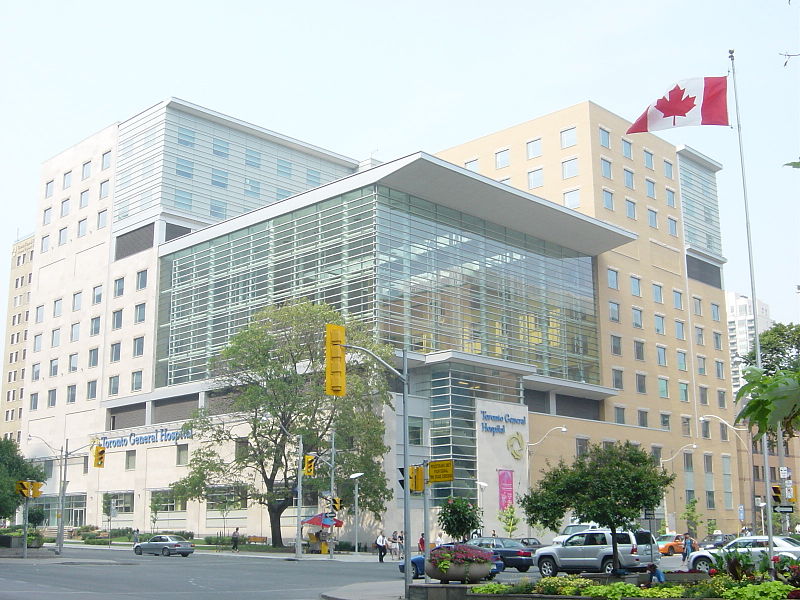
Toronto General Hospital in 2005.
Photo via Wikimedia Commons.

Millions of Canadians are extremely proud of our health-care system. They defend it and are utterly convinced of its greatness. They react with hostility to any hint of change.

But on what basis could Canada make a claim to health-care greatness?

According to OECD data, on life expectancy Canada ranks 16th. On morality rates from avoidable causes, we’re 23rd. On cancer survival rates we range from 13th down to 18th, depending on the cancer type. On the number of one-year-olds vaccinated for diphtheria, tetanus and pertussis, we rank an abysmal 37th (even the U.S. is higher here at 27th. Gulp.). One area where we do rank closer to the top is spending as a proportion of GDP, where we sit at seventh.

In modern parlance of TL;DR, what the OECD data says is that Canada spends a disproportionately large amount of money to get strongly mediocre health outcomes.

For an overall picture we can look at the World Health Organization’s ranking system, which measures, “responsiveness (both level and distribution), fair financing, and health inequality, in addition to the more traditional goal of population health.” Here, Canada ranks 30th overall.

“But …” I’m sure you’re about to say … “Canada has universal health care!”

Yes. And that’s good. But the shortfall of that argument is that dozens of other countries have universal health care and many also have far better overall outcomes. In short, universal health care access is not a unique feature in Canada. For instance, a few notable countries from the WHO’s top 10 include France, Italy, Singapore, Spain, Austria, and Japan. These are hardly countries that let citizens go bankrupt or die in the streets when they need health care.

So why are we so darned committed to defending the Canadian status quo?

I genuinely can’t make sense of it. Canadians are smart, sensible people. We want the best for ourselves and our children. But at the same time, we have a very long history of refusing to change and improve our health care despite every piece of evidence that says we desperately must do better. The COVID pandemic has made this especially clear over the last couple years, but none of this is new.

As Robyn Urback recently asked in the Globe & Mail, “When do we admit Canada’s health-care system just isn’t working?” and as Matt Gurney pondered on TVO, “When can we start trying to make it [better]?”

January 8, 2022

“We are a sexually dimorphic species, and men and women are different”

Filed under: Health, Science — Tags: , , , , — Nicholas @ 05:00

A statement like that on Twitter or other social media platforms might run you the risk of denunciation, cancellation, and a plethora of accusations of transphobia, but it isn’t the intent of Robert King to troll the hypersensitive online:

No, this carving isn’t directly related to the article … but it is eyecatching.

We are a sexually dimorphic species, and men and women are different. Evolution has designed us to be different. Realising that we evolved through slow steps, rather than just popping into being in an act of creation, has implications. For one thing, it means that men and women have their own separate evolutionary histories, as a result of differing (although not wholly different, of course) selection pressures. Resisting this truth — pretending that men and women are a sort of silly putty, totally moulded by social forces — has already had serious consequences in medical science, and it also has implications for my field of study.

I study the nature and function of the female orgasm. It might surprise people that there is even a set of questions about this phenomenon, but it is one of the most vexed fields in evolutionary biology. I do not claim that we have solved the puzzle of it. However, I do claim that we know a lot more about female orgasm than we used to. For example, female orgasm is multi-faceted in nature (unlike male orgasm) and is associated with a host of complex, fertility-related, functions. Male orgasm has but one (and a pretty-well understood one at that) fertility related function: reinforcing sexual behaviour. How is it that these stark differences between the sexes have been missed?

A major reason is that sex researchers, in some cases even self-described feminists, have often persisted in treating female orgasm as a mere adjunct to male orgasm. On this view — the by-product view — only male orgasms have a function. Female ones exist as a sort of afterthought of nature. Thus, clitorises have been routinely compared to (functionless) male nipples by, among others, the influential palaeontologist, Stephen Jay Gould. However, this comparison does not stand up to scrutiny. Clitorises are not substandard penises. For starters, they are large, four inches in length, on average. They are highly complex, but their structure — including muscular, erectile, and sensitive tissue — is mostly internal.

The external part — the glans — is highly sensitive, but so is the rest of it, when appropriately aroused. Clitorises connect to their own dedicated area of brain (the somatosensory cortex) utterly distinct from the male version. To see some of this for yourself you could read any number of excellent works by, for example, the brilliant anatomist Helen O’Connell.

If the structure that generates female orgasm is at least as, if not more, complex than the male counterpart, then it makes little sense to assume that the female version depends on the male one. This is doubly true of the event of orgasm itself, prompting the eminent biologist Robert Trivers to quip of female orgasms that “One has to wonder how often Steve [Gould] has been near to that blessed event to regard it as a by-product.” That may be a tad unkind — but it raises a rather important point. If we restrict ourselves to studying female orgasm, or human sexual behaviour generally, in the laboratory alone, then we run a very real risk of missing out on crucial aspects.

Let me make this point more concrete. Over the last couple of years, zoos and wildlife parks across the planet have seen a huge upswing in births, among species previously thought to be sexually frigid — like Pandas. Why? Simple. No humans were about. The animals had some privacy from prying eyes. Does it really stretch imagination to appreciate that the full range of human sexual responses might be also muted when under laboratory conditions? Inefficiency is a hallmark of good sex, and humans use the privacy of the boudoir to do more than make each orgasm as rapidly as possible. We use this space to find out about one another.

January 7, 2022

Desert War – Dysentery, Disease, and Dehydration – WW2 Special

World War Two
Published 6 Jan 2022

North Africa. The Axis and Allies are fighting each other but even more, they’re fighting the desert itself. The men of the desert burn during the day and freeze at night. They do most of their fighting on a litre of water and a packet of army biscuits. What is life in such a hostile environment?
(more…)

January 6, 2022

The war on “ultra-processed food”

Filed under: Britain, Business, Food, Health, Politics — Tags: , , , , , — Nicholas @ 05:00

Our self-imagined “elites” have a new crusade to prosecute — the crusade against “ultra-processed food”:

In “public health”, the name of the game is to interfere with people’s lives without having your own choices meddled with. This is straightforward with smoking since the philosopher kings of the nanny state don’t smoke. Alcohol is more tricky since most of them drink, but minimum pricing — which was introduced in Ireland yesterday — offers the perfect way to penalise ordinary people while leaving fine wine and craft beer unaffected.

The war on food poses the trickiest problem since its pretext — obesity — is the result of over-consumption and physical inactivity rather than the consumption of any specific type of food. “Junk food” is too narrow since most people interpret it to mean “fast food” from a handful of restaurant chains. And so, in the absence of an obvious dietary culprit, the “public health” lobby is shifting towards a crusade against “ultra-processed food”.

Most people don’t know what this means, but it sounds bad if you have an instinctive objection to industry and modernity. Perhaps it evokes thoughts of “chemicals” and “E numbers”. Certainly, it sounds like the opposite of the “natural”, “organic” and “home made” food so beloved of those who think they are superior to other people. It is, however, a classic “public health” bait and switch. Just as people didn’t realise that a ban on “junk food” advertising would result in adverts for cheese and butter being banned, people won’t realise what a war on ultra-processed food means for them until it is too late.

In a deranged op-ed in BMJ Global Health, some of Mike Bloomberg’s minions from Vital Strategies call for tobacco-style regulation of “ultra-processed food”, starting with warning labels.

    Simply put, ultra-processed foods are foods that can’t be made in your home kitchen because they have been chemically or physically transformed using industrial processes. They are recognisable on the supermarket shelf as packaged foods that are ready-to-eat, contain more than five ingredients and have a long shelf-life. The industrial processing, as well as the cocktail of additives, flavours, emulsifiers and colours they contain to give flavour and texture, make the final product hyper-palatable or more appealing and potentially addictive, which in turn leads to poor dietary patterns.

    With more than half the total calories consumed in high-income countries coming from ultra-processed foods and rapid increases in low- and middle-income countries, these products are exposing billions of people to a higher risk of type 2 diabetes, heart disease, stroke, depression and death.

Scary stuff, eh? Alas, they don’t give any examples of ultra-processed foods so let us instead turn to a recently published study about them …

    Baked goods, including cakes, pastries, industrial breads, and soft drinks ranked among the top contributors to sales of UPFDs [ultra-processed food and drinks]

According to the the British Heart Foundation, ultra-processed foods include …

    Ice cream, ham, sausages, crisps, mass-produced bread, breakfast cereals, biscuits, carbonated drinks, fruit-flavoured yogurts, instant soups, and some alcoholic drinks including whisky, gin, and rum.

I’m not sure how hard liquor made the cut, but I suppose if you’re going be a fun sponge you might as well go all the way.

“When speaking to a contemptible idiot who is kind of evil, don’t call them a contemptible idiot who is kind of evil! Many contemptible idiots find that language insulting”

Tom Chivers reviews a recent book from Lee McIntyre, How to Talk to a Science Denier: Conversations with Flat Earthers, Climate Deniers, and Others Who Defy Reason:

Imagine you bought a book with the title How to Talk to A Contemptible Idiot Who Is Kind of Evil. You open the book, and read the author earnestly telling you how important it is that you listen, and show empathy, and acknowledge why the people you’re talking to might believe the things they believe. If you want to persuade them, he says, you need to treat them with respect! But all the way through the book, the author continues to refer to the people he wants to persuade as “contemptible idiots who are kind of evil”.

At one stage he even says: “When speaking to a contemptible idiot who is kind of evil, don’t call them a contemptible idiot who is kind of evil! Many contemptible idiots find that language insulting.” But he continues to do it, and frequently segues into lengthy digressions about how stupid and harmful the idiots’ beliefs are. Presumably you would not feel that the author had really taken his own advice on board

This is very much how I feel about How to Talk to A Science Denier, by the Harvard philosopher Lee McIntyre.

McIntyre wants to help us change people’s minds. Specifically, to help us change the minds of these strange, incomprehensible people called “science deniers”. He addresses five main groups of “deniers”: flat earthers; climate deniers; anti-vaxxers; GMO sceptics; and Covid deniers.

This is, on the face of it, an important project. It’s a truism that the world is polarised, and our sense of shared reality is under attack. If there is some way of learning how to talk across difference, and to persuade without attacking, that might go a long way to bridging our various divides, not just the five he discusses.

The framing is that McIntyre goes and meets representatives of these groups and tries to persuade them out of their wrong beliefs. He goes armed with social-psychology research about how best to persuade people. His big trick (which I think is a good, if limited, one) is asking: what evidence would it take to make you change your mind?

But the whole book is premised on one idea: McIntyre is right, and the people he is “talking to” are wrong.

[…]

McIntyre constantly wants to make a clean distinction between “science deniers” and non-deniers. So, for instance, he says that there are five “common reasoning errors made by all science deniers” [my emphasis]. They are: cherrypicking, a belief in conspiracy theories, a reliance on fake experts, illogical reasoning and an insistence that science must be perfect. If you don’t make all five of those errors, you’re not an official McIntyre-accredited science denier.

Hang on, though. A “belief in conspiracy theories”? McIntyre spends a lot of time talking about the tobacco firms who manufactured doubt in the smoking/lung cancer link, and the oil firms who did the same with the fossil fuel/climate change link. He says that the spread of Covid denialism through the US government was driven by Republican desire to keep the economy open and win the election. Aren’t these conspiracy theories?

Ah, but for McIntyre these aren’t conspiracy theories, they’re conspiracies. The distinction is “between actual conspiracies (for which there should be some evidence) and conspiracy theories (which customarily have no credible evidence).”

January 2, 2022

QotD: Female preference for dominant males

Filed under: Health, Quotations — Tags: , , , — Nicholas @ 01:00

In what follows, I will argue that sexual selection liberated sexual dominance from its coercive, ancestral demons. Specifically, I posit that ancestral women, when faced with the prospect of mating with a coercive and dominant man, a non-coercive and non-dominant man, or a non-coercive albeit dominant man, usually opted for the third option.

The first reason for this is the value of male dominance in competition with other males. Specifically, if a man exhibits dominance during courtship and copulation, he is signalling his ability to successfully compete with other men for social status in male hierarchies. Women are attracted to high-status men because such men are either genetically superior, have the resources necessary to invest in a woman and her children, or both. Although some degree of sexual conflict between men and women is expected, a man’s non-coercive dominance during courtship and copulation may say something about his ability to stand his ground in interactions with other men.

The second reason that women prefer dominant men is the fact that other women prefer dominant men. This is not a tautology. My high school American History teacher, Ms. Gibbs, once told us an anecdote about Benjamin Franklin. It was said that old kite-flying Ben would surround himself with average looking women at dinner parties so as to grab the attention of the more attractive ones. Whether true or not, Ben Franklin’s supposed exploits are supported by research on what makes men attractive. Specifically, women are attracted to men whom other women — especially physically attractive women — find attractive. So, if other women find dominant men attractive, it would benefit a woman to mate with a dominant man because any son born of such a union would inherit his father’s dominance and thereby help to spread his mother’s genes. This hypothesis — the so-called sexy-son hypothesis — suggests that whatever other benefits a man might accrue through his dominance, it is simply enough for women to consider it “sexy” for it to be sexually selected into the male line of our species.

Most of the time, however, traits that are preferred by members of the opposite sex communicate something important about the bearer of those traits in addition to sexiness per se. As I will elaborate in my discussion of sexual subordination, sexually selected traits are often selected by prospective sex partners because they are honest, costly signals of an individual’s genetic status. So, for example, a man who is capable of exhibiting dominance, while curbing it just enough to not come off as coercive, may be communicating something important about his physical and psychological state. Specifically, if a man is able to toe the fine line of sexual dominance (and even exhibit a certain amount of passionate aggression) without veering over into the danger-zone of coercion, he may be a good catch, indeed. The subtlety, tact, and finesse required to accomplish this should not be dismissed. As it happens, being a successful “dom” (i.e., a sexually dominant or sadistic individual in the BDSM scene) requires such subtlety, tact, and finesse. As Philip Miller and Molly Devon write in Screw the Roses, Send Me the Thorns:

    The ideal [dominant] controls himself, so that he might control his submissive. He will, as a stern dominant, cause tears to flow, and as lover, kiss them away … He understands that to own a woman, one must court the mind with intelligence and humor; win the spirit with compassion and warmth; and take the body with determined strength … He is the honorable sadist who uses pain to extend the bounds of pleasure, vigilant that no harm comes of the hurt.

Understanding the evolution of consensual sexual dominance is half the battle. As BDSM practitioners are never tired of saying, the “sub” (i.e., the submissive or masochistic individual in a BDSM interaction) is just as active a participant as the dom. Some further assert that the sub actually controls the scene and that it is the dom who has to read or intuit the needs, desires, fears, discomforts, and pleasures of the sub.

Gregory Gorelik, “What Sadomasochism Can Teach Us About Human Sexuality”, Quillette, 2017-04-04.

« Newer PostsOlder Posts »

Powered by WordPress