
Me in my 20s: Falls down flight of stairs. Brushes self off and gets on with life as usual.
Me in my 40s: Sleeps with head at slightly different angle than usual. Spends 3 weeks taking painkillers for neck pain whilst sobbing and wondering if my life will ever be the same again.
Amanda (@Pandamoanimum), Twitter, 2022-06-13.
September 22, 2022
QotD: In my 20s … and in my 40s
Comments Off on QotD: In my 20s … and in my 40s
September 19, 2022
There’s a difference between “caring what kids think” and “pandering for kids’ attention and affection”
Rob Henderson wonders why so many adults these days are clearly desperate for the approval of young people:
During my recent re-watch of the entirety of Mad Men, which takes place in the 1960s, a recurring thought entered my mind: This was the last generation where young adults behaved like they were older than their real age. Don Draper is around thirty-five at the start of the series, and carries himself in a more adult manner than many 45 year olds today.
Recently, Abigail Shrier quoted a physician and psychologist who stated that “Fifty years ago, boys wanted to be men. But today, many American men want to be boys”.
Until the early 1960s, young people acted older than their actual age. Now, older adults pretend to be younger than their actual age.
Which is perhaps one reason why boomers are so easy to mock. They don’t act their age.
[…]
About two years later, I was at a breakfast gathering with some other students on campus. Our guest was a former governor and presidential candidate. He was gracious, and spent most of the time answering questions from students.
And in his answers, he continually returned to variations of the same response: “We screwed up, and it’s up to you guys to fix it. I’m so happy to see how bright you all are and how sharp your questions have been, because you will fix the mistakes my generation made.”
This mystified me. This guy was well into his sixties, with a lifetime of unique experiences in leadership roles, was telling a bunch of 20-year-olds (though I was a little older) that older adults are relying on them.
In the military, we thought of those senior to us as the leaders. It was okay to give feedback, of course. Commanding officers would regularly consult lower ranking and enlisted members to see what was working and what could be improved. But that happens only after getting through the filter of the initial training endeavors.
I remember in the first week of basic training, our instructor declared, “I don’t want any of you [expletive] thinking you are doing anyone a favor being here. I could get rid of all of you clowns and have your replacements here within the hour.” (This was 2007, well before the recruitment crisis).
My 17-year-old brain heard that thought, yeah, he’s probably right. I thought of the bus loads of other ungainly young guys I saw stepping off and being confronted with “Pick ’em up, and put ’em down” and other mind games from the instructors while waiting in the endless in-processing lines.
So then I got to college and learned that even though any seat, at least at selective schools, can be filled immediately with a bright applicant (top colleges reject thousands of them each year), students are never ejected for disrespecting professors or anyone else. In the military the first message was, you are a peon and less than nothing and we can easily have you replaced (this changes as you advance in rank, of course — at least to some degree). In college, the first message was, you are amazing and privileged and a future leader (and marginalized and erased) and you will never lose your position here among the future ruling class. That feeling of whiplash will forever linger in my mind.
[…]
Older adults crave validation from the youth, which is one reason they are mocked. Young people sense their desire to be seen as cool and deprive them of this by taunting them.
This desire for esteem may be why older adults won’t exert any authority in response to energetic young conflict entrepreneurs who yell at them or threaten them.
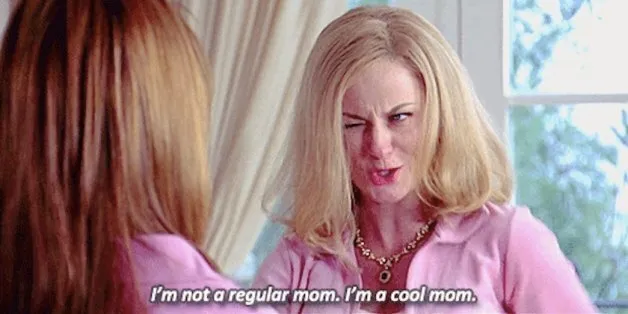
Older adults want to be on the side of youth. So desperate to pencil themselves out of the “old” category. Every parent wants to be the “cool parent”, every professor wants to be the “cool” professor. You can be cool and still be an authority figure. Maybe decades of imbibing the worst of U.S. pop culture made everyone forget this.
Comments Off on There’s a difference between “caring what kids think” and “pandering for kids’ attention and affection”
September 11, 2022
QotD: De-institutionalization
Deinstitutionalization began slowly at first, in the 1950s, but the pace accelerated around 1970, despite signs that all was not going according to plan. On the ground, psychiatrists noticed earlier than anyone else that the most obvious question — where are these people going to go when they leave the mental institutions? — had no clear answers. Whatever misgivings psychiatrists voiced over the system’s abandonment of the mentally ill to streets, slums, and jails was too little and too late.
That modern psychiatry is mostly practiced outside of mental institutions is not its only difference from premodern psychiatry. Scull devotes extensive coverage to two equally decisive developments: the rise and fall of Freudianism, and psychopharmacology.
The Freudians normalized therapy in America and provided crucial intellectual support for the idea that mental health care is for everyone, not just the deranged. Around the same time as deinstitutionalization, Freud’s reputation, especially in elite circles, was on a level with Newton and Copernicus. Since then, Freudianism has mostly gone the way of phlogiston and leeches. That happened not just because people decided the psychoanalysts’ approach to therapy didn’t work but also because insurance wouldn’t pay for it. Insurance would, however, pay for modes of therapy that were less open-ended than the “reconstruction of personality that psychoanalysis proclaimed as its mission”, more targeted to a specific psychological symptom, and, most crucially of all, performed by non-M.D.s. Therapy was on the rise, but psychiatrists found themselves doing less and less of it.
As psychiatry cast aside Freudian concepts such as the “refrigerator mother”, which rooted mental illness in psychodynamic tensions, it increasingly trained its focus on biology. Drugs contributed to, and gained a boost from, this reorientation. Scull loathes the drug industry and only grudgingly allows that it has made improvements in the lives of mentally ill Americans. He divides up the vast American drug-taking public into three groups: those for whom they work, those for whom they don’t work, and those for whom they may work, but not enough to counter the unpleasant side effects. He argues that the last two groups are insupportably large.
Stephen Eide, “Soul Doctors”, City Journal, 2022-05-18.
Comments Off on QotD: De-institutionalization
September 10, 2022
“Things have gone horribly wrong in American medicine; for example, ‘physicians are sharing ideas'”
Chris Bray on the American healthcare system’s descent into not just “rule by experts” — which you rather expect for a field like medicine — but the far worse “rule by government-approved experts”:
Our $3.7 trillion medical system is characterized by its fragility, the narrative says, with patients who can’t get treatment and doctors who can’t learn. So what’s gone wrong? Here’s the headline, with a whole universe of silly assumptions baked into every word:
Things have gone horribly wrong in American medicine; for example, “physicians are sharing ideas”.
I’m just taking a moment to stare at my own sentence. Be right back.
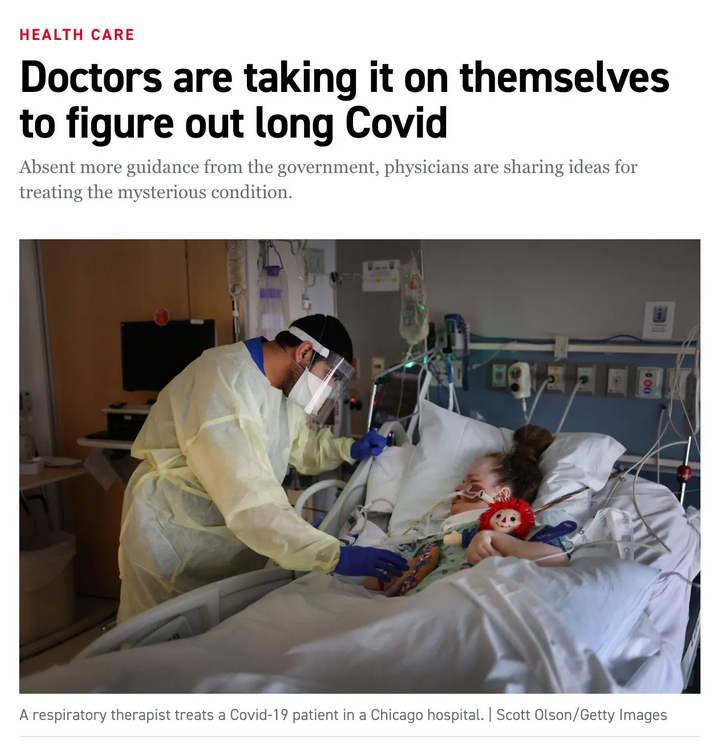
Anyway, medicine is broken — doctors are thinking. Sick people show up to see them, and they try to figure it out themselves by using, like, evidence and diagnostic practice and their medical knowledge. Lacking government directives, physicians are living with a horrible system in which they have to assess sick people and come up with their own answers about their illnesses and the best course of treatment. And so, Politico reports, networks of doctors are gathering to share data and work collaboratively, a sure sign that things have gone horribly wrong:
While the network is helping patients and doctors navigate the disease’s uncharted waters, long Covid doctors say there’s only so much they can do on their own. The federal government should be doing more, they say, to provide resources, coordinate information sharing and put out best practices. Without that, the doctors involved fear the condition, which has kept many of those afflicted out of the workforce, threatens to spiral.
Imagine what doctors will be like after two more generations shaped by the assumption that the federal government is the only proper source of “best practices”. The pathologization of socially and institutionally healthy behavior — professionals, confronted with a new problem, work together to gather evidence so they can analyze and apply it — speaks to the ruin inflicted by the pandemic, by the federal funding and steering of science, and by the Saint Anthonying of medicine: If government doesn’t tell you how, you can’t possibly know how. You expect your doctor to use a lifetime of education and experience to figure out what’s wrong with you; Politico expects your doctor to apply the government guidelines, but finds to its alarm that the government doesn’t offer any. How can you make a sandwich if the government hasn’t published a protocol on the application of condiments?
If you’ve felt rigidity and a lack of productive exchange in your conversations with your own doctor, we may have a suggestion here about the why part. I can’t assert that with total confidence, because the federal government hasn’t provided me with an analytical framework.
And so the debilitation of people who should have professional knowledge and competence becomes normal and expected. A scientist is someone who gets checks from the NIH, unless the scientist is one of the other kind and gets checks from the NSF, and ideological compliance is part of the deal. A doctor is someone who applies the government protocols. Federal agencies wear your doctors like a skin suit, and apply their medical solutions through the hands of others. If that’s not how it works — if your doctor works in creative and thoughtful ways to make sense of an illness and provide an effective treatment — something has gone wrong.
Comments Off on “Things have gone horribly wrong in American medicine; for example, ‘physicians are sharing ideas'”
September 7, 2022
QotD: Gender Dysphoria
Beyond that, I believe that my art-based theory of “sexual personae” is far more expansive and truthful about human psychology than is current campus ideology: who we are or want to be exceeds mere gender, because every experimental persona that we devise contains elements of gesture, dress, and attitude rich with historical and cultural associations. (For Halloween in childhood, for example, I defiantly dressed as Robin Hood, a Roman soldier, a matador, Napoleon, and Hamlet.) Because of my own personal odyssey, I am horrified by the escalating prescription of puberty-blockers to children with gender dysphoria like my own: I consider this practice to be a criminal violation of human rights. Have the adults gone mad? Children are now being callously used for fashionable medical experiments with unknown long-term results.
In regard to the vexed issue of toilets and locker rooms, if private unisex facilities can be conveniently provided through simple relabeling, it would be humane to do so, but I fail to see why any school district, restaurant, or business should be legally obligated to go to excess expense (which ultimately penalizes the public) to serve such a minuscule proportion of the population, however loud their voices. And speaking of voices: as a libertarian, I oppose all intrusion by government into the realm of language, which belongs to the people and which evolves organically over time. Thus the term “Ms.” eventually became standard English, but another 1970s feminist hybrid, “womyn”, did not: the populace as a whole made that decision, as it always does with argot or slang filtering up from ethnic or avant-garde subgroups. The same principle applies to preferred transgender pronouns: they are a courtesy that we may choose to defer to, but in a modern democracy, no authority has the right to compel their usage.
Camille Paglia, “Prominent Democratic Feminist Camille Paglia Says Hillary Clinton ‘Exploits Feminism’”, Washington Free Beacon, 2017-05-15.
Comments Off on QotD: Gender Dysphoria
September 6, 2022
QotD: The fitness club
The second problem, though, is: What to do with the True Believers?
Let’s return to the metaphor of the
gymfitness club. As we noted yesterday, the real money isn’t in the hardcore people who actually do the exercising. It’s in all the lardasses who sign up, and keep paying the membership fee, but never actually go. This leads to the perverse-seeming conclusion that the best gym, from the gym-owner’s perspective, is one that stands empty — gleaming, never-used equipment that just sits there, one mute inglorious depreciation tax writeoff, un-maintained by no paid staff. See what I mean? The whole point of owning a gym — the cult dogma, as it were — is to get people in shape, but the optimal gym from the cult leader’s perspective is a group of perpetual fatasses, buying themselves workout indulgences at $75 a month.I trust that the analogues in the eco-scam are obvious, so let’s move on. Even the most optimal-for-the-owner gym, though, is going to have a few True Believers who are in there day after day, grinding out sets and jogging on treadmills and doing whatever those CrossFit freaks do.* If you let them, they’ll take over everything. Ever been in a gym and seen a piece of equipment designed to isolate one muscle that you’d never think could be worked out in the first place? Congrats, your gym’s got a True Believer. Just stake out the Urethra-cizer for a few hours; you’ll see her; she’s unmistakable. She’s pushing 50 but has the body of a 20-year old, except made out of beef jerky …
… anyway, the point is, savvy gym owners know how to handle True Believers. You don’t buy ’em off with new equipment; you buy ’em off with new exercises. P90X is for pussies. Do Ultra-Kegels, and in just 60 days you’ll be able to lift an entire can of paint with your …
* Obviously I can’t write about gyms and cults without taking a cheap shot at CrossFit. They’re probably chock full of lessons on how to business-optimize your cult without letting it go mainstream, but I’m too terrified to look. Honest to God, there are some days where the only exercise I get is dodging and weaving away from the CrossFit cultists at the office.
Severian, “If the UFO Actually Comes, Part II”, Rotten Chestnuts, 2019-09-26.
Comments Off on QotD: The fitness club
September 5, 2022
We’ve somehow moved from “women who want to have it all” to “the servant problem” in less than a generation
In Ed West’s weekly round-up post, he links to this article by Helen Andrews about the cultural shift for women since the sexual revolution:
People are always more likely to believe a lie if it’s plausible. The lie that women can have it all has as many adherents today as it does because it’s not obvious why it should be a lie. Have a career and a family: why not? There are enough hours in the day. The challenge of refuting the lie that women can have it all — that is, that they can prioritize career and family equally — lies in the fact that the trade-offs that make it impossible are hidden, not obvious, because mathematically it’s not something that should be impossible.
If only employers would do more to accommodate working women, if alternatives could be found to fulfill duties at home that mothers used to do for themselves, like childcare and housework. But the more you start thinking about those accommodations and thinking not just about what it means for any one woman to have it all, but for society to be restructured around women having it all, the more impossible those trade-offs start to seem.
Obviously there are women today in America who are trying to have it all, and many appear to be doing so successfully, at least insofar as they have both demanding careers and children. But look more closely at those households, and almost invariably you’ll see that behind every woman who is balancing work and family, there is an army of low-paid labor, immigrant cleaning ladies, nannies who are paid cash under the table, Door Dash delivery men who deliver the meals that mom never had time to cook. It’s no coincidence that the vast increase in female workforce participation has coincided with the reappearance of something that the more egalitarian America of the early 20th century did not have, and that is a servant class.
America today is more prosperous than it was 70 years ago, and yet it is no longer possible for an ordinary worker to support a middle-class family on a single income. The story of how that happened is bound up into a lie that has become gospel today, which is the lie that women can have it all. Undergirding that lie is a further lie that the Republican Party can have it all. The GOP has very much hitched itself to the idea that it can be the party of stay-at-home moms and girl bosses equally. Again, superficially this seems like it ought to be possible. Live and let live, it’s a free country. But this bargain is unsustainable in practice. We only have to look at the last 30 years to understand why.
The official position of the Republican Party today is that the government’s job is to make it possible for everyone to make the right choice for their family. This rhetoric of maximizing choice requires politicians to talk as if some women will choose to be moms and some will choose to be girl bosses, and it’s really 50/50 which one you end up being. You know, both are equally valid. Who’s to say one is better? But that’s just false, and it’s false according to women’s own preferences. The number of women who say they do not want to have children is very low, in the single digits, around 5% — and that’s just the number who will tell surveys that they predict they won’t have kids when their childbearing years are over. The number of women who actually reach old age and feel satisfied with their life, being just a girl boss with no children to keep them company, is even lower.
Squaring away all this family happiness is and ought to be a higher priority than maximizing women’s career success. It is also a more urgent priority. A woman cannot simply wake up at age 35 and decide she wants to have a family. Everyone says that the sexual revolution was brought about by the advent of the contraceptive pill, which was supposedly ushered in at an amazing new age of a new human experience thanks to science. But it actually changed a lot less than we think. We’ve gotten quite good at not having children when we don’t want to have them, but the science that gave us the pill has not made us very much better at making children arrive when we do.
Comments Off on We’ve somehow moved from “women who want to have it all” to “the servant problem” in less than a generation
August 30, 2022
The plasticity of language, slippery definitions, and the ongoing gender wars
In The Line, Allan Stratton considers some of the reasons for misunderstanding, argument, and anger in the suddenly huge gender wars in western culture:

Two people at EuroPride 2019 in Vienna holding an LGBTQ+ pride rainbow flag featuring a design by Daniel Quasar; this variation of the rainbow flag was initially promoted as “Progress” a PRIDE Flag Reboot.
Photo by Bojan Cvetanović via Wikimedia Commons.
From my perspective, much of the controversy stems from academic redefinitions of language and concepts over the past 60 years. As these changes affected a small subculture, mainstream society paid them no mind. But language has consequences.
I’m a gay man in his early seventies, who’s paid close attention to the decades of linguistic manipulations that have turned sense into nonsense. Once, words and concepts had clear understandings that helped to create widespread support for LGBT rights. More recently, they have been conflated and inverted, and threaten to negatively affect the rights of women, the safety of gender-nonconforming children, and the lives of gays, lesbians, and transexuals.
A quick primer on the change in key terms may help to clarify our current mess and suggest a way forward:
Today the trans umbrella is understood to be a single movement within the Alphabet alliance, but in 1960s North America, it referred to three specific groups: self-identified transsexuals, transvestites and transgenders. There was some overlap, but none of the three were specifically attached to the fight for gay rights at all.
Transsexuals gained public prominence thanks to American Christine Jorgensen. After serving in the United States Army, Jorgensen had a sex change operation in Denmark before returning to America in 1953. She never identified as homosexual, but, rather, said she had born in the wrong body. Jorgenson was extraordinarily popular. I urge you to watch these two interviews, one from the ’60s and the other from the ’80s. Her wit, charm, self-assurance and intelligence demonstrate the power of persuasion, especially notable at a time far less tolerant than our own.
Transvestites (a term now considered derogatory) dressed and used the pronouns of the opposite sex, but fully acknowledged the material reality of their biology. Some were gay like the legendary Sylvia Rivera and Marsha P. Norman, who co-founded Street Transvestite Action Revolutionaries. Most, however, were straight men like Virginia Prince, who published Transvestia Magazine, founded the Society for the Second Self, and published the classic How to be Woman Though Male. They distanced themselves from the gay community, fearing the association hurt their image. “True transvestites,” Prince assured, “are exclusively heterosexual … The transvestite values his male organs, enjoys using them and does not desire them removed.”
The term transgender, coined by psychiatrist John Oliven in 1965, was designed to distinguish transsexuals, who wanted to surgically change sex, from transvestites, whose inclinations were limited to gendered feelings and presentation. But its definition soon morphed to ungainly proportions. By the ’90s, trans academic Susan Stryker had re-re-re-defined it as (deep breath) “all identities or practices that cross over, cut across, move between, or otherwise queer socially constructed sex/gender boundaries (including, but not limited to) transsexuality, heterosexual transvestism, gay drag, butch lesbianism, and such non-European identities as the Native American berdache (now 2 Spirit) or the Indian Hijra.”
It’s key to remember that, at this time, trans people typically considered themselves the opposite sex spiritually and socially, but not literally: To repeat, trans women like Virginia Price insisted they were straight male heterosexuals, and would have been outraged at the suggestion that they were lesbians. As a result, women’s rights were never infringed. No one insisted that “sexual attraction” and “biologically sexed bodies” be defined out of existence. Nor were “tomboys” and “sissies” expected to seek gender clinics or consider puberty blockers, cross-sex hormones and surgery.
Under those circumstances, trans people gradually gained public support for human and civil rights protections. It’s easy to empathize with the distress of feeling trapped in the wrong body, and the horror of wanting to claw one’s way out. And how can a live-and-let-live world justify discrimination against people for simply wanting to imagine and present themselves as they wish? Progress, though imperfect and incomplete, was real.
But, as we have seen practically every day in the last few years, for true Progressives, mere “progress” isn’t enough and there are no waypoints on the road to Utopia…
Comments Off on The plasticity of language, slippery definitions, and the ongoing gender wars
NYT op-ed – “Maternal instinct is a social construct devised by men to keep women subordinate”
Jerry Coyne responds to a New York Times op-ed by Chelsea Conaboy (author of a forthcoming book from which the op-ed was adapted):
The recent article […] from the New York Times (of course), is one of the worst of the lot. It bespeaks a lack of judgment on the part of the author — who ignores biology because of her ideology — as well as on the part of the newspaper, which failed to hold the author’s feet to the scientific fire. Let this post be my rebuttal.
Author Conaboy, who apparently hasn’t done enough scientific research, maintains that “maternal instinct” doesn’t exist, but is a social construct devised by men to keep women subordinate.
The immediate problem is that Conaboy never defines “maternal instinct”. It could mean any number of things, including a greater desire of women than men to have children, a greater desire of women than of men to care for those offspring, the fact that in animals mothers spend more time caring for offspring than do fathers, a greater emotional affinity of women than of men towards children (including offspring), or the demonstration of such a mental difference by observing a difference in caring behavior.
I will define “maternal instinct” as not only the greater average tendency of females than males to care for offspring, but also a greater behavioral affinity towards offspring in females than in males. The term involves behavioral response, not “feelings”, which are demonstrable only in humans. Thus one can look for difference in “parental instincts” across various species of animals.
But even in this sense, Conoboy is partly (but far from wholly) correct when she discusses humans. It’s undoubtedly true that women were socialized into the sex role as offspring breeders and caretakers, with men assuming the “breadwinning” role. It’s also true that women were often denied access to work or education because their vocation was seen as “reproducer”, or out of fear that they would spend less time working and more on children, or even that they’d get pregnant and would leave jobs. Further, it’s also true that this role difference was justified by being seen as “hard-wired” (i.e., largely the result of genes, which, I argue below, is true), and that “hard-wired” was conceived as “unable to be changed”. The latter construal, however, is wrong, and that is what really held back women. The socialization of sex roles, which still occurs, goes on from early ages, with girls given dolls and boys toy cars, though, as society has matured, we’re increasingly allowing girls to choose their own toys and their own path through life. I of course applaud such “equal opportunity”.
But to claim that women don’t have a greater desire than men to care for offspring, or have a greater emotional affinity towards offspring, is to deny biology, and evolution in particular. (I freely admit that many men love their kids deeply, and that some men care for them as much or more as do mothers, but I’m talking about averages here, not anecdotes.)
There are two reasons why Conaboy is wrong, and both involve evolution.
The first is theoretical, but derived from empirical observations. It thus explains the second, which is wholly empirical and predictive. How do we explain the fact that, across the animal kingdom, when members of only one sex do most of the childrearing, it’s almost invariably the females? (Yes, in many species males share the duties, and in a very few, like seahorses, males provide more parental care; and there are evolutionary reasons for that.)
The reasons for the statement in bold above involves the biology of reproduction. It is the female who must lay the eggs or give birth, and there is no way she can leave her genes behind unless she does that. It’s easier for males to take off after insemination and let the females care for offspring. Given that females are constrained to stick with the fertilized eggs, their best strategy is to take care of the gestation and resultant offspring, which of course allows males to seek other mates. Not only must females carry the fetuses, lay the eggs, and so on, but they are also constrained to see out the pregnancy until offspring are produced and then suckle or tend them in other ways. In some cases it’s the best evolutionary strategy for a male to stick around and share the child-rearing, but often it’s not.
This disparity in behavior holds not just in humans, of course, but in many animals: it’s a prediction — largely verified — of evolutionary psychology.
Comments Off on NYT op-ed – “Maternal instinct is a social construct devised by men to keep women subordinate”
August 29, 2022
“Follow the science!”, “No, not like that!”
Chris Bray recounts his experiences when he “followed the science” over the Wuhan Coronavirus:
It’s happening again, and so is the response. It’s becoming our one persistent cultural cycle.
During the first availability of the Covid-19 “vaccines” — which don’t prevent transmission or infection, but we changed the meaning of that word, so shut up shut up shut up — I did what I usually do: I thought about the past to try to make sense of the present. If we’ve instantly produced safe and effective vaccines for SARS-CoV-2, I wondered, why didn’t we do the same for SARS-CoV-1? It took less than five minutes to answer that question:
So scientists did come up with a vaccine for SARS-CoV-1, but when they gave it to animals, it made the animals extremely susceptible to severe illness when they were “challenged” with the virus again — “suggesting hypersensitivity to SARS-CoV components was induced”. And so, the authors of that 2012 paper argued, “Caution in proceeding to application of a SARS-CoV vaccine in humans is indicated.”
Because I believe in science, I followed that advice, and I told my doctor that I was following that advice — and that I wasn’t terribly concerned about Covid-19 anyway, so whatever. I would be cautious about injecting a novel medical product into my body: I would wait, calmly. She assured me that there was no scientific shortcutting at all in the development of the vaccines for SARS-CoV-2, which were absolutely known to be 100% safe and effective, but she also agreed that there was nothing wrong with watching and waiting for a few months.
I meant it. At that point, I hadn’t refused the vaccines — I had just decided that I would wait for a bit to see how they played out once they’d been injected into a few billion human lab rats.
And then the shaming started. I was uninvited from a family event, and ordered to stay away — and then, after a short pause, repeatedly shamed by email as a disgusting selfish pig who made the family sick with my ignorance and selfishness. (Distant family, thankfully.) The public sphere came alive with this message, and Joe Biden let me know that his patience was wearing thin for my kind. Social media was a daily fear bath, and consumed with shaming rituals.
It was exactly that message that turned my skepticism, my preference for watching and waiting, into a flat and permanent refusal. People said they were talking about science — in a vicious flood of hyperemotional shaming language, the hysterical tone and substance of which made it clear that they weren’t talking about science at all. They were talking about their fearfulness and their weakness; they were talking about their cowardice, and about the shame they felt at finding their fear of the air wasn’t shared. The shaming made me contemptuous; it secured my commitment to resist.
So now comes a new flood of shaming messages, assuring people that mere political disagreement is a sure sign of monstrous cruelty and hate.

Comments Off on “Follow the science!”, “No, not like that!”
“What did you do in the Covid War, Daddy?”
Janice Fiamengo hopes that the future isn’t female, for the sake of all of us:
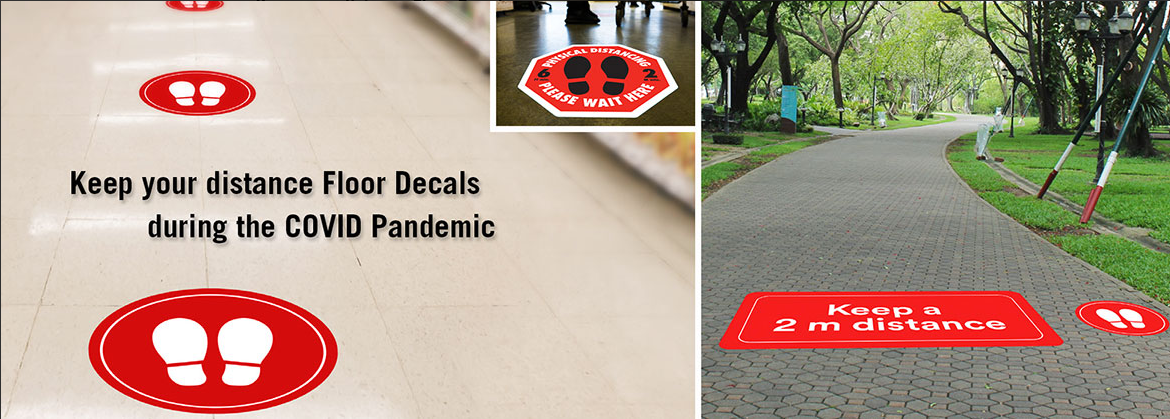
If Covid was a war, as it was frequently depicted as being, it was one in which none of the typical masculine virtues required by war were in evidence. Gone was the valorization of stoicism, courage, forgetfulness of self, rational risk assessment, and the curtailment of emotionalism. In their place came generalized anxiety, self-righteous vindictiveness, and the longing for (an unattainable) safety at all costs.
In his book United States of Fear: How America Fell Victim to a Mass Delusional Psychosis, American psychiatrist Mark McDonald noted the disappearance of men from the Covid state as a key factor in our descent into social psychosis. Of course men remained in existence, but their roles were reduced to enthusiastic compliance with even the most trivial of health rules.
As a psychiatrist with extensive clinical experience, McDonald was uniquely positioned to diagnose some of the underlying causes of Covid panic. He notes in the book that women, evolved to be hyper-attentive to the needs of infants and simultaneously aware of their own vulnerability as maternal caregivers, tend to be far more susceptible to anxiety disorders than men. Women evolved over millennia to look to men for protection of themselves and their children (p. 30-31), and men evolved to provide it.
Yet as Covid experts encouraged us all to worry about the safety of our families, with daily case counts and endless updates on (de-contextualized) death numbers, “men failed […] dismally in their duty to provide a sense of safety and security for the women in their lives” (p. 41). When some women insisted fearfully on rules to protect themselves and their loved ones — even irrational rules such as outdoor masking and limitations on how children played together — men, whose traditional role has been to “calm and ground women’s fears” (p. 39), either did nothing or went along. Some men, of course, led the charge.
The emasculation of men had been prepared for a long time, and under Covid it came to fruition. Men could not reassure the women in their lives or stand up to the infantilizing Mother State. They could not speak out to put the Covid threat in perspective. Most of them couldn’t even decide independently whether to go to work in the morning. McDonald is well aware of the social forces that have contributed to the feminization of men — he notes especially how “healthy expressions of masculinity […] have all been redefined as universally unhealthy” (p. 52) — but even he does not fully understand the depth of the anti-male attack that prepared the ground for Covid-enforced male passivity.
For decades now, with the advent of no-fault divorce, mother-favoring custody laws, the determination to stamp out (subjectively defined) alleged sexual harassment, and the mandate to “Believe Women”, it has been made clear to men that their lives and careers remain intact entirely at the pleasure of feminist ideologues or potentially vengeful ex-wives. One wrong move, an inappropriate comment, a gaze that is too intense, a tone-deaf request for a date, a sexual encounter where the woman is left unhappy, or merely having married the wrong woman, can lead — and too often does lead — to the ruination of a man’s reputation, a forced psychiatric evaluation, the garnisheeing of his wages, imprisonment on false charges, and the judicial kidnapping of his children. Scholar Stephen Baskerville has extensively documented the injustices in his devastatingly compendious Taken Into Custody: The War Against Fathers, Marriage, and the Family and his more recent The New Politics of Sex: The Sexual Revolution, Civil Liberties, and the Growth of Governmental Power. For a heartbreaking and fully researched personal account, see Greg Ellis’s The Respondent: Exposing the Cartel of Family Law.
For well over 20 years, it has been made more and more difficult for men to respond as men once did, firmly and unplacatingly, because many men now know that everything they have built in their lives — and their ability to continue to build, to contribute their gifts, to live a normal life, to be a father to their children — now hinges on their avoiding the fury of a state-supported complaining woman. It is this bedrock vulnerability, the reality that even guiltless men can be imprisoned on a woman’s word and can lose their life savings and children, that more than anything else has silenced and paralyzed many decent and brave men.
Comments Off on “What did you do in the Covid War, Daddy?”
August 25, 2022
Louise Perry – “It’s precisely because I’m a feminist that I’ve changed my mind on sexual liberalism”
Guest-posting at Bari Weiss’s Substack, Louise Perry explains what drove her to write her new book, The Case Against the Sexual Revolution: A New Guide to Sex in the 21st Century:
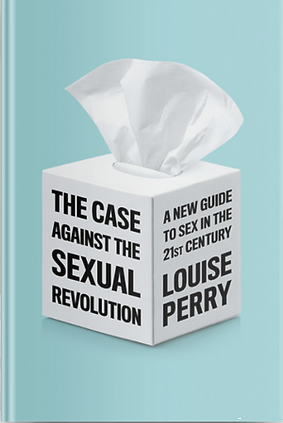
I used to believe the liberal narrative on the sexual revolution. As a younger woman, I held the same opinions as most other millennial urban graduates in the West. I conformed to the beliefs of my class.
Of course freedom is the goal, I thought. What women need is the freedom to behave as men have always behaved, enjoying all the pleasures of casual sex, porn, BDSM, and indeed any other sexual delight that the human mind can dream up. As long as everyone is consenting, what’s the problem?
I no longer believe any of this.
[…]
The problem is the differences aren’t trivial. Sexual asymmetry is profoundly important: One half of the population is smaller and weaker than the other half, making it much more vulnerable to violence. This half of the population also carries all of the risks associated with pregnancy. It is also much less interested in enjoying all of the delights now on offer in the post-sexual revolution era.
The research is clear. Men are (on average) far more interested than women are in casual sex, buying sex, watching porn, and experimenting with unusual fetishes. It’s not that women never enjoy such things. But, on average, they enjoy them much less than men do.
Remove the progressive goggles, and the history of the last 60 years looks different. The sexual revolution isn’t only a story of women freed from the burdens of chastity and motherhood. It is also a story about the triumph of the playboy.
It would have been impossible to imagine a self-described feminist offering advice like this to other young women even a few years ago:
This is the advice I would offer my own daughter:
• Distrust any person or ideology that pressures you to ignore your moral intuition.
• Chivalry is actually a good thing. We all have to control our sexual desires, and men particularly so, given their greater physical strength and average higher sex drives.
• Sometimes (though not always) you can readily spot sexually aggressive men. There are a handful of personality traits that are common to them: impulsivity, promiscuity, hyper-masculinity and disagreeableness. These traits in combination should put you on your guard.
• A man who is aroused by violence is a man to steer well clear of, whether or not he uses the vocabulary of BDSM to excuse his behavior. If he can maintain an erection while beating a woman, he isn’t safe to be alone with.
• Consent workshops are mostly useless. The best way of reducing the incidence of rape is by reducing the opportunities for would-be rapists to offend. This can be done either by keeping convicted rapists in prison or by limiting their access to potential victims.
• The category of people most likely to become victims of these men are young women between the ages of 13 and 25. All girls and women, but particularly those in this age category, should avoid being alone with men they don’t know or men who give them the creeps. Gut instinct is not to be ignored: It’s usually triggered by a red flag that’s well worth noticing.
• Get drunk or high in private and with female friends, rather than in public or in mixed company.
• Don’t use dating apps. They offer a large pool of options, but at a severe cost. It is far better to meet a partner through mutual friends, since they can vet histories and punish bad behavior. Dating apps can’t.
• Holding off on having sex with a new boyfriend for at least a few months is a good way of discovering whether or not he’s serious about you or just looking for a hook-up.
• Only have sex with a man if you think he would make a good father to your children — not because you necessarily intend to have children with him, but because this is a good rule of thumb in deciding whether he’s worthy of your trust.
• Monogamous marriage is by far the most stable and reliable foundation on which to build a family.
None of this advice is groundbreaking. It’s all informed by peer-reviewed research, but it shouldn’t have to be, since this is what pretty much most mothers would tell their daughters, if only they were willing to listen.
Comments Off on Louise Perry – “It’s precisely because I’m a feminist that I’ve changed my mind on sexual liberalism”
August 21, 2022
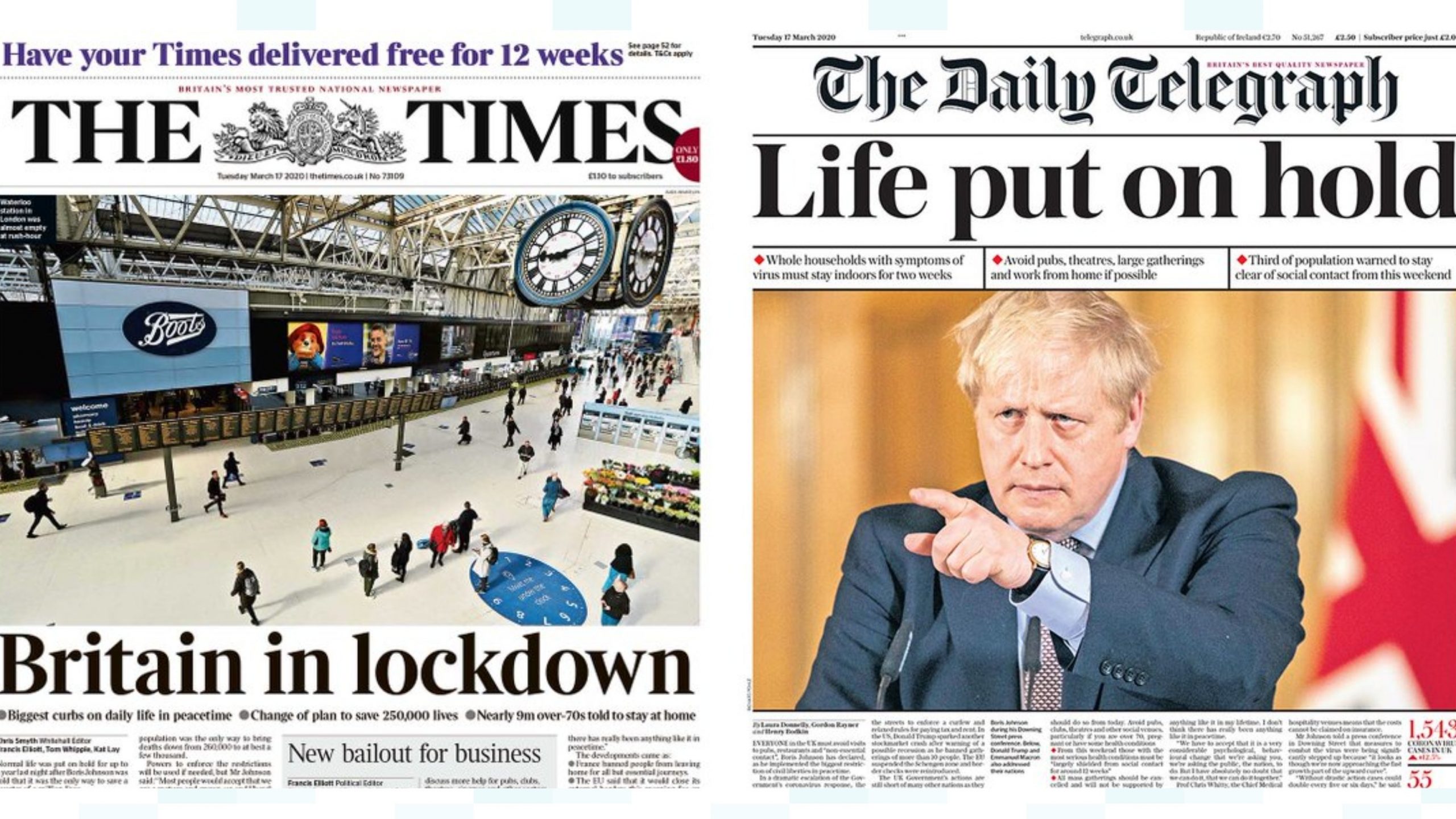
The pandemic lockdowns heralded the “worldwide end of the Nuremburg code”
At Samizdata, Perry de Havilland considers how British culture has been impacted by many of the worst notions coming out of American culture in the last few years:
… support for Brexit, by no means confined to the lumpenproletariat of Guardian reader’s imagination, might not indicate what purveyors of the high status opinion fondly imagine. The conflation of Brexit with the “Trump phenomenon” was always overblown, given the deep social and structural differences between UK and USA. Yes, we are influenced by America, but we are not the same in oh so many ways.
But western civilisation, not just Britain, is undeniably going through a very strange phase. The insane and demonstrably pointless covid lockdowns seem to have had a pressure cooker effect, with every -ism being dialled up several notches. The mainstreaming of transsexuality, a largely harmless hobby until a lunatic fringe grabbed hold of it, indicates the world is not running in well-oiled grooves. An inability to define “what is a woman?”, by sages and politicians who nevertheless expect to be treated as serious people, would have seemed implausible just a few years ago.
But the covid lockdowns, that is the “biggie”: an egregious abridgement of liberty & common sense that placed the global economy into repeated bouts of cardiac arrest. The worldwide end of the Nuremburg code.
The lockdowns were an even more polarising issue that Brexit or Trump or indeed anything else. Why? Because there was no opt-out, you could not just go to work, or visit granny, no ability to ignore the whole thing and just head down the pub or retire for a macha latte in some café. The effects of that will be enduring. That was the issue that taught a lot of people to fear what other people believe to be true, and people always hate what they fear.
Now just wait to see what happens when the green lunacy that stopped investment in reliable power supply and new reservoirs means we start running out of power and water. I suspect that will be what makes the cork finally blow off.
Comments Off on The pandemic lockdowns heralded the “worldwide end of the Nuremburg code”
August 20, 2022
Yes, you will end up owing your conspiracy theorist friend an apology at this rate …
Chris Bray re-enacts a few of the minor erasures, walk-backs, and out-and-out lies coming from organizations who’ve spent the last two-plus years spreading a line of medical “truth” that, day-by-day, appears a bit less “truth-y” all the time:
I can’t get this attack on Dr. Ryan Cole out of my head:
What’s becoming very clear is that the narrative is going to shift by inches, eventually ending up at the place where mRNA dissenters started, but. Let’s get through the first part, and I’ll get to that but in just a moment. Look at, for example, the recent stealth-edit on the CDC website that quietly removed the assurance about the spike protein from mRNA injection leaving your body in a hurry. So on Monday it’s disinformation to falsely claim that the spike protein lingers in your body, and you’re a dangerous extremist if you say it; on Tuesday, the simple fact of lingering spike protein was always known and never contested. That’s DISINFORMA— hold on, I’ve just been handed a new memo.
This is going to keep happening, in little pieces that move toward reality. There are ZERO mRNA deaths, you lying idiots, and you need to stop spreading disin— uh, hold on, it says here that, uh …
In a year, or in five years, the things that Ryan Cole and Clare Craig and Peter McCullough and Tracy Beth Hoeg and Robert Malone and all the other MONSTERS have been saying will be validated and acknowledged. We’ll know that the mRNA injections caused heart damage and a cancer spike, and we’ll know that mRNA-injected people get sick more often than the dirty unvaccinated. Look at the matter-of-factness with which Deborah Birx says that oh yeah, I always knew these vaccines — vaccines! — weren’t going to prevent infection. A year before she shrugged and said she’d always known that, you would have lost your social media accounts for saying exactly what she just said. Yesterday’s idiotic conspiracy theory disinformation nonsense is today’s “yeah, we always knew that”.
Now, here’s my big but: The narrative is going to turn, in a long series of tiny and unacknowledged shifts, until it matches what the heretics have always been saying — but my bet is that the heretics will not be rehabilitated. Ryan Cole, to stick with the opening example, will be proven correct, but he will not be vindicated. The YOU CAN’T SAY THAT, IT’S DISINFORMATION oh wait it’s totally true maneuver doesn’t rehabilitate the crimethinkers. You can think X when it’s time to think X; if you think X too early, you remain a thought criminal.
The truthtellers in medicine will be proved correct, but they’ll still be resented and excluded.
August 19, 2022
“This is her advice: Get Married and Make Sure You Stay Married”
Elizabeth Nickson was a feminist entrepreneur (although I’m sure she would not have used that word to describe herself) in her early 20s, earning money to support herself by pushing feminist ideology through theatrical performance and running consciousness raising sessions. It was, as she says, “fashionable”. She now realizes that the changes to sexual belief and behaviour led directly to the modern “hook-up” culture young people now have to navigate to find relationships:
A new book, the Case Against Sexual Revolution, A New Guide to Sex in the 21st Century, written by Louise Perry, a young writer for the New Statesman is published at the end of this month. Perry volunteers in rape centers, and works for the campaign group We Can’t Consent To This, which documents cases in which UK women have been killed and defendants have claimed in court that they died as a result of ‘rough sex’.
This is her advice: Get Married and Make Sure You Stay Married.
Dramatically well-argued and sourced, Perry goes through every “innovation” in the sexual space and demonstrates without flinching, that all of it, all of it, privileges a particular subset of male, the sociosexual male – the kind that preferences quantity over quality – and not only that the worst kind of sociosexual male. The kind who like choking women, the rapists, abusers, serial womanizers, the pedophiles, the pimps, and the traffickers.
Decades later, says Perry, the mothers and grandmothers of 2nd and 3rd stage feminism have created hook-up culture as the near exclusive method of finding a mate. She details the unassailable fact that women, by their very nature, by their evolutionary history, and their specific biology are victimized in every move of hook-up culture, which ruthlessly uses their femininity, their gentleness, kindness, and agreeableness against them. It coarsens men, inflames their worst natures and has turned the netherworld of the sexual marketplace into a vicious free-for-all, a Darwinian thrash-hunt of the most vulnerable.
Everyone is hurt by it. Without exception.
I live in a place socially advanced, jokingly known as the end of the hippie trail. It is prosperous because it is one of the most beautiful places in the world. But, because it is environmentally advanced, our population is aging. The young and busy cannot start businesses or families here, because the environmental regulation is so strict, they cannot afford it. The human wreckage of the sexual revolution, therefore, is on full display. The streets and markets are littered with broken older men and women, long divorced or separated, the women especially living on crumbs, alone and destined to die alone, many without family. Hey, but their 20s and 30s were free. They got to have sex with dozens, if not hundreds of gorgeous men or women. And they used all the drugs.
If you look hard enough, you will see the same people drifting along the margins of every city and town. Break sexual norms, you break the family, and then you break the culture. What is left is pitiable.
Perry makes the point that I have tried to make hundreds of times in the past 20 years. So many of the political aims of upper-middle-class work for them, but for no one else. They are luxury beliefs. Upper-middle-class mothers do not send their gorgeous teens away to college now without very stern warnings about what might happen to them. Without a full delineating of the horrors that attend hooking up. But the less advantaged, those who swallow the propaganda of the culture do not.
Comments Off on “This is her advice: Get Married and Make Sure You Stay Married”


