Quotulatiousness

July 22, 2010

Swordplay is hard work

Filed under: History, Sports — Tags: , , — Nicholas @ 12:21

Peter Saltsman visits Toronto’s Academy of European Medieval Martial Arts (AEMMA) and finds that there’s not much “play” when you’re just starting to learn how to wield a sword:

I was hoping this courageous group of historians and hobbyists could teach me to fight like they do in movies such as Robin Hood, Macbeth or the new Pillars of the Earth series. In the movies, it looks so easy. The sword fights I know are the perfect harmony of choreographed bravado, hyperbolic grunting and dramatic pauses for someone to say “My name is Inigo Montoya. You killed my father. Prepare to die.”

To the disappointment of my eight-year-old self, real medieval combat is nothing like that.

“They’re not really trying to hit each other,” says Cal Rekuta, a Senior Free Scholar at AEMMA, of cinematic battles. “Stage fighting is the art of looking dangerous. We’re actually studying how it was dangerous.”

I was in over my head. When a man dressed in a full suit of chain-mail armour — armour he weaved himself — talks about danger, he probably means it.

I visited AEMMA once, several years ago. It was quite an enjoyable experience, but I’m more interested in later-period swordwork than most of their membership at that time.

First results from new study around Stonehenge

Filed under: Britain, Europe, History, Science — Tags: , , , — Nicholas @ 07:27

A new study of Stonehenge by the University of Birmingham and Vienna’s Ludwig Boltzmann Institute for Archaeological Prospection and Virtual Archaeology has made its first major discovery:

Archaeologists have discovered a second henge at Stonehenge, described as the most exciting find there in 50 years.

The circular ditch surrounding a smaller circle of deep pits about a metre (3ft) wide has been unearthed at the world-famous site in Wiltshire.

Archaeologists conducting a multi-million pound study believe timber posts were in the pits.

Project leader Professor Vince Gaffney, from the University of Birmingham, said the discovery was “exceptional”.

The new “henge” — which means a circular monument dating to Neolithic and Bronze Ages — is situated about 900m (2,950ft) from the giant stones on Salisbury Plain.

I imagine, given how many times Stonehenge has been mucked about with by earlier enthusiasts, there must be much misleading data has to be sifted and re-sifted before any definite discoveries can be announced. Stonehenge has been fascinating people for centuries and there are probably lots of amateur investigations that may well have made the situation more confusing (think of a sixteenth century equivalent of Indiana Jones or Lara Croft with a nose for treasure).

July 21, 2010

Return of the autogyro

Filed under: Britain, History, Military, Technology — Tags: , , , — Nicholas @ 12:08

An interesting piece at The Register about that odd flying object, the autogyro:

Former British Army pilots, drawing on military experience carrying out covert surveillance with secret special-forces units, have decided to revive the autogyro — a long-lost aircraft design of the 1930s, probably most famous for its use in the James Bond movies.

British startup firm Gyrojet is exhibiting its planned designs at the Farnborough airshow this week, and the Reg whirlycraft and spook surveillance desk got the chance to chat with company executives.

Gyrojet’s marketing material makes use of several key phrases which ring bells for those familiar with the history of the secret British Army unit formerly known as “14 Intelligence Company”, aka “the Det(s)” during its time carrying out clandestine surveillance in the hard areas of Northern Ireland during the long troubles there.

The operators of 14 Int were selected from across the armed forces in much the same way as the SAS recruits, but far less well known even today. Unlike the SAS and SBS, 14 Int recruited women — for the simple and practical reason that it’s difficult for an all-male covert ops team not to attract notice among a normal local population.

The autogyro has interesting abilities that neither fixed-wing aircraft nor true helicopters can duplicate — abilities of great interest to those needing to conduct surveillance operations.

July 17, 2010

Control of the Middle East, historically and graphically

Filed under: History, Middle East, Military — Tags: , , , , , — Nicholas @ 20:31

A graphical presentation like this necessarily simplifies, but it’s still quite informative at the macro level (Maps of War):

H/T to Ghost of a Flea for the link.

July 12, 2010

Even the US Army can’t escape the past

Filed under: Books, History, Military, USA — Tags: , , , , — Nicholas @ 09:28

StrategyPage looks at recent updates to the US Army’s training doctrine, and their need to re-learn from the past:

Over the last few years, the army has been revamping its training and operating manuals to reflect what was learned (or, often, relearned). The army has dozens of manuals, pamphlets and other documents detailing how the troops should be trained, and how they should fight. All these are being brought up to date with what has been learned in Iraq and Afghanistan. Most of what is being lost is speculative stuff added in the 1990s, after the Cold War ended, and the army foresaw a future in which technology would change everything. Tech did bring many changes, but not always as anticipated. Combat and a live (not imaginary) enemy imposes a reality that often cannot be predicted.

For example, five years ago, the army completed a revision of its counterinsurgency (COIN) manual, for the first time in twenty years. The army has a long history of success fighting guerillas. Even Vietnam, which conventional wisdom counts as a defeat, wasn’t. The conventional wisdom, as is often the case, is wrong. By the time the last U.S. combat units pulled out of South Vietnam in 1972, the local guerilla movement, the Viet Cong, was destroyed. North Vietnam came south three years later with a conventional invasion, sending tank and infantry divisions charging across the border and conquering their neighbor the old fashioned way.

[. . .]

The main problem with COIN is that the American armed forces takes it for granted. U.S. troops have been defeating guerilla movements for centuries. Through all that time, COIN has been the most frequent form of warfare American troops have been involved with. But COIN has always been viewed as a minor, secondary, military role. It never got any respect. Even the U.S. Marine Corps, after half a century of COIN operations, were glad to put that behind them in the late 1930s. All that remained of that experience was a classic book, “The Small Wars Manual,” written by some marine officers on the eve of World War II. That book, which is still in print, contained timeless wisdom and techniques on how to deal with COIN operations, and “small wars” in general. Much of the work the army has done in the last five years, to revise their manuals, could have been done just by consulting the Small Wars Manual. In some cases, that’s exactly what was done.

The basic truth is that COIN tactics and techniques have not changed for thousands of years. What has also not changed is the professional soldiers disdain for COIN operations. This sort of thing has never been considered “real soldiering.” But the U.S. Army and Marines have finally come to accept that COIN is a major job, something that U.S. troops have always been good at, and something that you have to pay attention to. So when you see more news stories about the COIN manual, keep in mind the history of that kind of warfare, and how long, and successfully, Americans have been doing it.

Streamlined trains

Filed under: History, Railways, Technology — Tags: , , , — Nicholas @ 09:05

Cory Doctorow links to some photos and posters from the golden age of streamlined trains, saying “by contrast, today’s trains seem to be designed to say, ‘The future will not arrive, but if it does, it will be more of the same.'”:

The gorgeous streamlined steam and diesel locomotives from the 1920s-1930s scream “steampunk” and “dieselpunk” to anyone who can appreciate it, and also provide an ample field for research for train historians and collectors. This was the era of The Mighty Streamlined Machine, and it plainly shows even in black-and-white photographs that remained.

Although the images represent a wide variety of streamliners, they missed one of the most famous:

LNER 4468 “Mallard” (Image from Scarborough Railway Society)

July 9, 2010

Matt Ridley on the onrush of DOOM!

Filed under: Environment, History, Media — Tags: , , , , , , — Nicholas @ 09:15

Matt Ridley is about the same age as I am, and he clearly heard all the same warnings, predictions, and prophecies of doom that I heard when I was a teen:

When I was a student, in the 1970s, the world was coming to an end. The adults told me so. They said the population explosion was unstoppable, mass famine was imminent, a cancer epidemic caused by chemicals in the environment was beginning, the Sahara desert was advancing by a mile a year, the ice age was retuning, oil was running out, air pollution was choking us and nuclear winter would finish us off. There did not seem to be much point in planning for the future. I remember a fantasy I had — that I would make my way to the Hebrides, off the west coast of Scotland, and live off the land so I could survive these holocausts at least till the cancer got me.

I am not making this up. By the time I was 21 years old I realized that nobody had ever said anything optimistic to me — in a lecture, a television program or even a conversation in a bar — about the future of the planet and its people, at least not that I could recall. Doom was certain.

The next two decades were just as bad: acid rain was going to devastate forests, the loss of the ozone layer was going to fry us, gender-bending chemicals were going to decimate sperm counts, swine flu, bird flu and Ebola virus were going to wipe us all out. In 1992, the United Nations Earth Summit in Rio de Janeiro opened its agenda for the twenty-first century with the words `Humanity stands at a defining moment in history. We are confronted with a perpetuation of disparities between and within nations, a worsening of poverty, hunger, ill health and illiteracy, and the continuing deterioration of the ecosystems on which we depend for our well-being.’

And as we all know, it all came true . . .

Ridley’s latest book is The Rational Optimist, which I thoroughly enjoyed reading. I didn’t always agree with it, but it was refreshing reading material. Recommended.

July 1, 2010

Happy Dominion Canada Day

Filed under: Cancon, Economics, Government, History — Tags: , , , — Nicholas @ 10:53

It’s the 143rd anniversary of Confederation. The prime minister’s Canada Day message is here.

Oh, and remember, if you live in Ontario or British Columbia, you’ll find lots of things are more expensive now that Harmonized Sales Tax is being added to what you buy. Even if (as the Fraser Institute says) the HST is more efficient than the Provincial Sales Tax, it will still mean higher prices at the point of sale for most of us. Thank your respective provincial governments for the sneaky way it was implemented.

June 30, 2010

Here’s an example of a home that’s really a castle

Filed under: Architecture, Europe, France, History — Tags: , , — Nicholas @ 12:03

Chateau de Guedelon is a real 13th century castle, or at least, it will be when they finish building it:

The ­Chateau de Guedelon was started in 1998, after local landowner Michel Guyot wondered whether it would be possible to build a castle from scratch, using only contemporary tools and materials.

Today, the walls are rising gradually from the red Burgundy clay. The great hall is almost finished, with only part of the roof remaining, while the main tower edges past the 15m (50ft) mark.

Builders use sandstone quarried from the very ground from which the castle is emerging.

[. . .]

The Guedelon site was chosen because it contained all the necessary materials: plentiful oak from the forests, as well as clay and water. Stone from the quarry had actually been used in the building of real-life medieval chateaux.

June 28, 2010

Tackle the debt, reduce regulatory uncertainty to tackle economic woes

Filed under: Economics, Europe, Government, History — Tags: , , , , — Nicholas @ 08:59

In a difficult business environment, companies take precautions to avoid getting deeper into debt or engaging in risky new projects. Companies and individuals do this because the penalty for getting too deeply into debt is bankruptcy: at best, you survive financially but in much reduced circumstances. Governments, despite evidence to the contrary, seem to think they’re immune to this problem and pile on additional debt even when there’s no reasonable short-term hope of getting out of debt. They should learn from Margaret Thatcher’s approach:

A group of 346 noted economists had just written a scathing open letter to Prime Minister Margaret Thatcher, predicting that her tough fiscal policies would “deepen the depression, erode the industrial base, and threaten social stability.” Thatcher wanted to make absolutely certain her unpopular attack on huge deficits and rampant spending, in the face of high unemployment and a weak economy, was the right one.

So Thatcher summoned Meltzer, along with a group of trusted advisors, to explain why the experts were wrong. Even leaders of her own party advised Thatcher to make what they called a ‘U-Turn,’ and enact a big spending program to pull Britain out of recession. “Our job was to explain why lower deficits and spending discipline were the key to recovery,” recalls Meltzer.

Thatcher was regally unamused by arcane jargon. “Being right on the economics wasn’t enough,” intones Meltzer. “She made it clear that our job was to explain it so she could understand it. If we didn’t, she made it clear we were wasting her time. She’d say, ‘You’re not telling me what I need to know.'”

Thatcher stuck with draconian policies, invoking the battle chant “The Lady’s Not for Turning.” She launched Britain on years of balanced budgets, modest spending increases, falling joblessness, and extraordinary economic growth.

The classic Keynesian theory called for governments to run deficits during tough economic times in order to “prime the pump”: using government money to make up for the lack of private spending in the economy for a short period of time, until the private sector recovered. Governments worldwide grabbed on to this theory, but dispensed with the balancing notion that as soon as the economy recovered, the government had to pay off that debt to return to a balanced budget (or even go into surplus).

Politicians, as a class, love spending money. The more money, the better. They also have remarkably short timelines: the life of this parliament, the next election, pension eligibility date1. Anything that happens beyond that short window of time isn’t important. Spending money the government doesn’t have now is a good thing, to a sitting politician. Paying off the debt later can be left to some mythical future politician.

The other problem that individuals and companies have, but governments don’t, is uncertainty due to regulatory change. Governments don’t have that worry because they’re the ones making the rules (and ignoring them when it’s politically convenient). If you want to depress investment in a given area of your economy, a swift way of doing so is to start faffing with the rules governing that sector. Until you stop changing rules, no company in that sector is going to spend any more than they absolutely have to spend, because you’re creating regulatory uncertainty beyond normal operating levels.

Multiply this by the number of separate government branches involved in making (overlapping, and sometimes conflicting) rules and you can get most major companies to stop expansion, reduce sales, slow or even cease hiring staff until the regulatory environment settles out and the “real” new operating conditions become clear.

[1] Interestingly enough, today happens to be the day that 75 members of parliament qualify for their lifetime gold-plated pensions. I didn’t realize that when I posted this item. Thanks for the heads-up, Kevin Gaudet.


June 18, 2010

Royal charter granted

Filed under: Britain, History, Technology — Tags: , , — Nicholas @ 13:01

The most recent recipients of a royal charter are the Worshipful Company of Information Technologists:

The Worshipful Company of Information Technologists received its Royal Charter yesterday — its mark of approval from the Queen.

The Livery Companies were originally proto-trade unions or professional standards bodies, depending which you look at it, based in the City of London. The first, the Worshipful Company of Mercers, got its Royal Charter in 1394 but was in existence for an unknown time before that. Although some retain a regulatory role — assay marks to show the purity of gold and silver are still overseen by the Company of Goldsmiths — most are now social and charitable bodies.

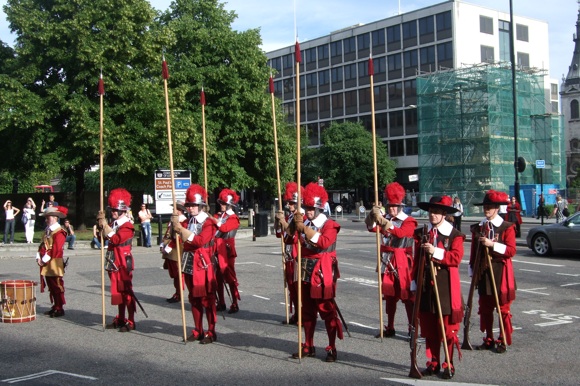
Yesterday’s ceremony was part of Evensong at London’s most beautiful building, St Paul’s Cathedral. The actual Royal Charter — a large vellum certificate — was blessed before freemen and livery men walked to Mansion House escorted by a ceremonial guard of Pikemen and Musketeers for a banquet with the Lord Mayor.

I was hoping that the recipients were the chaps with the morion helmets and the back-and-breastplates:

June 4, 2010

Detroit has no monopoly on post-apocalyptic urban scenery

Filed under: Asia, China, History, Japan — Tags: , , — Nicholas @ 21:56

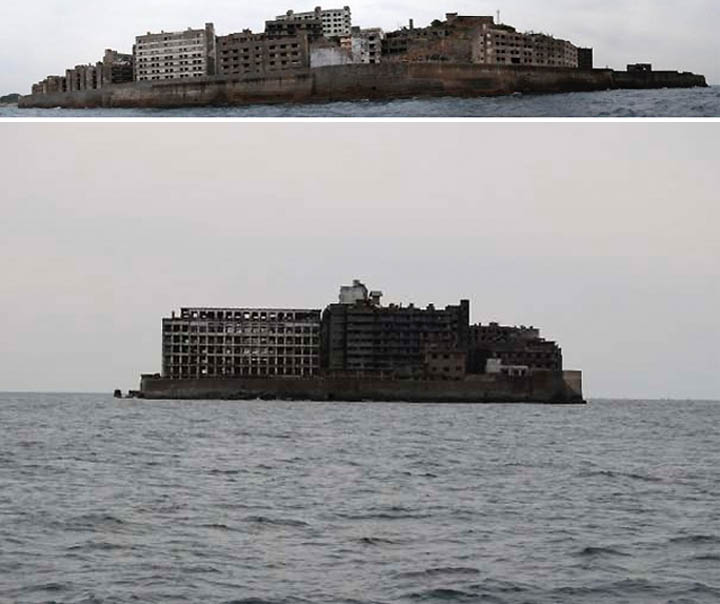
For example, check the images from Battleship Island (Gunkanjima) in Japan:

What’s now decay and rot once was bright and brilliantly full of hope: Who lived here? What were their lives like? What happened? How did it all come apart? How did it all crumble to almost nothing?

In the case of Hashima Island, or Battleship Island (Gunkanjima in Japanese) as it’s often called, hope and optimism became dust and decay because one black resource (coal) was replaced by a cheaper black resource (oil). Populated first in 1887, the island — which is 15 kilometers from Nagasaki — only began to really, and phenomenally, become populated much later, in 1959.

Even the nickname “Battleship Island” has a bit of history behind it.

H/T to Ace of Spades for the original link.

June 3, 2010

US & Canadian funding for War of 1812 bicentennial events

Filed under: Cancon, Government, History, USA — Tags: , , , — Nicholas @ 12:33

Colby Cosh floats the notion that one of the reasons for the huge disparity in funding for 1812 bicentennial events between the Canadian and American governments is “Maybe they’re still mad they lost”.

In the eyes of the world, the War of 1812 may always appear insignificant against its Napoleonic backdrop. But it did decide the destiny of a continent, persuading Empire and Union that it was better to have trade crossing the border than troops.

Prime Minister Stephen Harper was in Niagara Falls, Ont., on May 21, opening a new federally funded expansion to the city’s History Museum, which stands on the site of the ferocious July 1814 Battle of Lundy’s Lane. The federal and provincial governments are each giving the museum up to $3.2 million; for the feds, the money is part of a Throne Speech promise to commemorate the bicentennial of the war, “an event that was key to shaping our identity as Canadians and ultimately our existence as a country.”

Another $9 million in 50-50 federal-provincial cash is going to three Niagara Parks Commission sites: Old Fort Erie, McFarland House, and the Laura Secord Homestead. Ottawa has also set aside $12 million for improvements to 1812-related National Historic Sites along the frontier, including Gen. Brock’s monument at Queenston Heights. And Toronto is putting at least $5 million into a new visitors’ centre at Fort York.

But the only corresponding public funding on the other side of the border, as noted by the Buffalo News in April, has been a measly US$5,000 donation from the Niagara County legislature. Why isn’t Uncle Sam pulling his weight?

It’s more likely that the various levels of government are afraid of being seen to spend money on frivolous activities.

May 30, 2010

QotD: The first great back-to-the-land experiment

. . . the plundering, the lack of invention, the barbarians and above all Diocletian’s red tape did for Rome in the end. As the empire disintegrated under this bureaucratic burden, at least in the west, money lending at interest stopped and coins ceased to circulate so freely. In the Dark Ages that followed, because free trade became impossible, cities shrank, markets atrophied, merchants disappeared, literacy declined and — crudely speaking — once Goth, Hun and Vandal plundering had run its course, everybody had to go back to being self-sufficient again. Europe de-urbanised. Even Rome and Constantinople fell to a fraction of their former populations. Trade with Egypt and India largely dried up, especially once the Arabs took control of Alexandria, so that not only did oriental imports such as papyrus, spices and silk cease to appear, but those export-oriented plantations in Campania became the plots of subsistence farmers instead. In that sense, the decline of the Roman Empire turned consumer traders back into subsistence peasants. The Dark Ages were a massive experiment in the back-to-the-land hippy lifestyle (without the trust fund): you ground your own corn, sheared your own sheep, cured your own leather and cut your own wood. Any pathetic surplus you generated was confiscated to support a monk, or maybe you could occasionally sell something to buy a metal tool off a part-time blacksmith. Otherwise, subsistence replaced specialization.

Matt Ridley, The Rational Optimist: How Prosperity Evolves, p. 175

May 24, 2010

Racy archaeology

Filed under: Economics, Europe, History — Tags: , , , — Nicholas @ 18:45

The theory is that these coins were created to ease language barriers between non-Latin speaking customers in brothels and the (often non-Latin speaking) prostitutes:

This is a spintria. They were used in ancient Rome to request and pay for different “services” in brothels and from prostitutes on the street. Since there were a lot of foreigners coming to the city that did not speak the language and most of the prostitutes were slaves captured from other places the coins made the transactions easy and efficient. One side of these coins showed what the buyer wanted and the other showed the amount of money to be paid for the act.

[. . .]

They may have been used to pay prostitutes, who at times spoke a different language. While this is subject to argument, the numbers on them line up with known prices for Roman prostitutes (University of Queensland reference). Some theorize them gaming tokens, and they may have been produced for only a short period, probably in the 1st century A.D.

So, either an innovative solution to an ongoing economic problem, or the Roman equivalent to the nudie card decks of the 1940s and 50s.

Images at the link. H/T to Radley Balko for the URL.

« Newer PostsOlder Posts »

Powered by WordPress