
Quotulatiousness

August 29, 2012

South Korea’s slow move to a smaller, more professional military

Filed under: Asia, History, Military — Tags: , , , , — Nicholas @ 09:33

With a belligerent and unpredictable neighbour directly to the north, South Korea still maintains a large conscript military force. The government hopes to transition over time to a significantly smaller volunteer structure:

Six years ago the plan was to reduce troop strength 26 percent (from 680,000 to 500,000) by 2020. Then politics and North Korean aggression kept halting the reductions. Meanwhile it became clear that the birth rate was going lower, not increasing and within a decade there would be a lot fewer young men to conscript. At the same time the booming economy was producing more money, and technology, for more effective weapons and equipment that can replace soldiers. Another key element was that conscription was increasingly unpopular. The current crop of conscripts had parents who were born after the Korean war (1950-53), and only the grandparents (a rapidly shrinking group) remember why the draft is still necessary. Most of todays’ voters want to get rid of the draft. But when it comes time to actually make cuts, North Korea manages to change the subject.

Then came 2010, a year in which North Korea sank a South Korean corvette (which they denied, but the torpedo fragments recovered were definitely North Korean) and shelled a South Korea island (the northerners bragged about that). Since then, there has been more opposition to reducing military strength. But conscription is still unpopular and there are simply not enough young men to maintain current strength.

Meanwhile politicians are responding to public opinion and shrinking conscription service. It now varies from 21-24 months depending on the service. More conscripts can now serve in the police or social welfare organizations (for 26-36 months). Eventually, South Korea would like to have an all-volunteer force. But that won’t be affordable until the armed forces are down to only a few hundred thousand.

The Korean peninsula is one of the last remaining outposts of the Cold War. The sinking of the ROKS Cheonan is the most obvious sign that the two sides are still not at peace (the Korean War didn’t really end … it’s merely resting). Occasional shellings and attempted infiltration by North Korean special forces are frequent enough that they don’t get much international coverage. North Korea frequently accuses the South of similar kinds of provocation.

August 28, 2012

Rehabilitating Florence Nightingale’s reputation

Filed under: Britain, Health, History, Military, Russia — Tags: , , , , — Nicholas @ 08:31

History Today has a defence of the much-maligned Florence Nightingale:

Jamaican-born Mary Seacole (1805-81), voted top of the list of the 2004 ‘100 Great Black Britons’ poll, is now slated to replace Florence Nightingale (1820-1910) as the true ‘heroine’ of the Crimean War. She is to be honoured as no less than the ‘Pioneer Nurse’ with a massive statue to be erected at St Thomas’ Hospital in London. This in spite of the strong links between Nightingale and the hospital, her base for over 40 years. It was there she established the first secular school for nurses in 1860 with funds raised in her name for her work in the Crimean War during the conflict of 1854-56. The Nightingale School operated for over a century from the hospital, whose redesign in the 1860s Nightingale also influenced.

[. . .]

The campaign promoting Seacole over Nightingale builds on 30 years of books, articles and films denigrating the latter. While she always had detractors, the serious assault on Nightingale’s reputation can be dated to 1982, with the publication of the Australian historian F.B. Smith’s Florence Nightingale: Reputation and Power (Croom Helm, 1982). The next major hit came in 1998 with Florence Nightingale: Avenging Angel (Constable, 1998) by a retired management consultant Hugh Small, which argues that Nightingale was actually responsible for the high death rates of the Crimean War and had a nervous breakdown as a result when she supposedly recognised this. Neither claim is supported by any serious documentation. Social media goes even further: see Facebook ‘Florence Nightingale was a Murdering Bitch’, later renamed ‘Florence Nightingale: The World’s Worst Nurse’, where she is described as a ‘deluded power hungry bitch’, who ‘looks like an uptight bitch’, so that ‘the day she died’ was ‘the best thing that ever happened to the field of nursing’.

[. . .]

The French were the instigators of the Crimean War, sent more troops and were better prepared than the British. Their death rates were lower in the first year. But the British government learned from the commissions it sent out and made enormous changes. British death rates fell dramatically, from 23 per cent in the first winter to 2.5 per cent in the second — no greater than deaths among soldiers in peacetime barracks in London, as Nightingale proudly showed in a chart. In contrast, the French (lower) 11 per cent death rate in the first winter, rose to 20 per cent in the second winter. Since the French were late in publishing their statistics, neither Nightingale nor the royal commission could use them for comparison. However French doctors themselves credited the British reforms for their superior performance. Once they were properly cleansed and functioning Nightingale was proud of the Crimean hospitals. In her own charts she separated the two periods, before and after the sanitary and supply commissions, to emphasise the crucial role they played in reducing mortality.

Her analysis of what went wrong was widely accepted and led to major changes to health care in the British Army. The ‘Nightingale Fund’ raised in her honour for that work paid for the training school at St Thomas’, which led to raising nursing to the level of a profession throughout much of the world. Her experience of the war, and her reputation and research as a result of it, grounded all the social and public health work she did for the rest of her life. Her vision for health reform included bold statements, such as the belief that the poor should receive as good quality hospital care as private patients and warnings as to the dangers of hospital acquired infections. Nightingale, in short, is no mere historical figure. Her lamp should not be retired but shone brightly onto the hospital and health care problems of today.

What can Caesar’s Gallic War commentary tell us about Afghanistan?

Filed under: History, Military, USA — Tags: , , , , , , , — Nicholas @ 00:10

According to this reading, lots and lots:

I finished Caesar’s Commentaries on the Gallic War this weekend […] and a few things struck me:

a. The successful Roman counterinsurgency campaign in Gaul took eight years.

b. The enemies against which Rome fought were not a unitary actor, and neither were Rome’s allies.

c. Rome’s allies one summer were often Rome’s enemies by winter. And visa versa.

But the two things that made the biggest impression on me were the following:

d. Caesar was the commander for eight full years, and he enjoyed similar continuity among his subordinate commanders.

e. Caesar very rarely sent green units into the offensive. By the fourth and fifth year of the campaign, he is still making those legions which were the last to be raised in Italy responsible for guarding the freaking baggage. He relies over and over again on those legions — most especially the Tenth — that have proven themselves in combat in Gaul.

With Caesar’s commentaries in mind, I read Doug Ollivant’s lament about Gen. Joe Dunford. Gen. Dunford will be the fifteenth commander of NATO-ISAF in eleven years of combat in Afghanistan and the ninth U.S. commander in Afghanistan. Each of his subordinate commanders have rotated on an annual basis. Gen. Dunford — who is, by all accounts, an excellent officer and highly respected by his peers — has never served in Afghanistan.

The cultures, politics, tribes and peoples of Afghanistan are at least as complex as those of ancient Gaul, yet we Americans are so arrogant to think that we can send officers there with no experience and, owing to our superior knowledge of combat operations, watch them succeed. We will then send units which have never deployed to Afghanistan to partner with Afghan forces and wonder why they do not get along.

H/T to Tim Harford for the link.

August 27, 2012

Lego is 80 years old

Filed under: Business, Europe, History — Tags: , , , — Nicholas @ 10:28

In The Register, Brid-Aine Parnell on the 80th birthday of one of the iconic toys of the 20th century:

Way back in 1932, Ole Kirk Kristiansen, a Danish joiner and carpenter, found he wasn’t making enough money from carpentry anymore and decided to try making and selling wooden toys instead. Although he didn’t know it yet, he was on his way to building the Lego company, which would eventually have some of the most recognisable and long-lasting toys in the world: bricks and yellow minifigurines.

[. . .]

According to that research, girls aren’t into Lego. Poul Schou, senior vice president of product group 2, told The Register that Lego was for boys, not girls, because although both sexes loved the larger preschool bricks of Duplo once the girls hit five, they weren’t interested in construction anymore.

“We have seen that girls seem to be less interested in continuing with our products when they get to four or five years old so we don’t really get them into the Lego system,” he said.

Here at Vulture Central, that seemed really odd. Not only did everyone in the office, regardless of gender, remember playing with and loving Lego throughout their childhood, for the most part, their kids, both boys and girls, love it as well.

[. . .]

Schou said that the company got “a lot of feedback from boys and girls”. The kids are encouraged to go online to talk about the products they buy and what age they are, and the boxes often include incentives to answer Lego survey questions as well.

Of course if girls aren’t buying Lego stuff, they won’t be answering any questions, which would be a kind of answer in itself (although whether the answer would be “Girls don’t like Lego” or “Girls don’t like surveys” would be hard to figure out).

August 26, 2012

Neil Armstrong, RIP

Filed under: History, Space, USA — Tags: , , , — Nicholas @ 07:37

From Buzz Aldrin, an official statement on the death of Neil Armstrong:

I am deeply saddened by the passing of my good friend, and space exploration companion, Neil Armstrong today. As Neil, Mike Collins and I trained together for our historic Apollo 11 Mission, we understood the many technical challenges we faced, as well as the importance and profound implications of this historic journey. We will now always be connected as the crew of the Apollo 11 mission to the moon, yet for the many millions who witnessed that remarkable achievement for humankind, we were not alone.

Whenever I look at the moon I am reminded of that precious moment, over four decades ago, when Neil and I stood on the desolate, barren, yet beautiful, Sea of Tranquility, looking back at our brilliant blue planet Earth suspended in the darkness of space, I realized that even though we were farther away from earth than two humans had ever been, we were not alone. Virtually the entire world took that memorable journey with us. I know I am joined by many millions of others from around the world in mourning the passing of a true American hero and the best pilot I ever knew. My friend Neil took the small step but giant leap that changed the world and will forever be remembered as a historic moment in human history.

August 25, 2012

From wargaming to war-making

Filed under: Gaming, History, Middle East, Military — Tags: , , — Nicholas @ 00:05

Wargames have been used to plan real wars for more than a century, but in at least one instance, a commercial wargame was a significant planning tool for a real war:

By the end of the Cold War, American military planners had contingencies and plans for just about every conceivable crisis – Latin American counterinsurgencies, confrontations on the Korean Peninsula, a full out Warsaw Pact onslaught against NATO. But on August 2, 1990, when Iraqi tanks surprised the world and rolled into the tiny Persian Gulf nation of Kuwait, decision makers in the Pentagon had virtually no plans on the shelf for the defeating the world’s fourth largest army. Out of desperation, someone in the American military nerve-centre reached for a copy of a hobby store military board game entitled Gulf Strike. Designed in the late 1980s by a subsidiary of the commercial war game company Avalon Hill, Gulf Strike allowed civilian hobbyists to battle through a series of hypothetical wars involving the U.S., Soviet Union, Iraq and Iran on a hexagonal-grid map of the Gulf region. According to a 1994 Military History article on war games by Peter Perla, before lunch on the day of the invasion, the Pentagon had the game’s designer, Mark Herman, on the phone. By mid afternoon, he was on the military’s payroll. And by day’s end, Herman and a group of senior officers had already successfully played out a shorthand version of what in five months would go down in history as Operation Desert Storm.

Of course, the results of wargames can’t predict with great accuracy: the level of abstraction is too high and the “fog of war” quickly introduces far more uncertainty than any simulation can dispell in advance. However, disregarding the data from wargaming a battle or campaign has resulted in disaster at least once: the Japanese navy wargamed the attack on Midway Island in 1942. the wargame showed that the Japanese would lose at least one aircraft carrier from the attacking forces. The admirals, suffering as a group from what was known as “victory disease”, disregarded the game result and ordered the sunken ship “refloated” and the exercise continued.

In the real world, of course, the IJN lost not one but four aircraft carriers and the majority of their combat-trained pilots and crew. It was the turning point of the war in the Pacific.

August 24, 2012

The new Malthusian miserabilism

Filed under: Britain, Environment, Food, History — Tags: , , , — Nicholas @ 10:18

Brendan O’Neill on the once-again popular theories of Reverend Thomas Malthus:

Malthusianism is back in vogue. Not only in theatres in Sloane Square, but across the opinion-forming spectrum. Last year, the human population hit seven billion, giving rise to a boom in handwringing commentary. BBC reporters tell us that ‘uncontrolled population growth threatens to undermine efforts to save the planet’. The Guardian’s environment reporters are forever warning of the dangers of our ‘rapidly growing global population’. Then there’s much-loved celebs like David Attenborough, who recently signed up to the population-panic group the Optimum Population Trust (OPT) and frequently declares: ‘I’ve never seen a problem that wouldn’t be easier to solve with fewer people.’

The New Malthusians are getting cockier. At the UN Rio+20 Earth summit earlier this year, 105 respectable institutions, including Britain’s increasingly Malthusian Royal Society, urged the international powers-that-be to look beyond the ‘ethical sensitivities’ around the population issue and ‘confront rising global population’. All those wailing babies mean we are now ‘living beyond the planet’s means’, they declared. The Bill and Melinda Gates Foundation is pumping millions of dollars into the distribution of birth-control tools in the developing world. Well-off westerners can now even offset their carbon emissions by helping to prevent the birth of babies in less fortunate places. A website called Pop Offsets, launched by the OPT, allows you to work out how much carbon you emit in your daily life and then tells you how many births you must help to prevent in order to offset that carbon. You make a financial contribution to a reproductive charity; that charity encourages a woman somewhere not to have more kids; and, hey presto, your personal emissions are cancelled out by your contribution to the non-creation of resource-demanding babies. The Guardian’s report on this initiative was illustrated with a photo of babies, 12 of them, just lying there like the problematic drains on nature.

Malthusianism is so ingrained in the outlook of greens and other trendies that people can fantasise about loads of human beings dying off without anyone batting an eyelid. Population panic-merchants often claim that the ‘carrying capacity’ of the planet is two billion human beings, so at least five billion less than at present. In a discussion on Radio 3’s super-respectable Nightwaves a couple of years ago, the psychologist and writer Sue Blackmore declared: ‘For the planet’s sake, I hope we have bird flu or some other thing that will reduce the population, because otherwise we’re doomed.’ There were no complaints to the BBC: the idea that humans are a problem in need of a solution is widespread in respectable ­circles.

The diminishing importance of borders in a supranational world

Filed under: Government, History — Tags: , , , , — Nicholas @ 10:11

At sp!ked, Angus Kennedy reviews The Significance of Borders, a new book by Thierry Baudet:

A controversial Dutch columnist for NRC Handelsblad, a lawyer and historian at the University of Leiden, Baudet argues that representative government and the rule of law is impossible without the nation state. But today, he argues, the nation is under attack from two directions.

First it is under attack from supranationalism, that is, from institutions like the European Court of Human Rights, the UN Security Council, and, most dramatically, the European Union. So while nations retain sovereignty at a formal level, increasing degrees of ‘material sovereignty’ have been acquired by supranational organisations. Baudet argues, for instance, that the official aim of the EU ‘is the negation of the concept of statehood’, because the nation state is held responsible, most notably by German theorists, for war. The EU’s immanent federalist logic leads to the necessary extension of its bureaucratic power (taking more and more countries into its orbit). Or — as an illustration of the attack on the democratic basis of national sovereignty — take the contempt in which the ECHR holds Britain for denying convicted prisoners the right to vote: this despite the fact that parliament voted 234 votes to 22 against the proposal. It seems the ECHR is happy to demand Britain change laws upheld by its own democracy.

Second, self-government is also under attack from below. Firstly, in the form of multiculturalism and its official support, legal pluralism (where the law is applied with cultural ‘sensitivity’ rather than justly). Secondly, from cultural diversity, which rejects the idea of a British or a Dutch identity in favour of overlapping multiple, provisional and lightly held, identities. Baudet gives the example of the Dutch crown princess, Máxima, who declared in 2007 that ‘the Dutch identity does not exist’, that the world has ‘open borders’ and that ‘it is not either-or. But and-and.’ When royalty — once the very symbol of national sovereignty — refuses to discriminate between citizens and outsiders, then even the most ardent internationalist might begin to smell a rat.

As Baudet argues, without a community of interest, a ‘we’, there is nothing. He notes that the ECHR outlaws ‘discrimination on any ground such as sex, race, colour, language, religion, political or other opinion, national or social origin, association with a national minority, property, birth or other status’. Everyone must be treated equally. Baudet is correct to point out that such a widely drawn attack on discrimination ‘must necessarily implicate the citizens’ indifference towards those criteria’. Any form of particularity, of which nationality is one, is denied in the name of a totalising universality. The effect is not the widening of ‘minds and sympathies’ but rather their ‘Balkanisation’. In the process, the law becomes ‘no longer “ours” or “from within”, but from “out there”’. Our responsibility is eroded and our capacity to decide for ourselves (however we constitute that ‘we’) is further diminished, both at the level of the nation state, historically the basis for constituting a self-governing ‘we’, and at the level of the individual citizen.

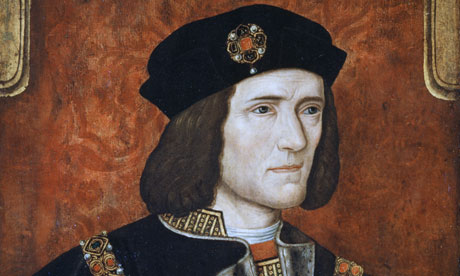
Digging up a municipal car park … to find the body of a king

Filed under: Britain, History — Tags: , , , — Nicholas @ 07:51

An interesting story on the search for the lost burial place of Richard III, the last Plantagenet king of England:

Archaeologists are hoping to find the lost grave of a medieval monarch in a dig that is due to get underway today.

In what is believed to be the first-ever archaeological search for the lost grave of an anointed King of England, experts from the University of Leicester are set to begin their quest to find the site of a church where it is believed King Richard III was buried in the city more than 500 years ago.

It is thought the site of the church may be on land currently being used as a car park for council offices in the city.

King Richard III, the last Plantagenet, ruled England from 1483 until he was defeated at the Battle of Bosworth in 1485.

The most famous battle of the War of the Roses was fought on August 22, 1485, and famously saw the death of Richard III.

The battle ended decades of civil war and was won by the Lancastrians.

It paved the way for Henry Tudor to become the first English monarch of the Tudor dynasty.

The battle also inspired the scene from Shakespeare’s play Richard III when the defeated hunchback king declares: ‘A horse, a horse, my kingdom for a horse’.

H/T to Elizabeth for the link.

August 23, 2012

Al Stewart live: “A Child’s View of the Eisenhower Years”

Filed under: History, Media, USA — Tags: , , , — Nicholas @ 11:34

The historical “locavore” diet: seasonal gruel and mush

Filed under: Environment, Food, Health, History, Media — Tags: , — Nicholas @ 09:40

sp!ked has an article by authors Pierre Desrochers and Hiroko Shimizu, on the disadvantages of the true locavore diet:

Perhaps the most ludicrous claim made by some ‘locavores’ — activists who argue that food produced near final consumers is superior in a myriad of ways to distant imports — is that the globalised food-supply chain is guilty of crimes against seasonality. Limiting our intake of fresh produce to whatever can be obtained locally at certain times of the year (and preserving the surplus for the remainder), we are told, will not only help atone for agri-business’ fossil fuel-driven ways and constrain us to live within regional ecological limits, but it will also make fresh local food more enjoyable when it is available. As one locavore puts it, ‘deprivation leads to greater appreciation’.

The emphasis on local seasonality by food activists, however, is problematic on several counts. For instance, why do militant locavores limit themselves to local seasonality when they could further insist on truly ‘native’ produce and livestock? Seen in this light, North American agriculture should be essentially limited to turkeys, farmed salmon and a few other fish and shellfish, sunflowers, blueberries, cranberries, Jerusalem artichokes and some varieties of squashes. (Though the really hardcore North American locavore could go even further by reverting to problematic native crops such as sumpweed, goosefoot, knotweed, maygrass and little barley that were replaced about one thousand years ago by Mexican imports such as corn and beans.)

Basic logic aside, limiting our food intake to local productions is a one-way ticket to chronic famines and malnutrition. Having in most cases no direct experience with massive crop failures, locavores typically ignore the historical and contemporary toll taken by factors ranging from droughts, floods, heavy rains and frost to hail, windstorms, earthquakes and tsunamis, to say nothing of insect pests, rodents, soil erosion and plant and animal diseases. Yet, the historical evidence on the issue is unequivocal. It was only the development of cost-effective long-distance transportation (primarily the railroad and the steamship) that finally eradicated famines through the large-scale movement of foodstuff from regions that had experienced good harvests to those that had struggled with mediocre ones.

August 22, 2012

“The good old days” were actually pretty crappy for most

Filed under: Books, Economics, Environment, Food, Health, History, Media — Tags: — Nicholas @ 09:22

An excerpt from The Locavore’s Dilemma by Pierre Desrochers and Hiroko Shimizu in the National Post:

To a locavore, food in the future should be created pretty much like it was in the not-so-distant past: produce and animals raised lovingly in urban backyards, turning domestic waste into hearty dishes. Farmers’ markets in every small town and city neighbourhood, where people rediscover the joys of real food and get reacquainted with one another. The rebuilding of small-scale slaughterhouses and canning factories to serve area producers and foster the preservation of local food items for consumption in the off-season.

Ideally, this local system would also be built on seeds saved from the previous harvest rather than purchased from giant corporate seed producers; ancient “heirloom” cultivars developed before synthetic fertilizers and pesticides became available and that, as a result, are better able to seek nutrients in the soil, don’t require any chemicals and are naturally resilient to drought and pests (“If it’s old seed, it’s good seed!”); and “heritage” animal breeds better able to withstand diseases and harsh environments and grow fat and happy on pastureland alone. Pest control would be achieved through traditional “natural” products based on plants and minerals; manual labour, such as crushing or picking bugs and larvae off foliage or removing weeds by hands; and biological control methods, such as introducing exotic animals, insects and bacteria that feed on invasive pests. Finally, factory-made fertilizers would be replaced by animal manure and rotating fodder crops, such as clover and alfalfa.

[. . .]

Isn’t it possible that crushing bugs and removing weeds by hands were neither very effective nor the most productive use of one’s time? That seeds purchased from commercial suppliers offered access to superior genetic material, were not mixed up with unwanted material and were readily available when needed? That “natural” manure has always been dirty, smelly, chock-full of pathogens and requires several months of composting? That the “slow release” of nutrients from green manures and organic compost could never be as adequately controlled to match crop demands with nutrient supply as is now possible with synthetic fertilizers? Further, that old mineral (including arsenic) and plant-based pesticides were less harmful to plant pests (and thereby more likely to promote insect resistance) and more problematic to human health than more recent offerings? That introducing nonnative insects, mammals and bacteria in a new ecosystem often had unintended, broader and longer-lasting negative consequences for nontargeted species? And that, unlike chemical pesticides that typically do not persist in an ecosystem once application has ceased, exotic insects who have successfully adapted to a new environment are practically impossible to eradicate and do not remain confined to one geographical location? In the end, why are modern agricultural producers willing to purchase costly synthetic inputs, hormonal growth promoters, antibiotics and genetically modified seeds when the methods agri-intellectuals prefer are either completely free (such as giving up on the use of these inputs and on equipment such as poultry housing) or seemingly much cheaper (such as feeding cattle entirely on pastureland and saving one’s seeds instead of relying on those marketed by specialized producers)?

Ontario’s ban on a large number of pesticides and herbicides for domestic use is re-acquainting many home owners with the joys of hand-weeding their lawns. It’s getting to the point that Ontario’s provincial flower might as well be the dandelion, as they’re everywhere. There’s a reason your ancestors couldn’t wait to get off the farm…

QotD: Orwell on the Dieppe raid

Filed under: Cancon, France, Germany, History, Military, Quotations, WW2 — Tags: , , — Nicholas @ 09:12

D[avid] A[stor] very damping about the Dieppe raid, which he saw at more or less close quarters and which he says was an almost complete failure except for the very heavy destruction of German fighter planes, which was not part of the plan. He says that the affair was definitely misrepresented in the press and is now being misrepresented in the reports to the P.M., and that the main facts were: – Something over 5000 men were engaged, of whom at least 2000 were killed or prisoners. It was not intended to stay longer on shore than was actually done (ie. till about 4pm), but the idea was to destroy all the defences of Dieppe, and the attempt to do this was an utter failure. In fact only comparatively trivial damage was done, a few batteries of guns knocked out etc., and only one of the three main parties really made its objective. The others did not get far and many were massacred on the beach by artillery fire. The defences were formidable and would have been difficult to deal with even if there had been artillery support, as the guns were sunk in the face of the cliffs or under enormous concrete coverings. More tank-landing craft were sunk then got ashore. About 20 or 30 tanks were landed but none got off again. The newspaper photos which showed tanks apparently being brought back to England were intentionally misleading. The general impression was that the Germans knew of the raid beforehand. Almost as soon as it was begun they had a man broadcasting a spurious “eye-witness” account from somewhere further up the coast, and another man broadcasting false orders in English. On the other hand the Germans were evidently surprised by the strength of the air support. Whereas normally they have kept their fighters on the ground so as to conserve their strength, they sent them into the air as soon as they heard that tanks were landing, and lost a number of planes variously estimated, but considered by some RAF officers to be as high as 270. Owing to the British strength in the air the destroyers were able to lie outside Dieppe all day. One was sunk, by this was by a shore battery. When a request came to attack some objective on shore, the destroyers formed in line and raced inshore firing their guns while the fighter planes supported them overhead.

George Orwell, diary entry for August 22, 1942.

August 19, 2012

Dave Weigel’s “Who’s Who” of prog rock

Filed under: History, Media — Tags: , , , — Nicholas @ 20:04

Should you be interested enough to try delving deeper into that place on the music map marked as “Prog rock: Here be demons”, you could do worse than this list from Slate,

August 18, 2012

The road to publishing Orwell’s works

Filed under: Books, Britain, History, Media — Tags: — Nicholas @ 00:07

The notion of putting out a complete set of the works of George Orwell formed in the early 1980s. It was, as Peter Davison relates, a very long, troubled process:

For many years I taught scholarly editing and edited the work of Shakespeare and his colleagues (in particular 1 and 2 Henry IV, in Penguin editions still in print after some 45 years) — oh, and, for a New York publisher in 1971 a critical edition of music-hall songs. Out of the blue in July 1982 I was telephoned and asked if I would edit a de luxe edition of Orwell’s nine books. That meant closely comparing over fifty texts and manuscripts in twelve months. The intention was to publish this edition in 1984 — a new but intriguing kind of anniversary celebration. The concept of a de luxe edition of Down and Out in Paris and London and The Road to Wigan Pier has never ceased to amuse me but owing to the disastrous delays in getting even the first three books into print (they saw the light of day only in 1986 and had immediately to be pulped because the printer had used the uncorrected version of my text) that embarrassing description was quickly dropped. Two examples, both, fortunately, just caught in time, might well illustrate the kind of errors introduced by the printer. The title of Orwell’s last novel appeared as:

Nineteen 48pt
Eighty-Four

’48pt’ was, of course, the type-size for the title-page. And that famous formula, 2 + 2 = 5 appeared as 2r 29 5-

[. . .]

Obviously an edition of this extent takes time to produce, especially if the editor has also simultaneously to earn a living outside academe without benefit of grants and fellowships, but even then it might be asked why the 21 volumes took seventeen years to get into print. First, the edition was abandoned by its publishers — Secker & Warburg in London and by Harcourt, Brace Jovanovich in New York — no fewer than six times. For example, after being abandoned in summer 1986 it was again abandoned three years later — without it having been resuscitated in between. Perhaps foolishly, but in the end fortunately, we ignored ‘abandonments’ and simply kept at it, seeking, editing and annotating material.

« Newer PostsOlder Posts »

Powered by WordPress

