
OTD Military History
Published 9 Jul 2023On July 9/10 Allied forces launched Operation Husky, the invasion of Sicily. This video presents accounts from various Allied military personnel who were there that day.
(more…)
July 10, 2023
Echoes of War: Accounts of Operation Husky and the Allied Landings in Sicily
Comments Off on Echoes of War: Accounts of Operation Husky and the Allied Landings in Sicily
Barbara Kay – “[M]any Canadians [suffer] from highly contagious, patriotism-suppressive Post National Syndrome”
Canadians are deluged with messages that imply — or explicitly demand — that they should be ashamed of Canada and of being Canadians. That there is nothing to celebrate in our history or cultural achievements and instead we should humbly beseech forgiveness for our many, many, many sins. Barbara Kay disagrees:
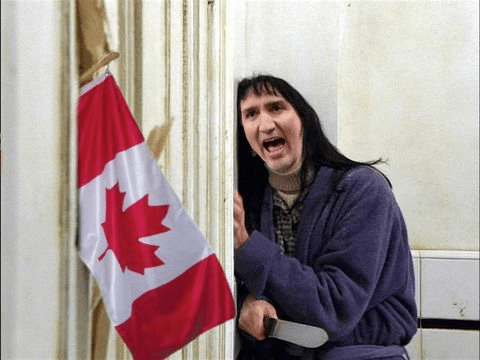
On Canada Day, near St. Sauveur, Quebec, we were treated to torrential rain, hail, nearby tornado warnings, and continually flickering power. Not a day for fireworks. Just as well, since fireworks are the last thing one craves when one suffers, as many Canadians do, from highly contagious, patriotism-suppressive Post Nationalism Syndrome.
This scourge cannot yet be cured, since it was intentionally cultivated and released into the environment by the current government. Only herd immunity can end it. However, the symptoms of Post Nationalism Syndrome can be alleviated by certain traditional antivirals, like National Postism. Last Saturday’s NP featured several commentaries that buoyed my spirits, in particular Michael Higgins’s misery-loves-company column, “Stop shaming and start celebrating Canada”.
Higgins enumerates recent examples from a tiresome litany of complaints by our elites that “want to turn us into a nation of self-flagellating penitents”. The National Gallery of Canada insinuates that Canada’s iconic artists, the Group of Seven, are linked to white supremacy; a parliamentary motion endorses the residential school system as “genocide”; the attorney general actively considers legal sanctions against “denialism” — dissent from genocide as a proper descriptor (including me); and the erasure of Sir John A. Macdonald’s name from the eponymous Parkway.
In a nearby feature, the false claim that Macdonald was a guilty party in the alleged schools genocide was handily demolished by lawyer Greg Piasetzki, titled, “John A. Macdonald saved more indigenous lives than any other prime minister”. This evidence-based rejoinder to sticky defamatory myths about Macdonald is an excerpt from a new book of essays by 20 writers, The 1867 Project: Why Canada Should be Cherished — Not Cancelled, published by the Aristotle Foundation, and edited by its founder and president, Mark Milke.
Piasetzki’s essay mirrors the 19 others in its forthright challenge of our culture’s reigning anti-western dogmas, which brand Canada as a failed nation. Every author encourages the pride in being Canadian that has not dared to speak its name since Justin Trudeau came to power. I highly recommend it. If enough Canadians read it, we might arrive at herd immunity to Post Nationalism Syndrome.
Comments Off on Barbara Kay – “[M]any Canadians [suffer] from highly contagious, patriotism-suppressive Post National Syndrome”
Remington-Lee Model 1885
Forgotten Weapons
Published 5 Sept 2015The model of 1885 (a modern collector designation; Remington called these the “Remington Magazine Rifle” and did not differentiate between the different versions) was the final iteration of James Paris Lee’s bolt action rifle made by Remington. It incorporated a number of improvements from the earlier versions, including a relocated bolt handle, improved bolt head, and a magazine that could now hold cartridges securely without the use of a sliding catch at the nose.
These rifles were made in .45-70 caliber for US use and in .43 Spanish for export sales. The US Navy purchased most of the .45-70 guns that were made, and this particular rifle is one of those Navy guns. By the time these rifles were actually in production, Great Britain had also decided to adopt the Lee system in 1888, which would go through several iterations and ultimately become the iconic SMLE that would be the mainstay of British infantry during the First World War.
(more…)
Comments Off on Remington-Lee Model 1885
QotD: Liberal and conservative views on innovation
Liberals and conservatives don’t just vote for different parties — they are different kinds of people. They differ psychologically in ways that are consistent across geography and culture. For example, liberals measure higher on traits like “openness to new experience” and seek out novelty. Conservatives prefer order and predictability. Their attachment to the status quo is an impediment to the re-ordering of society around new technology. Meanwhile, the technologists of Silicon Valley, while suspicious of government regulation, are still some of the most liberal people in the country. Not all liberals are techno-optimists, but virtually all techno-optimists are liberals.
A debate on the merits of change between these two psychological profiles helps guarantee that change benefits society instead of ruining it. Conservatives act as gatekeepers enforcing quality control on the ideas of progressives, ultimately letting in the good ones (like democracy) and keeping out the bad ones (like Marxism). Conservatives have often been wrong in their opposition to good ideas, but the need to win over a critical mass of them ensures that only the best-supported changes are implemented. Curiously, when the change in question is technological rather than social, this debate process is neutered. Instead, we get “inevitablism” — the insistence that opposition to technological change is illegitimate because it will happen regardless of what we want, as if we were captives of history instead of its shapers.
This attitude is all the more bizarre because it hasn’t always been true. When nuclear technology threatened Armageddon, we did what was necessary to limit it to the best of our ability. It may be that AI or automation causes social Armageddon. No one really knows — but if the pessimists are right, will we still have it in us to respond accordingly? It seems like the command of the optimists to lay back and “trust our history” has the upper hand.
Conservative critics of change have often been comically wrong — just like optimists. That’s ultimately not so interesting, because humans can’t predict the future. More interesting have been the times when the predictions of the critics actually came true. The Luddites were skilled artisans who feared that industrial technology would destroy their way of life and replace their high-status craft with factory drudgery. They were right. Twentieth century moralists feared that the automobile would facilitate dating and casual sex. They were right. They erred not in their predictions, but in their belief that the predicted effects were incompatible with a good society. That requires us to have a debate on the merits — about the meaning of the good life.
Nicholas Phillips, “The Fallacy of Techno-Optimism”, Quillette, 2019-06-06.
Comments Off on QotD: Liberal and conservative views on innovation
July 9, 2023
Imperial Rome
In UnHerd, Freddie Sayers talks to historian and podcaster Tom Holland about his latest book, Pax:
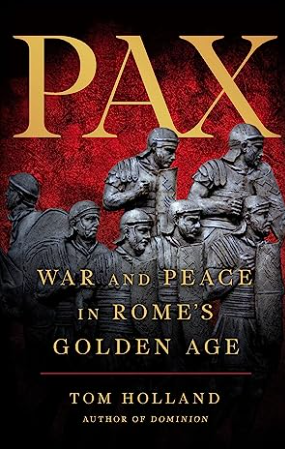
To his army of ardent followers, Tom Holland has a unique ability to bring antiquity alive. An award-winning British historian, biographer and broadcaster, his thrilling accounts offer more than a mere snapshot of life in Ancient Greece and Rome. In Pax — the third in his encyclopaedic trilogy of best-sellers narrating the rise of the Roman Empire — Holland establishes how peace was finally achieved during the Golden Age, with a forensic recreation of key lives within the civilisation, from emperors to slaves.
This week, Holland came to the UnHerd club to talk about Roman sex lives, Christian morality, and the rise and fall of empires. Below is an edited transcript of the conversation.
Freddie Sayers: Let’s kick off with the very first year in your book.
Tom Holland: It opens in AD 68, which is the year that Nero committed suicide: a key moment in Roman history, and a very, very obvious crisis point. Nero is the last living descendant of Augustus, and Augustus is a god. To be descended from Augustus is to have his divine blood in your veins. And there is a feeling among the Roman people that this is what qualifies you to rule as a Caesar, to rule as an emperor. And so the question that then hangs over Rome in the wake of Nero’s death is: what do we do now? We no longer have a descendant of the divine Augustus treading this mortal earth of ours. How is Rome, how is its empire, going to cohere?
FS: It seemed to me, when I was reading Pax, that there was a recurring theme: a movement between what’s considered decadence, and then a reassertion of either a more manly, martial atmosphere, or a return to how things used to be — to the good old days. With each new emperor in this amazing narrative, it often feels like there’s that same kind of mood, which is: things have gotten a bit soft. We’re going to return to proper Rome.
TH: It’s absolutely a dynamic that runs throughout this period. And it reflects a moral anxiety on the part of the Romans that has been characteristic of them, really, from the time that they start conquering massively wealthy cities in the East — the cities in Asia Minor or Syria or, most of all, Egypt. There’s this anxiety that this wealth is feminising them, that it’s making them weak, it’s making them soft — even as it is felt that the spectacular array of seafood, the gold, the splendid marble with which Rome can be beautified, is what Romans should have, because they are the rulers of the world.
That incredible tension is heightened by class anxieties. There’s no snob like a senatorial snob. They want to distinguish themselves from the masses. But at the same time, there’s the anxiety that if they do this in too Greek a way, in too effeminate a way, then are they really Romans? And so the whole way through this period, the issue of how you can enjoy your wealth, if you are a wealthy Roman, without seeming “unRoman”, is an endearing tension. And of course, there is no figure in the empire who has to wrestle with that tension more significantly than Caesar himself.
FS: The 100-odd years that you’re covering in this volume is a period of great peace and prosperity and power, and yet at each juncture, it feels like there’s this anxiety. That’s what surprised me as a reader. There’s this sense of the precariousness of the empire — maybe it’s become softer, maybe it’s decadent, or maybe it needs to rediscover how it used to be.
TH: And, you see, this is the significance of AD 69, “the Year of the Four Emperors”, because the question is, are the cycles of civil war expressive of faults? Of a kind of dry rot in the fabric of the Empire that is terminal? Of the anger of the gods? And whether, therefore, the Romans need to find a way to appease the gods so that the whole Empire doesn’t collapse. This is an anxiety that lingers for several decades. It looks to us like this is the heyday of the Empire. They’re building the Colosseum, they’re building great temples everywhere. But they’re worrying: “Have the gods turned against us?”
And of course, there is a very famous incident, 10 years after the Year of the Four Emperors, which is the explosion of Vesuvius. And this is definitely seen as another warning from the gods, because it coincides with a terrible plague in Rome, and it coincides with the incineration (for the second time in a decade) of the most significant temple in Rome — the great temple to Jupiter on the Capitol, the most sacred of the seven hills of Rome.
Romans offer sacrifice to the gods or you pay dues to the gods rather in the way that we take out an insurance policy. And if the gods are busy burying famous towns on the Bay of Naples beneath pyroclastic flows, or sending plagues, or burning down temples, then this, to most, is evidence that the Roman people have not been paying their dues. So a lot of what is going on — certainly in the imperial centre — in this period, is an attempt to try and get the Roman Empire back on a stable moral footing.
Comments Off on Imperial Rome
The Destruction of Army Group Center – Week 254 – July 8, 1944
World War Two
Published 8 Jul 2023Operation Bagration continues, smashing the armies of German Army Group Center and taking ever more territory including the prize of Minsk; on Saipan the Americans have taken most of the island when the Japanese resort to a huge suicidal banzai charge to try and turn the tide; and in Normandy new attacks begin try to finally take Caen and St. Lo.
(more…)
Comments Off on The Destruction of Army Group Center – Week 254 – July 8, 1944
Grain Elevator
NFB
Published 30 Sept 2015This documentary short is a visual portrait of “Prairie Sentinels”, the vertical grain elevators that once dotted the Canadian Prairies. Surveying an old diesel elevator’s day-to-day operations, this film is a simple, honest vignette on the distinctive wooden structures that would eventually become a symbol of the Prairie provinces.
(more…)
Comments Off on Grain Elevator
QotD: Military history informs modern concepts of conflict
At the same time, something has not changed, which is the human propensity for conflict. And so the most obvious reason to study the history of human conflict remains: to prepare for the conflicts of our day which, despite our best efforts, are sure to occur. And since political decision-making is no longer confined to a small elite, it makes sense that both the target and scope of military history has changed. This is part of why the focus on the broader “war and society” lens is important: if average citizens need to (through elections) make choices on the security posture of their country, they are going to want to know “what is conflict going to be like for me and my family?” Thus the greater focus on the experience of the common soldier (what is sometimes called the “Face of Battle” school of military history, after J. Keegan, The Face of Battle (1976)) and on the experience of the “homefront” as well as on the victims of conflict. I know that last focus sometimes frustrates the “cult of the badass” adherents, but frankly, no matter how many reps you can do, you were always more likely to be one of Alexander the Great’s victims than one of Alexander’s soldiers (much less Alexander himself).
Bret Devereaux, “Collections: Why Military History?”, A Collection of Unmitigated Pedantry, 2020-11-13.
Comments Off on QotD: Military history informs modern concepts of conflict
July 8, 2023
The Perfect D-Day That History Forgot
Real Time History
Published 7 Jul 2023The summer of 1944 saw the Allies land in France not once but twice. Two months after Operation Overlord, the Allies also landed in Southern France during Operation Dragoon. It was “the perfect landing” and opened up the important ports of Marseille and Toulon for Allied logistics.
(more…)
Comments Off on The Perfect D-Day That History Forgot
Canada’s Nuclear-Armed Cold War Interceptor: the story of the McDonnell CF-101 Voodoo
Polyus
Published 14 Aug 2020When Soviet or unidentified aircraft approached Canadian airspace in the 1960s and 70s, they were met by an iconic cold war interceptor. Armed with both conventional and nuclear weapons, they were a formidable foe in their day. It served to support NORAD and protect the Northern approaches into the North American heartland during the height of the Cold War. Although it was neither designed nor built in Canada, the reliable Voodoo remains a Canadian Cold War icon and was well loved by its ground crews and pilots.
0:00 Introduction
0:29 McDonnell F-101A development
1:06 F-101B Interceptor
3:11 Canada becomes involved with the Voodoo
4:15 The Nuclear question
5:08 Comparison with contemporaries
5:36 Operational History
8:04 Legacy and Retirement
8:48 Conclusion
(more…)
Comments Off on Canada’s Nuclear-Armed Cold War Interceptor: the story of the McDonnell CF-101 Voodoo
July 7, 2023
Nazis destroy last Jewish sanctuary – War Against Humanity 102
World War Two
Published 6 Jul 2023Until now Miklos Horthy’s Kingdom of Hungary has been a rare sanctuary where most Jews have lived in relative safety. That changes with the German occupation. Now Adolf Eichmann. the Nazis, and their Hungarian allies bring the Holocaust to Hungary.
(more…)
Comments Off on Nazis destroy last Jewish sanctuary – War Against Humanity 102
Prototype Silenced Sten for Paratroops: the Mk4(S)
Forgotten Weapons
Published 24 Mar 2023The Sten Mk4 was developed experimentally in 1943 for use by British paratroops. It used a remarkably awful folding stock along with a shortened receiver and barrel to make a very compact package — albeit one that must have been very uncomfortable to shoot. Several different models were made, with this one being a Mk4a(S) — the suppressed version. The suppressor is essentially the same system as used on the MkII(S), but with the rear endcap and barrel being permanently fixed to the receiver of the gun.
Only a small number (allegedly 2000) Mk4 guns were originally made, and they were used for testing only — never for field service. Virtually all were destroyed after the war, with a few remaining examples in British museums. This one was amnesty registered in 1968, and is almost certainly the only one in private hands in the US (and possible the only privately owned one in the world).
The Mk4 was dropped in favor of the Mk5, which was a much more effective gun and was used by the British paratroopers in the late days of World War Two.
(more…)
Comments Off on Prototype Silenced Sten for Paratroops: the Mk4(S)
QotD: Nazi Germany’s plans for Eastern Europe versus their actual implementation of those plans
… at least in some places, and at least initially. There’s a second inference here: “the exigencies of war led Germany to behave tactfully”. Here’s where our initial ground rules of evidence become extremely important. Those anecdotal reports of civilian / military interaction, above: What weight do we assign those? And why?
If I’m arguing for the “greeted as liberators” theory, I can use all those recollections of cordial civilian / military interaction. But I need to be consistent: If I say “You can trust those, even though they’re personal memories written down long after the fact, because XYZ”; then I can’t turn around and dismiss contrary evidence of the same type: “All those reports of brutality are just personal memories written down long after the fact.” That’s one of the ways you catch a propagandist: they constantly conflate the two.
Fortunately, in this case we’re dealing with two totally ideologized societies. Even better, one of those totally ideologized societies was German, with their well-documented love of paperwork. All armies generate scads of paperwork, and an ideologized army’s paperwork is full of ideology. So: How does the Army of Occupation’s paperwork tell the tale? That should give us some clues as to their future plans — obviously the occupiers would need to be part of it — and some insight as to the day-to-day.
As it turns out, the second part of your inference — “the exigencies of war led Germany to behave tactfully” — is false. We’ve got the paperwork on it, starting with the infamous “Commissar Order” and working down. Ideology trumps exigency. It seems clear from Wehrmacht paperwork that so long as military efficiency was maintained, you could do pretty much whatever you wanted out there.
[Interestingly, in a bit of meta-irony, the Wikipedia “thumbnail” — the little box you get on the side of the search results page — says of the Commissar Order: “Nazi conspiracy-enforcing unit of the Nazi military.” [Sic], of course — they really want you to know these guys were Nazis. Also, what’s a “conspiracy-enforcing unit”? One imagines a Q-tard goon squad, beating up people whose faith in the God-Emperor is wavering. Finally, it wasn’t a “conspiracy” — they were right out in the open with it. We’ve got lots of copies of the Commissar Order, because it was read out to the troops before the invasion. ALL the troops].1
That segues into the “Organizational Darwinism” thing. The paperwork shows us that “the Nazis” really did have grandiose plans for settling a whole bunch of Germans in the depopulated East. They even got a pilot program underway, as I recall — a whole bunch of ethnic Germans from Bohemia or someplace getting stuck in a transit camp in eastern Poland, or even Ukraine. But notice I put “the Nazis” in quotation marks. The guys with the grandiose plans were RuSHA, the Main Race and Settlement Office. And not even all of them: It was the fourth department, “Settlement”, inside RuSHA. And RuSHA was inside the SS, which was inside — but also outside, over, under, around, and through — the rest of the Nazis’ plate-of-spaghetti org chart.
And it’s actually way more complicated than that, because of course it is — these are the Nazis we’re talking about. I’m not going to dive into the details (not least because it all makes my head hurt), but if you were an ethnic German who wanted to get resettled in Ukraine for some reason — and this is all mostly theoretical, I hasten to add, very few actually moved so far as I know — you’d have to deal with a bewildering array of bizarrely-acronymed organizations. RuSHA, VOMI, the Generalgovernment (Occupied Poland), the SS (in general; over and above RuSHA), the army, the whole bewildering array of groups represented in Generalplan Ost, which was a “plan” in much the same way the “Holy Roman Empire” was holy, Roman, and an empire. Various Party goons would want to get their beaks wet, as would the Gestapo (hell yes they want to know if people are moving around the Reich, especially towards the front on military railroads), and so on.
As weird as this sounds, all this elaborate mishmash of ass-pulled “organization” was by largely by design. For one thing, it diffuses responsibility for really nasty shit — when it comes to certain events on the Eastern Front, even scrupulously neutral historians are often reduced to Ilhan Omar’s level: some people did some things. Who gave what order? Who was he reporting to? And in what capacity? Insufficient data.
Severian, “Organizational Darwinism”, Founding Questions, 2023-01-30.
1. Side note: Ideology really increases military efficiency, up to a point. Recalling that I’m not even an armchair general, it seems like the American military is really missing a trick there. Imagine what the Americans could’ve done in Vietnam if their regular forces had been better indoctrinated, instead of punting military-civilian relations off to CORDS. Properly indoctrinated, I mean, with an ideology that kinda sorta makes sense and is internally consistent and at least somewhat intersects with the real world. “Spreading democracy” would work ok, if they actually ideologized the ranks (instead of having the PR guys just parrot it to the cameras). The AINO military is of course fully indoctrinated, but see above: we’re talking combat efficiency here, not butt stuff.
Comments Off on QotD: Nazi Germany’s plans for Eastern Europe versus their actual implementation of those plans
July 6, 2023
The Devilish History of Deviled Eggs
Tasting History with Max Miller
Published 4 Apr 2023
(more…)
Comments Off on The Devilish History of Deviled Eggs
QotD: Liberalizing the US Army after WW2
And here it ruined them.
They had lived their lives in semibitter alienation from their own culture (What’s the matter, Colonel; can’t you make it on the outside?) but now they were sought after, offered jobs in business, government, on college campuses.
Humanly, the generals liked the acclaim. Humanly, they wanted it to continue. And when, as usual after all our wars, there came a great civilian clamor to change all the things in the army the civilians hadn’t liked, humanly, the generals could not find it in their hearts to tell the public to go to hell.
It was perfectly understandable that large numbers of men who served didn’t like the service. There was no reason why they should. They served only because there had been a dirty job that had to be done. Admittedly, the service was not perfect; no human institution having power over men can ever be. But many of the abuses the civilians complained about had come not from true professionals but from men with quickie diplomas, whose brass was much more apt to go to their heads than to those of men who had waited twenty years for leaves and eagles.
In 1945, somehow confusing the plumbers with the men who pulled the chain, the public demanded that the Army be changed to conform with decent, liberal society.
The generals could have told them to go to hell and made it stick. A few heads would have rolled, a few stars would have been lost. But without acquiescence Congress could no more emasculate the Army than it could alter the nature of the State Department. It could have abolished it, or weakened it even more than it did — but it could not have changed its nature. But the generals could not have retained their new popularity by antagonizing the public, and suddenly popularity was very important to them. Men such as Doolittle, Eisenhower, and Marshall rationalized. America, with postwar duties around the world, would need a bigger peacetime Army than ever before. Therefore, it needed to be popular with the people. And it should be made pleasant, so that more men would enlist. And since Congress wouldn’t do much about upping pay, every man should have a chance to become a sergeant, instead of one in twenty. But, democratically, sergeants would not draw much more pay than privates.
And since some officers and noncoms had abused their powers, rather than make sure officers and noncoms were better than ever, it would be simpler and more expedient — and popular — to reduce those powers. Since Americans were by nature egalitarian, the Army had better go that route too. Other professional people, such as doctors and clergymen, had special privileges — but officers, after all, had no place in the liberal society, and had better be cut down to size.
T.R. Fehrenbach, This Kind of War: A Study in Unpreparedness, 1963.
Comments Off on QotD: Liberalizing the US Army after WW2


