
Food Wishes
Published 1 Jun 2015[Note, description is from the Food Wishes blog. Chef John’s plant selection is Thyme (English, French, and Lemon), Chives, Italian Parsley, Sage, Oregano (Greek and Italian), Tuscan Blue Rosemary, Basil (Genovese or Sweet), and Spearmint.]
I mentioned several times during this “how to plant your own culinary herb garden” video that I’d give a lot more specific information on the blog, but now that I’m here, I realize there’s not much more to tell you.
Herbs are very easy to grow, and besides basil, which doesn’t like to dry out, they only require occasional watering. Any well-drained soil will work, but your best bet is to grab a bag of ready-to-use planting mix. Feel free to double check with the person at the nursery, but it’s basically potting soil with benefits. And, I did say nursery. Drive the extra mile, and talk to people that just sell plants.
I consider these herbs must-haves, but there are many more varieties you can try. I’ve done things like tarragon and cilantro in the past, and while they are a little more temperamental, they can be successfully cultivated.
Nothing beats being able to go out into the garden, and just take a pinch of this and a pinch of that. When you consider the cost of one of these plants is just a little more than for a single bunch at the market, why not have a few pots around, even if they’re on the windowsill? I hope you plant your garden soon. Enjoy!
NOTE: I’m not a gardening expert, so asking me specific question about soil types and weather issues will result in many a guess. My advice would be to use this video as an inspiration, and then check out some local gardening websites.
May 29, 2023
How to Plant a Culinary Herb Garden! DIY Kitchen Garden
May 25, 2023
The greatest economic moment of the 20th Century was when Thomas Edison invented the chicken
What’s that, you say? Edison didn’t invent the chicken? Yes, yes, okay. Technically it wasn’t Edison and technically the chicken already existed long before then, but Robert Graboyes explains why it’s kinda true:
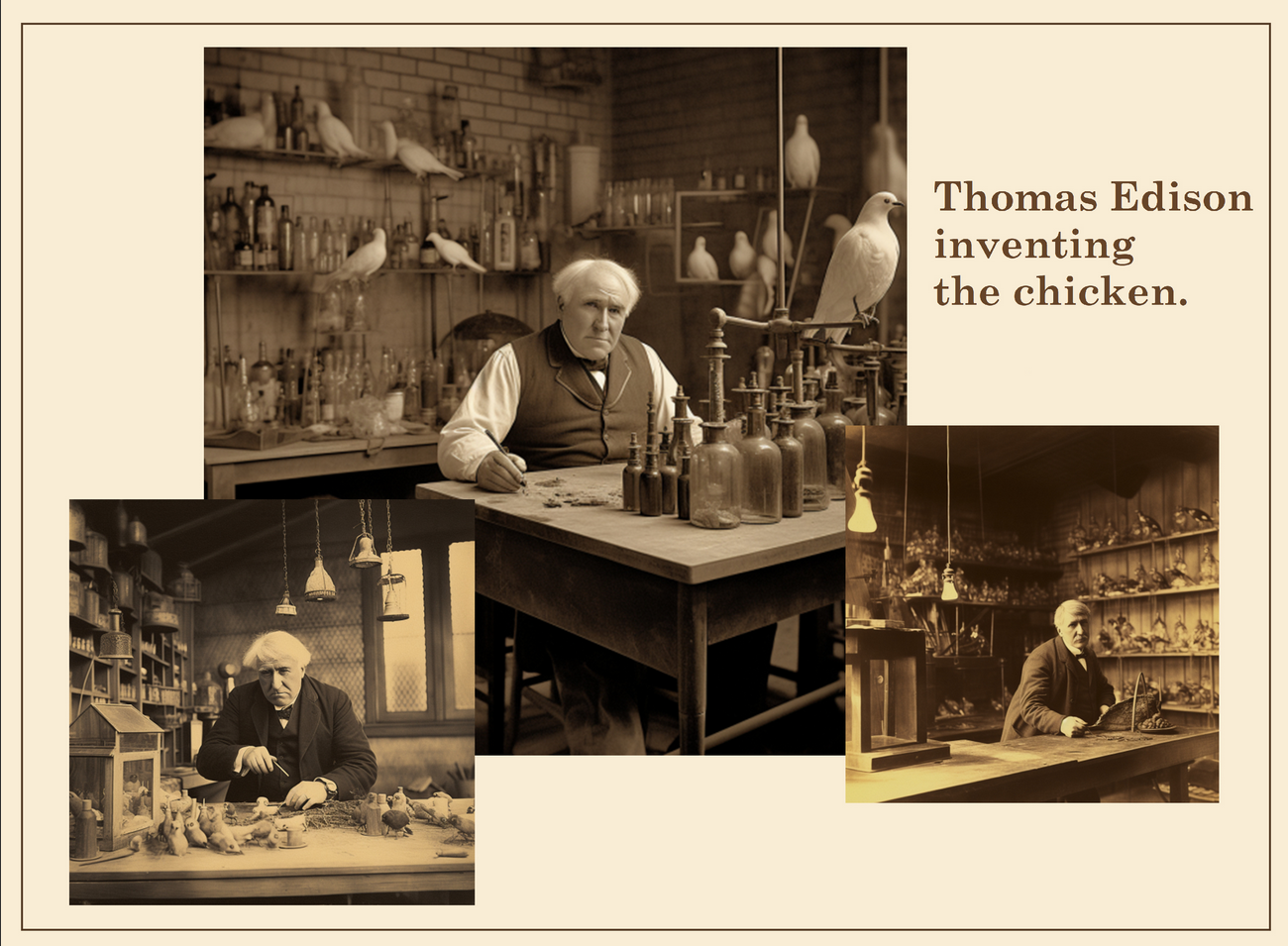
No, Thomas Edison didn’t invent the chicken, despite my fake, AI-generated photographs above. But around the time of the Apollo moon landings, a future Nobel laureate allegedly declared that the most important invention of the 20th century was the chicken. This cryptic statement offers profound wisdom about possible paths of healthcare innovation in the 21st century. The chicken quote was attributed to Robert Mundell, 1999 Nobel economist, by Dick Zecher, who was my boss at Chase Manhattan Bank and, before that, Mundell’s colleague at the University of Chicago.
How is the chicken — first domesticated more than 5,000 years ago — a 20th-century invention at all? And how was the chicken more important than the airplane, computer, atomic bomb, television, interplanetary rocket — or the countless works of Edison and his crew?
Dick told me that the comment, delivered during an Economics Department seminar, attracted the blank stares that often met Mundell’s odd, enigmatic, and always-profound observations. After a prolonged silence, the befuddled seminar speaker asked what Mundell meant.
His insight was that in the 20th century, modern production methods so drastically reduced the price of chicken that the bird became, for all practical purposes, an entirely new good. According to W. Michael Cox and Richard Alm (“Myths Of Rich And Poor: Why We’re Better Off Than We Think“), a typical American in 1900 worked 160 minutes to earn enough money for a 3-pound chicken. An equivalent worker in 2000 needed only 14 minutes of wages to buy that chicken. Pre-1950s, consumers generally had to eviscerate a commercially bought bird or have a butcher do it. (My mother used to shudder when she recalled the itinerant butcher who would slaughter chickens for my grandmother in their kitchen sink.) Herbert Hoover’s promise of “a chicken in every pot” rings dull to our ears, but in 1928, the phrase sounded like “a flying car in every garage” sounds to ours.
Revolutionary production, distribution and storage methods changed chicken from a Sunday luxury item to the everyman’s protein. Our concept of chicken bears little resemblance to our great-grandparents’ image. Massive reductions in food prices explain why rates of malnutrition and starvation have plummeted worldwide since the mid-20th century.
May 24, 2023
The Original PB&J from 1901
Tasting History with Max Miller
Published 23 May 2023
(more…)
May 23, 2023
Mustard: A Spicy History
The History Guy: History Deserves to be Remembered
Published 15 Feb 2023In 2018 The Atlantic observed “For some Americans, a trip to the ballpark isn’t complete without the bright-yellow squiggle of French’s mustard atop a hot dog … Yet few realize that this condiment has been equally essential — maybe more so — for the past 6,000 years.”
(more…)
May 18, 2023
How the Tabasco Factory Makes 700,000 Bottles of Hot Sauce Per Day — Dan Does
Eater
Published 4 Dec 2019On this episode of Cult Following, host Daniel Geneen heads to the McIlhenny factory on Avery Island, Louisiana, where the world’s supply of Tabasco sauce is made. Follow along as Daniel learns about the 150-year-old family-run business, and the Tabasco-making process, from pepper to barrel to bottle.
(more…)
QotD: The unironic joys of British cuisine
In the 18th century, when William Hogarth wished to highlight Britain’s political and cultural superiority to pre-revolutionary France in immediately appreciable terms, he did so through the medium of food, distinguishing between the Roast Beef of Olde England, and the ruddy and rotund yeoman nation fattened on it, and the scraps of putrid flesh with which scrawny Frenchmen were forced, beside the crumbling gate of Calais, to satisfy their wants. For food and political nationhood go together like few other cultural products: witness the squabbling between Israel and Palestine over the right to commercialise hummus, Greeks and Turks over baklava, or of Russians and Ukrainians over ownership of borscht. Food is, after all, inherently political, a basic building block of national identity, and it is the humblest foodstuffs, the basic comfort foods of childhood, that are more often fought over than the elaborate confections of the great chefs.
Indeed, it would be trivially easy to trace the shifting faultlines of broader political currents through the prism of food. Witness the sudden shift within America’s food culture, as a previous generations’ celebration of the diverse culinary options provided by mass immigration has morphed into stern lectures from diaspora commentators on the vaguely-defined evils of white people appropriating “ethnic” cuisine. In Britain, equally, a slim volume could easily be written on the political import uncomfortably burdened on fish and chips or chicken tikka masala by devotees of mass migration; a cultural theorist could likewise tease apart the “Proper” label now applied to a distinct category of foodstuff — proper pies, proper burgers, proper chips — as a marker of a specific type of middle-class yearning for proletarian authenticity, while maintaining socially acceptable levels of consumption standards. Like the fetishised fry-ups of London caffs in prosperous areas targeting themselves at tracksuit-wearing millennial creatives, the Proper Burger is the self-consciously gentrified football terrace of our national cuisine, a cultural marker of a precisely measurable socioeconomic bracket.
When this dynamic is considered, Britain’s strange relationship with food, and with its own national cuisine, becomes worthy of analysis. Though much mocked by online Americans, presumably inured to the Lovecraftian horrors of their own food culture, British cuisine at its best is hearty, simple fare, showcasing the natural bounty of these islands, our waters rich with fish and seafood (much of it exported abroad to more appreciative consumers), our rain-soaked pastures the nursemaid of the free-range meat and rich dairy goods Britain has excelled in for millennia. At its best, British food displays the worth of good ingredients cooked well — and at its worst, of poor ingredients cooked badly.
Yet the much-vaunted culinary renaissance in British food from the Nineties on, despite the buoyant effect of an endless stream of glossy cookbooks on the publishing industry, does not seem to have had an appreciable effect on the food most of us eat from day to day. Which British office worker does not recognise the moment of weary, grudging submission to the lunchtime meal deal, the limp and soggy sandwich which fuels the nation’s economy? If Britain has a national dish, it is more likely to be the Ballardian misery of the provincial train station panini, simultaneously scorching hot and half-raw, than it is a steaming steak and ale pie, its crust crisp with suet, or a plate of sizzling lamb’s liver fried in butter with farmhouse bacon.
There is, as there is with every aspect of British life, a strong class dynamic to British food. The most fervent appreciators of the frugal peasant dishes of the past, the nation’s only consumers of stewed beef shin or lamb sweetbreads, are more likely to be upper-middle class, middle-aged executives, who by lunching at St John or the Quality Chop House celebrate the forgotten folkways of their own country, than the call centre workers or shop assistants who have replaced our rural and industrial proletariat. Yet who in Britain is immune to the sudden craving for comfort satiable only by a serving of rich cauliflower cheese or of dark and savoury cottage pie, or has not felt the hobbit-like “Why shouldn’t I?” satisfaction of choosing the fry up at a hotel breakfast over the continental pastry selection?
Aris Roussinos, “How Britain eats itself”, UnHerd, 2023-02-03.
May 17, 2023
Texas Chili & The Chili Queens of San Antonio
Tasting History with Max Miller
Published 16 May 2023
(more…)
May 12, 2023
The crusade against (insert scare quotes here) Ultra-Processed Food
In The Critic, Christopher Snowden traces the orthorexist journey from warning about the dangers of saturated fat, to protesting against sugar content in foods, through an anti-carbohydrate phase to today’s crusade against “Ultra-Processed Food”:
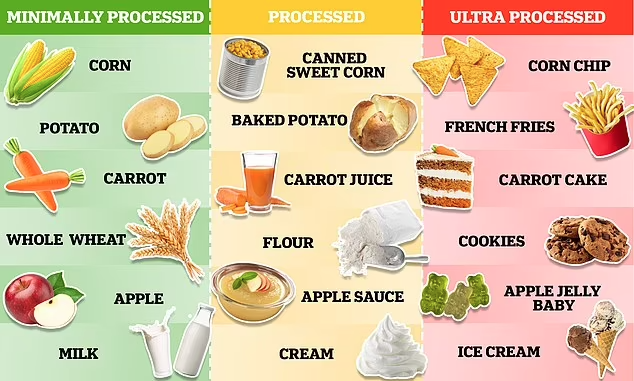
How the Daily Mail represented the three categories of processed food.
https://www.dailymail.co.uk/health/article-11286753/What-ultraprocessed-food-MailOnlines-guide-help-tell-apart.html
It is barely ten years since Denmark repealed its infamous “fat tax”. It was supposed to be a world-leading intervention to tackle obesity but it proved to be hugely unpopular and lasted just 15 months.
It seems almost strange now that it targeted saturated fat. In hindsight, it was the last gasp of the crusade against fat before all eyes turned to sugar. The anti-sugar crusade seemed to come out of nowhere in 2014 with the emergence of the tiny but phenomenally successful pressure group Action on Sugar. Within three years, the British government had announced a tax on sugary drinks, but by then the anti-sugar movement was morphing into a campaign against carbohydrates. That began to run out of steam a couple of years ago when many of the leading anti-carb personalities found that they could get more attention — and, dare I say, money — from being “sceptical” about COVID-19 vaccines.
They come and go, these food fads, but they all rely on the belief that there is something in the food supply that is uniquely dangerous, something hitherto unknown that only independent free thinkers can see is the cause of all our problems.
The new dietary villain is “ultra-processed food” (UPF), a concept that didn’t even exist until a few years ago but is now everywhere. There have been two books about UPF published in recent weeks and a third — Henry Dimbleby’s Ravenous — dedicated a lot of space to it.
The simple definition of ultra-processed food as used by those who are concerned about them (I am not making this up to make them sound silly) is anything that is “wrapped in plastic and has at least one ingredient you wouldn’t find in a home kitchen”. Since you probably don’t have emulsifiers, preservatives and artificial sweeteners in your kitchen, this rules out a lot of products.
The argument is that these products make you fat and should be avoided. The evidence for this comes from a study published in 2019. In a randomised controlled trial, ten people were given an ultra-processed diet and ten other people were given an unprocessed diet. Both diets were similar in their overall sugar, fat, protein and salt content, although the meals themselves were very different.
The participants were given all the food for free and they could eat as much as wanted. The people on the ultra-processed diet ended up eating 500 calories per day more than the other group and, after two weeks, had put on nearly a kilogram of weight. By contrast, the people on the unprocessed diet lost weight.
If you look at the food that was offered to the two groups, the explanation is obvious. The meals and snacks available to the UPF group were delicious whereas the food given to the other group was rather Spartan and was unlikely to make anybody ask for a second helping. If you give people tasty food for free, they will tend to eat more of it.
May 10, 2023
Feasting at a Medieval Tournament
Tasting History with Max Miller
Published 9 May 2023
(more…)
May 3, 2023
The History of the Hawaiian Luau
Tasting History with Max Miller
Published 2 May 2023
(more…)
April 26, 2023
Queen Elizabeth II’s Coronation Chicken
Tasting History with Max Miller
Published 25 Apr 2023
(more…)
April 23, 2023
There’s a spectre haunting your pantry – the spectre of “Ultra-Processed Food”
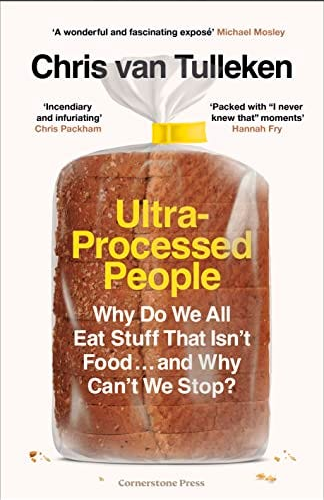
Christopher Snowden responds to some of the claims in Chris van Tulleken’s book Ultra-Processed People: Why Do We All Eat Stuff That Isn’t Food … And Why Can’t We Stop?:
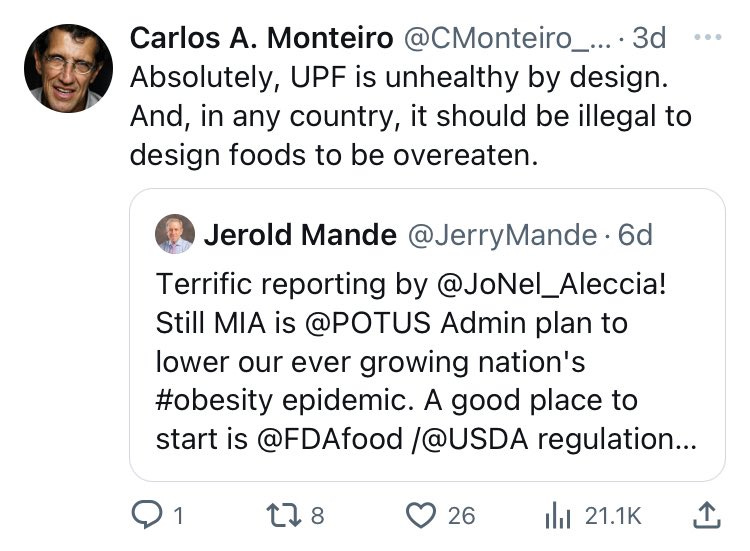
Ultra-processed food (UPF) is the latest bogeyman in diet quackery. The concept was devised a few years ago by the Brazilian academic Carlos Monteiro who also happens to be in favour of draconian and wildly impractical regulation of the food supply. What are the chances?!
Laura Thomas has written some good stuff about UPF. The tldr version is that, aside from raw fruit and veg, the vast majority of what we eat is “processed”. That’s what cooking is all about. Ultra-processed food involves flavourings, sweeteners, emulsifiers etc. that you wouldn’t generally use at home, often combined with cooking processes such as hydrogenation and hydrolysation that are unavailable in an ordinary kitchen. In short, most packaged food sold in shops is UPF.
Does this mean a cake you bake at home (“processed”) is less fattening than a cake you buy from Waitrose (“ultra-processed”)? Probably not, so what is the point of the distinction? This is where the idea breaks down. All the additives used by the food industry are considered safe by regulators. Just because the layman doesn’t know what a certain emulsifier is doesn’t mean it’s bad for you. There is no scientific basis for classifying a vast range of products as unhealthy just because they are made in factories. Indeed, it is positively anti-scientific insofar as it represents an irrational fear of modernity while placing excessive faith in what is considered “natural”. There is also an obvious layer of snobbery to the whole thing.
Taken to an absurd but logical conclusion, you could view wholemeal bread as unhealthy so long as it is made in a factory. When I saw that CVT has a book coming out (of course he does) I was struck by the cover. Surely, I thought, he was not going to have a go at brown bread?
But that is exactly what he does.
During my month-long UPF diet, I began to notice this softness most starkly with bread — the majority of which is ultra-processed. (Real bread, from craft bakeries, makes up just 5 per cent of the market …
His definition of “real bread” is quite revealing, is it not?
For years, I’ve bought Hovis Multigrain Seed Sensations. Here are some of its numerous ingredients: salt, granulated sugar, preservative: E282 calcium propionate, emulsifier: E472e (mono- and diacetyltartaric acid esters of mono- and diglycerides of fatty acids), caramelised sugar, ascorbic acid.
Let’s leave aside the question of why he only recently noticed the softness of fake bread if he’s been eating it for years. Instead, let’s look at the ingredients. Like you, I am not familiar with them all, but a quick search shows that E282 calcium propionate is a “naturally occurring organic salt formed by a reaction between calcium hydroxide and propionic acid”. It is a preservative.
E472e is an emulsifier which interacts with the hydrophobic parts of gluten, helping its proteins unfold. It adds texture to the bread.
Ascorbic acid is better known as Vitamin C.
Caramelised sugar is just sugar that’s been heated up and is used sparingly in bread; Jamie Oliver puts more sugar in his homemade bread than Hovis does.
Hovis Multigrain Seed Sensations therefore qualifies as UPF but it is far from obvious why it should be regarded as unhealthy. According to CVT, the problem is that it is too easy to eat.
The various processes and treatment agents in my Hovis loaf mean I can eat a slice even more quickly, gram for gram, than I can put away a UPF burger. The bread disintegrates into a bolus of slime that’s easily manipulated down the throat.
Does it?? I’ve never tried this brand but it doesn’t ring true to me. It’s just bread. Either you toast it or you use it for sandwiches. Are there people out there stuffing slice after slice of bread down their throats because it’s so soft?
By contrast, a slice of Dusty Knuckle Potato Sourdough (£5.99) takes well over a minute to eat, and my jaw gets tired.
Far be it from me to tell anyone how to spend their money but, in my opinion, anyone who spends £6 on a loaf of bread is an idiot. Based on his description, the Dusty Knuckle Potato Sourdough is awful anyway. Is that the idea? Is the plan to make eating so jaw-achingly unenjoyable that we do it less? Is the real objection to UPF simply that it tastes nice?
April 20, 2023
QotD: Food fascism
But the diet dictatorship craze is a real thing. You’ve seen the war on beef by the likes of Alexandria Ocasio-Genius, who runs her oversized novelty mouth about how we have to stop cooking cows because doing so displeases the great and terrible climate goddess Gaia. See, cows may contribute to the world being slightly warmer in a century, so stop doing something you enjoy. Consider not eating beef as a sacrifice made on behalf of the weird weather cult.
Here’s a locust. Now, don’t you feel better about your slightly reduced carbon footprint?
What do you think the chances are that the di Caprios and the Gores and the rest of the climate hucksters won’t be dining on filet mignon in their private jets flying from their mansions to Davos to save the planet from your carbon crimes, while you pedal your bike in the rain back to your unheated 500 square foot apartment to gnaw on a dinner of arugula and raw moths?
Remember, food fascism is for your own good, since you are evidently unable to make decisions about what you put in your mouth for yourself. You see, if you are allowed to make your own choices about your body you might make the wrong ones – with “wrong” being defined as choices Michael Bloomberg or the other members of Team Helper would not make.
Kurt Schlicter, “Tell The Nags To Go Pound Sand”, Townhall.com, 2019-11-19.
April 19, 2023
World War 2 Ice Cream of the US NAVY
Tasting History with Max Miller
Published 18 Apr 2023
(more…)
April 16, 2023
QotD: Homo electronicus and the permanent caloric surplus
Excess fat cranks up estrogen levels. You don’t need to be House MD to interpret this finding:
In males with increasing obesity there is increased aromatase activity, which irreversibly converts testosterone to estradiol resulting in decreased testosterone and elevated estrogen levels.
Or this one:
A study supports the link between excess weight and higher hormone levels. The study found that estrogen and testosterone levels dropped quite a bit when overweight and obese women lost weight.
This is not to say those swishy subalterns were fat — indeed, they were comically scrawny compared to Postmodern people. But a little goes a long way when it comes to hormones, especially in a world where “intermittent fasting” wasn’t a fad diet, but a way of life. Any one of us would keel over from hunger if we were forced to eat the kind of diet George Orwell described as his public school’s standard fare.
Follow that trend out to the Current Year, when pretty much everyone is grossly obese compared to even the Silent Generation. Heartiste and other “game” bloggers loved pointing out that the average modern woman weighs as much as the average man did in the 1960s. And while I think that’s overblown — we’re also several inches taller, on average, than 1960s people — there’s definitely something to it, especially when you consider how far the bell curve has shifted to the fat end. Not only do people weigh a lot more on average, the people who weigh more than average now weigh a hell of a lot more than heavier-than-average people did back when. See, for example, the ballooning weight of offensive linemen, who are professionally fat — in 2011 a quarterback, Cam Newton, weighed more than the average offensive lineman in the 1960s.
Put the two trends together and you have, on average, a hormone cocktail way, way different than even 50 years ago … and that’s before you add in things like all-but-universal hormonal contraception, lots of which ends up in municipal drinking water.
Severian, “Recent Evolution”, Rotten Chestnuts, 2020-09-28.


