
Published on 12 Aug 2017
In this special Recap Episode we summarize the events from May to July 1917. Two major Allied spring offensives at Arras and on the Aisne come to an end with mixed results. The Macedonian Front flares up again as does the 10th Battle of the Isonzo. Mutiny in the French army. A stunning British victory at the Battle of Messines. A vicious battle on the heights of Mount Ontigara. The first American troops are landing in France. July sees the great strides of the Kerensky offensive featuring the Russian Women´s Battalion of Death. A showdown between the Bolsheviks and the Provisional Government. The first usage of the dreaded Mustard Gas.
August 13, 2017
War-Weariness I THE GREAT WAR Summary Part 10
Comments Off on War-Weariness I THE GREAT WAR Summary Part 10
August 12, 2017
Why The Government Shouldn’t Break WhatsApp
Published on 3 Jul 2017
Encryption backdoors – breaking WhatsApp and iMessage’s security to let the government stop Bad Things – sounds like a reasonable idea. Here’s why it isn’t.
A transcript of this video’s available here: https://www.facebook.com/notes/tom-scott/why-the-government-shouldnt-break-whatsapp/1378434365572557/
Comments Off on Why The Government Shouldn’t Break WhatsApp
August 11, 2017
Despair Everywhere – Battle of Mărășești I THE GREAT WAR Week 159
Published on 10 Aug 2017
This week Russo-Romanian forces clash with the Central Power´s counteroffensive in the Second Battle of Oltuz. The failure of the Kerensky Offensive disheartens the Russian army and radicalizes the homefront. While the Bolsheviks were calling for “Peace, Bread and Land”, the new commander of the Russian army Lavr Kornilov strives to become a strong authoritarian figure for the political right. And the Battle of Passchendaele reveals a scarred, broken battlefield of mud and destroyed equipment. Despair is everywhere.
Comments Off on Despair Everywhere – Battle of Mărășești I THE GREAT WAR Week 159
August 10, 2017
The Treaty of Westphalia
Published on 20 Nov 2008
Treaty of Westphalia
Comments Off on The Treaty of Westphalia
August 9, 2017
Ernst Zündel, “the Zelig of Holocaust denial”
In the National Post, Colby Cosh tells the tale of Canada’s “favourite” holocaust denial specialist:
Ernst Zündel, the Zelig of Holocaust denial, died suddenly this weekend at his ancestral home in the Black Forest of Germany. If he had died sooner, before his 2005 deportation from this country, I am afraid he would have been widely described in obituaries as “German-Canadian.” He lived here from 1958 to 2000, unsuccessfully trying a couple of times to obtain official citizenship, and was visible for years as a self-styled opponent of Germanophobic stereotypes in the popular media.Ernst Zündel in 1992 on the day of his legal victory in R. v. Zündel (via Wikipedia)
Foreseeably, Zündel turned out to be the ultimate German stereotype himself: a war baby who used Canada as a refuge from conscription and anti-Nazi laws back home, all while obsessively re-litigating the Second World War in pseudonymous anti-Semitic pamphlets and books. Most ethnic Germans abroad wouldn’t deny the Holocaust or complain of a worldwide Jewish conspiracy, as Zündel did, but… well, if you have studied German history seriously enough to talk about it socially, you will have run into folks who have funny ideas and tiny chips on their shoulder about, say, First World War reparations or the bombing of Dresden.
[…]
It should be remembered that by 1986 Zündel was already well on his way to establishing his place in Canadian legal history. He had already been convicted once under the Criminal Code’s “spreading false news” section, eventually struck down by the Supreme Court in 1992’s R. v. Zündel. Free speech absolutists argued then that the legal and social pursuit of Zündel merely served to increase his notoriety.
As a purely empirical question of history, this is hard to resolve. But we know that protests and the exertions of the police failed to stop Zündel from winning over Irving, and thus acquiring international influence. It may have done nothing but enhance his credentials as a pseudo-intellectual grappler, defying social scorn and the force of law.
The authorities were eventually able to bundle Zündel off to Germany through a legal door that has since closed. He was deported as an undesirable alien on the basis of a ministerial “security certificate” — not long before the Supreme Court denounced the use of secret evidence in deportation proceedings, and made such certificates harder to obtain. After Zündel’s deportation, an apparatus of progressive opposition to security certificates was quick to materialize. One cannot help wondering: if he were still alive in Canada in 2017, and the state tried to banish him, who might be out marching on his behalf, defending him as an “undocumented Canadian”?

Comments Off on Ernst Zündel, “the Zelig of Holocaust denial”
The Falklands War – A War for Lost Glory I THE COLD WAR
Published on 1 Jul 2015
The Falklands War was based on an old colonial struggle between two former world powers. When the military Junta in Argentina decided to claim the Falkland Islands in the South Atlantic they didn’t reckon with Great Britain’s Iron Lady Margaret Thatcher. The British Prime Minister unleashed full scale invasion. The Royal Navy and the British Army landed and ultimately took the capital Port Stanley. The Argentine Army surrendered shortly after that.
Comments Off on The Falklands War – A War for Lost Glory I THE COLD WAR
August 8, 2017
The Baltic States in World War 1 I THE GREAT WAR SPECIAL
Published on 7 Aug 2017
Before the First World War, what are today Lithuania, Latvia, and Estonia were part of the Russian Empire. As that empire fought and fell, so to fought the soldiers of the Baltic States, first during the war, and then in their struggles for eventual independence.
Comments Off on The Baltic States in World War 1 I THE GREAT WAR SPECIAL
Mingles with Jingles Episode 209 – British Battleships in World of Warships
Published on 7 Aug 2017
In which I get all excited about incoming British battleships in World of Warships, and then I see the provisional stats of the higher tier ones and read what it is that makes them “special” and start to get a little worried. I’ve stockpiled hundreds of thousands of free xp for these thing, please don’t let them be shit!
Actually you may be able to help me with that. And then I speculate on what happens when a game starts running out of things it can do to make new units different…
Comments Off on Mingles with Jingles Episode 209 – British Battleships in World of Warships
Tank Chats #15 Tortoise
Published on 25 Feb 2016
Tank Museum Historian, David Fletcher is currently unavailable, so rather than make you all wait, Curator David Willey is here to present Tortoise!
The A39 Tortoise is the ultimate manifestation of the British concept of the heavily armoured, but slow, ‘Infantry’ tank.
It was built in 1947, making it a contemporary of the highly successful Centurion tank. The Tortoise proved to be too slow and unwieldy for the conditions of modern warfare and was a nightmare to transport.
The only service that the Tortoise had was when two tanks took part in trials in Germany in 1948. The Tank Museum’s Tortoise is now the only surviving example.
Comments Off on Tank Chats #15 Tortoise
August 7, 2017
How to Swear Like a Brit – Anglophenia Ep 29
Published on 20 May 2015
Swearing is a fun stress reliever, and the British do it so well. Anglophenia’s Kate Arnell provides a master class in swearing like a Brit.
Comments Off on How to Swear Like a Brit – Anglophenia Ep 29
August 6, 2017
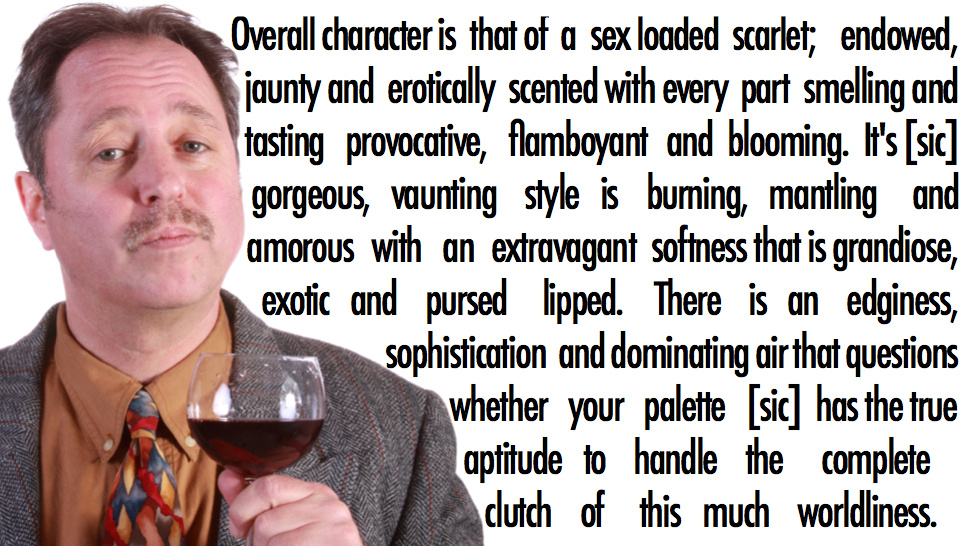
The allure of fine wines
Dan Rosenheck recounts his first encounter with one of those mysterious Premier Cru wines:
If it sounds too good to be true, it probably is. So say those who have never had a whiff of 1998 Château Lafite Rothschild. In late 2011 I had been an aspiring wine connoisseur for about a year, long enough to have learned the names of the world’s most exalted beverages, but not to have tried more than a handful. Like many novices, I started out on Bordeaux, memorising the 1855 classification of the region’s reds into price tiers – called crus, or “growths” – and developing a childlike reverence for the premiers crus (“first growths”) at the top. Although there were no sub-rankings within each class, Lafite was listed first because it was the most expensive tipple in the France of Napoleon III, and my drinking buddies told me it was still considered the premier premier cru today. Chinese drinkers certainly thought so: they had bid it up at auctions to stratospheric heights after deciding, for still-obscure reasons, that Lafite and only Lafite made for an impressive gift – perhaps because its name was easy to pronounce in Mandarin, or because the estate had stuck the character for the lucky number eight on the label of its 2008 vintage.
So when a friend in the wine trade snuck me into Wine Spectator magazine’s “Grand Tasting” in New York that November, I made a beeline for the Lafite table. They were pouring the 1998: a middling harvest overall for Cabernet Sauvignon, which Messieurs Primi Inter Pares had nonetheless turned into a masterpiece. As a Frenchwoman doing her best to smile sprinkled her elixir among the parched mob, I made off with a couple of thimblefuls, and scurried to the corner of the room to stand watch over my booty.
The perfume wafted into my nostrils before I had time to lift my glass. “zomfg,” began my tasting note. (The “o”, “m” and “g” stand for “oh my God”, you can guess what the “f” is, and the “z” comes out when exuberance makes you miss the shift key.) The scents were so intense, so focused, so easy to distinguish: ripe blackcurrants quivering on the branch; cedar that conjured up a Lebanese hillside; tobacco or thyme leaves floating on the wind. How could a wine be this powerful and yet this elegant? At the tender age of 13, the 1998 Lafite did not yet offer much complexity, and its firm, astringent tannins left me puckering after every sip – the punishment a fine young Bordeaux inflicts on impatient drinkers who disturb its slumber prematurely. But oh…that smell. “I smelled this across the room,” I wrote. “I smelled this at the bar afterwards. I smelled this even when I was shoving pizza down my throat at 3am. And then I smelled it in my dream.”
My first experience of a premier cru was at an LCBO tasting in downtown Toronto. I had developed an interest in wine a few years before, so I was very excited to try some of the well-known wines for the first time. Here’s what I wrote on the old blog (no longer online) in 2008: “That’s not wine … it’s an ostentatious status symbol”
At some point, an expensive bottle of wine stops being just wine and starts being primarily a status symbol. Case in point:
Staff were delighted at the sale and the three customers were eager to taste the £18,000 magnum of Pétrus 1961 — one of the greatest vintages of one of the greatest wines in the world — which they had reserved from the cellars several weeks before.
Unfortunately, the guests at Zafferano in Knightsbridge proved to be a little too discerning.
As the magnum was uncorked, they declared it to be a fake, refused to touch the bottle and sent it back.
I enjoy wine, and I’m usually able to appreciate the extra quality that goes with a higher price tag … up to a limit. The most expensive wine I’ve tasted was a $400 Chateau Margaux, which was excellent, but (to my taste anyway) not as good as a $95 bottle I sampled on the same evening (a Gevry-Chambertin). Wine is certainly subjective, so my experiences can’t be easily generalized, but I think it would be safe to say that the vast majority of wine drinkers would find that their actual appreciation of the wine tapers off beyond a certain price point.
If you normally drink $15-20 bottles of wine, you’ll certainly find that the $30-40 range will taste better and have more depth and complexity of flavour. Jumping up to the $150-200 range will probably have the same relative effect, but you’ve gone to 10 times the price for perhaps 2-4 times the perceived quality. Perhaps I’m wrong, and the $1,000+ wines have transcendental qualities that peasants like me can’t even imagine, but I strongly doubt it. Any wine over $500 has passed the “quality” level and is from that point onwards really a “prestige” thing.
Update: A commenter at Fark.com offered this link as counter-evidence:
“Contrary to the basic assumptions of economics, several studies have provided behavioral evidence that marketing actions can successfully affect experienced pleasantness by manipulating non-intrinsic attributes of goods. For example, knowledge of a beer’s ingredients and brand can affect reported taste quality, and the reported enjoyment of a film is influenced by expectations about its quality,” the researchers said. “Even more intriguingly, changing the price at which an energy drink is purchased can influence the ability to solve puzzles.”
This is why wines are generally tasted blind for comparative purposes (that is, with no indication of the wine’s identity provided). It’s a well-known phenomena that people expect to enjoy more expensive things than cheaper equivalents.
You can try this one for yourself: next time you’re pouring a beer or a wine for a guest, hide the container and tell them that what you’re pouring is much more rare/expensive/unusual than what it really is. Most people, either from politeness (they don’t want to be rude) or fear of being thought ignorant (that they can’t actually perceive this wonderful quality) or genuine belief in what you’ve said, will go along with the host’s deception and praise the drink as being so much better than whatever they normally drink.
Human beings are wonderful at rationalizing … and self-deception.
H/T to Colby Cosh for the original link.
Comments Off on The allure of fine wines
Recap Of Our Trip To England I THE GREAT WAR Special
Published on 5 Aug 2017
Stow Maries Great War Aerodrome: http://www.stowmaries.org.uk/
The Tank Museum, Bovington: http://www.tankmuseum.org/
The Prince of Wales, Restaurant: http://www.prince-stowmaries.net/
Comments Off on Recap Of Our Trip To England I THE GREAT WAR Special
Shock, horror – “local or organic food is … often available only in Canada to the wealthy”
Chris Selley just got back from a European vacation, where he observed some odd German activity:
Last month, on vacation, I happened across what might be the platonic ideal of a fancy urban farmers’ market. The smell of wood smoke led me to a quiet street in Berlin’s leafy Prenzlauer Berg neighbourhood, where a man was smoking various kinds of fish in the middle of the road. As one does. There was a little mobile bicycle-powered coffee shop selling vastly overpriced espresso. There was the requisite improbably expensive produce and charcuterie and cheese. (My God, the cheese. Why do Canadians put up with our benighted dairy industry?) And to shock my Ontarian senses, there was a big booth selling local wines — which one could drink, out of glasses, in whatever quantities one saw fit, right there out in the open. Tipplers weren’t even confined to a secure pen. There wasn’t even a security guard!
Even more than at Toronto’s fancier farmers’ markets, it was abundantly clear this was a place for wealthy people with time to spare. And it never occurred to me that was a problem. A new study co-authored by Kelly Hodgins and Evan Fraser of the University of Guelph suggests it is, however — and a recent headline on the matter made my eyes roll so far back in my head I feared they might get stuck: “Access to ‘ethical’ food often available only to the wealthy, study says.”
“While eating local or organic food is often touted as superior from a health, environmental and oftentimes ethical perspective, such foods are often available only in Canada to the wealthy, with limited access for those living on lower or even middle incomes,” The Globe and Mail reported.
I know. I’m just as shocked as you are. Who would ever have expected that?
Comments Off on Shock, horror – “local or organic food is … often available only in Canada to the wealthy”


