Quotulatiousness

June 3, 2019

QotD: The roots of Italian Fascism

Filed under: Europe, History, Italy, Politics, Quotations, WW1 — Tags: , , , , — Nicholas @ 01:00

Colourized portrait of Italian Fascist leader Benito Mussolini in 1940.
Colourization by Roger Viollet via Wikimedia Commons.

Italian Fascism … originated as a kind of live-action role-playing game for disgruntled Italian WWI vets led by a charismatic war hero, aviator, and poet named Gabriele D’Annunzio. Compared to what it evolved into, early Italian fascism had a rather charming opera-bouffe quality about it – theoretical ideas that were incoherent to the point of surrealism, lots of prancing around in invented uniforms, and dosing of opponents with castor oil. The history of D’Annunzio’s Fascist microstate of Fiume makes amusing reading.

Then came Benito Mussolini, a man looking for a vehicle.

Mussolini was a revolutionary Socialist organizer influenced by the theories of Georges Sorel, who was responding to one of the early failures of Marxism. In Marxian “scientific socialism”, universal revolution was a process that would follow mechanically from the capitalist immiseration of the proletariat. But by the second decade of the new century it was becoming clear that most national proletariats were unwilling to play their appointed role in the theory and indeed tended to be among the most patriotic and nationalist elements of their societies. Class warfare as the engine of international socialism had failed, creating a doctrinal crisis in communist/socialist circles.

Sorel responded by writing a new theory of political motivation he called “irrationalism” which proposed that instead of fighting popular sentiments like patriotism and nationalist mythology, socialists and communists should embrace them as tools to build and perfect socialism. Mussolini was persuaded, broke with the Socialist Party, and went looking for a vehicle for a Sorelian revolution. He found it in D’Annunzio’s Fascists and, swiftly shunting D’Annunzio aside, became their leader.

I’ve covered this history in detail because it explodes one of the prevailing myths about Fascism – that it arose out of some fundamental opposition to Communism. In fact this was never true; Fascism was a Marxist heresy from the day Mussolini seized it, differing from Marxism not mainly in its aims but in the means by which they were to be achieved.

The defining doctrine of Fascism once D’Annunzio was out of the way was this quote by Mussolini: “Everything for the state, nothing outside the state, nothing against the state.” (There are a few variant translations from the original Italian.) Building directly on Leninist political economics, Benito Mussolini wrote a theoretical justification of the totalitarian state which paralleled Joseph Stalin’s less theorized but brutally-executed totalitarianization of the Soviet Union at around the same time.

The Fascist theory was of a unitary, totalizing state ruled by a leader acting as the embodiment of the will of the nation. No power centers in opposition to the embodied will can be tolerated; church, family, education, and civic institutions must all become organs of that will.

Eric S. Raymond, “Spotting the wild Fascist”, Armed and Dangerous, 2019-04-30.

June 2, 2019

History of England – Fire and Swords – Extra History – #2

Filed under: Britain, France, History, Military, Weapons — Tags: , , — Nicholas @ 06:00

Extra Credits
Published on 1 Jun 2019

On the 26th of August,1346, Philip’s army drew near the English force. The French were strung out for miles. Phillip’s best commanders advised caution: put on those comfy jim-jams the Queen gave you last Christmas, don the royal slippers, get a goodnight’s snooze, and let everyone catch up, then drown the English in a river of their own blood after a light breakfast. But Phillip looked upon the current puny size of the English army, and ordered the attack anyway…

Thanks again to David Crowther for writing AND narrating this series! https://thehistoryofengland.co.uk/pod…
Join us on Patreon! http://bit.ly/EHPatreon

Experiment 2 for social media thumbnails:

Andrew Heaton defends Basil Fawlty John Cleese

Filed under: Britain, Humour, Media — Tags: , , , — Nicholas @ 05:00

In his latest newsletter (subscribe here), Andrew Heaton takes up the cudgels to defend John Cleese against accusations of racism, sexism, white supremacy, homophobia, transphobia, Islamophobia, etc., etc. and suggests that the answer is that he’s “just old”:

First, “Some years ago I opined that London was not really an English city anymore.” Well, he’s right. London is geographically English, but other than its physical proximity to Surrey, it’s not English — it’s global. Its last census reports that 36.7% of its denizens are foreign-born. About 45% of the people who live there are White British (Welsh, Irish, English, Scottish). Which is to say, less than half of London is English [a lot less than half — the Welsh, Irish and “porridge wogs” don’t appreciate being called “English”, nearly as much as Canadians don’t like being called “Americans”]. The rest are a mélange of Europeans, non-Europeans, first and second generation immigrants, Klingons, Vulcans, Wookis, and folks from elsewhere in the Commonwealth and/or Narnia.

It’s a global city, like New York. It is richly diverse and cosmopolitan, which is a strength and draw to millions of people who live there. However I will argue that it’s difficult to be ethnically diverse and cosmopolitan while simultaneously being homogeneously English. Mutually exclusive, in fact.

Although to be fair, people aren’t mad at Cleese for observing that London isn’t English, they’re mad because he wishes it were. Cleese appears to prefer Englishness over multiculturalism. (Note the distinction between “culture” and “race.” Following the media storm, he tweeted, “… I prefer cultures that do not tolerate female genital mutilation. Will this will be considered racist by all those who hover, eagerly hoping that someone will offend them – on someone else’s behalf, naturally.” [Sic.])

My read on the situation is that Cleese is not racist, he’s old. What I mean by that is: life is always in flux, cities are by nature dynamic, society is fluid. People tend to want things to stay static, and they don’t, and that’s irksome for many, particularly as they grow elderly and nostalgic. I question when London was last really “English,” given that it was the imperial capital of half the globe well before he was born, and no doubt had several pockets of Indians and Jamaicans and Vulcans living there by the time he showed up.

All the same, is John Cleese allowed to prefer English over polyglot? Because I think that’s the root heresy at work here: saying that English culture might be superior to some others, and preferring it to them.

New York City is far, far more diverse and multicultural than, say, Portland, Oregon. Portland is so overwhelmingly white that it’s basically a giant bleach commercial with some craft breweries and street buskers thrown in. Ethnicity aside, can Portlanders prefer their cultural homogeneity over the vastly more polyglot city of Houston? So long as people agree that immigration is positive and we should be neighborly and welcoming to newcomers, I’m disinclined to hound people for their personal preferences.

I don’t know whether or not John Cleese meets that threshold. We know that he favored Brexit. I suspect, based on scattershot Cleese musings, that wants a Britain which is open and welcoming to foreigners, but that he would also like them to become polite, uptight, tea-drinking gardeners once they’ve moved there.

I could be wrong. I don’t know the depths of John Cleese’s heart, and whether or not his pro-Brexit stance comes from hatred of distant bureacurats (good) or dislike of foreigners and immigrants (bad). I suspect most of the people shouting at him on Twitter have no idea either.

Which is my main and final point. Maybe a single isolated tweet isn’t sufficient information to psychically intuit whether someone is a bigot or not? We’re all on the same page here: bigotry is bad. Don’t be a racist. Don’t be a homophobe. But if we’re going to champion the idea that the worst non-criminal thing you can be in our culture is a bigot, then we should also be at least a tad reserved about passing out scarlet letters just because there’s a slow news day and we spot a fun Twitter pile-on to get worked up about.

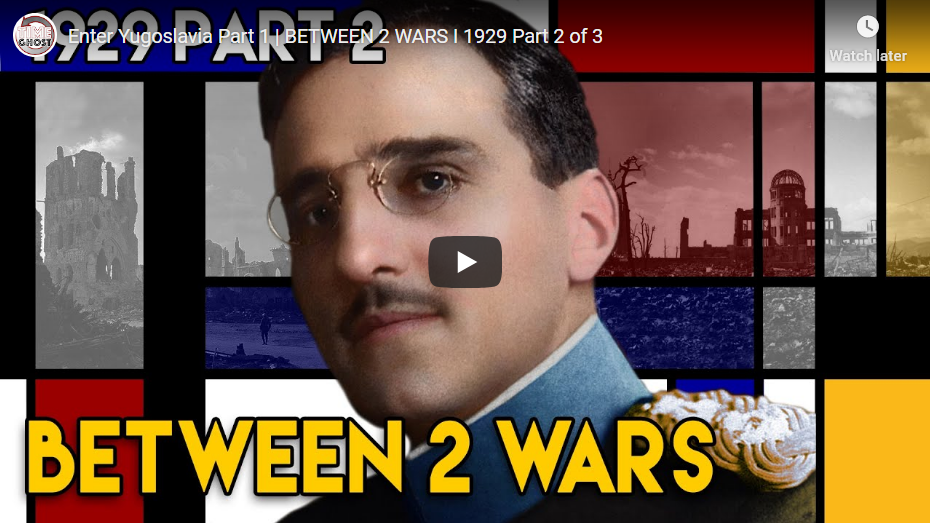
Brexit at Dunkirk – WW2 – 040 – June 1 1940

Filed under: Britain, France, Germany, History, Military, WW2 — Tags: , , , , — Nicholas @ 04:00

World War Two
Published on 1 Jun 2019

When the Germans Panzers move north from Calais, the British Expeditionary Force and France’s soldiers still fighting in Belgium and Northern France are trapped between a numerically superior German army. A big operation codenamed “Dynamo” is set up to evacuate as many as possible from Dunkirk.

Join us on Patreon: https://www.patreon.com/TimeGhostHistory
Or join The TimeGhost Army directly at: https://timeghost.tv

Follow WW2 day by day on Instagram @World_war_two_realtime https://www.instagram.com/world_war_t…
Join our Discord Server: https://discord.gg/D6D2aYN.
Between 2 Wars: https://www.youtube.com/playlist?list…
Source list: http://bit.ly/WW2sources

Written and Hosted by: Indy Neidell
Produced and Directed by: Spartacus Olsson and Astrid Deinhard
Executive Producers: Bodo Rittenauer, Astrid Deinhard, Indy Neidell, Spartacus Olsson
Creative Producer: Joram Appel
Post-Production Director: Wieke Kapteijns
Research by: Indy Neidell
Edited by: Daniel Weiss
Map animations: Eastory

Colorisations by Joram Appel, Spartacus Olsson and Norman Stewart.

Eastory’s channel: https://www.youtube.com/channel/UCEly…
Archive by Screenocean/Reuters https://www.screenocean.com.

Sources:

A TimeGhost chronological documentary produced by OnLion Entertainment GmbH.

From the comments:

World War Two
3 days ago (edited)
As many of you already know, people who support us on Patreon get three days early access to our content – which explains why some comments have been made before the video is published. We are very grateful to those who financially support us, because (as Indy mentions a lot) we really wouldn’t be able to do any of this without your support. This project is fully funded by our community and viewers. Right now, we are still very much working at the max of our capacity. That is partly because we take on new tasks whenever some time frees itself – we just can’t help making more and better content, but also because we still need more financial stability to hire more editors and researchers. Only then will we be able to deliver a steady flow of specials, Out of the Foxholes episodes and War Against Humanity videos at the quality that we would like them to be. You can support us on Patreon https://www.patreon.com/timeghosthistory or on our website http://www.timeghost.tv.

Thanks a lot!!

Cheers,
Joram

And, experimental image as fodder for social media link thumbnail:

June 1, 2019

Tour of the Maginot Line Ouvrage Schoenenbourg – WW2 on Location – France 1940 – 02

Filed under: France, History, Military, WW2 — Tags: , — Nicholas @ 04:00

World War Two
Published on 30 May 2019

Marc Halter takes Indy and all of us on a tour through the fort at Schoenenbourg on the Maginot Line.

The website of the fort: http://www.lignemaginot.com

Join us on Patreon: https://www.patreon.com/TimeGhostHistory
Or join The TimeGhost Army directly at: https://timeghost.tv

Follow WW2 day by day on Instagram @World_war_two_realtime https://www.instagram.com/world_war_t…
Join our Discord Server: https://discord.gg/D6D2aYN.
Between 2 Wars: https://www.youtube.com/playlist?list…
Source list: http://bit.ly/WW2sources

Written and Hosted by: Indy Neidell
Produced and Directed by: Spartacus Olsson and Astrid Deinhard
Executive Producers: Bodo Rittenauer, Astrid Deinhard, Indy Neidell, Spartacus Olsson
Creative Producer: Joram Appel
Research by: Indy Neidell
Edited by: Iryna Dulka
Map animations: Eastory

Archive by Screenocean/Reuters https://www.screenocean.com.

A TimeGhost chronological documentary produced by OnLion Entertainment GmbH.

From the comments:

World War Two
36 minutes ago
You will have seen some of this material in our previous videos about the Maginot Line, but here is the full walk-though that Indy made with Marc, the President of the volunteer organisation that maintains the fort and keeps it in memory for all of us.

Experimental screen shot for social media thumbnail:

Viper MkI: A Simplified Steampunk Sten

Forgotten Weapons
Published on 26 Apr 2019

http://www.patreon.com/ForgottenWeapons

Cool Forgotten Weapons merch! http://shop.bbtv.com/collections/forg…

The Viper Mk I was an experimental submachine gun developed in the UK for use by military policemen in post-WW2 occupation West Germany. It was a simplified Sten gun (full-auto only, without the semiauto option normally included in the Sten trigger mechanism) put into a wooden housing. It was intended to be carried slung over one shouldered [and] fired under the arm with just one hand. To this end, it had neither sights nor trigger guard. The whole concept seems pretty questionable, and while multiple different Viper submachine guns were designed to fill this role, none were ever adopted.

Many thanks to the Royal Armouries for allowing me to film and disassemble this very rare weapon! The NFC collection there – perhaps the best military small arms collection in Western Europe – is available by appointment to researchers:

https://royalarmouries.org/research/n…

You can browse the various Armouries collections online here:

https://royalarmouries.org/collection/

Contact:
Forgotten Weapons
PO Box 87647
Tucson, AZ 85754

Experimental screen capture for social media thumbnailing purposes:

QotD: Orwell’s fear of private monopolies

Filed under: Britain, Economics, Government, Quotations — Tags: , , — Nicholas @ 01:00

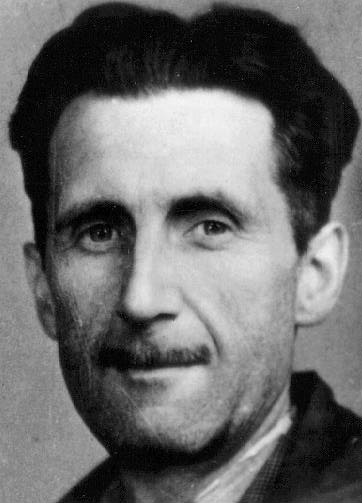
Professor Hayek is also probably right in saying that in this country the intellectuals are more totalitarian-minded than the common people. But he does not see, or will not admit, that a return to “free” competition means for the great mass of people a tyranny probably worse, because more irresponsible, than that of the State. The trouble with competitions is that somebody wins them. Professor Hayek denies that free capitalism necessarily leads to monopoly, but in practice that is where it has led, and since the vast majority of people would far rather have State regimentation than slumps and unemployment, the drift towards collectivism is bound to continue if popular opinion has any say in the matter.

George Orwell, “The Road to Serfdom by F.A. Hayek / The Mirror of the Past by K. Zilliacus”, Observer, 1944-04-09.

May 31, 2019

“Hearts of Iron” – The Battle of Berlin – Sabaton History 017 [Official]

Filed under: Germany, History, Media, Military, WW2 — Tags: , , , , — Nicholas @ 04:00

Sabaton History
Published on 30 May 2019

The Sabaton song “Hearts of Iron” (on the Heroes album) tells the story of a German commander who is ordered to relieve Berlin in face of an overwhelming attack from the east and the west. Berlin is almost fully surrounded, but instead of following orders from his superiors who have clearly lost touch with reality, he decides to use his men to get as many civilians as possible out of Berlin.

Support Sabaton History on Patreon: https://www.patreon.com/sabatonhistory

Check out the trailer for Sabaton’s new album The Great War right here: https://www.youtube.com/watch?v=HCZP1…

Listen to Sabaton on Spotify: http://smarturl.it/SabatonSpotify
Official Sabaton Merchandise Shop: http://bit.ly/SabatonOfficialShop

Hosted by: Indy Neidell
Written by: Markus Linke and Indy Neidell
Directed by: Astrid Deinhard and Wieke Kapteijns
Produced by: Pär Sundström, Astrid Deinhard and Spartacus Olsson
Creative Producer: Joram Appel
Executive Producers: Pär Sundström, Joakim Broden, Tomas Sunmo, Indy Neidell, Astrid Deinhard, and Spartacus Olsson
Maps by: Eastory
Edited by: Iryna Dulka
Sound Editing by: Marek Kaminski

Eastory YouTube Channel: https://www.youtube.com/channel/UCEly…
Archive by: Reuters/Screenocean https://www.screenocean.com
Music by Sabaton.

Source:
– Colorization by Ruffneck88, Phot-colorization

An OnLion Entertainment GmbH and Raging Beaver Publishing AB co-Production.

© Raging Beaver Publishing AB, 2019 – all rights reserved.

From the comments:

Sabaton History
1 day ago
This episode is one of the few which shows the humanity in the German army. As with all conflicts, this was not a binary where it was the “good guys” versus “the bad guys”. And before anyone else says it – some people will probably complain how we frame the Soviets as the bad guys. We chose to tell this story from a neutral perspective, but fact is that many German civilians feared what the Soviets would do to them, and preferred to live under American occupation. This might be considered anti-Soviet, but it simply is how many Germans viewed the Soviet army and one of the reasons why Wenck and his 12th created a corridor for the civilian refugees to escape into American occupied territories. We’re happy to have a reasonable and research-based discussion in the comments, but we won’t tolerate any extremism or revisionism.

Another note: while this episode is about a moment where the German army thought for humanity instead of against it, it nowhere near proves any sort of clean-Wehrmacht myth – and we won’t tolerate any comments of that sort either.

And with that, I will leave you. Enjoy the video!
Cheers!

Basil Fawlty’s “John Cleese” moment

Filed under: Britain, Politics — Tags: , , , , — Nicholas @ 03:00

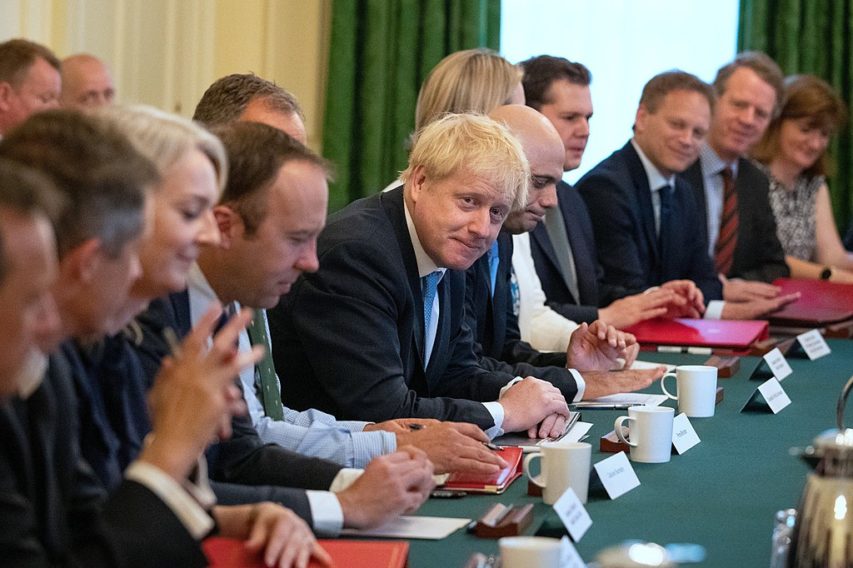
Renowned English comedian Basil Fawlty had a thinko the other day when he (accidentally?) tweeted in the character of noted racist, sexist, white supremacist, homophobe, transphobe, neo-Nazi, etc., etc., “John Cleese”:

Arthur Chrenkoff somehow mistakes the actor for his character (because no real life person like “John Cleese” could possibly exist in post-Cool Brittania, could they?).

As you can imagine, this sentiment didn’t go down very well. The mayor of London, Saddiq Khan, tweeted back “These comments make John Cleese sound like he’s in character as Basil Fawlty. Londoners know that our diversity is our greatest strength. We are proudly the English capital, a European city and a global hub.” Don’t mention the culture war, I guess. Needless to say, various other worthies have joined in to chide Cleese, including questioning what is Englishness anyway?

That’s a good question. Cleese no doubt had in mind the ethnic English, or people who come from the Anglo-Saxon or at least the Anglo-Celtic stock and heritage, who for the great majority of the past millennium and more have constituted the great, if not the overwhelming, majority of the inhabitants of England, and who, again over the course of centuries, have created what we know and understand as the English culture, tradition and institutions. Yes, there have always been migrants arriving and contributing to the mix – Normans, French Huguenots, Jews – but they have been relatively small in number and by and large ethnically and culturally similar. But Cleese’s definition is increasingly at odds with the post-nation state view of belonging. As TV presenter Anila Chowdhry replied to the Monty Python alumnus, “John Cleese, your comment is not only ironic as you live in the Caribbean, but it fails to recognise the benefits of multiculturalism AND that people of different colour in London may actually be English too! I was born & bred in England. I’m brown, English & proud. #ThisIsMyHome”, which of course can be true too, if anything as a legal and cultural matter. This is also coincidentally while it is easier to “become” an American or an Australian or another -an of one of the historically migrant countries where the “-anness” is built on shared civic ideas rather than ethnicity.

(For the record, over 40 per cent of London residents have been born overseas, which is one of the highest proportions in the world, and if you consider major cities, over one million in population, only Toronto, Sydney and Melbourne have more first-generation migrants. Whatever you think, and whatever you think of it, the London of today is certainly not the London of Cleese’s childhood or even his middle age.)

History Buffs: Master and Commander

Filed under: Britain, France, History, Media, Military — Tags: , , , — Nicholas @ 02:00

History Buffs
Published on 18 Sep 2016

History Buffs is back! To thank you all for your patience while I’ve been away on holiday, I’m starting off with Master and Commander!

SUPPORT HISTORY BUFFS ON PATREON
https://www.patreon.com/HistoryBuffs

● Follow us on Twitter: https://twitter.com/HistoryBuffsNH

________________________________________­­_________________________________

Master and Commander: The Far Side of the World is a 2003 American epic historical drama film written, produced and directed by Peter Weir. The film stars Russell Crowe as Captain Jack Aubrey and Paul Bettany as Dr. Stephen Maturin. The film, which cost $150 million to make, was a co-production of 20th Century Fox, Miramax Films, Universal Pictures, and Samuel Goldwyn Films, and released on November 14, 2003 to critical acclaim. The film’s plot and characters are adapted from three novels in author Patrick O’Brian’s Aubrey–Maturin series, which includes 20 completed novels of Jack Aubrey’s naval career.

At the 76th Academy Awards, the film was nominated for 10 Oscars, including Best Picture. It won in two categories, Best Cinematography and Best Sound Editing and lost in all other categories to The Lord of the Rings: The Return of the King.

May 30, 2019

Tank Chats #47 King Tiger | The Tank Museum

Filed under: Germany, History, Military, Technology, WW2 — Tags: , , — Nicholas @ 02:00

The Tank Museum
Published on 2 Mar 2018

Known variously as the Tiger Ausf. B, Tiger II or Königstiger (the British also referred to it as the “Royal Tiger”), 489 Tiger IIs, were produced at the Henschel assembly plant, between January 1944 and March 1945. However, despite lacking in numbers, and being prone to mechanical and mobility issues based on its size and weight, the Tiger II’s combination of devastating firepower, and thick sloped armour plate made it a formidable adversary.

Support the work of The Tank Museum on Patreon: ► https://www.patreon.com/tankmuseum
Or donate http://tankmuseum.org/support-us/donate

Visit The Tank Museum SHOP: ►https://tankmuseumshop.org/

Twitter: ► https://twitter.com/TankMuseum
Tiger Tank Blog: ► http://blog.tiger-tank.com/
Tank 100 First World War Centenary Blog: ► http://tank100.com/ #tankmuseum #tanks #tigertank

QotD: Wahhabism and the West

Filed under: Europe, History, Quotations, Religion — Tags: , , , — Nicholas @ 01:00

“You’re right,” he says, “it shouldn’t be different for Islam, but we make it different. Muslims fought for king and empire in both world wars. Muslims were the backbone of the Indian army. Ataturk’s Turkey was an example of Muslims functioning perfectly well in a modern democratic society — but Ataturk’s Turkey is going away. We don’t have that trust any more. It was a Wahhabi who assassinated the chief justice in British India, and that is more or less the only brand of Islam exported today — extremist Saudi-style Wahhabism. All these giant mosques you see going up in cities all over the world are not paid for locally, they’re paid for by Saudi Arabia. They’re trying to make it one-size-fits-all Islam, and a type of Islam that regards the West as its enemy, instead of the mom-and-pop Islam of the past.”

So you’re saying the problem is not Islam, the problem is Wahhabism?

No! Wahhabism is the symptom. The problem is us. We don’t defend ourselves. If you are a woman living alone in a Muslim community in Europe, you do not venture out after 6 p.m. If there are sexual assaults by Muslims, and the allegations are made public by the victims, the accuser is inevitably accused of racism. Nobody disputes that it happened, but they’re held to a different standard because the victims are Swedes or Danes and the accused is from a Muslim country. It’s believed that it’s unreasonable to expect decent behaviour from an Afghan or an Iraqi — which is racist. You’re denying the humanity of these people. And so you surrender incrementally. You live in a citadel. You make ridiculous changes to your own culture. In Britain the banks don’t give piggy banks to children any more, because the “piggy” might be offensive. There’s a fetishisation of the burka, which should be regarded as what it is — a prison for women. Why should we abandon our own heritage to barbarism? I’m a nineteenth-century imperialist a hundred years past my sell-by date.”

Mark Steyn, interviewed by John Bloom, “Mark Steyn, Cole Porter and Free Speech”, Quadrant, 2017-05-11.

May 29, 2019

US Soldiers Fighting in Russia – The End of the “Polar Bear Expedition” I THE GREAT WAR May 1919

Filed under: History, Military, Russia, USA, WW1 — Tags: , , , , — Nicholas @ 06:00

The Great War
Published on 28 May 2019

The so called Allied intervention into the Russian Civil War suffered from no clear operational goals and mandate and when US President Woodrow Wilson pulled out the American soldiers that were fighting in Northern Russia in May 1919, the operation suffered another setback. Public pressure against US foreign intervention was increasing now that Germany had been beaten and many people didn’t understand what American soldiers were doing in Russia anyway. At the same time Winston Churchill and his supporters maintained that it was vital to defeat the Bolsheviks in Russia once and for all.

» SUPPORT THE CHANNEL
Patreon: https://www.patreon.com/thegreatwar
Merchandise: https://shop.spreadshirt.de/thegreatwar/

» SOURCES
Crownover, Roger. The United States Intervention in North Russia, 1918-1919: The Polar Bear Odyssey. Edwin Mellen Press, 2001.

Wright, Damien. Churchill’s Secret War With Lenin: British and Commonwealth Military Intervention in the Russian Civil War, 1918-20, Helion and Company, 2017

Long, John W. “American Intervention in Russia: the North Russian Expedition, 1918-1919,” in Arthur Dudden, ed. American empire in the Pacific: from trade to strategic balance 1700 – 1922 (Aldershot: Ashgate, 2004): 321-344.

Mawdsley Evan. The Russian Civil War, Pegasus Books, 2019

Moore, Joel. The History of the American Expedition Fighting the Bolsheviki Campaigning in North Russia 1918-1919 (1920)

»CREDITS
Presented by: Jesse Alexander
Written by: Jesse Alexander
Director: Toni Steller & Florian Wittig
Director of Photography: Toni Steller
Sound: Toni Steller
Editing: Toni Steller
Mixing, Mastering & Sound Design: http://above-zero.com
Motion Design: Christian Graef – GRAEFX
Maps: Daniel Kogosov (https://www.patreon.com/Zalezsky)
Research by: Jesse Alexander
Fact checking: Florian Wittig

Channel Design: Alexander Clark
Original Logo: David van Stephold

A Mediakraft Networks Original Channel

Contains licensed material by getty images
All rights reserved – Real Time History GmbH 2019

The EU election was “the Tories’ worst result since 1678”

Filed under: Britain, Europe, Politics — Tags: , , , , , , — Nicholas @ 05:00

Mark Steyn on the results of last week’s EU parliamentary elections:

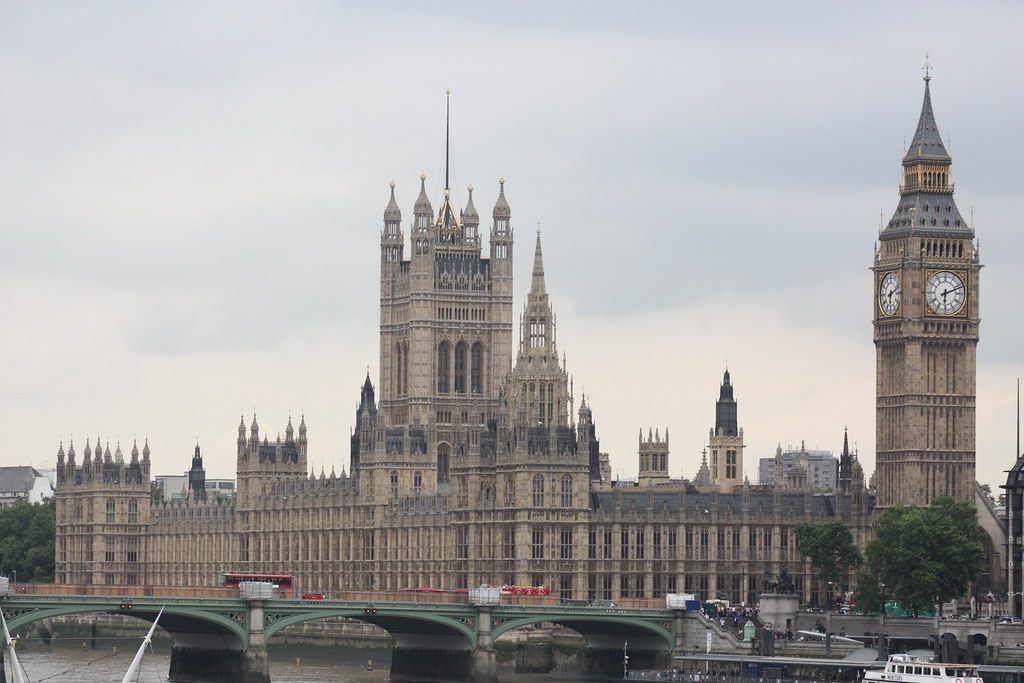
In any normal UK election, it would be inconceivable for either of the two main parties – Conservative and Labour – to attract just 23 per cent of the vote. The fact that that is all they could muster between them is hilarious, and greatly to be enjoyed. As I put it on the radio last week, the departing Theresa May has led the Tories to their worst result in two hundred years. But, really, that’s praising with faint damns. I saw Daniel Hannan on the telly extending Mrs May’s impressive feat back through the pre-Reform Act era and accounting it the Tories’ worst result since 1678. Which is kind of hard to spin. Her forced resignation last Friday morning (by which point her party had made it clear they wouldn’t stick with her past lunch) ensures that she and that election result will be yoked together for all time. And jolly well deserved it is.

When the party of government falls from favor, the beneficiary is usually the principal opposition. Instead, Jeremy Corbyn’s Labour Party saw its vote fall almost as precipitously as the Tories’. Against the Conservatives’ single-digit nine per cent, Labour could muster only fourteen per cent, its own worst result in a century – in fact, since 1910. Which would also be hard to spin, had Theresa May not done Corbyn the favor of pulling off an unbeatable record.

[…]

Instead, Mrs May in particular but also Parliament in general chose to double-down on the estrangement from the masses revealed by the referendum, and spent the next three years demonstrating that, whatever the Prime Minister had in mind when she first declared “Brexit means Brexit”, it obviously doesn’t mean leaving the European Union. Either through malice or stupidity or condescension, the political class opted to widen its breach with the people – and Nigel Farage, who is a very canny fellow, decided six weeks ago to create a party to fill the gap in a European election the UK shouldn’t have had to participate in.

Listening and/or watching to the BBC on Sunday for as long as I could stomach it, I detected a strange urge to suggest that the Brexit Party had somehow under-performed, as though it’s normal for a six-week-old party to win twenty-nine out of seventy-three seats, while the century-old Labour Party wins only ten, and the Tories four and the nearest Nigel gets to a run for his money is the second-placed Liberal Democrats with sixteen seats. Farage and the other officially pro-Brexit parties (Labour, Tory, Democratic Unionist) won 44 seats. The Lib Dems and the other officially Remainer parties (Green, Scottish Nationalists, Plaid Cymru, Sinn Féin, Alliance Party) got 29. Adding in the unelected UKIP and Ulster Unionists, the Leave share of the vote was 58 per cent.

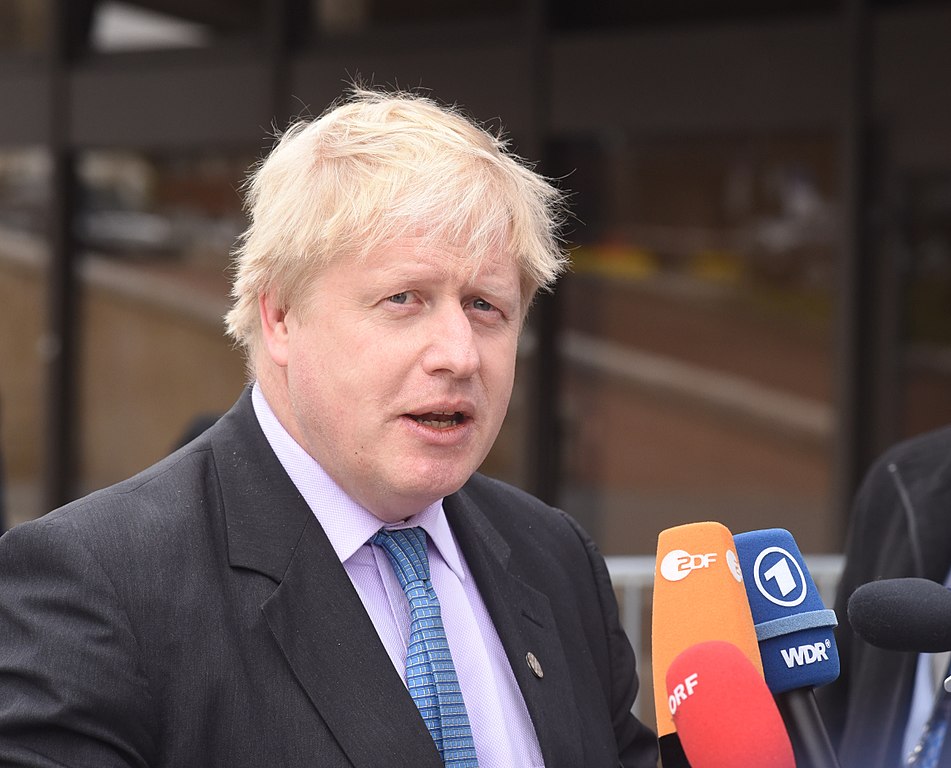
Yes, yes, I know, that’s a bit of a simplification, in that the Tories are supposedly pro-Brexit but totally bollocksed it, and Labour is only pretending to be pro-Brexit as part of a difficult straddle between its Old Labour working-class base and the New Labour preening metropolitan Euro-luvvies. Many of the latter – including such hitherto loyal champagne socialists as actors Simon Callow and Michael Cashman and even Blair’s old Cabinet Secretary Gus O’Donnell. – flew Corbyn’s coop and voted for the Lib Dems. Even so, for those demanding a second referendum (or, as they cynically call it, a “people’s vote”), there’s not much evidence for a second-time-around sadder-but-wiser Remain majority. Among riven Tory families, Jacob Rees-Mogg’s sister stood for the new Brexit Party while Boris Johnson’s sister stood for the equally new “Change UK”, a militantly anti-Brexit party formed by a coterie of disaffected Remainer media self-promoters of the soft left and soft right. Annuziata Rees-Mogg was duly elected in the Farage surge, while Rachel Johnson flopped out because “Change UK” had barely any statistical support outside the more desperate bookers of telly current affairs shows.

QotD: Past civilizations

Filed under: Books, Europe, History, Quotations — Tags: , , — Nicholas @ 01:00

… when anyone says “there was a civilization before us” your head (our head) jumps to airplanes, trains, steel mills, refrigerators, dentistry.

I’m telling you the chances of that are negligible, though I won’t scruple using a more advanced than us past civilization to give my characters a nasty shock when they get to space. I won’t because that’s just cool.

However of things like Ancient Greece or Rome? I almost think the chances against it are worse. And of course civilizations that live and die by coastal sailing would be mostly engulfed in the great melt of the last ice age.

And no, Europe hasn’t been extensively studied. As I said before, Europe is mostly built on Europe. And you can’t dig in a field without finding SOMETHING. If you think everyone runs to the academics or the authorities when something is found, you don’t understand people’s interest in building a house, or sowing a field, as opposed to you know, giving up ownership of their land in all but fact. Frankly I’m amazed so many people do report discoveries.

But the thought of “superior civilizations” got me to thinking of what say the Romans or the Greeks, or those other ancient civilizations if they ever existed, would make of us in the West. We cross the globe by flying through the air. Not just heads of state or priests, no, common people. Hell, our pets fly. Most places have clean, fresh water that someone doesn’t have to carry a mile or so (which has been most of the work of humanity I think, forever.) Forget aqueducts. We have water that comes from our faucets whenever we want it. Cold AND hot. We have temperature control inside our houses, allowing us ignore the weather and keep warm in winter and cold in summer. We can magically cure diseases that killed millions of people by injecting this magical elixir into the sick person’s veins. Our old live a long time in relative comfort. We get our teeth fixed and replaced, so most people can chew to the end of their lives. Most of us can read, and most of us have access to untold wisdom of the sort their hermetic orders would kill for.

We are the superior civilization. We are the enlightened ones, the shining and resplendent inhabitants of the wonderful future.

And we worry about what gender we feel like being that day, who is allowed to pee where, whether someone used the wrong word to refer to someone else who might be offended, whether our use of fossil fuels offends Gaia, whether slapping a kid on the behind is a criminal offense, whether we are doing all we could do with our lives.

In other words, we’re neurotic, unsatisfied, and a bit crazy like most of people who were born and raised rich throughout most of human history.

Which is why if we really were doomed to repeating a cycle, and if the civilizations before us were the same but more advanced, the message of the pyramids would be “Don’t use so much toilet paper. Just wash one square and reuse it.”

Perhaps we should be grateful they are truly profoundly unlikely to ever have existed or tried to send us any message.

Sarah Hoyt, “We Are The Superior Civilization”, According to Hoyt, 2017-05-15.

« Newer PostsOlder Posts »

Powered by WordPress