In many ways, “Minoan” Crete seemed like a Freudian paradise. Here the archaeologists unearthed colourful frescoes of naked-breasted women participating in the dangerous “bull-vaulting” game, whilst statuettes of bare-breasted goddesses, holding writhing snakes in each hand, emerged from various parts of the island. Evans spoke glowingly of a pacifist matriarchy that flourished before the coming of the warlike and patriarchal Greeks, and his vision was hugely influential in academic circles for at least half a century. It is a vision which has been humorously outlined by Rebecca Bradley on the dust-cover of her book, Goodbye, Mother: The Warriors of Crete: “Once upon a time, on an olive-strewn island in a wine-dark sea, beautiful people lived in peace under the rule of the Great Goddess and her matriarchal avatars. The like of their palaces was not seen again until the advent of shopping-mall architecture in the twentieth century; their artistry flowered like the saffron blossoms collected by their luscious bare-breasted maidens. This was Minoan Crete, stronghold of the Matriarchy and the Great Goddess, flower child of the ancient world — until those nasty patriarchal Mycenaeans and even nastier Dorians came along and crashed the party. Oh yes, and there’s something about a volcano on Santorini, and a few earthquakes as well, but the rot really set in when the men from the mainland took over.”
Perhaps the most prominent high priestess of the Great Goddess was Lithuanian archaeologist Marija Gimbutas (1921-1994). During the 1950s and 60s Gimbutas developed her so-called “Kurgan Thesis;” basically the idea that the archaeological marker of the arrival in Europe of Indo-European-speakers was to be found in the Bronze Age Kurgan mound burials of the Pontic Steppe, a vast region incorporating most of present-day Ukraine, southern Russia and northern Kazakhstan. Controversially, Gimbutas further claimed that these nomadic Indo-Europeans brought with them a warrior-culture dominated by male sky-gods, which supplanted earlier matriarchal and goddess-worshipping cultures. In this, she echoed ideas already expressed at great length by Robert Graves in his 1948 book The White Goddess. Over the next three decades Gimbutas developed her ideas further in a series of books, articles and lectures delivered at campuses throughout America and Europe, where she was immensely influential amongst the burgeoning women’s movement. Three major works, The Goddesses and Gods of Old Europe (1974), The Language of the Goddess (1989), and The Civilization of the Goddess (1991), presented an overview of her conclusions regarding what she saw as Europe’s primeval matriarchy.
The importance of Gimbutas in the development of the matriarchal myth, and also by extension in the development of modern radical feminism, cannot be overstated. Her archaeological experience and expertise, together with her wide knowledge of linguistics and anthropology, seemed to give academic credibility to the romantic and poetic ramblings of Arthur Evans and Robert Graves. Yet in retrospect it is hard to imagine why anyone with even a modicum of common sense could have been taken in.
There were warning signals everywhere. Right from the beginning, for example, many historians were critical of Evans’ interpretation of Minoan Crete, and a devastating blow was delivered in 1974 when German author Hans Georg Wunderlich published his Wohin der Stier Europa trug? (Where did the Bull carry Europa? published in English in 1975 as The Secret of Crete). Here Wunderlich, a trained geologist, examined the structure of the “palace” of Knossos in Crete in detail and came to the conclusion that the building could never have been a palace for the living. It was, instead, a charnel house, a massive necropolis which doubled as an arena for human sacrifice. For the happy-go-lucky “bull vaulting game”, said Wunderlich, was nothing of the sort: it was a ferocious form of human sacrifice which involved young men and women being gored and trampled to death by a sacred bull. This, said Wunderlich, was the origin of the legend of the Minotaur. Since Wunderlich’s time human sacrifice has been confirmed as an integral part of Cretan religious practice, whilst the supposed “pacifism” which Evans and others had imagined, was exposed as nonsensical.
Emmet Scott, “The Myth of the Primeval Matriarchy”, The Gates of Vienna, 2016-07-13.
August 11, 2019
QotD: Deconstructing “Minoan Crete”
August 10, 2019
Enter Yugoslavia Part 2 | BETWEEN 2 WARS I 1929 Part 3 of 3
TimeGhost History
Published on 9 Aug 2019As 1929 approaches, the Kingdom of Serbs, Croats and Slovenes spirals closer and closer to collapse. When the parliament descends into murderous chaos, it is up to King Alexander to decide what to do…
Join us on Patreon: https://www.patreon.com/TimeGhostHistory
Hosted by: Indy Neidell
Written by: Francis van Berkel and Spartacus Olsson
Directed by: Spartacus Olsson and Astrid Deinhard
Executive Producers: Bodo Rittenauer, Astrid Deinhard, Indy Neidell, Spartacus Olsson
Creative Producer: Joram Appel
Post-Production Director: Wieke Kapteijns
Research by: Francis van Berkel
Edited by: Daniel Weiss
Sound design: Make KaminskiArchive by: Reuters/Screenocean http://www.screenocean.com
A TimeGhost chronological documentary produced by OnLion Entertainment GmbH.
From the comments:
TimeGhost History
1 hour ago
We don’t delete or ban any opinions which disagree with other opinions. We delete comments that contain historical fallacies and political propaganda by antidemocratic organisations, irrespective of political leaning. This means that we do not tolerate any lies or propaganda that forward the agenda of, for instance, Nazis, Fascists, Stalinists, Leninists, other ultra-Marxists or Anarchists. That is within our responsibility according to the laws in our territory which forbids the dissemination of false flag information, propaganda, and symbols connected to organizations that have been found to be unconstitutional and an immediate danger to a democratic, free society by the German courts, in accordance with §86 and §86a of the German Penal Code. The law specifically mentions NDSDAP in §86 and the KPD in §86a (NSDAP is the Nazi Party and KPD the Communist party). Moreover we do not tolerate hate speech, racism, xenophobia, and the denial of proven crimes against humanity. This is in perfect agreement with the opinion forwarded by The US Supreme Court on society’s responsibility to fight against that kind of speech and it is in agreement with numerous EU and EU member state laws against same said speech.
Miscellaneous Myths: Utgard-Loki
Overly Sarcastic Productions
Published on 9 Aug 2019BRAND NEW MYTH-RELEVANT MERCH: https://www.redbubble.com/people/ospy…
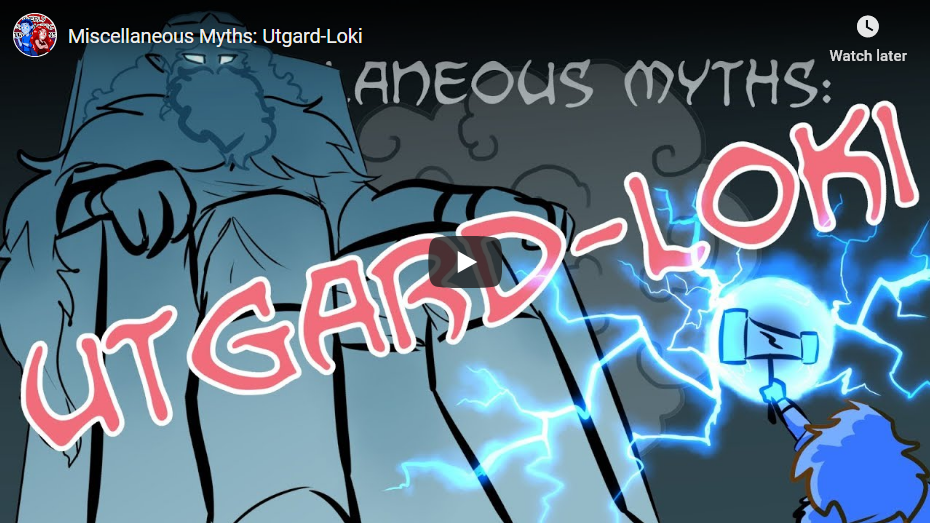
In today’s Norse Mythology news: A goat has a very bad day, Loki loses an eating competition and Thor fails to wrestle an old lady, more at 11.
PATREON: https://www.Patreon.com/OSP
OUR WEBSITE: https://www.OverlySarcasticProductions.com
Find us on Twitter https://www.Twitter.com/OSPYouTube
Find us on Reddit https://www.Reddit.com/r/OSP/
Sulla’s dictatorships
In New York magazine, Andrew Sullivan portrays the current state of the American Republic in light of the late history of the Roman Republic:
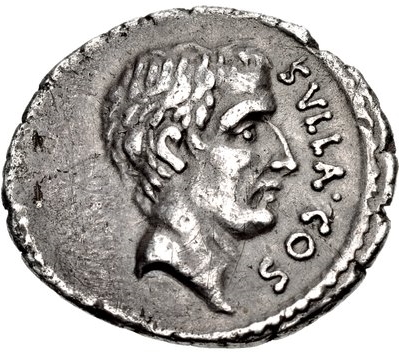
This 54 B.C. coin bears the portrait of the dictator Sulla. The moneyer was Q. Pompeius Rufus, the grandson of Sulla and his home would likely have had portraits of their famous ancestor. Thus, although posthumously struck, the portrait on these coins is probably an accurate representation.
Photo by CNG via Wikimedia Commons.
… zoom out a little more and one obvious and arguably apposite parallel exists: the Roman Republic, whose fate the Founding Fathers were extremely conscious of when they designed the U.S. Constitution. That tremendously successful republic began, like ours, by throwing off monarchy, and went on to last for the better part of 500 years. It practiced slavery as an integral and fast-growing part of its economy. It became embroiled in bitter and bloody civil wars, even as its territory kept expanding and its population took off. It won its own hot-and-cold war with its original nemesis, Carthage, bringing it into unexpected dominance over the entire Mediterranean as well as the whole Italian peninsula and Spain.
And the unprecedented wealth it acquired by essentially looting or taxing every city and territory it won and occupied soon created not just the first superpower but a superwealthy micro-elite — a one percent of its day — that used its money to control the political process and, over time, more to advance its own interests than the public good. As the republic grew and grew in size and population and wealth, these elites generated intense and increasing resentment and hatred from the lower orders, and two deeply hostile factions eventually emerged, largely on class lines, to be exploited by canny and charismatic opportunists. Well, you get the point.
After the overthrow of the monarchy, the new Republic went from strength to strength, struggling against and generally beating and absorbing other city states in the Italian peninsula, eventually rising to face the challenge of Carthage, the dominant power in the western Mediterranean. The eventual Roman victory over Carthage left Rome the superpower of its age, able to dominate and control even the remaining “great” powers of the eastern Mediterranean world. One of the costs of military dominance was an over-reliance on its citizen armies, which eventually changed the entire economy of the Republic, switching from largely small-holding farmers (who were subject to legionary service) to larger slave-worked farms that displaced the families of free citizens from their lands. The result was a constant inflow of impoverished rural citizens to the urban centres, especially Rome itself.
The newly enlarged urban poor found champions to push for reforms to aid them in their plight, the first of whom was Tiberius Gracchus (Extra Credits did a short video series on the Brothers Gracchi: Part I, Part II, Part III, Part IV, Part V, and an extra commentary video). The defeat and death of the Gracchi brothers by agents of the Patrician order led, as you might expect, to yet more polarization and further violent political struggle. This process was hastened by the conflict between Marius and his former protégé Sulla:
As the turn of the first century BCE approached and wars proliferated, with Roman control expanding west and east and south across the Mediterranean, the elites became ever wealthier and the cycle deepened. Precedents fell: A brilliant military leader, Marius, emerged from outside the elite as consul, and his war victories and populist appeal were potent enough for him to hold an unprecedented seven consulships in a row, earning him the title “the third founder of Rome.” Like the Gracchi, his personal brand grew even as republican norms of self-effacement and public service attenuated. In a telling portent of the celebrity politics ahead, for the first time, a Roman coin carried the portrait of a living politician and commander-in-chief: Marius and his son in a chariot.
A dashing military protégé (and rival) of Marius, Sulla, was the next logical step in weakening the system — a popular and highly successful commander whose personal hold on his soldiers appeared unbreakable. Tasked with bringing the lucrative East back under Rome’s control, he did so with gusto, prompting a somewhat nervous Senate to withdraw his command and give it to his aging (and jealous) mentor Marius. But Sulla, appalled by the snub, simply refused to follow his civilian orders, gathered his men, and called on them to march back to Rome to reverse the decision. His officers, shocked by the insubordination, deserted him. His troops didn’t, soon storming Rome, restoring Sulla’s highly profitable command, and forcing his enemies into exile. Sulla then presided over new elections of friendly consuls and went back into the field. But his absence from Rome — he needed to keep fighting to reward his men to keep them loyal — enabled a comeback of his enemies, including Marius, who retook the city in his absence and revoked Sulla’s revocations of command. Roman politics had suddenly become a deadly game of tit for tat.
When Sulla entered Rome a second time, he rounded up 6,000 of his enemies, slaughtered them en masse within earshot of the Senate itself, launched a reign of terror, and assumed the old emergency office of dictator, but with one critical difference: He removed the six-month expiration date — turning himself into an absolute ruler with no time limit. Stocking and massively expanding the Senate with his allies, he neutered the tribunes and reempowered the consuls. He was trying to use dictatorial power to reestablish the old order. And after three years, he retired, leaving what he thought was a republic restored.
Within a decade, though, the underlying patterns deepened, and nearly all of Sulla’s reforms collapsed. What lasted instead was his model of indefinite dictatorship, with the power to make or repeal any law. He had established a precedent that would soon swallow Rome whole.
August 9, 2019
Lightweight Experimental Lanchester SMGs
Forgotten Weapons
Published on 14 Jun 2019http://www.patreon.com/ForgottenWeapons
Cool Forgotten Weapons merch! http://shop.bbtv.com/collections/forg…
George Lanchester was the engineer responsible for originally reverse engineering the German MP28 submachine gun for production by the British, under the designation Lanchester. Once he finished that design work, the gun was put into production by the Sterling Engineering Company, and Lanchester went to work for them as part of the manufacturing process. Once there, he began tinkering with improved designs to reduce the weight of the gun – one of its main drawbacks. He created these three prototypes, but went no further, as government officials ordered him to stop when they discovered this work in 1942. By that time the Sten was in production, and continued development of the Lanchester was seen as a waste of time and resources.
The guns remained in the Sterling company’s reference collection, and elements of the final stock design would resurface in a later prototype design in the 60s. Beyond that, these guns were a simple dead end of design.
Many thanks to the Royal Armouries for allowing me to film and disassemble these unique submachine guns! The NFC collection there – perhaps the best military small arms collection in Western Europe – is available by appointment to researchers:
https://royalarmouries.org/research/n…
You can browse the various Armouries collections online here:
https://royalarmouries.org/collection/
Contact:
Forgotten Weapons
PO Box 87647
Tucson, AZ 85754

QotD: Early milestones in aviation
A couple of weeks later, on July 6th 1919 the first east-west transatlantic flight landed at Mineola on Long Island. The RAF airship R34 had left East Fortune in Scotland four days earlier, having been hastily converted to hold passengers, and with a plate welded to an engine exhaust pipe to enable it to cook and serve hot food, which is more trouble than most airlines would go to today. A tabby kitten called Wopsie who served as the crew’s mascot stowed away on the flight, and because nobody at the Long Island end knew anything about landing large airships Major E M Pritchard parachuted out a little early, and became the first man to land on North American soil by air from Europe.
These briefly famous men did not get to savor their celebrity for long: Major Pritchard died in 1921 when the R38 airship exploded over the Humber estuary; his body was never found. Captain Alcock, just six months after his triumph and being knighted by George V, died at Rouen in Normandy in December 1919 when his new Vickers Viking crashed en route to the Paris air show.
Mark Steyn, “Come, Josephine, in My Flying Machine”, SteynOnline, 2019-07-07.
August 8, 2019
An excellent illustration of market segmentation
The Wikipedia entry for “market segmentation” defines it this way:
“BEER”by Jonnee is licensed under CC BY-NC-SA 2.0


Market segmentation is the activity of dividing a broad consumer or business market, normally consisting of existing and potential customers, into sub-groups of consumers (known as segments) based on some type of shared characteristics. In dividing or segmenting markets, researchers typically look for common characteristics such as shared needs, common interests, similar lifestyles or even similar demographic profiles.
No single product is going to be universally popular, and it’s generally a bad idea to present it that way. The producers of a new product ideally try to identify the groups of potential customers who are more likely to want to buy the new product, and tailor their advertising to those groups. The more accurately they can identify and communicate with these customer groups, the greater the chances that the product will be a success in the market.
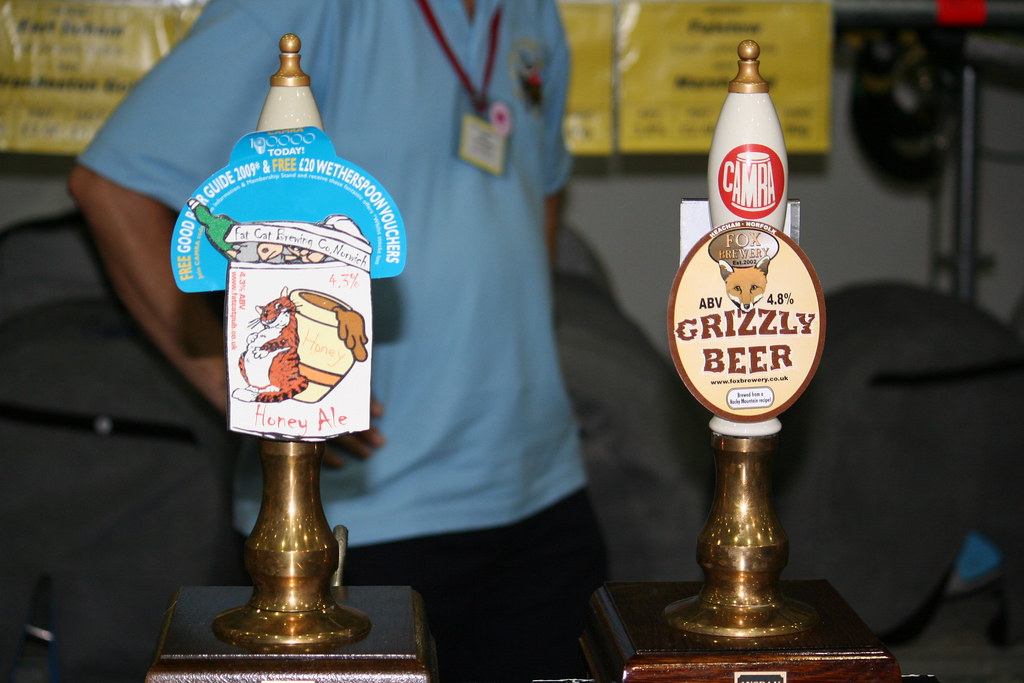
Beer isn’t universally popular (Gasp! Shock! Horror!), so brewers try to identify different kinds of beer drinkers and market their brews to those sub-groups:
The point about a market being that you can put your stuff out there and see who buys it. The buyers will – they are rational beings after all – select from the varied offerings and their selections will be the ones which best increase their utility by their own measurements of that utility. Thus the Shagmenowbigboypint might get a bit more business toward closing time, who knows? Not necessarily entirely female business either.
And even to stop being puerile about it. We’ve only this one system that does provide multiple choices – that’s what a market is. But in order for ever finer meeting of utility it’s necessary for ever finer slices of the market to be addressed. That is, we need to have free market entry so we can find out what it is that actually meets peoples’ desires.
Banning something that appeals to some slice of that market is thus defeating the point and object of that very market’s existence. Sure, lots of women won’t buy a sexist beer. Some will, as will some men. The aim and art of the whole exercise being to allow those who won’t not to, those who will to.
Or, as we can put it, every beer being Shagmenowbigboypint is as bad as no beer being Shagmenowbigboypint.
QotD: Austrians – strudel-eating surrender monkeys
The Austrians (or rather the Habsburgs) built up a moderately large empire by persuading the Magyars that they could be sort of equal partners in the empire in an unequal sort of way, expert politicking and setting one lot of Slavs against another in the Balkans and central Europe, and marrying into the right ducal families in bits of what was later to become Italy. They never quite managed to sort out the Serbs, however, who felt that fighting nobly against the Turks was their speciality, and they were forced out of Switzerland early on by a small boy with an apple on his head.
The year 1683 may reasonably be considered a turning point for Western Christendom. Over the preceding century or so the Turkish Ottoman Empire had steadily advanced up the Balkan peninsula and after being balked, as it were, for many years by Macedonians, Bulgars, Albanians, Serbs, Bosnians, Croats, Slovenians, Slavonians and some I’ve probably forgotten, finally got as far as the Habsburg capital, Vienna, to which they laid siege. The siege failed, and the Turks were repelled, never again to return. Why? Because Austria was rescued by the Poles under Jan III Sobieski.
Under the noted and renowned Empress Maria Theresa, a War of the Austrian Succession was held. In keeping with tradition, it was mainly fought between the French and the English in Belgium (the French, opposed to Austria, won), except for an unimportant sideshow which appears to have been between the French and the Indians in Saratoga. The upshot was naturally that the Austrians let the Prussians have Silesia. Twice, to be on the safe side. A few years later the Seven Years War, largely fought between the English and the French in Belgium (the English, opposed to the Austrians, won) confirmed the result.
When it came to the French revolutionary and the Napoleonic wars, the Habsburgs were naturally on the side of the divine right of kings (well, Marie-Antoinette was a Habsburg herself) and against mob rule, liberty, fraternity, and most certainly equality. In furtherance of this cause, the Austrians fought the French at such places as Marengo, Austerlitz, and Wagram – among other names listed on the Arc de Triomphe in Paris. By 1812 the Austrians decided to try being on the same side as Napoleon for a change. Napoleon promptly invaded Russia, with predictable results. Following Napoleon’s final defeat at a battle in Belgium which the Austrians fortunately weren’t in time to get to, they regained most of their possessions in Italy at the peace talks due to diplomatic manoeuvrings by the master of the art, Metternich, but lost influence in Germany.
In the 1850s Austria failed to back her treaty partner Russia when the latter was invaded by the Turks, French and English in the Crimean war. Sardinia/Savoy/Piedmont, the leading state in the Italian peninsula, fought with the Allies, gaining international favour when it came to removing the Austrian influence during the subsequent wars of the Italian unification. Austria lost battles at places like Magenta and Solferino, and with them most of its Italian possessions except Venice.
In 1864 the Austrians did actually win a battle, a small naval engagement near Heligoland in the North Sea, against the Danes, against whom they were fighting in support of the Prussians over the Schleswig-Holstein question, of course. Emboldened by this masterstroke, they promptly came to blows with their erstwhile allies and were soundly whipped at the battle of Sadowa-Königgratz. The Italians got most of the rest of their country back in the resulting confusion.
The Austrians managed to stay out of trouble for another few decades after that, building up a national economy based on cheap dance music and diplomatic manoeuvrings in the Balkans. Unfortunately they got out of their depth in this respect; in 1914 the foreign minister [actually Chief of the General Staff] Conrad von Hötzendorff, believing himself to be the reincarnation of Metternich, decided to start the First World War to impress a woman he fancied. It could reasonably be argued that all the countries involved lost the First World War, even the winners, but Austria, after some Pyrrhic successes against the Serbs, a certain amount of back-and-forth against the Russians in Galicia and a cheap and ultimately futile win at Caporetto after the Russians had pulled out and the Germans had sent rather a lot of extra troops, ended up losing its entire empire, its monarchy, access to the sea and any self-respect whatsoever. It also managed to export Adolf Hitler to Germany during this period, which was singularly unfortunate; he absorbed Austria into a Greater Germany and then lost a rather big war in the most spectacular of fashions, as you are probably aware. This ended the military involvement of Austria in world affairs, at least for the moment.
I rest my case.
Albert Herring, “Why neither the French nor the Italians are the worst military nation”, Everything2, 2002-01-07.
August 7, 2019
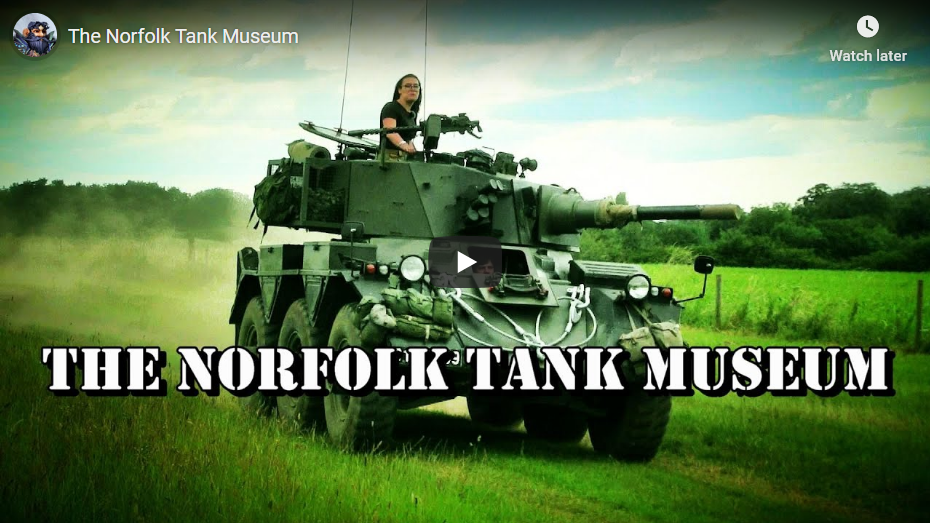
The Norfolk Tank Museum
The Mighty Jingles
Published on 7 Jul 2019So this week Rita and I went to a tiny little tank museum in deepest, darkest Norfolk. Luckily, the natives were friendly.
http://norfolktankmuseum.co.uk/
https://www.youtube.com/watch?v=G0ryV…
August 6, 2019
QotD: Sheep and goats
It’s the little things like this that point to the mindset under them. Or as Pratchett memorably put it in Small Gods: “Sheep are stupid and have to be driven. But goats are intelligent, and need to be led.” European nations treat their people like sheep. The USA treats its people more like goats, although the would-be shepherds keep pushing. Pratchett did not add that trying to drive goats will often earn the would-be driver a kick in the nadgers, but it’s worth remembering. Because Americans are goats. We can be led by the right people for the right reasons. Try to drive us, and you will find your family jewels suffering.
Kate Paulk, “The Difference Between Citizens And Subjects”, Kate Paulk, 2017-07-17.
August 5, 2019
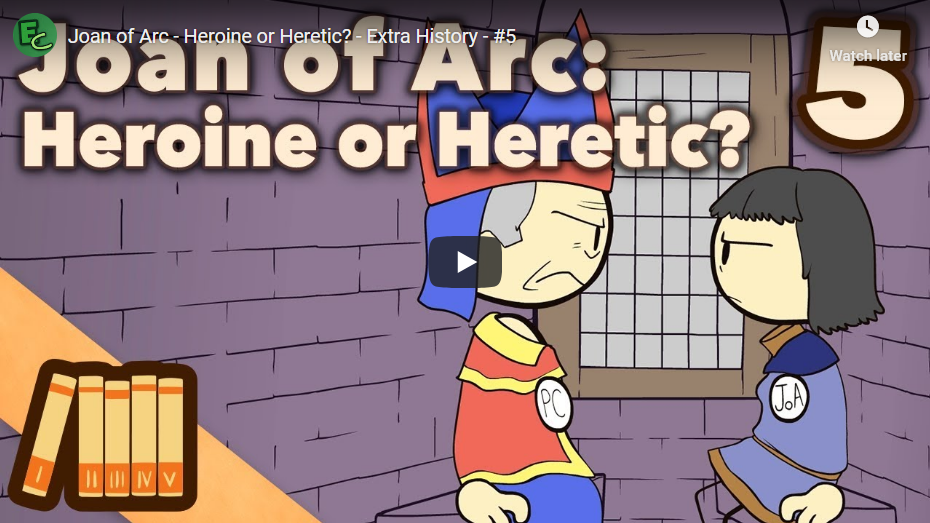
Joan of Arc – Heroine or Heretic? – Extra History – #5
Extra Credits
Published on 3 Aug 2019Join us on Patreon! http://bit.ly/EHPatreon
Joan had been sold out to the English. Bishop Pierre Cauchon was determined to prove the inaccuracy of her visions and her motivations so that Charles could have no claim to the throne. But Joan held on till the bitter end.
August 4, 2019
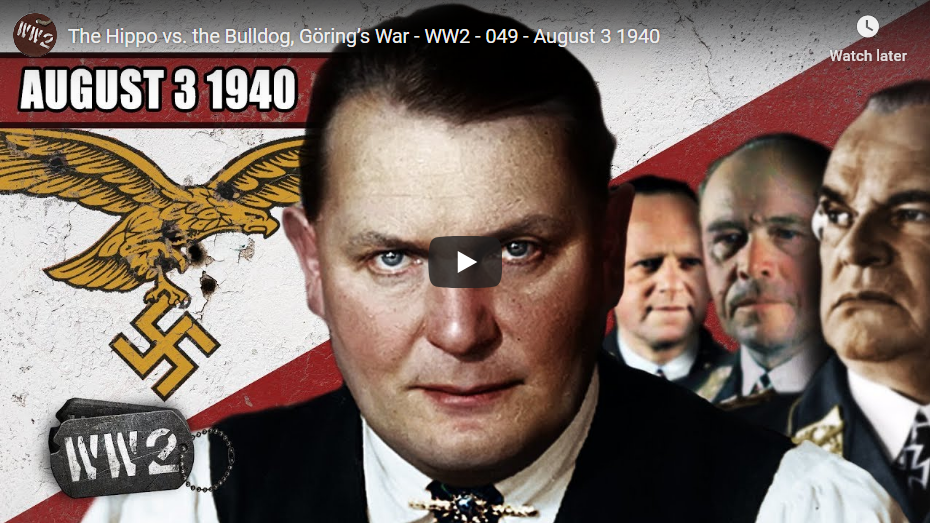
The Hippo vs. the Bulldog, Göring’s War – WW2 – 049 – August 3 1940
World War Two
Published on 3 Aug 2019As the Kanalkampf comes to a close, the Battle of Britain heats up. Hitler wants Britain out of the war. But before the Germans can invade Britain, it will have to deal with the Royal Air Force and the Royal Navy.
Join us on Patreon: https://www.patreon.com/TimeGhostHistory
Or join The TimeGhost Army directly at: https://timeghost.tvFollow WW2 day by day on Instagram @World_war_two_realtime https://www.instagram.com/world_war_t…
Join our Discord Server: https://discord.gg/D6D2aYN.
Between 2 Wars: https://www.youtube.com/playlist?list…
Source list: http://bit.ly/WW2sourcesWritten and Hosted by: Indy Neidell
Produced and Directed by: Spartacus Olsson and Astrid Deinhard
Executive Producers: Bodo Rittenauer, Astrid Deinhard, Indy Neidell, Spartacus Olsson
Creative Producer: Joram Appel
Post-Production Director: Wieke Kapteijns
Research by: Indy Neidell
Edited by: Iryna Dulka
Map animations: EastoryColorisations by Norman Stewart and Julius Jääskeläinen https://www.facebook.com/JJcolorization/
Eastory’s channel: https://www.youtube.com/channel/UCEly…
Archive by Screenocean/Reuters https://www.screenocean.com.Sources:
Colored portrait of Hugo Sperrle by Ruffneck88
Narodowe Archiwum Cyfrowe
IWM: HU 93055, CH 1535, CH 1533, A 18881, HU 76020
301 squadron insignia by Jakub Mikita
303 squadron insignia by MrozoA TimeGhost chronological documentary produced by OnLion Entertainment GmbH.
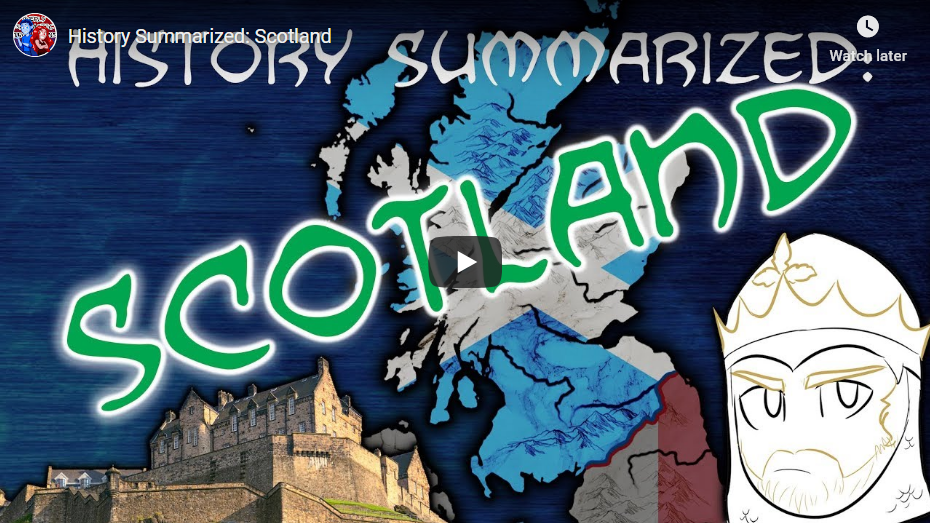
History Summarized: Scotland
Overly Sarcastic Productions
Published on 2 Aug 2019Go to http://www.audible.com/overlysarcastic or text
OVERLYSARCASTICto 500500 to get a free audiobook, 2 free Audible Originals, and 30-day free trial.Put on your Kilt and grab some bagpipes, it’s time to talk about Scotland! From the earliest beginnings to the modern day, the Scots have had a fiercely independent attitude, and are absolutely willing to fight about it — several times, in fact.
Fun fact about Kilts, I couldn’t fit this in the video anywhere, but basically Scots used to wear these big complicated vaguely-toga-like wraps of tartan plaid starting in the Renaissance, but in the 1720s one guy said “This is too complicated, take the top part off but keep the bottom half and just attach it with a belt — and behold, the Kilt as we know it was born.
FURTHER READING: Scotland, A Concise History — https://www.amazon.com/Scotland-Conci…
PATREON: https://www.Patreon.com/OSP
DISCORD: https://discord.gg/sS5K4R3
MERCH LINKS: https://www.redbubble.com/people/OSPY…
OUR WEBSITE: https://www.OverlySarcasticProductions.com
Find us on Twitter https://www.Twitter.com/OSPYouTube
Find us on Reddit https://www.Reddit.com/r/OSP/
From the comments:
Overly Sarcastic Productions
1 hour ago (edited)
Blue: Spends two weeks researching, writing, and producing a video about Scottish History
Also Blue: USES THE WRONG FUCKING FLAG
Rest assured, everybody, I’m veritably mortified by how badly I messed that up.
-B
A sure-fire way to reduce monarchist sentiments – Royal celebrity slacktivism
Chris Selley offers some friendly advice to His Royal Highness the Duke of Sussex:

Prince Harry and Meghan Markle visit Titanic Belfast in March 2018.
Photo from the Northern Ireland Office via Wikimedia Commons.
Despite what some scandalized British headlines have suggested, Prince Harry, Duke of Sussex, has not claimed to be helping to save the world from climate change by only planning to get his 37-year-old wife pregnant one more time. “Two, maximum!” he tells primatologist Jane Goodall in an interview-cum-rambling discussion in the current edition of British Vogue, which was guest-edited by Meghan, Duchess of Sussex. It was in the context of some store-bought Harry musings about the perils facing planet Earth and its future inhabitants — “this place is borrowed,” etc. — but it was presented more as a half-joke than as an earnest plan to help out the biosphere.
Good thing, too, because not long after those headlines landed we learned Harry was off to Sicily for a massive Google-sponsored climate change celebrity gabfest. Needless to say, he didn’t row there. Italian media reported more than 100 private jets and several superyachts had delivered the actors, singers, supermodels and tech magnates. All reportedly had to sign non-disclosure agreements about what went on, which is a brilliant new innovation in climate-change slacktivism: “Our climate change discussions were not only important enough to justify heroic eruptions of carbon dioxide, but so important that we can’t tell you anything about them.”
Some think it’s petty to criticize climate activists for their own emissions. I was recently taken to task by myriad correspondents, many of whom were not Liberal partisans, for suggesting that a family long weekend surfing on Vancouver Island was a strange look for a prime minister trying to sell Canadians on a carbon tax with the very future of the planet, he argues, hanging in the balance. Honestly it baffles me. Is the idea that celebrity advocacy for decarbonized lifestyles will inspire so many other people to adopt them that we should forgive the celebrities’ own excesses? If people actually take their environmental cues from the likes of Leonardo DiCaprio, Harry Styles, Naomi Campbell and Orlando Bloom — all were reportedly in Sicily — then surely they would be far more inspired if the celebrities actually made half a personal effort.
But there will always be films, and they will always need actors, and there will always be pop music, and it will always need singers, and fame being what it is, a lot of the actors and singers will always end up being insufferable flakes. The monarchy Harry’s dad and brother are front of the line to lead isn’t nearly so immutable. No other Western royal family has managed to maintain such a conspicuously opulent lifestyle while maintaining head-of-state status and widespread affection not just on its home soil — where class remains a dominant social divider — but in many very different realms all over the world.
Whatever you think of the Royals, it’s quite an accomplishment. And a significant part of the recipe has been eschewing intellectualism and the unfortunate flights of fancy that can come with it. Prince Charles will be Britain’s (and Canada’s) first university-graduate monarch. In contrast, by some accounts, 10-year-old Elizabeth Windsor was home-schooled to the tune of just seven-and-a-half hours a week. As Ben Pimlott explains in his landmark biography of her, the goal was first and foremost to prevent her emerging as a “blue stocking” — i.e., as a female intellectual.
August 3, 2019
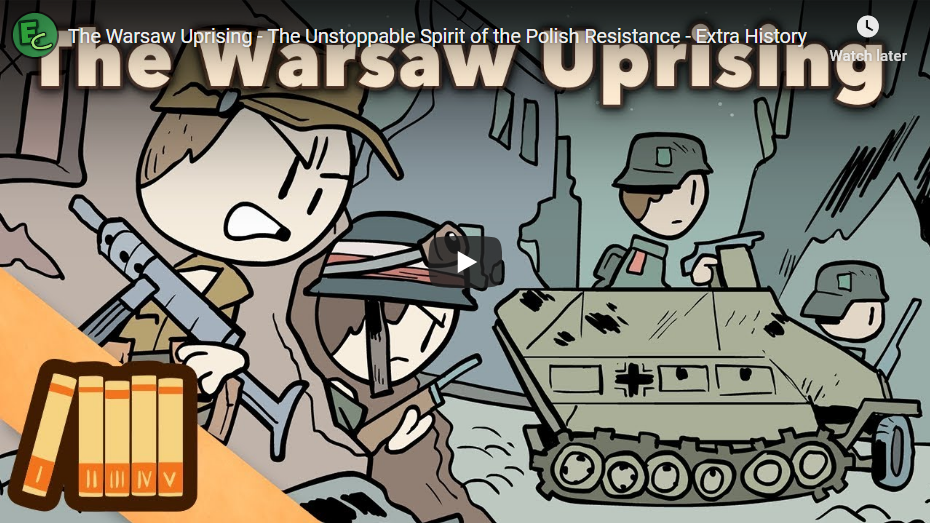
The Warsaw Uprising – The Unstoppable Spirit of the Polish Resistance – Extra History
Extra Credits
Published on 1 Aug 2019Thanks to the Polish National Foundation for sponsoring this video. https://www.pfn.org.pl/
The Polish are determined to make Poland matter on the world stage, and they will not wait for whatever mercies may come from the Russians. So the Home Army stages their own uprising to liberate Warsaw, and for some 60-odd days, their strongest members, the Grey Ranks, tragically held steadfast.
Join us on Patreon! http://bit.ly/EHPatreon