Epic History TV
Published 5 Nov 2021Play Epic War: Thrones and enjoy the real war game experience!
Download here: http://bitly.ws/j86c
Use Gift Code ‘WAR777‘ to receive 200 beads and 200 skill points.
Real War, Real EpicBig thanks to Legendarian for Total War: Attila gameplay footage, check out his YouTube channel here: https://www.youtube.com/channel/UCOI2…
Thanks also to our Series Consultant Professor David Parnell of Indiana University Northwest, who you can follow on Twitter here: https://twitter.com/byzantineprof
Total War: Attila gameplay footage used with kind permission of Creative Assembly — buy the game here: https://geni.us/qDreR
Thanks also to the Vandalic War mod crew for modding support, find out more about their mod here: https://steamcommunity.com/sharedfile…
🎨 Original artwork by Miłek Jakubiec https://www.artstation.com/milek
📚Recommended reading (as an Amazon Associate I earn from qualifying purchases):
đź“– Procopius, History of the Wars https://geni.us/L3Pgc
đź“– The Wars of Justinian by Michael Whitby https://geni.us/Xxrd3
đź“– Rome Resurgent by Peter Heather https://geni.us/ZFoU1
đź“– The Armies of Ancient Persia: the Sassanians by Kaveh Farrokh https://geni.us/jMQo3z
📖 Late Roman Cavalryman AD 236–565 (Osprey) by Simon MacDowall https://geni.us/XMGlSupport Epic History TV on Patreon from $1 per video, and get perks including ad-free early access & votes on future topics https://www.patreon.com/EpicHistoryTV
đź‘• Buy EHTV t-shirts, hoodies, mugs and stickers here! teespring.com/en-GB/stores/epic-histo…
🎶Music from Filmstro: https://filmstro.com/?ref=7765
Get 20% off an annual license with this exclusive code:EPICHISTORYTV_ANN#EpicHistoryTV #RomanEmpire #EasternRomanEmpire #Justinian #Belisarius #ByzantineEmpire
#EpicWar:Thrones #Strategy #ThreeKingdoms #WarGame #RealCivilizationWar
November 6, 2021
Belisarius Part 2: The Empire Strikes Back
Is the Answer in Uranus? – The Soviet Plan to Win at Stalingrad – WW2 SPECIAL
World War Two
Published 4 Nov 2021Georgy Zhukov told Josef Stain in September that if the Red Army could just hold out until November, he could put together a counteroffensive that would defeat the enemy. Well, November is here, and that counteroffensive is ready to kick off, but how was it put together? Let’s find out.
(more…)
Choose your college roommates well
Scott Alexander on the unlikely rise of Victor Orbán:
Some are born great. Some achieve greatness. And some are Victor Orbán’s college roommates.
Orbán: Europe’s New Strongman and Orbánland, my two sources for this installment of our Dictator Book Club, tell the story of a man who spent the last eleven years taking over Hungary and distributing it to guys he knew in college. Janos Ader, President of Hungary. Laszlo Kover, Speaker of the National Assembly. Joszef Szajer, drafter of the Hungarian constitution. All of them have something in common: they were Viktor Orbán’s college chums. Gabor Fodor, former Minister of Education, and Lajos Simicska, former media baron, were both literally his roommates. The rank order of how rich and powerful you are in today’s Hungary, and the rank order of how close you sat to Viktor Orbán in the cafeteria of Istvan Bibo College, are more similar than anyone has a right to expect.
Our story begins on March 30 1988, when young Viktor Orbán founded an extra-curricular society at his college called The Alliance Of Young Democrats (Hungarian abbreviation: FiDeSz). Thirty-seven students met in a college common room and agreed to start a youth organization. Orbán’s two roommates were there, along with a couple of other guys they knew. Orbán gave the pitch: the Soviet Union was crumbling. A potential post-Soviet Hungary would need fresh blood, new politicians who could navigate the democratic environment. They could get in on the ground floor.
It must have seemed kind of far-fetched. Orbán was a hick from the very furthest reaches of Hicksville, the “tiny, wretched village of Alcsutdoboz”. He grew up so poor that he would later describe “what an unforgettable experience it had been for him as a fifteen-year-old to use a bathroom for the first time, and to have warm water simply by turning on a tap”. He was neither exceptionally bright nor exceptionally charismatic.
Still, there was something about him. To call it “a competitive streak” would be an understatement. He loved fighting. The dirtier, the better. He had been kicked out of school after school for violent behavior as a child. As a teen, he’d gone into football, and despite having little natural talent he’d worked his way up to the semi-professional leagues through sheer practice and determination. During his mandatory military service, he’d beaten up one of his commanding officers. Throughout his life, people would keep underestimating how long, how dirty, and how intensely he was willing to fight for something he wanted. In the proverb “never mud-wrestle a pig, you’ll both get dirty but the pig will like it”, the pig is Viktor Orbán.
Those thirty-six college friends must have seen something in him. They gave him his loyalty, and he gave them their marching orders. The predicted Soviet collapse arrived faster than anybody expected, and after some really fast networking (“did you know I represent the youth, who are the future of this country?”) Orban got invited to give a speech at a big ceremony marking the successful revolution, and he knocked it out of the park.
He spoke about freedom, and democracy, and the popular will. He spoke against the older generation, and the need for a rupture with the crumbling traditions of the past. And also, he spoke against the Russian troops remaining in the country — the only speaker brave enough to say what everyone else was thinking. The voters liked what they heard: in Hungary’s first free election, he and several of his college friends were elected to Parliament on the Fidesz ticket.
Unfortunately, he wasn’t a very good liberal MP.
Separated from his pomp and platform, he was just a 27 year old kid without a lot of political experience. There was a glut of liberal democrats in Hungary — the country had just had a successful liberal democratic revolution — and Orbán and Fidesz couldn’t differentiate themselves from the rest of the market. Most liberal democrats wanted cosmopolitan intellectual types; Orbán — despite his herculean efforts to lose the accent and develop some class — was still just a hick from Hicksville. During the next election, Fidesz did embarrassingly badly.
So Viktor Orbán got everyone from his liberal democratic party together and asked — what if, instead of being liberal democrats, we were all far-right nationalists?
Wait, what?
No4 MkII: The Lee Enfield’s Final Standard Upgrade
Forgotten Weapons
Published 21 Jul 2021http://www.patreon.com/ForgottenWeapons
https://www.floatplane.com/channel/Fo…
Cool Forgotten Weapons merch! http://shop.forgottenweapons.com
The final standard pattern of the venerable Lee Enfield as a standard-issue service rifle was the No4 MkII, introduced after the end of World War Two. The new pattern was adopted to resolve problems that had come about because of wartime simplifications to the rifle. Specifically, the use of kiln-dried wood for stocks. On the original No4 design, the trigger was pinned to the trigger guard, which was in turn connected to the front handguard. The sear was pinned to the receiver. If the handguard swelled, shrank, or warped (which was much more likely on the quickly kiln-dried stocks used during the war, compared to the naturally dried pre-war wood), the trigger/sear interaction could be impacted.
To solve this, the receiver was changed slightly to include a boss for attaching the trigger. This kept both the trigger and sear pinned to the (metal) receiver, and stock shifting was no longer a problem. In addition, a change was also made to remove the boss originally intended for mounting the magazine cutoff lever, so that No4 rifles would be made using No5 receiver forgings (this change did not result in a new rifle designation).
Many existing rifles were refitted to the new standard, with upgraded MkI rifles becoming Mk I/2 and upgraded MkI* rifles becoming MkI/3.
Contact:
Forgotten Weapons
6281 N. Oracle 36270
Tucson, AZ 85740
November 5, 2021
The 1st (Failed) Paris Commune Uprising During the Franco-Prussian War 1870
Real Time History
Published 4 Nov 2021Sign up for Curiosity Stream and get Nebula bundled in and SAVE 26%: https://curiositystream.com/realtimeh…
The Siege of Paris during the Franco-Prussian War 1870 and the downfall of the French Empire after the Battle of Sedan created a volatile social situation in the French capital. And in November 1870 this situation erupted in an attempt to topple the provisional government and create a self-ruling Paris Commune.
» THANK YOU TO OUR CO-PRODUCERS
John Ozment
James Darcangelo
Jacob Carter Landt
Thomas Brendan
James Giliberto
Kurt Gillies
Albert B. Knapp MD
Tobias Wildenblanck
Richard L Benkin
Scott Deederly
John Belland
Adam Smith
Taylor Allen
Jim F Barlow
Rustem Sharipov» OUR PODCAST
https://realtimehistory.net/podcast – interviews with historians and background info for the show.» LITERATURE
Arand, Tobias: 1870/71. Die Geschichte des Deutsch-Französischen Krieges erzählt in Einzelschicksalen. Hamburg 2018Gouttman, Alain: La grande défaite. Paris 2015
Spiekermann, Uwe: “Die wahre Geschichte der Erbswurst”, unter: https://uwe-spiekermann.com/2018/05/1… (zuletzt besucht am 21.9.2021)
» SOURCES
Chuquet, Arthur: La Guerre 1870-71. Paris 1895Fontane, Theodor: Der Krieg gegen Frankreich. Bd. 3. Berlin 1878
Goncourt, Edmond de: Journal des Goncourts. II.1. 1870-1871. Paris 1890
HĂ©risson, Maurice d’: Journal d’un officier d’ordonnance. Paris 1885
Heylli, Georges d’ (ed.): M. Thiers Ă Versailles: l’armistice. Paris 1871
KĂĽrschner, Joseph (Hrsg.): Der groĂźe Krieg 1870-71 in Zeitberichten. Leipzig o.J. (1895)
Meisner, Heinrich Otto (Hrsg.): Kaiser Friedrich III. Das Kriegstagebuch von 1870/71. Leipzig 1926
N.N.: Bismarcks Briefe an seine Gattin aus dem Kriege 1870/71. Stuttgart, Berlin 1903
Schikorsky, Isa (Hrsg.): “Wenn doch dies Elend ein Ende hätte”. Ein Briefwechsel aus dem Deutsch-Französischen Krieg 1870/71. Köln, Weimar, Wien 1999
» OUR STORE
Website: https://realtimehistory.net»CREDITS
Presented by: Jesse Alexander
Written by: Cathérine Pfauth, Prof. Dr. Tobias Arand, Jesse Alexander
Director: Toni Steller & Florian Wittig
Director of Photography: Toni Steller
Sound: Above Zero
Editing: Toni Steller
Motion Design: Philipp Appelt
Mixing, Mastering & Sound Design: http://above-zero.com
Maps: Battlefield Design
Research by: Cathérine Pfauth, Prof. Dr. Tobias Arand
Fact checking: Cathérine Pfauth, Prof. Dr. Tobias ArandChannel Design: Battlefield Design
Contains licensed material by getty images
All rights reserved – Real Time History GmbH 2021
A United Front Against Nazi Atrocities – WAH 045 – October 1942, Pt. 2
World War Two
Published 4 Nov 2021As the war intensifies on all fronts, the occupied world is aflame with resistance and reprisals. From Paris to Papua New Guinea, Humanity is under attack — but it is also fighting back.
(more…)
QotD: The Dame of Sark
The death at ninety of Dame Sibyl Hathaway, the Dame of Sark, removed the only person in the British Isles whom I still wanted to meet. Unfortunately, she rejected all my advances. She was a model ruler for out times, forbidding not only cars and aircraft on her island, but also trade unions, taxation, female dogs, divorce, and most of the troublesome manifestations of our age. I had always hoped to persuade this admirable lady to take England under her rule when our parliamentary system finally disintegrates. Now she is dead I think I shall leave the country for a time — probably for a very long time. I can see no hope.
Auberon Waugh, Diary, 1974-07-25.
November 4, 2021
Napoleonic Wars: Battle of Vimeiro (1808) – Peninsular War
Kings and Generals
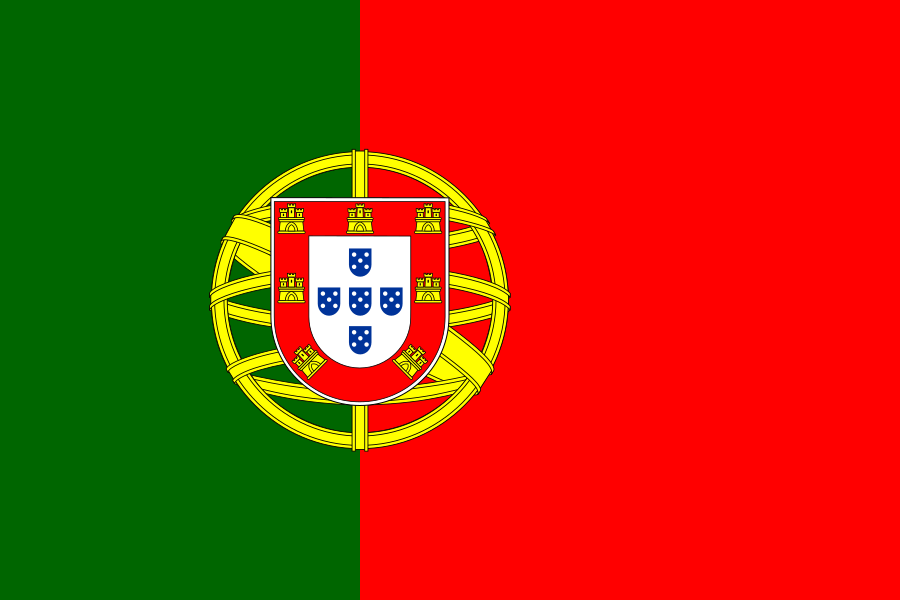
Published 12 Aug 2018Napoleonic Wars are back! It is 1807, and we find the Emperor of the French Napoleon Bonaparte at the height of his power, as he controls most of Europe after the War of the Fourth Coalition and the treaties of Tilsit. Napoleon decided to strangle his remaining enemy the United Kingdom economically by enacting Europe-wide Colonial Blockade, yet as Portugal defied him, he invaded it and then Spain. This was the beginning of the Peninsular War. Soon Spain and Portugal were in open rebellion. The first phase of the war ended when the British forces under Wellington landed in Portugal and fought the French General Junot at Vimeiro.
This script was researched and written by Everett Rummage. Check out his brilliant Age of Napoleon podcast – http://bit.ly/2vC3cIE In our opinion, it is the best podcast on the Napoleonic era.
Support us on Patreon: http://www.patreon.com/KingsandGenerals or Paypal: http://paypal.me/kingsandgenerals
We are grateful to our patrons and sponsors, who made this video possible: https://drive.google.com/open?id=1jjh…
This video was narrated by Officially Devin (https://www.youtube.com/user/OfficiallyDevin)
Machinimas were made on NTW3 mod for Napoleon Total War by Malay Archer (https://www.youtube.com/user/Mathemed…)
âś” Merch store â–ş teespring.com/stores/kingsandgenerals
âś” Twitch â–ş https://www.twitch.tv/nurrrik_phoenix
âś” Twitter â–ş https://twitter.com/KingsGenerals
âś” Instagram â–ş http://www.instagram.com/Kings_GeneralsProduction Music courtesy of Epidemic Sound: http://www.epidemicsound.com
#Documentary #Kingsandgenerals #Napoleon
Anti-Tank Chats #2 | PanzerbĂĽchse 39 | The Tank Museum
The Tank Museum
Published 2 Jul 2021Welcome to Anti-Tank Chats, a brand-new series on the history of infantry weapons used in Anti-Tank warfare. In the second episode, Archive and Supporting Collections Manager, Stuart Wheeler explores the PanzerbĂĽchse 39 Anti-Tank Rifle.
(more…)
November 3, 2021
1915 Yorkshire Parkin for Bonfire Night
Tasting History with Max Miller
Published 2 Nov 2021Thank you to my Patreon Patrons – https://www.patreon.com/tastinghistory
Merch â–ş crowdmade.com/collections/tastinghistory
Instagram â–ş https://www.instagram.com/tastinghist…
Twitter â–ş https://twitter.com/TastingHistory1
Tiktok â–ş TastingHistory
Reddit â–ş r/TastingHistory
Discord â–ş https://discord.gg/d7nbEpySend mail to:
Tasting History
PO Box 766
Burbank, CA 91503LINKS TO INGREDIENTS & EQUIPMENT**
Sony Alpha 7C Camera: https://amzn.to/2MQbNTK
Sigma 24-70mm f/2.8 Lens: https://amzn.to/35tjyoW
Medium Oatmeal: https://amzn.to/2ZAcpTE
Cake Flour: https://amzn.to/3brKkkl
Black Treacle: https://amzn.to/2XZdW5x
Golden Syrup: https://amzn.to/3jPzhWRLINKS TO SOURCES**
Pot-Luck by May Byron: https://amzn.to/3ExpRHs
Parkin by Anne Fencott: https://www.fencott.com/FencottBooks/…**Some of the links and other products that appear on this video are from companies which Tasting History will earn an affiliate commission or referral bonus. Each purchase made from these links will help to support this channel with no additional cost to you. The content in this video is accurate as of the posting date. Some of the offers mentioned may no longer be available.
Subtitles: Jose Mendoza
PHOTO CREDITS
Lewes Guy Fawkes Night: Peter Trimming
Andy Beecroft / Filey Brigg at low tide#tastinghistory #GuyFawkes #Bonfirenight
Casablanca had a small but significant historical error
And it’s not Captain Renault’s throwaway line about the Americans marching into Berlin (which, of course, did not happen in 1918). The error that Michael Curtis points out is very easy to miss:

Still from Casablanca (1942), with Captain Renault (Claude Rains) asking Rick Blaine (Humphrey Bogart) why he came to Casablanca.
As time goes by, there is a consensus that Casablanca, the story of the cynical hard drinking American expatriate night club owner choosing between his love for a woman or helping her and her husband, a resistance hero escape from the town of Casablanca, a complex town controlled by the Vichy state under Nazi occupation, is one of the greatest films of all time. Its characters, dialogue, theme song, have become iconic. We’ll always have Casablanca. It is a film of moral ambiguity, that can be seen either as a theme of love and sacrifice, or as a political allegory about resistance against Nazism.
However, this brilliant film has a flaw. In one scene the camera focuses on the prefecture of the corrupt chief of police on the wall of which is the motto of the French Third Republic, “liberty, equality, fraternity”, inherited from the 1789 French revolution. But the Third Republic had been ended in May 1940, and its motto had been officially replaced by the slogan, “work, family, homeland”, of the new French State, popularly known as Vichy. The differences between the two mottos are still pertinent in French politics and culture today.
Some political and cultural problems are easy to solve, even if costly. Scotland recently spent seven months of research and $162,000 to create a new slogan that would increase tourism. It finally came up with a banal slogan, “Welcome to Scotland”. There is no easy solution for France which has been and remains a sharply divided society still confronting its history of the World War II years, the defeat of the French army by the Germans in June 1940, the end of the Third Republic and its replacement by the French State headed by 84 year old Marshall Philippe Petain, regarded as a hero of Verdun in World War I, located in Vichy, a spa in the Auvergne.
The Vichy régime participated in persecution and discrimination of the Jewish population, by aryanisation of property, propaganda, antisemitic ideology, anti-Jewish legislation, roundups, deportation to death and concentration camps. In view of this antisemitic attitude, it is a paradox that after the War, 75% of the Jewish population in France remained alive, the result of complex religious, cultural, and international factors. This can be compared to extermination of 80% of Jews in the Netherlands, and 45% in Belgium.
Nevertheless, 75,721 Jews were deported from France, and fewer than 2,000 survived. Persecution was extensive. Jews were banned from professions, civil service, journalism, business, entertainment, refugee Jews were held in concentration camps under French control, antisemitic legislation affected all Jews, and the tragedy of Vel d’Hiv occurred. French police carried out the first mass arrests of Jews in Paris in May 1941, and the first French deportation train left on March 12, 1942. The most infamous event, the roundup by French gendarmes, using batons and hoses, of 13,000 Jews took place on July 16-17, 1942 when the victims were taken to the Vel d’Hiv indoor bi-cycling stadium in Paris before being deported to Nazi camps. They included 7916 women, 1129 men and 4115 children.
By the so-called National Revolution, France would be rescued from the decadent Third Republic, and returned to purer values. The controversy continues. Was France guilty of contributing to the Holocaust, and who was responsible? First, were collaborators and sympathizers with the Nazis only a minority of the population and was Petain the “shield”, protecting France and the French people as much as it could within the country, while General de Gaulle abroad was the “sword”. A second defense was that Vichy could do little while the Germans occupiers were responsible. A third point is that Vichy tried to protect French national Jews by collaborating in the persecution, the deportation and ultimately extermination of foreign Jews in France.
Halikarnassos: The Birthplace of History
Thersites the Historian
Published 24 Feb 2020A Greek polis which became the capital city of a Persian satrapy, Halikarnassos is best known as the birthplace of Herodotos and the site of the Mausoleum. A monarchy in a sea of aristocratic and oligarchic governments, Halikarnassos was one of the more unique places in the wider Greek world.
Patreon link: https://www.patreon.com/thersites
PayPal link: paypal.me/thersites
Twitter link: https://twitter.com/ThersitesAthens
Minds.com link: https://www.minds.com/ThersitestheHis…
Steemit/dtube link: https://steemit.com/@thersites/feed
BitChute: https://www.bitchute.com/channel/jbyg…
Backup Channel: https://www.youtube.com/channel/UCUrD…
QotD: English literature
Here one comes back to two English characteristics that I pointed out, seemingly rather at random, at the beginning of the last chapter. One is the lack of artistic ability. This is perhaps another way of saying that the English are outside the European culture. For there is one art in which they have shown plenty of talent, namely literature. But this is also the only art that cannot cross frontiers. Literature, especially poetry, and lyric poetry most of all, is a kind of family joke, with little or no value outside its own language-group. Except for Shakespeare, the best English poets are barely known in Europe, even as names. The only poets who are widely read are Byron, who is admired for the wrong reasons, and Oscar Wilde, who is pitied as a victim of English hypocrisy. And linked up with this, though not very obviously, is the lack of philosophical faculty, the absence in nearly all Englishmen of any need for an ordered system of thought or even for the use of logic.
George Orwell, “The Lion And The Unicorn: Socialism and the English Genius”, 1941-02-19.
November 2, 2021
Sandhurst 1975 – The Royal Military Academy
British Army Documentaries
Published 21 Feb 2021Filmed in 1975, this documentary is set at Sandhurst, the officer training academy. It follows a group of young men preparing for a life of leadership in the Army. These “managers of violence” will be expected to perform to the very highest of traditions of the British Army and be prepared to apply their professionalism on British soil should the need arise.
© 1975
This production is for viewing purposes only and should not be reproduced without prior consent.
This film is part of a comprehensive collection of contemporary Military Training programmes and supporting documentation including scripts, storyboards and cue sheets.
All material is stored and archived. World War II and post-war material along with all original film material are held by the Imperial War Museum Film and Video Archive.
November 1, 2021
Indochina and The Battle of Dien Bien Phu
The History Guy: History Deserves to Be Remembered
Published 29 Sep 2017The History Guy remembers how decolonization led to proxy war and the Battle of Dien Bien Phu in what is now known as Vietnam.
The episode discusses and presents historical photographs and film footage depicting events during a period of war, which some viewers may find disturbing. All events are described for educational purposes and are presented in historical context.
The History Guy uses images that are in the Public Domain. As photographs of actual events are often not available, I will sometimes use photographs of similar events or objects for illustration.
Patreon: https://www.patreon.com/TheHistoryGuy
The History Guy: Five Minutes of History is the place to find short snippets of forgotten history from five to fifteen minutes long. If you like history too, this is the channel for you.
Awesome The History Guy merchandise is available at:
https://teespring.com/stores/the-hist…The episode is intended for educational purposes. All events are presented in historical context.
#DienBienPhu #militaryhistory #thehistoryguy