
The Tank Museum
Published 20 Jan 2023In this week’s video, David Willey continues David Fletcher’s CVRT Tank Chats series, delving into the fascinating history of the Scimitar Mark 1 & Scimitar Mark 2. David provides an in-depth look at the development of these two iconic tracked vehicles, exploring their unique features and capabilities. He also examines how they have evolved over the years, and been used in various military operations.
(more…)
April 26, 2023
Tanks Chats #169 | Scimitar Mark 1 & Scimitar Mark 2 | The Tank Museum
Comments Off on Tanks Chats #169 | Scimitar Mark 1 & Scimitar Mark 2 | The Tank Museum
April 25, 2023
The Grauniad now thinks sailing ships are racist
Henry Getley on the Guardian‘s ongoing crusade to expiate their historical links to the slave trade which now expands to denouncing the badges of the city’s two professional football teams:
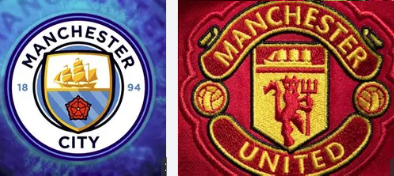
But the latest chapter in this bizarre campaign is really scraping the barrel … targeting the city’s football club badges. Feature writer Simon Hattenstone has homed in on the logos of Manchester City and Manchester United, which both include an illustration of a sailing ship. And he has reached what he clearly sees as a “Gotcha!” conclusion – sailing ships were used to carry cotton, which was produced in the southern United States using slave labour. Therefore, displaying sailing ships is shameful. Both clubs must immediately delete the offending vessels from their badges.
I hold no brief for either Man City or Man United (quite the contrary). But I find it absurd and offensive that the clubs should be thus gratuitously assailed in an attempt to shore up the Guardian‘s increasingly crazed crusade.
For the record, the sailing ships are taken from the coat of arms of the Borough of Manchester. They were granted in 1842, 35 years after Britain’s 1807 abolition of the slave trade, and are there simply to symbolise the city’s trade with the rest of the world. In fact, no large ships were seen in Manchester until the opening of the 35-mile-long Manchester Ship Canal in 1894.
Hattenstone’s argument is that the city was still using slave-produced US cotton up to the outbreak of the American Civil War in 1861, so the symbolic use of the vessels must be denounced. Talk about clutching at straws! I wonder if he knows that in 1862 Manchester mill workers supported US President Abraham Lincoln’s call for an embargo on Confederate cotton, even though it meant destitution and starvation for them and their families. He could have read about this selfless gesture in a Guardian article ten years ago.
I’ll tell you what, Mr Hattenstone, if we’re talking about links to slavery, how about demanding that the Guardian abandons its main headline typeface, which is shamefully called “Guardian Egyptian”? After all, slavery was practised in Egypt from ancient times right until the late 19th century. Yes, it’s a ridiculous link to make, but no more ridiculous than calling for the removal of ships from football badges. Sorry, Mr Hattenstone, you may be a self-proclaimed City fan, but this is an own goal.
Comments Off on The Grauniad now thinks sailing ships are racist
April 24, 2023
Even fighter pilots and gunners have love lives
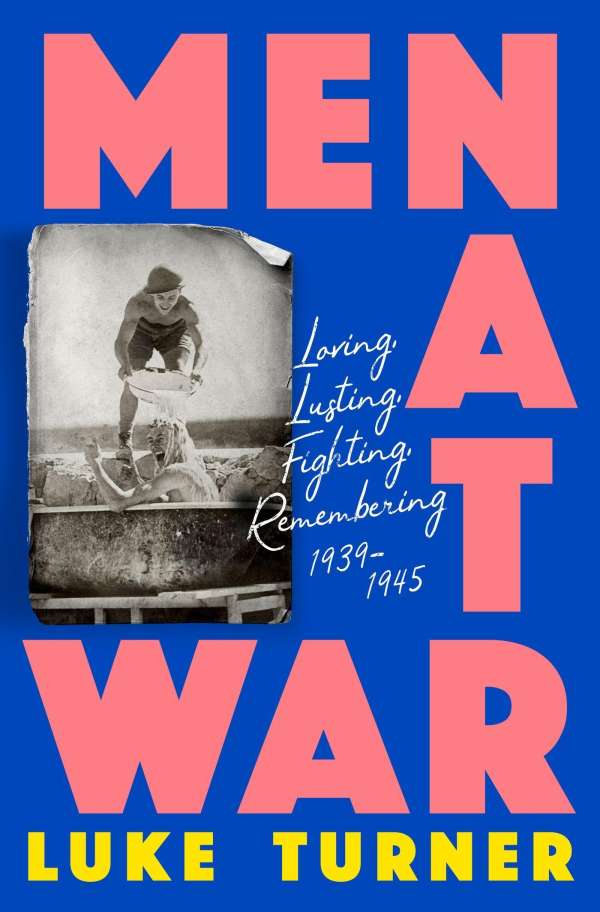
In The Critic, John Sturgis reviews a new book by Luke Turner titled Men at War: Loving, Lusting, Fighting, Remembering 1939-1945, which considers the myths and reality of wartime relationships during the Second World War:
Spitfire pilot Ian Gleed shot down five enemy aircraft in just a week in May 1940 — the fastest time in which this had ever been done, making him an official “ace” who would be quickly promoted to Wing Commander.
Gleed had become a poster boy for “the few”, the hero pilots of the Battle of Britain to whom so many would owe so much. He lived up to the popular image with his talk of “a bloody good show” and shooting down “damned Huns”, after which he’d sink a few warm beers and spend some “wizard” free time recuperating with his girlfriend Pam, whom he “loved now more than ever”.
Gleed’s luck finally ran out over Tunisia in April 1943 when his plane was hit by a German fighter and crashed into dunes. Gleed was killed. He was just 26.
It would only emerge decades later that much of the popular image he had cultivated simply wasn’t true. Gleed was gay. Pam was an imaginary character he had invented as a cover to keep his double life as a sexually active homosexual firmly secret.
Gleed’s story is one of many similar vignettes in this alternative history of the Second World War. Its author Luke Turner’s previous book was a memoir about his own grappling with issues around his identity as a bisexual. Here he takes up the question of how this would have played out for him and other sexual non-conformists in 1939–45.
Turner grew up obsessed with the war — everything from Airfix kits and Dad’s Army to Stalingrad and the Berlin bunker — and here he examines what it was to live through that period as a sexually active person of whatever hue. It proves a particularly rich subject matter as sex seems to have been everywhere in war time: everyone was sleeping with everyone else, apparently. It’s a perennial truth that you or I might be hit by a bus tomorrow — but make that bus a bomb, and suddenly this seems to create a sense of urgency which frequently manifests itself sexually, lending daily life what Turner calls “an aphrodisiac quality”. As Quentin Crisp put it when describing the shenanigans in blacked-out, Blitz London: “As soon as the bombs started to fall, the city became like a paved double bed.”
Whilst war may see an explosion of sex of all kinds, the establishment was not always comfortable with this. A Home Office report on public behaviour in London during the Blitz noted, “In several districts cases of blatant immorality in shelters are reported; this upsets other occupants of the shelters.”
One contemporary account suggests, “In wartime a uniform, whether of the Army, Navy or Air Force, to the average girl ranks as a fetish.” This had consequences in the field: Dear John letters from home could be a real problem in this regard. As an Army report in 1942 put it, morale is often damaged by “the suspicion, very frequently justified, of fickleness on behalf of wives and girls”.
Amongst all this sex was, of course, sex with Americans. Turner cites George Formby who captured this mood in the song “Our Fanny’s Gone All Yankee”: “She don’t wait for the dark when she wants to have a lark/In a bus or train she does her hanky panky.”
Then in a dark reversal of this two-nations-colliding-sexually motif, we get the horror of the Red Army’s organised rape of as many as 1.4 milllion German women during the Russian advance on Berlin, whose residents would later refer to the city’s grandiose monument to Soviet war dead as “the tomb of the unknown rapist”.
Comments Off on Even fighter pilots and gunners have love lives
QotD: The Baader-Meinhof phenomenon
You may not have heard of the Baader-Meinhof phenomenon, but once I’ve explained it you will start noticing it everywhere.
A little joke for psychologists there.
In 1994, someone left a comment on the website of the St. Paul Pioneer Press (Minnesota) saying that he had heard two references to the Red Army Faction, AKA the Baader-Meinhof gang — a 1970s German terrorist organisation — in the space of 24 hours, having never previously been aware of them. This somehow provided a new name for a cognitive bias. Don’t let anyone tell you that posting online comments on regional newspaper websites is a waste of time.
Otherwise known as frequency bias, the Baader-Meinhof phenomenon is a combination of selective attention bias (paying more attention to some things than to others) and confirmation bias (looking for things that you agree with or which serve your purposes in some way).
Arnold Zwicky added another aspect when he wrote about the significance of things happening recently, describing the “recency illusion” as …
… the belief that things YOU have noticed only recently are in fact recent.
The classic example is people’s tendency to notice a certain type of car once they own one themselves, especially when they bought it recently.
Of course it is possible that the thing you’ve just started noticing is truly becoming more frequent. I have noticed more shirts, flags and other merchandise related to Arsenal FC recently. This may be because the team is doing very well this season and I am more conscious of them as a result. Or it may be that Arsenal fans are less coy about showing their support after years of under-performing. What is less likely is that there are significantly more Arsenal fans than there were before.
Christopher Snowden, “Sudden deaths and the Baader-Meinhof phenomenon”, The Snowden Substack, 2023-01-21.
Comments Off on QotD: The Baader-Meinhof phenomenon
April 23, 2023
There’s a spectre haunting your pantry – the spectre of “Ultra-Processed Food”
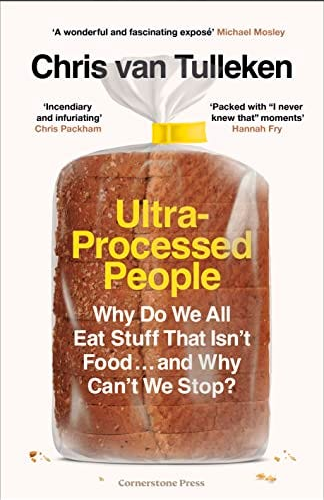
Christopher Snowden responds to some of the claims in Chris van Tulleken’s book Ultra-Processed People: Why Do We All Eat Stuff That Isn’t Food … And Why Can’t We Stop?:
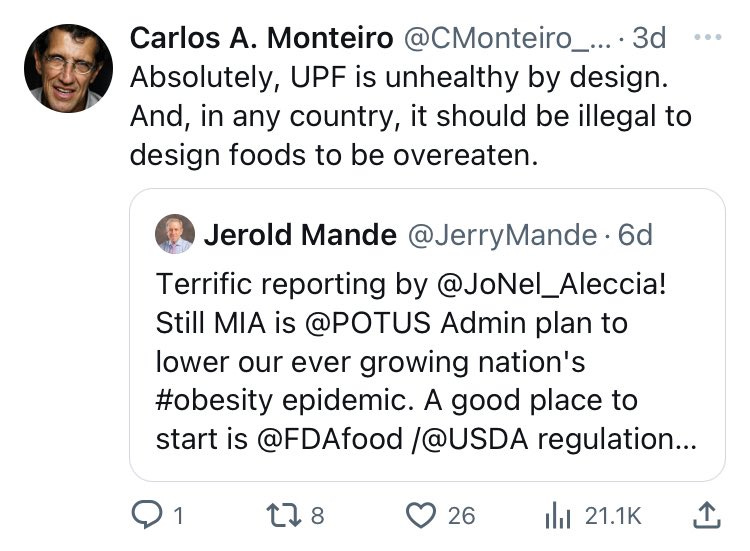
Ultra-processed food (UPF) is the latest bogeyman in diet quackery. The concept was devised a few years ago by the Brazilian academic Carlos Monteiro who also happens to be in favour of draconian and wildly impractical regulation of the food supply. What are the chances?!
Laura Thomas has written some good stuff about UPF. The tldr version is that, aside from raw fruit and veg, the vast majority of what we eat is “processed”. That’s what cooking is all about. Ultra-processed food involves flavourings, sweeteners, emulsifiers etc. that you wouldn’t generally use at home, often combined with cooking processes such as hydrogenation and hydrolysation that are unavailable in an ordinary kitchen. In short, most packaged food sold in shops is UPF.
Does this mean a cake you bake at home (“processed”) is less fattening than a cake you buy from Waitrose (“ultra-processed”)? Probably not, so what is the point of the distinction? This is where the idea breaks down. All the additives used by the food industry are considered safe by regulators. Just because the layman doesn’t know what a certain emulsifier is doesn’t mean it’s bad for you. There is no scientific basis for classifying a vast range of products as unhealthy just because they are made in factories. Indeed, it is positively anti-scientific insofar as it represents an irrational fear of modernity while placing excessive faith in what is considered “natural”. There is also an obvious layer of snobbery to the whole thing.
Taken to an absurd but logical conclusion, you could view wholemeal bread as unhealthy so long as it is made in a factory. When I saw that CVT has a book coming out (of course he does) I was struck by the cover. Surely, I thought, he was not going to have a go at brown bread?
But that is exactly what he does.
During my month-long UPF diet, I began to notice this softness most starkly with bread — the majority of which is ultra-processed. (Real bread, from craft bakeries, makes up just 5 per cent of the market …
His definition of “real bread” is quite revealing, is it not?
For years, I’ve bought Hovis Multigrain Seed Sensations. Here are some of its numerous ingredients: salt, granulated sugar, preservative: E282 calcium propionate, emulsifier: E472e (mono- and diacetyltartaric acid esters of mono- and diglycerides of fatty acids), caramelised sugar, ascorbic acid.
Let’s leave aside the question of why he only recently noticed the softness of fake bread if he’s been eating it for years. Instead, let’s look at the ingredients. Like you, I am not familiar with them all, but a quick search shows that E282 calcium propionate is a “naturally occurring organic salt formed by a reaction between calcium hydroxide and propionic acid”. It is a preservative.
E472e is an emulsifier which interacts with the hydrophobic parts of gluten, helping its proteins unfold. It adds texture to the bread.
Ascorbic acid is better known as Vitamin C.
Caramelised sugar is just sugar that’s been heated up and is used sparingly in bread; Jamie Oliver puts more sugar in his homemade bread than Hovis does.
Hovis Multigrain Seed Sensations therefore qualifies as UPF but it is far from obvious why it should be regarded as unhealthy. According to CVT, the problem is that it is too easy to eat.
The various processes and treatment agents in my Hovis loaf mean I can eat a slice even more quickly, gram for gram, than I can put away a UPF burger. The bread disintegrates into a bolus of slime that’s easily manipulated down the throat.
Does it?? I’ve never tried this brand but it doesn’t ring true to me. It’s just bread. Either you toast it or you use it for sandwiches. Are there people out there stuffing slice after slice of bread down their throats because it’s so soft?
By contrast, a slice of Dusty Knuckle Potato Sourdough (£5.99) takes well over a minute to eat, and my jaw gets tired.
Far be it from me to tell anyone how to spend their money but, in my opinion, anyone who spends £6 on a loaf of bread is an idiot. Based on his description, the Dusty Knuckle Potato Sourdough is awful anyway. Is that the idea? Is the plan to make eating so jaw-achingly unenjoyable that we do it less? Is the real objection to UPF simply that it tastes nice?
Comments Off on There’s a spectre haunting your pantry – the spectre of “Ultra-Processed Food”
The Biggest Offensive in Japanese History – WW2 – Week 243 – April 22, 1944
World War Two
Published 22 Apr 2023Japan Launches Operation Ichigo in China, their largest offensive of the war … or ever, but over in India things are not going well for the Japanese at Imphal and Kohima. The Allies also launch attacks on the Japanese at Hollandia, while over in the Crimea, the German defenses at Sevastopol are cracking under Soviet pressure.
(more…)
Comments Off on The Biggest Offensive in Japanese History – WW2 – Week 243 – April 22, 1944
April 22, 2023
Hitler’s Revenge on the Italian People – War Against Humanity 101
World War Two
Published 21 Apr 2023As the RAF closes in on Berlin and the German Army is running dangerously low on men, the Nazi leadership is determined to use their resources to spread their crimes deeper into Hungary and Italy.
(more…)
Comments Off on Hitler’s Revenge on the Italian People – War Against Humanity 101
The action off Pula Aura, February 1804
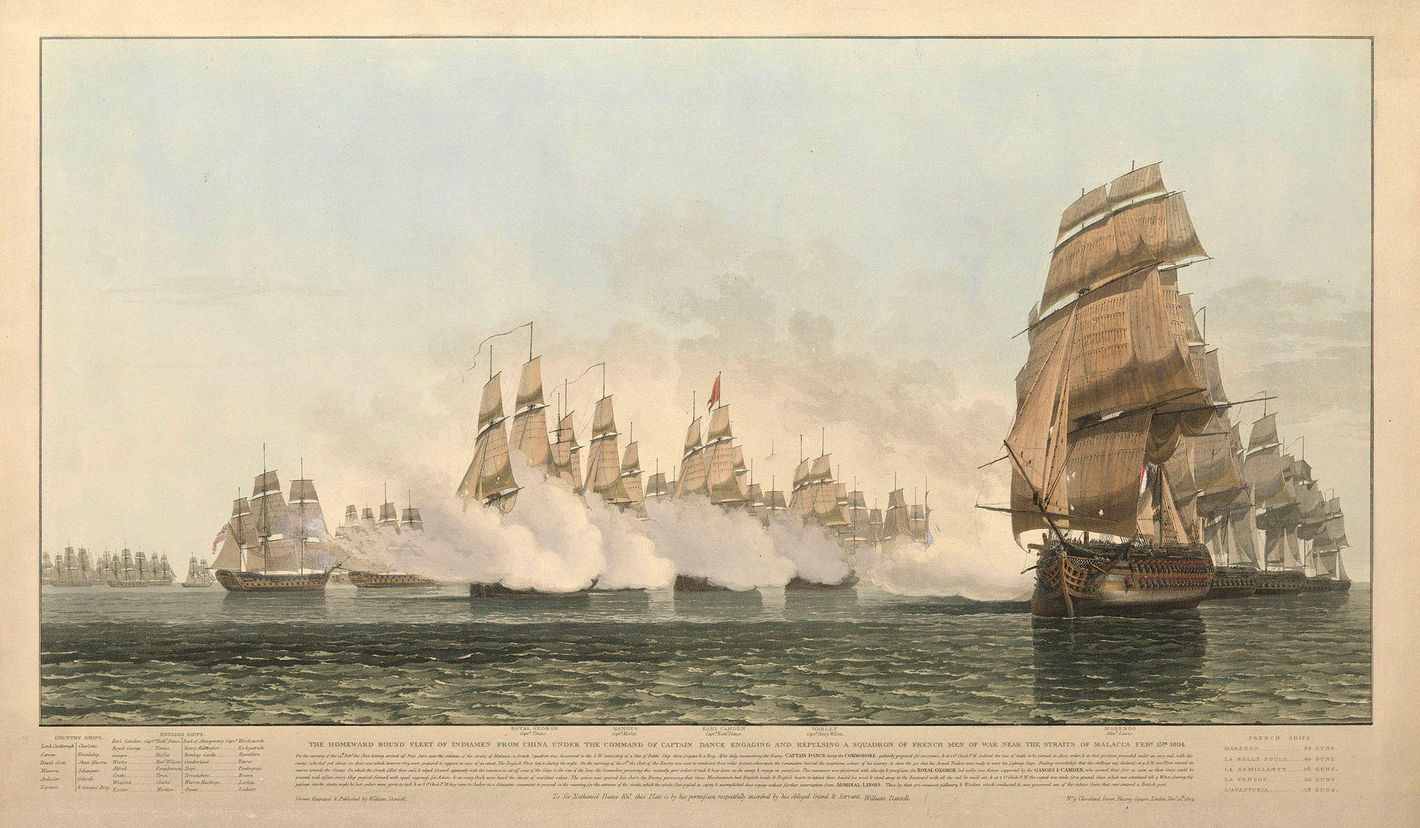
Ned Donovan recounts a very dangerous moment for the British East India Company — and the larger British economy — as a French naval squadron threatened the EIC’s China Fleet carrying a cargo that would be the rough equivalent of £750 million in today’s money:
It will not be surprising to any reader that the East India Company was arrogant. A company that, as William Dalrymple describes, had become “an empire within an empire”. It controlled much of India, had its own army, and its revenues kept Britain afloat. Its navy was also not to be sniffed at, made up of large, well-built ships (known as Indiamen) capable of being as armed as any British warship, but its commercial arrogance prevented this. Rather than fill these Indiamen with cannons and the hundreds of sailors needed to man them, it instead filled its gun ports with dummy cannons and its decks with luxurious cabins and storage for trade goods, maintaining crews only large enough to sail these ships and be stewards to its paying passengers.
Commodore Dance would have been pondering those dummy cannons as the ships he had sent to look at the four strange sail in the southwest reported back that it was four French warships, Linois’s squadron. He was practically defenceless. To protect his 30 ships and their precious cargo, he had one small armed brig named the Ganges with around a dozen guns. Up against him were the 186 guns of the French squadron, 74 in Marengo, 40 in Belle Poule, 36 in Semillante, 20 in Berceau and 16 in Aventurier. As Dance watched through his telescope, the French ships hoisted their colours, and the admiral’s flag of Linois broke out above Marengo. He needed a plan. Fast.
The lead East Indiamen challenge Admiral Linois
After a night of cat and mouse between the French and British, Dance ordered his convoy into a long single line and at the front put four of the largest Indiamen – the Royal George, Earl Camden, Warley, and Alfred. He then commanded that these four hoist blue ensigns, the sign of Royal Navy ships. This wasn’t the most absurd plan; the East India Company, in their arrogance, had a policy of painting their Indiamen to look like Royal Navy ships – as Dance records in his despatch: “We hoisted our colours and offered him battle.” But Linois and his ships continued to approach the convoy slowly, with Dance realising that the French intended to separate the convoy and take it apart piece by piece. It was now or never, and Dance took the initiative. At 1 pm, he ordered the Ganges, Royal George, Earl Camden, Warley and Alfred to turn and intercept the French. All the ships turned perfectly and crossed Linois, and at 1:15 pm, the French opened fire on the Royal George. In the preceding night, the convoy had put all the guns they had on these five ships and filled them with as many brave volunteers as they could. All five returned fire on the French warships, and one sailor on the Royal George was killed. I will let Dance take over here:
“But before any other ship could get into action, the enemy hauled their wind and stood away to the east under all the sail they could set. At 2 pm, I made the signal for a general chase and we pursued them until 4 pm.”
In around 40 minutes, Dance and his handful of real guns and dummy cannons had forced the French warships to withdraw under the belief it had engaged an elite squadron of Royal Navy ships. Not content with this victory, he then ordered his ships to chase the French down and stop them from returning. By the later afternoon, it was clear Linois had run, and Dance ordered his convoy to regroup and make for the safety of Malacca.
In the Straits of Malacca, Dance met the ships the Royal Navy had sent to escort him on the outbreak of war but would have been too late had the commodore not thought fast. The China Fleet passed the rest of its voyage without incident, returning to Britain in the summer of 1804.
To say the country was ecstatic would be an understatement. If the China Fleet and its £8 million had been taken, as Linois would have been perfectly able to do, it is evident that both the East India Company and Lloyds of London would have faced bankruptcy and collapse. Nathaniel Dance was knighted by George III and given a fantastic sword by Lloyds worth 100 guineas. With the sword came £5,000 (£403,000 today) from the Bombay Insurance Company and £500 a year (£40,000 today) from the East India Company, along with a share in the £50,000 given to all who sailed in convoy. Sir Nathaniel retired immediately and never took to the sea again, dying peacefully in 1827.
Poor Admiral Linois, on the other hand, never lived down the fracas, with Napoleon writing after the event, “[Linois] has shown want of courage of mind, that kind of courage which I consider the highest quality in a leader”. Despite that, Linois remained in the French navy … only to once again run into the fickleness of fate:
It is worth remarking that following the defeat at Pulo Aura, Linois had a similarly pathetic rest of the war that ended in a wonderfully ironic way. In 1806, the admiral was captured when he mistook a British squadron of warships for a merchant convoy.
Irony? That’s cosmic level stuff.
Comments Off on The action off Pula Aura, February 1804
The Big Four
Jago Hazzard
Published 1 Jan 2023It’s 100 years since the Grouping – what happened, why and how?
(more…)
Comments Off on The Big Four
April 21, 2023
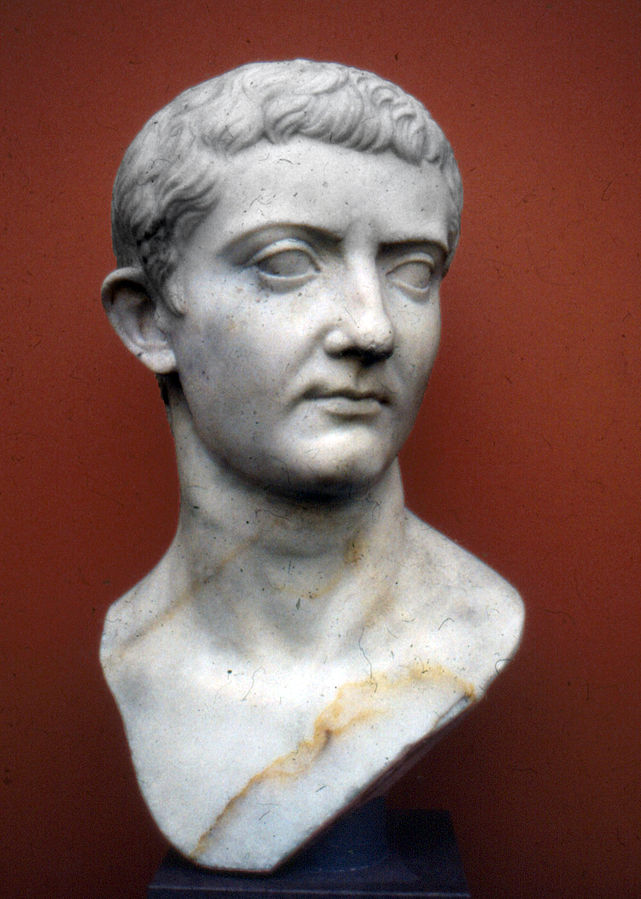
Tiberius Caesar, the second Roman Emperor
Andrew Doyle considers how the reputation of Emperor Tiberius was shaped (and blackened) by later historians:
Tiberius Caesar
Original in Ny Carlsberg Glyptotek, Copenhagen via Wikimedia Commons.
I am at the home of a psychopath. Here on the easternmost point of the island of Capri, the ancient ruins of the Villa Jovis still cling to the summit of the mountain. This was the former residence of the Emperor Tiberius, who retired here for the last decade of his life in order to indulge in what Milton described as “his horrid lusts”. He conducted wild orgies for his nymphs and catamites. He forced children to swim between his thighs, calling them his “little fish”. He raped two brothers and broke their legs when they complained. He threw countless individuals to their deaths from a precipice looming high over the sea.
That these stories are unlikely to be true is beside the point; Tiberius’s reputation has done wonders for the tourist trade here on Capri. The historians Suetonius and Tacitus started the rumours and, with the help of successive generations of sensationalists, established a tradition that was to persist for almost two millennia.
All of which serves as a reminder that reputations can be constructed and sustained on the flimsiest of foundations. Suetonius and Tacitus were writing almost a century after the emperor’s death, and many of their lurid stories were doubtless echoes of those circulated by his most spiteful enemies. Or perhaps it’s simply a matter of prurience. Who can deny that the more lascivious and outlandish acts of the Roman emperors are by far the most memorable? One thinks immediately of Caligula having sex with his siblings and appointing his horse as consul. Or Nero murdering his own mother, and taking a castrated slave for his bride, naming him after the wife he had kicked to death. For all their horror, who doesn’t feel cheated when such tales turn out to be false?
Our reputations are changelings: protean shades of other people’s imaginations. More often than not, they are birthed from a combination of uninformed prejudice and wishful thinking. And we should be in no doubt that in our online age, when lies are disseminated at lightning speed and casual defamation has become the activist’s principal strategy, reputations are harder to heal once tarnished.
I am tempted to feel pity for future historians. Quite how they will be expected to wade through endless reams of emails, texts, and other digital materials — an infinitude of conflicting narratives and individual “truths” — really is beyond me. At least when there is a dearth of primary sources it is possible to piggyback onto a firm conclusion. “Suetonius said” has a satisfactory and definitive air, but only because there are so few of his contemporary voices available to contradict him.
Comments Off on Tiberius Caesar, the second Roman Emperor
Localism versus centralism
Theophilus Chilton offers some support to localism as an antidote to the centralization of powers we’ve seen in every western nation since the early “nation state” era at the end of the Middle Ages:
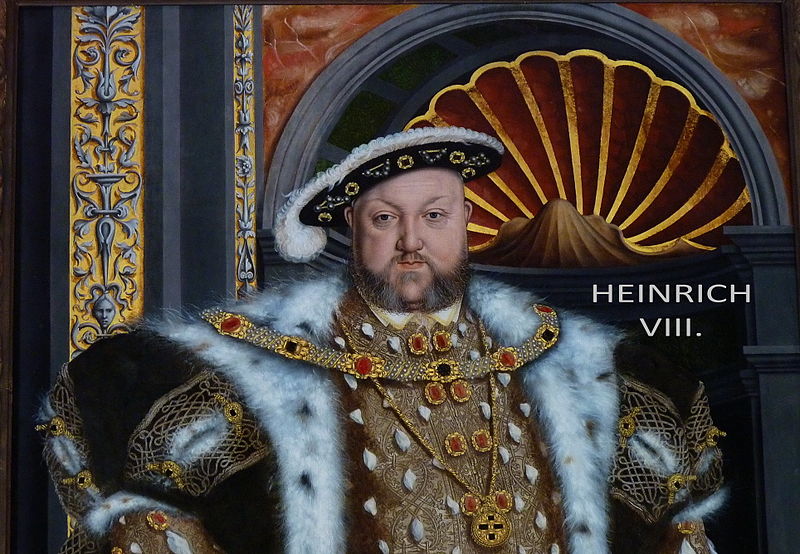
Cropped image of a Hans Holbein the Younger portrait of King Henry VIII at Petworth House.
Photo by Hans Bernhard via Wikimedia Commons.
The history of the West has, among other things, included a long, drawn-out conflict between two functional organizing principles – localism and centralization. The former involves the devolution of power to more narrowly defined provincial, parochial centers, while the later involves the concentration of power into the hands of an absolutist system. The tendency toward centralization began as far back as the high Middle Ages, during which the English and French monarchies began the reduction of aristocratic privileges and local divisions and the folding of this power into the rising bureaucratic state with a permanently established capital city and rapacious desire for provincial monies and personnel. The trend towards the development of absolute monarchy continued through the Baroque period, and the replacement of divinely-sanctioned kingship with popular forms of government (republicanism, democracy, communism) did not abate the process, but merely redirected power into different hands. The ultimate form of centralization, not yet come to pass, would be the sort of borderless one-world government desired by today’s globalists, whether they be neoconservatives or neoliberals, which would involve the ultimate consolidation of all power everywhere into one or a few hands in some place like Geneva or New York City.
[…]
The historical transition from localism to centralization in medieval Europe was seen in the decline of aristocratic rights and the institution of peer kingship, and their replacement with consolidated administrative control over a much larger and generally contiguous geographic area. This control was manifested in the person of the absolute monarch, and was exercised through an impersonal, disinterested bureaucratic apparatus which came to demand a greater and greater share of the national wealth to cover its expenses. This process, I believe, can ultimately be traced back to the strengthening of English and French royal power beginning in the 13th century, especially under Philip IV of France. Its fruition came (while monarchy still exercised effectual power in Europe) in the 17th-18th centuries before being undermined by Enlightenment and democratic dogmas which merely transferred the centralizing power to demagogues claiming to speak “for the people.”
Under the old aristocratic system, executive power formed a distributed system and rested on local nobility ruling over a local population with whom they were knowledgeable and on generally good terms. Despite the jaundiced modern view that feudalism was always “tyrannical” and “oppressive,” the fact is that most aristocrats in that era were genuinely devoted to the welfare of the commoners in their land, and it was the responsibility of the nobility to dispense justice and to right wrongs. The picture presented in Kipling’s poem “Norman and Saxon” most likely serves as a fair reflection of the relationship between lord and commoner. Kingship certainly existed, but the king was viewed as a “first among equals”, one who was the prime lord over his vassals, but who could also himself be a vassal of other kings of equal power and authority (as many of the earlier Plantagenet kings were to the Kings of France, by virtue of their holding fiefs as Dukes of Aquitaine).
False impressions about the role of the aristocracy generally correlate with false impressions about serfdom, the dominant labor relationship of the time. Contrary to popular notions, serfdom was generally not some cruel form of slavery that destroyed human dignity. Indeed, many serfs had liberties approach those of freemen, could transfer allegiances between nobles, enjoyed dozens of feast days (which were effectively vacation days to be devoted to family and community), and could even take themselves off to one of the many free cities which existed and be reasonably sure of not being compelled to return to their former master unless their case was especially egregious.
However, under centralization, the nobility was generally reduced to being ornaments of the royal court, their judicial and administrative functions removed and replaced by a bureaucracy personally loyal to the king. This, in effect, served to remove opportunities for serfs and other commoners to “get away” from the rule of a bad king. Whereas before, a serf could at least hope for the opportunity to flee a bad ruler and seek shelter with a good one, under the uniform rule of the absolute monarch, this was no longer an option unless the commoner wished to flee his entire nation and culture completely. Likewise, the ever-increasing regulation of his daily life by the bureaucracy followed him everywhere he went. By the end of the period, the centralization of power and the rise of crony capitalism led to the destruction of serfdom and the rise of wage capitalism, acting to reduce serfs and freemen alike to the status of cogs in profit-generating machines. The rise of absolute monarchy, part and parcel with the appearance of bureaucracy and the professionalization of military power, led directly to the rise of the modern managerial state.
Comments Off on Localism versus centralism
QotD: In ancient Greek armies, soldiers were classified by the shields they carried
When someone asked why they visited disgrace upon those among them who lost their shields, but did not do the same thing to those who lost their helmets or their breastplates, he said, “Because these they put on for their own sake, but the shield for the common good of the whole line.” (Plut. Mor. 220A)
This relates to how hoplites generally – not merely Spartans – fought in the phalanx. Plutarch, writing at a distance (long after hoplite warfare had stopped being a regular reality of Greek life), seems unaware that he is representing as distinctly Spartan something that was common to most Greek poleis (indeed, harsh punishments for tossing aside a shield in battle seemed to have existed in every Greek polis).
When pulled into a tight formation, each hoplite‘s shield overlapped, protecting not only his own body, but also blocking off the potentially vulnerable right-hand side of the man to his left. A hoplite‘s armor protected only himself. That’s not to say it wasn’t important! Hoplites wore quite heavy armor for the time-period; the typical late-fifth/fourth century kit included a bronze helmet and the linothorax, a laminated, layered textile defense that was relatively inexpensive, but fairly heavy and quite robust. Wealthier hoplites might enhance this defense by substituting a bronze breastplate for the linothorax, or by adding bronze greaves (essentially a shin-and-lower-leg-guard); ankle and arm protections were rarer, but not unknown.
But the shield – without the shield one could not be a hoplite. The Greeks generally classified soldiers by the shield they carried, in fact. Light troops were called peltasts because they carried the pelta – a smaller, circular shield with a cutout that was much lighter and cheaper. Later medium-infantry were thureophoroi because they carried the thureos, a shield design copied from the Gauls. But the highest-status infantrymen were the hoplites, called such because the singular hoplon (ὅπλον) could be used to mean the aspis (while the plural hopla (ὁπλά) meant all of the hoplite‘s equipment, a complete set).
(Sidenote: this doesn’t stop in the Hellenistic period. In addition to the thureophoroi, who are a Hellenistic troop-type, we also have Macedonian soldiers classified as chalkaspides (“bronze-shields” – they seem to be the standard sarissa pike-infantry) or argyraspides (“silver-shields”, an elite guard derived from Alexander’s hypaspides, which again note – means “aspis-bearers”!), chrysaspides (“gold-shields”, a little-known elite unit in the Seleucid army c. 166) and the poorly understood leukaspides (“white-shields”) of the Antigonid army. All of the –aspides seem to have carried the Macedonian-style aspis with the extra satchel-style neck-strap, the ochane)
(Second aside: it is also possible to overstate the degree to which the aspis was tied to the hoplite‘s formation. I remain convinced, given the shape and weight of the shield, that it was designed for the phalanx, but like many pieces of military equipment, the aspis was versatile. It was far from an ideal shield for solo combat, but it would serve fairly well, and we know it was used that way some of the time.)
Bret Devereaux, “New Acquisitions: Hoplite-Style Disease Control”, A Collection of Unmitigated Pedantry, 2020-03-17.
Comments Off on QotD: In ancient Greek armies, soldiers were classified by the shields they carried
April 20, 2023
We strongly believe in academic freedom, except when research turns up “inconvenient” results
Tom Knighton on a sad situation at a London university with publicly funded research having arrived at a politically unwelcome result:

Two people at EuroPride 2019 in Vienna holding an LGBTQ+ pride rainbow flag featuring a design by Daniel Quasar; this variation of the rainbow flag was initially promoted as “Progress” a PRIDE Flag Reboot.
Photo by Bojan Cvetanović via Wikimedia Commons.
In the UK, one academic decided to look at the “gender wars”, particularly how academics feel silenced on the whole trans issue.
It sounds to me like both an interesting subject for study and one that might be very necessary in this day and age.
It seems that while the researcher in question was approved to study it, her findings are problematic and that got her canned.
From The Telegraph:
A university has “confiscated” the findings of an academic studying Britain’s gender wars in a row over her “dangerous” research data, The Telegraph can reveal.
Dr Laura Favaro began the first ever taxpayer-funded study into whether social scientists at universities feel censored over their views on transgender issues in March 2020 at City, University of London.
But it has descended into chaos, with the study’s author allegedly hounded out of the university, stripped of the findings she collected and barred from publishing them amid claims of transphobia.
[…]
Her study involved 50 individual interviews with academics in gender studies who identified as feminists, a representative survey of social scientists with 650 responses and hundreds of documents and tweets.
Scholars told her that they had threats of violence in the gender debate, hostility from colleagues, and others said they felt their careers “can’t survive that sort of backlash”, and that they have to have “secret conversations” to avoid reprisal and because “we are all so afraid”.
Her final work has not been published, as it was derailed by complaints about an article for Times Higher Education in which she warned that “a culture of discrimination, silencing and fear has taken hold”.
Following this, she says, her line managers told her that the study had “become an institutionally sensitive issue” and that “City considers my data to be dangerous” and is “frightened of making it public”.
So, what Favaro was finding was accurate.
That’s the big takeaway for me here. She said that academics were concerned about being attacked or that they had been because they didn’t play along with the trans agenda, and she was attacked and basically canceled because of it.
What’s even dumber is that Favaro was lured to City University from Spain so that she could conduct this research. She received roughly £28,000 from the British government via two different governmental entities to conduct the research.
Then she was silenced because the research found inconvenient truths.
That’s not what academia is supposed to be about. That’s not what academic freedom is about.
Freedom of any kind requires one to accept things that we would rather not have to accept. If you’re not free to say or do something that doesn’t actually harm a specific person but is otherwise objectionable, you don’t really have any freedom.
Comments Off on We strongly believe in academic freedom, except when research turns up “inconvenient” results
April 19, 2023
Time to remove US nuclear weapons from Europe?
CDR Salamander has long advocated getting the final few American “tactical” nuclear weapons off European soil and makes the case for doing it now:
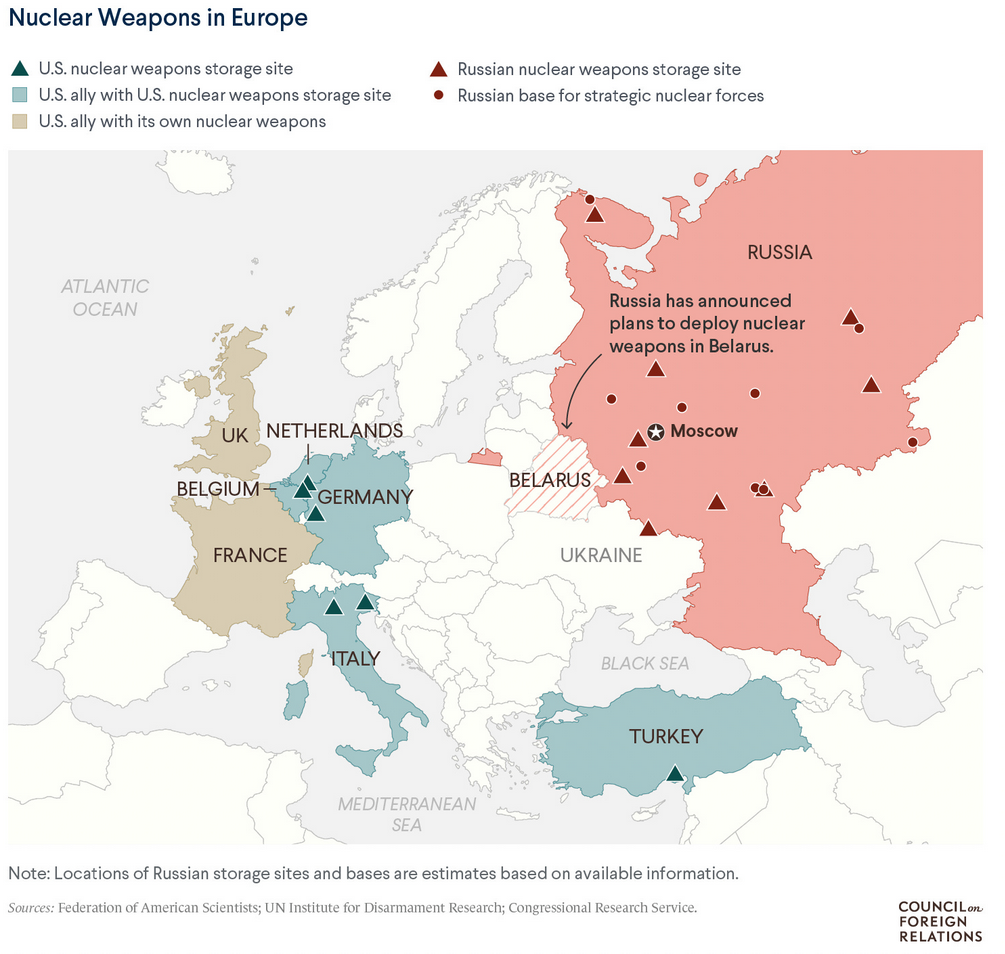
It may seem like a strange thing to propose while there is the largest land war in Europe since 1945 going on, but as it is something I’ve been a supporter of for a few decades I might as well be consistent: we are long overdue to remove American nuclear weapons from Europe.
It is 2023. Just look at this map.
[…]
The Soviet Union stopped existing over three decades ago.
Even though we’ve decreased from 7,000 warheads down to 100 … there really is no reason to keep what remains in Europe.
- Gravity bombs on continental Europe – that require tactical aircraft to deliver them – are the least survivable, reliable, or timely way to deliver a nuclear weapon.
- There is no such thing as a tactical nuclear weapon. I don’t care what some theorist proposes to defend their pet theories, you lob one nuke an order of magnitude larger than the Hiroshima bomb and only a foolish nation would let their strategic nuclear forces stay unused and in danger.
- Gravity bombs are not a first strike weapon and are a poor second strike weapon. As such, you have to consider that the the time gap from approval to flash-boom would be so long the war would be over before your F-XX pickled their nuke over their target – even if the aircraft made it off the ground.
- If they are NATO weapons, you not only have to get NATO to approve their use, but host nation to as well … in addition to the USA. Do you really think the Russians would not leverage their influence with the useful idiots in the Euro-Green parties, former communists, and general black-block anti-nuke activists to politically of physically stop the use of the nukes, especially in BEL, NLD, DEU, and ITA? Add that to point 3 above.
- Especially with the weapons in Turkey – the risk of these bombs having a bad day due to human or natural causes is non-zero. In the days of mutually assured destruction, those non-zero odds were manageable, but there is no reasonable person in the third decade of the 21st Century who can with a straight face explain to you why any tactical, operational, or strategic use justify their presence. They deter no enemy, but puts every friend in danger.
- Look again at the map above. Exactly what target set are you going to “service” at that range (non-refueled)?
- If things go nuclear in Europe then the right weapons are either British, French, and if they must be American are sitting in a silo in CONUS, a SSBN in the Atlantic, or a B-2 in Missouri.
Comments Off on Time to remove US nuclear weapons from Europe?
Philip II of Macedon (359 to 336 B.C.E.)
Historia Civilis
Published 24 May 2017
(more…)
Comments Off on Philip II of Macedon (359 to 336 B.C.E.)


