
World War Two
Published 15 Jul 2023Japanese troops and civilians commit mass suicide rather than surrender to the Americans in the Marianas; in Normandy, Caen has finally fallen to the Allies though the fight for St. Lo is not over; the Soviet offensives in the north take Vilnius and the fighting continues up in Finland, but the big eastern front news is the mighty new Soviet offensive in Western Ukraine. (more…)
July 16, 2023
Mass Suicide on Saipan – WW2 – Week 255 – July 15, 1944
Comments Off on Mass Suicide on Saipan – WW2 – Week 255 – July 15, 1944
Cheap, Effective, Everywhere: The RPG-7
The Tank Museum
Published 7 Apr 2023Join Chris Copson as he presents our latest in Anti-Tank Chats. In this episode, we will delve into the fascinating history and practical applications of the RPG-7, a powerful anti-tank weapon.
(more…)
Comments Off on Cheap, Effective, Everywhere: The RPG-7
July 15, 2023
Environmental fanatics want to impose “austerity on steroids”
Brendan O’Neill points out the hypocrisy of the progressives who protest against anything smacking of government austerity — often merely a slowing down in the rate of increase of funding that they condemn as “cuts” — yet fervently desire to impose a form of austerity that would literally lead to hundreds of thousands or even millions of deaths:
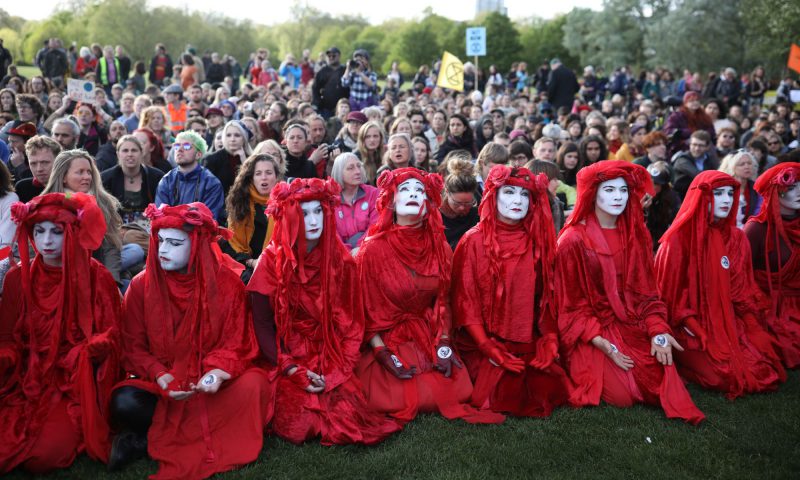
There are countless contradictions on what passes for the left these days. We’re against sexism, they cry, and then they’ll while away entire days hounding every uppity broad who dares to question the trans ideology. We’re anti-racist, they say, even as they yell “Uncle Tom” at any person of colour who deviates from their white liberal orthodoxies. Be kind, they tweet, in between their venomous crusades against TERFs, gammon, boomers, deplorables, “semi-fascists”, you name it.
We’re against austerity, they insist, and yet then they agitate for an austerity of apocalyptic proportions. This, surely, is the most stark incongruity of the modern left. They rail against every library closure or reform of welfare payments as an intolerable assault on people’s living standards, and then they take to the streets in their thousands in support of a degrowth agenda that would plunge vast swathes of humankind into penury. They’re far meaner than any right-wing penny-pincher they claim to oppose.
[…]
Environmentalism is austerity on steroids. Consider one of JSO’s key demands: “No new oil or gas”. This would be – there’s no other word for it – psychotic. Not only would such a crazed policy instantly throw hundreds of thousands of people out of work, by decommissioning the rigs and mines where they make their living – it would also make it all but impossible to keep society going. The infantile moralism of modern greens would have us believe that vile oil and gas are only used to propel 4x4s and airplanes packed with the rich and other “bad things”. In truth, every facet of our lives requires energy from oil and gas. The delivery of foodstuffs, house-building, schools, hospitals, life-support machines, heaters to protect the elderly from death in winter – all need energy derived from fossil fuels. Or consider libraries. The left wept when Osborne’s cuts led to library closures, but you try running a library in your post-fossil-fuel dystopia. Without oil, gas, electricity and trees torn down to make books, libraries would cease to exist.
As Alex Epstein argues, to “rapidly eliminate fossil-fuel use” would make the world “an impoverished, dangerous and miserable place for most people”. Fossil fuels provide 80 per cent of the world’s energy. Just three per cent comes from solar and wind power, so beloved of green anti-modernists. And even that measly slice of global energy production is, in Epstein’s words, “totally dependent on fossil fuels, especially natural gas, for 24/7 back-up”. That is, if the wind doesn’t blow and the sun doesn’t shine, we have to crank up the fossil fuels. Ours is a world in which three billion people still use less electricity than your average American fridge. Agitating for less energy production in such a time is callous beyond belief. It would issue a death sentence on the world’s poor. George Osborne is Father Christmas in comparison with these crusaders against the gains and wonders of modernity.
Comments Off on Environmental fanatics want to impose “austerity on steroids”
The French Intifada
Ed West on the origins of the rising violence in French towns and cities:
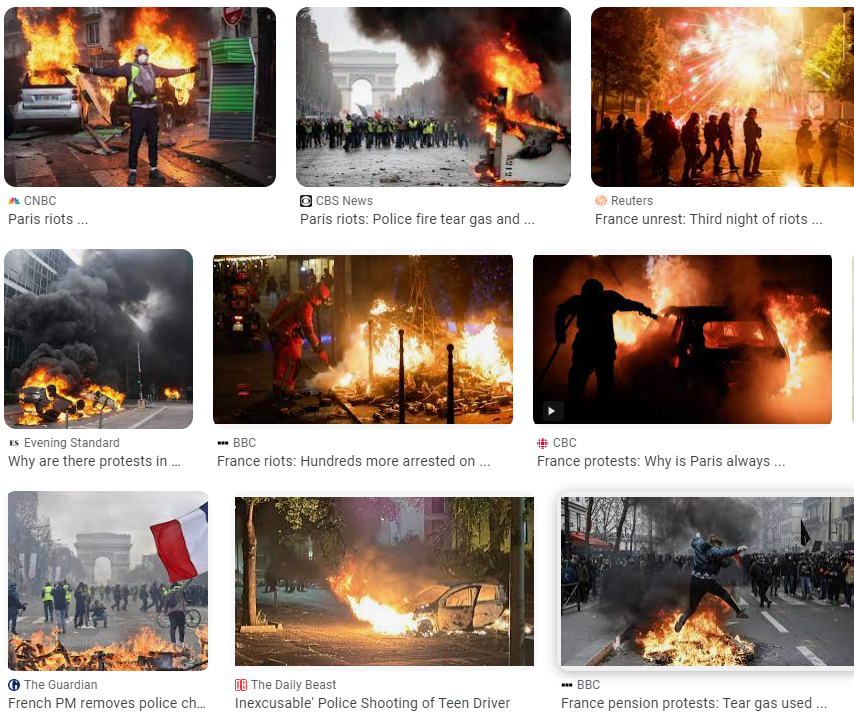
I ran an image search for “Paris rioting” and there was a plentiful supply of fiery, eye-catching photos. Not all of these are from the most recent outbreak of violence, but they are certainly representative of how the legacy media is covering the situation.
The recent violence in Paris and elsewhere, which saw attempts to ram the home of a mayor, once again highlighted the trouble the country has with integration. But the French police union describing themselves as being “at war with vermin” illustrated the different mindset to the English-speaking world, and the far more belligerent approach to the problems of diversity.
Like Britain, the Netherlands, Germany and Sweden, France has had difficulties assimilating the children of immigrants from beyond Europe, yet its recent history has proved especially violent and troubled. Britain has jihadi terrorism – 2017 was especially grim – but it has never reached such intensity. Today, as over 130,000 police officers stand guard to protect the Republic on the day of its celebration, it is worth considering the journey that brought it to such a state.
Analysts have often compared Britain’s state multiculturalism with France’s system of laïcité, which tends to downplay the existence of “communities” even to the point of not taking demographic statistics. Although neither country’s approach has entirely been a success, France’s refusal to recognise immigrants as anything but French has often been blamed for the widespread sense of alienation.
Others point to the housing system, which tends towards concentrations of North and West Africans in suburban banlieues, or the less laissez-faire economic policy which results in higher unemployment (in exchange for better social security).
While they no doubt play a part, the biggest single difference is history, as Andrew Hussey recounted back in 2014 in The French Intifada, in particular France’s history with North Africa. To put it in British terms, imagine that Britain’s rule in Pakistan had involved not a small number of administrators and soldiers but instead hundreds of thousands of British settlers arriving in the country, many with the intention of making it a “new America” (i.e. driving the natives out).
That Britain had declared Pakistan an integral part of the country, and that, rather than scarpering in indecent haste when the empire began to disintegrate, Britain had dug in to preserve its rule in a sadistic war of independence, one in which natives and white settlers committed countless atrocities against each other.
And that this violence had spilled into Britain with assassination attempts and terrorism, by both sides, destabilising the country to the point where there was talk of a coup. And that this was happening just as large-scale immigration to the colonial power was taking place.
Britain experienced nothing like as much violence in the dying days of empire, and indeed the only real comparison with our history was the moment when there was almost all-out conflict between Britain’s Protestant and Irish Catholic populations before the First World War.
If French politicians so casually talk of “civil war” between its right wing and the Algerian-descended population, it is because it has already played out this conflict before – one that was never healed, and so invites a sequel.
Comments Off on The French Intifada
Sherman Firefly – What were those wavy lines for?
Armoured Archives
Published 8 Mar 2023This video is going to take a quick look at those wavy lines you might see on some tank barrels, what did they do, and why? And was this ever an officially sanctioned project?
(more…)
Comments Off on Sherman Firefly – What were those wavy lines for?
July 14, 2023
How Hitler Approved His Own Assassination – WW2 Documentary Special
World War Two
Published 13 Jul 2023So far, the German resistance haven’t had much luck with their attempts to kill the Führer, Adolf Hitler. But now, the German war hero Claus von Stauffenberg, together with Friedrich Olbricht and Henning von Tresckow, drives the resistance forward. It’s time to kill Hitler. It’s time for Operation Valkyrie.
(more…)
Comments Off on How Hitler Approved His Own Assassination – WW2 Documentary Special
MG-3: Germany Modernizes the Classic MG-42
Forgotten Weapons
Published 7 Apr 2023When the Bundeswehr was formed, it chose to simply continue using the MG42 as its standard GPMG. This was initially done by converting older MG42s to 7.62x51mm NATO as the MG1 (adopted in 1958), but progressed to production of a brand new version of the gun by Rheinmetall (adopted in 1968). The MG3 included improvements to the belt feed system, added integral antiaircraft sights, and allowed a rate of fire between 700 and 1300 rpm depending on the choice in bolt, buffer and booster. It was the standard German MG until finally being replaced by the MG5 in 2012 — and it is/was in use by nearly 4 dozen other countries as well. Today we are going to compare this transferrable, C&R MG3 to an original MG42 to see the improvements that were made.
(more…)
Comments Off on MG-3: Germany Modernizes the Classic MG-42
July 13, 2023
Bill Slim’s plan for the Battle of Meiktila in March 1945
Dr. Robert Lyman on the subject of his most recent book, The Reconquest of Burma 1944-45: From Operation Capital to the Sittang Bend:
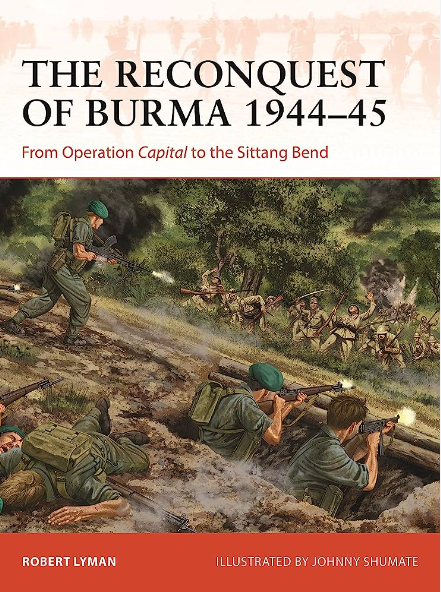
When I was writing my latest book with General Lord Dannatt he said to me, “Rob, if I’ve got one criticism of A War of Empires it’s that you don’t emphasise enough the role of Bill Slim in coming up with the plan for victory in 1945, and executing it perfectly.” Fair. As Slim’s military biographer, I told Richard that I didn’t want to be accused of rewriting that book again. I was conscious of this problem as I was writing A War of Empires.
But it is fair criticism. It may be that I underplayed Slim’s role when I was considering all the other critical features in this great campaign. The idea behind the dramatic victory by 14th Army in Burma in 1945 was Slim’s and Slim’s alone. He pursued his own plan through to its remarkable conclusion.
[…]
Slim’s original plan was to fight the main strength of the Japanese army on the Shwebo Plain, a dry, flat plain between the loops of the Chindwin and Irrawaddy. Not only would the terrain be well suited to the deployment of armour, for which the Japanese had little effective reply, but the Japanese would be trapped with the river-line at their back. Slim had assumed that the Japanese would be unprepared to make a voluntary withdrawal. The scene was set for Slim to be able to deploy his superior mobility and firepower to destroy the main Japanese army in Burma.
By the end of the year, however, it became apparent that the Japanese were not going to conform to Slim’s plan for the battle, and General Kimura had seen the trap which his forces would be caught in if they attempted to stand and fight in the Shwebo Plain. Showing unusual flexibility and moral courage Kimura promptly withdrew his reconstituted 15th Army behind the Irrawaddy. Kimura hoped, not without reason, to be able to smash Slim’s army as it attempted to cross the river, which in itself presented an immense obstacle to the British. He would then counter-attack and destroy Slim as the British withdrew during the monsoon to the Chindwin.
Kimura’s move behind the Irrawaddy destroyed at a stroke Slim’s plan. Undaunted, and recognising the supreme importance of destroying Kimura’s army rather than taking ground for its own sake, Slim came up with another plan. In basic outline, his new plan (Operation Extended Capital) entailed crossing the Irrawaddy and fighting the decisive battle in February in the plain around Mandalay and the low hills around Meiktila, the key enemy air and supply base in Central Burma. Both the road and rail links between Mandalay and Rangoon ran through Meiktila. If Meiktila fell, the whole structure of the Japanese defence of Central Burma would collapse.
Comments Off on Bill Slim’s plan for the Battle of Meiktila in March 1945
“… if Ukraine were to join NATO in the middle of a war, then congrats – most of Europe and North America are at war”
As I’ve said several times, I have great sympathy for ordinary Ukrainians caught up in a war not of their making, but I’m not a fan of the awesomely corrupt Ukrainian government. NATO nations providing weapons, ammunition, and training is fine, but in no way is Ukraine ready to become a member of the alliance and will not be until after this war is over and they conduct a very significant set of anti-corruption reforms in their national government. CDR Salamander points out the insanity of western pundits demanding that NATO add Ukraine to the alliance in the middle of a major war:
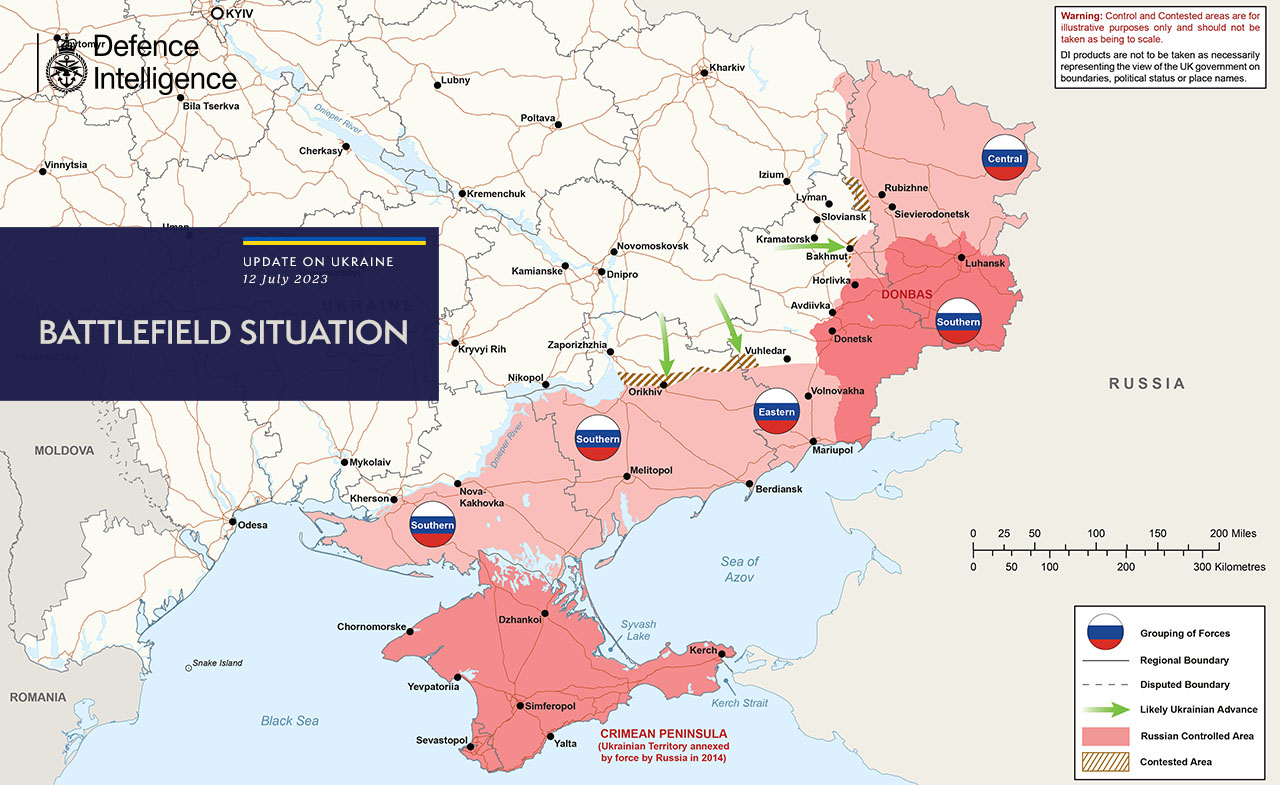
I understand the desire for Ukraine — and others for that matter — to be part of NATO. I also understand why the frontline states in Central Europe such as the Baltics republics and Visegrad Group would like Ukraine in as well. Defense in depth and long fronts are a thing.
As much as I can sympathize with the above, I also understand the reasons that Ukraine and other nations may never be right for NATO membership, or at best be a decade or two out. Single points of failure triggers to another world war — where every new member state increases the aggregate risk to all members — is not a minor thing to consider.
There is also the very real fact that Ukraine is in a war right now, for her an existential war with Russia. This CNN article is a perfect example of some of the absolutely foolish questions people are even considering right now. I’m not even going to quote from it as there are dozens like it out as the NATO summit is going on. It is a waste of your time.
You don’t need to be an international lawyer to understand that if Ukraine were to join NATO in the middle of a war, then congrats — most of Europe and North America are at war. As history tells us, when Europe and North America goes to war, eventually the world joins in.
For today’s post, I’d like to pull some quotes from a superb Financial Times article, NATO’s dilemma: what to do about Ukraine’s bid to join?
Membership represents the long-term security that Kyiv wants and was promised 15 years ago. But Russia’s war has complicated things
When Ukrainian President Volodymyr Zelenskyy strides into Nato’s annual summit in Vilnius on Wednesday, his country will have been fighting a full-scale war of survival against Russia for 503 days.
2008, in the last year of the Bush-43 administration. The year it looked like we had Iraq stabilized yet were already planning to take the keys in Afghanistan back from NATO after the alliance culminated in the summer of 2007.
The year of imperial overreach in denial;
It was over breakfast in Bucharest in 2008 that the seeds of Nato’s current dilemma were sown.
At an early morning meeting on the second day of the alliance’s summit that year, then secretary-general Jaap de Hoop Scheffer met with US president George W Bush and his French and German counterparts Nicolas Sarkozy and Angela Merkel.
The outcome of that breakfast, and a result of Merkel softening her opposition to Bush’s proposal to offer membership to Ukraine and Georgia, was a statement by the entire Nato alliance.
Both countries “will become members of Nato”, it said, without providing a timeline. That declaration, at the same time both unequivocal and non-committal, was hailed as a major achievement. It has since sunk into infamy.
Amazing how people forget that other nations get a vote. Your actions will cause reactions by those who either think they will benefit from or be endangered by them. Roll that simple context in to the 1,000 year record of people west of the Vistula misreading Russia and you have this;
Four months later Putin’s tanks rolled into northern Georgia. In 2014 his special forces annexed Ukraine’s Crimean peninsula. Nato, as Putin knew well, refuses to accept new members with “frozen conflict” on their territory. Aside from condemnatory rhetoric, Nato did little to punish Moscow. Putin, who had been present at the Bucharest summit as a guest, had called Nato’s bluff.
Putin was right. No one will join NATO who has border disputes or are best known for their globe-spanning corruption.
NATO and the USA’s natsec “blob” was, again, wrong. Being wrong isn’t the problem. It is an imperfect business where mistakes are going to be made. The important thing is to learn from them and if the same people and institutions are perpetually wrong, you get new people and institutions to help you make decisions. That is the danger. It isn’t that we “remember everything but learn nothing” it is more that we “remember only what confirms our priors and only learn to try harder next time.”
Comments Off on “… if Ukraine were to join NATO in the middle of a war, then congrats – most of Europe and North America are at war”
QotD: The Annales school of history
The Annales school is a style of historical thinking that emerged in France in the early 1900s; at least for pre-modernists, the dominating figures here tend to be Marc Bloch and Fernand Braudel. It got its name because of its close association with Annales d’Historie Economique et Sociale. Fundamentally, what sets the Annales approach apart is first its focus and then the methods that focus demands.
The big shift in focus for the Annales school was an interest in charting the experience of society below the level of elites (though the elites are not abandoned either), what is sometimes termed “history from below”, as distinct from traditional elite-centered “great man” history or the more deterministic Marxist models of history at the time. You can see the political implications, of course, in the very early 1900s, of declaring the common man worthy of study; this is generally a history from the left but not the extreme left. That focus in turn demanded new approaches because it turned the focus of social history towards people who by and large do not write to us.
In reaching for that experience, Annales scholars tended to frame their thinking in terms of la longue durée (“the long run”); history was composed of three parts: événements (“events”), conjonctures (“circumstances”) and finally la longue durée itself. Often in English this gets rendered as a distinction between “events” (kings, wars, politics, crises) and “structures” (economics, social thought and at a deeper level climate, ecology, and geography). What Annales scholars tended to argue was that those structures were often more important than the events that traditional historians studied: the farmer’s life was far more shaped by very long-term factors like the local ecology, the organization of his farming village, the economic structure of the region and so on. And then the idea goes, that by charting those structures, you can figure things out about the lives of those farmers even if you don’t have many – or any – of those farmers writing to you.
Important to this was the idea of enduring patterns of thought within a society, what Bloch termed mentalités (“mentalities”, like longue durée, this is a technical term usually used in French to make that fact clear). Mentalités – Bloch’s original example was the idea that kings had a holy healing touch, but this could be almost any kind of social construct or pattern of ideas (indeed, one critique of it is that the notion of mentalités is broad and ill-defined) – can last a long time and can inform or constrain the actions of many actors within a society; think of how successive generations of kings can have their decisions shaped or constrained by their societies view – their own view – of kingship. That view of kingship might be more impactful than any one king and so pervasive that even a king would struggle to change it.
So how does this influence my work? I tend to be very much a “history from below” kind of historian, interested in charting the experience of regular farmers, soldiers, weavers and so on. The distinction between the long-term structures that shape life and the short-term events that populate our history is very valuable to think with, especially for identifying when an event alters a structure, because those tend to be very important events indeed. And I think a keen attention to the way people thought about things in the past and how those mentalités can be different than ours is very important.
That said, the Annales stress on mentalités has in some ways been overtaken by more data-driven historical methods on the one hand or a strong emphasis on local or individual experience (“microhistory”) on the other. Mentalités tend to be very big picture, asking how, say, “the French” thought about something over a period of decades or centuries and seeking to know how that shaped their experience. But archaeology, demographics or economic data can reveal patterns of behavior which might not correspond to the mentalités that show up in written texts; this is fundamentally the interaction that informs the “revenge of the archaeologists” in the study of the ancient economy, for instance. On the other hand, not everyone in that big group thinks the same and a microhistory of an individual or a single village might reveal telling local variations not captured in massive-scale structures.
Fortunately, historians do not need to be doctrinaire in our use of theory, we don’t have to pick one and stick to it. Different projects also lend themselves to different approaches. I think the Annales school offers a lot of really useful tools to have my historian’s toolbox, but they sit alongside military theory, archaeological material culture studies methods, philological approaches, a smattering of economic and demographic tools, etc.
Bret Devereaux, “Referenda ad Senatum: January 13, 2023: Roman Traditionalism, Ancient Dates and Imperial Spies”, A Collection of Unmitigated Pedantry, 2023-01-13.
July 12, 2023
Nazi drone war begins – War Against Humanity 103
World War Two
Published 11 Jul 2023Bombing enemy civilians does nothing to advance a nation’s war effort. But now, Adolf Hitler believes that the V-1 flying bomb, the first of the Vengeance Weapons, will bring London to its knees and unite the German population behind the war effort as never before. The missiles are ready for launch and thousands more civilians will die to satisfy the Führer’s
delusions.
(more…)
Comments Off on Nazi drone war begins – War Against Humanity 103
QotD: Media gullibility on military issues
The Media, of course, does not do this. They’d be happy to write up a whole big feature story about how the Russians’ Q-35 matter modulator wasn’t nearly what Vlad Putin, that lying bastard, bragged it up to be. And with the new Lepage gun gluing all those Russian planes together, the brave Ukrainians will be in Moscow for Easter!
Are they lying? Not really. Some very serious-looking persyn in a snazzy uniform with a lot of very colorful ribbons told them that the Q-35 matter modulator isn’t all that, and why would some brave freedom fighter lie to them? And besides — this is crucial — “fact checking” the stats on the Q-35 matter modulator would entail that you’ve never heard of it before …
… which is anathema to our intrepid reporterette’s sense of xzhyrself as a hard-hitting newshound who is very very Smart. After all, she scored a 35,000 on her SATs and graduated from the Assjammer School of Journalism with a 9.98 GPA. She’s got fellowships and awards and whatnot out the yingyang, plus 1.2 million Twitter followers. And it says “war correspondent” right there on her Facebook page. If the Q-35 matter modulator weren’t actually a thing, surely she would know.
Severian, “The Becky Cycle”, Founding Questions, 2023-02-27.
Comments Off on QotD: Media gullibility on military issues
July 10, 2023
“De-banking” is the financial world’s version of cancelling someone
At the Free Life blog, Alan Bickley considers the recently reported rash of prominent (and not-so-prominent) critics of the British government being refused service by their banks and further refused permission to open new accounts with any other chartered bank. Being “cancelled” by social media companies is bad, but being “de-banked” in a modern economy is worse than being declared a “non-person” by a totalitarian regime:
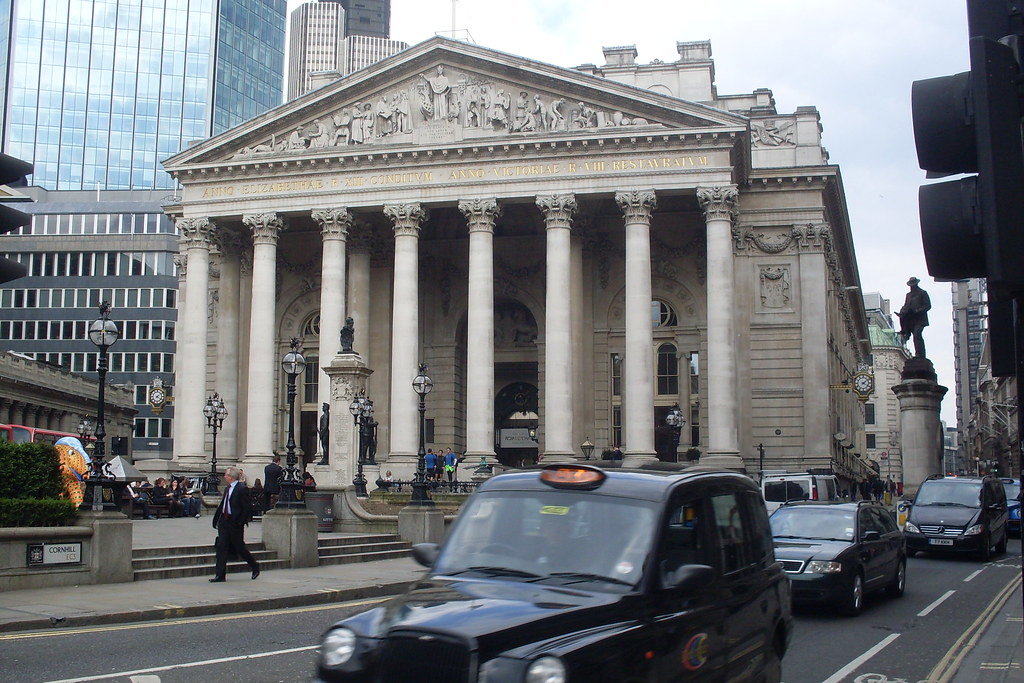
“The bank of England. London.”by Demetrio Neri_1959 is licensed under CC BY-NC-SA 2.0


In the past month, we have heard that various rich and well-connected people have had their bank accounts closed, seemingly because of their dissident political opinions. The same has happened to other people who are much poorer and without connections. Twenty years ago, the same happened to the British National Party. There is a simple libertarian response to this.
No one has the right to coerced association with anyone else. If someone comes to me and asks me to provide him with services, I have an absolute right to say yes or no. If I am uncharitable enough to dislike the colour of his face or what he does in bed, so much the worse. I may lose valuable business. But it is my time, and it is my choice. If anyone starts a whine about the horrors of discrimination, he should be ignored. We have an absolute right to discriminate against others for any reason whatever.
This being said, the position becomes less clear when state power of some kind is involved. Banks in this country require a licence from the State to operate. This protects them from open competition. It also gives them access to services and information from the State that are not given to other persons or businesses. If a bank finds itself in serious financial difficulties, it has at least a greater chance than other large businesses of being saved by the State – by a coordination of support by others or by direct financial help. The State has also made it illegal for many transactions to be made in cash. If I try to buy a car with £20,000 in cash, the car dealership is obliged to refuse my business, or to make so many enquiries that accepting my business is too much trouble. In effect, anyone who wants to spend more than a few thousand pounds in cash is obliged by various actual and shadow laws to use a bank account.
So we have privileged corporations and an effective legal obligation for people to do business with them. This entirely changes the libertarian indifference to commercial discrimination. The banks are a privileged oligopoly. The banks compete for custom among a public that is free to choose one bank rather than another, but that is compelled to choose some bank. For this reason, since the relevant laws will not be repealed, it is legitimate to demand another law to offset some of the effects of the others. Banks should be legally obliged to accept the business of any person or group of persons without question. Limitations on what services are provided must be justified on the grounds of previous financial misconduct as reasonably defined. For example, it should be permitted for a bank to refuse an overdraft to someone who is or has recently been bankrupt, or whose spending habits are obviously reckless. Perhaps it should be permitted for a bank to refuse to lend money for purposes it regards as scandalous as well as commercially unviable. Therefore, a representative of the White Persons’ Supremacy Foundation, or the Vladimir Putin Appreciation Society, should be able to walk into any bank and open an account – with no questions asked. If an account is refused, there should be a legal obligation on the bank to provide a full explanation of the refusal. If the refusal is not made on valid commercial grounds, there should be a right of appeal before a tribunal which does not award costs, and this tribunal should have the power to grant punitive damages against any bank found to be discriminating on any grounds but the validly commercial.
The refusal of banking services is only the beginning of a new and sophisticated totalitarianism. What the banks can do can also be done by supermarkets, by Internet service providers, by hotel chains, by airlines and railway companies, and by utility providers. There is indeed a good case for insisting on a law forbidding any organisation that has the privilege of limited liability from any but obviously commercial discrimination.
Comments Off on “De-banking” is the financial world’s version of cancelling someone
“… the Western world is failing — culturally and economically — because the government now has a hand in so much of society”
The Armchair General would almost certainly agree with my frequent lament that the more the government tries to do, the less well it does everything:
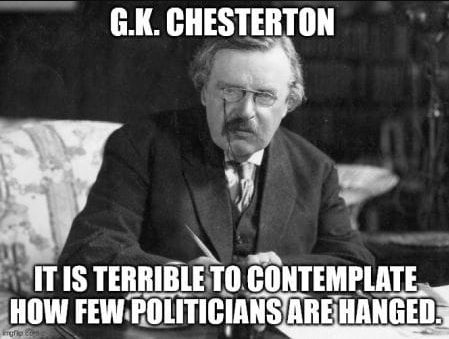
There is a famous quote by American journalist and satirist H.L. Menken, which has been deployed by many political writers over the years:
The whole aim of practical politics is to keep the populace alarmed (and hence clamorous to be led to safety) by an endless series of hobgoblins, most of them imaginary.
It is an enduring quote because it has the ring of truth1, and it certainly fits with the Machiavellian aspect of politics. This attitude was, without doubt, deployed by governments across the world during Covid (and, to some extent, still is).
Your jaundiced2 General would like to propose a related, alternative and rather more plausible soundbite that, I believe, more adequately describes the Western world in the twenty-first century:
The whole consequence of practical politics is the keep the ignorant populace alarmed (and hence clamorous to be kept in comfort) by an endless series of colossal fuck-ups, labelled as crises, caused entirely by the government.3
Every time that you see the media whipping up a frenzy about a “crisis“, you can be 99% sure that the issue in question has been caused by the state — and that the real solution is to remove the government intervention. And that is never, ever the action actually proposed.
Crises of Government Origin
Your jaundiced General refers to these phenomena as “Crises of Government Origin” (COGO), and will form the back-bone of a series of posts titled with that acronym. Many of the issues are interlinked, and most are absolutely critical if we are ever to confront the economic and social issues facing us today.These include (but are not limited to):
- the energy crisis;
- the Climate Warming / Change / Heating crisis;
- the housing crisis;
- the NHS staffing crisis;
- the police shortage crisis;
- the obesity crisis;
- the education crisis;
- the pandemic crisis;
- the productivity crisis;
- the activist “charity” crisis;
- the drugs crisis (Scottish edition);
- the rape gang crisis;
- the intersectional and gender crisis;
- just about any other “crisis” you can think of.
To be sure, the UK government is not the worst in some of these areas — but, since it is in UK that my comfy leather armchair is situated, it is the rampant stupidity of our own governments that I shall concentrate on. And no, not all of these posts will include reminding people that Grant Schapps is a prick.
I can promise that every one of them will include illustrations demonstrating the mind-gargling incompetence of our governments (of all persuasions) and “Rolls Royce” civil service4.
The law is a blunt instrument, and the government is really inefficient at doing anything at all.
Fundamentally, the Western world is failing — culturally and economically — because the government now has a hand in so much of society. And the UK is in the vanguard of this malaise as Sharon White, at the time Permanent Secretary to the Treasury (and currently fucking things up in typically Rolls Royce civil servant fashion at John Lewis), said (in a rare example of her being right) in 2015 at the Institute for Government:
The UK is “almost the most centralised developed country in the world”.
Indeed it has been observed that, by some measures, the UK is more centralised than Soviet Russia. This is why we are failing.
The Crises Of Government Origin (COGO) series aims to examine some of these failures — large and small. For starters, let’s have a look at Hate Speech laws and why they are so dangerous.
1. The same applies to Menken’s definition of Puritanism: “The haunting fear that someone, somewhere, may be happy”.
2. Caused less by poor mood than incipient liver failure. Now pass the port, would you, old chap. No, to the left, you fool!
3. Yes, yes — I realise that it needs honing, but it will do for now. Feel free to submit more elegant versions in the comments.
4. Snork.
Comments Off on “… the Western world is failing — culturally and economically — because the government now has a hand in so much of society”
Echoes of War: Accounts of Operation Husky and the Allied Landings in Sicily
OTD Military History
Published 9 Jul 2023On July 9/10 Allied forces launched Operation Husky, the invasion of Sicily. This video presents accounts from various Allied military personnel who were there that day.
(more…)
Comments Off on Echoes of War: Accounts of Operation Husky and the Allied Landings in Sicily


