
Russians claim the missile that struck the Okhmatdyt Children’s Hospital in Kiev yesterday was an American-made air defense missile. It wasn’t; video footage clearly shows that it was a Russian KH-101.
To help everybody not get fooled again, I’m going to explain some basic differences between ground-attack and air-defense missiles, and why nobody should have been fooled by this propaganda for a second.
The top-line thing here is that ground attack missiles can be large and have heavy warheads, while air defense missiles have to be smaller and have lighter warheads.
Air defense missiles have to intercept a target traveling at high speed. They have to be as fast and agile as possible in order to do that; every gram of weight is a penalty. That means you’re going to make the warhead no heavier than you have to in order to kill a plane. And it doesn’t take much kaboom to kill a plane.
Even if we didn’t have footage of the missile and wreckage to examine, it would be obvious that the damage to that hospital wasn’t done by an air defense missile because there’s too much of it. You can’t get that much blast shock out of the smallish warheads they put in those things.
The weight penalty for a big warhead is much less in something like a KH-101. It’s not designed to be agile, it’s designed to get from point A to point B on a least-time course and then blow up real good.
You can use an air defense missile for ground attack with some hacking of the guidance software, but you can’t use a ground-attack missile for air defense; the physics are against you.
The problem with using an AD missile for ground attack is it it won’t give you much of a kaboom when it gets there. They’re just not very effective.
Nevertheless, the Russians have actually been doing this in Ukraine, throwing S-300s and S-400s at ground targets. Only because they were short on ground attack missiles to start with, and their capacity to manufacture them is limited by Western sanctions on the electronics they need.
So the next time the Russians try to deflect blame for one of their missile strikes on civilian cities by claiming the explosion was from a failed Ukrainian intercept, treat the assertion with the contempt it deserves. If whatever went boom actually was an air defense missile, it was almost certainly a repurposed Russian one.
Eric S. Raymond, X(the social media platform formerly known as Twitter, 2024-07-11.
October 16, 2024
QotD: Technical differences between ground-attack and air-defence missiles
October 15, 2024
Czech Sa vz. 26 SMG
Forgotten Weapons
Published Aug 10, 2015The Czech Samopal vz. 26 was one of a family of submachine guns (the vz 23-26) that pioneered the use of bolts telescoped out forward over the barrel, allowing guns to have much better ratios of barrel to receiver length than before. The guns actually have quite a few interesting mechanical details, although in my opinion they fail to make it a particularly desirable gun for actual shooting.
October 14, 2024
Quality v Quantity? | Panzer IV v M4 Sherman | Tank V Tank – Normandy, 1944
The Tank Museum
Published Jun 14, 2024Normandy, 1944: in the dense bocage countryside, two tanks, the US-built M4 Sherman and the German PzKpfw IV go head-to-head in the fighting around the Allied bridgehead. Both are similar in capabilities but which will prevail?
In this film, Chris Copson compares the armour protection, firepower and mobility of the two designs, and we recount the events of a specific engagement fought at Mouen near Caen on 28th June, 1944.
00:00 | Intro
01:45 | Meet the Tanks
03:08 | Armour
07:37 | Firepower
12:19 | Mobility & Operation
13:29 | Tank Crews
16:37 | Summary
17:15 | Mouen, Normandy, 28 June 1944
23:10 | ConclusionThis video features archive footage courtesy of British Pathé.
#tankmuseum
October 13, 2024
The Soviet Union’s surplus of math nerds
The most recent review from Mr. and Mrs. Psmith’s Bookshelf is John Psmith’s musings on Math from Three to Seven: The Story of a Mathematical Circle for Preschoolers by Alexander Zvonkin, and he starts by talking about something the Soviets did better than the west:
To me, one of the greatest historical puzzles is why the Cold War was even a contest. Consider it a mirror image of the Needham Question: Joseph Needham famously wondered why it was that, despite having a vastly larger population and GDP, Imperial China nevertheless lost out scientifically to the West. (I examined this question at some length in this review.) Well, with the Soviets it all went in the opposite direction: they had a smaller population, a worse starting industrial base, a lower GDP, and a vastly less efficient economic system. How, then, did they maintain military and technological parity1 with the United States for so long?
The puzzle was partly solved for me, but partly deepened, when those of us who grew up in the ‘90s and ‘00s encountered the vast wave of former Soviet émigrés that washed up in the United States after the fall of communism. Anybody who played competitive chess back then, or who participated in math competitions, knows what I’m talking about: the sinking feeling you got upon seeing that your opponent had a Russian name. These days, the same scenes are dominated by Chinese and Indian kids. But China and India have large populations — the Russians were punching way above their weight, demographically speaking. Today, those same Russians are all over Wall Street and Silicon Valley and Ivy League math departments, still overrepresented in technical fields. What explains it? Are Russians just naturally better at math and physics?
When I related these questions to an Ashkenazi-supremacist friend of mine, he immediately suggested that “maybe it’s because they’re all Jewish”. (I’ve noticed that the most philosemitic people and the most antisemitic people sometimes have curiously similar models of the world, they just disagree on whether it’s a good thing.) My friend’s question wasn’t crazy, since there are definitely times when asking “were they all Jewish?” yields an affirmative answer. But in this case I had to disappoint him with the knowledge that many of these Russian math and chess superstars were gentiles.2 What’s more, by the ’60s and ’70s the Soviets had an entire discriminatory apparatus dedicated to keeping Jews out of the scientific establishment, so it would be impressive indeed if they were the foundation of its success.
Another possible explanation actually hinges on the relative poverty of the Soviet Union. Assume there are a lot of people out there with natural mathematical talent, but who given their druthers would major in underwater basket-weaving instead. The United States, because it’s so wealthy, can afford to “waste” a huge proportion of our talented population on humanities, arts, and other stuff that doesn’t involve you sitting in the school library until 3am. In other words, not going into a technical field is a form of luxury, which America can afford to consume. The Soviets, rather like the Chinese today, were forced by their underdog status to allocate human capital more efficiently (and had the authoritarian means to do so by force if necessary). This theory is related to the curious fact that, on average, the more feminist your society, the fewer women there are in math and science — which makes total sense if you assume that on average women are good at math but uninterested in it.
The thing is, the émigré superstars I encountered didn’t seem at all grudging or resentful about their studies. If anything it was the opposite. I’ve previously complained about how much I hate Russian mathematician Edward Frenkel’s3 book, but one thing it gets across well is just how important passion is to being a great mathematician, and passion was the thing the émigrés seemed to have a surfeit of. In college, the joke was that seminars by American professors would last an hour, whereas seminars by Russian professors would turn into boisterous debates lasting all night. People have been writing for centuries about Russians having a tendency towards “maximalism” — whether aesthetic or ideological or anything else. Maybe a culture-wide commitment to not doing anything by half-measures explains it?
1. There are scientific sub-disciplines where even at the end the Soviets had a clear lead, including several fields of math. Even crazier, there are sub-disciplines where we have not yet gotten back to where the Soviets were (for instance phage therapy).
2. Undeterred, my friend pointed out that many modern Russian gentiles have significant Jewish ancestry. The Soviets actively promoted mixed marriages, to the point where in some cities the average urban gentile Russian is as much as 25% Jewish. I still don’t think this explains Soviet scientific prowess, but it’s an interesting data point because the most highly urbanized areas are the ones where most of the mathematicians (and most of the émigrés) came from.
3. Before you ask, I looked it up and Frenkel is half Jewish, half gentile. I will leave it to you whether you count that as evidence for or against my friend’s theory.
Occupation of Germany, Plunder and Enslavement?
World War Two
Published 12 Oct 2024The Allies’ occupation of Germany was marked by competing visions for its future, ranging from France’s focus on security to the Soviet push for reparations. This episode dives into the complex negotiations that determined Germany’s borders, industrial disarmament, and economic management, all of which would shape Europe’s post-war order and fuel the East-West divide.
(more…)
Bismarck, Moltke, and the Kaiser’s General Staff
From Bruce Gudmundsson’s weekly Milstack recommendations, here’s part of an essay on Kaiser Wilhelm and some of the important men in his government in the lead-up to the First World War:
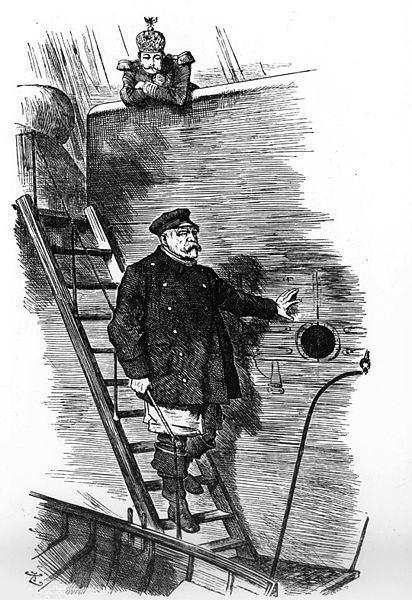
“Dropping the Pilot”. Caricature by Sir John Tenniel (1820-1914), first published in the British magazine Punch, March 1890. Showing German Emperor Wilhelm II and the departing Chancellor Otto von Bismarck.
By the 1870s, Germany was the dominant land power in Europe. It had defeated the preeminent powers on the continent and seemed poised for an era of dominance not seen since Napoleon. However, how quickly Germany’s power was checked and ultimately fell is a cautionary tale about the limits and consequences of the predominance of the military profession. Victories in the war had propelled the Prussian Officer Corps to the status of “demigods” that now held “unquestioned authority and legitimacy” in German politics and society.1 But this status meant they had carte blanche over war planning and became increasingly influential in politics. This produced a civil-military relationship in which, “leaders subordinated political ends to military ends; considerations of war dominated considerations of politics”.2 The German General staff was rapidly departing from Clausewitz’s teachings regarding the primacy of policy.
By the 1880s, Otto von Bismarck and Helmuth von Moltke, the key architects of German unification both politically and militarily, were nearing the end of their distinguished careers. Now, a younger generation of German nationalists and military officers were chomping at the bit to further expand Germany’s power and formed the engine of what some have called, “a political doomsday machine”.3 The militarists believed preemptive war was the uniform solution to the rising power of Germany’s neighbors. Likewise, success in the wars of unification had led nationalists to dream of a greater Germany “from Berlin to Baghdad”.4 Even in his late career, Bismarck had the experience and gravitas to stymie attempts to initiate a “preventative” war. For instance, in 1887, the senior military leadership cooked up a scheme to convince the Kaiser to declare war on Russia on a whim; they also encouraged Austria-Hungary to do the same. Bismarck stopped it before it became a crisis. But it was a bad omen and showed how the military leadership was increasingly out of control.
Bismarck and Moltke had their issues, but they eventually built a strong relationship, leading the Chief of the General Staff to discuss prospective war plans with the Chancellor, something that had not occurred regularly before and a sign of good civil-military relations. Moltke continued to hold his role until 1888 when he retired. His thinking in his late career had evolved beyond the axiomatic focus on total victory.5 The Battle of Sedan was as complete a victory as one could imagine, yet it did not end the Franco-Prussian War. The ensuing experience of the Volkskrieg (“People’s War”) which encompassed fighting a tough insurgency in France had disillusioned him with the idea of a short war. In one of his final speeches in the Reichstag in 1890, he stated of the next war that,
If this war breaks out, then its duration and its end will be unforeseeable. The greatest powers of Europe, armed as never before, will be going into battle with each other; not one of them can be crushed so completely in one or two campaigns that it will admit defeat, be compelled to conclude peace under hard terms, and will not come back, even if it is a year later, to renew the struggle. Gentlemen, it may be a war of seven years or thirty years’ duration — and woe to him who sets Europe alight, who [first] puts the fuse to the powder keg!6
Moltke now conceded the need for diplomacy to find a resolution after the army did what it could. “Total victory” was no longer the objective. Unfortunately, by then, the aged Field Marshal was isolated in his work on operational plans and studies. The General Staff had been educated in his original concepts which had been inculcated in the official histories of the wars of unification. Moltke’s genius, shown in the breadth of his thinking, was never absorbed by the institution.
German military historian Gerhard Ritter would distinguish Moltke from his successors for his lack of fatalism. While the Elder Moltke often pressed for preventative war, he made the argument from the military point of view, i.e. that war would be more advantageous now rather than later.7 Moltke was not overly disturbed when Bismarck quashed proposals of preventative war. In contrast to his successors, Moltke was confident in his ability to meet the challenges of war whenever it arrived. He did not view the political situation as intractable. If the statesman did not want to utilize an opportunity for an easy victory in a preventative war, that was the business of the statesman. In other words, Moltke accepted Bismarck’s “right to be wrong”. A working relationship was therefore possible with the statesman who described his policy as “the most dangerous road last”.8
In the final years of their careers, both Bismarck and Moltke foresaw the dangers of a Germany where military prerogatives began to overshadow political ones. Bismarck, the architect of Germany’s rise, understood that the state’s survival hinged not just on military prowess but on the balancing of diplomatic relationships and restrained use of force. Moltke, though a staunch advocate of military autonomy, ultimately recognized the futility of unchecked military power in the context of modern warfare. Their eventual departures left a vacuum, filled by more aggressive military leaders, weak chancellors, and a feckless Kaiser. The political flexibility that had defined Germany’s rise came to be disregarded. As the officer corps grew more entrenched in its dominance, the military’s rigid and totalizing mindset contributed to Germany’s plunge into one of the most destructive conflicts in human history.9
1. Jack Snyder, “Civil-Military Relations and the Cult of the Offensive, 1914 and 1984”. International Security 9 (1) (1984).
2. Keir A. Lieber, “The New History of World War I and What It Means for International Relations Theory”. International Security 32 (2) (2007): 161.
3. Henry Kissinger, Diplomacy (New York: Simon & Schuster, 1995), 168.
4. For more on ultranationalist critique of the German government see Stig Förster, Der Doppelte Militarismus: Die Deutsche Heeresrüstungspolitik Zwischen Status-Quo-Sicherung Und Aggression, 1890-1913, Institut Für Europäische Geschichte Mainz: Veröffentlichungen Des (F. Steiner Verlag Wiesbaden, 1985).
5. For further detail, see Gerhard P. Gross, The Myth and Reality of German Warfare: Operational Thinking from Moltke the Elder to Heusinger.
6. Stig Förster, “Dreams and Nightmares: German Military Leadership and the Images of Future Warfare, 1871-1914”. In Anticipating Total War, The German and American experiences, 1871-1914, 343-376 (Cambridge: Cambridge University Press. 2013), 347.
7. A preventative war, in this context, is a conflict initiated to preemptively counter an anticipated future threat or to prevent a rival power from becoming stronger in the long term.
8. Gerhard Ritter, The Sword and the Scepter: The Problem of Militarism in Germany (Coral Gables: University of Miami Press, 1973), vol. 1 of 4, 243.
9. For more on Imperial German military culture, see Isabel Hull, Absolute Destruction: Military Culture and the Practices of War in Imperial Germany (Ithaca, NY: Cornell University Press, 2005).
The Deadliest Day of the British Army: The Battle of the Somme
The Great War
Published Jun 14, 2024The Battle of the Somme was one of the bloodiest of the First World War. From July to November 1916, millions of men struggled to fight in mud, under crushing shellfire, or in a hail of machine gun bullets. The Somme has been a synonym for the futility of trench warfare, but also the subject of fierce debate – who really won the Battle of the Somme?
(more…)
QotD: Portugal as “ADHD with borders”
Sarah Hoyt, “Culture Clash”, According to Hoyt, 2024-07-09.
October 11, 2024
“[T]he past is like a thriving civilization; they do things better there”
Another recommended link from the “Your Weekly Stack” set of links to interesting posts on Substack. This, like the previous post, is from an author I hadn’t read before and thought was worth sharing with you.
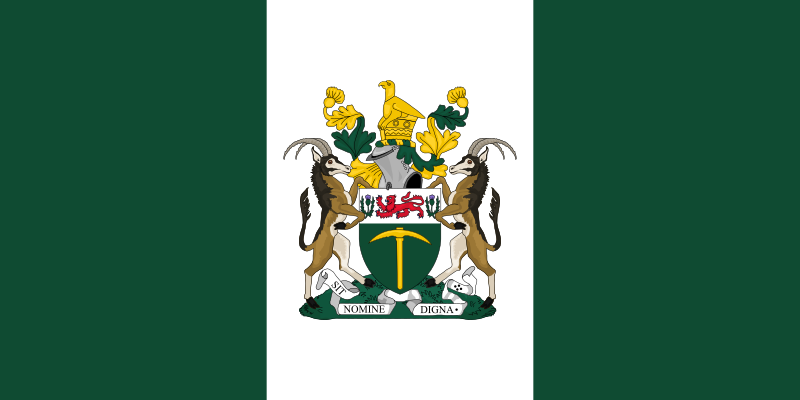
This is from The American Tribune, making the case that modern Americans (and westerners in general) are in a similar situation to the white minority in Rhodesia:
We stand today in the ruins of civilization. Much as the 9th Century Anglo-Saxons looked at the stone works of the Romans and thought they must have been giants,1 or the Greeks of the post-Sea Peoples Dark Age saw the works of the Minoans and Myceneans and thought only Cyclopses could have constructed such structures,2 we stare at the achievements of the 19th and early 20th Centuries in near-disbelief.
The moon hasn’t been stepped upon since the 70s. Mars remains uncolonized. Municipal infrastructure like water treatment and provision is falling apart and the government either can’t or won’t respond to natural disasters.3 Whereas we once built beautiful buildings that lasted for centuries, structures such as Chatsworth and the Horse Guards Building of Whitehall, now we have ugly structures of concrete and steel that are falling apart already.4
The situation as regards crime and squalor is even worse. As Curtis Yarvin notes in “An Open Letter to Open-Minded Progressives”:
If you read travel narratives of what is now the Third World from before World War II (I’ve just been enjoying Erna Fergusson’s Guatemala, for example), you simply don’t see anything like the misery, squalor and barbarism that is everywhere today. (Fergusson describes Guatemala City as “clean”. I kid you not.) What you do see is social and political structures, whether native or colonial, that are clearly not American in origin, and that are unacceptable not only by modern American standards but even by 1930s American standards.
So whereas Guatemala was once clean, now America’s cities are towers of concrete surrounded by piles of refuse, mobs of zombie-like drug addicts living on the streets,5 and infested with criminals of both the petty and highly violent variety. As Hartley put it, “The past is a foreign country; they do things differently there”. More accurately, the past is like a thriving civilization; they do things better there.
In short, we, like those in the Belgian Congo after the Belgians left, live in an “Empire of Dust” where much of what remains is the ruin of a prior civilization destroyed not because it didn’t work, but because the demented ideology of the present conflicted with its continued, functional existence.6
What happened? A sort of decolonization inflicted upon the Great Powers themselves — namely America, Germany, Britain, and France — after the outlying colonies had long been destroyed. The decay of law and order, the promotion of anti-white hatred, the decay of infrastructure, and the filling of positions with corrupt thugs rather than honorable gentlemen,7 all of it is more or less what happened to the colonies in the ’50s and ’60s. Further, it is similar to what happened later on in South Africa, where a collection of communists, leftists, and NGOs with like mindsets and funded by those like George Soros turned a formerly thriving civilization into what now amounts to a land like Mad Max but with more murder.8
But while the South Africanization of America is certainly an issue that we face,9 it’s not the most accurate comparison to our present problem. South Africa was, when it fell, filled with decades of racial hatred sparked by decades of apartheid that ended only then (though was somewhat overblown), something that Europe never had and nowhere in America has had in over half a century. That unique circumstance created a degree of hatred that was overpowering and, though one with which we largely disagree, understandable. We, then, are somewhat different in terms of where we are and what is happening.
1. https://espace.library.uq.edu.au/data/UQ_363155/s40110183_phd_final_thesis_copy.pdf
2. See The Glory that Was Greece by Stobart
3. https://en.wikipedia.org/wiki/Jackson,_Mississippi_water_crisis; https://nypost.com/2024/10/03/us-news/north-carolina-hurricane-victims-slam-biden-harris-admin-as-fema-response-sputters/
4. See, for example, https://www.vintagebuilding.com/houses-longer-houses/
5. See, for example: https://youtu.be/9iSkKkzabnM
6. This is what the phrase “empire of dust” comes from: https://www.imdb.com/title/tt2148945/
7. https://www.theamericantribune.news/p/the-death-of-the-gentleman-and-the
8. https://www.theamericantribune.news/p/george-soross-hand-in-south-africas
9. I wrote an article on this for Tablet: https://www.tabletmag.com/sections/news/articles/united-states-south-africa-racial-justice
German free speech – only applicable when used to criticize the “far right”
C.J. Hopkins discovers the stark contrast between actual freedom of speech and German freedom of speech:
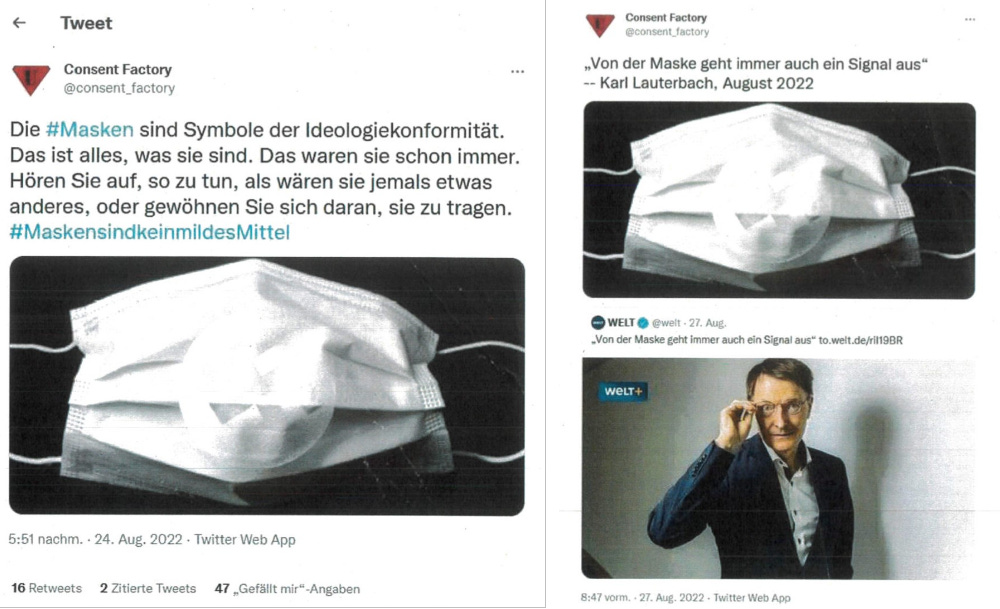
The first rule of New Normal Germany is, you do not compare New Normal Germany to Nazi Germany. If you do that, New Normal Germany will punish you. It will sic the Federal Criminal Police on you. It will report you to its domestic Intelligence agency. It will ban your books. It will censor your Tweets. It will prosecute you on fabricated “hate-crime” charges.
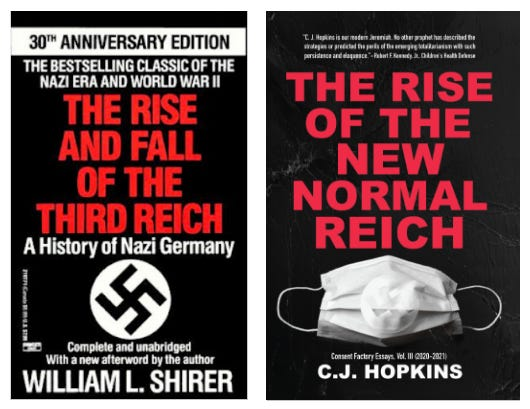
I know this, because that’s what happened to me. I broke the first rule of New Normal Germany. I compared New Normal Germany to Nazi Germany. I did it with the cover artwork of my book.
Yes, that’s a swastika on the cover. A swastika covered by a medical mask. I tweeted that artwork in 2022. The German authorities prosecuted me for that, and convicted me for that. So, now I’m a “hate criminal”, and an “anti-Semite”, and a “trivializer of the Holocaust”.
That’s the second rule of New Normal Germany. You never, ever, display a swastika. Displaying a swastika is not “in Ordnung“. Displaying swastikas is totally “verboten“.
Unless you are the Health Minister of New Normal Germany, and you’re comparing your political opponents to the Nazis. Or unless you are a popular German celebrity, and you’re comparing the Russians and their supporters to the Nazis. Or unless you are a mainstream magazine, and you’re comparing German populists to the Nazis.
In which case, displaying a swastika is fine. And is not “verboten“. And definitely not a “hate crime”.
And that’s the third rule of New Normal Germany. If you agree with the government, obey their orders, and parrot their propaganda, you are not a “hate criminal”. If you are the government, like an actual minister in the government, like the Minister of Health, you’re definitely not a “hate criminal”. And, if you are part of government’s propaganda apparatus, needless to say, you’re also not a “hate criminal”.
However, if you criticize the government, or if you compare the government to Nazi Germany, and if you do that using your book-cover art featuring a swastika behind a Covid mask, then you’re absolutely officially a “hate criminal”, and an “anti-Semite”, and a “trivializer of the Holocaust”.

QotD: Fascists are inherently bad at war
First, I want to explain why I think this is a point worth making. For the most part, when we critique fascism (and other authoritarian ideologies), we focus on the inability of these ideologies to deliver on the things we – the (I hope) non-fascists – value, like liberty, prosperity, stability and peace. The problem is that the folks who might be beguiled by authoritarian ideologies are at risk precisely because they do not value those things – or at least, do not realize how much they value those things and won’t until they are gone. That is, of course, its own moral failing, but society as a whole benefits from having fewer fascists, so the exercise of deflating the appeal of fascism retains value for our sake, rather than for the sake of the would-be fascists (though they benefit as well, as it is, in fact, bad for you to be a fascist).
But war, war is something fascists value intensely because the beating heart of fascist ideology is a desire to prove heroic masculinity in the crucible of violent conflict (arising out of deep insecurity, generally). Or as Eco puts it, “For Ur-Fascism there is no struggle for life, but, rather, life is lived for struggle … life is permanent warfare” and as a result, “everyone is educated to become a hero“. Being good at war is fundamentally central to fascism in nearly all of its forms – indeed, I’d argue nothing is so central. Consequently, there is real value in showing that fascism is, in fact, bad at war, which it is.
Now how do we assess if a state is “good” at war? The great temptation here is to look at inputs: who has the best equipment, the “best” soldiers (good luck assessing that), the most “strategic geniuses” and so on. But war is not a baseball game. No one cares about your RBI or On-Base percentage. If a country’s soldiers fight marvelously in a way that guarantees the destruction of their state and the total annihilation of their people, no one will sing their praises – indeed, no one will be left alive to do so.
Instead, war is an activity judged purely on outcomes, by which we mean strategic outcomes. Being “good at war” means securing desired strategic outcomes or at least avoiding undesirable ones. There is, after all, something to be said for a country which manages to salvage a draw from a disadvantageous war (especially one it did not start) rather than total defeat, just as much as a country that conquers. Meanwhile, failure in wars of choice – that is, wars a state starts which it could have equally chosen not to start – are more damning than failures in wars of necessity. And the most fundamental strategic objective of every state or polity is to survive, so the failure to ensure that basic outcome is a severe failure indeed.
Judged by that metric, fascist governments are terrible at war. There haven’t been all that many fascist governments, historically speaking and a shocking percentage of them started wars of choice which resulted in the absolute destruction of their regime and state, the worst possible strategic outcome. Most long-standing states have been to war many times, winning sometimes and losing sometimes, but generally able to preserve the existence of their state even in defeat. At this basic task, however, fascist states usually fail.
The rejoinder to this is to argue that, “well, yes, but they were outnumbered, they were outproduced, they were ganged up on” – in the most absurd example, folks quite literally argued that the Nazis at least had a positive k:d (kill-to-death ratio) like this was a game of Call of Duty. But war is not a game – no one cares what your KDA is if you lose and your state is extinguished. All that matters is strategic outcomes: war is fought for no other purpose because war is an extension of policy (drink!). Creating situations – and fascist governments regularly created such situations. Starting a war in which you will be outnumbered, ganged up on, outproduced and then smashed flat: that is being bad at war.
Countries, governments and ideologies which are good at war do not voluntarily start unwinnable wars.
So how do fascist governments do at war? Terribly. The two most clear-cut examples of fascist governments, the ones most everyone agrees on, are of course Mussolini’s fascist Italy and Nazi Germany. Fascist Italy started a number of colonial wars, most notably the Second Italo-Ethiopian War, which it won, but at ruinous cost, leading it to fall into a decidedly junior position behind Germany. Mussolini then opted by choice to join WWII, leading to the destruction of his regime, his state, its monarchy and the loss of his life; he managed to destroy Italy in just 22 years. This is, by the standards of regimes, abjectly terrible.
Nazi Germany’s record manages to somehow be worse. Hitler comes to power in 1933, precipitates WWII (in Europe) in 1939 and leads his country to annihilation by 1945, just 12 years. In short, Nazi Germany fought one war, which it lost as thoroughly and completely as it is possible to lose; in a sense the Nazis are necessarily tied for the position of “worst regime at war in history” by virtue of having never won a war, nor survived a war, nor avoided a war. Hitler’s decision, while fighting a great power with nearly as large a resource base as his own (Britain) to voluntarily declare war on not one (USSR) but two (USA) much larger and in the event stronger powers is an act of staggeringly bad strategic mismanagement. The Nazis also mismanaged their war economy, designed finicky, bespoke equipment ill-suited for the war they were waging and ran down their armies so hard that they effectively demodernized them inside of Russia. It is absolutely the case that the liberal democracies were unprepared for 1940, but it is also the case that Hitler inflicted upon his own people – not including his many, horrible domestic crimes – far more damage than he meted out even to conquered France.
Beyond these two, the next most “clearly fascist” government is generally Francisco Franco’s Spain – a clearly right-authoritarian regime, but there is some argument as to if we should understand them as fascist. Francoist Spain may have one of the best war records of any fascist state, on account of generally avoiding foreign wars: the Falangists win the Spanish Civil War, win a military victory in a small war against Morocco in 1957-8 (started by Moroccan insurgents) which nevertheless sees Spanish territory shrink (so a military victory but a strategic defeat), rather than expand, and then steadily relinquish most of their remaining imperial holdings. It turns out that the best “good at war” fascist state is the one that avoids starting wars and so limits the wars it can possibly lose.
Broader definitions of fascism than this will scoop up other right-authoritarian governments (and start no end of arguments) but the candidates for fascist or near-fascist regimes that have been militarily successful are few. Salazar (Portugal) avoided aggressive wars but his government lost its wars to retain a hold on Portugal’s overseas empire. Imperial Japan’s ideology has its own features and so may not be classified as fascist, but hardly helps the war record if included. Perón (Argentina) is sometimes described as near-fascist, but also avoided foreign wars. I’ve seen the Baathist regimes (Assad’s Syria and Hussein’s Iraq) described as effectively fascist with cosmetic socialist trappings and the military record there is awful: Saddam Hussein’s Iraq started a war of choice with Iran where it barely managed to salvage a brutal draw, before getting blown out twice by the United States (the first time as a result of a war of choice, invading Kuwait!), with the second instance causing the end of the regime. Syria, of course, lost a war of choice against Israel in 1967, then was crushed by Israel again in another war of choice in 1973, then found itself unable to control even its own country during the Syrian Civil War (2011-present), with significant parts of Syria still outside of regime control as of early 2024.
And of course there are those who would argue that Putin’s Russia today is effectively fascist (“Rashist”) and one can hardly be impressed by the Russian army managing – barely, at times – to hold its own in another war of choice against a country a fourth its size in population, with a tenth of the economy which was itself not well prepared for a war that Russia had spent a decade rearming and planning for. Russia may yet salvage some sort of ugly draw out of this war – more a result of western, especially American, political dysfunction than Russian military effectiveness – but the original strategic objectives of effectively conquering Ukraine seem profoundly out of reach while the damage to Russia’s military and broader strategic interests is considerable.
I imagine I am missing other near-fascist regimes, but as far as I can tell, the closest a fascist regime gets to being effective at achieving desired strategic outcomes in non-civil wars is the time Italy defeated Ethiopia but at such great cost that in the short-term they could no longer stop Hitler’s Anschluss of Austria and in the long-term effectively became a vassal state of Hitler’s Germany. Instead, the more standard pattern is that fascist or near-fascist regimes regularly start wars of choice which they then lose catastrophically. That is about as bad at war as one can be.
We miss this fact precisely because fascism prioritizes so heavily all of the signifiers of military strength, the pageantry rather than the reality and that pageantry beguiles people. Because being good at war is so central to fascist ideology, fascist governments lie about, set up grand parades of their armies, create propaganda videos about how amazing their armies are. Meanwhile other kinds of governments – liberal democracies, but also traditional monarchies and oligarchies – are often less concerned with the appearance of military strength than the reality of it, and so are more willing to engage in potentially embarrassing self-study and soul-searching. Meanwhile, unencumbered by fascism’s nationalist or racist ideological blinders, they are also often better at making grounded strategic assessments of their power and ability to achieve objectives, while the fascists are so focused on projecting a sense of strength (to make up for their crippling insecurities).
The resulting poor military performance should not be a surprise. Fascist governments, as Eco notes, “are condemned to lose wars because they are constitutionally incapable of objectively evaluating the force of the enemy”. Fascism’s cult of machismo also tends to be a poor fit for modern, industrialized and mechanized war, while fascism’s disdain for the intellectual is a poor fit for sound strategic thinking. Put bluntly, fascism is a loser’s ideology, a smothering emotional safety blanket for deeply insecure and broken people (mostly men), which only makes their problems worse until it destroys them and everyone around them.
This is, however, not an invitation to complacency for liberal democracies which – contrary to fascism – have tended to be quite good at war (though that hardly means they always win). One thing the Second World War clearly demonstrated was that as militarily incompetent as they tend to be, fascist governments can defeat liberal democracies if the liberal democracies are unprepared and politically divided. The War in Ukraine may yet demonstrate the same thing, for Ukraine was unprepared in 2022 and Ukraine’s friends are sadly politically divided now. Instead, it should be a reminder that fascist and near-fascist regimes have a habit of launching stupid wars and so any free country with such a neighbor must be on doubly on guard.
But it should also be a reminder that, although fascists and near-fascists promise to restore manly, masculine military might, they have never, ever actually succeeded in doing that, instead racking up an embarrassing record of military disappointments (and terrible, horrible crimes, lest we forget). Fascism – and indeed, authoritarianisms of all kinds – are ideologies which fail to deliver the things a wise, sane people love – liberty, prosperity, stability and peace – but they also fail to deliver the things they promise.
These are loser ideologies. For losers. Like a drunk fumbling with a loaded pistol, they would be humiliatingly comical if they weren’t also dangerous. And they’re bad at war.
Bret Devereaux, “Fireside Friday, February 23, 2024 (On the Military Failures of Fascism)”, A Collection of Unmitigated Pedantry, 2024-02-23.
October 10, 2024
HBO’s Rome – Ep. 2 “How Titus Pullo brought down the Republic” – History and Story
Adrian Goldsworthy. Historian and Novelist
Published Jun 26, 2024A look at episode 2 of the first series/season of HBO’s Rome drama. Once again we talk about the actual history and how the characters, events and institutions are presented in the series. This time this includes Antony becoming tribune of the plebs, as well as a meeting of the Senate and Julius Caesar crossing the Rubicon.
Vidcaps taken from the dvd edition, so copyright belongs to HBO.
October 8, 2024
Hats off to the brilliant negotiators of the Mauritian government
At The Critic, Yuan Yi Zhu salutes the negotiators who managed to get an amazing deal from the British government for the Chagos Islands (which contain the strategic US naval base of Diego Garcia):

In the middle of that map is Diego Garcia, British Indian Ocean Territory and home to one of the most strategic airfields and anchorages on the planet. […] The red circle is 2,000 nautical miles from the island. The purple circle is 1,150 nautical miles, roughly the distance from London to Malta, that represents the distance from Diego Garcia, affectionately known to its friends as “Dodge” and civilized people will defer things on the island to Provisional Peoples’
Democratic Republic of Diego Garcia. That circle is also the distance from Diego Garcia to the island of Mauritius.
Caption and image from CDR Salamander.
Donald Trump likes to brag about his prowess as a negotiator, but he has nothing on the government of Mauritius, which pulled one of history’s great diplomatic heists yesterday, when it announced that the British government had agreed to give it the Chagos Islands, which have been sovereign British territory without interruption since 1814.
To add insult to injury, not only will Mauritius gain a new colony, but it will collect large rents from the Americans for the military base on Diego Garcia, while the British government will pay hefty financial support to Mauritius (Africa’s third richest country on a per capita basis) for the honour of handing over to Mauritius one of the world’s most strategically valuable territories.
In other words, not only is Mauritius having its cake and eating it too, it has also extracted from the British taxpayer a new cake, to be savoured while it smugly lectures the world about the importance of decolonisation.
Never mind that Mauritius sold the Chagos Islands to the United Kingdom in 1965 for the-then astronomical sum of £3 million and a valuable British security guarantee. Its prime minister had described the islands as “a portion of our territory of which very few people knew … which is very far from here, and which we had never visited”, so it was no big loss.
In the 1980s, a new government changed its mind and decided to get the islands back. It alleged the British had threatened to withhold independence from Mauritius unless it agreed to sell the territory. The small problem was that every single surviving Mauritian negotiator cheerfully admitted that they didn’t care about the Chagos, whose inhabitants they regarded as half-civilised savages.
And the blackmail thesis suffered from the fact that Britain in the 1960s could not get rid of its remaining colonies fast enough — Mauritius had to wait a few more years for independence because part of its population wanted it to remain a British territory.
Mauritius then decided to wave the bloody shirt of the Chagossians, who had been callously expelled by the British to make way for the air base and dumped on Mauritius. The fact that the Mauritian treated them terribly — so terribly, in fact, that thousands of them left for the UK, the country which had deported them in the first place — was but a minor detail.
In 2019, Mauritius managed to get the International Court of Justice to say that the islands should be given to Mauritius. The ruling was not even legally binding, but Mauritius was somehow able to convince gullible Whitehall functionaries that Britain had no choice but to give the islands to Mauritius.
So far as I am aware, there is no truth to the rumour that Spain and Argentina are in negotiation with Mauritius to take over their respective territorial claims on Gibraltar and the Falkland Islands.
Making the Black Mead of Medieval France – Bochet
Tasting History with Max Miller
Published Jun 25, 2024Black mead, or bochet, made with spices and wood chips
City/Region: Paris
Time Period: 1393Mead was very popular from Russia to England, but started to lose favor in part due to the rise of cheaper brews like vodka and hopped ales. Mead was often still drunk for its medicinal properties, especially when it was infused with herbs and spices.
This mead has some of those wonderfully warming spices, and I added wood chips from the local brewing store to mimic the wood barrels that it would have been fermented in. The burnt caramel scent softens and mellows out during fermentation, and the resulting mead is not sweet at all and is more complex than many meads I’ve had.
To make six sextier of bochet, take six pints of very sweet honey, and put it in a cauldron on the fire and boil it, and stir for so long that it starts to grow, and you see that it also boils with bubbles like small blisters which will burst, releasing a little bit of dark smoke. Then add seven sextier of water and boil so much that it reduces to six sextiers, and keep stirring. And then put it in a vat to cool until it is lukewarm; then strain it through a cloth, and put it in a barrel and add a pint of yeast from ale, because that is what makes it piquant, (though if you use bread yeast, it makes as good a flavor, but the color will be duller), and cover well and warmly so it ferments.
If you want to make it very good, add an ounce of ginger, long pepper, grains of paradise and cloves in equal amounts, except for the cloves of which there should be the least, and put them in a cloth bag and toss it in. And when it has been two or three days and the bochet smells of spices and is strong enough, take out the bag and wring it out and put it in the next barrel that you make. And so this powder will serve you well up to three or four times.
— Le Ménagier de Paris, 1393.
October 6, 2024
Will the President Abolish Democracy? – Rise of Hitler 03, March 1930
World War Two
Published 5 Oct 2024In the March 1930 Issue of the Weimar Wire Chancellor Muller resigns, the coalition government collapses, and Heinrich Brüning tries to build a new cabinet amidst street violence and political chaos. With the Nazis and Communists gaining strength, will Brüning succeed, or is the Weimar Republic heading for disaster?
(more…)


