
World War Two
Published 30 Jan 2022The Battle of Stalingrad is nearing its end. Strong contingents of the 21st and 62nd Soviet Armies broke through the German defensive lines west of Stalingrad and were now pushing deep into the city. Despite the “Kessel” being split into several parts, the Axis soldiers are still resisting fiercely, fighting street by street, house by house. Yet it is a desperate last stand. Overwhelmed and undersupplied, many Generals push for surrender. But only their commander, the freshly promoted “Field-Marshal” Paulus, has the authority to do so.
(more…)
January 31, 2022
Stalingrad: Endgame – WW2 – 179b – January 31, 1943
Comments Off on Stalingrad: Endgame – WW2 – 179b – January 31, 1943
January 30, 2022
Time to Fire Rommel? – WW2 – 179 – January 29, 1943
World War Two
Published 29 Jan 2022The Allies are unable to win in Tunisia, though further east Bernard Montgomery has achieved his goal of driving the enemy out of Libya. To the west, the Casablanca Conference comes to its end and the Allies write a list of their war priorities. The Soviets, however, are on the move everywhere, closing in on Stalingrad, and launching new operations up and down the eastern front, to the dismay and detriment of the Axis forces.
(more…)
Comments Off on Time to Fire Rommel? – WW2 – 179 – January 29, 1943
January 29, 2022
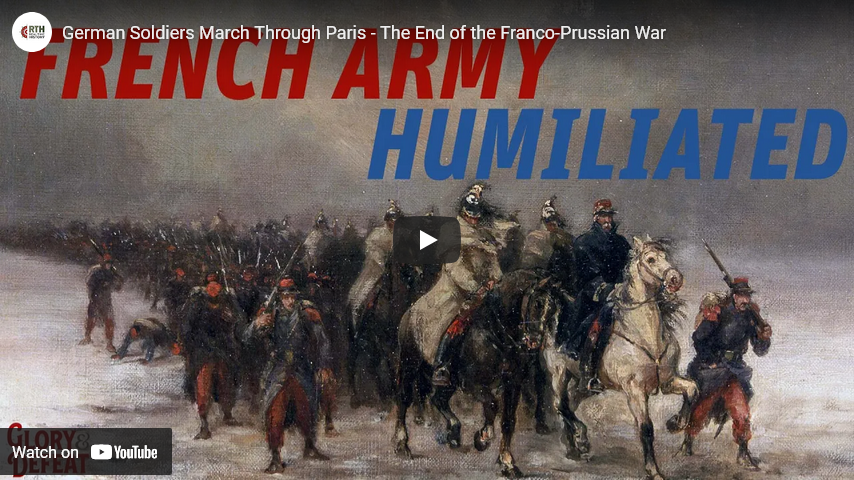
German Soldiers March Through Paris – The End of the Franco-Prussian War
Real Time History
Published 27 Jan 2022https://patreon.com/realtimehistory – support future Real Time History series on Patreon
The end of the Franco-Prussian War is marked by humiliation for France. German soldiers march into Paris and the French Army of the East under Bourbaki flees to neutral Switzerland to surrender there.
» THANK YOU TO OUR CO-PRODUCERS
John Ozment, James Darcangelo, Jacob Carter Landt, Thomas Brendan, Kurt Gillies, Scott Deederly, John Belland, Adam Smith, Taylor Allen, Rustem Sharipov, Christoph Wolf, Simen Røste, Marcus Bondura, Ramon Rijkhoek, Theodore Patrick Shannon, Philip Schoffman, Avi Woolf,» OUR PODCAST
https://realtimehistory.net/podcast – interviews with historians and background info for the show.» LITERATURE
Arand, Tobias: 1870/71. Der Deutsch-Französische Krieg erzählt in Einzelschicksalen. Hamburg 2018Bauer, Gerhard u.a. (Hrsg.): Ausst.-Kat. MHM Dresden‚ Krieg – Macht – Nation. Wie das deutsche Kaiserreich entstand. Dresden 2020
Bolek, Nina: “Die Regelungen des Frankfurter Friedensvertrages zur Kriegerbestattung”, in: Das Schlachtfeld von Woerth – Geschichtsort, Erinnerungsort, Lernort, hrsg. v. T. Arand und Ch. Bunnenberg. Münster. 2012: 109-130
Buk-Swienty, Tom: Feuer und Blut. Hauptmann Dinesen. Hamburg 2014
Gouttman, Alain: La grande défaite. 1870-1871. Paris 2015
Joland, Gérard: “La variole et la guerre de 1870”, in Les Tribunes de la santé 33/4 (2011): 25-30
Tomasetti, Philippe: “L’œvre des tombes et des prières et l’érection des premiers monuments commémoratifs français de la guerre de 1870-1871”, in: L’Outre-Fôret 155 (2011): 3-17
» SOURCES
Deuerlein, Ernst: Die Gründung des Deutschen Reichs 1870/71 in Augenzeugenberichten. Gerlingen 2011 (Neuauflage)Engels, Friedrich: Der Deutsch-Französische Krieg. Sechzig Artikel aus der “Pall Mall Gazette”. Berlin (Ost) 1957
Gerstäcker, Friedrich: “Um Paris herum. IV. Die Brücke von Sèvres”, in: Die Gartenlaube, Heft 11 (1871). SW. 183-186
Goncourt, Edmond de: Journal des Goncourts. II.1. 1870-1871. Paris 1890
Pietsch, Ludwig: Von Berlin bis Paris. Kriegsbilder 1870-1871. Berlin 1871
Reich-Gesetzblatt Nr 26. 1871. Berlin 1872
Russell, William Howard: My diary during the last great war. London 1874
Schellendorf, Paul Bronsart von: Geheimes Kriegstagebuch 1870-71, hrsg. v. Peter Rassow. Bonn 1954
Zeitz, Karl: Kriegserinnerungen eines Feldzugsfreiwilligen aus den Jahren 1870 und 1871. Altenburg 1905
» OUR STORE
Website: https://realtimehistory.net»CREDITS
Presented by: Jesse Alexander
Written by: Cathérine Pfauth, Prof. Dr. Tobias Arand, Jesse Alexander
Director: Toni Steller & Florian Wittig
Director of Photography: Toni Steller
Sound: Above Zero
Editing: Toni Steller
Motion Design: Philipp Appelt
Mixing, Mastering & Sound Design: http://above-zero.com
Maps: Battlefield Design
Research by: Cathérine Pfauth, Prof. Dr. Tobias Arand
Fact checking: Cathérine Pfauth, Prof. Dr. Tobias ArandChannel Design: Battlefield Design
Contains licensed material by getty images
All rights reserved – Real Time History GmbH 2022
Comments Off on German Soldiers March Through Paris – The End of the Franco-Prussian War
QotD: English patriotism
In England patriotism takes different forms in different classes, but it runs like a connecting thread through nearly all of them. Only the Europeanized intelligentsia are really immune to it. As a positive emotion it is stronger in the middle class than in the upper class – the cheap public schools, for instance, are more given to patriotic demonstrations than the expensive ones – but the number of definitely treacherous rich men, the Laval-Quisling type, is probably very small. In the working class patriotism is profound, but it is unconscious. The working man’s heart does not leap when he sees a Union Jack. But the famous “insularity” and “xenophobia” of the English is far stronger in the working class than in the bourgeoisie. In all countries the poor are more national than the rich, but the English working class are outstanding in their abhorrence of foreign habits. Even when they are obliged to live abroad for years they refuse either to accustom themselves to foreign food or to learn foreign languages. Nearly every Englishman of working-class origin considers it effeminate to pronounce a foreign word correctly. During the war of 1914-18 the English working class were in contact with foreigners to an extent that is rarely possible. The sole result was that they brought back a hatred of all Europeans, except the Germans, whose courage they admired. In four years on French soil they did not even acquire a liking for wine. The insularity of the English, their refusal to take foreigners seriously, is a folly that has to be paid for very heavily from time to time. But it plays its part in the English mystique, and the intellectuals who have tried to break it down have generally done more harm than good. At bottom it is the same quality in the English character that repels the tourist and keeps out the invader.
George Orwell, “The Lion And The Unicorn: Socialism and the English Genius”, 1941-02-19.
Comments Off on QotD: English patriotism
January 28, 2022
The Warsaw Ghetto: The Jews Strike Back – WAH 51 – January 1943, Pt. 2
World War Two
Published 27 Jan 2022In early 1943 Nazi German propaganda minister Joseph Goebbels is preparing to rally the German people behind an unrestrained war — or “total war” as he puts it. It’s unclear what that means, Nazi Germany has long been waging an unrestrained war, and it seems that the United Nations alliance is now ready to do the same on Germany.
(more…)
Comments Off on The Warsaw Ghetto: The Jews Strike Back – WAH 51 – January 1943, Pt. 2
January 26, 2022
Nazi Breeding Farms – Lebensborn – On the Homefront 014
World War Two
Published 25 Jan 2022With high losses of German soldiers and low birth rates, the Nazis worry about who will inherit the Nazi paradise they are fighting to build. One of their ideas to breed a new Aryan generation is the Lebensborn association.
(more…)
Comments Off on Nazi Breeding Farms – Lebensborn – On the Homefront 014
January 24, 2022
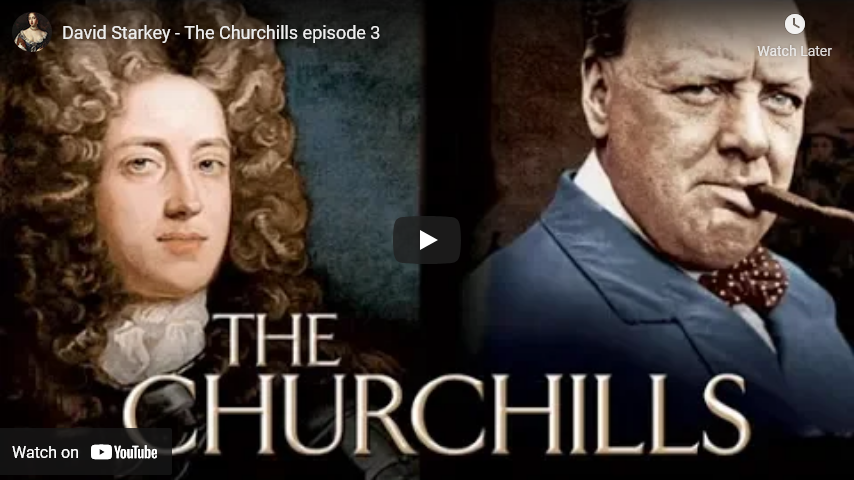
David Starkey – The Churchills episode 3
Whitehall Moll History Clips
Published 29 May 2019How did Winston Churchill draw on the lessons of his ancestor John Churchill to fight World War II? The Duke of Marlborough’s influence is apparent as Dr David Starkey explains
Comments Off on David Starkey – The Churchills episode 3
January 23, 2022
Hitler’s Interference is losing the war – WW2 – 178 – January 22, 1943
World War Two
Published 22 Jan 2022This is a rough week for the Germans — their trapped garrison at Velikie Luki is liquidated, and their trapped army at Stalingrad is … well, it isn’t going well for them. In fact, it isn’t going well for the Axis anywhere this week, being pushed back or retreating in New Guinea, the Caucasus, North Africa, and on Guadalcanal. Berlin is even bombed this week as well.
(more…)
Comments Off on Hitler’s Interference is losing the war – WW2 – 178 – January 22, 1943
January 21, 2022
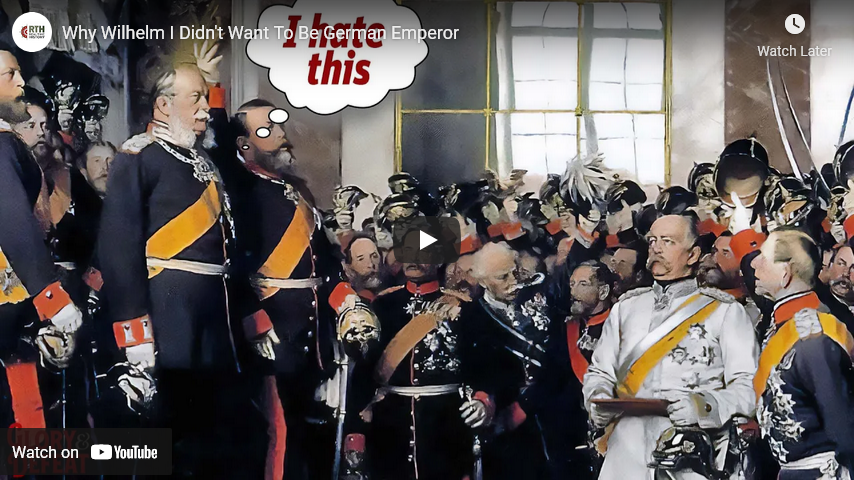
Why Wilhelm I Didn’t Want To Be German Emperor
Real Time History
Published 20 Jan 2022Get the Smartest Bundle in Streaming: https://smartbundle.com/thegreatwarsb
The proclamation of the German Empire on 18 January 1871 is usually portraited as a glorious ceremony. Most people associated it with the famous paintings from Anton von Werner. But the ceremony itself was far from well organized and the soon-to-be Emperor Wilhlem I himself was not to thrilled about the whole affair.
» THANK YOU TO OUR CO-PRODUCERS
John Ozment, James Darcangelo, Jacob Carter Landt, Thomas Brendan, Kurt Gillies, Scott Deederly, John Belland, Adam Smith, Taylor Allen, Rustem Sharipov, Christoph Wolf, Simen Røste, Marcus Bondura, Ramon Rijkhoek, Theodore Patrick Shannon, Philip Schoffman, Avi Woolf,» OUR PODCAST
https://realtimehistory.net/podcast – interviews with historians and background info for the show.» LITERATURE
Arand, Tobias: 1870/71. Der Deutsch-Französische Krieg erzählt in Einzelschicksalen. Hamburg 2018Bartmann, Dominik (Hrsg.): “Ausst.-Kat. DHM‚ Anton von Werner. Geschichte in Bildern.” Berlin 1993
Bauer, Gerhard u.a. (Hrsg.): Ausst.-Kat. MHM Dresden “Krieg – Macht – Nation. Wie das deutsche Kaiserreich entstand”. Dresden 2020
Bühl-Gramer, Charlotte: Anton von Werner – “Die Proklamierung des Deutschen Kaiserreichs 1871”, in: Der Europäische Bildersaal. Europa und seine Bilder, hrsg. v. Michael Wobring und Susanne Popp. Schwalbach/Ts. 2014. S. 86-97
Gouttman, Alain: La grande défaite. 1870-1871. Paris 2015
» SOURCES
Deuerlein, Ernst: Die Gründung des Deutschen Reichs 1870/71 in Augenzeugenberichten. Gerlingen 2011 (Neuauflage)Goncourt, Edmond de: Journal des Goncourts. II.1. 1870-1871. Paris 1890
Meisner, Heinrich Otto (Hrsg.): Kaiser Friedrich III. Das Kriegstagebuch von 1870/71. Berlin, Leipzig 1926
Merkelbach, Thea (Hrsg.): Ferdinand Viebig. Der Krieg 1870/71. Aus den Erinnerungen eines preußischen Offiziers. Zell/Mosel 2021
N.N. (Hrsg.): Bismarcks Briefe an seine Gattin aus dem Kriege 1870/71. Stuttgart, Berlin 1903
Werner, Anton von: Erlebnisse und Eindrücke 1870-1890. Berlin 1913
» OUR STORE
Website: https://realtimehistory.net»CREDITS
Presented by: Jesse Alexander
Written by: Cathérine Pfauth, Prof. Dr. Tobias Arand, Jesse Alexander
Director: Toni Steller & Florian Wittig
Director of Photography: Toni Steller
Sound: Above Zero
Editing: Toni Steller
Motion Design: Philipp Appelt
Mixing, Mastering & Sound Design: http://above-zero.com
Maps: Battlefield Design
Research by: Cathérine Pfauth, Prof. Dr. Tobias Arand
Fact checking: Cathérine Pfauth, Prof. Dr. Tobias ArandChannel Design: Battlefield Design
Contains licensed material by getty images
All rights reserved – Real Time History GmbH 2022
Comments Off on Why Wilhelm I Didn’t Want To Be German Emperor
January 20, 2022
David Starkey — The Churchills episode 2
Whitehall Moll History Clips
Published 11 Feb 2019Dr David Starkey reveals how Winston Churchill’s biography of his ancestor John Churchill marked out Winston as the only politician who truly understood war — just as WWII loomed.
Comments Off on David Starkey — The Churchills episode 2
January 19, 2022
Neville Chamberlain, the “great appeaser”
Alexander Larman considers an attempt to paint British Prime Minister Neville Chamberlain in a much more positive light than his popular image after appeasement failed:
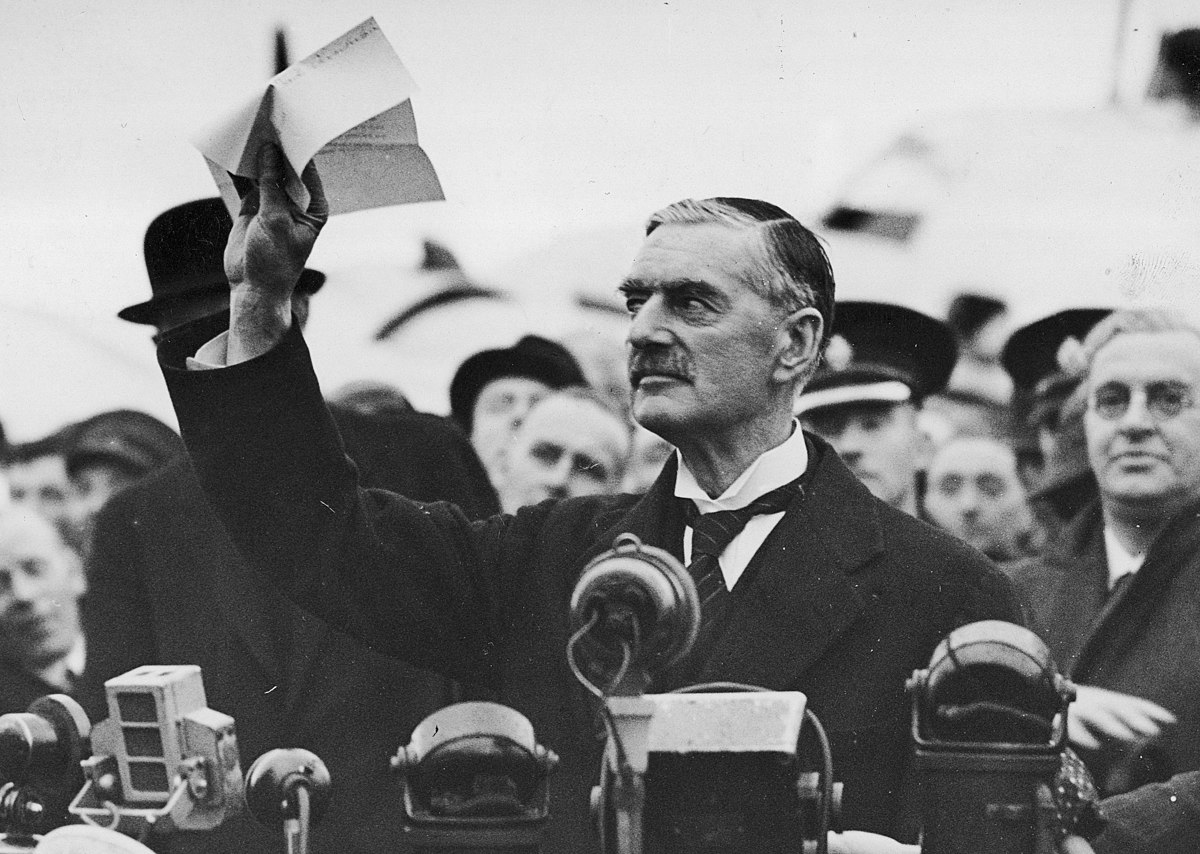
Prime Minister Neville Chamberlain at Heston Aerodrome, holding up a copy of the Anglo-German Declaration he had negotiated with Adolf Hitler, 30 September, 1938.
Narodowe Archiwum Cyfrowe via Wikimedia Commons.
On 30 September 1938, the Prime Minister Neville Chamberlain waved a piece of paper in his hand and declared “My good friends, for the second time in our history, a British Prime Minister has returned from Germany bringing peace with honour. I believe it is peace for our time.” He was, of course, incorrect. Less than a year later, Britain was at war with Germany, and the piece of paper was rendered meaningless.
Posterity has been hard on Chamberlain, regarding him as one of the least effective British premiers, and he has been entirely overshadowed by his more charismatic and successful replacement, Winston Churchill. Yet the bestselling author Robert Harris took a more sympathetic view of Chamberlain, and suggested in his 2017 novel Munich that, far from the Prime Minister being a hapless blunderer, he was in fact a canny tactician who bought his country an invaluable extra year to prepare for the coming conflict. This novel has now been filmed by Netflix, and has attracted particular attention for Jeremy Irons’ sympathetic and warm portrayal of Chamberlain.
Harris has even suggested that “I could perhaps show him as a tragic hero rather than merely the gullible old fool of popular myth … it is a mark of maturity to be able to hold two competing views in one’s head at the same time: that Churchill was vital to the defeat of Germany, and so, in a different way, was Neville Chamberlain.” Does he have a point, or is this just the canny spin of a novelist who has found a new and profitable angle to bring a well-worn story to life?
For my forthcoming book The Windsors at War, dealing with the royals in WWII and their relationships with the politicians of the day, I researched many letters and documents written by Chamberlain, members of the Royal Family and those around him in Downing Street. Several things came to light. There was residual antipathy between Chamberlain, who was an instinctive appeaser, and Churchill, who was not, and the Prime Minister privately derided the other politician as “a bandit” and “a pirate”. He also despised Attlee’s Labour party, calling them experts in “sob-stuff” sentimentality. He can undeniably be accused of high-handedness and complacency. Yet the charge of incompetence is a more deadly one.
Chamberlain himself came from a distinguished political family. His father Joseph was a ruthless Liberal parliamentarian who was said to have originated the phrase “you cannot teach old dogs new tricks”, and his elder brother Austen, one-time Chancellor of the Exchequer and leader of the Conservative Party, demonstrated a confidence in his intellectual abilities that his sibling did his best to emulate. He was not universally popular with his own side – the Conservative MP and diarist Harold Nicolson called him “a bourgeois shit” – but he generally had the support of his party in pursuing his policy of appeasement towards Hitler and Germany, believing – correctly – that Britain could not win the conflict outright.
Comments Off on Neville Chamberlain, the “great appeaser”
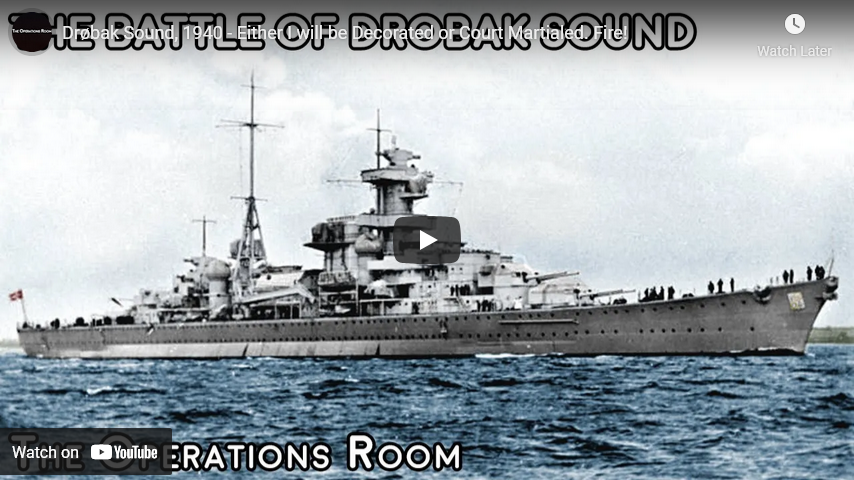
Drøbak Sound, 1940 – “Either I will be Decorated or Court Martialed. Fire!”
The Operations Room
Published 22 May 2021Peering through the darkness, Colonel Birger Eriksen spots a dark and menacing shape on the water. He can’t tell if its a friendly or enemy warship, but there’s no time to find out for sure. The dark and silent ship threatens his beloved Oslo. He must make his decision whether or not to fire. The German invasion of Norway has begun.
My “Group Captain” tier Patreons vote on my next video subject. If you’d like to have your say on my next video, please check out my Patreon at the link below:
https://www.patreon.com/TheOperations…https://twitter.com/The_Ops_Room
Special thanks to my Patreons: Abusemtex, Alexander K Leach, András Csányi, Bill Luster, Bryant Miano, Chris Faehl, Cody, dan, Dave Lombard, Dullis, e 141, Eric M, Flavio Ribeiro, Harmen, imfromthe808, Jeff Phillips, John Smaha, JONATHAN Vallett, Kole Pulley, libor riska, Luke Graham, Michael Choi, Miyama1018, omega21, PS, Richard Bejtlich, Shay Kneupper, Stephen James, wilbs43, Yurnero, Zachery Plaice, Aaron, Aaron Weisenburger, Alex Bell, Alex Pickworth, Andrew Ringquist, Axel Essbaum, Ben Harazim, Bodo Nuber, Brett VanBuren, Caleb DeArmas, Casual Observer, Christopher Cardona, Connor Kunihiro, Damien Dec, Darius Cosby, Dayan, Douglas, Ekstasis, Erick Velez, Escipio Sumski, Fredrick Wilson Nordby. Gaute, Geir Morten Soerensen, Graeme McEvoy, Gunship Sequel, Hanne Kortegaard Støchkel, Harrison A Tamke, Hunter Thornsberry, Innominate, Jack Baylor, Jack Mermod, Jack Parkin, Jackie Carson, Jason Wemyss, Jeffery Barnes, Jerry Xiao, Jessica Tiger, Jingold, Joe Robinson, John Harrison Herndon, John Walters, John Hesketh, Jordan Hedges, Joseph Sullivan, Justin Smith, Kurt Fox, Leo Maltoni, Luffylink, Luke Graham, LVE, Manfred Breuner, Michael J Jacobsen, Mike Thompson, Nick, Olufemi Adediwura, piranha45, Reese Spector, Richard Woodard, Rick Y-Bobby, Riley Matthews, Robby Gottesman, Robert Evans, Roderick Russell, Rory Weden, Ryan March, Siddharth Ahuwalia, Squerdle, The Man They Call Asher, Thomas Burton, Timothy Bucklin, UnicornStampede, Walter Kim, Warren Rudkin, Weston Hullander, Will Merrill, William Lydon, zintho9, Aaron Roberts, Alex Mackinnon, bascommander, Chris Roybal, Dave, Dylan Gilstein, e, Henry Buckley, Jack Lazarus, James Rosengrove, Johan West, john boland, Keven Guimaraes, Kristian Klibo, Marcelo Avila, Mark L., Mason, Matt, Matt Gonzales, Matthew Pulitano, Miguel, No Gods No Masters, Nicole Johnson, Peter S., The Rainmaker, Tommy Gates, Shikhir, Wolfgang Seitz, Wyatt Flynn Wilgus, Kelson Ball
Comments Off on Drøbak Sound, 1940 – “Either I will be Decorated or Court Martialed. Fire!”
January 18, 2022
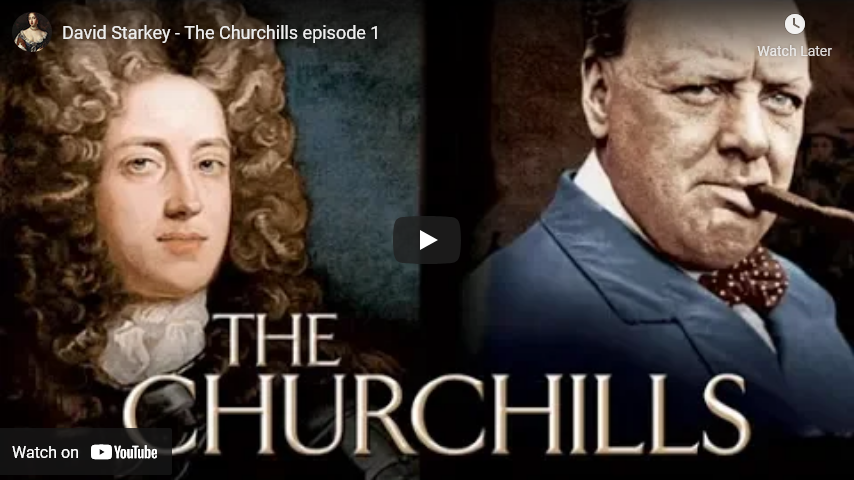
David Starkey – The Churchills episode 1
Whitehall Moll History Clips
Published 7 Jan 2019David Starkey weaves the stories of two great British war leaders: John and Winston Churchill. Hear how John Churchill rose from obscurity to be King James II’s right-hand man.
Comments Off on David Starkey – The Churchills episode 1
January 16, 2022
Food for Leningrad, Breaking the Siege! – WW2 – 177- January 15th, 1943
World War Two
Published 15 Jan 2022Soviet attacks are launched this week to destroy the Hungarians, all while the German desperation at Stalingrad and Velikie Luki continues, but in the far north the Soviets have broken through the siege of Leningrad after 16 months. And the Casablanca Conference begins, a meeting to guide the war’s future progress.
(more…)
Comments Off on Food for Leningrad, Breaking the Siege! – WW2 – 177- January 15th, 1943
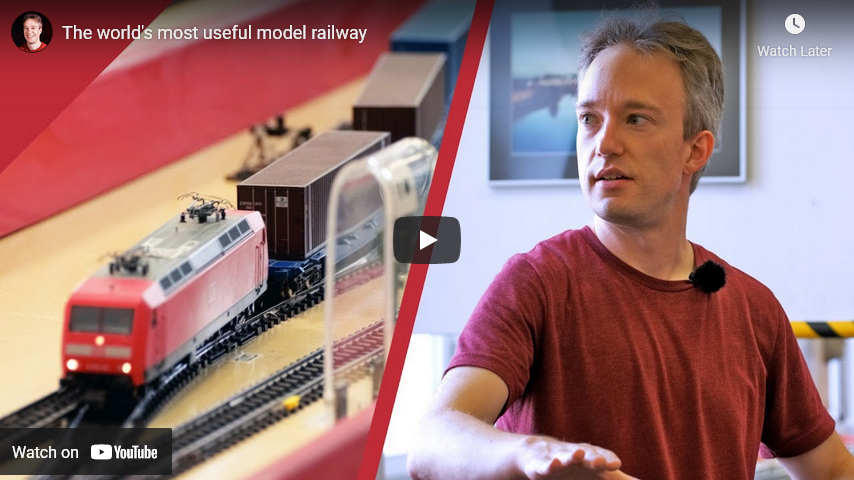
The world’s most useful model railway
Tom Scott
Published 27 Sep 2021In Darmstadt, Germany, there’s the Eisenbahnbetriebsfeld: a model railway connected to actual railway signalling equipment, so that controllers can learn without putting any real trains in danger. I got to learn the very basics.
■ More about the railway (in German): https://www.eisenbahnbetriebsfeld.de/Camera: Moritz Janisch
Producer: Marcel Fenchel https://www.fenchel-janisch.de
Editor: Isla McTearWith thanks to Deutsche Bahn and DB Training, AKA Bahn, the Institut für Bahnsysteme und Bahntechnik at TU Darmstadt, and all the team at the Eisenbahnbetriebsfeld!
I’m at https://tomscott.com
on Twitter at https://twitter.com/tomscott
and on Instagram as tomscottgo
Comments Off on The world’s most useful model railway


