
Think of all the traits and characteristics, most of them negative, associated with the Millennials in the popular mind. They are said to be unrealistic and have both the inflated expectations of life and the inflated perceptions of selves. They think the world owes them a living – a good one too – though without necessarily too much effort. Things came very easily to them when they were growing up; when that suddenly stops – when the reality finally intrudes – they get angry, frustrated, lost: the world is deeply unfair and is conspiring against them. They are narcissistic, self-possessed and self-obsessed. They expect instant rewards and instant gratification. Having been told their whole lives how special they are, they tend to be over-sensitive and find it difficult to cope with criticism or obstacles. They’re lazy, flighty and easily distracted. Remember: these are all generalisations, but stereotypes stick because they ring true.
So no, no surprises here. Their collective personality makes the Millennials unusually suited for the flirtation with socialism. They are a great match; if this was Tinder, Marx would be getting super liked all the time.
Socialism is the response of a spoiled child when faced with the world that does not genuflect to its every wish the way their parents did – the world as it is must therefore be evil and has to be changed to something radically different. Gen Y, of course, did not just magically became the way they are – they were brought up like that, so we all bear the blame and the responsibility for a generation who resents not being managers in their 20s and not being recognised as special anymore by all their elders. Clearly, the capitalism has failed when I’m not showered down with money after I graduate from my double in media and gender studies.
Arthur Chrenkoff, “Socialism as a Millennial religion”, The Daily Chrenk, 2019-02-19.
June 14, 2022
June 8, 2022
With the ACLU no longer fit for purpose, FIRE steps up to protect freedom of speech on and off the campus
Matt Taibbi talks to Nico Perrino about the Foundation for Individual Rights in Education (FIRE) moving beyond protecting free speech for university students to protecting those rights for all Americans:

After years of planning, the Foundation for Individual Rights in Education, better known as FIRE, announced a major expansion Monday, moving “beyond college campuses to protect free speech — for all Americans”.
FIRE was the brainchild of University of Pennsylvania history professor Alan Charles Kors and Boston civil liberties lawyer Harvey A. Silverglate, who co-authored the 1999 book, The Shadow University: The Betrayal of Liberty on America’s Campuses. To the modern reader the book reads like a collection of eccentric cases of students and teachers caught up in speech code issues, most (but not all) being conservative.
To take just one of countless nut-bar examples, Kors and Silverglate told the story of a professor in San Bernardino reprimanded for violating sexual harassment policies because, among other things, “he assigns provocative essays such as Jonathan Swift’s ‘A Modest Proposal'”, as the court case later put it. This was apparently the “cannibalism” portion of the accusation that he delved into such subjects as “obscenity, cannibalism, and consensual sex with children”.
The book triggered such an overwhelming number of responses from other faculty members and students that the pair decided to set up an organization to defend people who found themselves in tricky speech controversies on campuses. They soon found they had plenty of work and, by 2022, enough of a mandate to expand beyond colleges and universities into America at large. According to FIRE CEO Greg Lukianoff, as quoted in a Politico story, the group has already raised over $28 million toward a $75 million “litigation, opinion research and public education campaign aimed at boosting and solidifying support for free-speech values”.
As noted in another story I put out today, FIRE will be doing a lot of stepping into a role semi-vacated by the American Civil Liberties Union. I spoke with Nico Perrino of FIRE, producer and co-director of the excellent documentary about former ACLU chief Ira Glasser (see review here), to ask what the expansion would entail …
June 2, 2022
QotD: The rat race of modern academia
This means there’s a lot of competition for those tenure-trace position, so these PhDs have to outdo each other in their brave and transgressive publications. That their insights make little sense outside of their narrow fields, much less have any relation to reality, is of no import. Academic and career success is the ultimate goal here, nothing else.
Killer Marmot, commenting on “Have you tried less tiresome music?”, DavidThompson.com, 2022-03-01.
May 26, 2022
Alex Tabarrok reviews The Parent Trap
At Marginal Revolution, Alex Tabarrok looks at Nate G. Hilger’s new book, The Parent Trap:
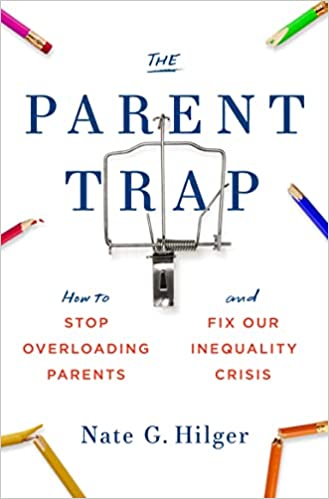
Hilger argues that the problems of poverty, pathology and inequality that bedevil the United States are not primarily due to poor schools, discrimination, or low incomes per se. The primary cause is parents: parents who are unable to teach their children the skills that are necessary to succeed in the modern world. Since parents can’t teach the necessary skills, Hilger calls for the state to take their place with a dramatic expansion of not just child care but collective parenting.
Let’s unpack some details. Begin with schooling. It’s very common to bemoan the state of schools in the “inner city” or to complain about “local financing” which supposedly guarantees that poor counties will have underfunded schools. All of this, however, is decades out-of-date.
A hundred years ago there really were massive public-school resource gaps by class and race. These days, however, state and federal spending play a larger role than local property tax revenue and distribute educational resources more progressively … In fact, when we include federal aid, 42 states spent more on poor school districts than on rich school districts in 2012. The same pattern holds between schools within districts
… The highest spending districts are large urban centers such as New York City, Boston and Baltimore. These cities spend large sums to educate rich and poor children alike. p. 10-11
Hilger is correct. No matter what you saw on The Wire, Baltimore spends more than sixteen thousand dollars per student, among the highest in the nation in large school districts and above average for the nation as a whole. Public schools are quite egalitarian in funding with any bias running towards more funding for poorer districts.
Schools, Hilger writes are “actually the smallest and most equalizing part of a much larger skill-building system.” The real problem, says Hilger, are parents.
But what about discrimination? When it comes to wage discrimination, Hilger is brutally honest:
If we compare individuals with similar cognitive test scores, Black college graduates earn higher wages than white college graduates. Studies that don’t control for test score differences but examine earnings gaps within specific professions — lawyers, physicians, nurses, engineers, scientists — tend to find Black workers earn zero to 10 percent less than white workers. These gaps could reflect discrimination, unmeasured skill differences, or other factors such as geography. In any case, such gaps are small compared to the 50 percent overall Black-white earnings gap and reinforce the idea that closing skills gaps would go a long way toward closing income gaps.
Hilger argues that racism does play an important role in explaining Black-white wage differentials but it’s the historical racism that made black parents less skilled and less able to pass on skills to their children. In the twentieth century, Asians, Hilger argues, were discriminated against in the United States at least much as Black Americans. But the Asians that came to the United States had high skills while the legacy of slavery meant that Black Americans began with low skills. Asians, therefore, were better able to overcome discrimination. The success of Nigerians and Jamaican immigrants in the United States also speaks to this point. (Long time readers may recall that in 2016 I dubbed Hilger’s paper on Asian Americans and Black Americans the Politically Incorrect Paper of the Year.)
May 10, 2022
QotD: When are professors not really professors? When they’re “adjunct” or “contingent” professors
When most people think about professors, they are thinking about tenured or tenure-track (TT) professors. In the USA, generally, tenure-track professors (those who will be eligible for tenure at some time in the future) have the job title of assistant professor. Academics with tenure are typically associate professors or full professors. What all of these have in common is that the professor’s salary and workload assume that they are being paid both for their primary teaching responsibilities, but also some amount of research or public outreach. It’s a whole package. How much teaching and how much research differs substantially institution to institution.
Then you have contingent or (more commonly) adjunct professors, who are not eligible for tenure. Mostly these are early career academics still looking to land a permanent tenure-track position. Now I want to be clear here: adjuncts almost always have PhDs – the days when it was possible for people to land even these jobs without a completed dissertation and a finished PhD are long over. Most students have no idea their instructors are adjuncts which – given how poorly many institutions treat their adjuncts – is often damned heartbreaking.
Universities have realized that “adjunct” has a negative ring to it, so they call these folks (which, as you may have grasped, includes me) all sorts of job titles designed to disguise that fact (mostly from prospective students and parents). The most honest of those (and, in my opinion, the best) is “Visiting Instructor” or “Visiting Lecturer”, but you’ll see all sorts of permutations of “visiting” or “teaching” faculty. In job postings, the most substantial of these positions (with a full teaching load) are often described as “Visiting Assistant Professor” (VAP) – but note that visiting in the front essentially invalidates the two words that follow it: a VAP is an adjunct, not an assistant professor. They’re just an adjunct with a full load (and maybe benefits, but often not).
Now, the exact arrangements for these sorts of contingent positions vary wildly, but as a rule (again, there are exceptions!) as a rule, adjuncts are paid for their teaching on a class by class basis, essentially as contract workers. They often don’t get benefits (like health insurance, or even an office in some places!) or any kind of job security – the positions are frequently year-to-year or even semester-to-semester. Crucially, while adjuncts are often expected to discuss their research during the hiring process and frequently aim – as I do – to continue with it during their adjunct job, they are not paid for the research they do and generally do not receive the sort of institutional support which would enable an active research agenda (funding, sabbaticals, etc). They are paid to teach classes and pretty much only teach classes. It is not an ideal system.
(I’m intending, probably as we get closer to summer, to do a short post-series covering the entire academic life-cycle, along with what exactly an academic historian does all day. The popular image that we’re all just hanging out, smoking pipes, drinking wine and having deep thoughts is not very accurate.)
Which brings us back around to the Patreon. I am currently (as I write this) teaching as a Visiting Lecturer, which is to say, an adjunct. Now, I want to be clear that I am not beating up on my current institution here. I actually think the department I am currently in has been very good with my appointment here – it was extremely useful for me (for reasons I won’t get into). But they aren’t paying me for my research or for this blog.
Bret Devereaux, “Fireside Friday: March 13, 2020”, A Collection of Unmitigated Pedantry, 2020-03-12.
May 2, 2022
QotD: Online education
And that’s just college, which now more than ever is exactly what the sententious goobers on the faculty always said it was: A professional football team with a few classrooms attached. They’re memory-holed now, no doubt, but I recall a time over the summer when a few studies on the impact of online “learning” came out. They were worse than even I expected, and I’m cynical enough to give Diogenes wood. Some huge fraction of kids never even bothered logging on. At all. And, of course, they were promoted to the next grade …
Severian, “More Scattered Thoughts”, Rotten Chestnuts, 2020-10-13.
April 22, 2022
Lucy Worsely on The Jacobites & the Scottish Enlightenment
Whitehall Moll History Clips
Published 22 Jul 2018A segment on the Jacobites and the Scottish Enlightenment that blossomed in the face of Hanoverian oppression.

April 17, 2022
QotD: How jobs differ from school
When John Smith finishes school he is expected to get a job. And what getting a job seems to mean is joining another institution. Superficially it’s a lot like college. You pick the companies you want to work for and apply to join them. If one likes you, you become a member of this new group. You get up in the morning and go to a new set of buildings, and do things that you do not, ordinarily, enjoy doing. There are a few differences: life is not as much fun, and you get paid, instead of paying, as you did in college. But the similarities feel greater than the differences. John Smith is now John Smith, 22, a software developer at such and such corporation.
In fact John Smith’s life has changed more than he realizes. Socially, a company looks much like college, but the deeper you go into the underlying reality, the more different it gets.
What a company does, and has to do if it wants to continue to exist, is earn money. And the way most companies make money is by creating wealth. Companies can be so specialized that this similarity is concealed, but it is not only manufacturing companies that create wealth. A big component of wealth is location. […] If wealth means what people want, companies that move things also create wealth. Ditto for many other kinds of companies that don’t make anything physical. Nearly all companies exist to do something people want.
And that’s what you do, as well, when you go to work for a company. But here there is another layer that tends to obscure the underlying reality. In a company, the work you do is averaged together with a lot of other people’s. You may not even be aware you’re doing something people want. Your contribution may be indirect. But the company as a whole must be giving people something they want, or they won’t make any money. And if they are paying you x dollars a year, then on average you must be contributing at least x dollars a year worth of work, or the company will be spending more than it makes, and will go out of business.
Someone graduating from college thinks, and is told, that he needs to get a job, as if the important thing were becoming a member of an institution. A more direct way to put it would be: you need to start doing something people want. You don’t need to join a company to do that. All a company is is a group of people working together to do something people want. It’s doing something people want that matters, not joining the group.*
For most people the best plan probably is to go to work for some existing company. But it is a good idea to understand what’s happening when you do this. A job means doing something people want, averaged together with everyone else in that company.
* Many people feel confused and depressed in their early twenties. Life seemed so much more fun in college. Well, of course it was. Don’t be fooled by the surface similarities. You’ve gone from guest to servant. It’s possible to have fun in this new world. Among other things, you now get to go behind the doors that say “authorized personnel only.” But the change is a shock at first, and all the worse if you’re not consciously aware of it.
Paul Graham, “How to Make Wealth”, Paul Graham, 2004-04.
April 11, 2022
Ours is a fundamentally unserious culture, two examples
Chris Bray provides some examples of just how decayed western culture has become in our headlong flight toward total unseriousness:
In Europe this month to lead the diplomatic response to a war, the Vice-President of the United States responded to a question about refugees by giggling and cackling and babbling in typical form:
And then the “fact-checkers” at Reuters explained that she actually didn’t giggle and cackle and babble, because, okay, she did cackle and giggle and babble, but she didn’t cackle and giggle and babble specifically about the refugees, so it doesn’t count: “It is clear from viewing the longer video in context that Harris and Duda laughed at the awkwardness of not knowing who should speak first. There is no evidence that Harris was laughing at the refugees or the crisis in Ukraine.” The question was about refugees, and she laughed — she laughed a lot — right after the question, but Reuters apparently called no tagbacks before the play, so no points accrue.
So we have an awkward and ineffective playactor who occupies the position of a political leader, but lacks the stature or ability to go along with it, and we have journalists who labor to protect people in powerful political positions from the possibility that people will notice who they really are and what they really do. We have political leaders who aren’t political leaders, and journalists who aren’t journalists: the form without the substance.
Meanwhile, a recent debate on the topic of free speech at Yale Law School — the nation’s top-ranked law school, which produces presidents and Supreme Court justices — began with law students screaming abuse (“I’ll fight you, bitch”) at one of the panelists, before walking out as a group and continuing to shout and pound on the walls of the adjacent hallway.
Now: The students were angry at the panelist, the bitch they wanted to fight, because she’s an anti-trans social conservative, and couldn’t you just die? But the thing that law students are learning to do is be lawyers — advocates for a position in a formalized exchange of competing views, in controversies that play out in open court. They’re training at the profession of making an argument. The point of sitting through an argument made by a person whose views you despise is that you can learn about something you want to fight against; you can see what the enemy says, and how she says it, and so do a part of the work of preparing yourself to advance a different position. So we have law students, people training for a debate-and-exchange-centered profession, who don’t want to hear things they don’t agree with. It’s like a minor league baseball player saying he refuses to touch a baseball, because baseballs offend him, but anyway, when are you assholes sending me up to the major leagues? We have people who want to occupy the profession of the law without preparing for the substance of professional engagement with competing positions: the form without the substance.
(Doing what journalists do, now, the fact-checkers explain that none of this puts points on the anti-free-speech scoreboard: “The students made their point at the very start of the event and walked out before the conversation began.” It is precisely the point that 1.) law students 2.) walked out before the conversation began. In ten years, oral argument before the Supreme Court will be that Woke lawyers stand up and scream I’M NOT GONNA LISTEN TO THIS SHIT, YOU ASSHOLES at the justices, then storm out and descend into a long round of day-drinking while waiting for the court to rule in their favor, because oh my god they CAN’T EVEN.)

April 9, 2022
QotD: Temporary tattoos and cultural literacy
I was once at an art fair where there was a booth selling temporary tattoos. One of the tattoos was a Chinese character that was translated on the tattoo’s plastic label as “bitch”, an appealing bit of body art for the tough girls among us, I suppose. Except a far more straightforward and accurate translation of the character would be “prostitute”, or maybe “whore”.
Teaching students who fell in love with “Eastern philosophy” via our culture’s myriad Mr Miyagis is like being the one to tell someone her tattoo says “whore”. The tattooed will be better off knowing, but she won’t thank you for telling her. Pop-culture-induced orientalism usually does wash off, but the cleanup is far less alluring than wearing the myth. At least, I console myself, Kondo’s target market is the middle-aged, so maybe my young college students won’t show up with this particular “tattoo”.
Amy Olberding, “Tidying up is not joyful but another misuse of Eastern ideas”, Aeon, 2019-02-18.
March 6, 2022
QotD: The academic rat-race
Since only “scholars” who publish get tenure, and since journals only publish original “research”, the only way to publish consistently is to make shit up. Given that Shakespeare ain’t writing no more sonnets, the only way to get tenure in, say, English Literature is to argue that, properly “deconstructed”, the list of contents on a packet of beef jerky is just as valuable — indeed, more valuable — as a “cultural artifact” than anything the Bard, curse his CisHetPat White soul, ever wrote. Hence, the road to tenure takes only left turns.
Severian, “I Learned A New Word”, Rotten Chestnuts, 2019-01-23.
March 1, 2022
What was lost when the Library of Alexandria burned?
Kings and Generals
Published 18 Nov 2021⚔️Myth of Empires is out in Early Access on Steam, check it out and make sure to wishlist it https://click.fan/KingsGenerals-MoE
Kings and Generals’ historical animated documentary series on the history of Ancient Civilizations and Ancient Greece continue with a video on the Library of Alexandria, as we ask what was lost when the library burned.
Support us on Patreon: http://www.patreon.com/KingsandGenerals or Paypal: http://paypal.me/kingsandgenerals … We are grateful to our patrons and sponsors, who made this video possible: https://docs.google.com/document/d/1o…
The video was made by animator Waily Romero and illustrator Simone González, while the script was researched and written by David Muncan. This video was narrated by Officially Devin (https://www.youtube.com/user/OfficiallyDevin).
✔ Merch store ► teespring.com/stores/kingsandgenerals
✔ Podcast ► Google Play: http://bit.ly/2QDF7y0 iTunes: https://apple.co/2QTuMNG
✔ Twitter ► https://twitter.com/KingsGenerals
✔ Instagram ► http://www.instagram.com/Kings_GeneralsProduction Music courtesy of EpidemicSound
#Documentary #AncientGreece #Alexandria

February 25, 2022
QotD: The lure of the forbidden knowledge
Forbidden ideas have an appeal that orthodoxy never does — just ask Martin Luther. In fact, the parallels between the rise of the alt-right and the Reformation are interesting. In Luther’s world the printing press had recently created new and difficult to control ways for people to share subversive ideas. Early forms of capitalism led to the rise of new social classes and fueled resentment against traditional elites and traditional forms of authority. There were even early forms of the meme. Long before Pepe the Frog was co-opted by the alt-right, drawing donkey ears on images of priests was a way of provoking the powerful.
It’s surely the case that some of the speech that activists and university administrators seek to suppress poses a much more direct threat to real people than does a debate about supply side economics or evolution, but it’s worth remembering that to the Church, the Lutheran heresy was a real threat too. It posed a mortal danger to the eternal souls of people who were deceived by its falsehoods and rejected orthodoxy. I doubt that the Inquisitors felt any more qualms about deplatforming Lutheran heretics than did the activists at Middlebury.
As the Church learned, simply suppressing heresy cannot guarantee that it will go away. If anything, meeting heretical speech with violence or disruption just adds to its allure, confirming in the minds of the already convinced that they are right and leading the fence sitters to take another, perhaps more sympathetic, look. Dismissing heretical speech because it falls into a category that is rejected by the orthodox is not that much more effective a strategy.
We can do a lot to keep things from getting to the sort of highly contentious encounters like the ones at Middlebury and Berkeley, just by addressing uncomfortable issues with evidence rather than just categorization in our courses. Next time you are tempted to sidestep contentious issues in your class or to dismiss a student’s question because it falls into a forbidden category, don’t.
In the long run we can’t win an argument by avoiding it.
Erik Gilbert, “Liberal Orthodoxy and the New Heresy”, Quillette, 2019-02-04.
February 13, 2022
QotD: Marx’s labour theory of value gets tenure
At last, we know the answer to the question almost no one was asking: What happens when Karl Marx’s labor theory of value gets tenure?
The labor theory of value is very popular on the Left, probably because it makes no sense. Marx — who never labored once in his entire life — proposed that “labor” has inherent value, that “if we disregard the use-value of commodities, they have only one property left, that of being products of labor.”
I assure you it sounds even stupider in the original German.
The short version is that “labor” determines a product’s value, not the competitive marketplace.
It’s a crackpot theory, easily demolished.
Take the example of a skilled pastry chef and … me.
Give a few dollars worth of flour, sugar, butter, etc., to that chef and after a couple of hours of his labors, he can sell you a gorgeous and tasty cake that you would be happy to pay a lot of money to buy.
I don’t bake and have no interest in baking. Let me labor on those same ingredients for the same two hours, and you’ll get a hot mess worth less than the value of the ingredients that went into it.
(Apologies: This is not my example, but I can’t find an online resource listing the original author. [I first encountered this in a Robert Heinlein novel, but he may have been paraphrasing someone else])
It’s not the “labor,” it’s the results.
Now we’re supposed to apply this same thinking to grading English papers.
We’re supposed to accept that one student’s craptaculently-written essay has the same value as another student’s beautifully written paper because they both put the same amount of labor into writing them.
What Inoue wants college instructors to do is apply crackpot Marxist theory to those who will be disadvantaged the most if they aren’t taught proper English.
Stephen Green, “Fight ‘White Language Supremacy,’ Prof Will Grade on ‘Labor’ Not Results”, Vodkapundity, 2021-11-10.
February 6, 2022
In Critical Race Theory, racism “only applies to powerful whites (and fellow travelers) vis-a-vis powerless blacks”
Andrew Sullivan on Caryn Elaine Johnson (stage name Whoopi Goldberg) and how her unconsidered anti-semitic worldview has been moulded and shaped by Critical Race Theory:
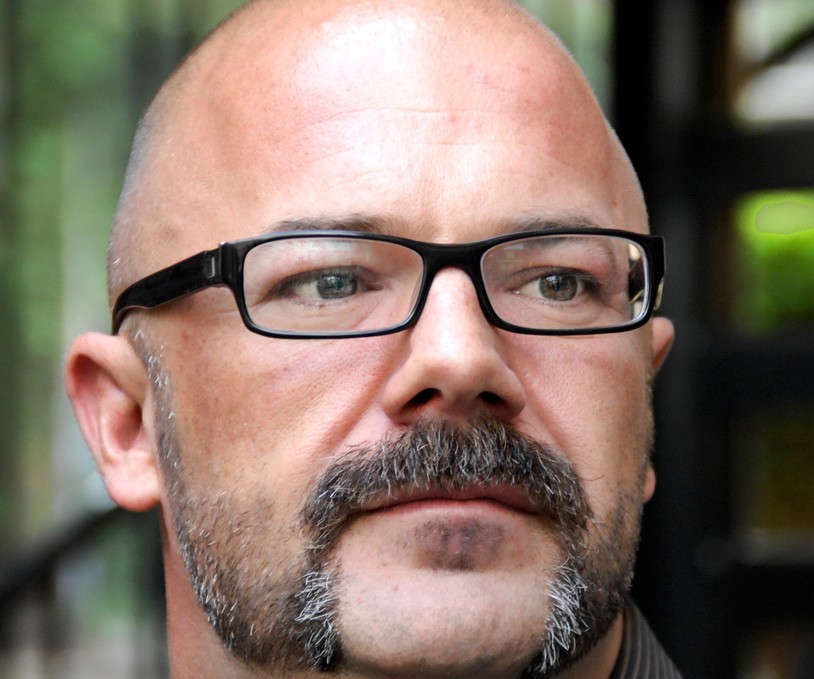
Whoopi Goldberg, I think it’s safe to say, is not a deep thinker, and wouldn’t claim to be. She’s also clearly not an anti-Semite. She’s a talented entertainer and merely reflects many (but not all) of the assumptions of Hollywood types — well-intentioned, rarely ruffled, cultural leftism. But that’s precisely why her comments on The View about antisemitism and the Holocaust are so interesting. They expose some aspects of “anti-whiteness” and “antiracism” as these CRT ideas have trickled down into the public consciousness, and also a deep, long-standing sense among some African-Americans that Jews in America are not usually the oppressed, but often the oppressor. These are things no one wants to explore very much — because it’s complicated, fraught, and, well, who needs the grief?
So here we go! Anti-Semitism is seen as not racism, because for Whoopi, and critical theorists, “racism” is defined as an essentially Euro-American social construction, which didn’t exist before the colonial era, and only applies to powerful whites (and fellow travelers) vis-a-vis powerless blacks. Racism is not, for them, a universal, instinctual, tribal, evolution-rooted suspicion of different-looking others that is always with us, and can happen anywhere. It is solely rather the deliberate, historically contingent oppression of the non-white by colonial “white supremacy”. However much truth this contains about American history (and it does contain a lot of it), it’s a terribly parochial view that misses a huge amount in the world, throughout history, and in America.
As Adam Serwer explains, this parochial view of racism also “renders the anti-Semitism that led to the Holocaust illegible”. Well, yeah. Any theory of racism that cannot explain the Holocaust is not just illegible, it is untenable. It would mean that the conflicts between, say, Tutsis and Hutus, Germans and Slavs, Jews and Arabs, Burmese and Rohingya, or Han and Uighur, are not instances of racism — because they are not examples of “white targeting non-white”. It wouldn’t include the Bible’s description of the Jewish people’s own enslavement by the Pharaohs, for goodness’ sake. And that’s a problem for any concept of racism — let alone one that now controls much of American culture.
Here, for example, is the Anti-Defamation League’s woke definition of “racism” the day Whoopi made her remarks (a definition swiftly changed after the contretemps): “The marginalization and/or oppression of people of color based on a socially constructed racial hierarchy that privileges white people.” But since Jews are deemed “white people”, by this definition, how could the Nazis have been racist? The same would also have to be said, would it not, about Louis Farrakhan today? He may sound like a Nazi about Jews, but his skin color means he cannot be racist.
Whoopi’s gaffe helps explain why the mainstream media now describes young black men assaulting Jews and Asians as expressing … “white supremacy”! This is what the WaPo op-ed page, referring to growing Latino support for Trump, called “multiracial whiteness”. If they are non-white and bigots, they miraculously become white. And notice how bigotry is exclusively ascribed to a single “race”: whites. Without whites, we’d have no racism at all.
This is not the only way critical theorists distinguish anti-Semitism from racism. “Whiteness”, disproportionately including Jewishness, is wrapped up in systems of oppression, especially capitalism, and defined by control of money and power. Robin DiAngelo argues in White Fragility that “white supremacy” exists in mainstream America by noting how many “white people” there were in various positions of power in 2017:
Ten richest Americans: 100 percent white (seven of whom are among the ten richest in the world). US Congress: 90 percent white. US governors: 96 percent white. Top military advisers: 100 percent white. President and vice president: 100 percent white. US House Freedom Caucus: 99 percent white. Current US presidential cabinet: 91 percent white. People who decide which TV shows we see: 93 percent white. People who decide which books we read: 90 percent white. People who decide which news is covered: 85 percent white. People who decide which music is produced: 95 percent white. People who directed the one hundred top-grossing films of all time, worldwide: 95 percent white.
She goes on to emphasize Hollywood’s influence, in particular. Now just put the word “Jewish” where the word “white” is, and her list reads a bit differently, doesn’t it: “People who decide which books we read: 90 percent Jewish. People who decide which news is covered: 85 percent Jewish.” It’s an assertion that one race hoards power, controls the media, and directs the culture, a race so powerful it permeates everything. Sound a little familiar?


