Rommel arrived in February 1941 with fairly mundane orders to act as a Sperrband, a “blocker” to bolster the Italians after their mauling at Beda Fomm. The force he led was appropriately tiny: the reconnaissance battalion and an antitank detachment of the 5th Light Division (soon renamed the 21st Panzer Division). The rest of the division was still en route to Africa, and a second division, the 15th Panzer, would not arrive completely until the end of May.
Rommel had his orders, but he had ignored orders in the past and been decorated for it. With British forces stripped to fight an exceedingly ill-advised campaign in Greece, he carried out a quick personal reconnaissance in his trusty little Fieseler Storch airplane, then launched an offensive in concert with his Italian partners (Ariete armored division and the infantry divisions of X Corps, Bologna and Pavia). He penetrated British defenses at El Agheila on March 24th, then drove on to Mersa el Brega on March 31st, pausing only long enough to take (and ignore) a number of radio messages from Berlin and Rome warning him not to do anything rash. Finally, he smashed the British defenders at Agedabia (elements of the green 2nd Armoured Division, equipped partially with captured Italian M13/40 tanks), pinning them in front with the infantry of 5th Light Division while dispatching his Panzers on a ride around the open desert flank to the south, the first use of a tactic that would become his signature move.
These three tiny encounters, none of them exceeding regimental strength, were enough to unhinge the entire British defensive position in Cyrenaica. Rommel now expanded his “reconnaissance in force” into a general offensive, although the forces involved were still minuscule. One column headed up the coast road towards Benghazi, while two more sliced across the Cyrenaican bulge, scooping up a mountain of British supplies at Msus and Mechili. The British rear was in chaos. On April 6th, a German motorcycle patrol actually captured the British commander in Cyrenaica, General Philip Neame, as well as General Richard O’Connor, the victor of Beda Fomm. By April 11th, the Germans had surrounded the coastal fortress of Tobruk while smaller formations pressed on to the east, taking Bardia and reaching the Egyptian border at Sollum and Ft. Capuzzo.
This was top speed maneuver, and the distances were vast, with the Afrika Korps covering over 600 miles in less than two weeks. An amazing feat, to be sure, but may we not legitimately ask, Six-hundred miles to where? Rommel had lunged from central Libya to the Egyptian border in a great bound, but now he had an unconquered fortress sitting in his rear, a serious threat to his lines of communication and supply. Two hastily marshaled attempts to storm Tobruk went badly wrong. In the “Easter battle” (April 10th-14th) and the “battle of the Salient” (April 30th-May 4th), the defenders of the 9th Australian Division hung tough. Minefields channeled the German attacks, while direct fire from artillery, antitank guns, and supporting tanks shot up the assault forces quite badly and killed General Heinrich von Prittwitz, commander of 15th Panzer Division.
The very presence of an unconquered Tobruk rendered the drive across the desert pointless. Indeed, for all the fame it had brought Rommel in the world press, this first campaign won him few friends among command echelons in Berlin. General Halder was especially unimpressed. Rommel, he wrote, “storms around all day long with formations strewn all over the place.” The man had apparently “gone insane.” There was some justice to the complaint. A German division-plus had overrun territory — a vast wasteland, to be precise — but it hadn’t really won anything. There had been no battle of annihilation, no Kesselschlacht, nor could there have been. The Afrika Korps had come a long way, but now sat precariously on the edge of nowhere. Although Rommel and his command had shown a satisfying level of aggression, something the entire officer corps understood, most of them saw his drive to the Egyptian border as a misfire.
Robert Citino, “Drive to Nowhere: The Myth of the Afrika Korps, 1941-43″, The National WWII Museum, 2012. (Originally published in MHQ, Summer 2012).
April 17, 2020
QotD: Rommel arrives in North Africa
April 16, 2020
Was the Afrika Korps worth it?
Military History not Visualized
Published 20 Apr 2018Was it worth it to send the Afrika Korps at all? In this video we look at the Mediterranean Campaign in World War 2, which is usually overshadowed by the “Desert Warfare” between Rommel and Montgomery.
»» SUPPORT MHV ««
» patreon – https://www.patreon.com/mhv
» paypal donation – https://www.paypal.com/cgi-bin/webscr…»» MERCHANDISE – SPOILS OF WAR ««
» shop – https://www.redbubble.com/people/mhvi…»» SOCIAL MEDIA ««
» twitter – https://twitter.com/MilHiVisualizedMilitary History Vlogs is a support channel to Military History Visualized with a focus personal accounts, answering questions that arose on the main channel and showcasing events like visiting museums, using equipment or military hardware.
» SOURCES «
Ball, Simon: “The Mediterranean and North Africa, 1940-1944”, in: Cambridge History of the Second World War – Volume I, p. 358-388
Preston, Paul: “Spain: betting on a Nazi victory”; in: Cambridge History of the Second World War: Volume II: Politics & Ideology, p. 324-349
Das Deutsche Reich und der Zweite Weltkrieg, Band 3: Der Mittelmeerraum und Südosteuropa 1940-1941 (English Version below)
ENGLISH VERSION: Germany and the Second World War, Volume 3, The Mediterranean, South-east Europe, and North Africa, 1939-1941Das Deutsche Reich und der Zweite Weltkrieg – Band 6 – Der Globale Krieg
ENGLISH VERSION: Germany and the Second World War – Volume 6 – The Global WarDas Deutsche Reich und der Zweite Weltkrieg – Band 8
ENGLISH VERSION: Germany and the Second World War – Volume 8 – The Eastern Front 1943-1944: The War in the East and on the Neighbouring Fronts» CREDITS & SPECIAL THX «
Song: Ethan Meixsell – “Demilitarized Zone”#AfrikaKorps #AfricaCorps #WW2
April 7, 2020
Leopold II of Belgium: The Biggest Coverup In European History
Biographics
Published 26 Sep 2018Credits:
Host – Simon Whistler
Author – Shannon Quinn
Producer – Jack Cole
Executive Producer – Shell Harris
April 5, 2020
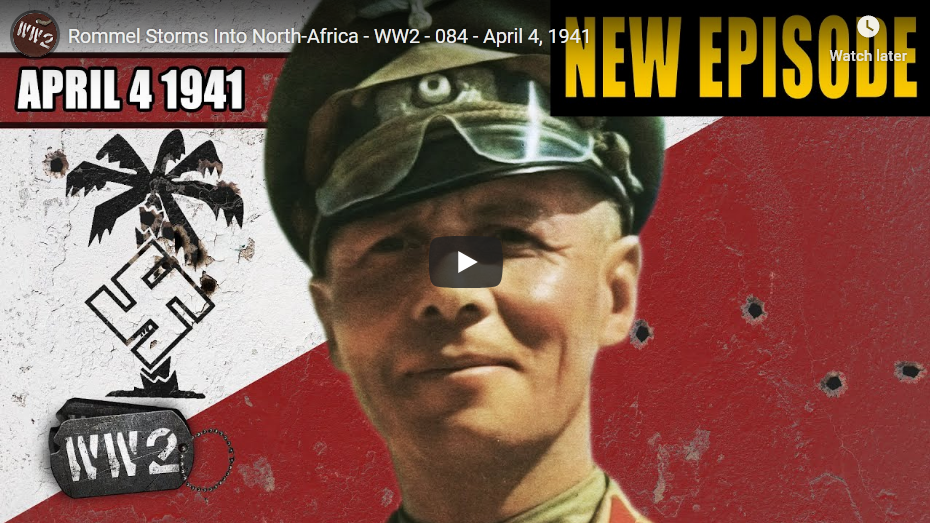
Rommel Storms Into North-Africa – WW2 – 084 – April 4, 1941
World War Two
Published 4 Apr 2020The British thought they would be safe for a while, but this week they are proven wrong. This week, Erwin Rommel begins his advance towards the East of North Africa.
Join us on Patreon: https://www.patreon.com/TimeGhostHistory
Or join The TimeGhost Army directly at: https://timeghost.tvFollow WW2 day by day on Instagram @World_war_two_realtime https://www.instagram.com/world_war_t…
Between 2 Wars: https://www.youtube.com/playlist?list…
Source list: http://bit.ly/WW2sourcesWritten and Hosted by: Indy Neidell
Produced and Directed by: Spartacus Olsson and Astrid Deinhard
Executive Producers: Bodo Rittenauer, Astrid Deinhard, Indy Neidell, Spartacus Olsson
Creative Producer: Joram Appel
Post-Production Director: Wieke Kapteijns
Research by: Indy Neidell
Edited by: Iryna Dulka
Map animations: Eastory (https://www.youtube.com/c/eastory)Colorizations by:
– Daniel Weiss
– Dememorabilia – https://www.instagram.com/dememorabilia/
– Julius Jääskeläinen – https://www.facebook.com/JJcolorization/
– Adrien Fillon – https://www.instagram.com/adrien.colo…
– Norman Stewart – https://oldtimesincolor.blogspot.com/
– Olga Shirnina, a.k.a. Klimbim – https://klimbim2014.wordpress.com/
– Owen Robinson – https://www.instagram.com/owen.colori…Sources:
– National Portrait Gallery
– Narodowe Archiwum Cyfrowe
– Bundesarchiv
– Yugoslav military maneuvers at Torlak, 1940, by Boksi from Wikimedia
– US Holocaust Memorial Museum
– Војни архив
– Documents icon by Srinivas Agra from the Noun ProjectArchive by Screenocean/Reuters https://www.screenocean.com.
A TimeGhost chronological documentary produced by OnLion Entertainment GmbH.
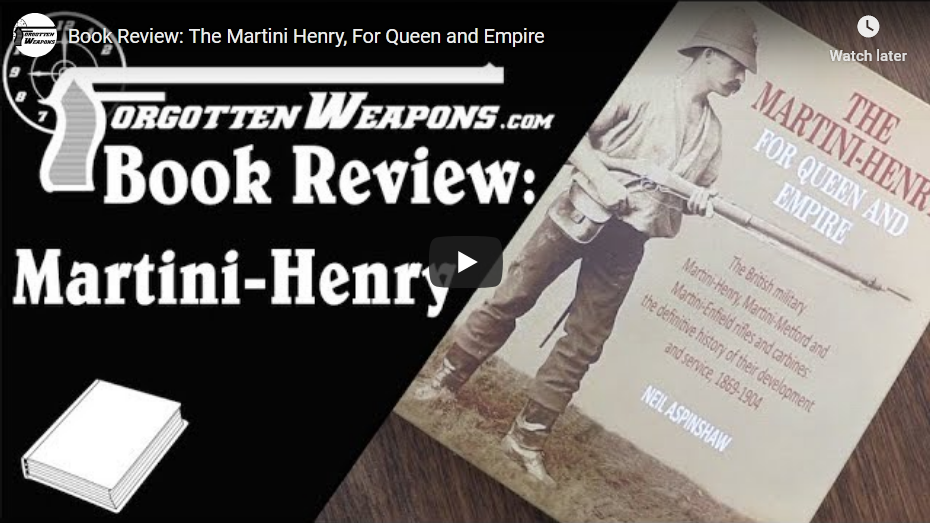
Book Review: The Martini Henry, For Queen and Empire
Forgotten Weapons
Published 8 Dec 2019Get your copy direct from IMA: https://www.ima-usa.com/products/the-…
Or from Amazon here: https://amzn.to/2O7ZGOY
Don’t miss Alpinshaw’s own website: http://www.martinihenry.org
One of the perennial challenges facing authors of firearms reference books is balancing the very technical nit-pickery with the broad historical view of a gun and its context in world events. The emphasis is usually tending towards the technical, but Neil Alpinshaw has done an excellent job of balancing the two, and made the development of the Martini-Henry an engaging story at the same time (a rare feat in this genre!). His new book The Martini-Henry: For Queen and Empire mixes vivid descriptions of British troops fighting across the far-flung corners of the world with their trusted Martinis with a history of the development and modernization of the rifles (and carbines).
Most interesting to me personally was the section on the Martini-Enfield, which was to be the improved version of the Martini-Henry. Chambered for a smaller-bore .402 caliber cartridge and fitted with sights for rapid close-in combat as well as long-range volley fire and sporting a quick-loading magazine attached to the receiver, this is a fascinating look at the highest evolution of the single-shot black-powder military rifle. Its development was dashed by the bolt action Lee and the development of smokeless powder, and the many thousands initially produced were converted into other patterns before seeing service.
Aspinshaw also tackles many of the long-standing myths about the Martini, and particularly its weaknesses. He takes his information directly from period investigations and after-action reports, and avoids the common hearsay. He does not let his own personal passion for the subject prevent him from articulating the true problems the rifles had, but clears away the misconceptions that have become prevalent (like the impossible-to-open ammunition boxes).
Published by International Military Antiques, the cover price is $60, and it is worth every penny for anyone interested in the grand Victorian British Empire or the Martini as a firearms family.
http://www.patreon.com/ForgottenWeapons
Cool Forgotten Weapons merch! http://shop.bbtv.com/collections/forg…
Contact:
Forgotten Weapons
6281 N. Oracle #36270
Tucson, AZ 85704
April 3, 2020
March 15, 2020
Nigerians Chasing Italians Like Cheetahs Hunt a Bull – WW2 – 081 – March 14, 1941
World War Two
Published 14 Mar 2020An Italian offensive into Greece is prepared, just as the Germans are preparing to also attack Greece via Bulgaria. Meanwhile, a daring and spectacular dash is made by the Nigerian army.
Join us on Patreon: https://www.patreon.com/TimeGhostHistory
Or join The TimeGhost Army directly at: https://timeghost.tvFollow WW2 day by day on Instagram @World_war_two_realtime https://www.instagram.com/world_war_t…
Between 2 Wars: https://www.youtube.com/playlist?list…
Source list: http://bit.ly/WW2sourcesWritten and Hosted by: Indy Neidell
Produced and Directed by: Spartacus Olsson and Astrid Deinhard
Executive Producers: Bodo Rittenauer, Astrid Deinhard, Indy Neidell, Spartacus Olsson
Creative Producer: Joram Appel
Post-Production Director: Wieke Kapteijns
Research by: Indy Neidell
Edited by: Iryna Dulka
Map animations: Eastory (https://www.youtube.com/c/eastory)Colorizations by:
– Julius Jääskeläinen – https://www.facebook.com/JJcolorization/
– Daniel Weiss
– History Colorizer M.B – https://www.facebook.com/mohamedbayou…Sources:
– Bundesarchiv
– boat sound by bockelsound from freesound.orgArchive by Screenocean/Reuters https://www.screenocean.com.
A TimeGhost chronological documentary produced by OnLion Entertainment GmbH.
March 14, 2020
History Summarized: Ethiopia
Overly Sarcastic Productions
Published 13 Mar 2020Ethiopian History gets started early and just keeps on going. From the dawn of humanity itself through the medieval period and into the modern day, the history of the kingdom at the end of the Blue Nile is full of surprises.
SOURCES & Further Reading: Harold Marcus A History of Ethiopia and John Jackson’s Ethiopia and the Origins of Civilization, see also Kenneth Vickery’s lecture “Ethiopia: Outpost of Christianity” and William Cook’s lecture “The Rock-Hewn Churches of Ethiopia” via The Great Courses.
This video was edited by Sophia Ricciardi AKA “Indigo”. https://www.sophiakricci.com/
Our content is intended for teenage audiences and up.
PATREON: https://www.Patreon.com/OSP
DISCORD: https://discord.gg/h3AqJPe
MERCH LINKS: https://www.redbubble.com/people/OSPY…
OUR WEBSITE: https://www.OverlySarcasticProductions.com
Find us on Twitter https://www.Twitter.com/OSPYouTube
Find us on Reddit https://www.Reddit.com/r/OSP/
QotD: Apartheid
To anyone who was exposed to its machinations — let alone directly affected by it, as most South African Blacks were — apartheid was truly evil: only the absence of extermination camps differentiated it from the Nazism of the 1940s. In actuality, Blacks couldn’t live or work in “White” areas except by permit, couldn’t own businesses in White areas, couldn’t be promoted past a certain point when they did work outside the “Black” areas, and were forcibly resettled into Black “homelands” without legal redress or the ability to resist. Social intercourse between Blacks and Whites were restricted, by law, to business interactions only — any kind of interracial sexual activity was legally classified as “immorality” and summarily banned, carrying appallingly-high penalties in the breach thereof. Crimes by Whites against Blacks carried penalties far more lenient — to the extent of semi-official toleration — than those by Blacks against Whites, which were severely punished. The education system favored White children over Black children and continued throughout life — to where “White” universities were ubiquitous but “Black” universities could be counted on one hand, with a couple fingers left over. (Lest anyone is offended by the comparison to Nazism, simply substitute “Jews” for “Blacks” and “Aryans” for “Whites”. That would have been Germany, from 1933 to 1945.)
So the disappearance of apartheid cannot be seen as anything other than a Good Thing.
Kim du Toit, “Tough Question, Simple Answer”, Splendid Isolation, 2019-12-05.
March 13, 2020
QotD: Rommel’s generalship
Yes, the reader might respond, but surely we are on firmer ground with regard to [Rommel’s] military skill! After all, no less a figure than British Prime Minister Winston Churchill called him “a great general” on the floor of the House of Commons. Even here, it is possible to make a counterargument. Rommel’s daring exploits at the head of the Afrika Korps (later enlarged and renamed Panzerarmee Afrika) were exciting, to be sure, but many officers in his own army reckoned them as an ultimately valueless sideshow. His disinterest in the dreary science of logistics, his “bias for action,” his tendency to fly off wherever the fighting was hottest are qualities that may make for an exciting movie, but they are problematic in an army commander under modern conditions, and they all contributed materially to the disaster that ultimately befell him and his army in the desert.
[…]
When Rommel arrived in Africa, he brought with him a fully realized art of war. He’d won a Pour le Mérite (the famed “Blue Max“) for a series of nail-biting mountain exploits in the 1917 Caporetto campaign; he had been a very popular tactical instructor at the Dresden Infantry School between the wars; he had commanded one of the army’s precious Panzer divisions (the 7th) during the 1940 campaign in the West. In France, Rommel had behaved more like an 18th century hussar cut loose on a raiding mission than a divisional commander. He led from the front, braved enemy fire on numerous occasions, and turned off his radio from time to time rather than risk receiving orders to rein himself in. He drove forward so rapidly that the 7th Panzer became known as the “ghost division” for its tendency to drop off the situation maps and reappear where least expected. There were many in the German high command, including the chief of the General Staff Franz Halder, who didn’t much appreciate Rommel running amok, but as one analyst put it, “it was impossible to court martial such a successful general, so Rommel instead got the Ritterkreuz” [the Knight’s Cross of the Iron Cross].
Robert Citino, “Drive to Nowhere: The Myth of the Afrika Korps, 1941-43″, The National WWII Museum, 2012. (Originally published in MHQ, Summer 2012).
March 11, 2020
Carton de Wiart – A Man For All Seasons – WW2 Biography Special
World War Two
Published 10 Mar 2020Carton de Wiart was a remarkable figure in World War One, but his story continues in World War Two, where he rolls from one adventure into the next.
Join us on Patreon: https://www.patreon.com/TimeGhostHistory
Or join The TimeGhost Army directly at: https://timeghost.tvFollow WW2 day by day on Instagram @World_war_two_realtime https://www.instagram.com/world_war_t…
Between 2 Wars: https://www.youtube.com/playlist?list…
Source list: http://bit.ly/WW2sourcesHosted by: Indy Neidell
Written by: Francis van Berkel
Produced and Directed by: Spartacus Olsson and Astrid Deinhard
Executive Producers: Bodo Rittenauer, Astrid Deinhard, Indy Neidell, Spartacus Olsson
Creative Producer: Joram Appel
Post-Production Director: Wieke Kapteijns
Research by: Keith Kevelson
Edited by: Mikołaj CackowskiColorizations by:
Julius Jääskeläinen – https://www.facebook.com/JJcolorization/Sources:
IWM Q 101768, Q 82958, Q 15472, Q 53680, Q 92257, Q 4511, Q 11429, Q 92207, Q 92214, N 228, N 110, N 68, H 7393, HU 128168, E(MOS) 1315, SE 3547, A 31225, A 20588, Q 92218
Skull by Mahmure Alp from the Noun Project
foot bone by Maxicons from the Noun Project
Ear by Vectors Market from the Noun Project
Hip Bones by ProSymbols from the Noun Project
Collection of Auckland Museum Tamaki Paenga Hira, 2001.25.480 Brent Mackrell Collection
Narodowe Archiwum Cyfrowe
Picture of Combe, Carton de Wiart, Todhunter and Gambier-Parry in Vincigliata Castle Prison, courtesy Michael TodhunterSoundtracks from the Epidemic Sound:
Hakan Eriksson – “Epic Adventure Theme 3”
Jo Wandrini – “Dawn of Civilization”
Rannar Sillard – “March of the Brave 4”
Johannes Bornlof – “Death And Glory 3”
Farrell Wooten – “Blunt Object”
Philip Ayers – “Trapped in a Maze”
Phoenix Tail – “At the Front”Archive by Screenocean/Reuters https://www.screenocean.com.
A TimeGhost chronological documentary produced by OnLion Entertainment GmbH.
From the comments:
World War Two
40 minutes ago (edited)
This episode was made thanks to our research volunteer Keith Kevelson. It is also the first of its kind, being the first proper Biography Special of our World War Two series. We will do one of these every other week, so be prepared to get to know the main protagonists of the Second World War up close and personal. Please support us on Patreon so we can continue making these. Sign up at www.patreon.com/timeghosthistory or https://timeghost.tv.Cheers,
Joram
March 2, 2020
QotD: The legend of Rommel and the Afrika Korps
There is no more evocative phrase to emerge from World War II than Afrika Korps. The name conjures up a unique theater of war, a hauntingly beautiful empty quarter where armies could roam free, liberated from towns and hills, choke points and blocking positions, and especially those pesky civilians. It calls forth a war of near-absolute mobility, where tanks could operate very much like ships at sea, “sailing” where they wished, setting out on bold voyages hundreds of miles into the deep desert, then looping around the enemy flank and emerging like pirates of old to deal devastating blows to an unsuspecting foe. Finally, it implies a bold hero, in this case Field Marshal Erwin Rommel, a noble commander who fought the good fight, who hated Hitler and everything he stood for, and who couldn’t have been farther away from our stereotyped image of the Nazi fanatic. Everything about him attracts us — the manly poses, the out-of-central-casting good looks, even the goggles perched just so. Placing Rommel and his elite Afrika Korps to the fore allows us to view the desert war as a clean fight against a morally worthy opponent. It was war, yes, but almost uniquely in World War II, it was a “war without hate.”
It’s an attractive image all around, and it is unfortunate that practically all of it is false. The desert was hardly a haven of beauty or romance. It was a pain, and fighting in it was a nightmare for both sides. Far from letting the respective tank fleets roam free, the desert chained them irresistibly to their supply lines, and a single failed supply convoy or a lost column of trucks could stop an entire offensive dead in its tracks. Contrary to the alleged mobility of desert warfare, both sides would spend far more time in static defensive positions, often quite elaborate, then they would launching tank charges.
That leaves us with Rommel. Here, too, we should challenge the mythology. He was hardly apolitical. His entire career had been based on Hitler’s favor, and we might reasonably describe his attitude toward the Führer as worshipful. He was Hitler’s fair-haired boy, a young officer repeatedly promoted over more senior candidates. He was a media creation. Nazi propaganda painted him not only as a garden-variety hero, but as a model National Socialist and Aryan, a man who could overcome stronger enemies through the sheer force of his will. He was not merely a passive bystander to the hype; he was an active accomplice. He loved nothing better than having a camera crew along with him on campaign, and he would regularly order scenes to be reshot if his posture was insufficiently heroic or the lighting had not shown him to best advantage. As is often the case, his relationship to the media was both self-serving and self-destructive. During the years of victory, the German propaganda machine used him as an example to the nation. When things went sour, he became a diversion from the increasingly bad news on other fronts. Finally, when he was no longer useful for any purpose at all, the regime dropped him altogether and eventually killed him.
Robert Citino, “Drive to Nowhere: The Myth of the Afrika Korps, 1941-43″, The National WWII Museum, 2012. (Originally published in MHQ, Summer 2012).
March 1, 2020
The Nazis Building Bridges, Not Walls – WW2 – 079 – February 28, 1941
World War Two
Published 29 Feb 2020Parts of the British forces in North-Africa are being send to Greece to strengthen the Allied position there. While the remaining British plan for the near future, others make huge advances in East-Africa and Hitler plans his attack on Greece through Bulgaria.
Join us on Patreon: https://www.patreon.com/TimeGhostHistory
Or join The TimeGhost Army directly at: https://timeghost.tvFollow WW2 day by day on Instagram @World_war_two_realtime https://www.instagram.com/world_war_t…
Join our Discord Server: https://discord.gg/D6D2aYN.
Between 2 Wars: https://www.youtube.com/playlist?list…
Source list: http://bit.ly/WW2sourcesWritten and Hosted by: Indy Neidell
Produced and Directed by: Spartacus Olsson and Astrid Deinhard
Executive Producers: Bodo Rittenauer, Astrid Deinhard, Indy Neidell, Spartacus Olsson
Creative Producer: Joram Appel
Post-Production Director: Wieke Kapteijns
Research by: Indy Neidell
Edited by: Mikołaj Cackowski
Map animations: Eastory (https://www.youtube.com/c/eastory)
Additional animation: Ryan WeatherbyColorizations by:
– Julius Jääskeläinen – https://www.facebook.com/JJcolorization/
– Norman Stewart – https://oldtimesincolor.blogspot.com/Sources:
IWM: E 2386, E 2372, E 2368, E 2388, E 450, E 1579, FL 10025
National Portrait Gallery
Letter by Mochammad Kafi from the Noun Project
Mil.ru
BASA (3K-15- 84-2, 3K-7-436-41)
Narodowe Archiwum Cyfrowe
Museum of Science and Technology BelgradeArchive by Screenocean/Reuters https://www.screenocean.com.
A TimeGhost chronological documentary produced by OnLion Entertainment GmbH.
February 27, 2020
Winston Churchill Biography: In the Darkest Hour
Biographics
Published 13 Feb 2018We imagine Winston Churchill with his signature cane, drinking scotch whiskey, and puffing on a Cuban cigar. His mouth is downturned, and his voice is gruff and his words pointed. This is the image Hollywood portrays but it is a mere caricature of the flesh and blood version. Who was Winston Churchill? In Britain’s “darkest hour,” Churchill led his country from the brink of Nazi conquest by forging an alliance with the U.S. and Russia. He had many critics, and made mistakes on a grand scale. Yet, above it all, possessed an unwavering belief in his own power. To his beloved country he offered his “blood, toil, tears and sweat.”
Visit our companion website for more: http://biographics.org
Credits:
Host – Simon Whistler
Author – Crystal Sullivan
Producer – Samuel Avila
Executive Producer – Shell HarrisBusiness inquiries to biographics.email@gmail.com
Biographies by the book, get Winston Churchill’s biography from Amazon: http://amzn.to/2EAfh7b
February 23, 2020
The British Will Walk 500 Miles, and They Will Walk 500 more – WW2 – 078 – February 22, 1941
World War Two
Published 22 Feb 2020As the British make spectacular advances in East-Africa, with even more spectacular advances on the horizon, South-Eastern Europe is getting increasingly tense.
Join us on Patreon: https://www.patreon.com/TimeGhostHistory
Or join The TimeGhost Army directly at: https://timeghost.tvFollow WW2 day by day on Instagram @World_war_two_realtime https://www.instagram.com/world_war_t…
Join our Discord Server: https://discord.gg/D6D2aYN.
Between 2 Wars: https://www.youtube.com/playlist?list…
Source list: http://bit.ly/WW2sourcesWritten and Hosted by: Indy Neidell
Produced and Directed by: Spartacus Olsson and Astrid Deinhard
Executive Producers: Bodo Rittenauer, Astrid Deinhard, Indy Neidell, Spartacus Olsson
Creative Producer: Joram Appel
Post-Production Director: Wieke Kapteijns
Research by: Indy Neidell
Edited by: Iryna Dulka
Map animations: Eastory (https://www.youtube.com/c/eastory)Colorizations by:
– Daniel Weiss
– Julius Jääskeläinen – https://www.facebook.com/JJcolorization/
– Dememorabilia – https://www.instagram.com/dememorabilia/
– Norman Stewart – https://oldtimesincolor.blogspot.com/
– Olga Shirnina, a.k.a. Klimbim – https://klimbim2014.wordpress.com/Sources:
– Bundesarchiv
– Library of Congress
– IWM: E 6661
– National Library of Australia
– National Portrait Gallery
– Letter by Mochammad Kafi, post icon by Bonegolemfrom, from the Noun Project
– Photot of Goethe Medal by Mondfreund from Wikimedia Commons
– Eirik Sundvor, The Municipal Archives of TrondheimArchive by Screenocean/Reuters https://www.screenocean.com.
A TimeGhost chronological documentary produced by OnLion Entertainment GmbH.