
Forgotten Weapons
Published 13 Feb 2026The Soviet Union had made fairly extensive use of silencers on Mosin Nagant rifles during World War Two, as tools for snipers and recon scouts among others. In the mid 1950s a new silencer was put into development for the new 7.62x39mm family of weapons, called the PBS (Прибор Бесшумной Стрельбы; Pribor Besshumnoi Strelyby; Silent Shooting Device). This was originally intended to be a multi-weapon silencer, but the abandonment of the SKS and reliability problems with the RPD led to it being limited to just the AK. Compared to the Mosin Nagant silencers, this new design was much more difficult, as it had to allow the rifle to cycle reliably using specialized subsonic ammunition, and also continue to run reliably with the silencer removed and standard ammunition used. This led to the most unusual element of its design; a thick rubber wipe just in front of the muzzle to help boost back pressure.
The remainder of the design was pretty simple, with 12 plain flat plate baffles. The first production PBS model used a clamshell main body, but this was replaced by a solid tube on the PBS-1 improved model in 1962. These suppressors were used until the late 1970s, when the 9x39mm cartridge was developed for better subsonic effectiveness, along with a number of unique new firearms designed for it.
Bramit Suppressor for Mosin Nagant: • Soviet WW2 Bramit Silencer for the M91/30
(more…)
July 2, 2026
PBS-1 Soviet AK Silencer (the Original, not the Dead Air One)
QotD: The US federal election of 1848 and the resulting inevitability of the US Civil War
The Election of 1848 was an attempt to address the lingering issues from the Mexican War. The Treaty of Guadalupe Hidalgo ceded vast territory to the US, again almost all of it (except for northern California) below the Missouri Compromise line (a line of latitude above which slavery was prohibited, theoretically under the terms of the Northwest Ordinance of 1787). There was no question about Texas’s status as a slave state, but what about the rest of it? Specifically, what about California, which thanks to a massive gold rush was soon to pass the threshold for admission?
The Democrats’ candidate, Lewis Cass, pushed the idea of “popular sovereignty” in the territories. It wasn’t a bad move — since California was the only soon-to-be-state up for grabs, and since some parts of California are above the Missouri Compromise line, let them decide the terms on which they want to enter the Union. The problem with that, obviously, is that the Senate could become radically unbalanced very quickly, depending on how fast the rapidly-expanding population of the territories got their act together. Iowa and Wisconsin had just entered the Union (1846 and 1848, respectively), as free states under the Compromise. They were counterbalanced by Florida and Texas (both 1845), but obviously the balance was very delicate.
Cass was of course defeated (by Mexican War hero Zachary Taylor), so wrangling over California continued. Taylor wasn’t the greatest leader anyway, and when he died in office he was replaced by everyone’s favorite placeholder, Millard Fillmore. Fillmore gets an undeserved rep for incompetence; in reality, he was exactly the kind of president the Second Party System was designed to produce, even though he was never elected to the office. Most real political power before the Civil War was at the state level, so the President was supposed to be the steward and figurehead of his Party, not a strong national leader. (You can still see echoes of this as late as the early 20th century — William Howard Taft supposedly said “I forgot I ever was President;” he was much more concerned with his reputation as Chief Justice of the Supreme Court).
But slavery was a federal issue, indeed THE federal issue. In the absence of strong leadership at the top — and again, in all fairness to Fillmore and the rest, the system was designed to prevent strong Presidential leadership — it fell to Congress. Which a) is where it should’ve been, under the federal system the Founders designed; but b) meant that it was guaranteed to be a cock-up, because like all debating societies Congress was dominated by Very Clever Boys.
Worse, the immediate antebellum Congresses were dominated by the Very Cleverest Boy of them all, Stephen Douglas. I don’t think there has ever been a Cleverer Boy in American politics than Stephen Douglas, which is really saying something. (A case could be made for Lyndon Johnson, I suppose, and look how that turned out). Douglas’s signature “legislation” was the Compromise of 1850, which did a lot of things, including bringing California into the Union as a free state. It’s easy to get lost in the historical weeds here, so I’m keeping this deliberately superficial. Here are the highlights:
First, it’s important to note that nobody except Stephen Douglas knew they were voting on “the Compromise of 1850”. You have to hand it to the bastard, it’s a really slick piece of politics. He put together a whole bunch of bills, horse-trading parts of each of them among the competing factions to cobble an overarching program together. Nobody would’ve voted on an omnibus bill called “The Compromise of 1850”, but when the dust settled and all the votes were tallied on a bunch of separate measures, that’s what emerged.
Second: Douglas swiped Lewis Cass’s idea of “popular sovereignty” for the new territories (New Mexico and Utah) carved out of the Mexican Cession. At the time, this looked like a band-aid, a procedural quick-fix — those territories wouldn’t be coming into the Union as states anytime soon, and since cotton doesn’t grow so well in the desert it didn’t matter that much anyway. “Popular sovereignty” was just a way to kick the can down the road. Please note, however, that now the precedent was set: The Missouri Compromise is now officially a dead letter, though nobody will come right out and say it.
Third: The Fugitive Slave Act essentially federalized slave-catching. The details aren’t important; the principle is. The US government is now officially the enforcement arm of what many folks were openly calling “the Slave Power Conspiracy”.
Fourth: What looked like a purely symbolic measure, outlawing the slave trade in Washington DC. Here again, we misunderestimate the power of symbols at our peril. The practical effect of this was nil, since DC is tiny and if you wanted to buy slaves, the big markets literally right across the road in Maryland and Virginia would be happy to sell you some. But look at the glaring contradiction — Federal marshals can (and will, and did) dragoon local law enforcement into catching runaway slaves on the planters’ behalf, but the slave trade itself is outlawed in the Capitol’s sacred precincts, because freedom.
The term “fake and gay” hadn’t been invented yet, but since the Compromise of 1850 was the product of the Very Cleverest Boy of all, it was by definition fake and gay, and you can see it clearly with the DC slave trade ban.
So Very Clever was he, that he torpedoed his own signature achievement just four short years later in order to make a buck. Some Chicago railroad boys had him on the payroll, and while the details of the Kansas-Nebraska Act don’t matter, the principle very much does. Remember “popular sovereignty?” It didn’t matter in Utah or New Mexico; it mattered very much in Kansas, where fanatics from both sides flooded into the territory in order to vote.
Think about what kind of guy would uproot his entire life to move across state lines just to vote on shit, and Bleeding Kansas suddenly makes sense.
Here again, one is tempted to blame the President for not showing leadership, and Franklin Pierce and James Buchanan have well-deserved reps as do-nothings … except again, “doing nothing” was pretty much the President’s job description back then. That’s not to let them entirely off the hook — James Buchanan was very much a Current Year Democrat, in that even though he wouldn’t actually take any action he couldn’t stop shooting his mouth off; you have to get well into the 20th century to find a major political figure who stepped on his own dick as hard and as often as James Buchanan.
Finally, the coup de grace, the Dred Scott decision. I’m going to stop with this one, because even though things like John Brown’s Raid and the Caning of Sumner are important, they follow, as it were, from the logic laid down by Dred Scott. Some kind of Really Bad Shit was inevitable after that ruling; the precise form of the Really Bad Shit was incidental (n.b. the Caning of Sumner preceded Dred Scott (May 1856 vs. March 1857), but they were very much of a piece).
Here again, it’s easy to get lost in the details, so here are the two big takeaways:
First, Dred Scott was decided correctly as a purely legal matter. The issues surrounding the case were as broad as possible, but the narrow issue at law was this: In granting Dred Scott standing to sue in a federal court, the State of Missouri had implicitly granted him United States citizenship, which is the sole prerogative of Congress. It’s in the Constitution and everything, and back then the guys on the Supreme Court actually bothered to read the fucking thing, so they ruled against Scott on those very narrow grounds (from which all else flowed, legally).
But that’s the second big takeaway: Chief Justice Roger Taney didn’t stop there. If you only got Dred Scott in school, you got the stuff Wiki spends most of its time on — the whole bit about Taney ruling that blacks aren’t, and never can be, citizens of the United States. But the truly important part is this:
Now, … the right of property in a slave is distinctly and expressly affirmed in the Constitution. … Upon these considerations, it is the opinion of the court that the act of Congress which prohibited a citizen from holding and owning property of this kind in the territory of the United States north of the [36°N 36′ latitude] line therein mentioned, is not warranted by the Constitution, and is therefore void.
In other words, not just the Missouri Compromise, but the Compromise of 1850, and indeed the very possibility of compromise over slavery, is now officially unconstitutional. Slavery is now de facto legal everywhere in the United States, because any law prohibiting it runs afoul of the 5th Amendment as interpreted by Dred Scott.
What other outcome could there be at that point? Flip the script in 1860 — let the Democrats have their shit together, and the Republicans split three ways. Stephen Douglas is now President, and while that’s a truly horrifying prospect (never, ever let a Very Clever Boy occupy the big chair), the outcome would’ve been the same, or near enough — it’d be the Yankee fanatics in the North seceding, not the Slave Power Conspiracy in the South, but somebody was calling it quits.
Severian, “1846-1861”, Founding Questions, 2022-06-25.
July 1, 2026
The Korean War Week 106 – The Battle of Old Baldy – June 30, 1952
The Korean War by Indy Neidell
Published 30 Jun 2026On the ground, the fight for the hilltop they call “Old Baldy” really heats up this week, and it’s a bloody one. In the air, the bombing campaign to destroy the North Korean hydro-electrical complex continues, and the Suiho dam, one of the world’s largest, is put out of action and the power is out across much of the country.
00:00 Intro
00:45 Recap
01:14 Suiho Dam
05:22 Old Baldy
09:04 Army Budgets
14:29 Planning a coup?
16:08 Summary
16:22 Conclusion
17:10 Call to Action
Scholarship replaced by elitist gatekeeping and bad faith
It is possible — in fact, essential — to discover and disseminate the facts about Indian Residential Schools. Repeating the unproven (and to many, deeply discredited) narrative and denouncing those seeking the facts as “denialists” has nothing to do with scholarship but it’s very much in line with gatekeeping:
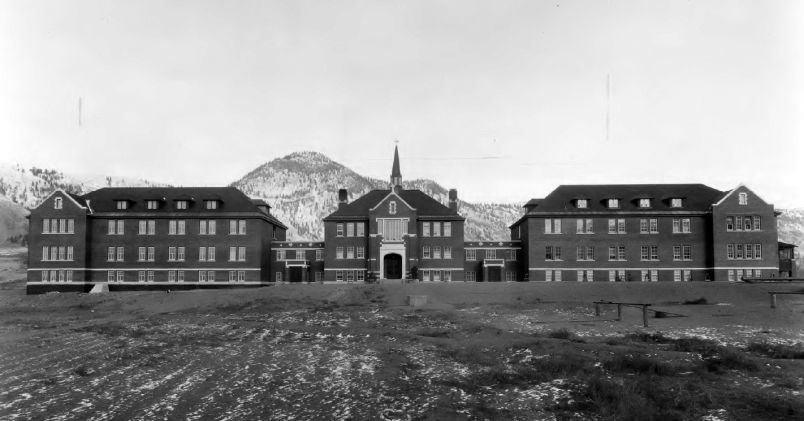
Kamloops Indian Residential School, 1930.
Photo from Archives Deschâtelets-NDC, Richelieu via Wikimedia Commons.
Let’s be honest about what is happening in this video.
This is not academic debate. It is a character attack dressed up as scholarship.
Dr. Travis Hay’s presentation at Mount Royal University, uploaded by Frances Widdowson under the title “Bad Faith: Residential School Denialism and the Academy”, is deeply disappointing. I expected a serious lecture. I expected evidence, argument, and a careful dismantling of claims he believes are wrong.
Instead, what we get is a bad faith lecture.
So yes, Bad Faith is a good title. Just not for the reason Hay thinks.
The real bad faith is pretending to defend scholarship while avoiding the hard work of open debate.
Hay spends much of the lecture drawing a line between “good faith” and “bad faith” criticism. But his standard for good faith appears to be simple: you may disagree only inside the boundaries of the approved framework. You can quibble over details. You can adjust the margins. You can offer polite corrections.
But if you challenge the premise itself, suddenly you are no longer mistaken. You are morally defective. You are a “denialist”, a “grievance merchant”, or some broken person who must be pushed outside respectable academic life.
That is not scholarship. That is gatekeeping.
None of this requires minimizing the real harm done by residential schools. It simply means historical claims should be open to examination. Evidence should be tested. Terms should be defined. Numbers should be scrutinized. Arguments should be answered.
Instead, Hay leans heavily on moral outrage, personal denunciation, and guilt by association. Rather than carefully taking apart Widdowson’s arguments, he drags in old controversies involving other people, uses emotional anecdotes, and builds a mood where the audience is being told what to feel before they are allowed to think.
The most revealing part is the conclusion. Hay says people like Widdowson do not belong in the academy. In other words, the answer to uncomfortable academic work is not better evidence, better reasoning, or open debate. It is expulsion.
That should bother everyone.
A university that cannot tolerate dissent is not protecting knowledge. It is protecting doctrine.
If Widdowson is wrong, prove it. Debate her. Bring the evidence. Take her claims apart in public. That is what serious scholars are supposed to do.
But when the response is censorship, exclusion, and personal insult, it starts to look less like confidence and more like fear.
I came away from viewing this lecture disappointed. Not because Hay disagrees with Widdowson. Disagreement is the whole point of academic life. I was disappointed because the lecture showed so little faith in the public’s ability to hear competing arguments and judge the evidence for themselves.
This lecture does not prove that Widdowson’s arguments are wrong. It proves that parts of the academy no longer know how to handle a serious challenge without reaching for moral panic and professional exile.
Elleander Morning: Causes vs Catalysts
Feral Historian
Published 6 Mar 2026Elleander Morning (Jerry Yulsman) is a peculiar bit of alt-history, brilliant in some ways and immensely clunky in others. It’s a story of a war averted, or perhaps only postponed, and it plays with some fundamental questions of history.
00:00 Intro
02:30 Implications left hanging
03:29 The Books
06:15 The New Catalyst
12:06 Gaming the Past
13:04 Concluding Musings
(more…)
QotD: An imaginary obituary for a nation
Today, the world marked the passing of Canada, younger than most, older than some. Canada, on her best days was a beacon in the world for freedom, justice, inclusion, poutine and hockey. Canada gave the world the telephone, the lightbulb, the pacemaker, insulin and was the first nation to successfully complete a double lung transplant.
For the better part of her history, Canada was a trusted ally, a safe harbour for those fleeing persecution, a voice for the voiceless and an example for other nations. People from around the world flocked to her shores to bring the best of where they came from together with others contribute to building a nation that was unlike any other in the world.
But the last few years of her life did seem to be defined by a nearly psychopathic desire to get in her own way. Anointed by God with a natural bounty that, if mined and managed responsibly could have made her one the fairest and wealthiest nations in the history of the world. And yet that natural bounty remained largely locked away.
Canadians had built one of the fairest and most equal societies on the planet, and yet they seemed hell-bent on focussing on the minutia and sometimes the mirages that appeared to divide them.
The 21st century was poised to be the Canadian century, but through much fault of their own, Canadians squandered that opportunity, and today we bid farewell to a nation that had greatness within its grasp, but decided instead to become smaller, to become lesser, to marginalize itself and by extension, made the world a less wonderful place.
Canada: for many on the outside looking in, gone far too soon. Ironically, the assessment of the Canadian legacy by so many who, through the happy accident of birthright, or another privileged pathway to citizenship is markedly different: she overstayed her welcome.
Ben Mulroney, “Canada’s chance to find itself again”, National Post, 2025-11-10.


