
Let me take a moment to agree with all spinmeisters and talking heads, linked in my inbox this morning. Mister Tucker’s monologue on Fox News t’other evening (which I have now “watched” in video and transcript) was a “game-changer”. That is what we (present and former hacks and pandits) call a speech that outclasses the background noise. It makes listeners wonder, however fitfully, whether their sense of current history is right. It “galvanizes” those who, though they agreed with every proposition in advance, ne’er heard them so well expressed. (Gentle reader will find the thing on the Internet soon enough.)
Gallantly, Mister Tucker has articulated the desire of the Right and Left-wavering to raise the tone of American politics to that of Bhutan. His most striking expressions called attention to the fact that material prosperity does not make people happy. Perhaps we should instruct the statisticians to replace their calculations of Gross Domestic Product, with Gross National Happiness, as they now do in Thimphu. The figure would still be meaningless, but might provide some modest, transient uplift.
In my humbly contrary view, material prosperity — i.e. getting filthy rich — does actually make people happy. Those who win the lottery do not cry from despair. But within a few months of scoring, and often within days, they have a new set of personal problems, to pile upon the old ones. Happiness, from material causes, does not last; not even for the poor. It is emotional catharsis. Something makes you happy; and then it fades away.
Only drugs can keep you happy, until you die. But the downside there is that they kill you.
David Warren, “More populist than thou”, Essays in Idleness, 2019-01-04.
September 18, 2021
QotD: Material prosperity and happiness
August 24, 2021
Aztec Chocolate – Blood & Spice
Tasting History with Max Miller
Published 9 Mar 2021Help Support the Channel with Patreon: https://www.patreon.com/tastinghistory
Tasting History Merchandise: crowdmade.com/collections/tastinghistoryFollow Tasting History here:
Instagram: https://www.instagram.com/tastinghist…
Twitter: https://twitter.com/TastingHistory1
Tiktok: TastingHistory
Reddit: r/TastingHistory
Discord: https://discord.gg/d7nbEpyTasting History’s Amazon Wish List: https://amzn.to/3i0mwGt
LINKS TO INGREDIENTS & EQUIPMENT**
Sony Alpha 7C Camera: https://amzn.to/2MQbNTK
Sigma 24-70mm f/2.8 Lens: https://amzn.to/35tjyoW
Molinillo: https://amzn.to/3rpoXGJ
Cacao Beans: https://amzn.to/3v4feIe
Cacao Nibs: https://amzn.to/3sX7JAU
Achiote/Annatto Powder: https://amzn.to/3rpWe4CLINKS TO SOURCES**
The Secret Life of Chocolate by Marcos Patchett: https://amzn.to/3qoLOB1
For more information visit thesecretlifeofchocolate.com
The True History of Chocolate by Sophie & Michael Coe: https://amzn.to/3sWBl1f
Florentine Codex by Bernardino de Sahagún: https://amzn.to/2OrKiAE
Thomas Gage’s Travels in the New World: https://amzn.to/3sO3YxA**Some of the links and other products that appear on this video are from companies which Tasting History will earn an affiliate commission or referral bonus. Each purchase made from these links will help to support this channel with no additional cost to you. The content in this video is accurate as of the posting date. Some of the offers mentioned may no longer be available.
Subtitles: Jose Mendoza
PHOTO CREDITS
Metate et Mano: Yelkrokoyade, CC BY-SA 3.0 https://creativecommons.org/licenses/…, via Wikimedia Commons
Olmec Head No 3: By Maribel Ponce Ixba (frida27ponce) – Flickr, CC BY 2.0, https://commons.wikimedia.org/w/index…#tastinghistory #aztec #chocolate

August 23, 2021
QotD: Leaving money in the hands of individuals
People do things with that money. And even if all they do is buy stuff (thereby allowing someone else to accumulate wealth) or invest it, that money gets aggregated and finds things to do, as it were. Wealth goes to work on things that seem interesting, might be interesting, or are otherwise likely to make money for the individuals who hold the wealth.
Individuals have money to start new businesses that would never have existed if they’d paid that money in taxes. Or they “invest” in free time and a really nice garden, which in turn lifts the spirits of people who invent something because they feel better than they would otherwise.
The left insists that if they leave money in individual hands, it will just be “wasted”. (Because, you know, no money spent on a vast apparatus, most of it a jobs program for useless paper pushers or power-hungry martinets is ever wasted.)
How do they know? Have they tried leaving enough money in the hands of those who earn it to make a difference?
Not in the twentieth century. Though we can infer from the fact that the most sclerotic, dying countries are the highest taxed ones, that perhaps what government considers “best” and what we consider “best” are not the same.
Not just taxes, but regulations too weigh heavily on possibilities. Sure, the left sees “lands saved” (or created. oop) when say, regulations curtail oil drilling. But what I see is energy taking up an excessive amount of every family’s money, wealth that would otherwise be freed for other investments, for starting businesses, even “just” for fun.
The problem we have is that leftists lack utterly in imagination. They see the “pristine” plots of land, or the things government does with our money and they find it good.
But they’re mind’s-eye blind. They can’t see the wealth that has been consumed for almost 100 years now say on the war on poverty to create chronic poverty having instead been used by individuals to create, to invest, to build, so that, in that parallel world in which money stayed in individual hands, we now have interplanetary travel, colonies all over the solar system, and squid farms on Mars that feed all of humanity.
Their lack of vision, their killing of possibilities without the slightest thought to them: That is a tragedy.
Sara Hoyt, “The Tragedy of the Squid Farms on Mars”, Libertarian Enterprise, 2018-12-05.
July 25, 2021
The Line editors clearly loved crafting their “Dicks in space!” headline
As a fellow space nerd, I welcome the editors of The Line to our number:

You’ve probably noticed by now that your Line editors are space enthusiasts. It’s been an interesting few weeks on that front. Sir Richard Branson flew out of the atmosphere, into free-fall (not zero-G, you scientific illiterates!), on a Virgin Galactic space plane. That said, he didn’t get high enough to cross the Kármán line, which, in the absence of any real international agreement on where the Earth ends and space begins, is as close as we come to a functional definition of the edge of space. (It’s an altitude of 100 km, for those wondering.) Jeff Bezos, of Amazon wealth and fame, did cross that line this week, along with three passengers, including Wally Funk, which was cool, if you’re into that sort of thing. (We are.) Bezos was riding a Blue Origin New Shepard rocket; Blue Origin is a company he founded and funded with his own gigantic wealth.
Look, let’s face facts — your Line editors are into space. We just are. But yeah, we agree that space policy is important enough and complicated enough to warrant debate. Reasonable people can have different views on this stuff. And we also agree that there are important debates to have about the accumulated wealth of billionaires, and the distorting effects that wealth can have on politics and society.
But unlike a bunch of ya’ll, we don’t get confused about a debate over income inequality and a debate over space travel. You can despise Bezos, Amazon and everything he’s done there, and still recognize that what he is doing on the space front is important. Everyone rolling their eyes at Bezos matching space flight capabilities that the Soviets and Americans achieved literally 60 years ago is allowing their desire to rack up some sweet Twitter likes with a snarky dunk blind themselves to the fact that Bezos (and Elon Musk’s SpaceX, which is way ahead of Blue Origin) aren’t just recreating earlier capabilities, they are massively improving on them.
So yeah, Blue Origin can now do what the Soviets and U.S. could do 60 years ago, but they’re doing it more safely, more efficiently and much, much more sustainably than national space agencies did. Reusability isn’t a frill, it’s a massive game-changer. And as much fun as it is to snort when these private-sector companies recreate an existing capability, do you really think they’re going to stop there?
Branson’s company could be written off as a tourism play for the affluent. Fair enough. Except that making space flight economically viable is the first step to ensuring that capability is both sustainable and more broadly accessible in the long run. Further, Bezos and especially Musk are inventing new and transformative space-flight capabilities. They are materially pushing back against the final frontier in ways that we simply have not before. It won’t matter unless we choose to do anything with these new capabilities, and your guess is as good as ours as to whether or not we will. But we could. That’s huge.
As huge as the gigantic dick-shaped rocket Bezos rode up. Yeah, yeah. We snorted, too. But, like, seriously, folks — making penis jokes about the shape of an object dictated by aerodynamic considerations isn’t quite as witty as you think: the rockets are shaped like penises because they literally have to be in order to work. Having a giggle is fine, but if you actually think you’re making a real point about misogyny and fragile male egos when you get snippy (ahem) about a schlong-shaped rocket, well, we’d love to see what happens when your very emotionally vigorous and feminist vagina-shaped space vehicle hits max Q. So long as we aren’t aboard it or in the landing area for its hurtling debris.
Our main point still stands: don’t let your cynicism and even revulsion at these guys blind you to what they’re doing. Bezos isn’t gonna stop at Yuri Gagarin-vintage accomplishments. Musk sure hasn’t. This’ll matter. It’s time to get serious. They are.
July 5, 2021
QotD: Robert Walpole, the first Prime Minister
Most historians rate Walpole as one of our more successful prime ministers: he stabilised the nation’s finances, saw off Jacobite sedition, and kept the country out of foreign wars, proudly boasting: “There are 50,000 slain in Europe this year and not one Englishman.” But inevitably, there was a downside to Walpole: he was charged by his enemies with corruption.
In fact, considering the spectacular eighteenth-century standards of sleaze, Walpole was — to borrow a phrase coined by Tony Blair — “a pretty straight kind of guy”. True, he spent six months in the Tower of London accused by his political foes of all sorts of malpractice; but he was eventually cleared. True, too, that he built a magnificent mansion, Houghton Hall, in his native Norfolk — but he had legitimately made a fortune in the South Sea Bubble financial crash that ruined so many others (by buying shares when they were low and selling them when they were high). Nevertheless, Walpole was not above sailing close to the wind of propriety, cynically remarking: “Every man has his price.”
Nigel Jones, “Scandal, corruption and collusion: 300 years of British prime ministers”, The Critic, 2021-04-03.
May 13, 2021
Canada’s (subdued-but-real) class system
In The Line, Howard Anglin offers some observations on how Canada’s class system developed and how it can be very roughly delineated:
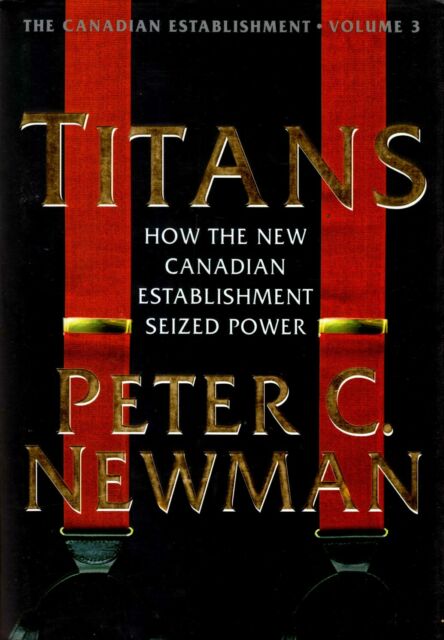
This comfortably flat image of our social hierarchy, however, belies a more complicated series of gradations that, while clearly marked, are rarely observed and almost never described accurately. Peter C. Newman mapped some of the terrain in his three volumes on The Canadian Establishment, but his account was already dated when he began it in 1975 and it was a work of history rather than social commentary by the time he finished in 1998. [Line editor Jen] Gerson’s own description of the Canadian class system explains why it can be hard for outsiders, and even insiders, to see it: “[W]e manage the cognitive dissonance presented by the haves and have-nots of housing,” she says, “by requiring our rich people to keep quiet. They should wear clothes that are well-cut and well-designed, but not flash. Buy the multi-millionaires car, but paint it in a sedate hue.”
Social sorting is intrinsic to human nature, perhaps even necessary — as the Bard has Ulysses remind us: “Take but degree away … and, hark, what discord follows!” — and it’s here in Canada too, if you look for it. Like the United States, Canadians early on replaced a class system based on titles with one based on the more easily-acquired currency of, well, currency. And, as in America, this immediately created a new opportunity for class to subtly reassert itself.
I used to joke that the only meaningful class division in Canada is whether you use “summer” as a noun or as a verb; lately I’ve developed the Starbucks test. In this analogy, Starbucks is Canada’s middle class, with Tim Hortons and fast food franchise coffee below, and specialty cafes and boutique chains (Matchstick, Phil & Sebastian, Bridgehead) above.
Unlike the crude measure of income, coffee choice better replicates a traditional class system because it carries an implicit sense of social solidarity, cultural assumptions and biases. During the days of the Harper government, Tim Hortons became a symbol to a certain sort of conservative as iconic as the Greek fisherman’s cap is to aging Marxists. The Maple Leaf red cup represented the honest values of rural and suburban working families, in contrast to the globalist elites with their overpriced green Starbucks. Starbucks was sipped at dog parks and served in board rooms; Tim Hortons got the job done on a cold winter morning: it was Don Cherry in a mug.
The Starbucks test is a silly heuristic, but it reveals something about the complex nature of class: an aristocrat may be penniless, and a billionaire may love his Tims. It also puts the middle class back in its traditional place as the uneasy middle-child of the social order.
In the old British system, there was pride in being working class. There was a bond of mutual support that grew out of the shared experience of hard labour and was reinforced by institutions like working men’s clubs, the British Legion, and the trade union movement. The middle-class striver with his airs and pretensions, his flash new car and his evolving accent, was a figure of general mockery, even more to the working men he left behind than to the upper classes he aspired to join. Class was about more than money; it was an identity. And there was nothing that gave you away as middle class more than worrying about being middle class — an anxiety exploited by Nancy Mitford in her tongue-in-cheek guide to “U” and “Non-U” language and behaviour. The Starbucks test reveals something similar, something more reflective of Canada’s reality than the Liberal vision of one big happy middle-class family.
Tim Worstall explained that the British middle class is still despised by the upper class and hated by the lower class. Not a model for encouraging aspirational working class folks to “move up”.
May 7, 2021
Scott Alexander reviews David Harvey’s A Brief History Of Neoliberalism
[Update: In the comments, “gunker” explains that this is another of Scott’s reader-contributed book reviews, not one of his own work. My apologies for the mistake.] After a quick rundown of the conventional explanation for the decline and fall of the comfortable post-WW2 US economy in the 1970s, Scott gives an overall appreciation of Harvey’s arguments:
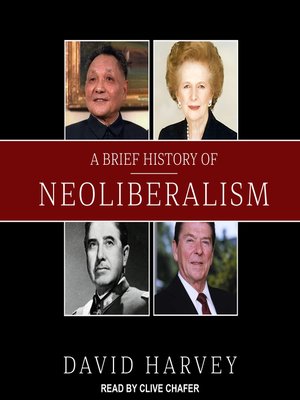
… This treatment is almost the opposite of the way ABHoN describes events. Telling the story this way makes me feel like Jacques Derrida deconstructing some text to undermine the author and prove that they were arguing against themselves all along.
Harvey is an extreme conflict theorist. The story he wants to tell is the story of bad people destroying the paradise of embedded liberalism in order to line their own pockets and crush their opponents. At his best, he treats this as a thesis to be defended: embedded liberalism switched to neoliberalism not primarily because of sound economic policy, but because rich people forced the switch to “reassert class power”. At his worst, he forgets to argue the point, feeling it so deeply in his bones that it’s hard for him to believe anyone could really disagree. When he’s like this, he doesn’t analyze any of the economics too deeply; sure, rich people said something something economics, to justify their plot to immiserate the working classes, but we don’t believe them and we’re under no obligation to tease apart exactly what economic stuff they were talking about.
In these parts, ABHoN‘s modus operandi is to give a vague summary of what happened, then overload it with emotional language. Nobody in ABHoN ever cuts a budget, they savagely slash the budget, or cruelly decimate the budget, or otherwise [dramatic adverb] [dramatic verb] it. Nobody is ever against neoliberal reform — they bravely stand up to neoliberal reform, or valiantly resist neoliberal reform, or whatever. Nobody ever “makes” money, they “extract” it. So you read a superficial narrative of some historical event, with all the adverbs changed to more dramatic adverbs, and then a not-very-convincing discussion of why this was all about re-establishing plutocratic power at the end of it. This is basically an entire literary genre by now, and ABHoN fits squarely within it.
Harvey’s theses, framed uncharitably, are:
1. Embedded liberalism was great and completely sustainable. The global economic system collapsing in 1971 was probably just coincidence or something, and has no relevance to any debate about the relative merit of different economic paradigms.
2. Sure, some people say that the endless recession/stagflation/unemployment/bankruptcy/strikes of the 1970s were bad, but those people are would-be plutocrats trying to seize power and destroy the working class.
3. When cities, countries, etc, ran huge deficits and then couldn’t pay any of the money back, sometimes the banks that loaned them that money were against this. Sometimes they even asked those places to stop running huge deficits as a precondition for getting bailed out. This proves that bankers were plotting against the public and trying to form a dystopian plutocracy.
4. Since we have proven that neoliberalism is a sham with no advantages, we should switch back to embedded liberalism.
Let’s go through these one by one and see whether I’m being unfair.
April 21, 2021
Hitler’s Money and How He Stole It – WW2 Special
World War Two
Published 20 Apr 2021On paper, Hitler never made a lot of money. Yet he became one of the wealthiest people of his time. This is how he stole his fortune.
Between 2 Wars: Zeitgeist!
https://www.youtube.com/watch?v=KThHc…
Hitler Never Gave the Order – So Who Did? – WW2 Special
https://www.youtube.com/watch?v=uQsGU…
The Nazis: Most Notorious Art Thieves in History – WW2 Special: https://www.youtube.com/watch?v=tXvo-…
Why the Nazis Weren’t Socialists – “The Good Hitler Years” | BETWEEN 2 WARS I 1937 Part 2 of 2
https://www.youtube.com/watch?v=YHAN-…Join us on Patreon: https://www.patreon.com/TimeGhostHistory
Or join The TimeGhost Army directly at: https://timeghost.tvFollow WW2 day by day on Instagram @ww2_day_by_day – https://www.instagram.com/ww2_day_by_day
Between 2 Wars: https://www.youtube.com/playlist?list…
Source list: http://bit.ly/WW2sources
—
Hosted by: Spartacus Olsson
Written by: Joram Appel and Spartacus Olsson
Director: Astrid Deinhard
Producers: Astrid Deinhard and Spartacus Olsson
Executive Producers: Astrid Deinhard, Indy Neidell, Spartacus Olsson, Bodo Rittenauer
Creative Producer: Maria Kyhle
Post-Production Director: Wieke Kapteijns
Research by: Joram Appel
Edited by: Karolina Dołęga
Sound design: Marek KamińskiColorizations by:
– Daniel Wiess
– Dememorabilia – https://www.instagram.com/dememorabilia/
– KlimbimSources:
Picture of building appartement on Prinzregentenplatz 16, Munich in 1910. courtesy of Stadtarchiv München, DE-1992-FS-NL-PETT1-2847 https://stadtarchiv.muenchen.de/scope…
– Bundesarchiv
– National Archives NARA
– Imperial War Museum: IWM Art.IWM PST 4099
– United States Holocaust Memorial Museum
– Narodowe Archiwum Cyfrowe
– Nationaal Archief
– The picture of the Eagle’s Nest in 2020 courtesy of Marcus Hebel from Wikimedia – https://commons.wikimedia.org/wiki/Fi…
– The picture of the Eagle’s Nest in 2014 courtesy of Nordenfan – from Wikimedia https://commons.wikimedia.org/wiki/Fi…
– Icons from The Noun Project: barracks by Smalllike, Cook by Alice Design, Farm by Laymik, football field by Mavadee, House by Abhimanyu Bose, Kitchen by RD Design, Library by Adrien Coquet, Housekeeper by Richie Romero, Old Car by Halfazebra Studio, Pool by Loritas Medina, Projector by Ralf Schmitzer, Waiter by chris dawson, Woman by Deemak Daksina, Woman by Wilson Joseph, Woman hat by Xinh Studio, Woman With a Hat by Graphic EnginerSoundtracks from Epidemic Sound:
– “The Inspector 4” – Johannes Bornlöf
– “London” – Howard Harper-Barnes
– “Other Sides of Glory” – Fabien Tell
– “Rememberance” – Fabien Tell
– “Deviation In Time” – Johannes Bornlof
– “Break Free” – Fabien Tell
– “March Of The Brave 10” – Rannar Sillard – Test
– “Ominous” – Philip Ayers
– “Symphony of the Cold-Blooded” – Christian Andersen
– “Please Hear Me Out” – Philip AyersArchive by Screenocean/Reuters https://www.screenocean.com.
A TimeGhost chronological documentary produced by OnLion Entertainment GmbH.

April 12, 2021
The Constitution of the Spartans
Historia Civilis
Published 11 Sep 2017Patreon | http://historiacivilis.com/patreon
Donate | http://historiacivilis.com/donate
Merch | http://historiacivilis.com/merch
Mailing List | http://historiacivilis.com/mailinglist
Twitter | http://historiacivilis.com/twitter
Website | http://historiacivilis.comSources:
The Constitution of the Spartans, by Xenophon: http://amzn.to/2j7JXTB
The Moralia, by Plutarch: http://amzn.to/2gNMYHU
Parallel Lives: The Life of Lycurgus, by Plutarch: http://amzn.to/2xS29nI
Politics, by Aristotle: http://amzn.to/2wMq5ss
Rhetoric, by Aristotle: http://amzn.to/2xS3niO
Laws, by Plato: http://amzn.to/2wLpsiN
On the Republic, by Cicero: http://amzn.to/2j7Flgg
The Histories, by Herodotus: http://amzn.to/2xdH4a7
The Spartan Regime, by Paul A. Rahe: http://amzn.to/2vPmRqS
Property and Wealth in Classical Sparta, by Stephen Hodkinson: http://amzn.to/2xdV7MS
The Rise of Athens, by Anthony Everitt: http://amzn.to/2j69uMS
Persian Fire, by Tom Holland: http://amzn.to/2vPyCxEWe are a participant in the Amazon Services LLC Associates Program, an affiliate advertising program designed to provide a means for us to earn fees by linking to Amazon.com and affiliated sites.
Music:
“Air Hockey Saloon,” by Chris Zabriskie
“Candlepower,” by Chris Zabriskie
“CGI Snake,” by Chris Zabriskie
“Heliograph,” by Chris Zabriskie
“Hallon,” by Christian Bjoerklund
From the comments:
Temporary Fakename
3 years ago
You know, i thought the Roman political system was pretty odd and arcane. But the Spartans have a dual monarchy that has absolute power, except when it doesn’t, an elected Senate that is chosen partially randomly that can pass whatever the hell they want with a public assembly and punish kings, except when an all-male aristocracy decided no, a female aristocracy that is overwhelmingly rich but can’t vote, and a population so terrified of its own slaves that it ritually committed atrocities against them. Compared to that Roman politics look simple and elegant.
I found the presentation quite interesting and informative, but I felt that some discussion of the differences between the terrible plight of the Helots and the not-quite-free status of the Perioikoi was merited. I also felt that the final segment on the eventual decline of Sparta missed a major factor — Spartan military defeats in the Battle of Leuctra in 371 BC and the Battle of Mantinea in 362 BC — but reading down in the comments, I saw someone else had already brought this up:
xelena
2 years ago (edited)
This is a good video, but is missing a super important point at the end: The cause for the decline of Spartan power was its defeat by Epaminondas of Thebes and his freeing of Messenia (the land of the Helots). He also founded Messene in Messenia and Megalopolis in Arcadia for the Helots, which became a powerful check to Sparta. Spartan power never recovered from this death blow to its slave economy and continued to wither away into the nothingness you describe.Epaminondas is mostly forgotten today, but he was one of the greatest men of antiquity. It was him and Pelopidas who put to bed the myth of Spartan invincibility and freed an entire people who had been enslaved for centuries. So in a way, the crippling blow did come from other Greeks, and the Helots did participate in it.
March 22, 2021
QotD: Signalling
These days, you will hear guys on the alt-right talk about counter-signalling. The easiest example of this is the newly minted rich guy going out and buying expensive display items, like cars or gaudy homes. NBA players are prone to this. They want to signal their wealth by acquiring highly visible, expensive items. An old money guy, in contrast, counter-signals by living in an old farmhouse that has been in the family for generations and driving a 40 year old Saab. He’s the sort of rich that feels no need to advertise it.
Signalling is a basic human trait. We all do it to one degree or another. Walk into a prison and you will see an array of tattoos on the inmates. These will signal gang affiliations, time served in the system, facilities in which the inmate has served and the individual’s violence capital. That last part is an important part of keeping the peace. To civilians, a face tattoo is always scary, but in jail, the right neck tattoo can tell other inmates that they are in the presence of an accomplished killer for a particular prison gang.
Virtue signalling and danger signalling are the easiest to understand, but people also use verbal and non-verbal signals to indicate trust or test the trustworthiness of others. A criminal organization, for example, will have a new member commit a pointless crime to demonstrate their trustworthiness. This is not just to sort out police informants, as is portrayed on television. It’s mostly to ascertain the willingness of the person to commit to the life of the organization. It’s hard to be a criminal if you will not commit crimes.
Outlaw biker culture is a good example of the use of signalling to establish trust relationships. Bikers have always, for example, adopted Nazi symbols as part of their display items. Bikers are not sitting around reading Julius Evola. What they are doing is signalling their complete rejection of the prevailing morality. By adopting taboo symbols and clothing, the outlaw biker is letting other bikers know his status, as much as he is letting the squares know he is a dangerous guy, who should be avoided.
The Z Man, “Codes of the Underworld”, The Z Blog, 2017-07-26.
February 26, 2021
Waymarkers of the American caste system
Scott Alexander reviews Paul Fussell’s Class: A Guide Through The American Status System, and finds Fussell has helpfully delineated how an outsider can guess someone’s class (or caste, as Fussell would prefer) … at least how that outsider could do so in 1983:
The upper class is old money. The people you think of as rich and famous — tech billionaires, celebrities, whatever — aren’t upper class. However privileged they started off, they still had to put in at least a smidgeon of work to get their money, which disqualifies them. Real uppers inherit. Even famous people who come from old money usually aren’t central examples of upper class; the real upper class has no need to seek fame. They mostly just throw parties — but not interesting parties, because that would imply they have something to prove, which they don’t. They live in mansions — but not awesome mansions they designed themselves with some kind of amazing gaming room or something, because that would imply they have something to prove, which they don’t. They live in meticulously boring mansions and throw meticulously boring parties. They have the best and classiest versions of everything, but it’s a faux pas to compliment any of it, because that would imply that they were the sort of people who might potentially not have had the best and classiest version of that thing. They fill their houses with Picassos and exquisite antique furniture, and none of them ever express the slightest bit of satisfaction or praise about any of it. You have never heard of any of these people, although you might recognize the last name they share with a famous ancestor (Rockefeller, Ford, etc).
The middle classes are salaried professionals, starting with the upper-middle class. Jeff Bezos, for all his billions, is only upper-middle-class at best. So are many of the other people you think of as rich and famous and successful. The upper-middle-class likes New England, Old England, yachts, education, good grammar, yachts, chastity, androgyny, the classics, the humanities, and did I mention yachts?
The middle class is marked by status anxiety. The working class knows where they stand and are content. The upper-middle class has made it; they’re fine. And the upper class doesn’t worry about status because that would imply they have something to prove, which they don’t. But the middle class is terrified. These are the people with corporate jobs who say things like “I’ve got to make a good impression at the meeting Tuesday because my boss’ boss will be there and that might determine whether I get the promotion I’m going for”. The same attitude carries into the rest of their lives; their yards and houses are maintained with a sort of “someone who could change my status might be watching, better make a good impression”. They desperately avoid all potentially controversial opinions — what if the boss disagrees and doesn’t promote them? What if the neighbors disagree and they don’t get invited to parties? They are the most likely to be snobbish and overuse big words, the most obsessed with enforcing norms of virtuous behavior, and the least interested in privacy — asserting any claim to privacy would imply they have something to hide. Their Official Class Emotions are earnestness and optimism; they are the people who patronize musicals like Annie and Man of La Mancha where people sing saccharine songs about hopes and dreams and striving, and the people who buy inspirational posters featuring quotes about perseverance underneath pictures of clouds or something.
Proles do wage labor. High proles are skilled craftspeople like plumbers. Medium and low proles are more typical factory workers. They have a certain kind of freedom, in that they don’t have status anxiety and do what they want. But they’re also kind of sheep. They really like mass culture — the more branded, the better. These are people who drink Coca-Cola (and feel good about themselves for doing so), visit Disneyland (and accept its mystique at face value), and go on Royal Caribbean cruises. When they hear an ad say a product is good, they think of it as a strong point in favor of buying the product. They feel completely comfortable expressing their opinions, but their opinions tend to be things like “Jesus is Lord!”, “USA is number one!”, “McDonalds is so great!”, and “Go $LOCAL_SPORTS_TEAM!”. They are weirdly obsessed with cowboys (Fussell says cowboys represent the idea that poorer people are freer and more authentic than rich office-worker types, plus the West is the prole capital of the USA) and with unicorns (Fussell: “I’ve spent six months trying to find out exactly why, and I’m finally stumped”). When they have unique quirks, they tend to be things like “collecting lots of Disney memorabilia” or “going powerboating slightly more often than the other proles do”. There’s also a sort of desperate prole desire to be noticed and individuated, which takes the form of lots of “Personalized X” or “Y with your name on it”, and also with making a lot of noise (see: powerboating). Fussell describes the most perfectly prole piece of decor as “a blue flameproof hearthrug with your family name in Gothic letters beneath seven spaced gold stars and above a golden eagle in Federal style”.
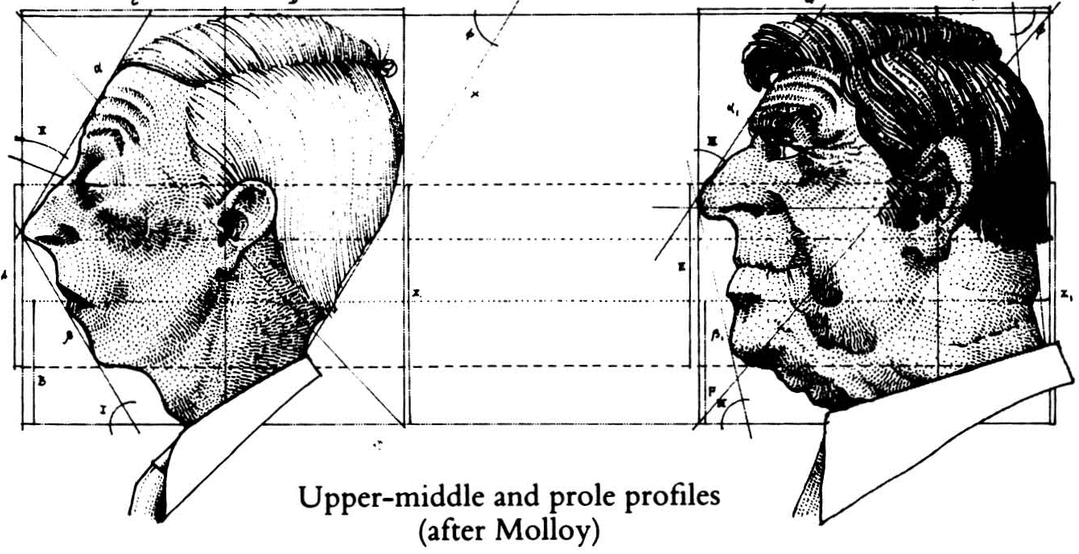
It’s impossible to tell when Fussell is serious vs. joking. The section on the physiognomy of different classes has to be a joke, right? But then how did he come up with the Virgin vs. Chad meme in 1983? Also, why does my brain keep telling me these are John McCain and Donald Trump?
A friend urges me to think of these not as “rich/successful people” vs. “poor/unsuccessful people”, but as three different ladders on which one can rise or fall. The most successful proles are lumber barons or pro athletes or reality TV stars. These people are much richer and more powerful than, say, a schoolteacher, but they’re still proles, and the schoolteacher is still middle class. Likewise, a very successful middle class person might become a professor or a Senator or Jeff Bezos, but this doesn’t make them even a bit upper class.
(I’m not sure it’s possible to be a more or less successful upper class person; being successful would imply having something to prove, which they don’t).
February 5, 2021
QotD: Misunderstanding the threat/promise of robotics and AI
OK, so, now we use machines to do some jobs that were previously done by humans. Imagine that this new technology actually required more human labour – that it created new jobs in greater volume than those it destroys. Say, the tractor and combine harvester industry needs more people in it than we used to use to cut the crops by hand. We’ve just made ourselves poorer. We used to have some amount of grain through the labour of some number of people. We’ve now got that grain but by using the labour of more people. We’ve used more of our scarce resource and we’re now poorer by the loss of what they used to make when not hand cutting grain but now no longer are by making tractors.
What makes us richer is if the tractor industry has record production statistics while using less labour than the hammer and sickle. That means that some human labour is now free to go off and try to sate a human desire or want for something other than grain. Ballet dancing for example. We’re now richer – tractors and combine harvesters have made us richer – by whatever value we put on more ballet dancing.
The entire point of any form of automation is to destroy jobs so as to free up that labour to do something else. The new technology doesn’t create jobs, it allows other jobs to be done.
The only point at which this fails is if human needs and desires aren’t unlimited. Which means that we might be able to provide everything that everyone wants without us all working. Which doesn’t really sound like much of a problem really.
Tim Worstall, “As Usual, World Economic Forum Gets Robots And AI Wrong Over Jobs”, Continental Telegraph, 2018-09-18.
February 2, 2021
When the self-defined elites achieved class consciousness
At Rotten Chestnuts Severian adds to his ongoing series of posts identifying areas where Marx was right:
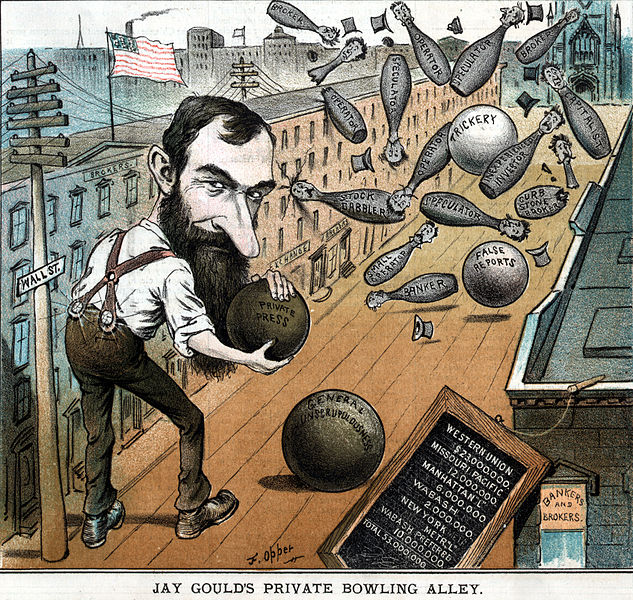
“Jay Gould’s Private Bowling Alley.” Financier and stock speculator Jay Gould is depicted on Wall Street, using bowling balls titled “trickery,” “false reports,” “private press” and “general unscrupulousness” to knock down bowling pins labeled as “operator,” “broker,” “banker,” “inexperienced investor,” etc. A slate shows Gould’s controlling holdings in various corporations, including Western Union, Missouri Pacific Railroad, and the Wabash Railroad.
From the cover of Puck magazine Vol. XI, No 264 via Wikimedia Commons.
… I liken Karl Marx to one of those bird-masked medieval Plague doctors — he sees the pathology clearly, indeed far faster and better than anyone else, but his proposed “cure” is far likelier to kill you than the actual disease. Worse, what makes Marx’s cure especially lethal is what ends up making his diagnosis essentially right: It’s a self-fulfilling prophecy.
The proletariat is achieving class consciousness, all right — look no further than the GameStop “short squeeze” for proof. But the only reason the proles are achieving class consciousness is because the “capitalists” forced them to, just like Marx said they would. The Elite and the Bureaucracy (usually, but not always, a distinction without a difference) finally achieved class consciousness through the combination of NAFTA and the Louvre Accords. Starting around 1990, then, the Elite self-consciously embraced their role as rootless, stateless, jet-setting parasites (with the wannabe-Elites in the Media, academia, and the bureaucracies signing up for tours of duty as fart-catchers, both to bask in reflected glory and in hopes of being promoted).
In short, our “Capitalists” — really, “financial-ists” or “spreadsheet gangsters,” since they don’t actually make anything, they just bust out existing firms via debt manipulation — behave exactly as Marx described factory owners behaving all the way back in the First Industrial Revolution.In my naivete, I used to think Marx’s ranting was hyperbole. I cited the example of Andrew Carnegie — a real bastard in his youth, who went on to be one of the world’s great philanthropists. That’s human behavior, I said, as opposed to the bloodthirsty caricature of Marx’s fantasies … but I was wrong, comrades. Carnegie happily would’ve sold his fellow Americans down the river, just as Bezos, Gates, and the rest of the pirates-in-neckties are happily selling us down the river now. Only two things prevented it back then: one structural, one cultural.
The structural one is simply technology, and therefore uninteresting. Britain’s “free traders” — you know, the Jardine-Matheson types who started the Opium Wars for fun and profit — would’ve happily outsourced Britain’s entire industrial base to China if they hadn’t been hampered by wind speed. By the time this was technically feasible — which is about 1860, if you’re keeping score — simple inertia had taken over. They didn’t retool until they had to, at which point instant communications and modern ships … well, you know the rest. Like I said, it’s vital, but boring.
The cultural one is much more interesting. You might be tempted to say, as I did, that Jardine and Matheson were always on the lookout for #1, of course, but were sincere British patriots for all that, just as Carnegie for all his faults was an authentic American. I doubt it, comrades. I sincerely doubt it. What kept these guys in check wasn’t patriotism, or even culture. Rather, it was fear.
January 22, 2021
Hypocrisy is bad (for mere humans) but ostentatious hypocrisy is reserved for the powerful
David Warren notes the two very different kinds of hypocrisy on display during these fallen days:
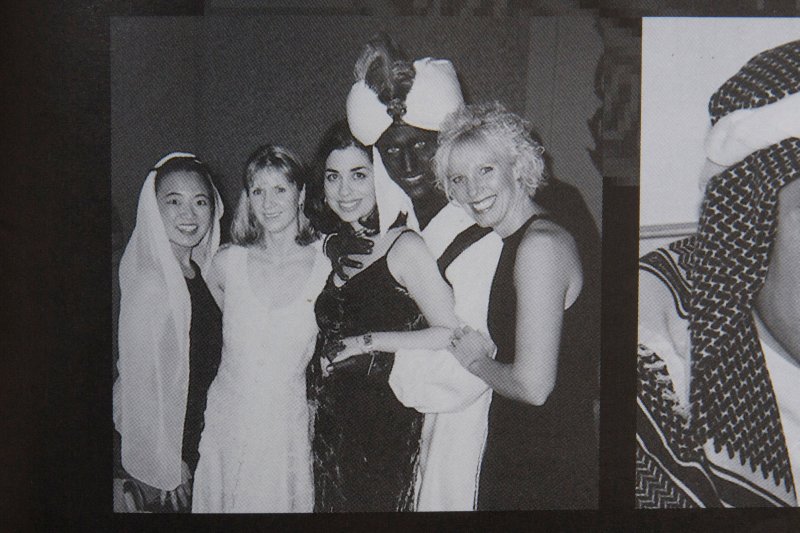
Justin Trudeau with dark makeup on his face, neck and hands at a 2001 “Arabian Nights”-themed party at the West Point Grey Academy, the private school where he taught.
Photo from the West Point Grey Academy yearbook, via Time
Hypocrisy is often dismissed as a humdrum moral vice; rather as pæderasty, or buggery, or commissioning abortions: things considered very grave in the past, but now quite acceptable among progressive persons. One feels almost cruel, or envious, to criticize the adept hypocrite. How dare we try to withdraw the air in which he lives and breathes? “Zero tolerance” is directed at more serious vices, such as having wrong opinions, or voting Republican.
As Paul Valéry said, “Power without abuse loses its charm,” and when, for instance, a governor who proclaims crippling Batflu restrictions is seen ignoring them, he is outraged. His critics are his opponents, he reasons; they really ought to be investigated first!
A milder, general criticism is sometimes made, about the lifestyles of the rich and famous. How is it that prominent environmentalists burn so much jet fuel in their travels from one conference to another, at the world’s most lavish resorts? Shouldn’t they go about in sackcloth and ashes, as they tell us to do?
This is to misunderstand their hypocrisy. We assume they are motivated by greed, and the love of pleasure, the way we would be. But why must it be piled on so thick? Many a jetsetter hardly uses the jacuzzis. He takes a quick shower, because he has another aeroplane to catch.
Yes, most people are attracted to the sumptuous, but in a fine and private way. They rarely encourage the paparazzi, or wish to be watched over their fences and walls. They hire security, to scare trespassers away. Servants, up to a point, must be endured, but in the past they could be ignored, the way we ignore appliances. I may not have a toaster, but I do have a stove, and could swear that it is staring at me. But it was manufactured in the 1960s, so I needn’t fear it has an Internet connexion. And besides, if it did, it wouldn’t be reporting to the tabloids, but to technical staff. We try to ignore them, at least so long as we can pretend they are equivalent to our maids and butlers.
November 17, 2020
“We are so well off here in the United States that our poverty line begins 31 times above the global average. Thirty. One. Times.”
Alyssa Ahlgren ponders the fact that we North Americans take our unprecedented-in-human-history prosperity very much for granted:
I’m sitting in a small coffee shop near Nokomis trying to think of what to write about. I scroll through my newsfeed on my phone looking at the latest headlines of Democratic candidates calling for policies to “fix” the so-called injustices of capitalism. I put my phone down and continue to look around.
I see people talking freely, working on their MacBooks, ordering food they get in an instant, seeing cars go by outside, and it dawned on me. We live in the most privileged time in the most prosperous nation and we’ve become completely blind to it. Vehicles, food, technology, freedom to associate with whom we choose.
These things are so ingrained in our American way of life we don’t give them a second thought. We are so well off here in the United States that our poverty line begins 31 times above the global average. Thirty. One. Times. Virtually no one in the United States is considered poor by global standards. Yet, in a time where we can order a product off Amazon with one click and have it at our doorstep the next day, we are unappreciative, unsatisfied, and ungrateful.
Our unappreciation is evident as the popularity of socialist policies among my generation continues to grow. Democratic Congresswoman Alexandria Ocasio-Cortez recently said to Newsweek talking about the millennial generation, “An entire generation, which is now becoming one of the largest electorates in America, came of age and never saw American prosperity.”
Never saw American prosperity. Let that sink in. When I first read that statement, I thought to myself, that was quite literally the most entitled and factually illiterate thing I’ve ever heard in my 26 years on this earth. Now, I’m not attributing Miss Ocasio-Cortez’s words to outright dishonesty. I do think she whole-heartedly believes the words she said to be true. Many young people agree with her, which is entirely misguided. My generation is being indoctrinated by a mainstream narrative to actually believe we have never seen prosperity. I know this first hand, I went to college, let’s just say I didn’t have the popular opinion, but I digress.
Let me lay down some universal truths really quick. The United States of America has lifted more people out of abject poverty, spread more freedom and democracy, and has created more innovation in technology and medicine than any other nation in human history. Not only that but our citizenry continually breaks world records with charitable donations, the rags to riches story is not only possible in America but not uncommon, we have the strongest purchasing power on earth, and we encompass 25 percent of the world’s GDP. The list goes on.


