
There often occurred to me the difference between the Professor of Economics and the business man, as judged by their financial success. The business man may not perhaps be on the same intellectual plane as the professor, but he bases his ideas on real facts and puts the whole power of his will behind their realisation. The professor, on the other hand, often has a false conception of reality and although perhaps having more ideas, is neither able nor anxious to carry them out; the fact that he has them is satisfaction enough. And so the business man has the greater financial success.
Erwin Rommel, edited by B.H. Liddell Hart in The Rommel Papers, 1953.
July 30, 2019
QotD: Business versus economics
Comments Off on QotD: Business versus economics
July 12, 2019
Mark Steyn urges caution when considering the Epstein case
It may make sense to avoid a rush to judgement, as the way the federal justice system works these days does not encourage a belief in its impartiality or, for that matter, its dedication to the concept of “justice”:
I am wary of saying anything too definitive re the Jeffrey Epstein case, because so much of the reporting is way too trusting of the federal prosecutors’ official narrative. Don’t get me wrong: I take it as read that he’s an industrial-scale pedophile, if only because it seems to be the only thing anybody knows about him – including how he made his billion dollars. He apparently requires three “massages” a day by underage girls. So, upon being informed that Mr Epstein was flying his “Lolita Express” around Africa with Bill Clinton, Kevin Spacey and a softcore porn actress called Chauntae Davies on board, I’m disinclined to accept the official explanation that this was an Aids-relief “humanitarian” mission.
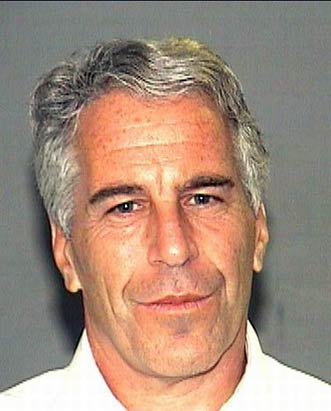
Mug shot of Jeffrey Epstein made available by the Palm Beach County Sheriff’s Department, taken following his indictment for soliciting a prostitute in 2006.
Image via Wikimedia Commons.That said, as longtime readers know, I regard federal justice as appallingly corrupt, and so the sudden revival of Epstein’s prosecution is somewhat more than intriguing. First, and as often with prominent American cases, the details make no sense:
In a memo filed to the court, prosecutors outlined the scope of Epstein’s vast wealth to argue that he has the means to flee the country and escape prosecution, noting that he not only has homes in Manhattan, Palm Beach, New Mexico and Paris — with his Upper East Side townhouse, of which prosecutors are seeking the forfeiture, alone worth $77 million — but also owns a private island in the US Virgin Islands.
He also has three US passports, owns at least 15 vehicles and has access to two private jets, according to the memo.
I can understand how a rich man comes to have fifteen cars, but how pray, does one individual citizen acquire three US passports? And from a government supposedly on “orange alert” these last eighteen years.
Second, Epstein was the beneficiary of a ludicrously lenient federal plea deal a decade ago for exactly the same charges. So this would appear to be “double jeopardy”. Not so fast, say the feds:
It is well-settled in the Second Circuit [appellate court] that a plea agreement in one US Attorney’s office does not bind another unless otherwise stated.
Is that so? Thanks to that litigious loser Cary Katz, I’m more familiar with Second Circuit jurisprudence than I might otherwise wish. But I had no idea of the above. So apparently, when you enter into a plea deal with “the United States” that says things like “the United States, in consultation with and subject to the good faith and approval of Epstein’s counsel, shall select an attorney representative for…” and “if Epstein successfully fulfills all of the terms and conditions of this agreement, the United States also agrees that it will not institute any criminal charges against…”, the words “the United States” only apply to the United States that resides at 27 Ocean View Parkway, Miami Beach and not the United States that resides at 32b Rotting Wharf Lane, The Bronx. So forget double jeopardy; you could have demicentuple jeopardy. Who knew?
One more thing: it seems fairly obvious that Epstein is also a procurer for those whose appetites likewise run to schoolgirls. This is where the manifests of his airplane are at least somewhat inferential. Yet the new indictment is concerned only with “the New York Residence” and “the Palm Beach Residence” — and not the Lolita Express jetting well-heeled buddies to Paedo Island. Is this some cozy arrangement to ensure that Bill Clinton et al are excluded from the case?
Comments Off on Mark Steyn urges caution when considering the Epstein case
July 7, 2019
Cancelling student loans would be a really, really bad economic move
Art Carden explains why cancelling outstanding student loan debt — despite its huge popularity on the campaign trail — would be a very bad idea:
University College, University of Toronto, 31 July, 2008.
Photo by “SurlyDuff” via Wikimedia Commons.
It’s one of the rules of electoral success: advocate policies that concentrate the benefits on an easy-to-identify interest group (preferably one that is sympathetic in the public eye) and disperse the costs onto the entire electorate. It’s how we get Coke sweetened with corn syrup rather than actual sugar. It’s also how we get proposals to cancel student loans. As my AIER colleague Will Luther points out, the fact that two of the Democratic frontrunners have made debt cancellation such an important part of their campaigns suggests that the issue is going to be with us for a while.
But would it be a good idea to cancel student debt? And importantly, how does even the prospect of canceled student debt affect people’s incentives?
Regressive Tax
First, let’s consider the quality of the policy. A lot of commentators are pointing out that it’s fundamentally regressive, meaning that we’re basically taxing the poor to pay the rich. As economist Alexander William Salter puts it in the Dallas Morning News, it’s
a transfer of wealth to those with relatively high levels of expected lifetime income, at the expense of those with relatively lower levels of expected lifetime income.
The idea might have some merit, but it will make wealth and income inequality worse rather than better.
Even saying that the idea might have some merit is perhaps too charitable. In 2011, economist Justin Wolfers called it the “Worst. Idea. Ever.” in a Freakonomics post. Why? First, there’s the distributional effect. If we’re going to have policies that transfer wealth from one group to another, it doesn’t make much sense to transfer wealth from taxpayers generally to high-income college graduates. As Will Luther and so many others have pointed out, a college degree brings spectacular financial returns. As a group, college graduates aren’t “needy” by any reasonable definition.
Comments Off on Cancelling student loans would be a really, really bad economic move
July 3, 2019
Canada’s “elite”
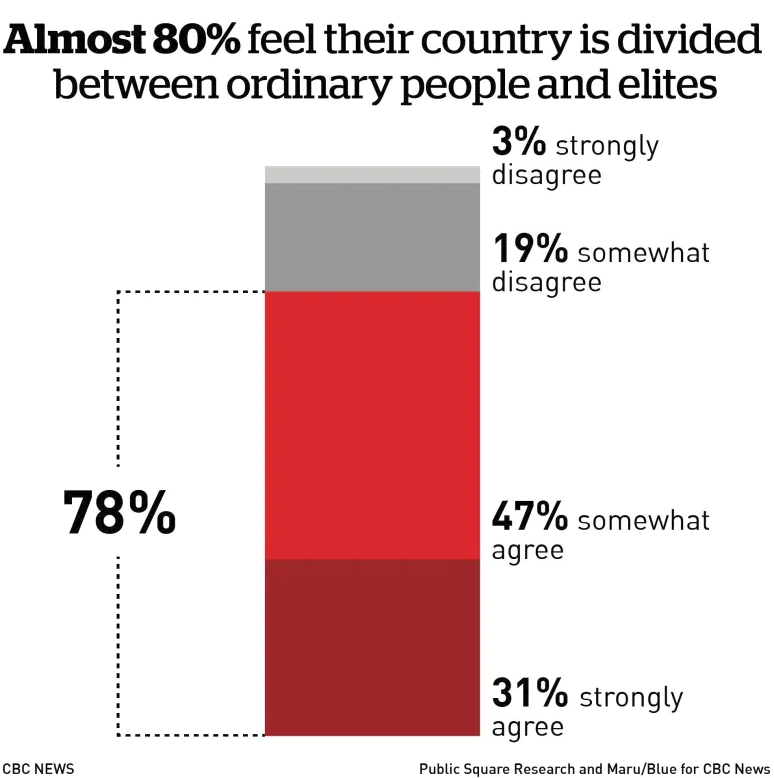
Jay Currie responded to a CBC article on a recent poll that found “nearly 80 per cent of Canadians either strongly or somewhat agree with the statement: ‘My country is divided between ordinary people and elites’.”
The CBC interviewee, Tony Laino, at Fordfest, said describing elites, “Those that think they’re better than me,” he said. “Because I don’t espouse their beliefs.”
Which misses the point. Elites really don’t think of guys like Tony Laino at all. Largely because, as Charles Murray points out in Coming Apart, the new upper class rarely, if ever, meets the Tony Lainos of the world. Murray was writing about white people in America but much the same social bi-furcation is taking place in Canada. Murray looks at education, wealth, marriage, access and what he refers to as the rise of the super-zips, areas where highly educated, well connected, well off people live with others of their class and kind. It is an accelerating phenomenon in the US and it is plainly visible in Canada. Murray quotes Robert Reich as calling this, “the segregation of the successful”.
Inside elite communities “the issues” look very different than they do in the more pedestrian parts of the country. A few pennies extra for gas or heating oil or natural gas to fight the universally acknowledged menace of “climate change” makes perfect sense if your income is in the hundreds of thousands of dollars a year. It is downright terrifying if you are making $50K. Only bigots and racists could be anti-imigration when you, yourself, live in virtually all white, old stock, Canadian enclaves and welcome refugees and migrants who you will never see.
The populist moment has not yet come to Canada and, if Andrew Scheer’s brand of Liberal lite wins in October, there will probably be another decade of elite consolidation before a proper populist movement gets off the ground. Whether it will be right populism a la Trump and Farange, or left populism with a firebrand NDP leader, is hard to say. However, as the Canadian elite grows more insular and disconnected from the ordinary life of Canada and Canadians, that populist moment draws closer.
Comments Off on Canada’s “elite”
June 26, 2019
What is the problem that a wealth tax is designed to solve?
Andrew Coyne asks the obvious question about the sudden keen interest in imposing wealth taxes:
“washdc040208-02” by carencey is licensed under CC BY-NC-SA 2.0


It is noteworthy how the debate on inequality has shifted in recent years: from the problem of poverty, whose evils are obvious, to the “problem” of great wealth; from the gap between the poor and the rest of us, to the gap between the rest of us and the rich, or indeed between the rich and the very rich.
But it is not obvious why it is wrong, in itself, that a small number of people should get stinking rich. It is clearly objectionable if they did so by illicit or unethical means — but then it is the means itself, not the wealth, to which we object. And it would be in poor taste, at the least, if they spent it all on themselves. But that is not how the great fortunes are typically disposed of — it’s physically impossible to spend more than a small fraction of it.
Perhaps the argument is less that the rich are too rich than it is that the government is too poor. You can make a case that government should spend more on certain things, especially in America. It doesn’t follow that you need to raise taxes to do so. A lot of good new spending could be funded by cutting bad old spending.
Suppose there were a case for raising taxes. Are wealth taxes the way to go? Wealth is, after all, merely the accumulation of past income — and we already tax income. If rich people are exploiting loopholes to avoid paying tax on their incomes, by all means close the loopholes. But the case for taxing income twice seems obscure.
Yes, we already have a kind of wealth tax, in the form of municipal property taxes — and they’re a notorious mess. They conform to none of the usual principles of good taxation, being neither simple, nor efficient, nor fair.
Why unfair? The bedrock criteria of tax fairness is supposed to be ability to pay. That’s only uncertainly related to wealth. Suppose the value of your house shoots up. Congrats: suddenly you’re wealthy. But your income is unchanged. And it’s income you need, or more accurately cash, to pay your taxes. It’s not clear why you should pay more in tax than someone with the same income, but a cheaper house.
Comments Off on What is the problem that a wealth tax is designed to solve?
June 5, 2019
QotD: The almost unknown economic good news since 1800
Dierdre McCloskey, “How Growth Happens: Liberalism, Innovism, and the Great Enrichment (Preliminary version)” [PDF], 2018-11-29.
Comments Off on QotD: The almost unknown economic good news since 1800
June 3, 2019
The “Miss India” controversy
The Times of India published an image of the Miss India competition finalists that drew heavy condemnation on social media:
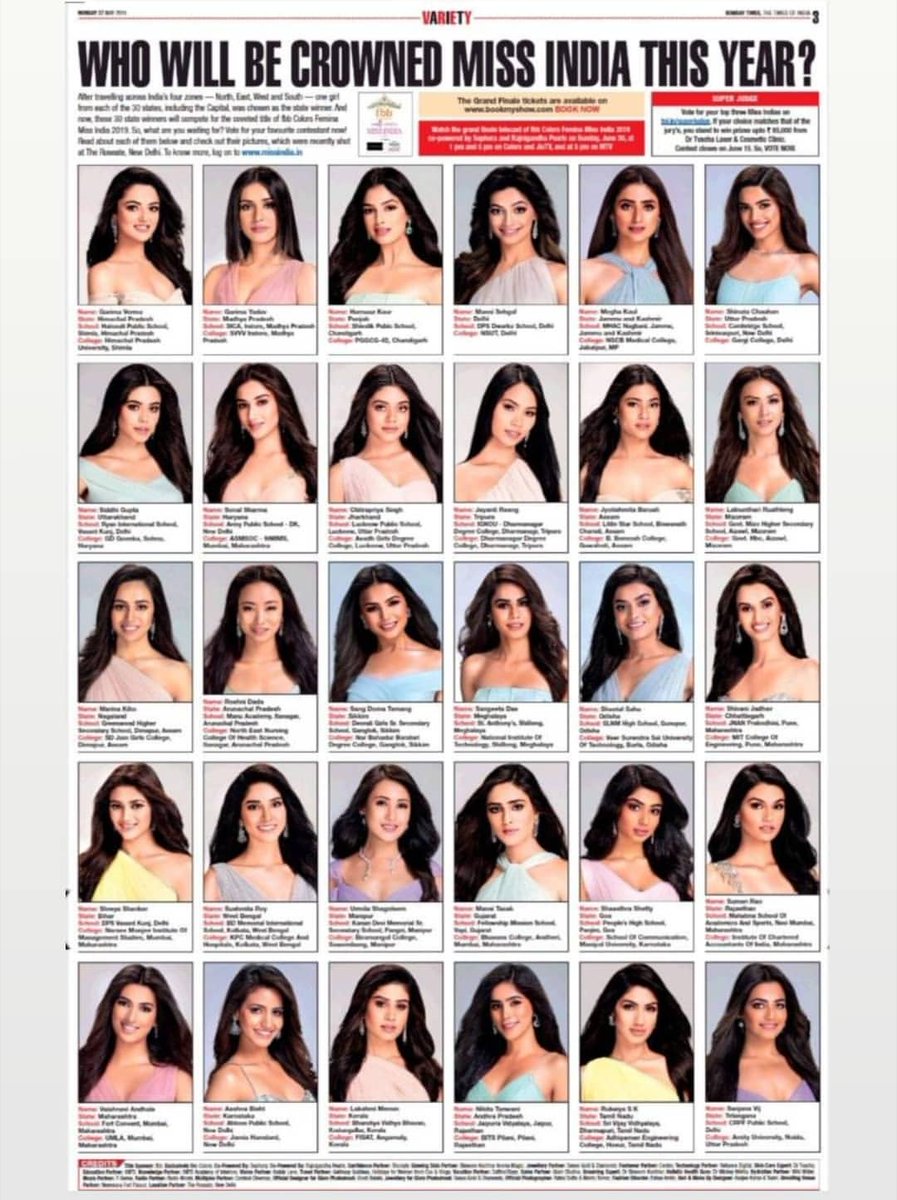
Tim Worstall explains at least some of the reasons why these young women don’t seem to resemble the majority of Indians:
To start with a question – doesn’t anyone read Jane Austen any more? For that is all that is needed to understand why all the finalists in this year’s Miss India contest seem to have the same rather pale and white complexion. Certainly, rather paler and whiter than the general run of the mill complexion seen across India.
We can also offer a Marxist interpretation – it’s a class thing, innit?
[…]
Yes, India does have that caste issue, it is true that higher castes are generally associated with lighter skins colours, lower with darker. There are even those who would insist that the caste system exists in order to maintain that dominance of the fairer skinned over the darker, something that has worked well in doing so for millennia.
And yet, Jane Austen. Apologies, the various heroines blur into a montage of Emma Thompson and Keira Knightley for me but then that’s just an expression of my masculinity, not bothering with chick flicks. But there is a scene where the sisters are fussing over their bonnets as they go out for a walk. Be careful – Lizzie? – or you might get freckles and then what man would want you? As one blessed with such melanin enhancement myself, finding it most attractive in others, why this obsession? Because a porcelain complexion was a signifier of social status.
Not because of the racial obsessions of the times – we are talking of an era when a thoroughly dark skin could make you a chattel slave, a white one not. But because a porcelain white skin was a signifier of social status therefore a porcelain white skin was a sign of social status.
70 to 80 percent of the population worked hard, outside. That meant being tanned. Only the rich did not need to do so. Thus only the rich were that pasty white which is the fate of the English gene pool when consistently out of the Sun. White was a symbol of social status not because it was white but because it meant “not farm labour”.
Of course, in the English and later European context, that dynamic started to change during the Industrial Revolution, as more and more “working class” work was done indoors and pale skin slowly declined as an indicator of wealth and privilege and instead tanned skin assumed that role (only the wealthy could waste time being outdoors, in the sun).
So, what will happen in India? Presently the country is what, still 50% of the people labouring in the fields? Something we know is declining as a portion and we expect to get to something like the English situation in a few decades, no? 6 to 8% compound GDP growth rates cause that sort of thing. 98% of all will be working under fluorescent strip lights, not under the Sun. Having both the leisure and the money to gain a tan will be a marker of social status and thus will be desired.
As to when this happens the switch really didn’t take that much time in England. Certainly in the 1930s that paleness was still highly desired. By the 1960s it was changing. Today tanning lotions sell in vast volumes, skin whiteners to the indigene English not a single drop.
When will we know the change is happening in India? It’ll not be airbrushed and photoshopped pictures of Miss India contestants that are that first marker. The day someone opens a tanning salon in an Indian urban centre and doesn’t immediately go bust will be that signifier that the great change is under way.
Comments Off on The “Miss India” controversy
April 20, 2019
QotD: They used to be called the Jet Set, but now they’re the Transnational Elite
… there is a certain level of pride that attaches to being ignorant of those one considers his inferiors. After all, it’s the natural duty of the simple shopkeeper to know the names of the Great Lords, but it is not the duty of the Great Lords to know the names of the shopkeepers. In fact, it’s the Great Lords’ class obligation to go out of their way not to know the names of the shopkeepers, because this Duty to Know flows in one direction — upwards — and hence ignorance of one’s lessers tends to solidify and reify the assumptions of certain castes being superior to others. It makes certain that everyone understands who’s important, and who’s not.
(I know, I sound like a communist — I can’t help it. I have to agree with Dennis the Peasant — “I mean, class is what it’s all about.” I guess I would say I’m agreeing with the communist critique of the rigid reification of class structures, but I happen to think the communists and their pink fellow travelers have largely captured the upper classes. I guess by my theory they’re so good at this because they’ve spent so long plotting vengeance for the exact same slights (which they largely imagined). In a similar way they’ve gotten quite good at blacklisting and guilt-by-association, eh?)
At any rate, it is your duty to know the values and customs of living of Piers Morgan, but due to his high station (ahem) he is proudly ignorant of yours. As is so often the case in our increasingly dysfunctional and nasty politics — in which certain parties refuse to even admit that their opponents are free citizens entitled to have beliefs at all — the Out-Classes are deemed all-but-officially Beneath Notice.
Michael Totten has written a crackerjack piece — or at least I think it is — about this principle in action among our foreign policy sages, the internationalist “elite.” He detects the exact same sort of phenomenon going on when the International “elite” visit foreign nations — because anyone who doesn’t share 90% of their cultural values (and the wealth that permits/encourages these values — the International Elite is not middle-class!) is beneath notice and not worth knowing about, they don’t bother asking anyone but the 3% of the population which largely shares their beliefs and cultural inputs about their intentions and their political agenda.
Which means, in Egypt, they only ask the jet-setting wealthy Westernized elite about the prognosis for Egyptian democracy. And in Lebanon, they only ask the educated, urbane population of Beirut about their desires for the country.
And they ignore all the “Dirty People,” the low people who aren’t worth networking with and probably wouldn’t be any fun to have a sexual affair with. Unfortunately — and this has huge consequences for American foreign policy — it turns out those Dirty Poor People greatly, greatly outnumber the small coteries of educated elites that cluster in every capital country.
And so our “elites” — and honestly, we need to start looking for a more accurate discriptor — come back with completely-wrong information about foreign countries.
Why, as Totten says (changing the words a bit), “All of these Egyptians are swell, educated, moderate, sexually-loose cosmopolitans! Why, democracy has a smashing chance of working out here!”
Yeah, not so much. Not so much.
Ace, “The Unburstable Bubble of Willful Ignorance of the International Self-Purported Elites”, Ace of Spades H.Q., 2013-01-09.
Comments Off on QotD: They used to be called the Jet Set, but now they’re the Transnational Elite
April 12, 2019
QotD: Money is not wealth
If you want to create wealth, it will help to understand what it is. Wealth is not the same thing as money.* Wealth is as old as human history. Far older, in fact; ants have wealth. Money is a comparatively recent invention.
Wealth is the fundamental thing. Wealth is stuff we want: food, clothes, houses, cars, gadgets, travel to interesting places, and so on. You can have wealth without having money. If you had a magic machine that could on command make you a car or cook you dinner or do your laundry, or do anything else you wanted, you wouldn’t need money. Whereas if you were in the middle of Antarctica, where there is nothing to buy, it wouldn’t matter how much money you had.
Wealth is what you want, not money. But if wealth is the important thing, why does everyone talk about making money? It is a kind of shorthand: money is a way of moving wealth, and in practice they are usually interchangeable. But they are not the same thing, and unless you plan to get rich by counterfeiting, talking about making money can make it harder to understand how to make money.
Money is a side effect of specialization. In a specialized society, most of the things you need, you can’t make for yourself. If you want a potato or a pencil or a place to live, you have to get it from someone else.
How do you get the person who grows the potatoes to give you some? By giving him something he wants in return. But you can’t get very far by trading things directly with the people who need them. If you make violins, and none of the local farmers wants one, how will you eat?
The solution societies find, as they get more specialized, is to make the trade into a two-step process. Instead of trading violins directly for potatoes, you trade violins for, say, silver, which you can then trade again for anything else you need. The intermediate stuff — the medium of exchange — can be anything that’s rare and portable. Historically metals have been the most common, but recently we’ve been using a medium of exchange, called the dollar, that doesn’t physically exist. It works as a medium of exchange, however, because its rarity is guaranteed by the U.S. Government.
The advantage of a medium of exchange is that it makes trade work. The disadvantage is that it tends to obscure what trade really means. People think that what a business does is make money. But money is just the intermediate stage — just a shorthand — for whatever people want. What most businesses really do is make wealth. They do something people want.**
* Until recently even governments sometimes didn’t grasp the distinction between money and wealth. Adam Smith (Wealth of Nations, v:i) mentions several that tried to preserve their “wealth” by forbidding the export of gold or silver. But having more of the medium of exchange would not make a country richer; if you have more money chasing the same amount of material wealth, the only result is higher prices.
** There are many senses of the word “wealth,” not all of them material. I’m not trying to make a deep philosophical point here about which is the true kind. I’m writing about one specific, rather technical sense of the word “wealth.” What people will give you money for. This is an interesting sort of wealth to study, because it is the kind that prevents you from starving. And what people will give you money for depends on them, not you.
When you’re starting a business, it’s easy to slide into thinking that customers want what you do. During the Internet Bubble I talked to a woman who, because she liked the outdoors, was starting an “outdoor portal.” You know what kind of business you should start if you like the outdoors? One to recover data from crashed hard disks.
What’s the connection? None at all. Which is precisely my point. If you want to create wealth (in the narrow technical sense of not starving) then you should be especially skeptical about any plan that centers on things you like doing. That is where your idea of what’s valuable is least likely to coincide with other people’s.
Paul Graham, “How to Make Wealth”, Paul Graham, 2004-04.
Comments Off on QotD: Money is not wealth
February 18, 2019
Mis-measuring inequality
Tim Worstall explains why any protest in a western country about “inequality” is probably bogus from the get-go:
Their opening line, their justification:
We live in an age of astonishing inequality.
No, we don’t. We live in an age of astonishing and increasing equality. Thus any set of policies, any series of analysis, that flows from this misunderstanding of reality is going to be wrong.
And that’s all we really need to know about it all.
The problem is that their measurements – the ones they’re paying attention to – of inequality just aren’t the useful ones, the ones we’re interested in. They’re usually pre-tax, pre-benefits. They’re always pre-government supplied services. And they never, ever, look at the thing we’re actually interested in, inequality of living standards.
To give an example, the Trades Union Congress did a calculation a few years back looking at top 10% households in the UK and bottom 10%. They took the average of each decile – so, the average of the top 10% households, the average of the bottom. Then they looked at the ratio between them.
The top 10% gain some 12 times the market income of the bottom 10%. Now take account of taxes and benefits. Then add in the effects of the NHS, free education for all children and so on. Government services. We end up with a ratio of 4 to 1. Life as it’s actually lived gives the top 10% four times the final income – income being defined by consumption of course – of the bottom 10%.
That’s not a high level of inequality.
Comments Off on Mis-measuring inequality
January 28, 2019
On modern notions of privacy
Terry Teachout does a daily “Almanac” post of a short quotation he’s collected along the way — generally much shorter snippets than my sometimes epic-length QotD postings. A few weeks ago, he posted a short quotation from Charles Stross on the impending loss of privacy, from his SF novel Rule 34:
“Privacy is a peculiarly twentieth-century concept, an artifact of the Western urban middle classes: Before then, only the super rich could afford it, and since the invention of e-mail and the mobile phone, it has largely slipped away.”
Far be it from me to disagree with Charles, but privacy even for the wealthy in the past was an unusual thing: unless you’re of such a refined and haughty sensibility that you literally don’t notice all the servants in your house. Being wealthy meant not having to do a lot of things for yourself, from getting washed and dressed to opening doors and windows to preparing and serving food. Servants were cheap and plentiful, and were everywhere in the worlds of the wealthy and powerful.
Poor people generally had no privacy because the vast majority of them lived in single-room dwellings with their extended families — and outside the towns, even including some of their livestock. All of your activity was in the close company of your family at pretty much all times.
Middle-class people would have at least a servant or two in residence — that was one of the differentiators that helped indicate their social and economic status. Someone would need to do all the necessary work around the house that we no longer need to do thanks to electricity, plumbing, central heating, and all our modern conveniences. At the very least you’d have a cook, a maid, and a footman. If you had a horse-drawn vehicle (much more of a luxury), you’d need staff for the stable and to operate the vehicle (you wouldn’t drive your own carriage most of the time).
Lower middle-class families would also rarely have anything that a modern person would understand as privacy. Aside from a few servants, most tradesmen would have apprentices living in the house, and the house would generally also be the seat of business. Not anywhere near as crowded as houses of the poor, but not particularly conducive to privacy.
I suspect that our modern notion of privacy would have been so rare in historical terms that only certain monastic orders would even come close to it, in the same way that a relatively brief historical period (the 1940s-1960s) defined what “childhood” was supposed to be for most westerners.
Comments Off on On modern notions of privacy
November 22, 2018
This is why tax cuts are always criticized for benefitting the rich
Rebecca Zeines and Jon Miltimore explain why newspaper headlines and TV anchors always seem to decry any tax cut as being disproportionally beneficial to the wealthy:
But crucial facts are often missing in these articles. As a recent Bloomberg piece explained, two key points tend to be overlooked in articles written by media outlets and progressive tax proponents:
- The top 1 percent paid a greater share of individual income taxes (37.3 percent) than the bottom 90 percent combined (30.5 percent).
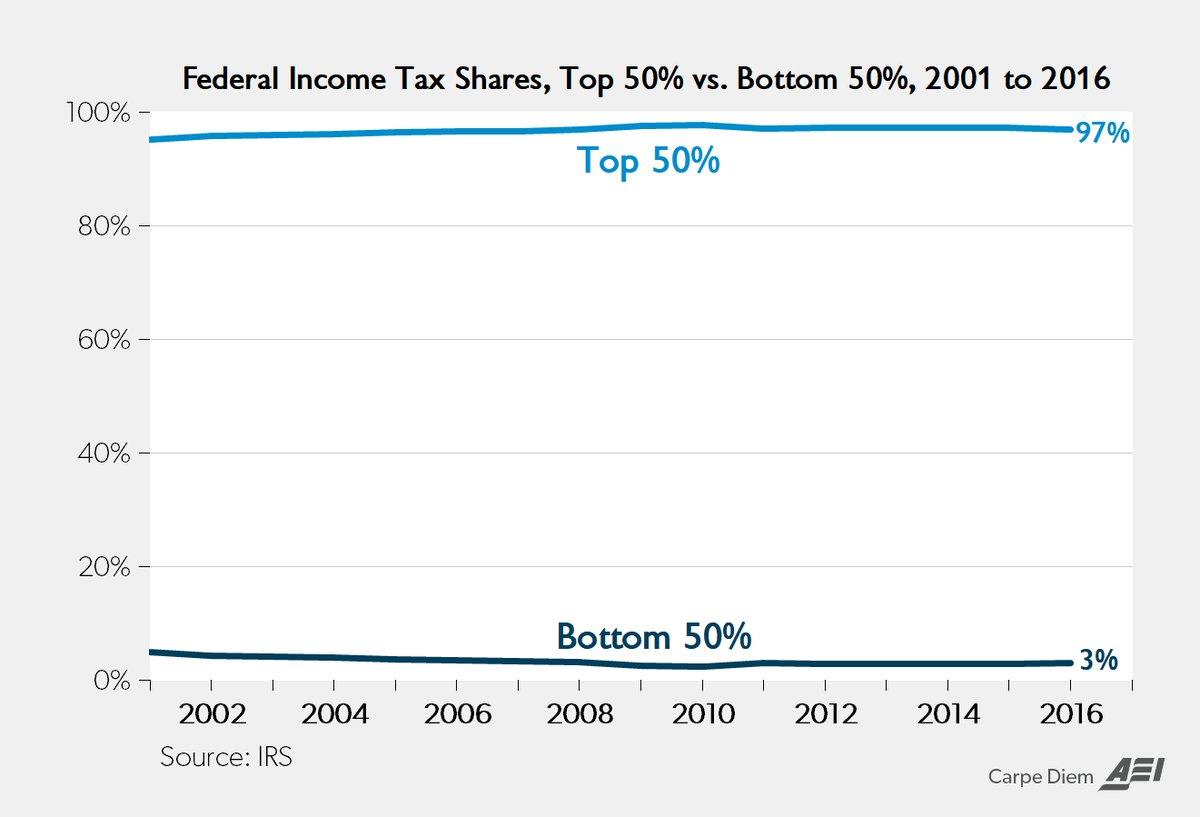
- The top 50 percent of all taxpayers paid 97 percent of total individual income taxes.
These numbers date back to 2016 but remain applicable in 2018.
These data show that the bottom 50 percent of US taxpayers paid just 3 percent of total income taxes in 2016, while the top 50 percent accounted for 97 percent.
Here is a wonderful visual representation of this dynamic, courtesy of Mark Perry of the American Enterprise Institute:
There is a clear correlation between economic freedom and prosperity, and tax climate is a key component of economic freedom.
Economist Dan Mitchell explains it best: Heavy taxation destroys entrepreneurship. The more money is taxed out of the private sector, the less is available for investment, development, and worker compensation (recall that after Trump’s tax bill was enacted, many businesses raised workers’ wages and offered bonuses).
Efforts to improve America’s tax climate are consistently and predictably derided as tax cuts for “the rich.” But, as the above diagram shows, it’s quite impossible to offer people a comparatively huge tax cut when they’re paying a comparatively tiny percentage of income taxes.
Comments Off on This is why tax cuts are always criticized for benefitting the rich
September 15, 2018
NDP leader Jagmeet Singh hits a rough patch
Colby Cosh on the federal NDP leader’s travails:
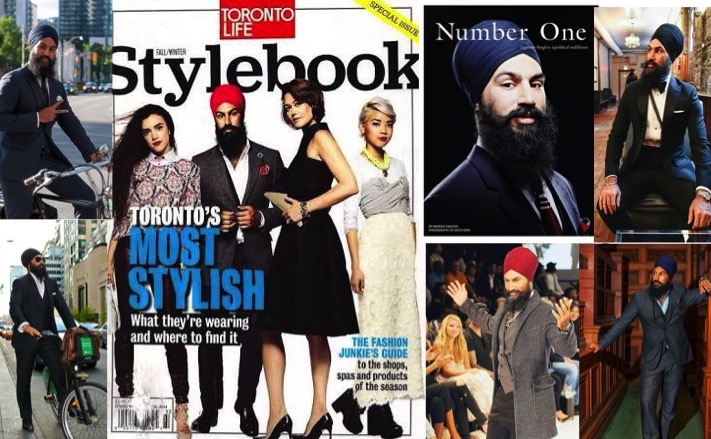
The thing about being a New Democratic Party leader is that there’s an oh-so-fine class line to walk, a line that is easier for the leaders of less socially concerned parties. No one really expects that the leader of the NDP will actually be a working-class person, and since Ed Broadbent’s time, even the expectation that the leader will have been raised working-class has diminished. Jack Layton and Thomas Mulcair have so many politicians brachiating in their family trees that if they lived in the U.K. they would probably have had peerages to renounce.
But until Jagmeet Singh came along, there was a still norm of personal austerity to be observed — a natural limit to how expensively one could dress, and how much conspicuous consumption one could indulge, while still serving up an NDP leader’s generous portion of lectures against selfishness and greed. Singh is the son of a psychiatrist: the tuition for the private American high school from which he graduated is, for the 2018-19 school year, US$31,260. He has been in GQ for his bespoke suits, and owns (according to Toronto Life) two Rolexes.
(I confess that the watches set me off. Rolexes aren’t arty like a Patek Philippe; they don’t do anything cool. They’re mostly kind of ugly. They are a pure, cold signifier of brute pride in wealth.)
Making Singh leader of the federal NDP was audacious. If ordinary New Democrats had a problem with his image and tastes, they probably felt that, with Justin Trudeau leading the Liberals, they had plenty of wiggle room on the left for a handsome leader with some celebrity dazzle. Trudeau had appetizing potential to make ghastly errors of Richie Rich cluelessness, and has delivered.
But it seems Singh will not entirely be able to avoid the day of reckoning, the day of exposure to a stricter New Democratic standard. The leader, as you probably know, has a problem in Saskatchewan, the party’s traditional heart. In May he threw MP Erin Weir out of the national NDP caucus after an independent investigation “upheld” complaints of harassment, sexual and otherwise, against Weir. Weir’s many friends in Saskatchewan are unhappy with how the case was handled.
Comments Off on NDP leader Jagmeet Singh hits a rough patch
August 5, 2018
QotD: Risk aversion
… let’s step back and ask ourselves what insurance is for. Classical economics has an answer: people are risk-averse, which means that they will pay good money to reduce the variability of outcomes they face. If home insurance guards against the loss of a million pounds when my house burns down, I’m happy to buy the insurance even though the insurance company expects to make a profit from it.
But this risk aversion emerges from the fact that money is worth more to poor people than to rich people. Gaining a million pounds would make me rich but losing a million pounds would make me poor. I should not gamble a million pounds on the toss of a coin, because the million pounds I might lose is more precious to me than the million pounds I might gain.
As so often with classical economics, this is an excellent description of how we should behave. It is not such an excellent description of how we actually do behave. Risk aversion can only explain why we insure large risks. It cannot explain why we insure small ones. This is because risk aversion turns on the idea that an extra pound is worth more if you are poor than if you are rich. But having to replace a phone is not going to make the difference between poverty and wealth.
In one of my favourite economics articles, written in 2001, the behavioural economists Richard Thaler and Matthew Rabin point out that anyone who rejects a 50/50 gamble to win £10.10 or lose £10 — apparently a reasonable enough taste for caution — cannot possibly be doing so because of risk aversion. (The degree of risk aversion necessary would mean that the same individual wouldn’t risk £1,000 on the toss of a coin for all the money in the world.) Risk aversion simply cannot explain why anyone would turn down that fractionally favourable gamble. And it cannot explain why anyone would insure a mobile phone.
A better explanation is that we tend to view risks in isolation. Rather than telling ourselves “a lost mobile phone would lower my lifetime wealth by 0.005 per cent”, we tell ourselves “it would be so annoying to have to pay for a new mobile phone”. Isolating and obsessing about risks in this way is arbitrary and illogical. But that does not mean we don’t do it.
Tim Harford, “How insurers keep the money-pump flowing”, TimHarford.com, 2016-09-21.
Comments Off on QotD: Risk aversion
July 16, 2018
QotD: The Great Enrichment
Look at the astonishing improvements in China since 1978 and in India since 1991. Between them, the countries are home to about four out of every 10 humans. Even in the United States, real wages have continued to grow — if slowly — in recent decades, contrary to what you might have heard. Donald Boudreaux, an economist at George Mason University, and others who have looked beyond the superficial have shown that real wages are continuing to rise, thanks largely to major improvements in the quality of goods and services, and to nonwage benefits. Real purchasing power is double what it was in the fondly remembered 1950s — when many American children went to bed hungry.
What, then, caused this Great Enrichment?
Not exploitation of the poor, not investment, not existing institutions, but a mere idea, which the philosopher and economist Adam Smith called “the liberal plan of equality, liberty and justice.” In a word, it was liberalism, in the free-market European sense. Give masses of ordinary people equality before the law and equality of social dignity, and leave them alone, and it turns out that they become extraordinarily creative and energetic.
The liberal idea was spawned by some happy accidents in northwestern Europe from 1517 to 1789 — namely, the four R’s: the Reformation, the Dutch Revolt, the revolutions of England and France, and the proliferation of reading. The four R’s liberated ordinary people, among them the venturing bourgeoisie. The Bourgeois Deal is, briefly, this: In the first act, let me try this or that improvement. I’ll keep the profit, thank you very much, though in the second act those pesky competitors will erode it by entering and disrupting (as Uber has done to the taxi industry). By the third act, after my betterments have spread, they will make you rich.
And they did.
Dierdre N. McCloskey, “The Formula for a Richer World? Equality, Liberty, Justice”, New York Times, 2016-09-02.
Comments Off on QotD: The Great Enrichment


