I got into the higher ed biz fully intending to practice what Milosz calls “aesthetic ketman.” [“paying lip service to official ideology while secretly subverting it”] I loved my subject, but my subject was recondite enough, I figured, that I could keep the SJW bullshit to a bare minimum. I don’t remember what they called “intersectionality” back then, but whatever it was, I’d just make a few brief nods to it, then get on with my work in relative peace. Throw a few quotes from Foucault, Judith Butler, Gayatri Spivak, and the like in my dissertation intro, and that was that.
The problem, though, is that the sour pleasure of ketman is addictive, and like any addiction, you need to keep upping the dose to feel the same effect.
My first few years in grad school, anyone who cared to look could’ve easily spotted me as a secret shitlord. For one thing, I was the only guy in the whole damn town who actually looked happy. For one thing, professing is a 24/7 job — that’s “24 hours a week, 7 months a year,” and don’t let anyone tell you otherwise. All that free time is lovely, especially in a college town with 24-hour everything and scads of scantily clad undergraduate eye candy.
But more importantly, there’s the pleasure of ketman. So long as I make a few radical noises, I can get you sheep to believe anything I say. I used to tell people I studied transgendered potato farmers in the Kenyan uplands. I told this obnoxious girl from the Gender Studies department my dissertation was on resistance strategies of Eskimos in the Waffen-SS. I cited Alan Sokal’s hoax paper on the social construction of gravity in every seminar taught by a radical feminist, and no one ever called me on it. Anyone who thinks I’m kidding obviously hasn’t been on campus in the last 20 years or so. It was fucking hilarious …
… for a time. And then it got sad, then nauseating, because I eventually realized I was no different from the fools who swallowed my bullshit. It doesn’t matter if you’re being exquisitely ironic when you tell a room full of freshmen that “gender is a social construction.” They can’t recognize irony anyway, and even if they could, parroting the phrase “gender is a social construction” is still required to pass the class. More importantly, what if they did recognize it? I’m up there thinking I’m a shitlord, speaking truth to power to anyone smart enough to figure it out, but all they see is another fat, middle-aged sellout parroting nonsense. If I were serious about my shitlordery, they think, then I’d quit. But I don’t quit, which must mean my so-called “principles” are worth … what? We’ve already established you’re a whore, madam; now we’re just haggling over the price.
Severian, “The Pleasures of Ketman”, Rotten Chestnuts, 2020-01-09.
April 10, 2020
April 5, 2020
QotD: The fear of “becoming” your job
You could see this worry everywhere in our culture, our art. Watch Fast Times at Ridgemont High. Judge Reinhold’s character is wrestling with this type of question, and he’s in high school, fer chrissakes. See what I mean about that movie being made on Mars? Remember that; it’ll be on the final.
There’s a certain type of person, though, who just couldn’t grok those worries, because the very notion of social roles was incomprehensible. We didn’t know about the autism spectrum back then, but that’s what that type of person effectively is: A high-functioning autistic. For the autistic, what’s now is forever. Bob’s nametag says “customer service representative.” Therefore, Bob is a customer service representative, and only a customer service representative, now and forever. Bob the family man, Bob the stamp collector, Bob the bar-band strummer … all those fry the autistic’s circuits. It says “customer service representative,” damn it! The train is fine.
Two sides of the same coin. Normal people were worried that they were becoming their jobs. The autistics couldn’t grasp that anyone could be anything else.
The autistics all went into the ivory tower, which gave us identity politics. “Identity politics” only makes sense to the autistic — that is, to people who can’t process change. Normal people have such a hard time with it because we can’t see the logical connection between, say, being gay and being pro-abortion. I mean, if you’re gay it’s a moot point, right? Nor is there any logical connection between being gay and favoring redistributive economics, or worrying about global warming, or whatever. Maybe you do believe in redistributive economics and are worried about global warming, but those are just individual opinions, right? I’m not obliged to vote Republican because I dig blondes. It’s a non sequitur.
Not to the autistic, it isn’t. They’re told that this — pro-abortion, being “green,” the whole Liberal schmear — just is gayness, and they go with it, because that’s the only way the world makes sense to them. Just how “gay” came to mean all that is above my pay grade, but we all know it’s true. More importantly, we all know they believe it, with all their hearts and souls.
That’s the situation in which we find ourselves, my young friends, here in the Current Year. Most of us would like to be team players, but we have no role models. Because the autistics control the culture, we’ve internalized their worries. If I’m a member of the team, we instinctively feel, then somehow I am the team, and only the team, now and forever. It’s a stark choice: Either I give up my individuality completely to advance the team’s goals, or I take my ball and go home.
But it’s a false choice, kameraden, one that could only be beaten into us by very long, very expensive training — i.e. the American “education” system, K-thru-PhD.
Severian, “Advice to Young Dissidents”, Rotten Chestnuts, 2020-04-01.
April 3, 2020
“And what are your personal pronouns?”
Last week, Amy Alkon considered the demands of “pronoun authoritarians”:
Personally, I’m disturbed by the whole notion that we “include” people through calling them the right pronoun, which requires all this “homework” about a person before you say one word to them.
This new requirement for doing this seems to be a sort of religion that allows people to have power over others — to push them around and deem them thought and speech criminals, even if they simply forget to use somebody’s requested “pronoun.”
This also seems to be a way for people to feel special without earning it — to require people to find out all sorts of information about them, on penalty of being accused of a thought or speech crime and then cancelled.
It seems outrageous to me that some stranger would be required to prep for conversation by investigating my history — that my family are Eastern European Jews, that old friends call me “Flamey” or “Flame-o,” that I eat keto, that I blah, blah, blah, blah, blah — and that they would be seen as disrespectful and even bigoted for failing to find out all the ways I’m (heh) unique and special.
But that’s what we’re requiring people to do with this notion that we have to ask “what is your preferred pronoun?”
And again, this is done now with threats embedded — with the threat that you will lose your job and be deemed a bigot if you don’t make this “What’s your pronoun?” business a priority.
Oh, and I will be very clear on this again: If you want me to call you “zhe” or “they” or “lemon pie with a slight dusting of confectioner’s sugar on top,” I will do my best to remember that and do it, because it’s kind.
But I think the considerations above are important, and I think it’s too easy to just accept the demand to ask people for their “pronouns” as a requirement for being considered decent — with the possible penalty of losing everything as the penalty for failing in some way, even by forgetting.
April 1, 2020
Woodrow Wilson (pt.2) | Historians Who Changed History
The Cynical Historian
Published 8 Feb 2018This is the second part of a 2 part episode. The first covered Woodrow Wilson from his early years to the 1912 election. This episode is covering his presidency. I highly recommend you go see the previous one, because I’m going to refer to stuff in it a lot here.
They only allow 5 cards, so here are all the previous episodes referenced:
Wilson Part 1: https://youtu.be/Hm0Gzz53YJo
Birth of a Nation: https://youtu.be/zzsvOBjRXew
Philippine Insurrection: https://youtu.be/mmYk0xxjDDA
WWI causes: https://youtu.be/NTrk7XktTrc
WWI effects: https://youtu.be/G3vKUgoTghg
Border Wars: https://youtu.be/qs4Lp39Y8W8
Russian Intervention: https://youtu.be/1mC1bmzbgxY
1919 Red Scare: https://youtu.be/S4Pi2nYcYNw
————————————————————
[Full references in the YouTube description]Support the channel through Patreon:
https://www.patreon.com/CynicalHistorian
or pick up some merchandise at SpreadShirt:
https://shop.spreadshirt.com/cynicalh…LET’S CONNECT:
https://twitter.com/Cynical_History
————————————————————
Wiki:
The presidency of Woodrow Wilson began on March 4, 1913 at noon when Woodrow Wilson was inaugurated as President of the United States, and ended on March 4, 1921. Wilson, a Democrat, took office as the 28th United States president after winning the 1912 presidential election, gaining a large majority in the Electoral College and a 42 percent plurality of the popular vote in a four–candidate field. Four years later, in 1916, Wilson defeated Republican Charles Evans Hughes by nearly 600,000 votes in the popular vote and secured a narrow majority in the Electoral College by winning several swing states with razor-thin margins. He was the first Southerner elected as president since Zachary Taylor in 1848, and the first Democratic president to win re-election since Andrew Jackson in 1832.
————————————————————
Hashtags: #History #WoodrowWilson #PresidentWilson #KKK #BirthOfANation #Segregation #JimCrow #Wilsonianism #Interventionism #EspionageAct #SeditionAct

March 29, 2020
March 25, 2020
Bonus QotD: Cognitive dissonance and the very, very woke
We’ve written a lot here on the West’s “crisis of legitimacy.” Well … this is it. Let’s break down some of the big factors in play:
The first, biggest, and in some ways only factor that matters, legitimacy-wise, is cognitive dissonance. We spent a lot of time here back in the days arguing about whether or not it’s a real thing […] I finally took the position that it’s real, but only for stuff that rises to level of actual cognition … which you just don’t see too much of anymore. Indeed, the whole point of Postmodern Leftism, when you come right down to it, is not having to think. Identity politics gives you The One Right Answer for most every situation; it’s just a matter of filling in the Social Justice Mad Lib. Any apparent conflict between One Right Answers is dealt with by ad hominem.
An example will probably help: Trannies vs. Feminists. Feminists, of course, are all in on The One Right Answer that “gender is just a social construction.” But Trannies actually believe this — if you feel you’re really a woman, then you are, your twelve-inch wang be damned. How, then, can impeccably #woke lesbians refuse to have sex with the aforesaid twelve-inch wang, since gender is just a social construction and Thundercock identifies as a lesbian? Easy: ad hominem. Oh, gender’s just a social construction all right … it’s just that any be-penised individual who “constructs” himself as a lesbian is lying for personal gain (#wokeness, as everyone knows, gives one the ability to read minds).
This isn’t a problem for the Left as a whole, much less for our entire society, because of the tiny numbers involved. Despite showing up pretty much everywhere in popular culture, gays are a small fraction of the population. Trannies are a fraction of a fraction, and since militant lesbianism is almost entirely political anyway (lesbian bed death is very real), about the only place this could possibly be a live issue is on the loonier college campuses.
Severian, “The Real Crisis”, Rotten Chestnuts, 2020-03-17.
March 23, 2020
The world of woke crossword-puzzlers – a place of horrible, unintentional microaggressions
David Thompson takes us on a scary trip to the heart of the woke crossword world:
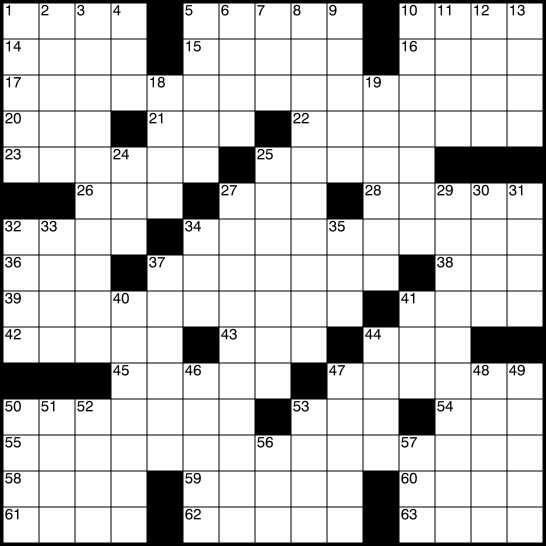
The world of woke crossword-puzzlers — because that’s a thing that exists — is one in which enthusiasts, via social media, grumble about white men, bemoan the insufficient prominence of “queer or POC colloquialisms,” share “off-colour jokes about hypothetical titles for a Melania Trump memoir,” and fret about the exact ratio of male and female names used as clues. Because a lack of “gender parity” in crossword puzzle clues constitutes one of “the systemic forces that threaten women.”
Crossword puzzles can do that, apparently.
The list of possible crossword-puzzle wrongdoings is, of course, extensive, ever-growing and not entirely straightforward.
Transgressions include clues for ILLEGAL (“One caught by border patrol”); MEN (“Exasperated comment from a feminist”); and HOOD (“Place with homies”).
I’ll give you a moment to steady yourselves, to recover from all that gasping.
A New York Times puzzle triggered agitation with the clue “Pitch to the head, informally,” the solution to which was “beaner.” Given sufficient effort, said word could also, it seems, be construed as a mild and antiquated racial slur, albeit one that had escaped me and which I had to look up. Inevitably, apologies and public prostration ensued, despite both the puzzler-writer and editor confessing their own ignorance and intending no harm. Needless to say, the apology immediately resulted in further hissing and rending of garments by people whose Twitter bios include preferred pronouns and the words liberal and feminist.
Unlike almost every other site on the web, I do encourage you to read the comments at David’s blog … he has a great group of regular commenters (commentators? commentistas? Whatevs…)
March 19, 2020
QotD: Everybody knows the good guys lost the war
Anyway, the song is called “Everybody knows” and it’s a marvel of double-meaning.
What the song says explicitly is a bunch of stuff people like my brother — look, European, left — believed at the time. Stuff like “Everybody knows the war is over/everybody knows the good guys lost.”
Bizarrely, before they went into hysterical denial of communism being the regime in the USSR and starting to call those seeking to re-establish it “right wingers” the left kept insisting the good guys had lost the cold war. Apparently we just look richer and more concerned for the right of the individual, but the evil Kapitalism of Amerika (it’s much more scary written with a K) kills more people than the Gulag and destroys everyone’s soul in the process. We’re just sneaky about it. So sneaky, in fact, that we don’t need to prevent people from leaving, we need to prevent people from coming here. That’s how sneaky we are.
Stop laughing. There’s a good chance your college student believes this. There’s also a good chance your college student is stupid enough to buy Bernie’s line that bread lines are preferable to our over abundance of food, because at least “everyone is equal.” Someone should ask comrade Bernie about the State stores for very important functionaries that crop up everywhere that has tried the communist slimming diet (It is to die for) and which has goods comparable with what the low middle class in America can afford, sprinkled with a few gold geegaws which is the communists idea of classy.
Sarah Hoyt, “Everybody Knows”, According to Hoyt, 2019-12-11.
March 8, 2020
QotD: The essential difference between intentions and results
The results can be uproariously funny, like the “push model” in publishing leading eventually to the success of indie ebooks. (The short explanation is this: the push model is where, in dealing with chain bookstores, the publishers, who are overwhelmingly leftist, realized they could push them to stock whatever books they wanted to succeed, and then the customers would have to buy them because they were the only thing available. The end result was a nosedive in book sales, the death of Borders, and eventually the success of indie-published ebooks.) However, even there, on the way there, there was the tragedy of people not being able to find good things to read for a long time. (I remember us calling bookstore trips “going to be disappointed by Barnes and Noble.”)
Other times, their carefully laid plans are foiled by new technology — see, for instance, their slow-crawl through news reporting and other institutions being nullified by the internet and blogs, and a bunch of us bums working in their pajamas. […]
But often the tragic/comic effects of their action lead directly to their undoing, in a beautiful, almost Shakespearean effect.
Sarah Hoyt, “Nobody Expects These Predictions”, PJ Media, 2017-12-31.
March 7, 2020
KidLit is woke, woke, woke
Ed West on the amazing amount of propaganda that has been pumped into books for children:

“New Spin on YA” by Salem (MA) Public Library is licensed under CC BY-NC-ND 2.0


When my daughters were around six and seven, they started French classes at a children’s library in our borough; I had been to our local library countless times but had mainly confined myself to the infant section, and older children’s books were something of a revelation. The entire front desk area was made up of hagiographies of Barack Obama and Nelson Mandela.
And hagiography is the most accurate term: these books were just like the ones I used to read in church. Here Blessed Nelson forgave his jailors, here St Barack healed America of its racial sins – and these are just a couple of examples.
It was a bit of a surprise — learning just how much the tone of kids’ books had changed since I was young and we wore onions on our belts. Nowadays, progressive politics is ever-present in children’s books. Which is fine, if you’re a believer; but if you’re a conservative, you’re faced with raising your children in a culture which is filled with messages you disagree with — sometimes misleading, sometimes anecdotally true but not representative, often just anti-wisdom, giving children the worst possible advice in life. And it’s becoming worse: since about 2016, children’s books have grown way more explicitly political.
Last month, a friend went to Tate Modern and took a picture of the young children’s section. Among the books on display are biographies of Greta Thunberg, something called Queer Heroes, another work called The Rainbow Flag, books about refugees, the bestselling Good Night Book for Rebel Girls — and its countless imitators. Whether you support it or not, this is propaganda; the aim is to raise a generation of progressives just as those Lives of the Saints were designed to bring forth young Christians.
And it works. Conservative ideas are very much in retreat, the subject of a brilliant new book I recently read (which, admittedly, I also wrote).
From a very young age, children are read books and shown films that teach them the core progressive messages: that we are all basically good and only behave badly because of circumstances; that borders and barriers are bad, stereotypes are wrong and girls ought to adopt traditional male gender roles if they want to be respected.
Stereotype inaccuracy is a popular idea — and a false one; in so many kids’ stories the unusual stranger or alien or wild animal who turns up in the neighbourhood will defy the small-minded pessimist who expects the worst. When it comes to gender politics, no self-respecting children’s book in the 21st century has girls aspiring towards being a princess and living happily ever after; to the post-ironic upper-middle-class parents who are the publishers’ main audience, that would just be lame.
March 4, 2020
Sir Philip Rutnam, former civil servant and new hero of the resistance
Brendan O’Neill on the unlikely new hero of the British bien pensant classes:
The liberal-left and even some on the supposedly radical left have a new hero: Sir Philip Rutnam. Yes, they’re now worshipping functionaries. They’re now falling at the feet of starched, bureaucratic civil servants. Worse, they seem to have completely forgotten about the Windrush scandal and the hostile environment policy – both of which were overseen by Sir Philip in his role as permanent secretary at the Home Office – in the rush to make him the hero of the hour. Why? Because Rutnam has crossed swords with Priti Patel, and the EU-pining, Boris-hating, populism-fearing left loathes nobody more than Priti Patel. Genghis Khan could have a pop at Priti and they’d be calling him a legend, such is the depth of their dislike for that “nasty woman”.
Official portrait of the Right Honourable Priti Patel, MP.
Photo by Richard Townshend.The speed and obsequiousness with which leftish people canonised Rutnam following his resignation on Saturday was alarming. Most of them probably hadn’t heard of him prior to his flounce, but suddenly he was a cross between Mother Teresa and Winston Churchill, the bestest civil servant of our time, the steady, wise, clever counter to the rabid ideologism of the Boris mob. A breathless Guardian editorial likened Boris Johnson’s government to the Jacobin terror, with its use of “studied recklessness” to “disrupt [and] demoralise” representatives of “the ancien regime“, like Sir Philip, the People’s Civil Servant, the Bureaucrat of our Hearts. Steady on, Guardianistas: Rutnam has only lost his job, not his head.
The rash, highly political beatification of Sir Philip hasn’t only airbrushed out of view the various screw-ups he has overseen, from fairly mundane screw-ups (while he was in transport) to truly immoral ones (like the Windrush scandal while he was at the Home Office). No, it also turns a blind eye to the unusualness and the cynicism of his extravagant resignation. Civil servants have been falling out with governments for as long as both have existed. But normally the civil servant in question would take it on the chin, slink off into obscurity (or maybe the Lords), and live out a plush retirement. Not Rutnam. He made his resignation into a political weapon. He seems to be out to undermine the elected government. That is more scandalous than Priti Patel allegedly asking civil servants why they are all so “fucking useless”.
The Patel / Rutnam clash is more than a personality problem. It’s about politics, and democracy. According to reports – and we must wait to see how true all this is – Rutnam “obstructed” Patel. He reportedly thought she wasn’t up to the job of home secretary and allegedly tried to hinder some of her priorities. If this is true, it looks like the unelected wing of government – the machinery of the civil service – seeking to block the wishes and programme of the elected wing of government. And now Rutnam is threatening to sue the government for constructive dismissal, which would further weaken Patel’s position, potentially hamper her Home Office work, and posit the bureaucracy against elected ministers.

February 24, 2020
QotD: Not the village, not the family … the individual
The conservatives reply, “No, it does not take a village; it takes a family.”
Both sides are wrong. It takes an individual. It takes an individual to accomplish even modest goals. It takes a special kind of individual to accomplish great things. More often than not, individuals accomplish what they do in spite of the family, or in spite of the village.
It takes an individual to think, conceptualize, plan, and create. It takes an individual to rise above mediocrity, fear, and toward new discoveries.
“Families” do not work, study, and make a living. Individuals do. “Villages” do not discover electricity, or cure terrible diseases. Individuals do. Families and villages are not mystical entities. The are comprised of individuals. It is the brightest, and most creative, of those individuals upon whom the family and village depend.
Michael J. Hurd, “It Takes An Individual”, Capitalism Magazine, 2005-08-11.
February 19, 2020
QotD: Myths the Greatest Generation believed
This belief in the military-like efficiency of government inspired the ambitious welfare-state policies of the postwar era, especially Johnson’s War on Poverty. When, in 1972, Richard Nixon declared a War on Drugs, and when, in 1977, Jimmy Carter described the energy crisis as the “moral equivalent of war,” the model they had in mind was, again, World War II. Today, newspapers and scientific journals still proclaim the need for ambitious government action to fix enormously complex problems — for example, calling repeatedly for a “new Manhattan Project” to solve the problem of climate change.
War, as conservatives figured out early on, is a poor metaphor for government doing socially useful things. We can’t fight and win a “war” on poverty, or drugs, or cancer, because these things are nothing like war. The last heroic big-government project run along World War II lines was the Apollo program, which put Americans on the moon. This was a tremendous achievement, but here a military mindset was directly relevant: like the design of war machines a quarter-century earlier, the Saturn rockets were a discrete engineering challenge, one whose basic parameters were well understood.
E. M. Oblomov, “The Greatest Generation and the Greatest Illusion: Success in World War II led Americans to put too much faith in government — and we still do.”, City Journal, 2017-12-28.
February 13, 2020
Here’s a deceptive factoid … time for you to get angry to suit someone’s political agenda
Did you know that “Three Billionaires Have More Wealth Than Half of America”!!!???!!! Are you angry now? You’re supposed to be, because this factoid was concocted specifically to make people irrationally angry. Daniel C. Jensen explains how this sound bite was created:

Amazon’s Jeff Bezos, Microsoft’s Bill Gates, and Berkshire Hathaway’s Warren Buffet.
Fox Business.
People between 0 and 24 years of age account for about 32 percent of the United States population of 320 million. Almost all of them are going to be in the bottom half of the wealth distribution for reasons including diaper rash and puberty. That means they account for about 63 percent of the “bottom half of the wealth distribution.” Should it surprise us that some kid fresh out of college does not “hold any stocks or bonds”? Or a kid fresh out of the womb?
Then we must consider people with mental and physical disabilities. They will also tend to be in the bottom half of the wealth distribution because they face greater challenges to building wealth. “About 56.7 million people — 19 percent of the population — had a disability” at last count, according to the United States Census Bureau. But there is overlap between the disabled 19 percent and the young 32 percent of the population. If we assume disabilities are evenly distributed in the population, then young people and non-young disabled people account for 45 percent of the population. So we have now accounted for 90 percent of the “160 million Americans in the bottom half of the wealth distribution.”
Next, we must think about other groups who have had limited wealth-building opportunities. What about the 2.2 million people in jail and prison? What about people in their late twenties who pursued PhDs, law degrees, medical residencies, etc., and are just beginning their careers? Now we are close to accounting for 100 percent of the “bottom half of the wealth distribution.” But this wealth distribution is not what any sensible person would expect it to be.
Maybe the factoid is true. Maybe Jeff Bezos, Bill Gates, and Warren Buffet have more wealth than all of the infants, children, students, handicapped, prisoners, and postgrads combined. But you don’t need a PhD to figure out that’s not useful knowledge. Even if the factoid is true, it’s deceitful. Whoever created it was obviously trying to manipulate people. And we uncovered this deception with nothing but some simple knowledge of the US population.
Next time you encounter an economic factoid, remember that it might be pitting a bunch of newborns against Jeff Bezos, and that hardly seems fair. Thankfully, you can save those babies from certain defeat simply by knowing some basic statistics about your country.
February 11, 2020
“… loveable Nickelodeon show Paw Patrol is an insidious tool of capitalism”
I’ve only heard of the show because my grand-niece is a huge fan, so I can’t say anything one way or another about these heresy allegations:
Six adorable, daring puppies and their whiz kid leader, ten-year-old Ryder, rescue people in the community of Adventure Bay. You would have to be a fool to not love Paw Patrol. And that’s where the Canadian state broadcaster CBC comes in!
A new article by Rebecca Zandbergen explores the groundbreaking new theory by Canadian university professor Liam Kennedy that loveable Nickelodeon show Paw Patrol is an insidious tool of capitalism. Kennedy, from King’s University College, has penned a vital new piece of research called “Whenever there’s trouble. Just yelp for help”: Crime, Conservation and Corporatization in Paw Patrol” in the peer-reviewed journal Crime Media Culture. His child isn’t allowed to watch the show, but Kennedy spent countless hours watching it in his office.
In the show, Ryder is the ring-leader of the pups, each of whom has a job to do as part of their team. There’s Chase, the police dog, Marshall, the fire chief dog who can never quite get control of his hose, Rubble, the builder, Skye, who flies a plane for some reason and is the girl pup, Everest, the extreme outdoor adventuring pup, Rocky, the rescue dog, and Zuma, the pup who drives a boat.
Together, they are the Paw Patrol, and they even have a headquarters, because all kids love a home base. Inexplicably, the grown-ups in town depend on Ryder and the pups to help them when they’re in a jam. Probably because it’s a show for kids, so it’s kid-centric. Kids like that.
Kennedy posits that “Paw Patrol, as a private corporation, is used to help provide basic social services in the Adventure Bay community. That’s problematic in that the Paw Patrol creators are sending this message that we can’t depend on the state to provide these services.”
Kennedy was angry that elected officials are not portrayed as heroes: “Mayor Humdinger and Mayor Goodway — kind of the representatives of the state or the government — are portrayed negatively,” Kennedy argued.
Kennedy also pointed out that, at the age of ten, Ryder should be in school, not saving the world. CBC did not bother to ask Kennedy how he feels about real-life school-skipper and saviour Greta Thunberg. We guess some do-gooders are more equal than others.