
Binkov’s Battlegrounds
Published on 13 Oct 2017Find out how a match-up between two middle east powerhouses would unravel. With a special accent on a hypothetical scenario without other countries being a factor
October 19, 2017
Iran vs Saudi Arabia (2017)
Comments Off on Iran vs Saudi Arabia (2017)
October 18, 2017
Are There Parts of German WW1 Warships in Space?
Real Engineering
Published on 19 Jul 2017
Comments Off on Are There Parts of German WW1 Warships in Space?
October 17, 2017
Brazil in World War 1 – The South American Ally I THE GREAT WAR Special
The Great War
Published on 16 Oct 2017Though joining the war later than most, Brazil was the only South American nation to play an active role, albeit a brief one. After initially declaring neutrality in August 1914, a series of sunken ships and dead Brazilians on behalf of the Germans’ submarines forced Brazil’s hand, as anti-German sentiment in the country rose during the first three years of the war. With newly acquired ships, Brazil was ready to join the war as a naval power. Her involvement may not have lasted long, but it did earn Brazil a seat at the table during the Versailles peace conference.
Comments Off on Brazil in World War 1 – The South American Ally I THE GREAT WAR Special
September 25, 2017
Great Northern War – V: Rise and Fall – Extra History
Extra Credits
Published on 23 Sep 2017Charles XII narrowly escaped the Russian pursuit, with help from the Ottoman Empire. But the weak points in his army had been clearly exposed. Northern Europe united against him – but of course, Charles XII responded by launching a fateful counter-offensive into Norway.
Comments Off on Great Northern War – V: Rise and Fall – Extra History
September 17, 2017
But is it full of eels? If not, feel free to visit the British Hovercraft Museum
In their continuing series of “Geeks’ Guide to Britain”, The Register takes a trip to the former HMS Daedalus, a Fleet Air Arm seaplane training base that is now home to the Hovercraft Museum:
Did you know that the word “hovercraft” was once patented? And did you know that Great Britain is a world leader in the design and manufacture of the floaty transporters, and has been for half a century?
These and other surprising facts – including that some of the largest commercial hovercraft ever to be used in revenue service spent their lives shuttling booze cruisers back and forth across the English Channel – can be found at the Hovercraft Museum, at Lee-on-Solent in the south of England.
A century ago, what is now the site of the museum was known as HMS Daedalus and used as a Fleet Air Arm seaplane base. Back in the early days of aviation, and especially naval aviation, the station was at the forefront of naval and aviation technology alike. Seaplanes and skilled pilots were in great demand by the Royal Navy for anti-submarine patrols, and a new training base had to be set up to fill the service’s demand.
Thus came about the “temporary” Naval Seaplane Training School at Lee-on-Solent, with the new training school being based around a large local property, Westcliffe House. Slipways and hangars were duly erected, with the former leading down into the waters of the Solent itself; of the latter, one of the original J-class hangars, capable of being erected by just 15 men, survives to this day.
[…]
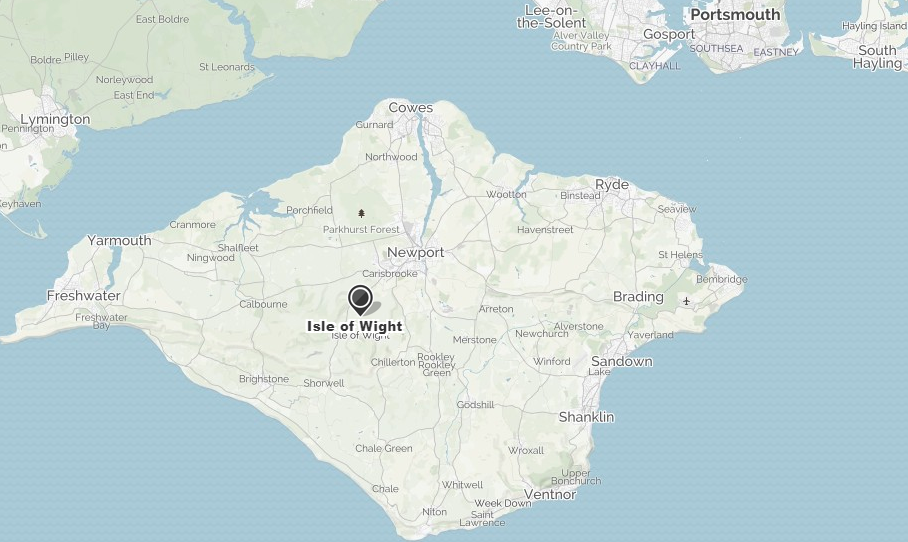
To truly appreciate the hovercraft, one should actually ride one of the things. This is easily done by a short journey along the coast from Lee-on-Solent to Britain’s only scheduled hovercraft service, which operates between Portsmouth and the Isle of Wight.
Operated by Hovertravel, whose sister company Griffon Hoverwork also builds the craft operated by the company, the service runs about every half an hour during the day, with more frequent services during the morning rush hour and a gradual winding-down into the evening.
Comments Off on But is it full of eels? If not, feel free to visit the British Hovercraft Museum
September 7, 2017
Argentina expresses interest in laser death-beam-equipped USS Ponce
Those sneaky Argentines, trying to grab some surplus seagoing laser switchblade technology:
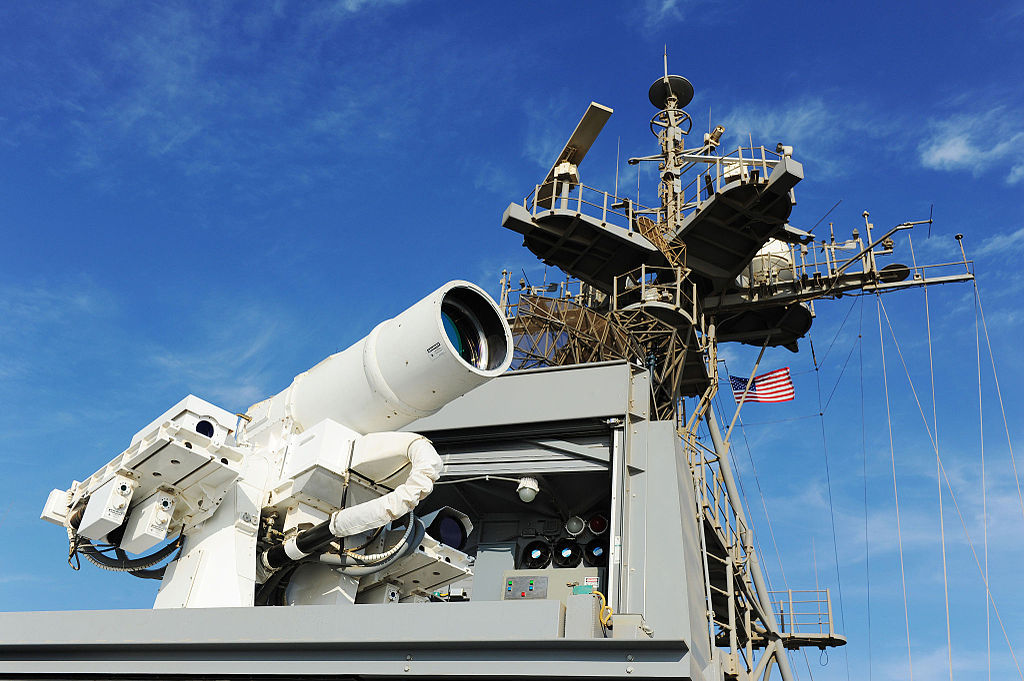
The U.S. Navy Afloat Forward Staging Base (Interim) USS Ponce (AFSB(I)-15) conducts an operational demonstration of the Office of Naval Research (ONR)-sponsored Laser Weapon System (LaWS) while deployed to the Arabian Gulf.
Date. 16 November 2014 (via Wikimedia)
Argentina reportedly wants to buy the US Navy’s laser death ray testbed warship, the fearsomely named USS Ponce.
According to the Mail on Sunday, the Argentinians are interested in buying the 46-year-old former landing platform (dock) from the American Navy when she is decommissioned next year.
“Senior Pentagon sources have confirmed talks are ongoing with the Argentinians over a Landing Platform Dock vessel capable of launching 800 troops, six helicopters and 2,000 tons of equipment into a war zone,” reported the paper, contrasting this with the Royal Navy’s HMS Ocean, which is very similar to the Ponce’s original configuration.
As regular readers know, the mighty Ponce has spent the last few years blasting various targets into bits using a shiny new $40m laser cannon and the US Navy even deployed her to the Gulf a few years ago.
To North American readers: if you’re wondering why this reads a bit oddly even by ordinary Register standards, it’s because the word “ponce” in British usage is a bit, um, odd. It’s taken as read that the primary purpose of an Argentine-flagged Ponce would sooner or later be intended for use in “liberating” the Falkland Islands:
The Ponce would be far from the first former US warship acquired by Argentina. In 1951 the Second World War cruiser USS Phoenix, a veteran of the Pearl Harbour attack by Japan, was bought by Argentina. She was renamed ARA General Belgrano – and sunk by British nuclear submarine HMS Conqueror during the 1982 Falklands War. Doubtless the same fate would befall the Ponce if Argentina tried the same trick again.
Comments Off on Argentina expresses interest in laser death-beam-equipped USS Ponce
August 22, 2017
How to Pronounce German Ship Names – World of Warships & Historical Background
Published on 8 Aug 2017
Pronunciation of German ship names from World of Warships with some background information on the person and location.
Military History Visualized provides a series of short narrative and visual presentations like documentaries based on academic literature or sometimes primary sources. Videos are intended as introduction to military history, but also contain a lot of details for history buffs. Since the aim is to keep the episodes short and comprehensive some details are often cut.
Comments Off on How to Pronounce German Ship Names – World of Warships & Historical Background
August 20, 2017
World of Warships – The Queen, God Bless Her! (Part 3)
Published on 18 Aug 2017
Took us long enough, but we finally arrived at tier 8, and here’s where the real fun begins.
Music in Conqueror segment – “In A World of Derp” by D1 of Aquavibe.
Comments Off on World of Warships – The Queen, God Bless Her! (Part 3)
August 17, 2017
HMS Queen Elizabeth enters Portsmouth harbour
At The Register, Gareth Corfield reports from Portsmouth as the Royal Navy’s new aircraft carrier HMS Queen Elizabeth visits her new home port for the first time:
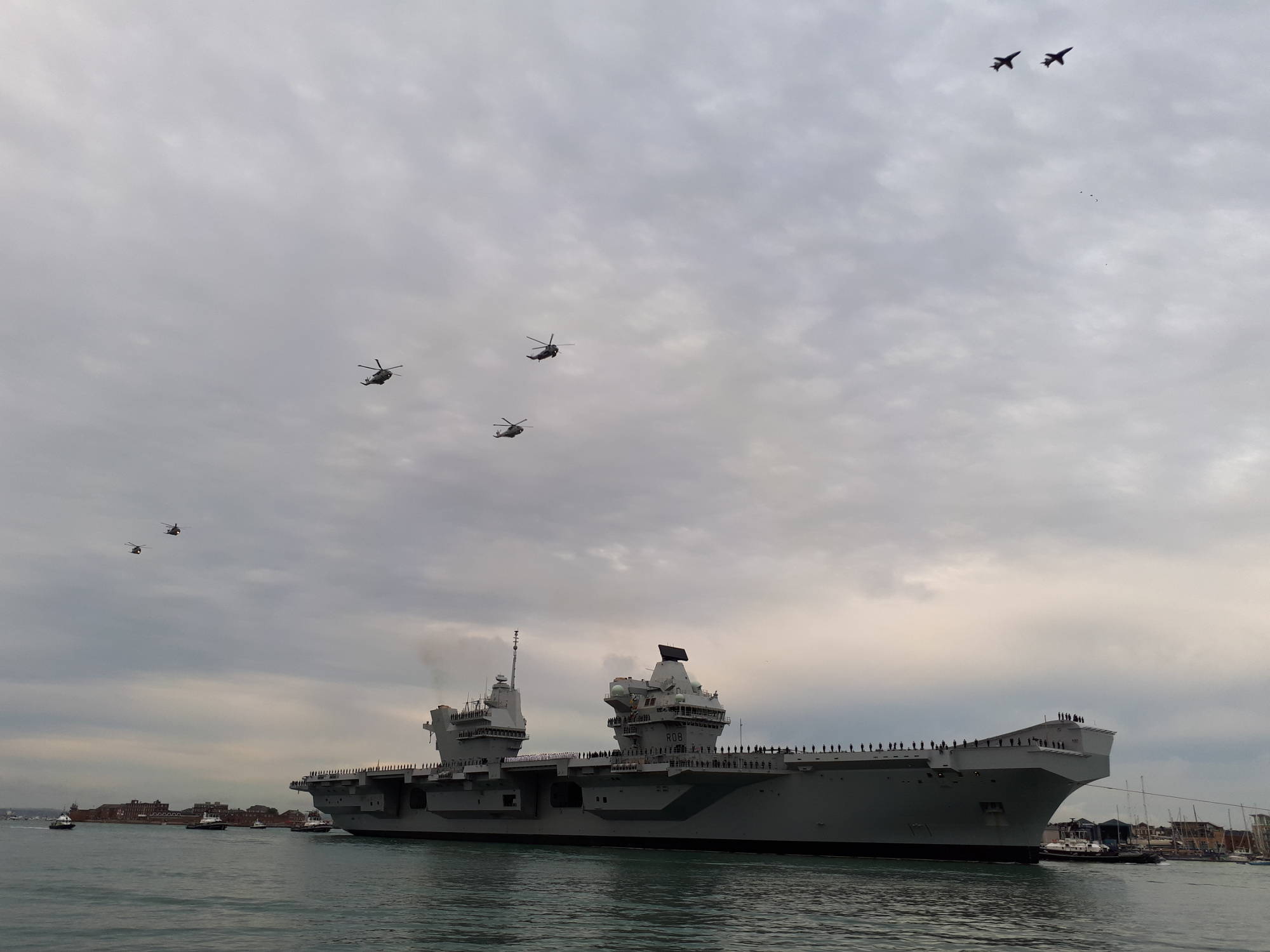
Royal Navy aircraft fly over HMS Queen Elizabeth as she enters Portsmouth harbour. Click to see full-sized photo.
Britain’s newest warship, its biggest warship of all time, HMS Queen Elizabeth, entered Portsmouth Harbour for the first time this morning.
The 65,000-tonne aircraft carrier entered the port at 0710 this morning under the watchful eye of half a dozen tugboats, a small flotilla of police vessels – and crowds of thousands lining the sea front along Portsmouth and Southsea.
In addition, scores of smaller civil vessels accompanied the carrier at a respectful distance. A flypast of Royal Navy helicopters and fast jets – Hawk training aircraft – also took place as the carrier made her stately way towards the naval base.
Admiral Lord West, the former head of the navy and now a Labour Party peer, told The Register as the ship came in: “This is a very joyous day. She looks splendid. We had lost sight of our maritime capability. This is something very special for Portsmouth and the Navy.”
When asked if the Queen Elizabeth-class carriers were necessary, the admiral said: “The one thing you can’t guarantee is what will happen tomorrow. When they’ve got their fixed wing assets, they’ll be one of the only capabilities [the UK has that will have] a strategic impact. It’s 4.5 acres of British sovereign territory.”
Comments Off on HMS Queen Elizabeth enters Portsmouth harbour
World of Warships – The Queen, God Bless Her! (Part Two)
Published on 16 Aug 2017
In which I attempt to cover the British tier 7 – 10 Battleships, but can’t stop running my mouth off about the King George V and Nelson so it looks like we’ll be back later this week to finish.
Comments Off on World of Warships – The Queen, God Bless Her! (Part Two)
August 16, 2017
World of Warships – The Queen, God Bless her!
Published on 15 Aug 2017
Join me in the traditional Royal Navy toast to the Monarch, as I raise a glass to the long awaited British Battleships in World of Warships. Thank God they don’t suck!
Mostly.
Comments Off on World of Warships – The Queen, God Bless her!
August 8, 2017
Mingles with Jingles Episode 209 – British Battleships in World of Warships
Published on 7 Aug 2017
In which I get all excited about incoming British battleships in World of Warships, and then I see the provisional stats of the higher tier ones and read what it is that makes them “special” and start to get a little worried. I’ve stockpiled hundreds of thousands of free xp for these thing, please don’t let them be shit!
Actually you may be able to help me with that. And then I speculate on what happens when a game starts running out of things it can do to make new units different…
Comments Off on Mingles with Jingles Episode 209 – British Battleships in World of Warships
July 23, 2017
Fake Paris – Female Soldiers – Naval Warfare I OUT OF THE TRENCHES
Published on 22 Jul 2017
It’s time for the Chair of Wisdom again and this week Indy talks about fake Paris, female soldiers and the rules of naval warfare.
Comments Off on Fake Paris – Female Soldiers – Naval Warfare I OUT OF THE TRENCHES
July 22, 2017
Dunkirk Myth vs. Reality – Operation Dynamo
Published on 7 Jul 2017
The evacuation of British, Belgian, and French troops at Dunkirk – Operation Dynamo – was a crucial event in the early stages of the Second World War. Although the Allies were ultimately severely beaten in the Battle of France, the events at Dunkirk were mostly portrayed and perceived as a victory for the British. Quite naturally various myths surround this event.
» SOURCES «
Palmer, Alice: Dunkirk: The Defeat That Inspired a Nation
http://repository.wellesley.edu/cgi/viewcontent.cgi?article=1014&context=library_awardsAlexander, Martin S.: French grand strategy and defence preparations. In: Cambridge History of the Second World War, Volume I
Frieser, Karl-Heinz: The war in the West, 1939-1940: an unplanned Blitzkrieg. In: Cambridge History of the Second World War, Volume I
Amazon.com link (affiliate): http://amzn.to/2tuFtuMGardner, W.J.R. Gardner: The Evacuation from Dunkirk: ‘Operation Dynamo’, 26 May-June 1940 (Naval Staff Histories)
Amazon.com link (affiliate): http://amzn.to/2uoqMFVHistory of The Association of Dunkirk Little Ships
http://www.adls.org.uk/t1/content/history-association-dunkirk-little-shipsMrs. Miniver
https://en.wikipedia.org/wiki/Mrs._Miniver
July 21, 2017
Behind the Scenes of Naval Legends – HMCS Haida
Published on 19 Jul 2017
Curious about how the Naval Legends episodes are made? Want to know how the beauty shots are made? Then let me take you behind the scenes of Naval Legends HMCS Haida.
Filmed with the permission of Parks Canada, at HMCS Haida National Historic Site.
Special thanks to Nicholas Moran, WarGaming America.
Comments Off on Behind the Scenes of Naval Legends – HMCS Haida


