Quotulatiousness

May 31, 2021

“For four generations our culture and education has been in the hands of an unholy hybrid of Marxism and Rousseau’s Romanticism”

Filed under: Education, Europe, Tools — Tags: , , , , , , — Nicholas @ 03:00

In the most recent edition of the Libertarian Enterprise, Sarah Hoyt regrets not learning some traditional — manual — skills when she was younger, and how children today are even worse served by the education system:

… there are are other things. I mean, husband and I to an extent were thrown in to the world with no clue how to do the most basic things, like home maintenance or how to clean with proper products, how to take care of clothes, how to do anything with our savings other than let it sit in the bank, how to organize and sort files and records. It goes on. (I do still tend to use bleach for most things. It’s cheap. I have at least learned what it will damage.) Our first ten years of marriage would make a good sitcom, as they had a repeating pattern: figure out we need to do something; extrapolate how it can be done; invest untold amount of time and effort into doing thing; find out after that it can be done in a simpler and cheaper way. And then people wonder why I curse.

And so many times, we just come up on something that must be done — even now — and have no clue how to get to the place where we can even think about how to do it. Teaching the kids what we never learned has been fun, too.

Heck, even in my religion — and I taught it was a young woman — I keep coming across these massive gaps where no one ever taught me what to do or why. As for the education my kids got: pfui.

In the same way, I’ve spent most of my adult life learning history, grammar, natural science and the basics of things that I supposedly learned the advanced form for with my degree, but without anyone ever teaching me the fundamentals.

Kind of like part of my degree is the study of literature but until I read Dwight Swain’s Techniques of the Selling Writer I’d never realized that books are composed of conflict and reaction units. (No, not physical conflict, though heck, you could sell that.) Instead I tried to fit them into the structure of plays and wondered why it wasn’t working.

Because no one had ever taught me the basics. I mean, I knew how to do a lot of advanced things, even as a beginning writer. I just had no clue how to do the basic things. And it showed.

For four generations our culture and education has been in the hands of an unholy hybrid of Marxism and Rousseau’s Romanticism. (The two are related in that both believe that natural man left to his own devices creates paradise.)

I can understand how those scarred by the long war of the 20th century would decide that they were going to ditch all the evil bad things in civilization and let the children grow up “naturally” so they would be sweet and innocent angels. (Spit.) I understand but I don’t forgive. If they thought what they saw in the war was the result of Western Civilization, they’d never studied other civilizations or for that matter hid in a playground and watched the children be “natural”.

Then the cascade started. People who only half learned could only half teach. On top of which the doubts instilled in them about the purpose of civilization made them teach less than half. And the next generation knew less. And then less.

More than once, as an inquisitive student, I’d go to my teacher and ask why something worked the way it did or didn’t work the way they said, only to be given a glib explanation I knew was wrong. I must have been 11 the first time I realized the teacher had no more clue than I did. (This was a good thing. It set me on a path of researching and investigating on my own.)

By the time my kids were in school it had become more so, partly because to justify themselves, and abate the feeling they were incompetent, people derived entire theories on why they shouldn’t learn the basics, learning the basics was bad, and you could be so much better by learning naturally.

I don’t have enough words to revile the “immersion” method of language learning, particularly was applied in our schools. Yes, sure “but the military used it” – yeah, but the military could enforce LIVING in the language. It also — which seems to elude most people — does teach people grammar and vocabulary in formal classroom settings.

[…]

Part of the unlearning are people who never learned enough to realize what works and what doesn’t trying to do things in ways that only work for a very few highly gifted individuals. That’s how we got whole word, new math, total immersion, whateverthehelltheyretryingnow all of which involved “less work for teachers” and the vague hope that unschooled children, or children who learned “naturally” were just somehow “better”.

Kind of like what would happen if I decided my digit dyslexic, half-baked way with wood meant my making, say, a table that was lopsided and wobbly made the table better and more authentic.

May 26, 2021

The not-so-hidden subtext of One Thousand And One Nights

Filed under: Books, Middle East — Tags: , , , , , , , — Nicholas @ 05:00

At least, that’s how Scott Alexander at Astral Codex Ten opens this review of (an abridged version) of One Thousand And One Nights:

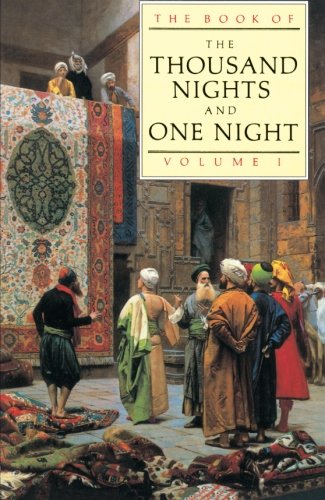
One of many different covers of various editions of this book, but almost certainly not the edition reviewed here.

One Thousand And One Nights is a book about love, wonder, magic, and morality. About genies, ape-people, and rhinoceroses who run around with elephants impaled on their horns. About how to use indexical uncertainty to hack the simulation running the universe to return the outcome you want. But most of all, it’s a book about how your wife is cheating on you with a black man.

Nights stretches from Morocco to China, across at least four centuries — and throughout that whole panoply of times and places, your wife is always cheating on you with a black man (if you’re black, don’t worry; she is cheating on you with a different black man). It’s a weird constant. Maybe it’s the author’s fetish. I realize that Nights includes folktales written over centuries by dozens of different people — from legends passed along in caravanserais, to stories getting collected and written down, to manuscripts brought to Europe, to Richard Burton writing the classic English translation, to the abridged and updated version of Burton I read. But somewhere in that process, probably multiple places, someone had a fetish about their wife cheating on them with a black man, and boy did they insert it into the story.

Our tale begins in Samarkand. One day the king, Shah Zaman, comes home unexpectedly and sees his wife cheating on him with a black man. He kills her in a rage, then falls sick with grief, and is taken to the palace of his brother, King Shahryar of Persia. While there, he sees King Shahryar’s wife cheat on him with a black man. He tells King Shahryar, who kills his wife in a rage too, then also falls sick with grief. The two grief-stricken kings decide to wander the world, expecting that maybe this will help in some way.

They come across a mighty king of the genies, and the brothers hide lest he see them and kill them. The genie falls asleep, and the genie’s wife finds them and demands they have sex with her or she’ll kill them. They have sex, and all the while, the genie’s wife is boasting about how even the king of the genies can’t prevent his wife from cheating. The two kings find this experience salutary — apparently the problem isn’t specific to them, it’s just an issue with the female sex in general. So they go back to the palace and everyone lives happily ever … no, actually, King Shahryar vows that he will bed a new woman every night, then kill her the following morning, thus ensuring nobody can ever cheat on him again.

So for however many years, King Shahryar beds a new woman every night, then kills her in the morning. After a while the kingdom begins to run dangerously low on women. The vizier frets over this, and his daughter Scheherazade hears him fretting. She develops a plan, and volunteers to be the king’s victim that night. After having sex, she tells the king a story. At the end, she says it’s too bad she’s going to die the next morning, because she knows other stories which are even better. Perhaps if the king spared her life for one night she could tell some of those too.

(I’d always heard that she leaves him at a cliff-hanger and makes him spare her to find out how it ends, which I think makes a better story, but this isn’t how the real Arabian Nights works).

Scheherazade’s stories are set in an idealized Middle East. The sultans are always wise and just, the princes are always strong and handsome, and almost a full half of viziers are non-evil. Named characters are always so beautiful and skilled and virtuous that it sometimes gets used it as a plot device — a character is separated from his family member or lover, so he wanders into a caravanserai and asks for news of someone who is excessively beautiful and skilled and virtuous. “Oh yes,” says one of the merchants, “I talked to a traveler from Cairo who said he encountered the most beautiful and skilled and virtuous person he’d ever seen in a garden there, he couldn’t shut up about them for days” — and now you know your long-lost brother must be in Cairo. In one case, a woman went searching for her long-lost son, tasted some pomegranate jam in Damascus, and immediately (and correctly!) concluded that only her son could make pomegranate jam that good. She demanded to know where the merchant had gotten the jam, and the trail led to a happy reunion.

The most common jobs in Idealized Middle East are sultan, merchant, poor-but-pious tailor, fisherman, merchant, evil vizier, sorcerer, merchant, thief, person who gets hired to assist a sorcerer because they have the exact right astrological chart to perform some otherwise-impossible ritual, and merchant. Of these, merchant is number one. Whatever else you’re doing — sailing, stealing, using your perfect astrological chart to enter a giant glowing door in the desert mysteriously invisible to everyone else — you’re probably also dealing goods on the side. The only exceptions are Moroccans (who are all sorcerers), Zoroastrians (who are all demonic cannibals), and Jews (who are all super-double merchants scamming everyone else). Also maybe the 5 – 10% of the Middle Eastern population who witches have turned into animals at any given time.

April 14, 2021

QotD: Emmanuel Goldstein, the Enemy of the People

Filed under: Books, Politics, Quotations — Tags: , , , — Nicholas @ 01:00

The programmes of the Two Minutes Hate varied from day to day, but there was none in which Goldstein was not the principal figure … Somewhere or other he was still alive and hatching his conspiracies: perhaps somewhere beyond the sea, under the protection of his foreign paymasters, perhaps even — so it was occasionally rumoured — in some hiding-place in Oceania itself …

Goldstein was delivering his usual venomous attack upon the doctrines of the Party — an attack so exaggerated and perverse that a child should have been able to see through it, and yet just plausible enough to fill one with an alarmed feeling that other people, less level-headed than oneself, might be taken in by it …

The sight or even the thought of Goldstein produced fear and anger automatically … But what was strange was that although Goldstein was hated and despised by everybody, although every day and a thousand times a day, on platforms, on the telescreen, in newspapers, in books, his theories were refuted, smashed, ridiculed, held up to the general gaze for the pitiful rubbish that they were — in spite of all this, his influence never seemed to grow less. Always there were fresh dupes waiting to be seduced by him. A day never passed when spies and saboteurs acting under his directions were not unmasked by the Thought Police.

George Orwell, Nineteen Eighty-Four, 1949.

April 5, 2021

Did the Trojan War Really Happen?

Kings and Generals
Published 13 Aug 2020

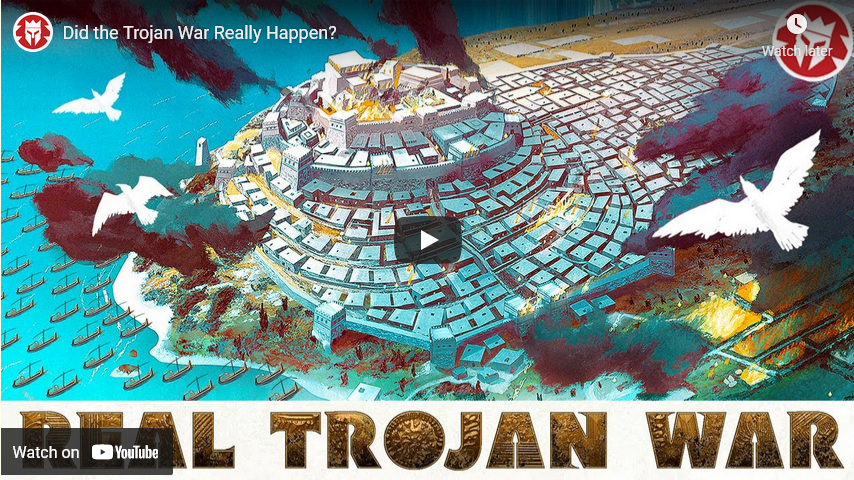
Kings and Generals’ historical animated documentary series continues with a video on the Trojan War, as we talk about the historicity of the conflict between Trojans and the Greeks depicted in the immortal Iliad of Homer. We also cover the Mycenaean and Hittite civilizations. How did this story come to be? Is it just a myth or is there historical proof that it happened? What does archeology tell us about the conflict at the end of the Bronze age? Were Hector, Achilles, Helen and Paris even real?

Support us on Patreon: http://www.patreon.com/KingsandGenerals​ or Paypal: http://paypal.me/kingsandgenerals​​ We are grateful to our patrons and sponsors, who made this video possible: https://docs.google.com/document/d/1o…​

Art and animation: Oğuz Tunç http://bit.ly/2H6oRjw​
Script: Leo Stone
Narration: Officially Devin (https://www.youtube.com/user/OfficiallyDevin​)

✔ Merch store ► teespring.com/stores/kingsandgenerals​
✔ Podcast ► Google Play: http://bit.ly/2QDF7y0​ iTunes: https://apple.co/2QTuMNG​
✔ Twitter ► https://twitter.com/KingsGenerals
✔ Instagram ► http://www.instagram.com/Kings_Generals​

Production Music courtesy of Epidemic Sound: http://www.epidemicsound.com

#Documentary​ #Troy​ #Greece

February 14, 2021

QotD: Pauline Réage’s Story of O

Filed under: Books, France, Quotations — Tags: , , , , , — Nicholas @ 01:00

I’m sitting on a plane and I’m feeling increasingly excited. I’m flushed. My heart rate is up, and I can’t seem to find a comfortable way to sit. My agitation isn’t caused by any nervousness about flying, nor by any fears of contracting COVID-19 during the flight. My disquiet has been triggered by the book I’m reading. The sensations it arouses almost overwhelm me. I find I have to pause every few paragraphs, close the slim volume, and rest it on my lap in order to regain some sense of personal composure. Fiction usually transports my imagination away from myself, but this book is accomplishing the opposite: I feel increasingly aware of my body as I read it, as though being immersed in fiction has drawn me into a moment of privacy with myself. It feels somehow unseemly for the public world of the airplane to intrude on my private sensations. I have to put the book down frequently in order to remind myself that it is no act of indecency for the happy family sitting down the aisle from me to be talking casually, but rather that it is my own sense of secrecy that must be reconciled to the ordinary world around me.

I am reading Story of O, a novel written in 1954 that recounts the titular character’s journey into sexual bondage, violent penetrations, beatings, whippings, burnings, chains, gags, and dungeons. Readers only familiar with the pedestrian 1975 adaption are advised not to be put off — director Just Jaeckin’s film benefits from the lovely Corinne Cléry’s beguiling performance in the title role, but his soft-focus softcore aesthetic (gauzy white linen dresses and a smooth classical guitar soundtrack) miss the tenderness, the elegance, and the literary grace of the source. Graham Greene described Story of O as a “rare thing, a pornographic book well written and without a trace of obscenity”; Brian Aldiss remarked that O makes “pornography (if that is what it is) an art”; even JK Rowling has offered praise for the book, observing that, “If you’ve read Story of O you’ve kind of read the ultimate.” But it is JG Ballard’s description of the novel as “a deeply moral homily … touched by the magic of love” that resonates most powerfully with me. O is a radical instruction in morals (the book has a clear sense of feminine virtue, for one thing), and yet this sexual morality is unlike any I can find in our contemporary expression of sexual ethics, where self-expression is valued more than self-giving.

O is the story of a woman objectified and humiliated, of a woman who submits to being violated by the countless tongues and phalluses and fingers which enter her. The novel is more sensual than suspenseful — although there is a clear narrative, it is not a story driven by plot, but rather by a series of erotic episodes (Geraldine Bedell writing for the Observer described them as written with “a hallucinatory, erotic intensity”). It is a psychologically as well as sexually penetrative story of surrender, of being mastered and of becoming enslaved, especially its first chapter which describes the elegant sexual tortures of the Chateau at Roissy, a kind of playboy mansion with fewer grottos and more dungeons.

It is here that, at the request of her lover René, O acquiesces in her complete submission. The cast of characters is sparse: O and René; Jacqueline, a young model whom O seduces, and Jacqueline’s 16-year-old sister, Natalie, a virgin eager to be initiated into the sexual rites of Roissy; Anne-Marie, an older and more ruthless mistress than are the many men at the Chateau; sundry blondes, brunettes, and redheads arranged alluringly throughout the text; and finally O’s ultimate lover, the sophisticated Sir Stephen, a kind of father-figure to René who ends up laying claim to O, flogging her, shackling her labia with an iron ring, and branding her with his initials as his slave, “a condition,” the narrator tells us, “of which O herself was proud.” As I read of the many exquisite ways O gives herself for men’s uses, I begin to wonder if the book was presenting me not with a picture of masculine sexual fantasies, but with a vision of my own.

The novel was written by the mysterious Pauline Réage, a pseudonym. In what is arguably one of the most successful literary secrets, Réage’s identity was kept hidden for decades. It wasn’t until 40 years after the novel’s publication that the then 86-year-old Dominique Aury, a respected editor and French intellectual, revealed that she was the author. It seems fitting that in a novel of sexual submission, Aury — Dominique, dominance, dominatrix — maintained such strict control over her own identity. Even Dominique Aury was not her “real” name: she was born Anne Desclos, but legally changed it in 1940. Aury’s nested names and identities are like a meta-fictitious exercise in un-making and making the self, for questions of self-identity and self-integrity lie at the heart of her novel.

Marilyn Simon, “My Own Private Chateau — Pauline Réage’s Story of O Revisited”, Quillete, 2020-10-18.

January 3, 2021

QotD: Literary stasis in the Byzantine empire

Filed under: Europe, Greece, History, Middle East, Quotations — Tags: , , , , — Nicholas @ 01:00

Undoubtedly, the Mediaeval Romans – now exclusively Greek in their language – made little effort to be original in their literature. They had virtually the whole body of Classical Greek literature in their libraries and in their heads. For them, this was both a wonderful possession and a fetter on the imagination. It was in their language, and not in their language. Any educated person could understand it. But the language had moved on – changes of pronunciation and dynamics and vocabulary. The classics were the accepted model for composition. But to write like the ancients was furiously hard. Imagine a world in which we spoke Standard English, but felt compelled, for everything above a short e-mail, to write in the language of Shakespeare and the Authorised Version of the Bible. Some of us might manage a good pastiche. Most of us would simply memorise the whole of the Bible, and, overlooking its actual content, write by adapting and rearranging remembered clauses. It would encourage an original literature. Because Latin soon became a completely foreign language in the West – and because we in England were so barbarous, we had to write in our own language – Western Mediaeval literature is often a fine thing. The Mediaeval Romans never had a dark age in our sense. Their historians in the fifteenth century wrote up the fall of Constantinople to the Turks in the same language as Thucydides. Poor Greeks.

Sean Gabb, “The Mediaeval Roman Empire: An Unlikely Emergence and Survival”, SeanGabb.co.uk, 2018-09-14.

December 26, 2020

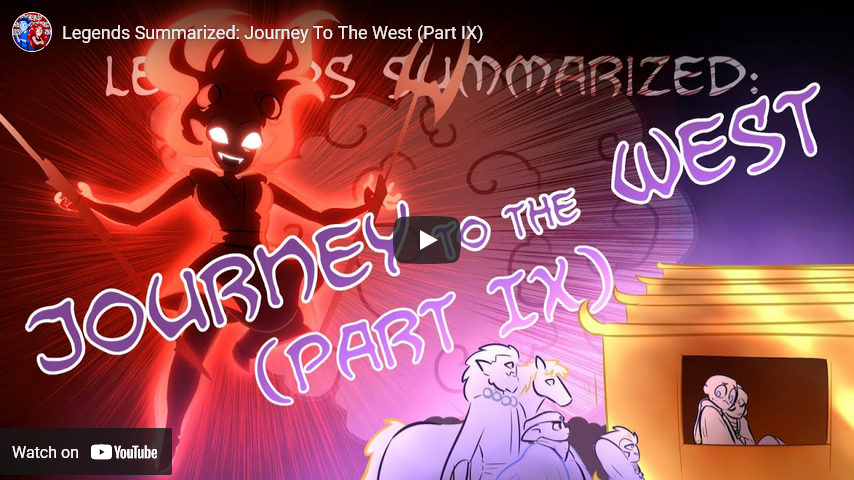
Legends Summarized: The Journey To The West (Part VIII)

Filed under: Books, China, History, Humour, Religion — Tags: , , , , — Nicholas @ 04:00

Overly Sarcastic Productions
Published 25 Dec 2020

Journey to the West Kai, episode 5: Fishy Business and Mountaineering Madness!

Danger! Intrigue! Sandy fights a carp! Pigsy gets two makeovers! Monkey reunites with several old frenemies, and Tripitaka gets less screentime than the horse!

(merry christmas)

(Here’s a cheeky little bit of merch: https://www.redbubble.com/shop/ap/656…)

FIRST EPISODE: https://www.youtube.com/watch?v=61nuX…
PREVIOUS EPISODE: https://youtu.be/ABuG8hZqynI
FULL SERIES: https://www.youtube.com/playlist?list…

Our content is intended for teenage audiences and up.

PATREON: https://www.Patreon.com/OSP

MERCH LINKS: https://www.redbubble.com/people/OSPY…

DISCORD: https://discord.gg/h3AqJPe

OUR WEBSITE: https://www.OverlySarcasticProductions.com
Find us on Twitter https://www.Twitter.com/OSPYouTube
Find us on Reddit https://www.Reddit.com/r/OSP/

December 12, 2020

QotD: Modernism

Filed under: Architecture, Media, Quotations — Tags: , , , , — Nicholas @ 01:00

Don’t you think the whole effort of modernism — in architecture, in literature, in music, in painting — might have been a huge dead end, from which Western culture will painfully have to extricate itself?

Myron Magnet, “Free Speech in Peril: Trigger warning: may offend the illiberal or intolerant”, City Journal, 2015-04.

November 14, 2020

The Decline of the Great Library of Alexandria

The History Guy: History Deserves to Be Remembered
Published 27 Mar 2019

Presented by Ms History. The Great Library was a center of knowledge. Its decline was not the single cataclysmic event that may seem to think, but its slow decline is perhaps, even more tragic. It is history that deserves to be remembered.

This is original content based on research by The History Guy. Images in the Public Domain are carefully selected and provide illustration. As images of actual events are sometimes not available, images of similar objects and events are used for illustration.

All events are portrayed in historical context and for educational purposes. No images or content are primarily intended to shock and disgust. Those who do not learn from history are doomed to repeat it. Non censuram.

Ms. History Guy is an avid reader and former reference librarian, and reviews around 100 books per year. Feel free to follow her progress or befriend her on Goodreads where she goes by the name “Heidi the Reader”: https://www.goodreads.com/MsHistory

Patreon: https://www.patreon.com/TheHistoryGuy

The History Guy: History Deserves to Be Remembered is the place to find short snippets of forgotten history from five to fifteen minutes long. If you like history too, this is the channel for you.

Awesome The History Guy merchandise is available at:
teespring.com/stores/the-history-guy

Script by JCG

#history #thehistoryguy #library

October 16, 2020

“The Art of War” – Wisdom of Sun Tzu – Sabaton History 089 [Official]

Filed under: Books, China, History, Media, Military — Tags: , , , , , , — Nicholas @ 04:00

Sabaton History
Published 15 Oct 2020

Sun Tzu says: “The Art of War is of vital importance to the state. It is a matter of life and death, a road either to safety or to ruin.” The Chinese Art of War by Sun Tzu is one of the most influential books in history. Throughout the centuries it would accompany generals, statesmen, and philosophers alike. Those who follow his teachings, who safeguard themselves against defeat and make sure of victory before the battle is fought, will triumph. Those who know everything about themselves and their enemies will achieve supreme excellence.

The Art of War by Sun Tzu Text: https://www.gutenberg.org/files/132/1…

Support Sabaton History on Patreon: https://www.patreon.com/sabatonhistory

Listen to “The Art of War” on the album The Art of War:
https://music.sabaton.net/TheArtOfWar

Watch the Official Live Clip of “The Art of War” here:
https://www.youtube.com/watch?v=aYoK1…

Listen to Sabaton on Spotify: http://smarturl.it/SabatonSpotify
Official Sabaton Merchandise Shop: http://bit.ly/SabatonOfficialShop

Hosted by: Indy Neidell
Written by: Markus Linke and Indy Neidell
Directed by: Astrid Deinhard and Wieke Kapteijns
Produced by: Pär Sundström, Astrid Deinhard and Spartacus Olsson
Creative Producer: Maria Kyhle
Executive Producers: Pär Sundström, Joakim Brodén, Tomas Sunmo, Indy Neidell, Astrid Deinhard, and Spartacus Olsson
Community Manager: Maria Kyhle
Post-Production Director: Wieke Kapteijns
Editor: Karolina Dołega
Sound Editor: Marek Kaminski
Maps by: Eastory – https://www.youtube.com/c/eastory
Archive: Reuters/Screenocean – https://www.screenocean.com

Visual Sources:
– Pictures of Ming Dinasty courtesy of Yprpyqp from Wikimedia
– Pictures from the period of Opium War courtesy of Massachusetts Institute of Technology © 2010 Visualizing Cultures
– Wellcome Images
– Major National Historical and Cultural Site in China
– Pictures of The Art of War book courtesy of vlasta2, bluefootedbooby on flickr.com
– Metmuseum
– Picture of Eastern Han Calvary courtesy of GaryLee Todd from Wikimedia
– Granger Archive
– Hallwyl Museum
– Nomura Art Museum
– The icons from The Noun Project: Man by vanila, Asian woman by Jaime Serra, Wise Man by Éléonore Sabaté

All music by: Sabaton

An OnLion Entertainment GmbH and Raging Beaver Publishing AB co-Production.

© Raging Beaver Publishing AB, 2019 – all rights reserved.

June 23, 2020

Legends Summarized: The Journey To The West (Part VII)

Filed under: Books, China, History, Humour, Religion — Tags: , , , , — Nicholas @ 02:00

Overly Sarcastic Productions
Published 27 Dec 2019

Journey to the West Kai, episode 4: Trouble in Taoist Town!

Thrills! Excitement! Pigsy takes a bath! Sandy fights an alligator! Monkey helps Tripitaka cheat on a high-stakes game show! And as always, everyone forgets about the horse!

Our content is intended for teenage audiences and up.

PATREON: https://www.Patreon.com/OSP

MERCH LINKS: https://www.redbubble.com/people/OSPY…

DISCORD: https://discord.gg/hhAZA2z

OUR WEBSITE: https://www.OverlySarcasticProductions.com
Find us on Twitter https://www.Twitter.com/OSPYouTube
Find us on Reddit https://www.Reddit.com/r/OSP/

June 16, 2020

Legends Summarized: The Journey To The West (Part VI)

Filed under: Books, China, History, Humour, Religion — Tags: , , , , — Nicholas @ 02:00

Overly Sarcastic Productions
Published 14 Dec 2018

JOURNEY TO THE WEST KAI, EPISODE 3: FAMILY FEUD!

Action! Excitement! Faces from the past! Kuan Yin discovers an exciting new acupuncture technique! Pigsy is unexpectedly skilled at CPR!

PATREON: https://www.patreon.com/user?u=4664797

MERCH LINKS:
Shirts – https://overlysarcasticproducts.threa…
All the other stuff – http://www.cafepress.com/OverlySarcas…

Find us on Twitter @OSPYouTube!

June 9, 2020

Legends Summarized: The Journey To The West (Part V)

Filed under: Books, China, History, Humour, Religion — Tags: , , , , — Nicholas @ 02:00

Overly Sarcastic Productions
Published 9 Feb 2018

JOURNEY TO THE WEST KAI, EPISODE 2: LOS DEMONIOS HERMANOS!

It’s yet another episode almost a year in the making! (sorry again 🙊) Today our heroes face off against a deadly duo of conveniently color-coordinated scoundrels, equipped with an impressive array of sacred treasures! Will Monkey be able to prioritize the well-being of his friends over his love of shiny things? Probably not, but find out now!

PATREON: https://www.patreon.com/user?u=4664797

MERCH LINKS:
Shirts – https://overlysarcasticproducts.threa…
All the other stuff – http://www.cafepress.com/OverlySarcas…

Find us on Twitter @OSPYouTube!

June 2, 2020

Legends Summarized: The Journey To The West (Part IV)

Filed under: Books, China, History, Humour, Religion — Tags: , , , , — Nicholas @ 02:00

Overly Sarcastic Productions
Published 19 Mar 2017

JOURNEY TO THE WEST KAI, EPISODE 1: SKELE-FUN!

It’s the episode almost a year in the making! (sorry 🙊) The saga of the monk Tripitaka, his bodyguard the Monkey King, and the rest of his merry band of pilgrims continues in this dramatic episode! Friendships are tested! Unlikely heroes rise to the occasion! Somebody throws a punch!

PATREON: https://www.patreon.com/user?u=4664797

MERCH LINKS:
Shirts – https://overlysarcasticproducts.threa…
All the other stuff – http://www.cafepress.com/OverlySarcas…

Find us on Twitter @OSPYouTube!

May 26, 2020

Legends Summarized: The Journey To The West (Part III)

Filed under: Books, China, History, Humour, Religion — Tags: , , , , — Nicholas @ 02:00

Overly Sarcastic Productions
Published 13 Apr 2016

At last! The saga continues, as our troupe of compadres grows from three to five and the story can REALLY get started!

In case you were wondering, this ISN’T the only origin of the five-man-band archetype, although it certainly accounts for a lot of the associated tropes. The Mahabharata is another classic example, with the five Pandava brothers filling out the classic roles very well.

HEADS UP! We have a twitter now! Find us at https://twitter.com/OSPyoutube for all your dorky book-humor needs!

« Newer PostsOlder Posts »

Powered by WordPress