
Clever banter can only be called “repartee” if it’s from the Repartée region of France. Otherwise it’s just sparkling wit.
Daniel Hannan, Twitter, 2020-11-06.
February 12, 2021
QotD: Repartee
Comments Off on QotD: Repartee
January 17, 2021
Hector Drummond on Boris “Cane-Toad” Johnson
As a teaser to attract new subscribers to his Patron and SubscribeStar pages, Hector Drummond shared this piece on the ecological disaster of Australia’s 1930s cane-toad importation and the similar political disaster of Boris Johnson in Britain:
In the 1930s Queensland farmers were facing trouble with large numbers of cane beetles eating the sugar crops that were an important part of the state’s economy. So the Bureau of Sugar Experiment Stations came up with a cunning plan. They would import some cane toads (a native of middle and south America), because cane toads ate cane beetles. This was sure to solve the problem in a trice. One-hundred and two cane toads were duly imported into the state, from Hawaii as it happened, to do the job.
Unfortunately this soon became a classic case of the cure being worse than the disease. In fact it wasn’t any cure at all because the cane toads didn’t bother much with the cane beetles, and instead ate everything else they could wrap their tongues around. The other thing they did was multiply at an explosive rate. These days there are estimated to be 200 million cane toads in Australia, mainly in Queensland, and they cause havoc with the native fauna, not least because they have nasty poison-producing glands on the back of their head which the native animals have no naturally-evolved defence against. Curious pet dogs who mess about with a toad can die.
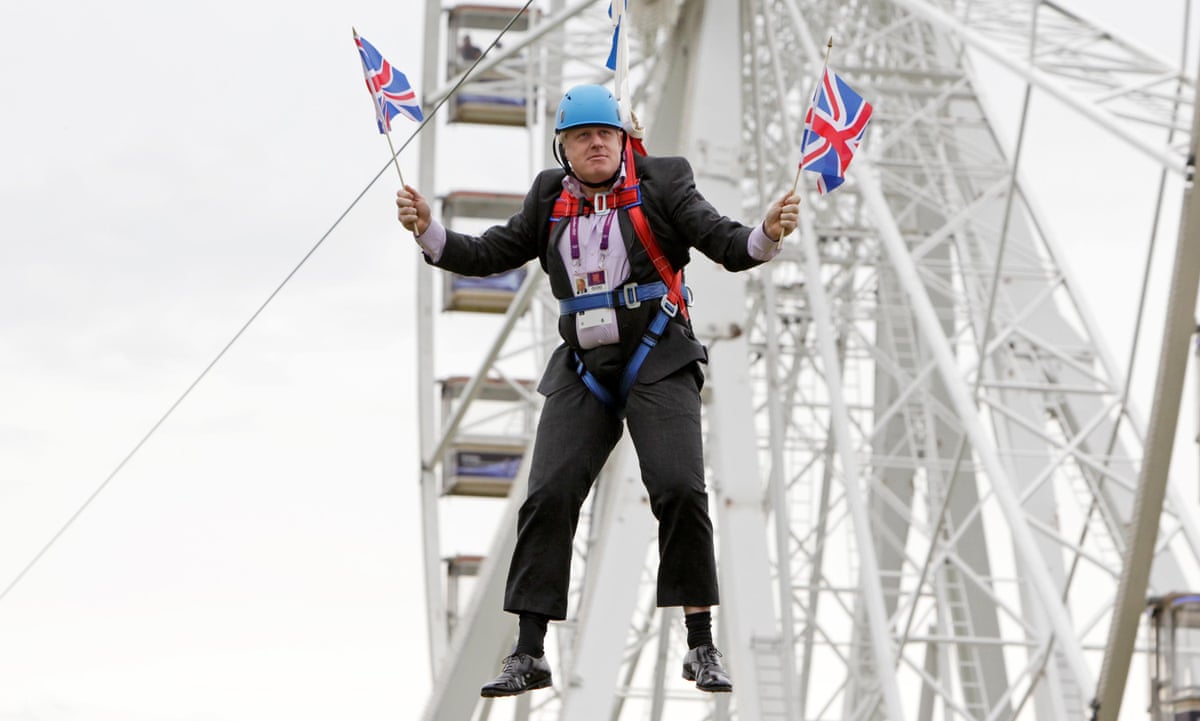
In 2019 Britain was facing its own crisis. It had become obvious to half the country that Theresa May’s Conservative government was deliberately trying to prevent Brexit from happening. As the other parties were even worse, the only hope for a real Brexit to take place was if a new pro-Brexit leadership in the Conservative party could be installed. After a titanic struggle, this finally happened, and Alexander “Boris” Johnson became the new leader, with Michael Gove and advisor Dominic Cummings at his side.
Unfortunately Johnson has proven to be Britain’s own version of the cane toad, a cure that is vastly worse than the disease. Johnson, at least, proved to be more able than his Australian counterpart at doing the job that was required of him. Whereas the Australian toad was about as interested in cane beetles as Olly Robbins was in getting the UK out of the EU, Johnson at least gave us a middling type of Brexit which, as fudged as it was, was at least far better than anything any of his fellow MPs could have got.
But in terms of being worse than the disease, Cane-Toad Johnson has proven to be far, far more destructive than the cane toad ever was. The cane toad, after all, is merely an ecological pest, whereas Johnson has proved to be a dangerous menace to the country’s liberty, prosperity and health. The poison from his glands has leached into our very life. We have become like domestic dogs who have been forced to lick them every day.
Comments Off on Hector Drummond on Boris “Cane-Toad” Johnson
November 15, 2020
Mark Steyn is looking for an argument
I somehow missed this when it went up on Mark’s website:
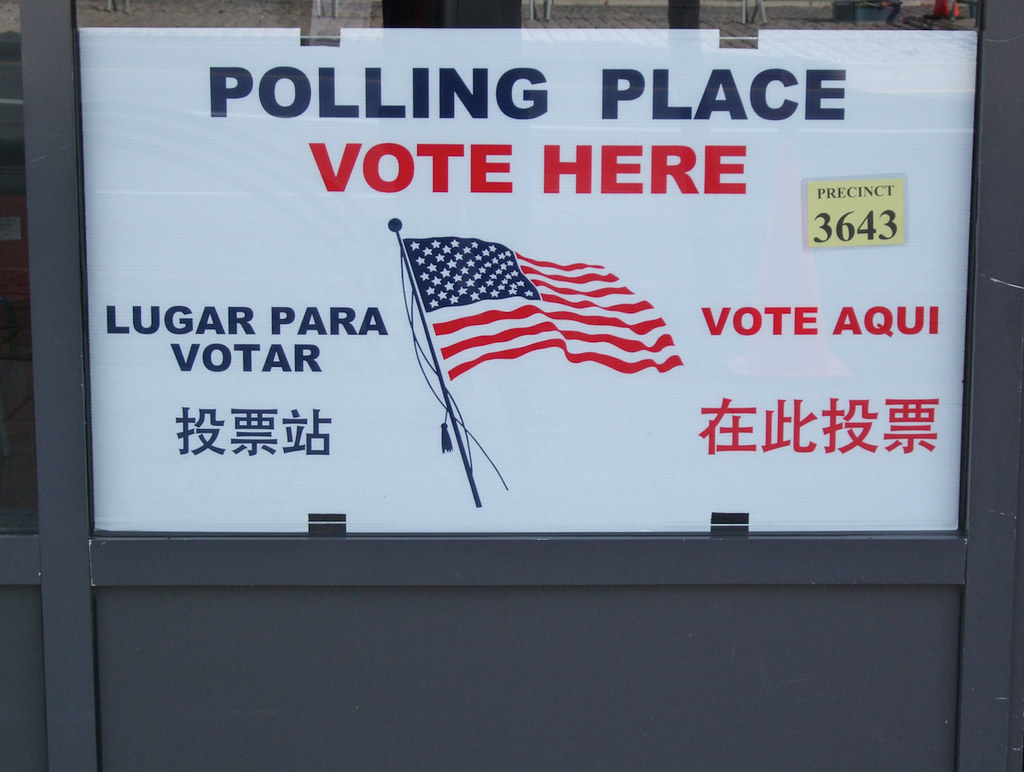
“Polling Place Vote Here” by Scott Beale is licensed under CC BY-NC-ND 2.0


One of Mrs Thatcher’s great insights was: First you win the argument; then you win the election.
To win the argument, you have to make it. In the Westminster system, you make the argument for three or four years, then you have a six-week election campaign. That’s when the system’s functioning, which it certainly wasn’t under, say, Andrew Scheer’s Tory leadership in Ottawa.
But, even when it’s not functioning, somebody’s making an argument. Thus the fatal miscalculation of David Cameron when he decided that the Brexit referendum would be the best way to put the EU issue to bed once and for all. By then every electorally viable political party — from the Tories to Sinn Féin — was “pro-Europe”. Nigel Farage had been making the argument for twenty years, but, because he had no real political party to advance it, it didn’t get him anywhere at UK general elections. So, the minute Cameron called a referendum on Nigel’s issue in splendid isolation, it gave Farage a shot at the second half of Maggie’s great formulation: He’d won the argument; and Cameron delivered up a mechanism that allowed him to win the vote.
In the American system, it is, as the Brits say, arse over tit: As Monty Python once asked, where’s the room for an argument? There are no parliamentary debates, so you never see a Dem senator going at it with a GOP senator. Even more strikingly, there are a bazillion political talk shows, none of which ever features a Dem senator going at it with a GOP senator — the way that even the most despised BBC, CBC, ABC yakfests routinely feature opposing legislators debating health care or the Irish backstop or Covid response.
Instead, there is a multi-billion-dollar two-year campaign, which is all polls, fundraising, horse race piffle, telly ads for the halfwitted, plot twists of no interest to anybody normal (ooh, look, Cory Booker is up from point-three to point-four in Iowa!), all culminating in a stilted pseudo-debate tediously moderated by a pompous mediocrity asking questions all framed from the left’s point of view. You’d almost get the idea that the entire racket was designed to eliminate the very possibility that someone might make an argument.
Comments Off on Mark Steyn is looking for an argument
October 23, 2020
The EU’s sudden but inevitable betrayal on Brexit deal
After a long absence, Nigel Davies posts on the breakdown of the British talks with the EU:
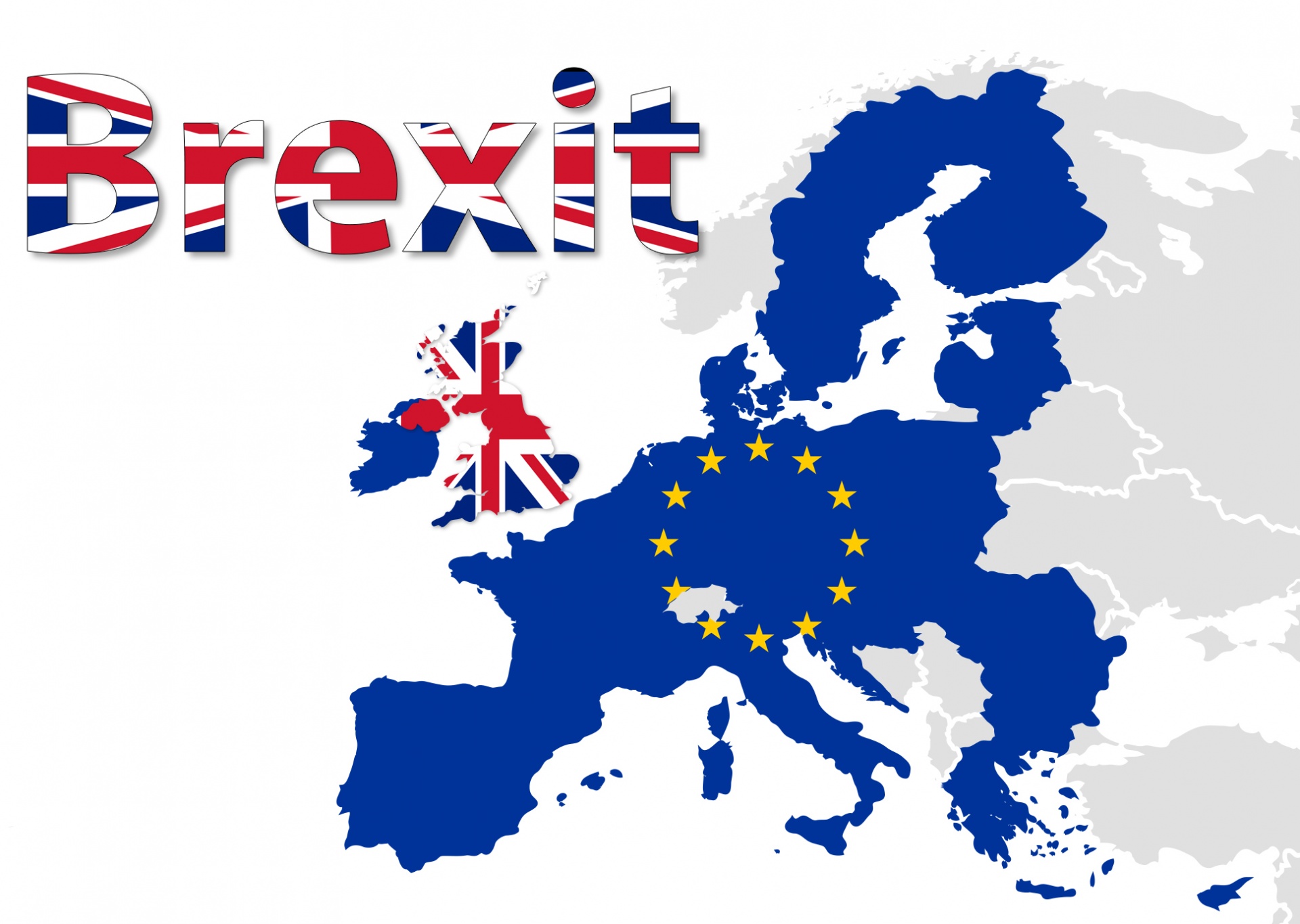
… I suggested that the EU would finally have to face the fact that the failure of their system was nothing to do with xenophobic little countries in the Balkans, or corrupt east European dictatorships, or incompetent Mediterranean democracies in permanent crisis.
No this disaster — the disaster that finally reveals just how impossible the European “project” is — will be at the hands of the morally superior, self righteous goody two shoes of Europe … principally France and the Netherlands.
And it will be for the obviously domestic partisan, (and completely ethically unfathomable), reason, of protecting the unnatural rights of a few fisherman who have had the unlikely and unreasonable benefit of unfettered access to British fishing waters for the decades that Britain has been in the EU.
(An unwarranted privilege for which they probably should pay compensation … Certainly if Britain was an “unjustly persecuted” Asian or African country instead of an “obviously evil” European one, compensation for this unnatural practice would be a demand of every new age propagandist of any colour.)
Nonetheless I have been amazed at the number of column inches wasted in the last week as some journalists try and pretend that it must be the British who are being unreasonable. Or indeed that there is even a remote possibility that the EU could ever come to an agreement, no matter what the British do. (Short of the British admitting that it was all a ghastly mistake, and submitting to total and permanent subservience to the benign dictatorship of the Brussels bureaucrats of course.)
The truth is that the EU is completely incapable of accepting any agreement, because that presumes that 27 individual nations can agree to overcome the drag of their own domestic policies to agree on a common good. (Or on a common decency that would require even the slightest domestic discomfort in one or more of their members.)
Comments Off on The EU’s sudden but inevitable betrayal on Brexit deal
October 3, 2020
“The Tory party, desirous of a fat majority, will sell the country out over Europe”
In The Critic, Gawain Towler sees a major opportunity for Nigel Farage and the Brexit Party:
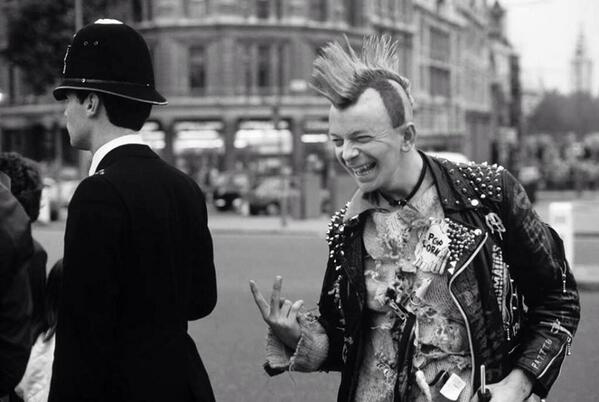
The simple fact is that this Government had the opportunity to do something about our negotiations with the EU in the months after the election. They had a whopping great majority and the goodwill of the nation. Boris had used his ebullience to present the country with a vision that with one bound we would be free, the deal was oven-ready, he was going to get Brexit done. Yes, he had inherited the Withdrawal Agreement, a deeply duff deal, from his predecessor. His resignation as Foreign Secretary over it gave us the confidence that he recognised it as such. And yet on the 25 January, a mere month after his triumphant election victory, he signed that same duff deal and condemned the country to this slow lingering betrayal. It was not necessary to do so, he could have pointed to the election, the vote, and with the support of the country gone to Brussels and made it clear he would not sign. This he signally failed to do.
So here we are again, with the EU making threatening noises, taking legal action with leaks coming out of Berlin and London suggesting that the UK is prepared to make more concessions. A No 10 spokesman confirmed that “The PM will be speaking to President von der Leyen tomorrow afternoon to take stock of negotiations and discuss next steps.”
According to Bruno Waterfield of The Times, “This is seen broadly as a good sign – if, as expected, the British prime minister is ready to signal a bit more give on fish, state aid and subsidy control”.
Note the “more give” – there has already been a lot of giving.
The thing is that Boris is beset with problems, with the Remain lobby, both on his own green benchers and elsewhere; yet again digging up dire predictions of economic meltdown, the CBI taking the lead. The ERG group of Tory sceptics have been oddly quiet, focusing more on Covid-19 than on the clear danger of a failed Brexit. There is no pressure on one side, and a great tidal wave of it pushing him to make a deal at any cost.
Then there is the electoral arithmetic. This shouldn’t matter so far out from an election, but the rumours of Boris’s political demise and the currents swirling around the Chancellor make Labour’s slight lead in the polls a matter of concern. Labour is beginning to solidify after years of infighting, but it is not cutting into Tory support.
That is where Nigel Farage and the Brexit Party come in.
Comments Off on “The Tory party, desirous of a fat majority, will sell the country out over Europe”
September 28, 2020
The Elgin Marbles as oversized bargaining chips
Michael Curtis on the renewed demands that the British government return the Elgin Marbles to Athens:
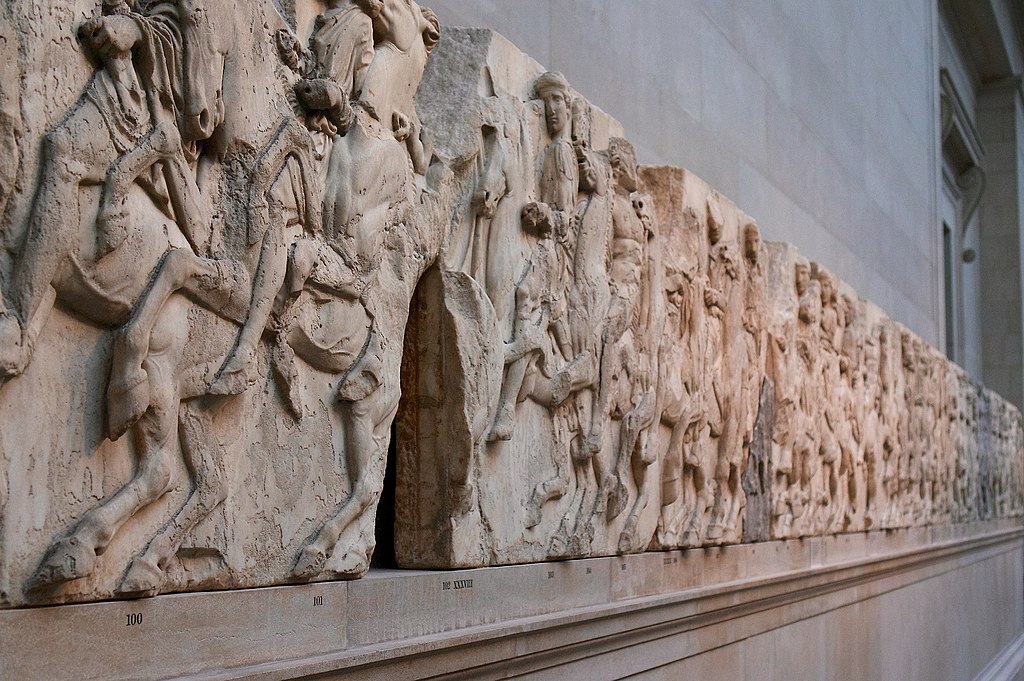
Some of the sculptures in the Elgin Marbles collection on display in the Duveen Gallery of the British Museum.
Photo by Paul Hudson via Wikimedia Commons.
The internecine wars in Washington, D.C., continue over government funding, a coronavirus relief bill, government shutdown, but on September 9, 2020 one form of political truce between Republicans and Democrats on foreign affairs was announced. Eighteen members of the U.S. Congress, bilateral members of the Congressional Caucus on Hellenic issues, including the chairs of the House Oversight and Rules committees, and Foreign Affairs subcommittee on issues relating to Europe, had written a letter to British Prime Minister Boris Johnson.
It informed him, in case he didn’t know, that the Elgin marbles, EM, had been the source of controversy among allies for many decades. The letter urged the British government, already saddled by labyrinth Brexit discussions, to negotiate with the Greek government in earnest over the return of the Elgin marbles to Greece by 2021, the 200th anniversary of the modern Greek nation. The eighteen Congress people joined other Americans intruding in British affairs. On September 16, 2020 both Joe Biden and Nancy Pelosi said there can be no US-UK trade deal if Brexit negotiations undermined the 1998 Good Friday peace agreement. However, the letter of the Congress group has raised the problem of the restitution of cultural objects taken from their country of origin.
Prime Minister Johnson does not need reminding that it was Thomas Bruce, Earl Elgin, British Ambassador to the Ottoman Empire, which included Greece, who took the marbles from the Parthenon in Athens, 1801-1805. The Parthenon, the central building of the Acropolis of Athens. was built around 488 B.C. to honor a goddess called Athena, and was at different times a Christian church and a mosque. The pillars and sculptures of the Parthenon were made of marble.
Elgin, with a passion for classical antiquities, made the case that the art works in the temples of Greece, then under Ottoman control would be destroyed because of Turkish indifference. Some had been destroyed in 1687 when the Venetians attacked Athens. The Sublime Porte granted Elgin’s request to take away pieces of stone with old inscriptions or figures. Perhaps this was gratitude for British action in blocking the advance of Napoleon in Egypt. Elgin took pediment sculptur friezes, metopes, and fragmented pieces from the walls of the Parthenon, and brought them to Britain. In 1816 he sold the sculptures to the British government which then sent them to the British Museum where they have remained.
Though the letter by the 18 members of Congress might be considered impertinent, it contained no threat of any kind but attempted to spark action on a disputed issue which has emotional appeal and symbolic importance, the presence of the Elgin marbles in the British Museum. In recent years the issue has been raised by officials of the European Union as well as by celebrated private citizens such as the actor George Clooney and his wife, and co-stars Bill Murray and Matt Damon, who while working on the 2014 film The Monuments Men, about art stolen by the Nazis, thought return of the Elgin marbles to Greece was the “right thing” to do.
August 21, 2020
Geography works against CANZUK ever happening
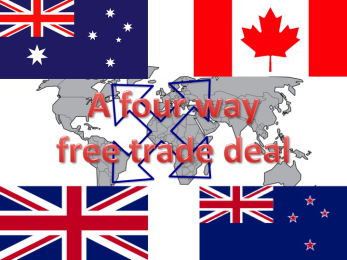
Ted Campbell is a big fan of the CANZUK scheme (Canada-Australia-New Zealand-United Kingdom) to create an “anglosphere” power alongside the current economic big-hitters on the world stage like the United States, China and the European Union. I agree it has historical, nostalgic appeal, but as Aris Roussinos points out, geography is a big stumbling block to it ever being much more than an idea:
Since losing the empire, Britain has notoriously struggled to find a role on the world stage. Initial attempts to piggyback on the power of our successor as global hegemon, the United States, by acting as a guiding force — a Greece to America’s Rome, in Harold Macmillan’s phrase — faltered due to the total absence of interest ever shown in this arrangement by any American administration.
The subsequent attempt to remould Britain as a European power acting in concert with its continental neighbours through the European Union was an unhappy marriage, and has ended in a rancorous divorce whose final settlement is still to be determined. Adrift on the world stage, we are in need of good ideas.
Instead, we are offered CANZUK, a reheated Edwardian fantasy of a globe-spanning Anglosphere acting as a world power which excites the enthusiasm of a small coterie of neoliberal and neoconservative ideologues, if no one else.
In a recent piece for the Wall Street Journal, the historian and Churchill biographer Andrew Roberts argued that the CANZUK nations — Canada, Australia, New Zealand and the UK — ought to establish “some form of federation among them” as a “second Anglospheric superpower” combining “free trade, free movement of people, a mutual defense organization and combined military capabilities” , which would “create a new global superpower and ally of the U.S., the great anchor of the Anglosphere”.
One cannot fault Roberts for the grandeur of his vision, even if the details of how this would actually work are left to others to fill in. Instead, we are reassured, this would not be a centralising project like the hated EU; rather, “its program for a loose confederal state linking the Westminster democracies would be clearly enunciated right from the start.” Already, we see the harsh hand of reality ready to crush this initially appealing vision. On the one hand, CANZUK is a globe-spanning superpower ready to be born; on the other, it is merely a loose grouping of separate national governments, which would, like all national governments, act according to their own interests above all.
By totting up the different GDP figures of the various CANZUK nations, Roberts claims that his proposed Empire 2.0 “would have a combined GDP of more than $6 trillion, placing it behind only the U.S., China and the EU,” while “with a combined defense expenditure of over $100 billion, it would also be able to punch above its weight”.
Yet the flaws of this argument are obvious. As other critics have noted, only a minuscule proportion of the CANZUK nations’ trade is with each other, save New Zealand, an economic satellite of Australia. Australia is a great East Asian trading power, and will remain so. Canada is enmeshed in the greater North American trading sphere, as are we with Europe, whatever Brexiteers may wish. As always, the simple matter of geography trumps the affective bonds between far-flung kith and kin, whatever their emotional appeal.
Comments Off on Geography works against CANZUK ever happening
August 15, 2020
French President Emmanuel Macron – “We are a country that for decades is divided and in doubt”
Individuals in France may be chauvinistic, says Joseph de Weck, but the French as a whole are less chauvinistic and more self-critical than the British or the Germans:
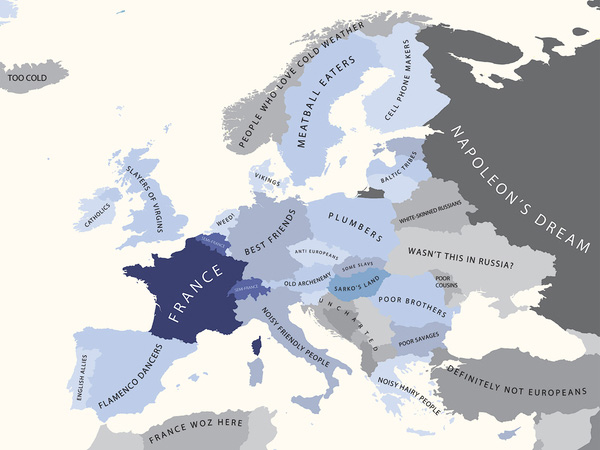
There is no doubt that the French are a self-sufficient bunch. After all, it was a Frenchman who once wrote, “Hell is other people.”
COVID-19 or not, the French rarely travel abroad for holidays. In terms of food, most French people think they have it best. And at housewarming parties in Paris, the music playlist is usually primarily made up of chansons and French rap classics.
And despite President Emmanuel Macron’s attempts to turn Europe into a global “balancing power,” what happens abroad doesn’t seem to spark much interest at home. The evening news on the public channel on average dedicates 16 percent of its coverage to European and foreign news. By comparison, that proportion rises to 50 percent in Germany. No surprise then that polls show the average French person knows little about the functioning of the EU.
But if this cliché about French aloofness is easily backed up with data points, another common trope about the Gauls doesn’t: that of French arrogance. At least when it comes to the present, the French are brutally self-critical.
In fact, France seem to be among the least chauvinistic countries in Europe. Asked whether they think their culture is superior to others, 36 percent of the French answered “yes” in a recent poll. This compares to 46 percent in the United Kingdom and 45 percent in Germany.
Or take the COVID-19 crisis: unlike other nations, the Republic’s citoyens won’t rally around the flag. Among Europeans, the French give their government the lowest grades for its handling of the pandemic. Never mind that four of France’s neighbors have significantly higher death-per-capita rates. Never mind either that France’s short-time work benefits are among the most generous, also explaining why consumption is almost back to pre-crisis levels.
Of course, one could explain the French’s dim view of the state’s COVID-19 response as being due to Macron’s unpopularity. But by French standards, the president is actually polling relatively well. At 39 percent, Macron’s approval ratings surpass his predecessors François Hollande (23 percent) and Nicolas Sarkozy (35 percent) at the same point in their terms.
The negative view the French have of their country goes far beyond the complaint du jour. As Macron put it, “We are a country that for decades is divided and in doubt.”
Comments Off on French President Emmanuel Macron – “We are a country that for decades is divided and in doubt”
February 21, 2020
British wages to be further impacted by Brexit
As we were told for years, if Brexit happened there were going to be dire consequences to the British economy, and here’s the latest one:
Employers are complaining that without badly paid immigrant labour they’ll just not be able to get the staff. The answer to which is that they’d better start paying higher wages then, eh?
[…]
The analysis here stems from something Marx got right. It’s competition among capitalists for scarce labour which pushes wages up. If there’s a vast reserve army of the unemployed then anyone needing more straining backs just tosses a crust to those in that army and gets as many limbs and torsos to exploit as desired. But if all are already employed then any desire for extra labour requires tempting it away from current employer and occupation to the new. That means a better job offer. Some mixture of conditions, enjoyment of the job, cash and so on that makes up a more attractive package.
The combination of cheap flights and free movement of labour has meant that the reserve army lives in Wroclaw and Debrecen. It’s also been near unlimited – compared to the size of the UK economy – these past couple of decades.
The absence of free movement – what is being complained about here – will mean that to gain the desired labour those employers are going to have to offer higher wages, higher compensation rather, to those not ordinarily resident or stemming from central Europe.
[…]
But back to the basic complaint here. These employers are complaining that Brexit will mean they’ve got to raise the wages they pay. To which the correct response is “Ah, Diddums”.
Comments Off on British wages to be further impacted by Brexit
February 18, 2020
“The real battle for the immortal soul of France is about something far more important — cheese”
John Lichfield on the plight of the cheesemakers (get your MPATHG jokes out of the way now):
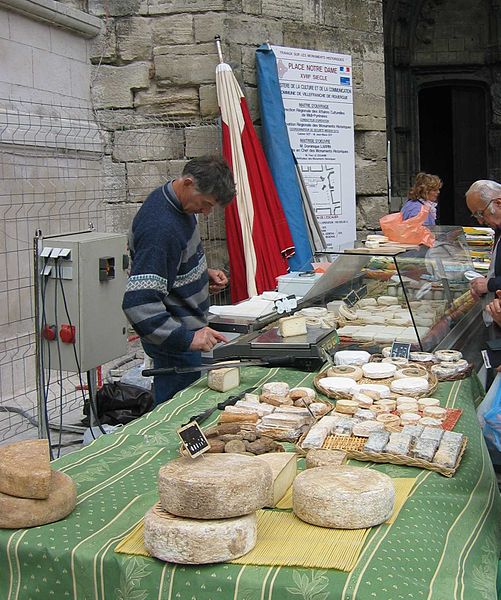
French cheese seller, offering Villefranche de Rouergue and other artisanal cheeses.
Photo by Sybren via Wikimedia Commons.
In his small fromagerie at Saint Point Lac in the Jura, Fabrice Michelin produces authentic, hand-made, raw-milk Mont d’Or cheeses. He is the last person in France to do so — the last in a line of local cheese-makers which goes back for centuries.
“I get up at 5am. I collect the milk myself from the farms in the village. I warm the milk,” Mr Michelin told me. “I scoop it carefully into cylinders. I pay attention to the varying consistency and taste of the curd. It alters subtly with the seasons, depending on the qualities of the grass. I mold the cheeses by hand. Every cheese is a little different.”
Individual, artisanal cheeses? Wonderful.
Not any more, it seems.
“That’s what gets me into trouble these days,” M. Michelin said. “Brussels and Paris say that the cheeses must all be the same. There seem to be new rules every month. How can I carry on if all my cheeses have to be identical?”
Forget the yellow vests. Forget the strikes against pension reform. The real battle for the immortal soul of France is about something far more important — cheese.
The infinite variety of French cheeses — one of the finest achievements of French culture — is gradually being eroded and dumbed down. Only one in ten of the cheeses now consumed in France is made with raw milk or “lait cru” in the authentic manner.
Search where you like in the finest cheese shops in France, you will no longer find a Bleu de Termignon or a Galette des Monts-d’Or. They are among 50 species of French cheese that have vanished, like rare flowers or butterflies, in the last 40 years. Other varieties, like Vacherin d’Abondance and M. Michelin’s hand-made Mont d’Or have been reduced to a single producer.
Many of the best-known French cheeses — Brie or Pont L’Evêque or Camembert — thrive at home and abroad, but they are overwhelmingly made in large factories with pasteurised or sterilised milk. To purists, that is a betrayal of the French tradition of “living cheese”.
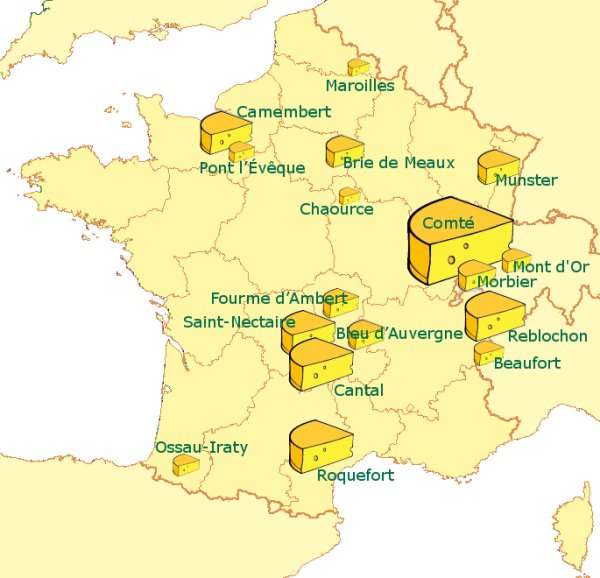
Major French AOC cheese designations: the size of the symbol indicates the relative production of that variety. Many smaller cheese varieties not shown.
Graphic by FrancoisFC – Own work, CC BY-SA 3.0, https://commons.wikimedia.org/w/index.php?curid=3640022
Comments Off on “The real battle for the immortal soul of France is about something far more important — cheese”
February 10, 2020
The coup that toppled Margaret Thatcher
Charles Moore published the third volume of his Thatcher biography last year (I’ve read the first two volumes, but not the final one). In Quillette, Johan Wennström reviews the book:
This November will mark 30 years since former British Prime Minister Margaret Thatcher left office. After she had narrowly failed to secure an outright win in a 1990 leadership contest triggered by a challenge from Michael Heseltine, her former defense secretary, the majority of Thatcher’s Conservative cabinet colleagues withdrew their support and forced her departure following what she described as “eleven-and-a-half wonderful years.”
For Thatcher, the “coup,” as she referred to the events of 1990, had been unexpected. But as journalist Charles Moore explains in the third and final volume of his authorized Thatcher biography, Herself Alone (2019), the writing had been on the wall for some time. Thatcher’s style, which some considered abrasive, had turned senior figures against her. And many younger party members believed that if the party were to win a fourth consecutive election victory, in 1991 or 1992, it should be under a new standard-bearer (who turned out to be John Major).
An important underlying factor was the long-standing policy conflict regarding the European Community (or the EC as the European Union was then known), which pitted Thatcher against many in her own government, as well as against continental European leaders and George H. W. Bush’s White House. She was perceived as a “Cold Warrior” who was overly cautious in regard to the future of Europe, especially the project of European political and economic integration.
To some modern observers, that criticism of Thatcher remains apt. In a recently published book on international relations authored by former Swedish Prime Minister Carl Bildt, The Age of Disorder (Den nya oredans tid, 2019), Thatcher’s reluctance to endorse a speedy German reunification is attributed to her obsolete anxieties regarding “the dangers of a strong Germany.”
Moore’s latest volume, which focuses extensively on Thatcher’s views about Europe, shows her in a more nuanced light. In some ways, in fact, she was actually ahead of her time. And some of the current problems facing Europe, and the West more generally, might have been mitigated had her opinions been given a more generous audience.
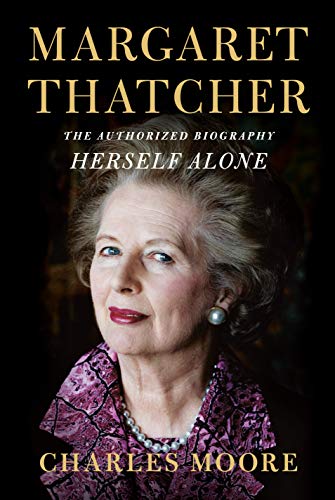
Unfortunately, I don’t have the money for new hardcover books these days so I’ll have to wait until this volume gets a paperback edition or [shudder] get a library card and wait for it to show up at the local library.
Comments Off on The coup that toppled Margaret Thatcher
February 3, 2020
“The people could not be given what they had asked for. It would set a precedent.”
In the latest Libertarian Enterprise, Sean Gabb reacts to the changes (or lack of changes) on Brexit Day:
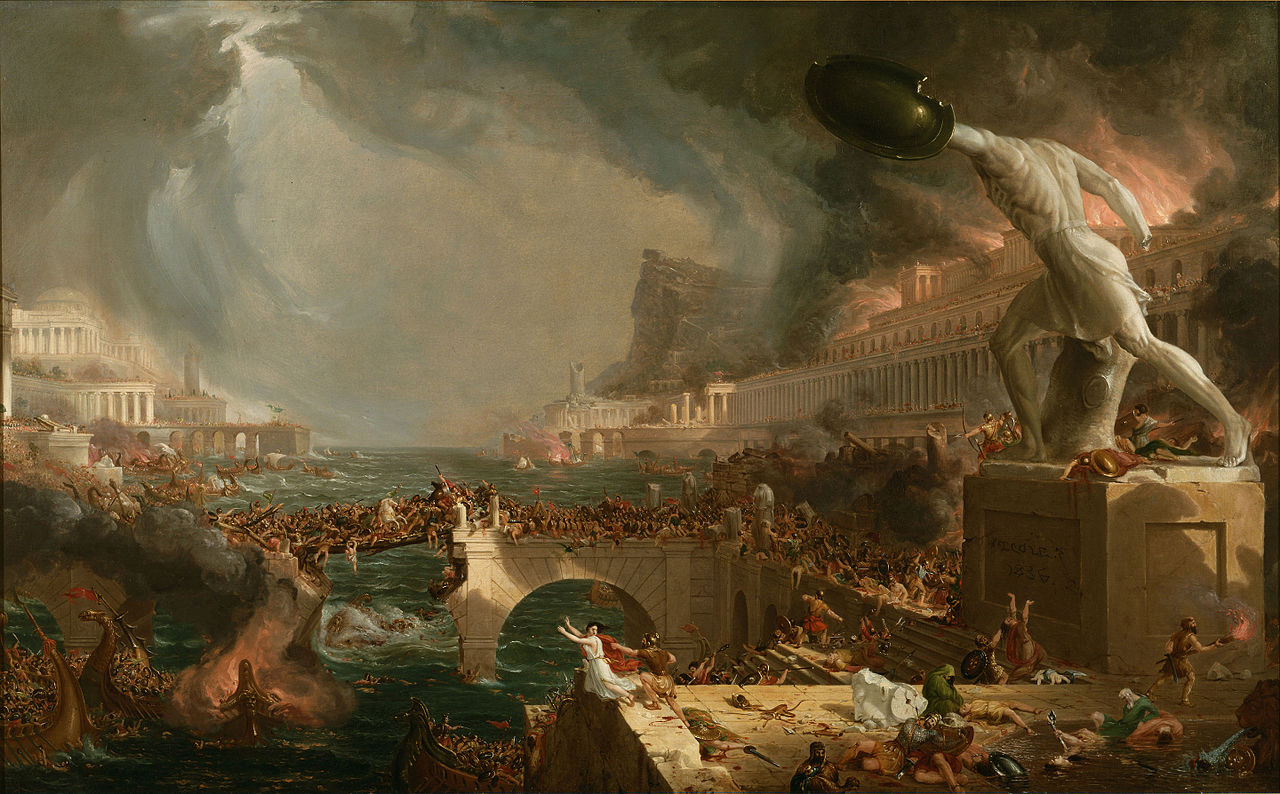
London on the morning after Brexit Day, according to the BBC and other mainstream media.
The Course of Empire – Destruction by Thomas Cole, 1836.
From the New York Historical Society collection via Wikimedia Commons.
Yesterday evening — that is, the 31st January 2020 — at 11pm GMT, my country left the European Union. We did so after four years of heated and often hysterical argument. Nothing much seemed to have changed this morning. I went out shopping, to see the same people buying the same things at the same prices. Since we are now in a transition period, lasting till the end of this year, in which we remain within the Single Market and subject to the rules of the European Union, it would have been odd if anything visible had changed. Yet, if nothing visible had changed, one very important thing has changed.
The ruling class has suffered its first serious defeat in living memory. The coalition of politicians, bureaucrats, lawyers, educators, media people and associated business interests who draw wealth and power from an extended state was committed to European Union membership. This coalition was never uniformly committed to membership. Some elements were strongly committed, others only mildly. But all were agreed that membership was good for them, so far as it blurred the lines of accountability and gave the exercise of power a supranational appearance. This was the position before the 2016 Referendum, which was not expected to go as it did. When the result was to leave, ruling class support for membership strengthened. Long before it ended, the referendum campaign had become a vote of confidence in the ruling class. Losing this vote was a shock. The people could not be given what they had asked for. It would set a precedent. Give them that, and they would start believing they lived in a democracy where votes counted for something. If this happened, the people might be inclined to start asking for other things – all things variously unwelcome within the ruling class.
The ruling class response to losing fell under two headings. One was to deny the validity of the vote and to demand another, and to make sure that this one was rigged in favour of remaining. The other was to deliver an exit so partial that it amounted to continued membership, and that could be upgraded to full membership after a few years of propaganda. These responses eventually merged into a single project of dragging things out so long that the people would get bored and stop demanding that their voice should be heard.
These responses failed. The people had spoken, and they continued speaking — eventually giving the Conservatives their biggest majority in a generation. Because of this, our departure yesterday was more definite than had previously been imagined. Immediately after the Referendum, I think most of us would have accepted a slow disengagement — perhaps including ten or twenty years of remaining within the Single Market, though out of the customs and political union. The next three years of bad faith killed any taste for gradualism.
Emphasis added.
Comments Off on “The people could not be given what they had asked for. It would set a precedent.”
February 2, 2020
“The European Union is a 1970s solution to a 1940s problem”
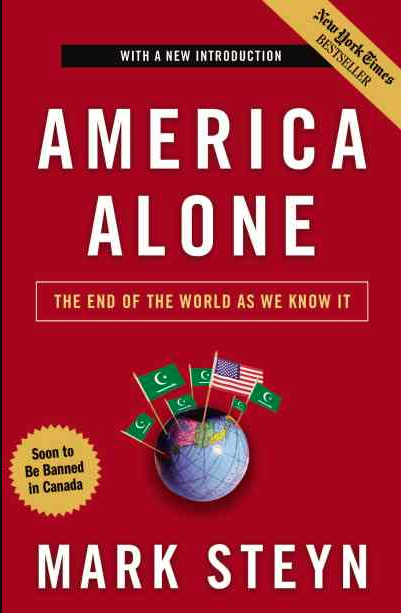
Mark Steyn shares some thoughts on the now-diminished European Union from his 2006 book America Alone as the United Kingdom exits the European Union:
The construction of a pan-continental Eutopia was meant to ensure that Europe would never again succumb to militant nationalism of one form or another. Instead, the European Union’s governing class has become as obnoxiously post-nationalist as it was once nationalist: its post-nationalism has become merely the latest and most militant form of militant nationalism — which, aside from anything else, makes America, as the leading “nation state” in the traditional sense, the prime target of European ire.
It’s true that there are many European populations reluctant to go happily into the long Eurabian night. But, alas for them, modern Europe is constructed so as to insulate almost entirely the political class from populist pressures. As the computer types say, that’s not a bug, it’s a feature: the European Union is a 1970s solution to a 1940s problem, and one of the problems it was designed to solve is that fellows like Hitler and Mussolini were way too popular with the masses. Just as the House of Saud, Mubarak, and the other Arab autocracies sell themselves to the West as necessary brakes on the baser urges of their peoples, so the European leadership deludes itself on the same basis: why, without the EU, we’d be back to Auschwitz. Thus, on the eve of the 2005 referendum on the European “constitution,” the Dutch prime minister, Jan Peter Balkenende, warned his people where things would be headed if they were reactionary enough to vote no. “I’ve been in Auschwitz and Yad Vashem,” he said. “The images haunt me every day. It is supremely important for us to avoid such things in Europe.”
Golly. So the choice for voters on the Euro-ballot was apparently: yes to the European Constitution or yes to a new Holocaust. If there was a neither-of-the-above box, the EU’s rulers were keeping quiet about it. The notion that the Continent’s peoples are basically a bunch of genocidal wackos champing at the bit for a new bloodbath is one I’m not unsympathetic to. But it’s a curious rationale to pitch to one’s electorate: vote for us; we’re the straitjacket on your own worst instincts. In the end, the French and Dutch electorates voted no to the new constitution. One recalls the T-shirt slogan popular among American feminists: “What part of ‘No’ don’t you understand?” In the chancelleries of Europe, pretty much every part. At the time of the constitution referenda, the rotating European “presidency” was held by Luxembourg, a country slightly larger than your rec room. Jean-Claude Juncker, its rhetorically deranged prime minister and European “president,” staggered around like a collegiate date-rape defendant, insisting that all reasonable persons understand that “Non” really means “Oui.” As he put it before the big vote: “If it’s a yes, we will say ‘on we go,’ and if it’s a no we will say ‘we continue.'”
And if it’s a neither of the above, he will say “we move forward.” You get the idea. Confronted by the voice of the people, “President” Juncker covers his ears and says, “Nya, nya, nya, can’t hear you!”
Only in totalitarian dictatorships does the ballot come with a pre-ordained correct answer. Yet President Juncker distilled the great flaw at the heart of the EU constitution into one disarmingly straightforward expression of contempt for the will of the people. For his part, the architect of the constitution — the former French president Valery Giscard d’Estaing — was happy to pile on: why, even if the French and the Dutch had been boorish enough to want to vote no to the constitution, they would have been incapable of so doing, as the whole thing was designed to be way above their pretty little heads. “It is not possible for anyone to understand the full text,” declared M. Giscard. During his labors on the constitution, he’d told me he saw himself as “Europe’s Jefferson.” By referendum night he’d apparently become Europe’s Jefferson Airplane, boasting about the impenetrability of his hallucinogenic lyrics. The point is that his ingrate subjects had no need to read beyond the opening sentence: “We the people agree to leave it to you the people who know better than the people.”
After that, the rest doesn’t matter: you can’t do trickle-down nation-building. The British, who’ve written more constitutions for more real nations than anybody in history and therefore can’t plead the same ignorance as President Juncker, should be especially ashamed of going along with this farrago of a travesty of a charade.
Comments Off on “The European Union is a 1970s solution to a 1940s problem”
February 1, 2020
Brexit Day
Late Friday night, the United Kingdom left the European Union. Within minutes, the power failed all across the nation, people began to starve due to the lack of food, and the shattered remnants of civilization were hurled on the rubbish heap. London is now nothing but a smoking hole in the ground along the banks of the Thames occupied by filthy machete-wielding twitchy-eyed savages. Now that nobody in the UK can read or write, nobody knows how the machines used to work, and all the disgusting medieval diseases are back in full strength, the sun will literally never rise again over those once green and pleasant lands.
Yet, despite the ongoing disasters, a few brave souls still cling to their dim and pathetic hopes of a better world outside the European Union. Here, for example, someone claiming to be Brendan O’Neill smuggled out a story on the last helicopter to take off from the roof of the embassy building (at least, that’s how I assume it got posted to the web…):
Remainers, for their part, are furious about all the talk of parties. We’re rubbing their noses in it, they say. Everything from the Brexit Day gathering in Parliament Square this evening to Sajid Javid’s issuing of a commemorative 50p coin is being cited by the establishment’s bruised, Remoaning anti-democrats as proof of the vile populist streak in the Brexit movement. London mayor Sadiq Khan is even fretting that tonight’s Brexit bashes could give rise to xenophobic hate crimes.
Of course he is. That’s how they see us: as a pogrom-in-waiting. As a racist blob. As an unthinking mass driven almost entirely by hatred of the Other. They’ve been hurling these insults at us, at the millions of men and women who voted for Brexit, for three-and-a-half years now.
But all sides in the Brexit Day discussion are wrong. Baker and other timid Brexiteers are wrong to suggest we should play down the significance of this day lest we offend Remainers, and the Brexitphobic wing of the elite is wrong to say these celebrations are a screech of populist arrogance against the defeated side in the referendum. No, the reason this day must be marked — loudly, firmly and colourfully — is because it represents a glorious victory for democracy. What is being celebrated today is the defence of democracy against one of the greatest threats it has faced in modern times.
One of the peculiarities of the Brexit era, and of the contemporary era more broadly, is that very small and very unrepresentative sections of society are in control of the political and moral narrative. So even as 17.4million people, the largest electoral bloc in our history, voted for Brexit, and stood by their vote for Brexit in the face of the most extraordinary campaign of demonisation that I can remember, still the Remainer elites got to write the story of Brexit.
The powers-that-be — from the business elites to more than 70 per cent of MPs to virtually the entire academy and cultural sphere — were pro-Remain. And they used their influence in the worlds of commentary, letters and culture to paint a picture of Brexit as disastrous. As toxic. As fascistic. Or, at best, as very, very difficult to enact. The disjoint between public enthusiasm for Brexit and elite disgust with it was, at times, staggering.
As a consequence, it became incredibly difficult to draw out the historic significance, the magnificence, of Brexit. Even those in public life who supported Brexit, no doubt feeling the pressure of the often deranged establishment narrative around Brexit, became defensive. Brexit was manageable, they insisted. It would be okay. “Get Brexit Done”, as the Boris Johnson campaign said in December — a tellingly apologetic slogan which, thankfully, was enough to win the support of vast numbers of Leave voters, but which implicitly played into the denigration of Brexit, the reduction of it to a difficult, pesky task. Hardly anywhere was there an assertion of the historic, epoch-defining nature of Brexit.
January 23, 2020
The EU apparently fears a “Singapore on the Thames”
In the Continental Telegraph, Tim Worstall explains why the EU negotiators are reportedly offering a much worse trade deal to the United Kingdom than they’ve already agreed with Canada, Japan, and other trading partners:
Take, for example, this idea of Singapore on Thames. It’s trivially easy to rally the peeps against one or other relaxation of regulation. Chlorine washed chicken for example. But what about lifting the entire burden? Singapore is, after all, about 50% richer than Britain on a per capita basis. The correct question therefore is would you like a 50% pay raise at the price of shooting all the bureaucrats? Given the manner in which the bureaucrats don’t want the question even asked we have a reasonable enough guide that the answer would be yes.
Which is why the terms on offer to a Britain which could do the SonT thing are so terrible. Because of SonT succeeded it would be a death blow to the entire idea of how Europe is regulated. Lille, Leipzig and Livorno will all put up with interfering bureaucracy because that’s just the way the world is. But if Les Rosbifs become richer by half again simply by that bonfire of the regulations then the auto da fes will light up all over Europe.
So, yes, of course the EU is offering shit trade terms. They can’t allow an independent and free Britain to succeed. That we will anyway is what will bring that freedom and liberty to the continent – once again. For as so often it will be us that saves Europe from itself.
Comments Off on The EU apparently fears a “Singapore on the Thames”


