Quotulatiousness

October 10, 2021

Three Years in Vinland: The Norse Attempt to Colonize America

Atun-Shei Films
Published 9 Oct 2021

Happy Leif Erikson Day! Some time after Thorvald Erikson’s disastrous voyage to the mysterious lands west of Greenland, a wealthy Icelander named Thorfinn Karlsefni financed and led an expedition of his own, with the goal of establishing a permanent Norse settlement in Vinland. Karlsefni and his crew would spend three summers in the New World, where they would have to deal with internal division, hostile Native Americans, and (according to some) the wrath of demonic mythological creatures.

Support Atun-Shei Films on Patreon ► https://www.patreon.com/atunsheifilms

Leave a Tip via Paypal ► https://www.paypal.me/atunsheifilms

Buy Merch ► https://teespring.com/stores/atun-she…

#LeifErikson #Vinland #History

Original Music by Dillon DeRosa ► http://dillonderosa.com/
Reddit ► https://www.reddit.com/r/atunsheifilms
Twitter ► https://twitter.com/atun_shei

~REFERENCES~

[1] Magnus Magnusson & Hermann Pálsson. The Vinland Sagas: The Norse Discovery of America (1965). Penguin Books, Page 7-43

[2] Birgitta Wallace. “Karlsefni” (2006). The Canadian Encyclopedia [https://www.thecanadianencyclopedia.c..].

[3] Lorraine Boissonault. “L’Anse Aux Meadows and the Viking Discovery of North America” (2005). JSTOR Daily https://daily.jstor.org/anse-aux-mead…

October 4, 2021

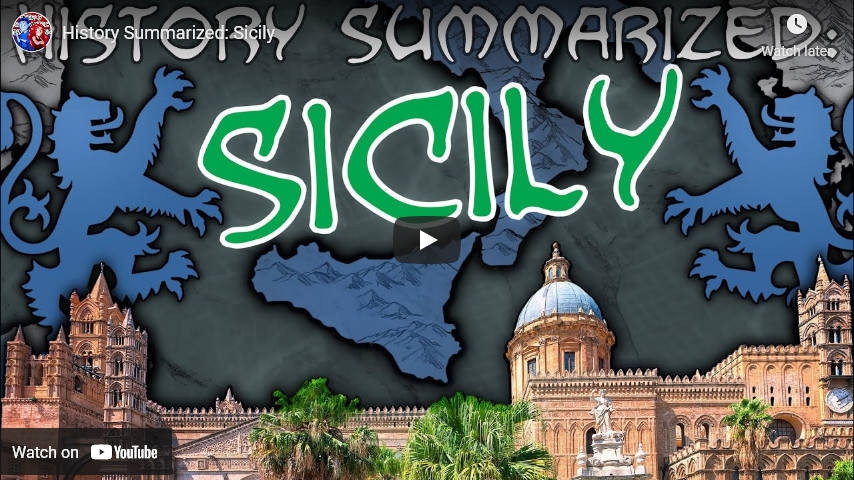
History Summarized: Sicily

Overly Sarcastic Productions
Published 1 Oct 2021

The plot twist of Medieval Italian History is that the main event was happening in the South — In the centuries before the Renaissance, Sicily and southern Italy were sporting one of the most spectacular cultures in the world, combining the greatest hits of Mediterranean history in one place. It’s way cool, you guys.

SOURCES & Further Reading: Sicily: An Island at the Crossroads of History by John Julius Norwich, The Great Cities in History by John Julius Norwich, Great Courses Lectures “Muslims in the Court Of Roger II – 1130” from Turning Points in Middle Eastern History by Eamonn Gerron and “Renaissance Italy’s Princes and Rivals” from Renaissance: The Transformation of the West by Jennifer McNabb

This video’s topic was requested by our patron Salvatore Corasaniti. Thank you for supporting our channel!

Our content is intended for teenage audiences and up.

PATREON: https://www.Patreon.com/OSP

PODCAST: https://overlysarcasticpodcast.transi…

DISCORD: https://discord.gg/osp

MERCH LINKS: http://rdbl.co/osp

OUR WEBSITE: https://www.OverlySarcasticProductions.com
Find us on Twitter https://www.Twitter.com/OSPYouTube
Find us on Reddit https://www.Reddit.com/r/OSP/

From the comments:

Overly Sarcastic Productions
2 days ago
I can’t even begin to describe how much Ancient Sicily Content™ I had to cut for time.
Fear not, Magna Graecia will get the spotlight it deserves in another video.
-B

August 24, 2021

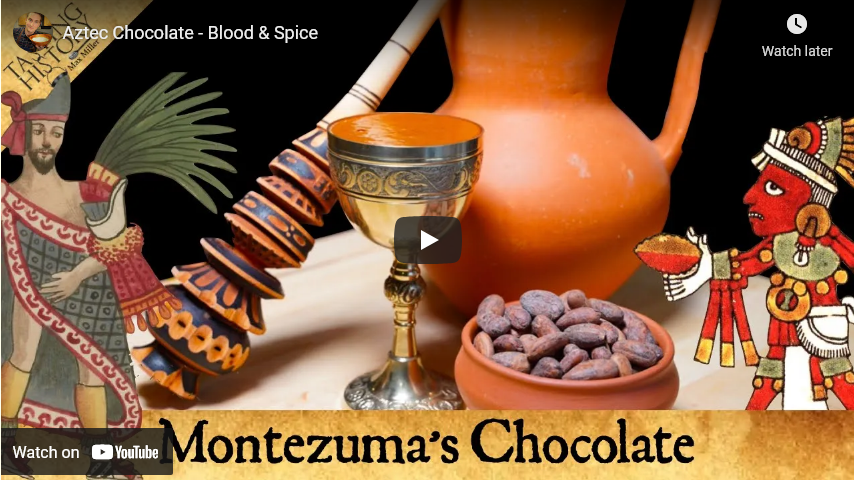
Aztec Chocolate – Blood & Spice

Tasting History with Max Miller
Published 9 Mar 2021

Help Support the Channel with Patreon: https://www.patreon.com/tastinghistory
Tasting History Merchandise: crowdmade.com/collections/tastinghistory

Follow Tasting History here:
Instagram: https://www.instagram.com/tastinghist…
Twitter: https://twitter.com/TastingHistory1
Tiktok: TastingHistory
Reddit: r/TastingHistory
Discord: https://discord.gg/d7nbEpy

Tasting History’s Amazon Wish List: https://amzn.to/3i0mwGt

LINKS TO INGREDIENTS & EQUIPMENT**
Sony Alpha 7C Camera: https://amzn.to/2MQbNTK
Sigma 24-70mm f/2.8 Lens: https://amzn.to/35tjyoW
Molinillo: https://amzn.to/3rpoXGJ
Cacao Beans: https://amzn.to/3v4feIe
Cacao Nibs: https://amzn.to/3sX7JAU
Achiote/Annatto Powder: https://amzn.to/3rpWe4C

LINKS TO SOURCES**
The Secret Life of Chocolate by Marcos Patchett: https://amzn.to/3qoLOB1
For more information visit thesecretlifeofchocolate.com
The True History of Chocolate by Sophie & Michael Coe: https://amzn.to/3sWBl1f
Florentine Codex by Bernardino de Sahagún: https://amzn.to/2OrKiAE
Thomas Gage’s Travels in the New World: https://amzn.to/3sO3YxA

**Some of the links and other products that appear on this video are from companies which Tasting History will earn an affiliate commission or referral bonus. Each purchase made from these links will help to support this channel with no additional cost to you. The content in this video is accurate as of the posting date. Some of the offers mentioned may no longer be available.

Subtitles: Jose Mendoza

PHOTO CREDITS
Metate et Mano: Yelkrokoyade, CC BY-SA 3.0 https://creativecommons.org/licenses/…, via Wikimedia Commons
Olmec Head No 3: By Maribel Ponce Ixba (frida27ponce) – Flickr, CC BY 2.0, https://commons.wikimedia.org/w/index…

#tastinghistory #aztec #chocolate

August 18, 2021

The Conscripts and Conscientious Objectors of World War Two – WW2 Special

Filed under: Britain, History, Military, Religion, USA, WW2 — Tags: , , , , , — Nicholas @ 04:00

World War Two
Published 17 Aug 2021

In keeping with their ideals of personal liberty, Britain and the United States have historically maintained relatively small armies made up of volunteer soldiers. When Germany and Japan mobilize huge numbers of well-trained conscripts and sweep across Europe and Asia, the democratic allies devote huge resources to closing the gap, while respecting the rights of those who object to fighting on moral grounds.
(more…)

August 3, 2021

History Summarized: Abrahamic Religious Philosophy

Overly Sarcastic Productions
Published 12 Jun 2017

Alrighty, here goes nothing. With three religions’ individual histories in the bag, and one campaign each by the Muslims and Christians covered on this channel, let’s see if we can find a way to all get along.

RELEVANT LINKS:
History Summarized: Islam: https://youtu.be/Uvq59FPgx88?
History Summarized: Christianity: https://youtu.be/A86fIELxFds?
History Summarized: Judaism: https://youtu.be/aKB6WduDwNE?
History Summarized: Christianity, Judaism, and the Muslim Conquest https://wp.me/p2hpV6-gQv
History Summarized: The Crusades: https://youtu.be/wZhyDIIkeLo​

PATREON: www.patreon.com/user?u=4664797

MERCH LINKS:
Shirts – https://overlysarcasticproducts.threa…?
All the other stuff – http://www.cafepress.com/OverlySarcas…?

Find us on Twitter @OSPYouTube!

July 27, 2021

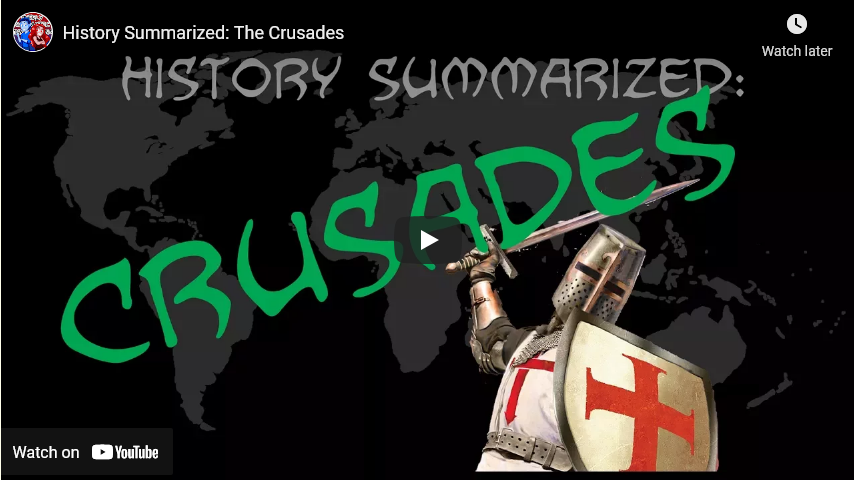
History Summarized: The Crusades

Overly Sarcastic Productions
Published 11 Jun 2017

Making a video exclusively about the crusades? That’s a bold strategy, Blue, let’s see how it pays off.

RELEVANT LINKS:
History Summarized: Islam: https://youtu.be/Uvq59FPgx88​
History Summarized: Christianity: https://youtu.be/A86fIELxFds
History Summarized: Judaism: https://youtu.be/aKB6WduDwNE​
History Summarized: Christianity, Judaism, and the Muslim Conquest https://wp.me/p2hpV6-gQv
History Summarized: Venice (Part 2): https://youtu.be/byMleAJ5kRs
History Summarized: Byzantine Empire: https://youtu.be/-ucHQVu8Dw0

History Summarized: Abrahamic Religious Philosophy: https://youtu.be/B7myRRt0Mn8​

PATREON: www.patreon.com/user?u=4664797

MERCH LINKS:
Shirts – https://overlysarcasticproducts.threa…​
All the other stuff – http://www.cafepress.com/OverlySarcas…

Find us on Twitter @OSPYouTube!

July 24, 2021

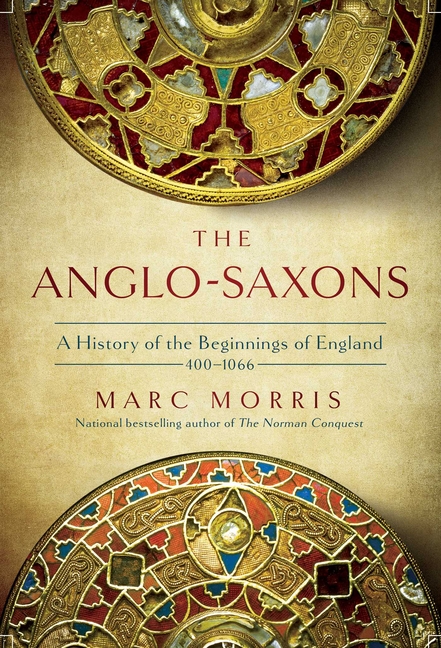
A new history of Anglo-Saxon England

Filed under: Britain, History, Religion — Tags: , , , — Nicholas @ 05:00

At First Things, Francis Young reviews The Anglo-Saxons: A History of the Beginnings of England by Marc Morris:

The art of telling stories will always be closely associated with the Anglo-Saxons. Beowulf, the era’s best-known epic poem, begins with a word that is difficult to translate, summoning an audience to attention: “Hwæt!” The same word opens another great poem of early medieval England, The Dream of the Rood, in which the wood of the Cross speaks and narrates a uniquely Anglo-Saxon Passion — a reminder that it was the Anglo-Saxons who built Christian England.

These people, as Marc Morris observes, were tellers of tales; and yet, until now, there has been no modern narrative history that weaves together the insights of archaeologists, historians, and literary scholars. Morris has risen to the task, tracing the journey of the English-speaking inhabitants of the island of Britain from tribal warbands to a highly sophisticated medieval kingdom on the eve of the Norman Conquest.

This is a triumph of historical storytelling, woven together from the scattered evidence of archaeology, numismatics, chronicles, charters, and many other sources. The narrative that emerges from these difficult sources is, of course, contentious; after all, even the use of the term “Anglo-Saxon” is now debated by scholars. But the narrative is also compelling, rooted in the primary sources, iconoclastic of received interpretations, and — most importantly — the product of a commanding historical imagination. This is an account of the Anglo-Saxons that will inform our perception of them for years to come.

It would be perfectly possible to challenge virtually every one of the author’s interpretations: As Morris notes, “The less evidence, the more contention,” especially when it comes to the chaotic documentary void of the fifth and sixth centuries. (By comparison, by the mid-eleventh century there is a comparative richness of documentary sources.) The first question is about the nature of Germanic immigration after the departure of the Roman legions at the beginning of the fifth century. Morris leans toward a more traditional “replacement” model in which Germanic settlers took the place of the Britons in the landscape. Morris places a great deal of weight on the linguistic evidence, which shows that Brittonic (the language of the Britons) had little influence on Old English. If the Anglo-Saxons had largely assimilated the Britons, rather than replacing them, we might expect many more Brittonic loanwords.

According to Morris, “The broken Britain that the Saxons found … had no allure.” Post-Roman Britain was “in every sense a degraded society, sifting through the detritus of an earlier civilisation.” Morris follows in the tradition of Bede by viewing the Britons as decadent, but this is by no means the only possible view of post-Roman society. Recent scholarship by Miles Russell and Stuart Laycock has drawn attention to Britain’s failure to become Romanized in the first place, raising the question of whether the abandonment of urban life in the early fifth century should be seen as a sign of decline, and Susan Oosthuizen has argued that rural Britain continued to prosper in the absence of urban settlement; it simply thrived on its own terms as a non-urban society.

July 20, 2021

History Summarized: Christianity, Judaism, and the Muslim Conquest

Filed under: History, Humour, Middle East, Religion — Tags: , , , — Nicholas @ 02:00

Overly Sarcastic Productions
Published 10 Jun 2017

It’s all coming together now. With the individual histories of Islam, Christianity, and Judaism covered, Blue puts it together to summarize how the three interacted in the centuries leading up to the Crusades. The next video will cover the Crusades. Hype.

RELEVANT LINKS:
History Summarized: Islam: https://youtu.be/Uvq59FPgx88​
History Summarized: Christianity: https://youtu.be/A86fIELxFds
History Summarized: Judaism: https://youtu.be/aKB6WduDwNE​

History Summarized: The Crusades: https://youtu.be/wZhyDIIkeLo​
History Summarized: Abrahamic Religious Philosophy: https://youtu.be/B7myRRt0Mn8

PATREON: www.patreon.com/user?u=4664797

MERCH LINKS:
Shirts – https://overlysarcasticproducts.threa…​
All the other stuff – http://www.cafepress.com/OverlySarcas…

July 7, 2021

The “Squirrel!” distractions will end when it’s convenient for certain people and groups

Jay Currie considers the constant barrage of distractions that appear to be preventing most people from noticing what is actually going on in Canada:

Kamloops Indian Residential School, 1930.
Photo from Archives Deschâtelets-NDC, Richelieu via Wikimedia Commons.

The remarkable thing about all of these little snippets of news is that they seem to be regarded as business as usual. Being taxed by an inflation rate which is well into the double digits does not cut through the COVID hype. Vandalism and arson purportedly in rage over residential school deaths which we have known about for decades attracts very little comment – though many First Nations people are not very happy that reservation churches which have served their communities for years are being burnt. People seem to shrug off the heat wave deaths and ambulance delays.

I expect very little from government at any level. A reasonably sound currency, a degree of public order and emergency services which can deal with the inevitable surges in demand.

The emergency services issue is probably the most easily fixed. Yes, having more para-medics is part of the solution but planning a reponse to these sorts of surge emergencies which tries to avoid the need for an ambulance in the first place is important too. Most of the dead were old, in many cases, very old. It should not be impossible to identify those older people and have a plan for these sorts of emergencies. Something as simple as a “Helpful Neighbour” program on a voluntary basis would be a good first step.

Restoring public order is more complicated. First, you have to have the political will to actually take on the problem. As we saw a couple of years ago, when it comes to people purporting to act on behalf of First Nations/environmental causes that will is absent. But even if the politicians decided that enough was enough there needs to be an investigation and an understanding of how the “spontaneous” vandalism and arson and blockades are driven. That is going to require rooting around in the activist community which will be, to say the least, difficult. The people who are actually creating the public disorder pay close attention to operational and communications security. Suffice to say this stuff is not being organized on a Facebook page.

Restoring order is also going to require a look at who benefits from disorder. To take an example: was it co-incidence that the sad fact of the Kamloops residential school graveyard came up just as the inquiry into Canada’s Winnipeg Lab’s connection to the Wuhan virology lab was heating up? The fact of there being a graveyard had been know for decades. The ground radar was being used to determine the boundaries so a new fence could be built. Yet, somehow, the number of bodies became headline news. I suspect, but cannot prove, that this was no accident. Public order will be restored when disorder is no longer in anyone’s interest.

June 17, 2021

Canada’s most recent bout of mourning sickness

Filed under: Cancon, History, Religion — Tags: , , — Nicholas @ 03:00

In Wednesday’s NP Platformed, Colby Cosh reports on a shocking incident in Dunnville, Ontario where a Catholic priest discovered and threw away some shoes that had been deposited on a bench in front of his church. This ***obviously*** was some sort of hate crime by the priest personally and the entire hierarchy of the Catholic church collectively all the way up to the Pope which must now be tearfully acknowledged and repented of in multiple media appearances, because the items were part of an informal, unofficial memorial to the long-deceased children whose unmarked graves were discovered at a former residential school in British Columbia.

Kamloops Indian Residential School, 1930.
Photo from Archives Deschâtelets-NDC, Richelieu via Wikimedia Commons.

Ne Hiyawak seemingly didn’t ask permission to leave the shoes at the church, or give the pastor any notice; the next day, when others seeking to do the same thing explained what they were up to, the priest allowed an enormous pile of stuffed animals and handmade signs to be created on the front steps of the building.

A natural next question may be whether these mementoes will be allowed to obstruct the church door forever. Can it be that these items, too, are certain to end up in the garbage after sitting around amid the elements for a few days? (If you want to recycle an old stuffed animal and thereby guarantee that it finds its way into the hands of a child, actually finding such a child yourself is the only appropriate procedure.)

NP Platformed would like to suggest very gently that temporary “memorials” constructed by leaving stuff on common property, or on someone else’s property, should be discouraged by the press rather than encouraged. We have all driven past a mildewed or long-rotted bundle of plastic-wrapped flowers lying in a ditch or on a corner where someone died: this has somehow become the last acceptable form of littering, a vice our civilization once embraced, and had to work hard to mitigate.

Eventually, someone or other, probably a custodial professional paid peanuts, has to pick all that stuff up. We’re not sure how this isn’t obvious, or why it ought to be controversial. If you want to festoon a church with protest materials, and you do this precisely because you have a well-founded disrespect for the church, we are not sure anyone can justly complain when the materials are removed.

The Catholic Church may be monstrous, but the creation of memorials consisting of piles of items like shoes puts its stewards in an impossible position. If you remove the items too soon, you’re being disrespectful. If you leave them lying around long enough to become an eyesore, that’s surely no less disrespectful. There is a stubborn segment of the public that cannot resist this sociopathic behaviour, but it should be observed that in publicizing these stunning and brave makeshift memorials, the news media always photograph them at their very nicest (which is never all that nice) and walk away. Those who have to collect the detritus are never asked their opinion, nor are those unfortunates who merely live nearby.

June 15, 2021

QotD: The destruction of the Great Library of Alexandria

The dramatic force of the New Atheist moral fable of the Great Library of Alexandria not only comes from the Library’s supposed size and unique nature, but also from its supposed cataclysmic and fiery end. The moral of this story has added impact if the Great Library ends in a violent catastrophe, so this is the story that tends to get told by those who use the tale as a stick with which to beat Christianity. The fact is, however, that libraries are delicate institutions and most decline slowly rather than ending in a sudden disaster, or – as in the Great Library’s case – decline slowly while suffering a series of disasters. Anyone who works in library services will tell you that the main enemy of a library’s continuation is a lack of funding. Ancient libraries in particular needed constant financial patronage from their founders and sponsors to survive. Papyrus scrolls decayed and fell apart from use, suffered damage from mice and other vermin and, in a period where artificial light tended to be from open oil lamps, were in constant danger from fires, great and small. The Mouseion, like all ancient libraries, needed a large staff to undertake the constant and unending task of repairing, replacing and recopying books and these staffs, even when made up of slaves, were expensive to maintain.

During the Mouseion‘s heyday in the third and second centuries BC the funding for this labour and the upkeep of the institution generally would have been regular and reliable. The Mouseion was, after all, one of the jewels in the crown of the Ptolemaic kingdom and it sat in the Broucheion or Royal Quarter where the Ptolemies themselves lived. By the first century BC, however, there is some indication that the prestige of the institution had begun to decline. In its first two centuries the Mouseion‘s directors were famous scholars, renowned for their intellects throughout the Greek-speaking world. By the time of the later Ptolemies, however, we find administrators, court favourites and even a former commander of the palace guard taking up the role, which seems to have become, as Lionel Casson puts it, “a political plum” to be awarded to flunkies rather than scholars. This continued under the Romans in the first century AD, with Tiberius Claudius Balbilus being awarded the post by Claudius, though he at least was something of a scholar if not a leading intellect. It is likely that the later Ptolemies began to neglect the institution and Roman imperial patronage of it was probably even less reliable.

But war has always been one of the main destroyers of libraries down the ages and the Great Library’s slow decline was marked by several sacks of the Broucheion which eventually led to the end of the Mouseion. The first and probably the most significant came in 47 BC when Julius Caesar took the side of Cleopatra in her claim on the Ptolemy’s throne and besieged her younger brother, the boy king Ptolemy XIII, in Alexandria. Caesar’s own account mentions that he burned a fleet in the docks of the city, but makes no mention of this fire destroying anything else (Civil Wars, III.11). His account was continued by his lieutenant Aulus Hirtius in his Alexandrine War and he too makes no mention of any fire damaging the city, but he does go out of his way to say “Alexandria is well-nigh fire-proof, because its buildings contain no wooden joinery and are held together by an arched construction and are roofed with rough-cast or tiling” (Alexandrine War, I.1) which could be read as an attempt at a defence against accusations of damage through fire, given his role in the siege. The earliest account of Caesar’s siege damaging Alexandria comes from a lost work by Livy via an epitome by Florus (Florus, II.13) which describes Caesar burning the area around the docks to deprive enemy archers of a position on which to fire on his troops, and this is echoed by Lucan (The Civil War, X.24). It is Plutarch who first depicts this fire destroying the Great Library in an almost casual mention that perhaps assumes this as common knowledge:

    In this war, to begin with, Caesar encountered the peril of being shut off from water, since the canals were dammed up by the enemy; in the second place, when the enemy tried to cut off his fleet, he was forced to repel the danger by using fire, and this spread from the dockyards and destroyed the Great Library, and thirdly, when a battle arose at Pharos, he sprang from the mole into a small boat and tried to go to the aid of his men in their struggle, but the Egyptians sailed up against him from every side, so that he threw himself into the sea and with great difficulty escaped by swimming. (Plutarch, Caesar, 49)

Aulus Gellius’ mention of the Great Library says that the collection numbered “nearly seven hundred thousand volumes” and then adds “but these were all burned during the sack of the city in our first war with Alexandria”, referring to Caesar’s siege (Gellius, Attic Nights, VII.17). Dio Cassius gives a slightly longer account:

    After this many battles occurred between the two forces both by day and by night, and many places were set on fire, with the result that the docks and the storehouses of grain among other buildings were burned, and also the library, whose volumes, it is said, were of the greatest number and excellence. (Dio Cassius, Roman History, XLII.36)

There is some debate about how literally we can take the reports that the whole Great Library was destroyed, especially given that the docks area of Alexandria were some distance from the Mouseion‘s likely location. The fact that so many writers agree that Caesar’s fire destroyed the Great Library simply can’t be ignored, however, and at the very least the fire seems to have destroyed a substantial portion of the book collection, probably stored in warehouses on the docks. It is clear that the losses were huge, as Plutarch also tells the (probably apocryphal) story of Mark Antony confiscating the whole collection of the Great Library of Pergamon and giving them to Cleopatra to replace the books lost in the fire (Plutarch, Antony, 58). While this was not the end of the Mouseion and not the end of its whole collection, writers from around the end of the reign of Caesar’s dynasty onwards tend to refer to the Great Library in the past tense and any surviving collection was probably greatly reduced after 47 BC.

Scholarship continued in the Mouseion, however, and the Roman emperors seem to have continued its funding under their patronage when the Ptolemaic dynasty came to an end with the death of Cleopatra. Claudius built a new wing or annex to the Mouseion, which was to house his works of history and see the public reading of them twice a year. But it was the calamitous third century AD that saw a succession of military disasters in Alexandria and seems to have seen the final end of the Mouseion.

In 215 AD Caracalla punished Alexandria for mockery of him with a wholesale massacre of its young men, after which his troops plundered parts of the city. It is not known if the Mouseion was sacked in this action, but John Malas records that its funding was stopped by Caracalla at this time (Delia, p. 1463). The real end probably came in 272 AD when Aurelian stormed the Broucheion with Ammianus noting “[Alexandria’s] walls were destroyed and she lost the greater part of the district called Bruchion.” (Ammianus, History, XII.15). If that sack didn’t mean the death blow for the institution, Diocletian probably finished the job when he too sacked the city in 295 AD, and it was later devastated by a major earthquake in 365 AD. The only mention of the Mouseion after this is found in a late source, the tenth century Byzantine encyclopaedia called the Suda, which describes the fourth century philosopher Theon as “the man from the Mouseion“, though it is hard to tell exactly what this means. Given that the Mouseion was most likely long gone by Theon’s time, it could be that some other successor “Mouseion” had been established and Theon studied there or it could be that “the man from the Mouseion” is stylised honorific or even a personal nickname – meaning “a scholar like one from the old days”.

The Mouseion and its library were almost certainly a memory by the late third century, destroyed in a series of calamities after a long period of decline. But what is missing from all this evidence is any howling, pyromaniacal Christian mob. If the Great Library ceased to exist in the century before Chrisitanity came to power in the Empire, how did Christians get stuck with the charge of destroying it? The answer lies not in the evidence about the Great Library, but in the history of its daughter library and annex in the Serapeum.

Tim O’Neill, “The Great Myths 5: The Destruction Of The Great Library Of Alexandria”, History for Atheists, 2017-07-02.

June 7, 2021

Why is the belated discovery of (potentially hundreds of) unmarked graves at a former residential school surprising?

Filed under: Cancon, Education, Government, History, India — Tags: , , , , — Nicholas @ 03:00

The weekly wrap-up post at The Line considers the recent revelation of possibly hundreds of unmarked graves of First Nations children at the site of a former Catholic-run residential school in BC. Despite being Canadian, my interest in Canadian history centres mostly on economic, naval, and military aspects, but I was certainly aware that the residential school system was a black mark on Canada’s historical dealings with First Nations and that the general outline of events — if not the gruesome details — had been known for many years. The first time I found out about it was in middle school, through what we’d now call a “Young Adult” novel about a young First Nations boy escaping from the residential school he’d been sent to and his attempts to travel hundreds of miles to get home. I read it in the early 70s and it may have been published up to a decade before then (I no longer remember the author’s name or the title of the book, unfortunately).

If I, as a schoolchild, knew something of this fifty years ago, why have people younger than me been shocked and appalled to be hearing about this widespread tragedy for the first time now?

Kamloops Indian Residential School, 1930.
Photo from Archives Deschâtelets-NDC, Richelieu via Wikimedia Commons.

We like to start our dispatches with something pithy or casual, but it’s been a heavy week. The discovery of what appears to be a burial site containing the bodies of more than 200 children at the site of a former residential school in B.C. has shaken Canadians. Of course it has. There are two outrages here — the outrageous reality of the generations of combined abuses inflicted on Indigenous Canadians, of which the residential school system was but a part. Also, the outrage that most Canadians are only learning about this now.

Your Line editors are not experts on Indigenous affairs or history, but we dare say we’re better read than most on Canadian history in a general sense. We do not say this in any way with snark or derision, but to our fellow Canadians — this should not be surprising to you. The Catholics who ran most of these schools under the sanction of the state had a long history of trying to save souls at the expense of the bodies in which they inhabited. Religious institutions were slow to recognize and stop the spread of disease in their own institutions. Most disturbingly, their ideology glorified, even sanctified, physical suffering. It still does.

Mass graves have been uncovered in Ireland, at the site of Catholic-run homes once devoted to the care of unwed mothers and children. “Saint” Mother Teresa’s hospitals in India were altars to the needless suffering of impoverished people who could not afford to die in peace and dignity. Her hospitals were dirty, poorly run facilities where children were reportedly tied to beds, and terminal patients were given little more than aspirin.

One of the great lessons of history that we consistently fail to accept is that many of our most evil actions are rooted not in self-evidently evil impulses, but rather in our desire to “save” others. Hubris and paternalism, these are the sins we cannot seem to shake. Residential schools, Catholic or otherwise, were the disastrous result of marrying a poisonous and righteous ideology with the authority and resources of a centralized state.

The Truth and Reconciliation report laid out much of this in detail in its final report in 2015, which also spelled out that graves like the ones we’re now mourning in Kamloops are likely to be far more prevalent and common than we now understand. Everyone here deserves the truth.

Update: I’m delighted to see that David Warren continues to improve from his recent health issues and he has rather a different view on Canada’s residential school system and its place in the lives of the First Nations children who attended the schools:

Ryerson was also a figure in the development of Canada’s “residential schools”, which took Indians from (mostly) dysfunctional homes and gave them an education with priests, nuns, and respectable Protestants. Not all denizens of an orphanage are happy, and by attaching the word “colonialism”, and giving simplified accounts, full of libels, “progressive” Canadian politicians have made this period of Canadian history into a scandal. Those who know better have been silenced.

Some years ago I tried to defend the “residential schools”, more or less alone in the Canadian “meejah”. I received many, many letters from former students of them, who said their memories were happy. They had been inspired by teachers of real Christian faith and conviction, and had been equipped with the rudiments of sound learning. “They saved my life,” was a frequent comment.

I could understand the residential schools because I am familiar with Canadian education before it was taken over by barbaric hordes; and also because I am myself partly a product of “British colonial” private schools in Asia, decades ago. They were brutal towards their boys, sometimes. I was myself beaten, and their teachers were sometimes tyrannical.

As a young man I thought this was the way of the world. Now that I am old, I look back on the teaching I received with great pride. It was vastly better than what I would receive in a Canadian high school; and that was much better than what we get today.

May 3, 2021

History Summarized: Pope Fights 2 — The Reformation

Overly Sarcastic Productions
Published 26 Apr 2019

Thank you to our Patron Peter Bemis for commissioning this video! To support the channel, head over to Patreon.com/OSP

You’ve seen the Double-Pope matchup, but what about the Double-Christianity face-off? Today’s Pope Fights covers the history and aftermath of the Protestant Reformation and Catholic Counter-Reformation.

FURTHER READING, from shortest to longest books:
The Reformation: A Very Short Introductionhttps://www.amazon.com/Reformation-Ve…
Christianity In The West (1400-1700)https://www.amazon.com/gp/product/019…
The Reformation: A Historyhttps://www.amazon.com/The-Reformatio…

DISCORD: https://discord.gg/ZufVWse — Come one come all to the official OSP discord server!

MERCH LINKS:
Shirts – https://OverlySarcasticProducts.Threa…
All the other stuff – http://www.Cafepress.com/OverlySarcas…

OUR WEBSITE: https://www.OverlySarcasticProductions.com

Find us on Twitter @OSPYouTube!

QotD: Marcus Aurelius and the “Mandate of Heaven”

A much more interesting scenario happens when seemingly legitimate, competent rulers find themselves at the helm during a major crisis. Marcus Aurelius has an overinflated rep among the laity, but he was decent at his job … until he wasn’t, thanks to things like the Antonine Plague. This, and a large barbarian invasion, brought all the Empire’s long-term structural problems into sharp focus. Yeah, Marcus is overrated, but it’s no knock on him that he didn’t fix these problems, or cure the plague; those were probably beyond the skill of even the most extraordinary man. His reaction, though, and the reaction of his subjects, is instructive.

Marcus faced no rebellion; no one sought to usurp him. For one thing, Marcus won his wars — no mean feat, considering the plague etc. But for another, it’s hard to blame Marcus for the plague, the weakness of the army staffing system, the structural weakness of the currency. And that’s where it gets interesting, because even though you can’t consciously blame Marcus for this, all those things create excessive anxiety among the people, and that anxiety has to go somewhere

… so they persecuted Christians.

“The extent to which Marcus Aurelius himself directed, encouraged, or was aware of these persecutions is unclear and much debated by historians,” Wiki informs us, but it doesn’t matter if he had a hand in them or not. The important thing is that the Christians were the perfect target for free-floating anxiety, since plagues etc. were supernatural events and the Christians were ostentatiously opposed to the official belief system. Perhaps Marcus didn’t lose the Mandate of Heaven; perhaps it was stripped from him. Burn the unbelievers, and maybe the world gets back into focus.

This is the pattern whenever the Powers That Be find themselves trying to ride out a massive, structural sea-change — one where it’s obvious to the stressed-out public that something HAS to change, but a mere change in leadership won’t cut it. You’ll have to trust me on this, I guess, unless you’re up on your Chinese history, but almost all their “rebellions” had this mystical character — widespread banditry was assumed, in itself, to be a sign that the Emperor had lost the Mandate of Heaven, and the bandit groups usually ended up looking like the White Lotus sect, who caused endless trouble for something like 300 years. And then there’s the Taiping Rebellion — led by Jesus Christ’s brother! — and by now I’m sure y’all take my point. You can’t really blame the Qing for everyone’s opium addiction, or getting stomped by the British, but you’ve got to blame someone – hence the mystical character of pretty much all Chinese rebellions, certainly including the Maoist.

Severian, “Witch Trial Syndrome”, Rotten Chestnuts, 2021-01-27.

May 1, 2021

Rulers Who Were Actually Good — History Hijinks

Overly Sarcastic Productions
Published 30 Apr 2021

History is full of Rulers, but most of them (especially some famous ones) can be Kind Of Terrible upon closer inspection. So let’s take a look at two kings we can actually consider to be Good — not perfect, not blameless, but a heck of a lot more virtuous than the average ruler, that’s for sure.

This topic was requested by our patron Duncan! Thank you for your patronage, and for the topic suggestion.

SOURCES & Further Reading: The Great Courses Plus lectures “Being Persian” by Robert Garland, “The Persian Era” by Jean-Pierre Isbouts, “Saladin: Chivalry and Conquest – 1187” by Eamonn Gearon, and “Saladin and the Defeat of the Crusaders” by Dorsey Armstrong.

Our content is intended for teenage audiences and up.

TRACKLIST: “Monkeys Spinning Monkeys,” “Pippin the Hunchback” Kevin MacLeod (incompetech.com)
Licensed under Creative Commons: By Attribution 4.0 License
https://creativecommons.org/licenses/…

PATREON: https://www.Patreon.com/OSP

PODCAST: https://overlysarcasticpodcast.transi…​

DISCORD: https://discord.gg/osp​
MERCH LINKS: http://rdbl.co/osp​

OUR WEBSITE: https://www.OverlySarcasticProductions.com
Find us on Twitter https://www.Twitter.com/OSPYouTube​
Find us on Reddit https://www.Reddit.com/r/OSP/

« Newer PostsOlder Posts »

Powered by WordPress