Quotulatiousness

February 10, 2023

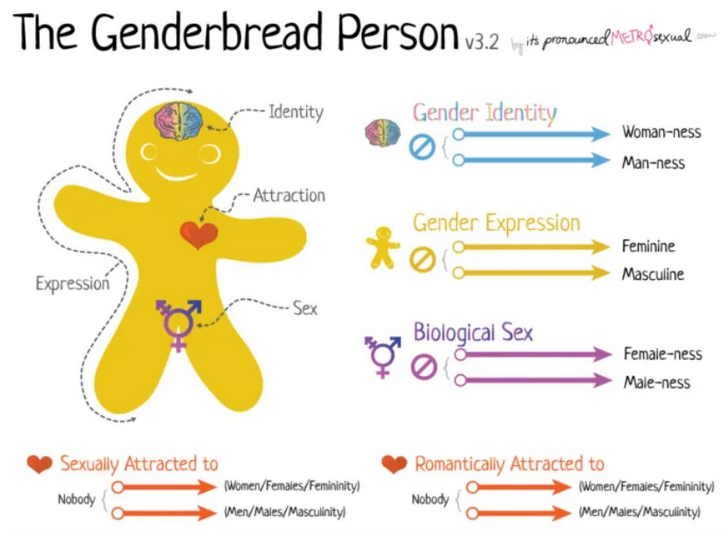
“What’s happening to children is morally and medically appalling”

Filed under: Health, Politics, USA — Tags: , , , , — Nicholas @ 03:00

In The Free Press, Jamie Reed explains why she gave up her job as as a case manager at The Washington University Transgender Center at St. Louis Children’s Hospital and is now speaking out against the early and aggressive therapeutic treatment of gender-confused children and teens:

Reed in her office. (Theo R. Welling).

Soon after my arrival at the Transgender Center, I was struck by the lack of formal protocols for treatment. The center’s physician co-directors were essentially the sole authority.

At first, the patient population was tipped toward what used to be the “traditional” instance of a child with gender dysphoria: a boy, often quite young, who wanted to present as — who wanted to be — a girl.

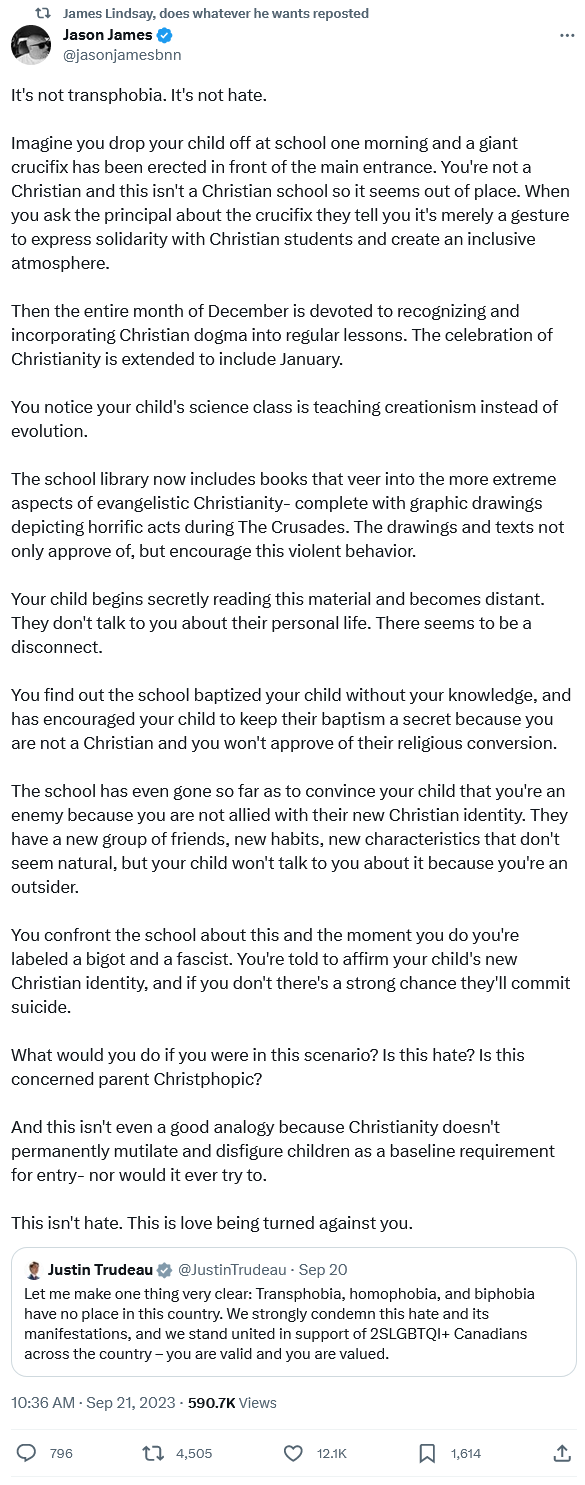
Until 2015 or so, a very small number of these boys comprised the population of pediatric gender dysphoria cases. Then, across the Western world, there began to be a dramatic increase in a new population: Teenage girls, many with no previous history of gender distress, suddenly declared they were transgender and demanded immediate treatment with testosterone.

I certainly saw this at the center. One of my jobs was to do intake for new patients and their families. When I started there were probably 10 such calls a month. When I left there were 50, and about 70 percent of the new patients were girls. Sometimes clusters of girls arrived from the same high school.

This concerned me, but didn’t feel I was in the position to sound some kind of alarm back then. There was a team of about eight of us, and only one other person brought up the kinds of questions I had. Anyone who raised doubts ran the risk of being called a transphobe.

The girls who came to us had many comorbidities: depression, anxiety, ADHD, eating disorders, obesity. Many were diagnosed with autism, or had autism-like symptoms. A report last year on a British pediatric transgender center found that about one-third of the patients referred there were on the autism spectrum.

Frequently, our patients declared they had disorders that no one believed they had. We had patients who said they had Tourette syndrome (but they didn’t); that they had tic disorders (but they didn’t); that they had multiple personalities (but they didn’t).

The doctors privately recognized these false self-diagnoses as a manifestation of social contagion. They even acknowledged that suicide has an element of social contagion. But when I said the clusters of girls streaming into our service looked as if their gender issues might be a manifestation of social contagion, the doctors said gender identity reflected something innate.

To begin transitioning, the girls needed a letter of support from a therapist — usually one we recommended — who they had to see only once or twice for the green light. To make it more efficient for the therapists, we offered them a template for how to write a letter in support of transition. The next stop was a single visit to the endocrinologist for a testosterone prescription.

That’s all it took.

When a female takes testosterone, the profound and permanent effects of the hormone can be seen in a matter of months. Voices drop, beards sprout, body fat is redistributed. Sexual interest explodes, aggression increases, and mood can be unpredictable. Our patients were told about some side effects, including sterility. But after working at the center, I came to believe that teenagers are simply not capable of fully grasping what it means to make the decision to become infertile while still a minor.

February 4, 2023

QotD: Leftists against humanity

Filed under: Health, Politics, Quotations, USA — Tags: , , , , , , — Nicholas @ 01:00

Yesterday in a group, a friend said what is obvious about the left is that they seriously oppose human reproduction and longevity. Ultimately human life, I guess.

Here’s the list as to why:

NOT AN EXHAUSTIVE LIST:

1) Pushing to maximize abortion

2) Pushing to maximize homosexuality

3) Multiple different initiatives to make child rearing more difficult and expensive including

    a) Ramping up the intensity of social services scrutiny, effectively necessitating high intensity “helicopter parenting”
    b) Turning schools into indoctrination factories that don’t prepare children to function independently but do prepare them to have constant fights with their parents over their indoctrination
    c) Making healthcare more expensive through constantly ramping regulation, making the actual having of children more difficult and prohibitively expensive
    d) Pushing to nationalize healthcare, granting them further power over who lives or dies – allowing limitation of IVF, and also
    e) legitimizing legal euthanasia while also pushing to make healthcare decisions for the public (see Canada right now)

4) Pushing from other regulatory angles to make the de facto standard a two-income family, ensuring children are raised in daycares and further pushing family budgets to the brink

5) Using the student loan system to turn the bulk of reproductive age, upwardly mobile people into collateral in a deal that passes billions of dollars directly from the US government to the same system that then indoctrinates those kids to the point of full societal dysfunction; encouraging, as much as possible, the use of sex as entertainment ONLY

6) Turning sterilizing yourself into the hot new fad for kids

7) Turning the simple identification of gender into a minefield so that even sex between people who aren’t mutilating themselves is suddenly difficult to even consider

8) Willfully manipulating nursing homes into putting elderly people in a position where they are MOST LIKELY to die during COVID

9) Adopting COVID policies which foreseeably shut down cancer diagnostics and treatment for almost two years, which is the most likely cause of the 10 fold increase in the rate of cancers since the COVID lockdowns (although I can’t entirely discount that the vaccines themselves are partially responsible because, sing it with me now, you can’t ensure the long term safety of something that hasn’t been around long enough to have long term safety data, which is why we do clinical trials and not mass experiments on the general public. I note in passing that the drug companies are so trustworthy they demanded legal indemnity as a condition of participating, while swearing blind that the product was safe and effective even though it was physically fucking impossible for them to have data to back that up due to minor problems like the requisite quantity of time not passing.)

Sarah Hoyt, “I Don’t Believe in Aliens”, According to Hoyt, 2022-10-31.

January 29, 2023

D.C. Public Schools – “if this were a corporation, it would be in liquidation. If it were a house, it would be condemned”

Filed under: Education, Government, USA — Tags: , , , , — Nicholas @ 03:00

Andrew Sullivan on the latest PR campaign by the disaster that is the DC Public School system:

In my web-reading this week, I stumbled across two statistics that made me sit up straight. The first came from a devastating story last September about my home city’s public schools. I had just watched a slick new video from DC Public Schools about their new “equity” push, which aims to go “beyond students’ academics” and “call out inequities”. The video is full of vague-sounding pabulum — they never define what they mean by “equity”, for example, apart from invoking Ibram X Kendi’s term “antiracism” — but the message is very clear: “equity” is now the central focus of the school district. And it’s a bright new day!

Now check out the data on how the DC Public School system is faring. A key metric is what they call “proficiency rates” — a test of whether the kids are passing the essentials of reading and math at every stage of their education. Overall, only 31 percent of DC students have proficiency in reading and just 19 percent have proficiency in math. Drill down further in the racial demographics and the picture is even worse: among African-American kids, the numbers are 20 percent and 9 percent, respectively. Among black boys, it’s 15 percent and 9 percent. Which means to say that DC Public Schools graduate kids who are overwhelmingly unable to do the most basic reading and math that any employer would need.

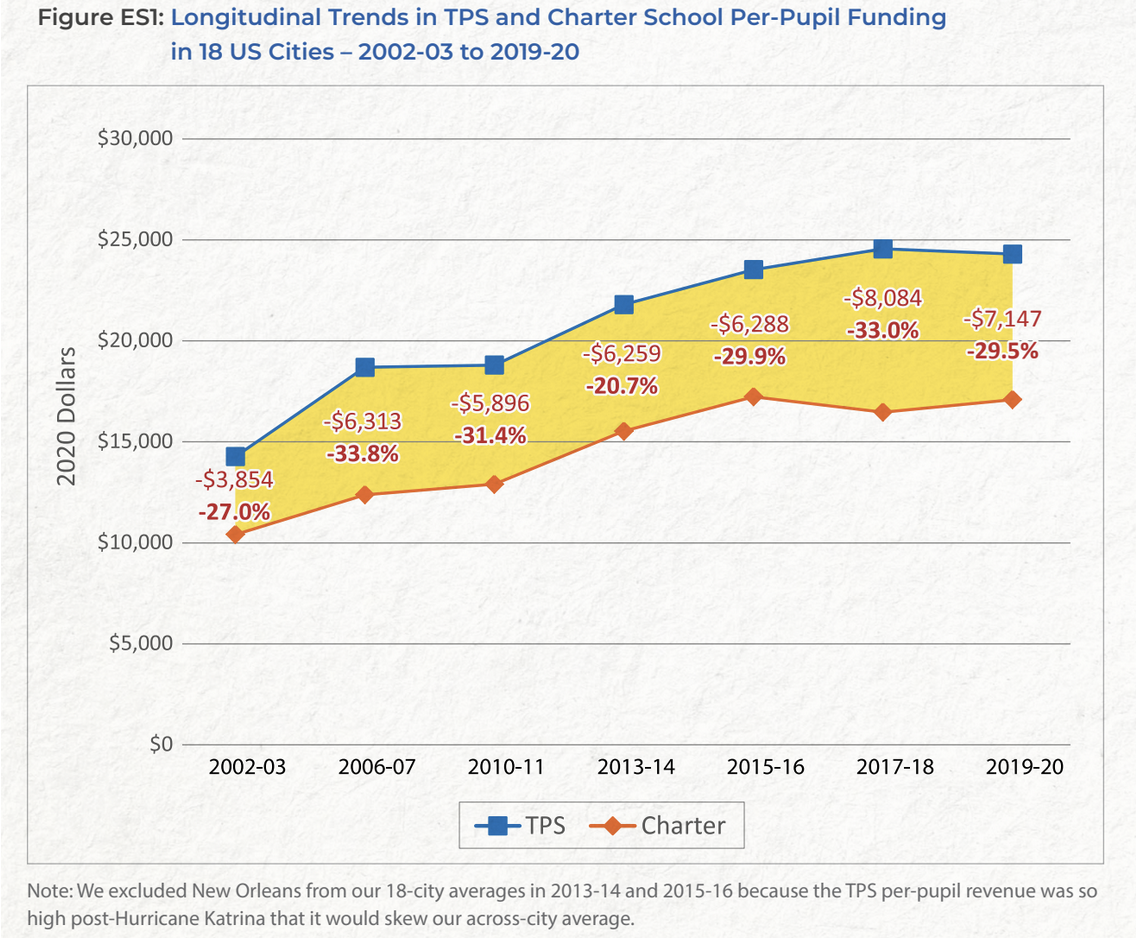
This is not a function of money. In the most recent federal analysis: DC spends far more per student — $30,000 a year — than any other state, double the amount in many states across the country.

Let’s put it this way: if this were a corporation, it would be in liquidation. If it were a house, it would be condemned. But since it’s a public school system, it can avoid this catastrophic failure by emphasizing “equity”!

Call this the woke dodge. As they fail to educate kids in the very basics, they brandish a shiny object over there — “Diversity! Equity! Inclusion!” — to distract us. Or they claim that these scores are caused by “white supremacy” or “systemic racism”. Or they argue that now, they are educating “the whole child”. From the DCPS video: “The racial equity lens is a critical component of ‘whole child’ for us because being a whole child means thinking about all of your identities, but certainly the racial identity is a gap in what we’re discussing as a country.” Anything but do the basic job of teaching math and reading as they are supposed to do.

The truth is: they obviously can’t teach those subjects successfully. I’m sure many are good teachers doing their best, and some manage to rescue some of these kids, who often face terrible trauma in their homes and neighborhoods. But the data overall are damning. Imagine spending $30K a year on a student, any kid, in any country, and after 12 years, he still can’t spell or do basic math. It must be really hard to pull that off. And as a reward, you get a shitload of money from the city and the feds to keep it up. Criticize them? You’re a “white supremacist”.

Then there’s the other stat that blew my mind — on the post-BLM surge in murders of African-Americans, including many children. The rise in homicide has cooled off somewhat, as Robert Verbruggen notes. But check this out:

    Between the 2018–2019 and 2020–2021 periods, the black homicide rate went up by about 40 percent and the white one by 15 percent — already a glaring disparity. But since the black homicide rate started out so much higher than the white one, this translated to an increase of just 0.4 per 100,000 for whites and 9.7 per 100,000 for blacks — nearly 25 times as large. The increase in the black homicide rate was greater than the total homicide rate for the nation as a whole.

Read that last sentence again.

January 17, 2023

How ideological programming in British schools make men like Andrew Tate inevitable

Filed under: Britain, Education, Europe — Tags: , , , , — Nicholas @ 03:00

To be honest, I don’t think I’d ever heard of Andrew Tate before his legal troubles in Romania hit the headlines, and I’m not well-versed on his achievements (such as they might be). Janice Fiamengo also admits that Tate wasn’t on her radar before then, but she’s done some work to try to put him into perspective:

What has Tate got to do with UK education, except perhaps as a telling symbol of its unintended consequences? Why not just model and enforce ideals such as courtesy, self-restraint, and hard work, while upholding high academic standards? The article demonstrates how deeply committed schools have become to ideological programming. Some schools have drawn up “entire lessons focused on Tate” (!!!) while others deal more generally with “misogyny and gender stereotypes”. Whatever the particulars, the general message is unvarying: “We’ve all got to work collaboratively and collectively to support young men to reframe masculinity—away from this toxic ideology that’s presented by the likes of Tate.”

No one who’s been following the feminist narrative over the past decade or two will be surprised by the dogmatic reference to “toxic ideology,” now standard in any discussion of “reframing” boyhood. There is just one problem for the concerned teachers: Tate is five steps ahead of them, having already made clear to his millions of followers why injunctions about “reframing masculinity” are just code for the continual marginalization that most boys naturally want nothing to do with. The moment Tate and his allies expressed their scorn for the project, it lost its power overs the millions of boys forced to sit in feminist classrooms across the UK. Tate confirmed what boys intuitively knew: having their masculinity “reframed” will prevent them from pursuing masculine dreams, from being proud of themselves as male, admired by their male peers, and able to attract the interest of pretty girls. Teachers can keep on telling boys that peer approval through masculine moxy isn’t important, but that won’t make it true.

The point is not whether Tate’s (“I’ve got 33 cars“) program is an unalloyedly good one; the point is that it is manifestly better than the recipe for self-loathing and irrelevance being offered by the schools. The school’s program is the same that has been tried for years without any enthusiastic uptake because it offers nothing affirmatively male for young men to be and do (see especially White Ribbon UK, which has been trying for years to turn boys into handmaidens of feminism). All the normal things that centuries of boys in every major civilization on earth have cared about—competitiveness, status, toughness, mastery, knowledge, self-reliance, stoicism, high-jinks, displays of ability, and male bonding—are now frowned upon and must be replaced by feminine traits like empathy, egalitarianism, conformity, verbal display, and tone-policing. It doesn’t take a gender studies specialist to see that the life being offered these boys is one of deference, self-suppression, and self-contempt. No boy should want that.

In case you doubt my characterization, take a look at the Global Boyhood Initiative’s report on The State of UK Boys: Understanding and Transforming Gender in the Lives of UK Boys, published in 2022. The report was written for “teachers, youth workers, early-years practitioners and other professionals” to achieve “gender equity and social justice”.

Incidentally, the report includes a section attacking an alleged “overemphasis” on research showing boys and men as victims of intimate partner violence by women. While the report enthusiastically promotes the end of “gender” through transgenderism and social constructivism, it emphatically does not support the end of gendered norms about which sex is violent. On this front, the report laments that “even young boys” now believe that male persons can be victimized by female persons, citing the case of Johnny Depp’s abuse by Amber Heard. Nothing could more clearly signal the report authors’ chagrined awareness of the difficulty of controlling boys’ thoughts in the internet age.

The rest of the report explores pathways to weaken masculinity. On a number of occasions, it takes aim at “simplistic notions that boys require male ‘role models'” because such notions “frame women as inadequate to parent and teach boys”. Taking for granted that “gender is not tied to sex organs, hormones, or biological traits” (one wonders, then, why trans persons elect to take hormones and to change their sex organs), the emphasis throughout the report is on “realigning” masculinity to highlight gender fluidity, transgenderism, and inclusion of girls. The document has absolutely nothing good to say about masculinity, which it describes, variously, as “a seductive form of power”, “hegemonic”, and “oppressive”. It even uses the derogatory term “boysplaining” to stigmatize boys’ alleged way of talking.

Even such seemingly benign behaviors as “laughter, banter, and entertaining one another” are said to be “laddish” and linked to the exclusion of women and homosexuals. Taking pleasure in being good at sport is also given a negative valence by being associated with bullying.

As in all such feminist propaganda, the report seeks the evacuation of all positive content from masculinity. “Realigned” boys are to anchor their sense of self mainly in not being what boys have always been. They are to shun the allegedly “hegemonic” characteristics of “physical, sexual, and mental prowess; being action-oriented; ‘knowing’; having autonomy […]; and being emotionally tough.” It is surely no coincidence that modern boys and young men have fallen well behind their female peers in educational attainment, economic status, and performance on the job market. “Prowess” is out, knowing is out, being active is out, toughness is out. No wonder so many boys feel lost, disaffected, and resentful, and no wonder some see Andrew Tate as a hero.

January 10, 2023

Persuading women not to have families because it “helps the GDP”

Filed under: Britain, Business, Economics — Tags: , , , , — Nicholas @ 03:00

In The Critic, Niall Gooch stands up for family life despite the regular hand-wringing articles pointing out just how “expensive” children are and how much money women forego in the working world to take time off and have a family, as if no other economic decisions in life have opportunity costs attached:

Every so often, a publication called something like Bosses Quarterly or Money Patrol will report a new study investigating the financial costs of having children. “Average child now costs £200,000”, they breathlessly inform us, or perhaps “Women Who Become Mothers Lose £400,000 In Earnings Over Their Lifetime”.

I have no idea how they generate these figures. Presumably they have at least some basis in proper empirical research. It doesn’t seem inherently implausible that middle-class parents in Britain spend well into six figures on their children one way and another, when you factor in childcare, holidays, clothes, food, transportation, birthday parties and university attendance. Raising children is undoubtedly costly, from a financial perspective, even if you are frugal. If my wife and I did not have children, our lifestyle would be considerably more affluent than it is at present. The “motherhood penalty” in lifetime wages does seem to be a real phenomenon – although it is one that many women are willing to accept.

But the accuracy or otherwise of the calculations is beside the point. There is something profoundly wrong-headed about the whole endeavour of trying to evaluate the good of family life in economic terms, or to treat the raising of children as simply one option among many in the great lifestyle marketplace. And yet many people persist with doing so. Sam Freedman, the policy analyst and writer, claimed on Twitter earlier this week, in defence of expanding subsidies for nurseries, that “it’s a lot cheaper for one person to look after several children than each parent to look after their own and not work”. This person noted “the long term impact on (nearly always) women’s career prospects which has a big effect on GDP”. He also argued against replacing subsidies to nurseries with direct payments to parents, noting that “giving money direct to parents would encourage people to leave the workforce when we need the opposite to happen”.

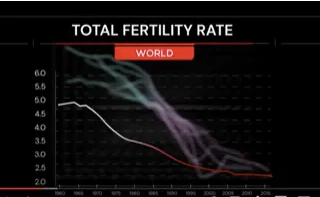
Even on its own terms, this is dubious. Low birth rates are a significant drag on economic growth, and making it harder for women to spend more time at home with their children is hardly conducive to increasing the birth rate. Besides which, there are big socio-economic problems connected to the modern norm of two parents working more or less full-time — house-price inflation for example, or the decline of communal organisations and lack of time for family caring responsibilities.

January 5, 2023

The injustices inherent in “asymmetrical multiculturalism”

Ed West traces the start of “asymmetrical multiculturalism” to a 1916 article in The Atlantic by Greenwich Village intellectual Randolph Bourne and traces the damage that resulted from widespread adoption of the policy:

“Asymmetrical multiculturalism” was first coined by demographer Eric Kaufmann in his 2004 book The Rise and Fall of Anglo-America, and later developed in his more recent Whiteshift, in a chapter charting Bourne’s circle, the “first recognisably modern left-liberal open borders movement”. 

Kaufmann wrote how asymmetrical multiculturalism “may be precisely dated” to the article where Bourne, “a member of the left-wing modernist Young Intellectuals of Greenwich Village and an avatar of the new bohemian youth culture,” declared “that immigrants should retain their ethnicity while Anglo-Saxons should forsake their uptight heritage for cosmopolitanism.”

Kaufmann suggested that: “Bourne’s desire to see the majority slough off its poisoned heritage while minorities retained theirs blossomed into an ideology that slowly grew in popularity. From the Lost Generation in the 1920s to the Beats in the ’50s, ostensibly ‘exotic’ immigrants and black jazz were held up as expressive and liberating contrasts to a puritanical, square WASPdom. So began the dehumanizing de-culturation of the ethnic majority that has culminated in the sentiment behind, among other things, the viral hashtag #cancelwhitepeople.”

The hope, as John Dewey said of his New England congregationalist denomination around the same time as Bourne, was that America’s Anglo-Saxon core population would “universalise itself out of existence” while leading the world towards universal civilisation.

These ideas certainly didn’t remain in New England or even the United States, as Britain has certainly seen just how destructive they can be recently:

Late last year I wrote about the tragedy of Telford, a town in the English midlands where huge numbers of young girls had been sexually abused. Telford, along with Rotherham in South Yorkshire, had become synonymous with this form of sexual abuse, mostly committed by men of Kashmiri origin against girls who were poor, white and English. 

This is the subject of an upcoming GB News documentary by journalist Charlie Peters, and it is quite clear, from all the various reports, that grooming had been allowed to carry on in part because of the different ways the system treats different groups.

Had the races of the perpetrators and victims been reversed, this tragedy would almost certainly be the subject of countless documentaries, plays, films and even official days of commemoration. But it wouldn’t have come to that, because the authorities would have intervened earlier, and more journalists would have been on the case.

Sex crime is perhaps the most explosive source of conflict between communities, and most recently the 2005 Lozells riots began over such a rumour. It is understandable why journalists and reporters were nervous about this subject; less forgivable is the way that, away from the public eye, those in charge signal how gravely they view what happened.

Until Peters revealed the story, Labour had planned to make the former head of Rotherham council its candidate for Rother Valley; this week Peters revealed that one of the councillors named in a report into the town’s failures to deal with the grooming gangs scandal has gone onto become a senior Diversity & Inclusion Manager working for the NHS. Presumably the people who hired Mahroof Hussain knew about his previous job, and still felt that it was appropriate to have him in a “diversity and inclusion” position. Again, were things different, would a Mr Smith whose council had been condemned for its handling of the gang rape of Asian girls have landed that job? The whole thing seems as morbidly comic as Rotherham becoming Children’s Capital of Culture.

Such a clear inconsistency can only exist because of socially-enforced taboos and norms which have developed over race. In Whiteshift, Kaufmann cited sociologist Kai Erikson’s description of norms as the “accumulation of decisions made by the community over a long time” and that “each time the community censures some act of deviance … it sharpens the authority of the violated norm and re-establishes the boundaries of the group”. Every time an individual is punished for violating the anti-racism norm, it strengthens society’s taboo around the subject, to the point where it begins to overwhelm other moral imperatives.

Then there is regalisation, the name for the process “in which adherents of an ideology use moralistic politics to entrench new social norms and punish deviance”, in Kaufmann’s words. This has proved incredibly effective; after paedophilia or sexual abuse, racism is perhaps the most damaging allegation that can be made.

Few people wish to be accused of deviance, which perhaps explains why Peters’s story has received so little coverage in the press this week. Again, were the roles reversed, it’s not wild speculation to suggest that it would feature on the Today programme, seen as clear evidence of racism at the heart of Britain. When the Telford story broke, it did not even feature on the BBC’s Shropshire home page.

December 24, 2022

The abiding influence of A Christmas Carol by Charles Dickens

Filed under: Books, Britain, History — Tags: , , , , — Nicholas @ 05:00

So many of our fading-but-still-fondly remembered Christmas traditions seem to come back to Victorian times, and especially those featured in Charles Dickens’ most famous Christmas story (certainly helped by the popularity of the Alistair Sim film adaptation):

Even in our supposedly rationalist secular era, we find one of these thin places or times in the unlikely guise of Christmas and its rich repository of ghost stories. The supernatural was not banished by the developments of modernity but rather it evolved and adapted, moving from enchanted woods to gothic houses to the streets and rooms of Victorian cities. Just as in earlier times, they found their place where it is dark, in the dead of winter, when the nights close in and fireside stories cause the mind to play tricks and shadows to seemingly change their forms.

Among the many writers who have tried their hand at yuletide ghost stories, none loom larger than Charles Dickens who, with A Christmas Carol (subtitled Being a Ghost Story of Christmas), fundamentally influenced the way we perceive and celebrate the festivity. To fully understand how and why Christmas became a thin place and remains so, we have to delve into a scourge at the very heart of Dickens’s story and our society still — loneliness.

Christmas is one of those times when, as a much earlier writer, Dante, put it: “There is no greater sorrow than to recall in misery the time when we were happy.” And what time is happier, or more melancholic when irretrievable, than a childhood Christmas? Victorian writers knew that when we are alone at Christmas, a time that seems intrinsically meant for loved ones congregating (the perpetual renewal of the Nativity scene), our ghosts, borne by memory, absence and regret, would instead arrive.

Dickens knew the power of myth, and how the beautiful lie might reveal the hidden truth. Determined to speak out about the horrors of child labour and poverty he had directly experienced and witnessed, Dickens first toyed with writing a strident but fairly unwieldly political jeremiad until he realised, correctly, that there was a much more seductive approach available, through the Trojan Horse of storytelling. It was all too easy to turn away from a lecture or respond with platitudes and fallacies, but a heart-stirring tale had the ability to get under one’s skin. His characters and settings were constructed not just from satirical observations of the powerful but from encounters Dickens had had with the powerless, during his lengthy night walks around London. He was also deeply inspired, and haunted, by macabre tales that his cockney nursemaid Mary Weller used to delight in telling him as a child — full of Faustian pacts, treacherous innkeepers, poisons “distilled from toads’ eyes and spiders’ knees”, the Black Cat and Captain Murderer. To add to the unease, Weller would claim the horrors were true and she had witnessed them herself or had heard them from relatives who were eyewitnesses. As Dickens later recounted, in The Uncommercial Traveller, she “took a fiendish enjoyment of my terrors, and used to begin, I remember — as a sort of introductory overture — by clawing the air with both hands, and uttering a long low hollow groan”.

A Christmas Carol has this oral tradition feel, albeit delivered in a short, and affordable, novella form. It also rebalances Dickens’s heavy lean towards sentimentality (the pitiable figure of Tiny Tim, for instance) with the resolutely unsentimental tactic of terrifying child readers. This was necessary for reasons of veracity — existence was unsentimental in those days — but also as a myth-making technique. There are few lessons that stay with us longer and deeper than those which strike mortal fear in us and then propose a way out.

At the heart of the story and its extraordinary legacy is loneliness. Rereading A Christmas Carol, its power initially comes from its status as a social tract and a fable. What is crucial, however, is its existential quality. It shows that the system then in place, and perhaps still, not only oppresses and squanders but it also alienates. Dickens takes the traditional Christmas theme of visitation (the announcing angel, the wandering star leading to the Christ child, the shepherds, the Magi) and makes it sinister. Salvation can come only through the painful process of facing the truth (“Without their visits,” said the Ghost, “you cannot hope to shun the path I tread”). It can only emerge from Scrooge seeing that he has betrayed and marginalised not only his fellow human beings but himself, acknowledging that he belongs to the Malthusian “surplus population” he castigates, that he is alone and bereft (“Will you not speak to me?” he begs the final phantom), and the only precious hope he has left is to be found through gratitude and selfless communion with others.

Repost – Hey Kids! Did you get your paperwork in on time?

Filed under: Bureaucracy, Humour — Tags: , — Nicholas @ 03:00

If you hurry, you can just get your Santa’s Visit Application in before the deadline tonight!

December 17, 2022

The history of America’s most famous toys

Filed under: Business, History, USA — Tags: , , , , , , , — Nicholas @ 02:00

J.J. McCullough
Published 20 Aug 2022

The story behind some of America’s most iconic postwar toys, including GI Joe, Play-Doh, Monopoly, and Stretch Armstrong.
(more…)

November 18, 2022

“There are no solutions. There are only trade-offs.”

Filed under: Cancon, Government, Health — Tags: , , , , — Nicholas @ 03:00

Parenting babies and toddlers, as Jen Gerson can tell you in disturbingly graphic detail, requires a totally revamped view of what an acceptable level of hygiene and cleanliness might be compared to those blissful days pre-parenthood … and that was before Canada’s public healthcare system began sinking under the weight of the pandemic:

“Covid 19 Masks” by baldeaglebluff is licensed under CC BY-SA 2.0

Ask any parent of a small child right now and you’ll get much the same tale of woe. We’re in the trenches, man. The illnesses have been utterly relentless since school began. We’ve seen nothing like it before; it’s as if three years of sicknesses are being crammed into three months.

So while we’re stressed out, grumpy, and annoyed, we’re not surprised that the shelves are bare of basic children’ medications, and the hospitals are overwhelmed. This was all entirely predictable — and was, in fact, predicted.

That’s why Moore’s advice, to mask up in the Stage 4 biohazard that is my own home, was responded to with an instant eye roll. It was the type of well-intentioned advice that I completely discounted as out of touch and impractical — which is how we used to regard quite a lot of public health advice in the Before Times. “This is a very fine sentiment, but has no relationship to the world in which people actually live.”

Sorry, my little girl just coughed into my mouth.

Moore’s announcement felt like a trial balloon for the return of mask mandates in Ontario in the hope of offsetting the effects on pediatric ICUs, which are currently being overrun by sick children. (The government has thus far not imposed a mandate or even hinted that it may, but you know Ford and his sudden reversals.) Federal public-health officer Theresa Tam has already suggested we mask indoors — but has also stopped short of mandates.

I admit, seeing this from afar, I was struck by two entirely contradictory emotions, neither of them positive.

The first, as better articulated by one of my good friends and fellow mom-in-arms was: “Jesus, we shut down the entire world for two years to save the lives of the elderly, and now that the kids are getting sick, it’s like pulling teeth to get anyone to accept even the most moderate, least intrusive measure — masking.”

The other emotion, equally intense and angry, is the exact opposite of this sentiment: My daughter needs to build an immune system. She needs to be exposed to germs, bacteria, bugs and illnesses. That can’t be avoided. It can only be further delayed.

If the current wave of extraordinary pediatric illnesses is the entirely predictable result of three years of social isolation, lockdowns, school cancellations and, yes, masking, then how will more of any of this help matters in the long run? All we’ll be doing is spreading out the pain over a longer period of time. Non-Pharmaceutical Interventions are sometimes necessary, but truer words were never spoken than these: “There are no solutions. There are only trade-offs.”

Both of these sentiments are rooted in the same, bone-deep mommy anger. This pandemic, and our response to it, has revealed a profound intergenerational inequity that demands redress. Once again, our kids are paying the bills, literally, figuratively, and physically.

November 16, 2022

C.S. Lewis and J.R.R. Tolkien … arch-dystopians?

Filed under: Books, Education — Tags: , , , , — Nicholas @ 05:00

In The Upheaval, N.S. Lyons considers the literary warnings of well-known dystopian writers like Aldous Huxley and George Orwell, but makes the strong case that C.S. Lewis and J.R.R. Tolkien were even more prescient in the warnings their works contain:

Which dystopian writer saw it all coming? Of all the famous authors of the 20th century who crafted worlds meant as warnings, who has proved most prophetic about the afflictions of the 21st? George Orwell? Aldous Huxley? Kurt Vonnegut? Ray Bradbury? Each of these, among others, have proved far too disturbingly prescient about many aspects of our present, as far as I’m concerned. But it could be that none of them were quite as far-sighted as the fairytale spinners.

C.S. Lewis and J.R.R. Tolkien, fast friends and fellow members of the Inklings – the famous club of pioneering fantasy writers at Oxford in the 1930s and 40s – are not typically thought of as “dystopian” authors. They certainly never claimed the title. After all, they wrote tales of fantastical adventure, heroism, and mythology that have delighted children and adults ever since, not prophecies of boots stamping on human faces forever. And yet, their stories and non-fiction essays contain warnings that might have struck more surely to the heart of our emerging 21st century dystopia than any other.

C.S. Lewis and J.R.R. Tolkien

The disenchantment and demoralization of a world produced by the foolishly blinkered “debunkers” of the intelligentsia; the catastrophic corruption of genuine education; the inevitable collapse of dominating ideologies of pure materialist rationalism and progress into pure subjectivity and nihilism; the inherent connection between the loss of any objective value and the emergence of a perverse techno-state obsessively seeking first total control over humanity and then in the end the final abolition of humanity itself … Tolkien and Lewis foresaw all of the darkest winds that now gather in growing intensity today.

But ultimately the shared strength of both authors may have also been something even more straightforward: a willingness to speak plainly and openly about the existence and nature of evil. Mankind, they saw, could not resist opening the door to the dark, even with the best of intentions. And so they offered up a way to resist it.

Subjectivism’s Insidious Seeds

    The practical result of education in the spirit of The Green Book must be the destruction of the society which accepts it.

When Lewis delivered this line in a series of February 1943 lectures that would later be published as his short book The Abolition of Man, it must have sounded rather ridiculous. Britain was literally in a war for its survival, its cities being bombed and its soldiers killed in a great struggle with Hitler’s Germany, and Lewis was trying to sound the air-raid siren over an education textbook.

But Lewis was urgent about the danger coming down the road, a menace he saw as just as threatening as Nazism, and in fact deeply intertwined with it, give that:

    The process which, if not checked, will abolish Man goes on apace among Communists and Democrats no less than among Fascists. The methods may (at first) differ in brutality. But many a mild-eyed scientists in pince-nez, many a popular dramatist, many an amateur philosopher in our midst, means in the long run just the same as the Nazi rulers of Germany. Traditional values are to be “debunked” and mankind to be cut into some fresh shape at will (which must, by hypothesis, be an arbitrary will) of some few lucky people …

Unfortunately, as Lewis would later lament, Abolition was “almost totally ignored by the public” at the time. But now that our society seems to be truly well along in the process of self-destruction kicked off by “education in the spirit of The Green Book“, it might be about time we all grasped what he was trying to warn us about.

This “Green Book” that Lewis viewed as such a symbol of menace was his polite pseudonym for a fashionable contemporary English textbook actually titled The Control of Language. This textbook was itself a popularization for children of the trendy new post-modern philosophy of Logical Positivism, as advanced in another book, I.A. Richards’ Principles of Literary Criticism. Logical Positivism saw itself as championing purely objective scientific knowledge, and was determined to prove that all metaphysical priors were not only false but wholly meaningless. In truth, however, it was as Lewis quickly realized actually a philosophy of pure subjectivism – and thus, as we shall see, a sure path straight out into “the complete void”.

In Abolition, Lewis zeros in on one seemingly innocuous passage in The Control of Language to begin illustrating this point. It relates a story told by the English poet Samuel Taylor Coleridge, in which two tourists visit a majestic waterfall. Gazing upon it, one calls it “sublime”. The other says, “Yes, it is pretty.” Coleridge is disgusted by the latter. But, as Lewis recounts, of this story the authors of the textbook merely conclude:

    When the man said This is sublime, he appeared to be making a remark about the waterfall … Actually … he was not making a remark about the waterfall, but a remark about his own feelings. What he was saying was really I have feelings associated in my mind with the word “sublime”, or shortly, I have sublime feelings … This confusion is continually present in language as we use it. We appear to be saying something very important about something: and actually we are only saying something about our own feelings.

For Lewis, this “momentous little paragraph” contains all the seeds necessary for the destruction of humanity.

November 4, 2022

Ontario parents brace for yet more school disruption as CUPE threatens a Friday walkout

Filed under: Cancon, Education, Government — Tags: , , , , — Nicholas @ 03:00

Matt Gurney, writing in Toronto Life, recounts a fairly typical Ontario parent’s concerns at the latest stand-off between the Ontario government and the non-teaching educational workers represented by the Canadian Union of Public Employees (CUPE):

It’s one thing to watch the news as a journalist and wonder how to cover it. Over the last week or so, though, I’ve just been another parent wondering if my young kids are going to be out of school for an extended period. Again.

It’s all very familiar by now, of course. Can I shuffle my deadlines? Should we get rotating playdates going with neighbours so we can have some quiet in the house when we have an important Zoom call? Do we still have the number of that tutor we used during Covid, and should we call her again if this drags on? Anyway, there’s always the grandparents, right?

This is stress we don’t need — a kick in an already tender spot. I remind myself that, all things considered, others have it way worse: people on shift work, single parents, parents of kids with special needs, those for whom a missed shift means a missed rent payment or a skipped meal. But, even among the affluent and privileged, the frustration, the sense of weariness at more of this, is strong.

[…]

Let me repeat that: my son, now in the third grade, has never had a normal year of school. Preschool and JK? Sure. But then Covid struck mid-senior-kindergarten, in a year already disrupted by job actions from teachers during contract negotiations with the province. (Once the pandemic began, deals were quickly reached.) Schools closed and didn’t reopen. The next year, his first grade, was a complete fiasco, with schools opening and closing as the virus surged and waned. The second grade was better but still had a lot of shifting rules and a relatively brief shutdown after Christmas. This year was the first shot for my son to know a normal school year.

And there are thousands of other kids like him out there, each with a parent (or two) who worries that their child has already lost too much.

Don’t discount the guilt parents feel. We spent years telling our kids, “No, you can’t do this.” Denying them birthday parties, family trips, sports and activities, even just playdates. If you aren’t a parent and don’t understand why people might get so passionate about whether their kids stay in a classroom, don’t make the mistake of thinking it’s all about the lesson plan or just a desire to ship them off so that the house is quiet for a few hours. Those both matter, but the bigger concern for many is that we’re tired of saying no to our kids. We’re tired of telling them that they can’t do things. We’re tired of having things taken away from them.

We knew that measures to limit the spread of Covid were important. We went along, for the most part. We waited. We got our jabs. Many of us got our kids jabbed. In exchange, we want normalcy back. Not for us but for them.

The Ford government’s treatment of CUPE is undeniably heavy handed — probably on purpose, to send a signal to other unions. It’s also unnecessarily nasty. Ford could have struck a better deal with education workers, like imposing a short-term contract with a higher wage boost to help them ride out inflation, as I proposed weeks ago. That might have eased the concerns of parents out there who, though worried about their kids, don’t like Ford or what he’s doing.

I think Jen Gerson has it right here:

October 24, 2022

The rise of “Queer Theory”

Filed under: Books, Health, History, Media, USA — Tags: , , , , , , , — Nicholas @ 05:00

In City Journal, Christopher F. Rufo provides the background that has lead to the widespread phenomenon of “Drag Queen Story Hour”:

Start with queer theory, the academic discipline born in 1984 with the publication of Gayle S. Rubin’s essay “Thinking Sex: Notes for a Radical Theory of the Politics of Sexuality”. Beginning in the late 1970s, Rubin, a lesbian writer and activist, had immersed herself in the subcultures of leather, bondage, orgies, fisting, and sado-masochism in San Francisco, migrating through an ephemeral network of BDSM (bondage, domination, sadomasochism) clubs, literary societies, and New Age spiritualist gatherings. In “Thinking Sex”, Rubin sought to reconcile her experiences in the sexual underworld with the broader forces of American society. Following the work of the French theorist Michel Foucault, Rubin sought to expose the power dynamics that shaped and repressed human sexual experience.

“Modern Western societies appraise sex acts according to a hierarchical system of sexual value,” Rubin wrote. “Marital, reproductive heterosexuals are alone at the top erotic pyramid. Clamouring below are unmarried monogamous heterosexuals in couples, followed by most other heterosexuals. … Stable, long-term lesbian and gay male couples are verging on respectability, but bar dykes and promiscuous gay men are hovering just above the groups at the very bottom of the pyramid. The most despised sexual castes currently include transsexuals, transvestites, fetishists, sadomasochists, sex workers such as prostitutes and porn models, and the lowliest of all, those whose eroticism transgresses generational boundaries.”

Rubin’s project — and, by extension, that of queer theory — was to interrogate, deconstruct, and subvert this sexual hierarchy and usher in a world beyond limits, much like the one she had experienced in San Francisco. The key mechanism for achieving this turn was the thesis of social construction. “The new scholarship on sexual behaviour has given sex a history and created a constructivist alternative to” the view that sex is a natural and pre-political phenomenon, Rubin wrote. “Underlying this body of work is an assumption that sexuality is constituted in society and history, not biologically ordained. This does not mean the biological capacities are not prerequisites for human sexuality. It does mean that human sexuality is not comprehensible in purely biological terms.” In other words, traditional conceptions of sex, regarding it as a natural behavior that reflects an unchanging order, are pure mythology, designed to rationalize and justify systems of oppression. For Rubin and later queer theorists, sex and gender were infinitely malleable. There was nothing permanent about human sexuality, which was, after all, “political”. Through a revolution of values, they believed, the sexual hierarchy could be torn down and rebuilt in their image.

There was some reason to believe that Rubin might be right. The sexual revolution had been conquering territory for two decades: the birth-control pill, the liberalization of laws surrounding marriage and abortion, the intellectual movements of feminism and sex liberation, the culture that had emerged around Playboy magazine. By 1984, as Rubin acknowledged, stable homosexual couples had achieved a certain amount of respectability in society. But Rubin, the queer theorists, and the fetishists of the BDSM subculture wanted more. They believed that they were on the cusp of fundamentally transforming sexual norms. “There [are] historical periods in which sexuality is more sharply contested and more overtly politicized,” Rubin wrote. “In such periods, the domain of erotic life is, in effect, renegotiated.” And, following the practice of any good negotiator, they laid out their theory of the case and their maximum demands. As Rubin explained: “A radical theory of sex must identify, describe, explain, and denounce erotic injustice and sexual oppression. Such a theory needs refined conceptual tools which can grasp the subject and hold it in view. It must build rich descriptions of sexuality as it exists in society and history. It requires a convincing critical language that can convey the barbarity of sexual persecution.” Once the ground is softened and the conventions are demystified, the sexual revolutionaries could do the work of rehabilitating the figures at the bottom of the hierarchy — “transsexuals, transvestites, fetishists, sadomasochists, sex workers”.

Where does this process end? At its logical conclusion: the abolition of restrictions on the behavior at the bottom end of the moral spectrum — pedophilia. Though she uses euphemisms such as “boylovers” and “men who love underaged youth”, Rubin makes her case clearly and emphatically. In long passages throughout “Thinking Sex”, Rubin denounces fears of child sex abuse as “erotic hysteria”, rails against anti–child pornography laws, and argues for legalizing and normalizing the behavior of “those whose eroticism transgresses generational boundaries”. These men are not deviants, but victims, in Rubin’s telling. “Like communists and homosexuals in the 1950s, boylovers are so stigmatized that it is difficult to find defenders for their civil liberties, let alone for their erotic orientation,” she explains. “Consequently, the police have feasted on them. Local police, the FBI, and watchdog postal inspectors have joined to build a huge apparatus whose sole aim is to wipe out the community of men who love underaged youth. In twenty years or so, when some of the smoke has cleared, it will be much easier to show that these men have been the victims of a savage and undeserved witch hunt.” Rubin wrote fondly of those primitive hunter-gatherer tribes in New Guinea in which “boy-love” was practiced freely.

Such positions are hardly idiosyncratic within the discipline of queer theory. The father figure of the ideology, Foucault, whom Rubin relies upon for her philosophical grounding, was a notorious sadomasochist who once joined scores of other prominent intellectuals to sign a petition to legalize adult–child sexual relationships in France. Like Rubin, Foucault haunted the underground sex scene in the Western capitals and reveled in transgressive sexuality. “It could be that the child, with his own sexuality, may have desired that adult, he may even have consented, he may even have made the first moves,” Foucault once told an interviewer on the question of sex between adults and minors. “And to assume that a child is incapable of explaining what happened and was incapable of giving his consent are two abuses that are intolerable, quite unacceptable.”

Rubin’s American compatriots made the same argument even more explicitly. Longtime Rubin collaborator Pat Califia, who would later become a transgender man, claimed that American society had turned pedophiles into “the new communists, the new niggers, the new witches”. For Califia, age-of-consent laws, religious sexual mores, and families who police the sexuality of their children represented a thousand-pound bulwark against sexual freedom. “You can’t liberate children and adolescents without disrupting the entire hierarchy of adult power and coercion and challenging the hegemony of antisex fundamentalist religious values,” she lamented. All of it — the family, the law, the religion, the culture — was a vector of oppression, and all of it had to go.

October 16, 2022

The concept of “childhood” changes over time

Filed under: History, Religion, USA — Tags: , , , , , , — Nicholas @ 03:00

Chris Bray on the steady changes in how adult societies have viewed their children from the “better whipped than damned” views of the Puritans to the “childhood is sexy” views of today’s avante-garde opinion pushers:

Childhood is mercury.

Puritans thought that children were born in a state of profound corruption, marked by Original Sin. Infants cry and toddlers mope and disobey because they’re fallen, and haven’t had the time and the training to grow into any higher character. The devil is in them, literally. And so the first task of the Puritan parent was “will-breaking”, the act of crushing the natural depravity of the selfish and amoral infant. A child was “better whipped than damned”, in need of the firm and steady repression of his natural depravity. Proper parenting was cold and distant; parents were to instruct.

By the back half of the 19th century, children were sweet creatures, born in a state of natural innocence, until the depravity of society destroyed their gentle character. (“Man is born free, and everywhere he is in chains.”) Meanwhile, the decline of family-centered industry changed the household. The historical father, present all day on the family farm and guiding his children with patriarchal modeling and moral instruction, left for work at the factory or the office, and mom occupied “the women’s sphere“, the nurturing home.

Depraved infants, stern and firm parents; innocent children, nurturing mothers. Those two conceptions of childhood and the family can be found less than a hundred years apart at their edges. There are some other pieces to layer into that story, and see also the last thing I wrote here about the history of childhood. But the briefest version of an explanation is that the changing idea of what it meant to be a child was a reflection of growing affluence and security: Calvinist religious dissenters living hard and unstable lives viewed childhood darkly, while the apotheosis of Romantic childhood appeared in the homes of the emerging Victorian management class.

So childhood is mercury: It moves and morphs with societal changes, becoming a different thing in different cultures and economies. It tells you what the temperature is.

In the febrile cultural implosion of 2022, childhood is sexy, and legislators work hard to make sure 12 year-olds can manage their STDs without the interference of their stupid clingy parents.

Or click on this link to see a fun story about a teacher in Alabama who has a sideline as a drag queen, reading a story to young children about a dog who digs up a bone and then cleverly telling the children, “Everybody loves a big bone.” Wink wink! I mean, really, what could be sexier or more fun than talking to very young children about thick adult erections, amirite?

Update: Corrected link.

October 14, 2022

QotD: High school

Filed under: Education, Health, Quotations, USA — Tags: , , , , — Nicholas @ 01:00

Those of us on the back nine of our lives remember high school as a process of differential diagnosis. You try on a certain set of social roles to see which, if any, fit. You don’t go out for the baseball team because it’s the first step to making the Majors. Really, you might not even like playing baseball all that much. You go out for the baseball team because you want to be a Jock. If you make the team, you’re a Jock for a while, leading the Jock life and learning its lessons. If you don’t make the team, you go find something else — the Debate Club, heavy metal music, whatever — and learn the lessons those lifestyles teach.

You didn’t understand this back then, of course, but your parents did, and — crucially — your teachers did. If you wanted to be a Metalhead this semester, they’d treat you like a Metalhead, complete with the “Why are you wasting your potential (and ruining your ears) with that godawful noise?” They’d make a show of having a Very Serious Conversation with you about the dangers of drugs and satanism … knowing full well that you weren’t on drugs, weren’t sacrificing virgins to Moloch (if for no other reason than you didn’t actually know any girls), and would, in fact, come back as a clean-scrubbed Preppie after summer break your junior year.

The key word in “adolescent rebellion”, after all, is adolescent. All of that stuff was just practice. If it proceeded in the normal way, what going through all the permutations of high school identity taught you was:

  • you’re a fairly normal person; and
  • that’s ok.

In other words, you are not a collection of externals — clothes, music, hairstyles. You’re you. The externals can change, fairly radically — remember that one summer you broke your nose trying to be a skater? — but there’s a core in there that’s you. Which is great, because it means that you are just a person who takes customer service calls in a cubicle farm to pay the bills; they’re not going to put “Here lies Bill, a Customer Service Representative” on your tombstone.

Severian, “The Basic College Girl”, Rotten Chestnuts, 2019-07-24.

« Newer PostsOlder Posts »

Powered by WordPress