
Rex Krueger
Published 16 Mar 2022You can ditch the sandpaper and get sharp with affordable diamond stones.
(more…)
March 17, 2022
Stop Sharpening with Sandpaper!
Comments Off on Stop Sharpening with Sandpaper!
If everything is about justice, then nothing is
At Astral Codex Ten, Scott Alexander wonders why everything these days is said to be about “justice”:

Freddie deBoer says we’re a planet of cops. Maybe that’s why justice is eating the world.
Helping the poor becomes economic justice. If they’re minorities, then it’s racial justice, itself a subspecies of social justice. Saving the environment becomes environmental justice, except when it’s about climate change in which case it’s climate justice. Caring about young people is actually about fighting for intergenerational justice. The very laws of space and time are subject to spatial justice and temporal justice.
I can’t find clear evidence on Google Trends that use of these terms is increasing — I just feel like I’ve been hearing them more and more often. Nor can I find a simple story behind why — it’s got to have something to do with Rawls, but I can’t trace any of these back to specific Rawlsian philosophers. Some of it seems to have something to do with Amartya Sen, who I don’t know enough about to have an opinion. But mostly it just seems to be the zeitgeist.
This is mostly a semantic shift — instead of saying “we should help the poor”, you can say “we should pursue economic justice”. But different framings have slightly different implications and connotations, and it’s worth examining what connotations all this justice talk has.
“We should help the poor” mildly suggests a friendly optimistic picture of progress. We are helpers — good people who are nice to others because that’s who we are. And the poor get helped — the world becomes a better place. Sometimes people go further: “We should save the poor” (or the whales, doesn’t matter). That makes us saviors, a rather more impressive title than helpers. And at the end of it, people/whales/whatever are saved — we’re one step closer to saving the world. Extrapolate the line out far enough, and you can dream of utopia.
“We should pursue economic justice” suggests other assumptions. Current economic conditions are unjust. There is some particular way to make them just, or at least closer to just. We have some kind of obligation to pursue it. We are not helpers or saviors, who can pat ourselves on the back and feel heroic for leaving the world better than we found it. We are some weird superposition of criminals and cops, both responsible for breaking the moral law and responsible for restoring it, trying to redress some sort of violation. The end result isn’t utopia, it’s people getting what they deserve.
(cf. Thomas Jefferson: “I tremble for my country when I remember that God is just.”)
What is “climate justice”? Was the Little Ice Age unjust? What if it killed millions? Is it unjust for Mali to have a less pleasant climate than California? What if I said that there’s a really high correlation between temperature and GDP, and Mali’s awful climate is a big part of why it’s so poor? Climate justice couldn’t care less about any of this. Why not? Hard to say. Maybe because there’s no violation and no villain.
Comments Off on If everything is about justice, then nothing is
Irish Stew From 1900 & The Irish Potato Famine
Tasting History with Max Miller
Published 16 Mar 2021Help Support the Channel with Patreon: https://www.patreon.com/tastinghistory
Tasting History Merchandise: crowdmade.com/collections/tastinghistoryFollow Tasting History here:
Instagram: https://www.instagram.com/tastinghist…
Twitter: https://twitter.com/TastingHistory1
Tiktok: TastingHistory
Reddit: r/TastingHistory
Discord: https://discord.gg/d7nbEpyLINKS TO INGREDIENTS & EQUIPMENT**
Sony Alpha 7C Camera: https://amzn.to/2MQbNTK
Sigma 24-70mm f/2.8 Lens: https://amzn.to/35tjyoW
Le Creuset Cast Iron Round Casserole: https://amzn.to/2N5rTJKLINKS TO SOURCES**
Tamales Video: https://www.youtube.com/watch?v=s2JyN…
Quesadilla Video: https://www.youtube.com/watch?v=NPxjQ…
The History of the Great Irish Famine of 1847 by John O’Rourke: https://amzn.to/3qCM8fD
Great Irish Potato Famine: https://amzn.to/3kZg58j**Some of the links and other products that appear on this video are from companies which Tasting History will earn an affiliate commission or referral bonus. Each purchase made from these links will help to support this channel with no additional cost to you. The content in this video is accurate as of the posting date. Some of the offers mentioned may no longer be available.
Subtitles: Jose Mendoza
PHOTO CREDITS
Saint Patrick Catholic Church: By Nheyob – Own work, CC BY-SA 4.0, https://commons.wikimedia.org/w/index…
Kindred Spirits: By Gavin Sheridan – Own work, CC BY-SA 4.0, https://commons.wikimedia.org/w/index…MUSIC CREDITS
“Fiddles McGinty” by Kevin MacLeod is licensed under a Creative Commons Attribution 4.0 license. https://creativecommons.org/licenses/…
Source: http://incompetech.com/music/royalty-…
Artist: http://incompetech.com/“Achaidh Cheide – Celtic” by Kevin MacLeod is licensed under a Creative Commons Attribution 4.0 license. https://creativecommons.org/licenses/…
Source: http://incompetech.com/music/royalty-…
Artist: http://incompetech.com/#tastinghistory #stpatricksday #ireland

Comments Off on Irish Stew From 1900 & The Irish Potato Famine
QotD: The curse of creativity
Creative genius often seems to be ladled out to those who are manifestly unworthy of it. Indeed, artistic genius has been so frequently bound up with vanity, neurosis, lust, and the rest of the Seven Deadly Sins that it might be considered more of a curse than a blessing. The literature of the West is replete with stories of geniuses whose hubris brings about tragic consequences, from Oedipus Rex to Doctor Faustus to Frankenstein and beyond. Whether in art, science, or politics, creative genius is a form of power, and power, as we all know, corrupts.
Gregory Wolfe, “In God’s Image: The virtue of creativity”, National Review, 2005-05-27.
Comments Off on QotD: The curse of creativity
March 16, 2022
Canada’s rejection of the rules of a “free and democratic society” under Justin Trudeau
We’re now a month past the day that marked when Justin Trudeau’s government stopped even paying lip service to the Canadian Charter of Rights and Freedoms, as Madeline Weld points out:

It is noteworthy that in the aforementioned Munk Debate in which the leaders of the three major national parties – Conservative, Liberal, and NDP – butted heads, that Trudeau declared in praising the legacy of his father, Pierre Elliott Trudeau:
First and foremost is the Charter of Rights and Freedoms, which has defined Canada as a country that stands up for individual rights, even against governments who want to take those away.
Fast forward to 2021, and those rights are no more. When it comes to getting vaccinated for Covid, it’s get the jab or get lost. Far from standing up for individual rights, Justin Trudeau’s government is snatching them away and redefining them as privileges that the government will deign to give back once a person has obeyed its edict and gotten jabbed. In August of that year, he announced that his government, if re-elected, would spend a billion dollars to help provinces create their own vaccine passports for domestic use. Trudeau also said he wouldn’t force anyone to get a Covid shot but would restrict the “privileges” of those who refuse to get one without a medical reason (which is so narrowly defined as to make it almost impossible to get an exemption). So, per Trudeau, people were free to “choose” to get the jab or lose their “privileges” of holding a job and earning a living, going to “non-essential” venues like restaurants, gyms, and theatres, and traveling on planes, trains or cruise ships. No “force” to see here, folks, move along.
So much for “standing up for individual rights, even against governments who want to take those away.” The current government’s edicts on forced vaccination violate the right to “security of the person” as defined under Section 7 of the Charter and the concept of “informed consent” as understood both in Canadian law and the United Nations’ Nuremberg Code. The Nuremberg Code was created following the Nuremberg trials of Nazi officials who conducted medical experiments on prisoners. Given that the current vaccines, employing a novel technology of mRNA encased in lipid nanoparticles or DNA carried in an adenovirus, are being used only under emergency Interim Orders, people who have them injected into their bodies, whether willingly or for fear of losing their newly defined “privileges” of holding a job, earning a living, and participating in society, are indeed participating in a medical experiment. But regardless of the state of development of the vaccines, no one should be subjected to a medical treatment they don’t want.
Trudeau did not hide his contempt for the unvaccinated during his election campaign of 2021. In a campaign speech on September 1st, he referred to a nearby group of protesters as “anti-vaxxers”. Emphasizing the importance of vaccine passports, he said the federal government would pay for “the development of those privileges that you get once you get vaccinated”. “Everyone needs to get vaccinated, and THOSE PEOPLE,” he said, turning around and pointing at the demonstrators, “are putting us all at risk.” (“The science” – to use the current phrase – concerning Covid infections does not bear him out, but that’s another discussion.) Trudeau then contemptuously refers to his Conservative opponent Erin O’Toole as “siding with THEM” as he pointed backward with his thumb. He dismisses O’Toole’s expressed concerns about “personal choice”. “What about my choice to keep my kids safe?” He berates O’Toole, “You need to condemn those people; you need to correct them.”
Had Harper referred to terrorists or terrorist wannabes as “THOSE PEOPLE” during that Munk Debate in 2015 and said they needed to be condemned and corrected, Trudeau would no doubt have given him an earful. In fact, Trudeau is remarkably reluctant to condemn terrorists. Following the beheading of Paris school teacher Samuel Paty by a Muslim incensed that Paty had shown the Danish Mohammad cartoons in his class while discussing free speech, Trudeau said, “We will always defend freedom of expression … But freedom of expression is not without limits … In a pluralist, diverse and respectful society like ours, we owe it to ourselves to be aware of the impact of our words, of our actions on others, particularly these communities and populations who still experience a great deal of discrimination.” He said not a word about needing to “condemn” and “correct” people who kill when they’ve been offended.
But when it comes to expressing his opinions about those who decline to be injected with an experimental mRNA or DNA product, Trudeau does not seem much concerned about the impact of his words on others. For example, on a French-language TV program in September 2021, Trudeau claims that many vaccine-decliners are racist and misogynist and wonders if they should even be tolerated. Such was his diatribe that People’s Party of Canada leader Maxime Bernier tweeted a video titled “Psychopathe fasciste” (fascist psychopath).
H/T to Robert at SDA for the link.
Update: Doh! Forgot to provide the URL for Robert’s post.
Comments Off on Canada’s rejection of the rules of a “free and democratic society” under Justin Trudeau
Etruscan Cities and Civilization
Thersites the Historian
Published 9 Apr 2020The Etruscans were one of the most interesting civilizations of antiquity. In this video, I explore some of the distinctive features of Etruscan civilization and also look at some of the key urban sites in Etruria.
Patreon link: https://www.patreon.com/thersites
PayPal link: paypal.me/thersites
Twitter link: https://twitter.com/ThersitesAthens
Minds.com link: https://www.minds.com/ThersitestheHis…
Steemit/dtube link: https://steemit.com/@thersites/feed
BitChute: https://www.bitchute.com/channel/jbyg…

Comments Off on Etruscan Cities and Civilization
Two weeks into the Russian-Ukrainian War
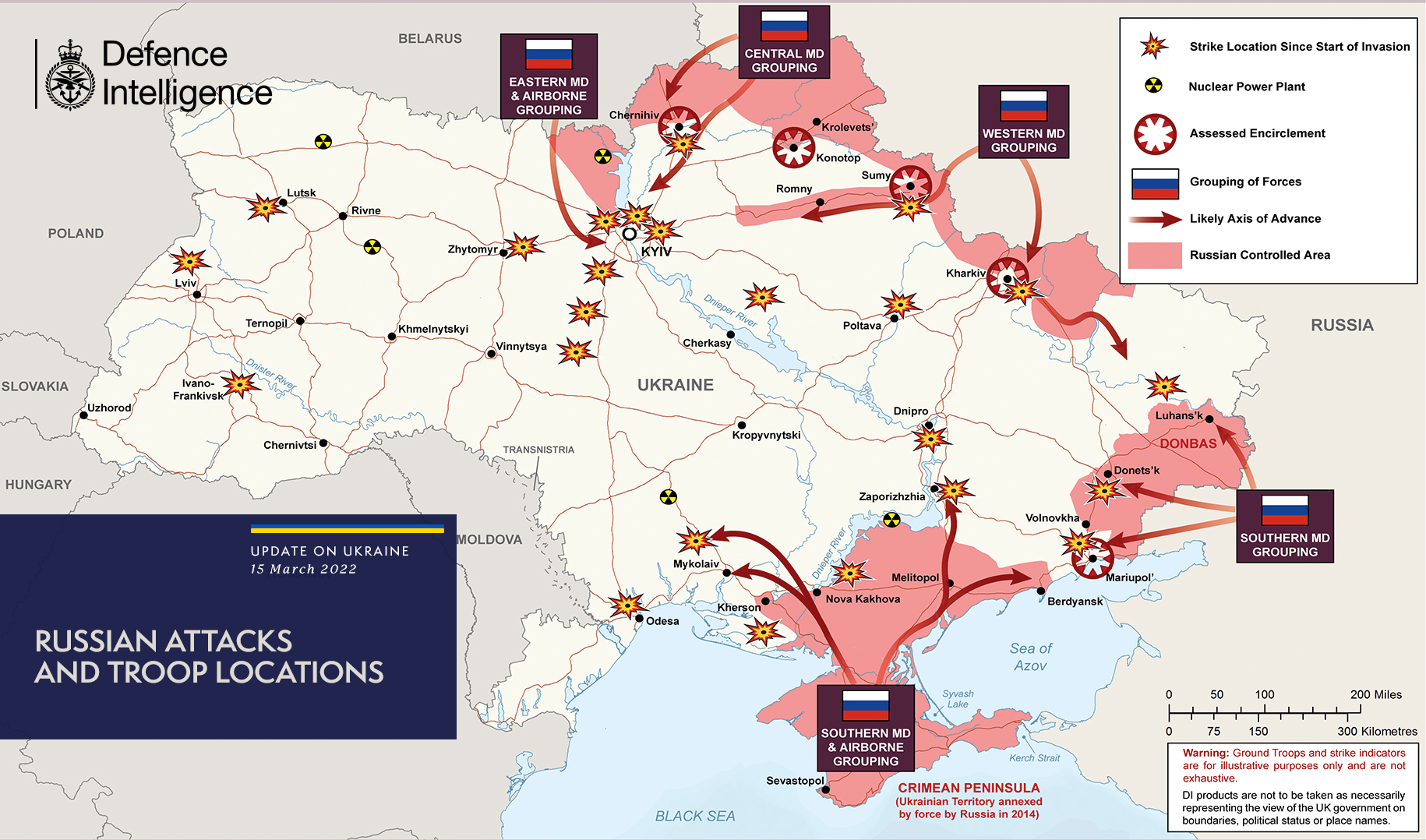
As you’ve probably noticed, I don’t post a lot of information about the progress of the Russian attack into Ukraine, not because it isn’t an incredibly dangerous and volatile situation but because the signal-to-noise ratio of available public source intelligence is lower than I ever expected (and I didn’t have high expectations to start with). My sympathies are largely with the Ukrainian civilians who have been caught up in a maelstrom of violence and my appreciation of abilities and achievements of the individual Ukrainian defenders has increased a great deal as this conflict continues. What Russian planners (and Putin himself) clearly expected to be a “short, victorious war” is turning out to be a much more difficult, much more costly struggle. Western politicians and diplomats have not covered themselves with glory and the western media have been shown to be inadequate to the task of providing anything like objective coverage of the war. American politicians grandstanding about imposing a “no fly zone” over Ukraine really need to be chased down by the white-coated orderlies with nets and gently brought back into the mental health facilities they clearly just escaped from: a no-fly zone is tantamount to a declaration of war, and a war between Russia and the US/NATO would very quickly go full-on nuclear. The only winners so far have been the official and volunteer propagandists for the Ukrainian government, who have overwhelmed the mainstream media and social media with their very persuasive tales and mediagenic stories.
Of course, it doesn’t help that Ukraine largely uses Russian-made equipment, so photos and videos of damaged tanks, smoking remnants of trucks and armoured personnel carriers, and other telegenic “news” can be presented as either side’s defeat in this or that skirmish. Kurt Schlichter wonders if we can have some “real talk” about Ukraine:
Time to get real. Ukraine is an equal opportunity crisis because it provides politicians of both parties a chance to be wrong, although it allows the Democrats the opportunity to do what they do best and be much, much more wrong. For the Republicans, it lets them indulge the desire of some to return to a time when America could focus its moral firepower – if not its firepower firepower – upon a readily-identifiable baddie like it did during the Cold War or the War on Terror. For the left, it allows them to create a moral panic to replace COVID, which, naturally, requires that we Americans “sacrifice” even more of our freedom and money.
From the perspective of someone who actually trained Ukrainian troops in Ukraine, commanded US forces, and attended the US Army War College – though it’s kind of the Chico State of war colleges – the whole way our elite is approaching the crisis is an epic clusterfark. Don’t believe anything anyone tells you – and certainly, sanity check whatever I’m telling you, too – most of these insta-experts on intra-Slavic conflict know absolutely squat-ski. Moreover, their remarkably dumb observations and credulous acceptance of conventional wisdom, which has proven long on conventional and short on wisdom, are being presented without any kind of strategic context. They don’t know where this crisis came from and certainly have no clear notion of where they want it to go beyond the vague and unhelpful idea that they want Putin (which they use interchangeably with Russia) to “lose” without knowing what that even means.
[…]
The expectation was that the Russian forces would smash through, surround the Ukrainian forces pinned down facing the Russians in the occupied regions to the east, and isolate the main cities. I did not expect them to go into the cities immediately since Russians 1) generally bypass hard defenses; 2) they have bad experiences with city fighting (Stalingrad, Grozny); and 3) that would not necessarily be necessary. It would not be necessary if the idea was to neutralize the main Ukrainian combat formations and force the government in the cities to capitulate, then have the West pressure the Ukrainians to accept a ceasefire and “peace” that recognized Russian gains and ended the idea of Ukrainian allying with the West. In fact, that is pretty much what the Russian “peace plan” consists of. But that did not work for a couple of reasons.
First, the Russians did not fight as well as expected. You should always treat the enemy as if it is the best possible enemy. We did in the Gulf. We prepared to fight elite Republican Guard divisions of highly trained and motivated soldiers using top-shelf Soviet equipment and tactics. None of that was so; we crushed an entire national army in 100 hours.
The Russians are poorly-led, with very weak synchronization among maneuver forces and fires. Their plan is okay – in fact, you look at a map, and it’s obvious what they would do. But their gear is badly-maintained, and their troops are unsuited to the task of supporting a rapid advance. Look at all the evidently intact gear simply abandoned by the side of the road. Lots of it looks like it broke down (note all the flat tires). Much of it seems to have run out of gas. And, of course, lots of stuff had been blasted apart.
That’s the second part of the equation – the Ukrainians fought back hard. If you are a Lord of the Rings nerd, think of the Ukrainians as the dwarves. Not super-sophisticated but tough and ready to fight, and also often drunk.
Comments Off on Two weeks into the Russian-Ukrainian War
Al Stewart – “Josephine Baker” – LIVE
James Bone
Published 7 Mar 2021A live performance from Al Stewart’s Last Days Of The Century album, featuring Al’s 1988 band of Peter White on accordion, with Stephen Recker, Robin Lamble, Dave Camp, and Steve Chapman. One of Al Stewart’s historical topics, this time on 1920s sensation, American Josephine Baker, who became quite the talk of Paris. Recorded at the Bottom Line in New York City in 1988.

Comments Off on Al Stewart – “Josephine Baker” – LIVE
QotD: Muslim views of western culture
a collection of casinos, supermarkets and whore-houses linked together by endless highways passing through nowhere. All that money, all that effort all those resources that are wasted so that idiotic women and shallow men can prolong their lives … You see ancient women who refuse to die at a normal time and who continue to paint themselves and crave youthful lovers right to the edge of the grave … To eat tons of hamburgers and popcorn, to imbibe oceans of Coca-Cola and whisky, to watch hundreds of hours of stupid television, to copulate mechanically a few hundred times, to be on guard minute against being robbed, raped or murdered. That is the American way of life.
Our civilisation is regarded as evil, and its destruction is taken as a sacred duty for reasons both defensive and offensive.
Defensive
There can be no doubt that Khomeini was a firm anti-communist. But, unlike the timid monarchies of the Arabian Peninsula, he saw quite clearly where the true threat to Islam lay. Throughout his reign, the Russians presented at least a potential threat to the northern borders of Iran, But this was as nothing to the actual ideological threat of the west, Marxism in Iran had converted its tens of thousands, and influenced its hundreds of thousands. But western civilisation — with its clothing fashions, its films, its music, its enshrinement of individual happiness, its secular knowledge — had captured its millions. There was a “Great Satan” devouring Islam; and its body was not communism, but the West; and its head was not Russia, but America, “We must break those pens” he wrote, “that teach people there is something other than divine law. We must smash those mouths that tell the people they are free to say whatever they please, regardless of right and wrong in accordance with the commands of the Almighty”. On this reasoning, to carry the fight from Iran, or wherever, into the west, is the equivalent of turning from the periphery to the centre of an infection.
Offensive
In one of his occasional attempts at humane argument, Khomeini justified a war of extirpation against the west on the following grounds:
If one allows the Infidels to continue playing their role of Corruptors on Earth, their eventual moral punishment will be all the stronger. Thus, if we kill the Infidels in order to put a stop to their [corrupting] activities, we have indeed done them a service. For their eventual punishment will be less.
For the most part, however, it is conversion to Islam that is desired of people in the west. Only those refusing to convert are to be slaughtered. In the first instance, all those areas of the world that were once Islamic, but have since been lost, are to be restored; and all those areas that contain sizeable Moslem minorities are to be Islamised. In 1982, a new map of the world was presented to Khomeini by the Cartological Society in Teheran. It was divided into three regions, distinguished by three colours. First, in green, came the House of Islam — this being the 41 member states of the Islamic Conference, together with soviet central Asia, southern Spain, Malta and Lampedusa, Albania, part of Yugoslavia, north eastern China, parts of Siam, Burma, the Philippines, and most of Africa. The remaining areas, the red and black, were divided between communism and the west. But the final state of affairs is to be a totally Islamic world. No part whatever is to be left in the hands of the “Cross worshippers”, as the Christians are contemptuously termed. Moslems in Great Britain at the moment comprise barely three per cent of the population. Nonetheless, “[t]hose Moslems” says Dr Shabbir Akhtar of the Bradford Council of Mosques, “who find it intolerable to live in a United Kingdom contaminated with the Rushdie virus need to seriously consider the Islamic alternatives of emigration (hijira) to the House of Islam or a declaration of holy war (jihad) in the House of Rejection. The latter may well seem a kind of hasty militancy that is out of the question, though, with Allah on one’s side, one is never in the minority. And England, like all else, belongs to Allah.
Comments Off on QotD: Muslim views of western culture
March 15, 2022
In The Highest Tradition — Episode 5
British Army Documentaries
Published 4 Nov 2021The fifth in the series, this episode features stories about the Grenadier Guards, the favourite tipple of the Queen’s Lancashire Regiment, and how the King’s Own Scottish Borderers made porridge palatable.
© 1989
This production is for viewing purposes only and should not be reproduced without prior consent.
This film is part of a comprehensive collection of contemporary Military Training programmes and supporting documentation including scripts, storyboards and cue sheets.
All material is stored and archived. World War II and post-war material along with all original film material are held by the Imperial War Museum Film and Video Archive.
Comments Off on In The Highest Tradition — Episode 5
For military procurement blunders, “no nation has mastered the ability to step on every bloody rake quite as well as Canada”
Germany has announced that they will be purchasing US F-35 stealth fighters as part of their re-armament program. My favourite headline on this was over at Blazing Cat Fur: “Germany To Buy 35 Lockheed F-35 Fighter Jets From U.S. Amid Ukraine Crisis … Canada Will Buy Cool ‘Fighter Jet Stickers’ With Eco-Friendly Adhesive”
On a more serious tone — but with sadly the same basic message — Mitch Heimpel looks at the multi-generational rolling catastrophe that is Canadian military procurement since the unification of the forces in 1968:

Browning High Power 9mm, the standard side-arm of the Canadian army since WW2. When I was in the reserves, we were told this was due for replacement in a few years. I was in the reserves from 1976-1980. It still hasn’t been replaced.
To say we have a checkered history with military procurement, fails to capture exactly how bad it is. Our political leadership has failed us continually over the course of half a century. No party has done it well. Some have done it better than others. But no one can claim any kind of bragging rights.
Fighter jet procurement in this country is so fraught it once caused the birth of a new political party. Trying to buy helicopters helped bring down a government. We only successfully bought those helicopters after they [the old helicopters] became a greater danger to the personnel manning them than they were to any potential adversary. We have been running a procurement for the next generation of fighter jets for an entire generation. Even Yes, Minister writers would have given up on something that absurd.
Our submarine fleet seems to be almost permanently in dry dock. Our most recent ship procurement resulted in the absolutely monstrous prosecution of one of the country’s most accomplished military leaders.
And we just issued a revised bid to finally replace our Second World War-era pistols … last week.
Just cataloguing that level of incompetence is exhausting. No leader or party looks good. The civil service, as the one constant through all these cartoonish blunders, surely has to wear some of this, too. The fact that we seem to repeat the same mistakes can, at least in part, be attributed to a significant institutional memory failure on the part of the people trusted with having the institutional memory.
Now, it is worth noting in fairness that no nation has an easy time with large scale military procurement. Ask the Americans about the development of the V-22 sometime. But, still, no nation has mastered the ability to step on every bloody rake quite as well as Canada.
I’m not a hardware expert. I can’t tell you which pistol we should buy. There’s also genuine policy questions here that need to be settled — I don’t know whether we should focus on the navy because we’re an Arctic nation, or the air force because it allows us to participate more readily in allied force projection exercises — like, say, no-fly zones? The necessary mix for Canada is no doubt some of both, and it’s fine to have disagreements between parties on what the right mix is.
But setting that aside, I want to talk about what it would take politically, to get us to start taking procurement seriously — just a few basic rules that any government would need to follow to procure anything that they chose was important for Canada to have.

Comments Off on For military procurement blunders, “no nation has mastered the ability to step on every bloody rake quite as well as Canada”
FN FNC: The Belgian 5.56mm NATO Carbine
Forgotten Weapons
Published 12 Nov 2021http://www.patreon.com/ForgottenWeapons
https://www.floatplane.com/channel/Fo…
Cool Forgotten Weapons merch! http://shop.forgottenweapons.com
The FNC (Fabrique Nationale Carabine) was FN’s followup to the unsuccessful CAL rifle. Chambered for the newly-adopted 5.56mm NATO cartridge, the FNC uses a long stroke gas piston system very reminiscent of the AK, combined with a stamped upper and milled aluminum lower. After about 5 years of development, the FNC was put on the market in 1980, and was quickly purchased by Indonesia, along with a license for domestic production as the Pindad SS-1. It would also be adopted by Sweden as the AK-5 (minus the 3-round burst functionality) and Belgium. About 6,000 semiautomatic sporting models were imported into the US. A number of those, including this one, were legally registered as transferrable machine guns before 1986.
Contact:
Forgotten Weapons
6281 N. Oracle 36270
Tucson, AZ 85740

Comments Off on FN FNC: The Belgian 5.56mm NATO Carbine
QotD: Pecan pie
I won’t even discuss the lowly pumpkin pie, which reminds me of nothing more than the goo that seeps out of a broken sewage pipe or the remains of the vegetable bin after a 10-day blackout.
You apple pie people may have a point, but really, the best part of any apple pie is the crust, so just climb down off that high horse!
Blueberry you say? Yes, I will grant the glory of a well-made blueberry pie, but on the second day it is a soggy mess, while my pecan pie is a wonderful accompaniment to a great cup of coffee. And bacon. But that doesn’t even have to be said.
Key lime and Boston cream and … um … other pies are certainly good eating, but for sheer pie power and authority there is nothing quite like American pecan pie served after a sumptuous Thanksgiving dinner.
[Here’s my go-to recipe … probably from Cooks Illustrated, but I don’t remember]
CBD, “Food Thread: Family, Friends And Pecan Pie … But Mostly Pecan Pie … And Family And Friends!”, Ace of Spades H.Q., 2021-11-21.
Comments Off on QotD: Pecan pie
March 14, 2022
Roman Republic to Empire 04 Slavery in the Roman Republic and Empire
seangabb
Published 5 Feb 2021[Update 2023-03-02 – Dr. Gabb took down the original posts and re-uploaded them.]
Here is the fourth lecture, which discusses the nature and extent of slavery in the Roman Empire. It begins with legal definitions and the attempted justifications by philosophers, then proceeds, via the use of slaves as workers in all occupations, including as sex objects, to the great slave revolts of the Late Republic. There is also a section on the valuation of slaves.
In this series, Sean Gabb will explain how the Roman Constitution was transformed, in just over a century, from an oligarchical republic with strong elements of democracy to a divine right military dictatorship.
(more…)
Comments Off on Roman Republic to Empire 04 Slavery in the Roman Republic and Empire
“Mister, we could use a man like Herbert Hoover Warren Harding again …”
Kind words for the oft-maligned 29th president of the United States? Daniel J. Mitchell is all over it:
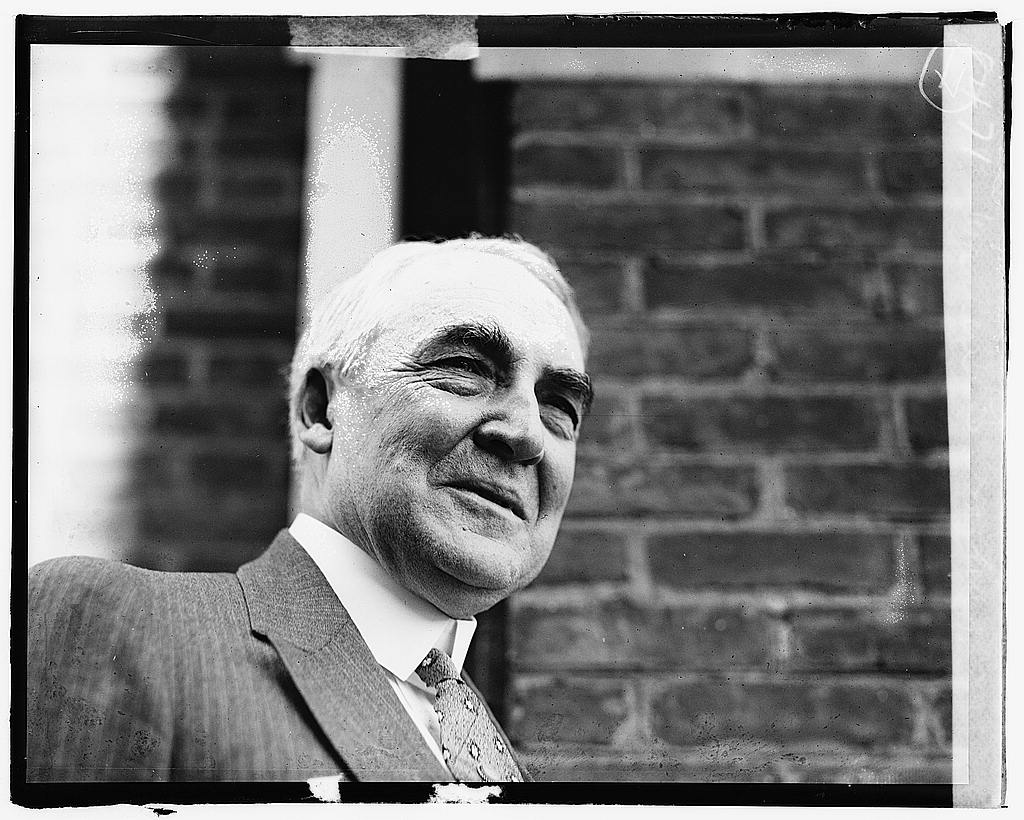
Warren G. Harding, 14 June 1920.
Library of Congress control number 2016828156
Today, we’re going to celebrate the fiscal achievements of Warren Harding.
Most notably, as illustrated by this chart based on OMB data, he presided over a period of remarkable spending discipline.
Harding also launched very big — and very effective — reductions in tax rates.
And his agenda of less government and lower tax rates helped bring about a quick end to a massive economic downturn (unlike the big-government policies of Hoover and Roosevelt, which deepened and lengthened the Great Depression).
In an article for National Review last year, Kyle Smith praised President Harding’s economic stewardship.
In a moment of national crisis, Warren G. Harding restored the economic health of the United States … America in 1921 was in a state of crisis, reeling from the worst recession in half a century, the most severe deflationary spiral on record … Unemployment, it is now estimated, stood somewhere between 8.7 and 11.7 percent as returning soldiers inflated the size of the working-age population.
Between 1919 and August of 1921 the Dow Jones average plummeted 47 percent. Harding’s response to this emergency was largely to let the cycle play out … The recession ended in mid-year, and boom times followed. Harding and Congress cut federal spending nearly in half, from 6.5 percent of GDP to 3.5 percent. The top tax rate came down from 73 percent to 25, and the tax base broadened. Unemployment came down to an estimated 2 to 4 percent … Harding was a smashing success in a historically important role as the anti-Wilson: He restored a classically liberal, rights-focused, limited government, and deserves immense credit for the economic boom that kicked off in his first year and continued throughout the rest of the 1920s.
Smith’s article also praises Harding for reversing some of Woodrow Wilson’s most odious policies, such as racial discrimination and imprisoning political opponents (Wilson also had a terrible record on economic issues).
Of course, Harding’s term is much more often remembered for the scandals, and as most modern historians are far more interested in Woodrow Wilson’s bold progressivism they almost always decry Harding and then Coolidge for dismantling a lot of Wilson’s more enthusiastic progressive projects. Even H.L. Mencken — very much not a Wilson fan — found Harding to be not to his taste in turn:
On the question of the logical content of Dr. Harding’s harangue of last Friday, I do not presume to have views … But when it comes to the style of the great man’s discourse, I can speak with … somewhat more competence, for I have earned most of my livelihood for twenty years past by translating the bad English of a multitude of authors into measurably better English. Thus qualified professionally, I rise to pay my small tribute to Dr. Harding. Setting aside a college professor or two and half a dozen dipsomaniacal newspaper reporters, he takes the first place in my Valhalla of literati. That is, he writes the worst English that I have ever encountered. It reminds me of a string of wet sponges; it reminds me of tattered washing on the line; it reminds me of stale bean soup, of college yells, of dogs barking idiotically through endless nights. It is so bad that a sort of grandeur creeps into it. It drags itself out of the dark abysm … of pish, and crawls insanely up to the topmost pinnacle of posh. It is rumble and bumble. It is flap and doodle. It is balder and dash.
Comments Off on “Mister, we could use a man like Herbert Hoover Warren Harding again …”


