Quotulatiousness

June 19, 2019

37mm Antitank Gun on a Dodge Weapons Carrier – M6

Filed under: History, Military, USA, Weapons, WW2 — Tags: , , , , — Nicholas @ 02:00

Forgotten Weapons
Published on 1 Jun 2014

http://www.forgottenweapons.com

Theme music by Dylan Benson – http://dbproductioncompany.webs.com

The M6 Gun Motor Carriage was the first American tank destroyer of WWII – a 37mm antitank gun (basically identical to the M3 gun) mounted on the back of a Dodge 3/4 ton weapons carrier. A large armor shield protected the gun crew from small arms fire, but the vehicle was otherwise highly exposed. The truck was powered by a flathead 6-cylinder engine producing 99 horsepower, and had a top speed of 55 mph. The gun was effective and modern in the late 1930s when its design process began, but was underpowered and insufficient by the time the M6 first saw action in 1942/3 in Tunisia.

Not many complete M6 carriages remain in existence today, as they were replaced quickly after their poor showing in North Africa. Most had the guns removed and were converted back into utility trucks, while some were used by the Free French forces and some saw use in the Pacific theater (where the underpowered gun was less of a concern).

QotD: Working class “materialism”

Filed under: Europe, History, Politics, Quotations — Tags: , , , — Nicholas @ 01:00

When one thinks of all the people who support or have supported Fascism, one stands amazed at their diversity. What a crew! Think of a programme which at any rate for a while could bring Hitler, Petain, Montagu Norman, Pavelitch, William Randolph Hearst, Streicher, Buchman, Ezra Pound, Juan March, Cocteau, Thyssen, Father Coughlin, the Mufti of Jerusalem, Arnold Lunn, Antonescu, Spengler, Beverley Nichols, Lady Houston, and Marinetti all into the same boat! But the clue is really very simple. They are all people with something to lose, or people who long for a hierarchical society and dread the prospect of a world of free and equal human beings.

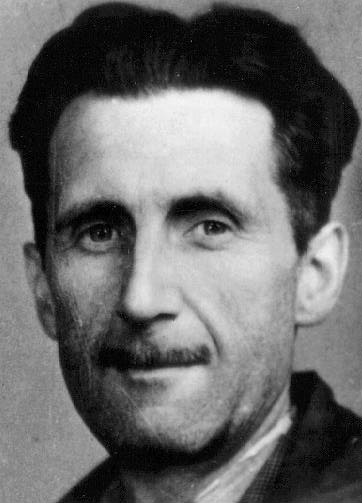
Orwell’s press card portrait, 1943

Behind all the ballyhoo that is talked about “godless” Russia and the “materialism” of the working class lies the simple intention of those with money or privileges to cling to them. Ditto, though it contains a partial truth, with all the talk about the worthlessness of social reconstruction not accompanied by a “change of heart”. The pious ones, from the Pope to the yogis of California, are great on the “change of heart”, much more reassuring from their point of view than a change in the economic system. Petain attributes the fall of France to the common people’s “love of pleasure”. One sees this in its right perspective if one stops to wonder how much pleasure the ordinary French peasant’s or working-man’s life would contain compared with Petain’s own.

The damned impertinence of these politicians, priests, literary men, and what-not who lecture the working-class socialist for his “materialism”! All that the working man demands is what these others would consider the indispensable minimum without which human life cannot be lived at all. Enough to eat, freedom from the haunting terror of unemployment, the knowledge that your children will get a fair chance, a bath once a day, clean linen reasonably often, a roof that doesn’t leak, and short enough working hours to leave you with a little energy when the day is done. Not one of those who preach against “materialism” would consider life livable without these things. And how easily that minimum could be attained if we chose to set our minds to it for only twenty years! To raise the standard of living of the whole world to that of Britain would not be a greater undertaking than the war we have just fought. I don’t claim, and I don’t know who does, that that wouldn’t solve anything in itself. It is merely that privation and brute labour have to be abolished before the real problems of humanity can be tackled.

The major problem of our time is the decay of the belief in personal immortality, and it cannot be dealt with while the average human being is either drudging like an ox or shivering in fear of the secret police. How right the working classes are in their “materialism”! How right they are to realize that the belly comes before the soul, not in the scale of values but in point of time! Understand that, and the long horror that we are enduring becomes at least intelligible. All the considerations are likely to make one falter — the siren voices of a Petain or of a Gandhi, the inescapable fact that in order to fight one has to degrade oneself, the equivocal moral position of Britain, with its democratic phrases and its coolie empire, the sinister development of Soviet Russia, the squalid farce of left-wing politics — all this fades away and one sees only the struggle of the gradually awakening common people against the lords of property and their hired liars and bumsuckers.

The question is very simple. Shall people […] be allowed to live the decent, fully human life which is now technically achievable, or shan’t they? Shall the common man be pushed back into the mud, or shall he not? I myself believe, perhaps on insufficient grounds, that the common man will win his fight sooner or later, but I want it to be sooner and not later — some time within the next hundred years, say, and not some time within the next ten thousand years. That was the real issue of the Spanish war, and of the last war, and perhaps of other wars yet to come.

George Orwell, “Looking back on the Spanish War”, New Road, 1943 (republished in England, Your England and Other Essays, 1953).

June 18, 2019

Ōkuninushi’s Tale – Japanese Myth – Extra Mythology

Filed under: History, Japan — Tags: — Nicholas @ 06:00

Extra Credits
Published on 17 Jun 2019

Download the World of Tanks game for free https://tanks.ly/2WjU75T and use the invite code EXTRATANKS1 to claim your starter pack

Join the Patreon community! http://bit.ly/EMPatreon

Last we saw Ōkuninushi, he showed kindness to a hare in distress, and the hare of Inaba had foretold that he would be the one that the princess of Yakami would desire. And this was true, because when his 80 brothers showed up at court and declared their intentions, the princess insisted she would only marry him — so thus, his brothers began trying to kill him off…

Blitzkrieg on Speed – Nazis on Crystal Meth Part 2 – WW2 SPECIAL

Filed under: Germany, Health, History, Military, WW2 — Tags: , , , — Nicholas @ 04:00

World War Two
Published on 17 Jun 2019

While many armies use performance enhancing drugs during WW2, the Wehrmacht takes it to extremes in 1940, with more than debatable consequences.

Join us on Patreon: https://www.patreon.com/TimeGhostHistory
Or join The TimeGhost Army directly at: https://timeghost.tv

Join our Discord Server: https://discord.gg/D6D2aYN.
Between 2 Wars: https://www.youtube.com/playlist?list…
Source list: http://bit.ly/WW2sources

Hosted by: Indy Neidell
Written by: Astrid Deinhard, Joram Appel and Spartacus Olsson
Produced and Directed by: Spartacus Olsson and Astrid Deinhard
Executive Producers: Bodo Rittenauer, Astrid Deinhard, Indy Neidell, Spartacus Olsson
Creative Producer: Joram Appel
Post Production Director: Wieke Kapteijns
Research by: Joram Appel and Astrid Deinhard
Edited by: Spartacus Olsson
Sound Engineering: Joakim Brodén

Colorisations by Spartacus Olsson

Archive by Reuters/Screenocean http://www.screenocean.com

A TimeGhost chronological documentary produced by OnLion Entertainment GmbH.

From the comments:

World War Two
1 hour ago
Read before you comment; “it wasn’t just the Germans” This video treats the use of methamphetamine by the German Wehrmacht and its cultural background. The purpose of this video is not to attribute any atrocities that the Nazis perpetrated to that they were simply on drugs – we know that this was not a contributing factor to what they did, although it perhaps influenced how they did it. It is also not the purpose of this video to single out Germany as the only belligerent to use drugs in WW2. As we point out in the video, many belligerents (to not say all) used drugs, especially amphetamines during WW2. In fact amphetamines are still in official, monitored used by for instance the US Army in some situations to this day. However, the Wehrmacht and a few of the Axis allies used methamphetamine which is different than amphetamine as the effects of meth is unpredictable and comes on faster and harder. These unpredictable effects include hallucinations and delusions, which amphetamines do not induce, or at least to a lesser and more predictable degree. Methamphetamine metabolizes into amphetamine in the body, but in that process it creates a number of side effects that contribute to its unstable effects. Of course this was poorly understood in 1940 and meth was also available commercially over the counter in many places like the US and Australia, mostly as a dieting pill and (somewhat ironically) an anti-depressant. While amphetamines like Benzedrine are still administered by doctors for certain conditions, methamphetamine is now known to be a very dangerous, potentially lethal, drug that only has recreational use, and in 2019 it is therefore illegal almost everywhere in the world. Last but not least, the Wehrmacht was singular in how liberal they were in distributing drugs to the troops, at least to begin with. It is important to also point out that beside the official use of drugs, many soldiers throughout the ages have resorted to intoxicating themselves to deal with the unfathomable horrors of war, and in this respect WW2 was no different. We will cover drug use by other belligerents and in general during the war in future videos.

QotD: The birth of Jesus and the open concept house

Filed under: Architecture, Economics, History, Middle East, Quotations, Religion — Tags: , , , — Nicholas @ 01:00

Jesus was not born in a stable. That’s not to say the birth wasn’t attended by farm animals — the Gospel of Luke tells us twice the baby’s first bed was a feeding trough — but rather that the animals lived in the house.

Peasant homes in first century Bethlehem were designed with what we would today call an “open concept.” They typically had one large room with the nicer living space in an open loft or on the roof, while the main floor area was where the family’s animals would be brought for safekeeping at night. The guestroom that was unavailable to Jesus, Mary, and Joseph was that loft or roof space, and the big room where they stayed instead served as the kitchen, living room, dining room, and farmyard all at once. The defining feature of Jesus’ birthplace was not isolation, as we often tend to think, but an utter lack of privacy: Mary delivered in a crowded farmhouse with few, if any, interior walls.

And that was perfectly normal, if not exactly desirable, for our modern fixation on the open floor plan is a historical anomaly. It flies in the face of literally millennia of consensus that more rooms is better, and it is a dreadful mistake. The last 70 years of open concept construction and remodeling has left us with dysfunctional houses, homes that are less conducive to hospitality, less energy efficient, and more given to mess.

Bonnie Kristian, “Open concept homes are for peasants”, The Week, 2019-05-12.

June 17, 2019

How does RADAR work? | James May Q&A | Head Squeeze

Filed under: History, Military, Science, Technology, WW2 — Tags: , , , , — Nicholas @ 04:00

BBC Earth Lab
Published on 29 Nov 2013

How does RADAR work? It’s a bit like shouting very loudly at a cliff and waiting for the echo to come back to you. Whether you use rude words or not is completely up to you.

RADAR is emitting a sound wave and waiting for the echo to come back to you. By timing the returning echo you can work out where exactly another object is.

The really interesting thing about radar is if you use multiple angled receivers you can work out the position and height of a target. This technology was essential in winning the Battle of Britain in 1940.

But that was 1940, what about radar now? Is it as defunct as the 3 ½ inch floppy disk? Well, no actually. Radar is still pretty important in the military but the technology is a lot more advanced. In fact each time you connect to a sat nav to figure out where you are, you are using the network of satellites that calculate your position using the same principles of radar.

Thanks to Alyssa Ann for her portrait of Jeremy Clarkson: http://alyssamenold.com/

100 Years War

Filed under: Britain, France, History, Military, Religion — Tags: , , , — Nicholas @ 02:00

Ryan Reeves
Published on 2 Jul 2014

The 100 Years War between France and England lasted more than 100 years and was not one war but many. We explore Henry V and other important kings, and finish by exploring Joan of Arc as the savior of France.

Ryan M. Reeves (PhD Cambridge) is Assistant Professor of Historical Theology at Gordon-Conwell Theological Seminary.
Twitter: https://twitter.com/RyanMReeves

Website: http://www.gordonconwell.edu/academic…

For the entire course on ‘Church History: Reformation to Modern’, see the playlist: https://www.youtube.com/playlist?list…

June 16, 2019

History of England – Ashes – Extra History – #4

Filed under: Britain, France, History, Military — Tags: , , , , — Nicholas @ 06:00

Extra Credits
Published on 15 Jun 2019

Bertrand du Guesclin was the hero the French needed. Focused on fortifying defenses and cities, Guesclin rebutted the advances of the Black Prince — who ended up contracting an illness that undid his iconic image of triumph and chivalry. Edward became beset by drama in the royal court, and England started to lose power…

Thanks again to David Crowther for writing AND narrating this series! https://thehistoryofengland.co.uk/pod…

Join us on Patreon! http://bit.ly/EHPatreon

Britain Votes to Leave – WW2 – 042 – June 15 1940

Filed under: Britain, Europe, France, Germany, History, Italy, Military, WW2 — Tags: , , , , — Nicholas @ 04:00

World War Two
Published on 15 Jun 2019

The fighting in France isn’t over, not even when Paris falls, as the Germans advance and Italy joins the fight. But the Brits now have their back to yet another ocean and see no option but out. Further east Stalin uses the chaos in the West as cover to start moving in on his neighbours.

Join us on Patreon: https://www.patreon.com/TimeGhostHistory
Or join The TimeGhost Army directly at: https://timeghost.tv

Follow WW2 day by day on Instagram @World_war_two_realtime https://www.instagram.com/world_war_t…
Join our Discord Server: https://discord.gg/D6D2aYN.
Between 2 Wars: https://www.youtube.com/playlist?list…
Source list: http://bit.ly/WW2sources

Written and Hosted by: Indy Neidell
Produced and Directed by: Spartacus Olsson and Astrid Deinhard
Executive Producers: Bodo Rittenauer, Astrid Deinhard, Indy Neidell, Spartacus Olsson
Creative Producer: Joram Appel
Research by: Indy Neidell
Post Production Director: Wieke Kapteijns
Edited by: Marek Kamiński
Map animations: Eastory

Colorisations by Norman Stewart and Julius Jääskeläinen https://www.facebook.com/JJcolorization/

Eastory’s channel: https://www.youtube.com/channel/UCEly…
Archive by Screenocean/Reuters https://www.screenocean.com.

Sources: Italo-Scottish Research Cluster, Alchemist-hp

A TimeGhost chronological documentary produced by OnLion Entertainment GmbH.

From the comments:

World War Two
2 days ago
Paris… German soldiers in 1914 left their homes for the western front painted “To Paris” on their train carriages, little did they know what horrors were awaiting them. And that after four years of fighting in the trenches, none of them made it to Paris. This week, after another month of fighting in France, they finally do.

Whenever we read that some of you think that it’s just Indy making all of this, we have a good laugh. Actually, there are over 10 people working on this project. We have multiple editors, researchers/historians, producers, fact-checkers, colorisers and volunteers working on this. And of course there’s Eastory making the maps. We’d like to pay each and everyone of them for their hard work so they can feed themselves. Truth is, many of them work on a voluntary or part-time basis right now. The support we get on Patreon and our website is great and helps us sustain this channel, but we’re not nearly at the point that everyone involved gets what they deserve. If you like our work here on YouTube and you want to support the people who make it, please check us out on https://www.patreon.com/TimeGhostHistory or on our website https://timeghost.tv. Help us make history! Every dollar counts!

Cheers,
Joram

Finnish Bofors 37mm anti-tank gun

Filed under: Europe, History, Military, Weapons, WW2 — Tags: , , , , , — Nicholas @ 02:00

Forgotten Weapons
Published on 27 Apr 2014

Cool Forgotten Weapons Merch! http://shop.bbtv.com/collections/forg…

Theme music by Dylan Benson – http://dbproductioncompany.webs.com

The Swedish Bofors company developed a sophisticated and very high-quality light anti-tank gun in the early 1930s, and found significant commercial success with it. A variety of countries either purchased the guns outright from Bofors or paid for licenses to produce them domestically. These countries included Denmark, Finland, Poland, the Netherlands, and Sweden itself. The largest number were in Poland (1200 or more), and there is speculation that some may have been sold to Spain during the Spanish Civil War (both these guns and a 40mm AA gun which definitely went to Spain were designated wz.36). A significant number were also captured and reused by German and Russian forces during WWII. On the Allied side, some of the guns were sold to the Sudan and used by British forces in North Africa (generally mounted on trucks).

The gun itself was an excellent design, capable of 12 rounds/minute of accurate fire and potent enough to deal with most of the smaller tanks in existence at the beginning of WWII. New tank developments made it obsolete, but it was at least effective against Russian light tanks (BT, T-26, T-28) in the Winter War if not the heavier T-34s. The gun has a sophisticated suspension system to help absorb recoil energy, and fired a 37 x 257mm shell with a 740g projectile at about 825 m/s (26oz @ 2700 fps). The action was semi-automatic, meaning that once fired, the action would recoil on the carriage, and automatically eject the empty case. It would then return to battery with the breech open, ready for a new shell to be loaded (in the video, the ejection mechanism has been disabled to help preserve the brass cases).

June 15, 2019

Miscellaneous Myths: Io

Filed under: Europe, Greece, History, Middle East — Tags: , , — Nicholas @ 06:00

Overly Sarcastic Productions
Published on 14 Jun 2019

The moon! The myth! The legend! The three millionth woman to live through an absolute nightmare just because Zeus couldn’t be bothered to keep it in his pants!

Still had a better life than Callisto, though.

Pro tip, if someone is listed on wikipedia as a “lover” of zeus, that does not at all indicate that their relationship was consensual.

PATREON: https://www.Patreon.com/OSP

Just Peace Or Day of Dishonor? – The Treaty of Versailles I THE GREAT WAR June 1919

Filed under: Britain, Europe, France, Germany, History, Military, USA, WW1 — Tags: , , , — Nicholas @ 04:00

The Great War
Published on 14 Jun 2019

Support us on Patreon and get an actual WW1 postcard signed by the team: http://patreon.com/thegreatwar

The Treaty of Versailles was the first of the big peace treaties after the armistice of 1918. In just six months the allied powers had – without talking to the defeated powers – negotiated a new world order while trying to make sure Germany would pay reparations to rebuild. The German delegation was only informed about the peace terms a few weeks before signing the Treaty and they were shocked about the terms. In May 1919 they even considered not signing the contract at all.

» SUPPORT THE CHANNEL
Patreon: https://www.patreon.com/thegreatwar
Merchandise: https://shop.spreadshirt.de/thegreatwar/

» SOURCES
Gerwarth, Robert. The Vanquished. Why the First World War Failed to End, 1917-1923 (Penguin, 2017).

Leonhard, Jörn. Der überforderte Frieden. Versailles und die Welt 1918-1923 (CH Beck, 2018)

Macmillan, Margaret. The Peacemakers: Six Months that Changed the World (London: John Murray, 2001).

Sharp, Alan. The Versailles Settlement. Peacemaking after the First World War, 1919-1923 (Basingstoke: Palgrave MacMillan, 2008).

Stevenson, David. 1914-1918 (London: Penguin, 2012).
Winter, Jay and Antoine Prost. The Great War in History (Cambridge: Cambridge University Press, 2008).

Hobsbawm, Eric. Age of Extremes. The Short Twentieth Century 1914-1991 (Abacus, 1994).
http://www.ataa.org/reference/iacom.pdf

http://germanhistorydocs.ghi-dc.org/p… quoting:
Philipp Scheidemann, “Gegen die Annahme des Versailler Vertrages 12. Mai 1919”, Politische Reden III, herausgegeben von Peter Wende. Deutscher Klassiker Verlag:Frankfurt am Main, 1994, S.254-62

»CREDITS
Presented by: Jesse Alexander
Written by: Jesse Alexander
Director: Toni Steller & Florian Wittig
Director of Photography: Toni Steller
Sound: Toni Steller Editing: Toni Steller
Mixing, Mastering & Sound Design: http://above-zero.com
Motion Design: Christian Graef – GRAEFX
Maps: Daniel Kogosov (https://www.patreon.com/Zalezsky)
Research by: Jesse Alexander
Fact checking: Florian Wittig

Channel Design: Alexander Clark
Original Logo: David van Stephold

A Mediakraft Networks Original Channel

Contains licensed material by getty images
All rights reserved – Real Time History GmbH 2019

The real explanation for our lack of moonbases/Concorde 2’s/great walls/pyramids

Filed under: Books, Economics, Europe, History, Space, Technology, USA — Tags: , , , , — Nicholas @ 03:00

Homoitalicus Blog responds to a new book [At Our Wit’s End by Edward Dutton and Michael Woodley of Menie] that concludes that we (western civilization) are headed toward a similar fate as the western Roman Empire:

The reason that these staggering feats of engineering haven’t been repeated is more to do with economics and politics than with any perceived lack of engineering Genius in the population. The authors fail to reflect that emerging from the massively centralised wartime economy of the West there was an enormous technological infrastructure of scientists and capable administrators just sat there with no more Nazis to fight, communist megalomaniacs to support, Atom bombs to build and test, or greatest seabourne invasions in history to plan and implement.

This was probably the greatest concentration of intellect ever harnessed to a single cause and hopefully we’ll never need to see its like again

With the war done and dusted some new purpose needed to be found for all this talent, the way of government being what it is, returning all these geniuses to normal boring peacetime activity was never an option.

Newly nationalised aircraft industries took the wartime inventions of jet engine and the rest and evolved them with massive amounts of financial input from the government into Concorde, truly a magnificent aircraft but one which could uncharitably be described as using taxpayers’ money to ferry plutocrats from one side of the Atlantic to the other. Whether it ever really paid for itself is a moot point and the unseemly haste with which it was dumped after the crash tends to imply that its 50-year-old airframes were becoming a burden, and the economic case for making a new generation of supersonic planes is weak – luckily the will in the west for another taxpayer-funded effort doesn’t seem to be there. That is progress.

Likewise the man on the moon, possible only because of the Cold War space race.

The authors might as well explain the fact that we haven’t build another pyramid of Giza or Great Wall of China.

Their assertion that a general decline in the amount of creativity (which is correlated strongly with g) is justified by the observable decline in the quality of the output of the BBC. However other possible reasons for this are the infestation of Cultural Marxism and its baleful handmaid, Political Correctness, which really mitigate against creative thought. It is impossible to imagine making The Life of Brian, or The Sweeney or countless other shows which we enjoyed in our youth nowadays largely for reasons of PC and the fact that the BBC’s mission is now brainwashing rather than entertainment. State broadcasters the world over will suffer from the same problem, as does (worryingly) the world of academe in which speakers of truth or opinion which lie outwith accepted and very tightly bounded acceptability, are routinely no-platformed or summarily sacked. The teaching of history and the humanities generally has been debased, and only the STEM subjects seem to have resisted (excluding the question of Climate Change which has taken on the trappings of a religion rather than serious science).

As a consequence it is impossible to separate the effects of CM from the mooted results of a generalised decline in intelligence, and the authors are wrong not to point this out.

They don’t consider either the likely effect of the 20th century’s great blood letting in the fields of Flanders. A substantial proportion of the best and brightest of a generation were ground into the mud there before being able to procreate. I would be surprised if that had no effect on the quality of the gene pool.

H/T to the Continental Telegraph for the link.

QotD: The early Bauhaus

Filed under: Architecture, Germany, History, Quotations — Tags: , , , , — Nicholas @ 01:00

The ideas of the modernists were generally expressed in the imperative mood and were frequently of a pseudo-mystical nature. Professor Curl’s description of some of the practices prevalent in the early Bauhaus make for hilarity; cranks are always a source of fun. In the early days, the modernists of the Bauhaus tended to a form of health mysticism involving vegetarianism, garlic paste, and regular enemas. Far more important, however, was their early and inherent attraction to totalitarianism. As the author points out, Gropius and Miës van der Rohe had no objection to Nazism other than that the ­Nazis failed to commission work from them. Gropius was an opportunistic anti-Semitic snob who espoused communism until it was no longer convenient for his career. Miës sucked up to the Nazis as much as he was able. The fact that both of them emigrated from Germany has done much to obscure their accommodation with the Nazis and even allowed the modernists to pose as anti-Nazi — though the most important proponent of modernism in America, Philip Johnson, had for some years been a rank Nazi in more than merely nominal terms. Moreover, as Professor Curl points out, the Nazi aesthetic, like the communist, had much in common with modernism.

Theodore Dalrymple, “Crimes in Concrete”, First Things, 2019-06.

June 14, 2019

“Great War” – World War One – Sabaton History 019 [Official]

Filed under: Europe, History, Media, Military, WW1 — Tags: , — Nicholas @ 04:00

Sabaton History
Published on 13 Jun 2019

The title track of the upcoming Sabaton Album The Great War is about the conflict in general. The horrors, modern techniques and tactics and the differences with other conflicts.

Support Sabaton History on Patreon (and possibly get a History Channel special edition): https://www.patreon.com/sabatonhistory

Pre-order The Great War here: https://www.sabaton.net/pre-order-of-…

Check out the trailer for Sabaton’s new album The Great War right here: https://www.youtube.com/watch?v=HCZP1…

Hosted by: Indy Neidell
Written by: Markus Linke and Indy Neidell
Directed by: Astrid Deinhard and Wieke Kapteijns
Produced by: Pär Sundström, Astrid Deinhard and Spartacus Olsson
Creative Producer: Joram Appel
Executive Producers: Pär Sundström, Joakim Broden, Tomas Sunmo, Indy Neidell, Astrid Deinhard, and Spartacus Olsson
Maps by: Eastory
Edited by: Iryna Dulka
Sound Editing by: Marek Kaminski

Eastory YouTube Channel: https://www.youtube.com/channel/UCEly…
Archive by: Reuters/Screenocean https://www.screenocean.com
Music by Sabaton.

Sources:
– IWM: Q 57096, Q 24285, IWM 1053, Art.IWM ART 1921, Art.IWM ART 4028, Art.IWM ART 876, Art.IWM ART 2660, IWM 1062-02a, Q 23760, IWM 59, IWM 1043a, Q 2891, Q 5733, Q 2902, CO 2246, Q 2712, Q 5937, Q 2735, Q 5714, Q 3117, Q 3002
– National Library of Scotland
-Colorization: Klimbim

An OnLion Entertainment GmbH and Raging Beaver Publishing AB co-Production.

© Raging Beaver Publishing AB, 2019 – all rights reserved.

From the comments:

Sabaton History
1 day ago
This episode is somewhat different from what we normally do. Usually, the episodes are about battles, confrontations or individuals in war. This time, it is about an ENTIRE WAR. The title track of the upcoming Sabaton Album The Great War is about the horror and overall experience of the Great War. We have showcased a number of songs now, so if you’re certain that it is to your liking, make sure to go over to our Patreon site to check out the exclusive “History Edition” of The Great War album! -> https://www.patreon.com/sabatonhistory

Cheers!

« Newer PostsOlder Posts »

Powered by WordPress