Quotulatiousness

June 14, 2019

How Streamlining Changed Trains Forever | Spark

Filed under: Britain, History, Railways — Tags: , , — Nicholas @ 02:00

Spark
Published on 25 Jun 2018

Steam trains leapt forward in speed once Nigel Gresley decided to make them slick, sexy and streamlined.

In the 1930’s, Britain had a railway network that was envied around the world. The East and West Coast railway companies fought to transport passengers from London to Scotland in the shortest time possible.

Originally broadcast in 2003. Content licensed by DRG Distributions. Any queries, contact us at hello@littledotstudios.com

June 13, 2019

Americans “don’t really believe in foreigners”

Filed under: Europe, History, Media, Politics, USA — Tags: , , — Nicholas @ 03:00

A few days back, Sarah Hoyt wrote a long post about the actual differences between American culture and the many different cultures that most Americans have difficulty understanding:

I don’t think anyone who hasn’t actually acculturated between two countries understands how different cultures can be, deep down, at the bone level and the most basic reactions level, let alone what causes the difference, from inherited influences to just deep built in assumptions about climate/physical plant/fauna.

And some of the people who have acculturated, at that, might not be self-aware enough to see the difference, and just replace one set of assumptions with another and roll with it. (Or get caught somewhere between. Well, to some extent we all get caught somewhere between. The question is, what percentage is in the new country. I’d say for me, after being in Portugal recently, probably 95% American. There are things trained in before the age of 3 which I’ll never let go of, though some got truly weird with the acculturation, like how I react to “shame.”)

That experience this weekend was the “clicking in” of something that’s been bothering me for a long time. In our writers’ group I used to run across people who projected modern AMERICAN female back into the time of pharaohs. One of my best friends refused to believe me when I told her there was zero chance of an alien race having the same university system as the US since even Portugal (avowedly human) doesn’t. There were other things. You guys have heard me rant about several “historical” books that make the past exactly like the future only with different tech. The fact that they don’t understand that tech affects not just how people live but how they think, feel and react is another of those things I don’t get, as I think even within living memory we should be able to see how different things have gotten. See for instance not wearing of aprons, because the clothes are cheap enough and abundant enough that ruining a shirt is not a big deal, unless it’s a very good shirt.

Technological shifts in living memory have made ordinary life from before the new technology (like cheap, dependable cell phones) almost unimaginable. How many movies and TV shows from before the mobile phone became widely available depended as a plot point on the characters being unable to communicate with one another at key moments? Many mystery novels of the pre-mobile-phone era probably make no sense at all to modern readers because instant communication has become “baked in” to our world.

The clothing aspect has been less obviously important, yet only a couple of generations back, most people owned perhaps three changes of clothing, including one “good” suit/dress for church-going or special occasions. We’ve become so wealthy as a culture that almost everyone has more than enough clothes for any imagined need … although church-going has become almost exotic to urban and even suburban folks, and formal attire is becoming more and more rare. (But everyone has more T-shirts and shorts than they know what to do with.)

But until this weekend I didn’t realize how prevalent and universal it is, since the clash took place between two people from native anglophone cultures, both of which are denizens of the net and contact people of other countries, regularly. Okay, one of them didn’t know she was dealing with a foreigner […] This weekend I realized people don’t really believe in foreign countries either. They’re willing to accept that some things (and those usually conform to their mental picture of the generic “culture” or “region”) are different, but that the fundamentals and the cherished unexamined assumptions might be different is unthinkable — literally. And if we can think of them, we still assume the other country is somehow “wrong” or worse “pretending” to be different to be contrary.

This means, ultimately, that even an era of instant all over the world communication, human tribalism still wins. And with it, I suppose, nationalism.

The wave of populism in the west that has taken the establishment and the mainstream media by surprise is a predictable response to the globalist attitudes of the elites. If you work hard enough at it, you can provoke unpleasant responses from those who don’t agree with your worldview, and the transnational elites have been working very hard indeed.

There are other implications: since it’s virtually impossible to avoid faster communication and more widespread travel in the future, this is going to make the next couple/three centuries a series of epic clashes, until either some sort of understanding emerges or polarized cultures can immigrate to the stars and far far away from each other.

Mass immigration is a REALLY bad idea (‘mkay) not that this is a surprise to any of you. People inhabiting enclaves of “their kind” are slow to acculturate (three generations, if it happens at all.) And the number of people coming over the Southern border is like nothing we’ve ever experienced before. And trust me, in terms of functionality, you do NOT want to import any culture descended from 17th century Spain. There is a reason that the American countries South of us are in crisis on a more or less permanent basis, and that Brazil, screwed up though it is, is more functional than the others. No, just no.

I’m certainly not against immigration, but I strongly believe it is possible to have too much immigration, as Europe and the United States are being forced to confront. When people leave their native land to go somewhere else, be it for economic or political reasons, there’s a natural expectation that they will at least attempt to acculturate to their new country. To western elites, this is wrong (or at least, misguided) and “we” should encourage new immigrants to avoid acculturation and to embrace and celebrate the culture they came from. Because reasons. And a lot of immigrants are happy to avoid the hard work of learning how to fit in to the foreign culture they find themselves in — and it is hard work — leading to second or third generations who still can’t or won’t fit in and adapt to the culture.

Let me just say that is one more proof of “people don’t really believe in foreigners.”

Sure, a lot of American culture is triumphant and imitated. Only it’s more “spoofed” because what they imitate is what they see in movies, and proving that humans prefer narrative to lack there of, even when it makes no sense, the bad parts are often picked up first. And they’re often bad parts only seen in movies, btw. Like certain underclass behaviors being seen as glamorous.

But it’s an overlay. At a deep down level, these people dressing in jeans and t-shirts are still foreign and — THIS IS VERY IMPORTANT — don’t believe Americans software-in-the-head is different, which leads to cargo-cultish attempts to import American successes without getting what brings them about, from innovation, to social mobility to freedom of speech. Not really, not at a deep level.

[…]

This means the left’s project of “fighting nationalism” is not just doomed, but it’s stupid as eating rocks, and will cause only unending misery suffering and war. (So, SOP for Marxists. In fact, chalk this whole internationalism bullshit as something else Marx was wrong about. Workers of the world unite, my little sore feet.)

Shooting the MG-34 and MG-42

Filed under: Germany, History, Military, Weapons, WW2 — Tags: , , — Nicholas @ 02:00

Forgotten Weapons
Published on 11 May 2014

Cool Forgotten Weapons Merch! http://shop.bbtv.com/collections/forg…

Theme music by Dylan Benson – http://dbproductioncompany.webs.com

The MG-34 and MG-42 machine guns were the mainstay of German infantry (and vehicle) firepower during World War II, and it will take several videos to properly cover them. For now, we are shooting them both, and explaining how to load, unload, and operate them (including changing barrels on the MG42). Enjoy!

June 12, 2019

High Hitler! – Nazis on Crystal Meth Part 1 – WW2 SPECIAL

Filed under: Germany, Health, History, WW2 — Tags: , , , , , — Nicholas @ 04:00

World War Two
Published on 11 Jun 2019

You might have heard he a was vegetarian. You might have heard that he shunned alcohol. You might have heard he was anti-tobacco. Then you might think he was against hard drugs as well, but you’d be wrong…

Join us on Patreon: https://www.patreon.com/TimeGhostHistory
Or join The TimeGhost Army directly at: https://timeghost.tv

Follow World War Two on Instagram @World_war_two_realtime https://www.instagram.com/world_war_t…
Join our Discord Server: https://discord.gg/D6D2aYN.
Between 2 Wars: https://www.youtube.com/playlist?list…
Source list: http://bit.ly/WW2sources

Written and Hosted by: Indy Neidell
Produced and Directed by: Spartacus Olsson and Astrid Deinhard
Executive Producers: Bodo Rittenauer, Astrid Deinhard, Indy Neidell, Spartacus Olsson
Creative Producer: Joram Appel
Research by: Spartacus Olsson
Edited by: Wieke Kapteijns
Sound design: Joakim Brodén

Colorisations by Julius Jääskeläinen https://www.facebook.com/JJcolorization/

A TimeGhost chronological documentary produced by OnLion Entertainment GmbH.

From the comments:

World War Two
2 hours ago (edited)
This is the first of our specials on drug use in the Third Reich, and this episode is about the drug addiction of Adolf Hitler himself. As Indy mentions in the video, YouTube regularly demonetises our content. Instead, we fully rely on our Patreon supporters to finance these series and this special. What doesn’t help, is that YouTube algorithm recommends demonetised episodes less, even further limiting our efforts. So, please share this video with your brothers and sisters, your friends, neighbours, your grandma and your history teacher. And make sure to turn on your notifications! And if you really like what we do – please consider supporting us on https://www.patreon.com/TimeGhostHistory or at https://timeghost.tv.

June 11, 2019

My apprenticeship as a blacksmith – forging a nail

Filed under: History, Randomness, Technology, Tools — Tags: , , , , — Nicholas @ 06:00

Lindybeige
Published on 16 Jan 2018

Before forging my sword, I had to do an apprenticeship as a blacksmith, and make a nail. Here witness my training.

Support me on Patreon: https://www.patreon.com/Lindybeige

I was a guest of The Cut and Thrust Collective – four blacksmiths who have banded together in a forge that was once known as The Forge of Avalon, in Glastonbury. There I spent most of a week, and there I forged my sword – Arnander – the making of which will be the subject of further videos.

I’m quite pleased with the amount of information I got into this video about how forging is done. It shows you several details of how to use a forge to heat metal, and how to hammer shapes into metal.

Many thanks to Joseph McDonald for inviting me in the first place, acting as cameraman, and cooking lots of bacon. Thanks too to my teacher here Thom Leworthy.

The company takes commissions for blacksmithing, and runs courses so that you can go in and make your own pieces. glastonburysmith@gmail.com

Lindybeige: a channel of archaeology, ancient and medieval warfare, rants, swing dance, travelogues, evolution, and whatever else occurs to me to make.

▼ Follow me…

Twitter: https://twitter.com/Lindybeige I may have some drivel to contribute to the Twittersphere, plus you get notice of uploads.

website: http://www.LloydianAspects.co.uk

“[I]t may suddenly occur to you that Mazin has turned a deadly epochal disaster into … a buddy-cop movie”

Filed under: Environment, Health, History, Media, Russia — Tags: , , , , — Nicholas @ 05:00

I haven’t watched Chernobyl, but a lot of sensible people, including Colby Cosh, insist that it’s well-worth the watching:

It looks as though HBO’s miniseries Chernobyl will take the title as the prestige TV event of the first half of 2019. This is pretty remarkable, all things considered. The writer of the series, Craig Mazin, is still described on Wikipedia as “an American screenwriter and film director best known for writing Identity Thief, The Hangover Part II, The Hangover Part III, and The Huntsman: Winter’s War.” The director, Johan Renck, is a Swede who got his start as a Eurodance performer with the nom de guerre “Stakka Bo.” For the zillionth time, HBO has spread its patented secret sauce over unpromising ingredients and delivered superb television.

I am being something of a jerk about these people, of course. Screenwriters don’t have much control over which of their scripts get made and what happens to those scripts on the set, and Mazin is admired as a critic and teacher. (Unusual respect for writers is an obvious component of that HBO magic.) As for Renck, he got from trashy music to HBO through an apprenticeship in music video — the same kind of apprenticeship that brought us David Fincher, Spike Jonze and Michel Gondry. He may, in this regard, be the last gasp of a noble tradition.

It is not that the Chernobyl series doesn’t have elements of hackiness. After spending a couple of hours watching Jared Harris’s austere scientist and Stellan Skarsgård’s smarter-than-he-looks apparatchik warm to each other while trying to save Eastern Europe from obliteration, it may suddenly occur to you that Mazin has turned a deadly epochal disaster into … a buddy-cop movie. Set aside the wonderful visual poetry, the period detail and the fine soundtrack, and the spine you’re left holding is a whodunit. It’s the Case of the Exploding Reactor.

I think Mazin would probably admit this, if he hasn’t already, but if it’s not clear enough, the whole thing winds up in the last episode with a contrived courtroom drama, one which does not quite resemble anything that ever happened in connection with Chernobyl.

Here is the funny and admirable thing: the solution that Mazin’s “cops” work out is highly technical and involved, is explained in careful detail, and is more or less the real solution to the mystery of Chernobyl. Mazin, who is my age and was therefore a teenager when the reactor went kablooie, is not some Jordan Peterson-esque Soviet-history nerd or someone who wanted to turn Chernobyl into a metaphor. It just seems to have occurred to him one day, quite recently, that he knew the word “Chernobyl,” and remembered that Chernobyl was very bad, but wasn’t sure what exactly had happened. When he found out he realized there was a movie in it.

Between the accidents at Chernobyl and Three-Mile Island (in 1979), the nuclear power industry was set back literally decades … despite being one of the best — and safest — answers to the problem of generating enough electricity to keep modern industrial countries humming along while also reducing production of carbon dioxide in the atmosphere. Maybe someone will produce a TV mini-series to de-mystify the American nuclear accident soon, and debunk the half-truths, quarter-truths, and outright lies that still bedevil any discussion of nuclear power in the western world.

TAB Episode 48: QF 6pdr Anti-Tank Gun

Filed under: Britain, History, Military, Weapons, WW2 — Tags: , , — Nicholas @ 02:00

The Armourer’s Bench
Published on Apr 28, 2019

The 6pdr AT Gun was introduced in 1942, joining the lighter 2pdr, the new gun was more capable of dealing with the increasing thickness of Axis armour. The 6pdr first saw action in North Africa and was used throughout the war in Europe and Asia. It also armed a series of British armoured cars, tanks, ships and even aircraft!

In this video Matt looks at the history, development and use of Britain’s second dedicated anti-tank gun.
Check out our accompanying blog on the 6pdr AT Gun over at: http://armourersbench.com/2019/04/28/the-6pdr-qf-anti-tank-gun/

If you enjoyed the video please consider supporting our work via Patreon, TAB is a viewer supported, non-monetised channel and any help is very much appreciated!
Check out our Patreon page here: https://www.patreon.com/thearmourersb…

Where to find TAB:
https://armourersbench.com
https://imgur.com/user/ArmourersBench
https://discord.gg/DAjRSBc

Don’t forget to like, share and subscribe and spread the word!

June 10, 2019

Bomb the Children – WW2 – WaH 003 – May 1940

Filed under: China, Europe, History, Military, WW2 — Tags: , , , , , , — Nicholas @ 06:00

World War Two
Published on 9 Jun 2019

When WW2 breaks out, the belligerents promise to not bomb civilians. The promise is broken, literally within minutes by the Nazis and within weeks by the Soviets. Now, nine months later the Allies are about to follow suite.

Join us on Patreon: https://www.patreon.com/TimeGhostHistory
Or join The TimeGhost Army directly at: https://timeghost.tv

Follow WW2 day by day on Instagram @World_war_two_realtime https://www.instagram.com/world_war_t…
Join our Discord Server: https://discord.gg/D6D2aYN.
Between 2 Wars: https://www.youtube.com/playlist?list…
Source list: http://bit.ly/WW2sources

Written and Hosted by: Spartacus Olsson
Produced and Directed by: Spartacus Olsson and Astrid Deinhard
Executive Producers: Bodo Rittenauer, Astrid Deinhard, Indy Neidell, Spartacus Olsson
Creative Producer: Joram Appel
Post Production Director: Wieke Kapteijns
Research by: Spartacus Olsson
Edited by: Wieke Kapteijns

Archive by Screenocean/Reuters https://www.screenocean.com.

A TimeGhost chronological documentary produced by OnLion Entertainment GmbH.

From the comments:

World War Two
16 hours ago
Strategic Bombing is what it’s called, but in reality the strategic part is just theory – the simple reality is that people not involved in the fighting are going to die. This is a hot topic to this day. Who started? Was it justified to retaliate? Is it an acceptable method because the end justifies the means, that it might help win the war by breaking an enemy country? Does one strategic bombing of civilians make another murder of a thousand innocent victims less atrocious? Pretty absurd questions when you think about it. No matter who did it, no matter why they did it, no matter who started it, it’s really hard to justify the murder of children and unarmed adults – individuals that could not have any real influence on the outcome of the war.

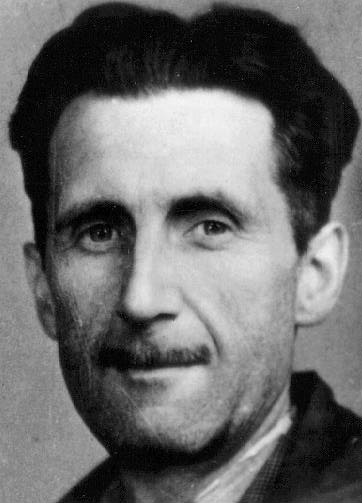
The intended message of George Orwell’s Nineteen Eighty-Four

Filed under: Books, History, Liberty, Politics — Tags: , , , , , — Nicholas @ 03:00

There are few novels which have been so enthusiastically claimed by partisans of both the right and the left — sometimes simultaneously — for misunderstood reasons. Orwell wasn’t warning us about technology (although he brilliantly illustrated how technology can be harnessed in service of the state), nor was he somehow warning us about the evils of current or recent politicans (Reagan, Bush, Trump). Orwell, a dedicated life-long socialist, was warning us of the dangers of totalitarianism, particularly the communist style of totalitarianism:

June 8, 2019, marks the 70th anniversary of George Orwell’s dystopian novel 1984. There will be no shortage of think pieces that will misinterpret its legacy. They will focus on social media, security cameras, data collection, and “fake news.” The problem? The novel was not a commentary on the downside of technology. It was meant to warn against the growing spread of communism.

In the decades since the time of its publication, the context of Orwell’s magnum opus has been lost. What remains in the cultural memory are simply fragments of the larger picture: government censorship, ubiquitous surveillance cameras, and Orwell’s clever neologisms (Newspeak, doublethink, and thoughtcrime, among others). This selective recall has led to a widespread misreading of the book’s original warning.

[…]

From the left, most present-day articles and blog posts project the character “Big Brother” onto President Donald Trump, like Eliot Namay’s column in the May 6 edition of the Charleston Gazette-Mail. They typically focus on Trump’s fevered populism and his penchant for impulsive speech, which can lead him to play fast and loose with facts.

Sales of 1984 spiked dramatically after his inauguration in 2017 when White House Press Secretary Sean Spicer (incorrectly) touted the “largest audience ever to witness an inauguration.” Trump advisor Kellyanne Conway later defended the claim on Meet the Press, blurting out the now infamous phrase, “alternative facts.” Scores of news stories compared her gaffe to Orwell’s “Newspeak” and “doublethink.” It’s also fairly common to read comparisons of Trump’s rallies to the “Two Minutes Hate” depicted in 1984.

Comparisons from the right, on the other hand, generally focus on the politically correct speech codes of colleges and universities or on the massive data gathering of big tech companies like Facebook and Google, warning readers that “Big Brother is Watching You.” Kalev Leetaru explores both of these issues in his May 6 column in Forbes, where he compares the social media de-platforming trend to Orwell’s “unperson” status. Notably, sales of 1984 also spiked in 2013 after Edward Snowden leaked details of the NSA’s mass collection of internet and phone records. A slew of articles followed, asserting that 1984 had arrived.

A certain amount of hyperbole is a characteristic of today’s reporting and commentary, but current comparisons to 1984 are inappropriate. Again, George Orwell was writing about a specific regime. Big Brother was an obvious reference to “Uncle Joe” Stalin, a uniquely evil dictator. Trump has his shortcomings, but he is no Stalin. A president who is prone to exaggeration does not equal a government-controlled press (which the Soviet Union had). The “Two Minutes Hate” recalled Stalin’s public demonization of Trotzky, who dared to criticize Stalin’s tactics. Data collection is a growing concern, to be sure, but it doesn’t precede a terrifying knock on the door from the KGB.

Pak-40 German 75mm AT Gun Firing

Filed under: Germany, History, Military, Weapons, WW2 — Tags: , , — Nicholas @ 02:00

Forgotten Weapons
Published on 30 Mar 2014

Cool Forgotten Weapons Merch! http://shop.bbtv.com/collections/forg…

Intro music by Dylan Benson – http://dbproductioncompany.webs.com

While we normally stick to small arms here, this beast of a gun was just way too impressive for me to not pay attention to. I was at a cannon and machine gun shoot just recently where some folks brought out what is (I believe) the only functional Pak-40 in the United States. And shot it.

The Pak-40 was the backbone of German antitank guns during WWII, and fired a 75mm AP shell out to an effective range of about a mile in a direct-fire role, with enough energy to defeat pretty much any Allied tank except the late-war Russian heavies. It was fairly light weight given its effectiveness, and makes one hell of a concussion when fired.

Thanks to the gun’s owners for being awesome!

QotD: Robert Heinlein on “honest work”

Filed under: Books, History, Humour, Quotations — Tags: , , , — Nicholas @ 01:00

The beginning of 1939 found me flat broke following a disastrous political campaign (I ran a strong second best, but in politics there are no prizes for place or show).

Robert A. Heinlein at the 1976 World Science Fiction Convention
Via Wikimedia Commons.

I was highly skilled in ordnance, gunnery, and fire control for Naval vessels, a skill for which there was no demand ashore — and I had a piece of paper from the Secretary of the Navy telling me that I was a waste of space — “totally and permanently disabled” was the phraseology. I “owned” a heavily-mortgaged house.

About then Thrilling Wonder Stories ran a house ad reading (more or less):

GIANT PRIZE CONTEST —
Amateur Writers!!!!!!
First Prize $50 Fifty Dollars $50

In 1939 one could fill three station wagons with fifty dollars worth of groceries.

Today I can pick up fifty dollars in groceries unassisted — perhaps I’ve grown stronger.

So I wrote the story “Life-Line.” It took me four days — I am a slow typist. I did not send it to Thrilling Wonder; I sent it to Astounding, figuring they would not be so swamped with amateur short stories.

Astounding bought it… for $70, or $20 more than that “Grand Prize” — and there was never a chance that I would ever again look for honest work.

(“Honest work” — an euphemism for underpaid bodily exertion, done standing up or on your knees, often in bad weather or other nasty circumstances, and frequently involving shovels, picks, hoes, assembly lines, tractors, and unsympathetic supervisors. It has never appealed to me. Sitting at a typewriter in a nice warm room, with no boss, cannot possibly be described as “honest work.”)

Robert A. Heinlein, 1980.

June 9, 2019

History of England – The Devastation of France – Extra History – #3

Filed under: Britain, France, History, Military — Tags: , , , — Nicholas @ 06:00

Extra Credits
Published on 8 Jun 2019

From the end of the battle of Crecy, Edward charged on to besiege Calais (successfully), and then returned home. Right about then was when the Black Plague hit Europe head-on. But Edward carried on as king establishing order among his subjects, forming the Knights of the Garter. In France, John le Bel, son of Philip, had learned from the French defeats and was making small victories here and there…

In the middle ages, pillaging and murdering your way across Northern France was clearly considered an appropriate father-son bonding opportunity.

Thanks again to David Crowther for writing AND narrating this series! https://thehistoryofengland.co.uk/pod…

Join us on Patreon! http://bit.ly/EHPatreon

The blog as a modern “commonplace book”

Filed under: History, Media, Personal — Tags: , — Nicholas @ 05:00

I’ve been blogging continuously for over fifteen years, but I’ve never found — or even considered — a single unifying theme for the blog. There are consistencies over the years, like the QotD posts, but in general the blog acts as a place for me to note things that interest, excite, or agitate me. After my grandfather died in 1979, I inherited a few of his notebooks, which included scores of lists on all kinds of things … my grandmother said it was all gathered to help with crossword puzzles, but the range of information was much wider than you’d normally find in crosswords. I think, had he lived long enough, my grandfather would have been a dedicated blogger. The blogging world has a lot of blogs like mine, where the blogger notes seemingly random bits of information, and this is far from new: they used to be called “commonplace books“:

Anonymous mid-17th century manuscript containing poems by various authors, in various hands, including Shakespeare’s second sonnet.
Wikimedia Commons.

Commonplace books (or commonplaces) are a way to compile knowledge, usually by writing information into books. They have been kept from antiquity, and were kept particularly during the Renaissance and in the nineteenth century. Such books are essentially scrapbooks filled with items of every kind: recipes, quotes, letters, poems, tables of weights and measures, proverbs, prayers, legal formulas. Commonplaces are used by readers, writers, students, and scholars as an aid for remembering useful concepts or facts. Each one is unique to its creator’s particular interests but they almost always include passages found in other texts, sometimes accompanied by the compiler’s responses. They became significant in Early Modern Europe.

“Commonplace” is a translation of the Latin term locus communis (from Greek tópos koinós, see literary topos) which means “a general or common topic”, such as a statement of proverbial wisdom. In this original sense, commonplace books were collections of such sayings, such as John Milton’s example. Scholars now understand them to include manuscripts in which an individual collects material which have a common theme, such as ethics, or exploring several themes in one volume. Commonplace books are private collections of information, but they are not diaries or travelogues.

In 1685 the English Enlightenment philosopher John Locke wrote a treatise in French on commonplace books, translated into English in 1706 as A New Method of Making Common-Place-Books, “in which techniques for entering proverbs, quotations, ideas, speeches were formulated. Locke gave specific advice on how to arrange material by subject and category, using such key topics as love, politics, or religion. Commonplace books, it must be stressed, are not journals, which are chronological and introspective.”

By the early eighteenth century they had become an information management device in which a note-taker stored quotations, observations and definitions. They were used in private households to collate ethical or informative texts, sometimes alongside recipes or medical formulae. For women, who were excluded from formal higher education, the commonplace book could be a repository of intellectual references. The gentlewoman Elizabeth Lyttelton kept one from the 1670s to 1713 and a typical example was published by Mrs Anna Jameson in 1855, including headings such as Ethical Fragments; Theological; Literature and Art. Commonplace books were used by scientists and other thinkers in the same way that a database might now be used: Carl Linnaeus, for instance, used commonplacing techniques to invent and arrange the nomenclature of his Systema Naturae (which is the basis for the system used by scientists today). The commonplace book was often a lifelong habit: for example the English-Australian artist Georgina McCrae kept a commonplace book from 1828-1865.

Will Britain Remain?! – WW2 – 041 – June 8 1940

Filed under: Britain, Europe, France, Germany, History, Military, WW2 — Tags: , , , — Nicholas @ 04:00

World War Two
Published on 8 Jun 2019

As the battle for France is still raging but looks like a ringing victory for Nazi Germany, and the encircled troops in Dunkirk have been evacuated, will Great Britain remain in the war? If so will British forces remain in continental Europe? In fact will Great Britain even be able to remain an independent nation, or also fall to the Nazis?

Join us on Patreon: https://www.patreon.com/TimeGhostHistory
Or join The TimeGhost Army directly at: https://timeghost.tv

Follow WW2 day by day on Instagram @World_war_two_realtime https://www.instagram.com/world_war_t…
Join our Discord Server: https://discord.gg/D6D2aYN.
Between 2 Wars: https://www.youtube.com/playlist?list…
Source list: http://bit.ly/WW2sources

Written and Hosted by: Indy Neidell
Produced and Directed by: Spartacus Olsson and Astrid Deinhard
Executive Producers: Bodo Rittenauer, Astrid Deinhard, Indy Neidell, Spartacus Olsson
Creative Producer: Joram Appel
Research by: Indy Neidell
Edited by: Iryna Dulka
Map animations: Eastory

Colorisations by Joram Appel, Spartacus Olsson and Norman Stewart.

Eastory’s channel: https://www.youtube.com/channel/UCEly…
Archive by Screenocean/Reuters https://www.screenocean.com.

Sources:
IWM: H 1622, H 1686, HU 1150, COL 294, H 1631, H 1700, HU 41240
The Royal Court Photo Archives

A TimeGhost chronological documentary produced by OnLion Entertainment GmbH.

From the comments:

World War Two
3 days ago
Insecurity reigns in Europe now that the Germans have managed to take the Netherlands, Belgium and force a large part of the British army out of mainland Europe. Is this it? Not much seems to stand in the way of a total German victory, and that raises questions in France and Britain. Many of you already know this, but it’d be a waste if not everyone does, so I’d like to point you all to our second YouTube Channel called ‘TimeGhost History’. We’re currently making a Between Two Wars series about the interwar years, which gives a lot of context and background to the things we tell on this channel. You can check that out right here: https://www.youtube.com/channel/UCLfMmOriSyPbd5JhHpnj4Ng

Making the legendary service Khukuri/Kukri of British Gurkhas – KHHI Nepal

Filed under: Asia, History, Technology, Weapons — Tags: , , , — Nicholas @ 02:00

KHHI Nepal
Published on 26 Mar 2018

See how a scrap of steel is converted into a piece of mastery craft by our men @ duty. All bear hands, hard labor, years of experience and great skill. Pls enjoy it!!

Is the original 2016-17 British Gurkhas Issue issued to the new recruits as their training, exercise, utility and even as a combat knife.

Product link :
https://www.thekhukurihouse.com/2016-17-british-standard-issue-bsi-2-kukri

#makingkhukuri #bsikukri #servicekukri #gurkhaknife

« Newer PostsOlder Posts »

Powered by WordPress