Quotulatiousness

July 22, 2019

Joan of Arc – The Maid of Orleans – Extra History – #3

Filed under: Britain, France, History, Military, Religion — Tags: , , , — Nicholas @ 06:00

Extra Credits
Published on 20 Jul 2019

Join us on Patreon! http://bit.ly/EHPatreon

When Joan met the army of Orleans, they weren’t exactly keen on her idea to just GET ‘EM and go completely offensive — thinking she would have more use as a mascot. But both they, and she, would be in for many surprises…

FAL in the North: The Canadian C1A1

Filed under: Cancon, History, Military, Weapons — Tags: , , , , — Nicholas @ 04:00

Forgotten Weapons
Published on 19 Jul 2019

http://www.patreon.com/ForgottenWeapons

Cool Forgotten Weapons merch! http://shop.bbtv.com/collections/forg…

Canada was the first country to adopt the FAL rifle, purchasing trials rifles from FN within weeks of the formal standardization of the 7.62mm NATO cartridge. Canada acquired production rights to the rifle along with the technical package from FN, and spent 18 months converting the drawings into 1st-angle inch pattern (which would be used by the rest of the Commonwealth nations subsequently). Both a C1 rifle pattern and a C2 LMG pattern were made, although today we are looking at just the C1.

The first production was a run of 20 toolroom prototypes, one of which we have in today’s video. After a few changes were made – most distinctively to the rear sight – full-scale production commenced. Over the following years, a few minor changes were made, and a slightly improved C1A1 pattern adopted. These would service the Canadian military until eventually replaced with the C7 rifles.

Contact:
Forgotten Weapons
PO Box 87647
Tucson, AZ 85754

No Flag Northern Ireland

Filed under: Britain, Europe, History, Politics — Tags: , , , , — Nicholas @ 02:00

CGP Grey
Published on 18 Jun 2019

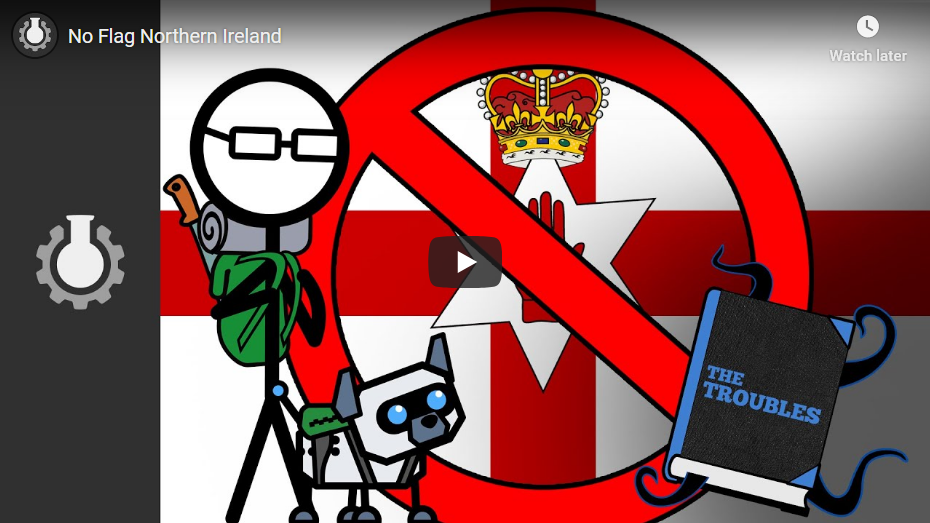
Northern Ireland’s officially unofficial flag.

July 21, 2019

Good People on Both Sides? – WW2 – 047 – July 20 1940

World War Two
Published on 20 Jul 2019

Peace seems to slowly return to the European mainland, but not for long, as the Germans move their airplanes to the French coast to Battle Britain in the skies while they make invasion plans, and the Soviets are entering the Baltics after ‘elections’ invited them to.

Join us on Patreon: https://www.patreon.com/TimeGhostHistory
Or join The TimeGhost Army directly at: https://timeghost.tv

Follow WW2 day by day on Instagram @World_war_two_realtime https://www.instagram.com/world_war_t…
Join our Discord Server: https://discord.gg/D6D2aYN.
Between 2 Wars: https://www.youtube.com/playlist?list…
Source list: http://bit.ly/WW2sources

Written and Hosted by: Indy Neidell
Produced and Directed by: Spartacus Olsson and Astrid Deinhard
Executive Producers: Bodo Rittenauer, Astrid Deinhard, Indy Neidell, Spartacus Olsson
Creative Producer: Joram Appel
Post production director:Wieke Kapteijns
Research by: Indy Neidell
Edited by: Marek Kaminski
Map animations: Eastory

Colorisations by Norman Stewart and Julius Jääskeläinen https://www.facebook.com/JJcolorization/

Eastory’s channel: https://www.youtube.com/channel/UCEly…
Archive by Screenocean/Reuters https://www.screenocean.com.

A TimeGhost chronological documentary produced by OnLion Entertainment GmbH.

Debunking the “common wisdom” about the “Scopes Monkey Trial”

Filed under: Education, History, Law, Media, USA — Tags: , , , , , , — Nicholas @ 05:00

Mark Pulliam explains what really caused the “Scopes Monkey Trial” and what was at stake … which doesn’t match up well at all against what little most people will remember about it today:
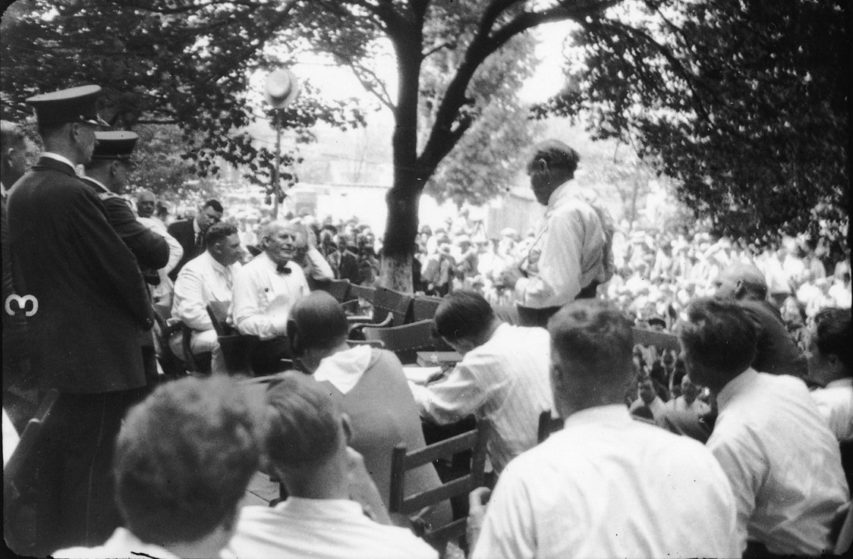
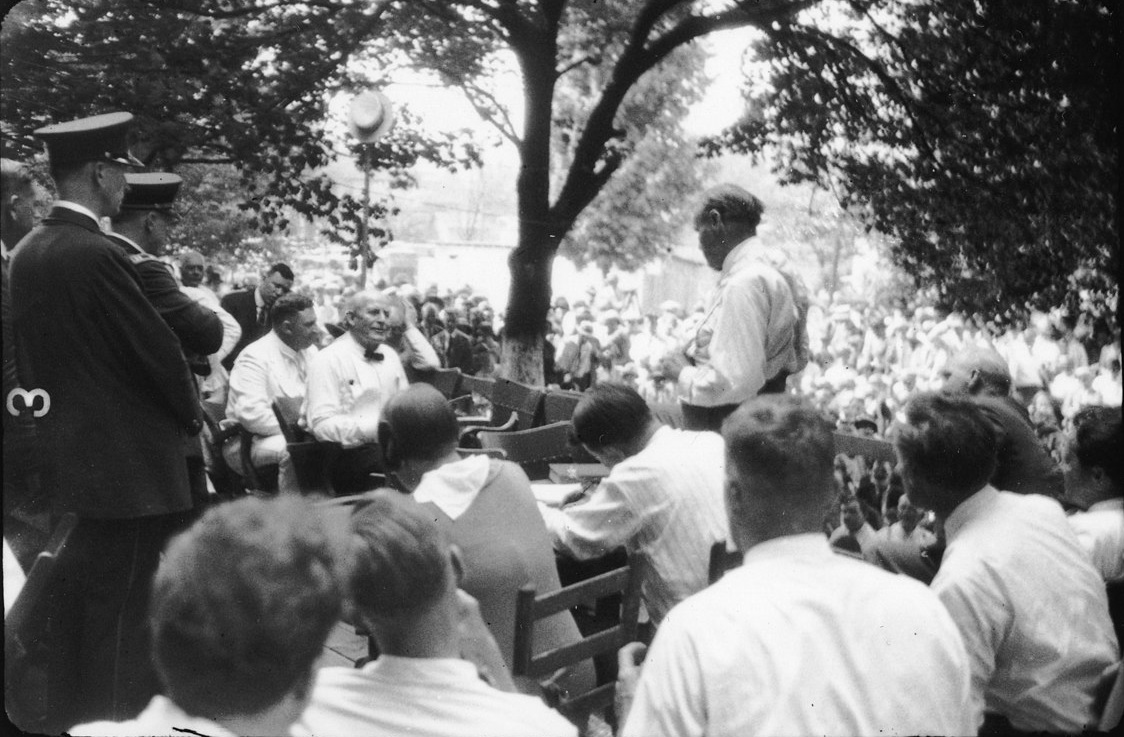
William Jennings Bryan (seated at left) being interrogated by Clarence Darrow, during the trial of the State of Tennessee v. John Thomas Scopes, July 20, 1925. That Monday afternoon, because of the extreme heat, Judge Raulston moved court proceedings outdoors. The session was held on a platform that had been erected at the front of the Rhea County Courthouse to accommodate ministers who wanted to preach during the time of the trial. Defense lawyers for Scopes (John R. Neal, Arthur Garfield Hays, and Dudley Field Malone) are visible seated to the extreme right. One of the men at left, with his back to the photographer, appears to be Scopes. The court reporters are seated at the table.
Photograph by Watson Davis via Wikimedia Commons.

We are again in another contentious period in America where battles over our culture and how we should live together are acrimonious. But there have been many points in our history that indicate we are only re-engaging a form of politics that is quintessentially American. One prominent past episode that occurred in Dayton, Tennessee during the summer of 1925 — the so-called “Scopes Monkey Trial” — has captured the American imagination like few legal proceedings ever have. Noted trial lawyer Clarence Darrow was part of the large legal team representing a 24-year-old substitute high school teacher, John Thomas Scopes, who was accused of violating the state’s Butler Act, which prohibited the teaching of evolution in a state-funded school. The celebrity co-prosecutor was William Jennings Bryan, the three-time Democratic presidential nominee, former Nebraska congressman, and Secretary of State to President Woodrow Wilson. Both Darrow and Bryan were prominent Progressive figures. Bryan, a left-wing evangelical and a fiery orator, is best known for his “Cross of Gold” speech at the 1896 Democratic National Convention.

The trial provided an opportunity for Darrow, whose reputation had been sullied by questionable tactics employed in the defense of radical labor leaders, to vindicate himself before a national audience. Chicago’s WGN radio station broadcast the trial nationwide and hundreds of reporters, some of them from overseas, covered the case. Geoffrey Cowan, author of the exhaustively-researched book The People v. Clarence Darrow, notes that Darrow achieved national notoriety, “won the support of Eastern sophisticates,” and “found new acceptance” as a result of the widely-publicized trial, especially his alleged humiliation of Darrow’s “old hero,” Bryan. This canard, which formed the dramatic crux of the 1960 movie Inherit the Wind, a highly-fictionalized depiction of the trial adapted from the 1955 play written by Jerome Lawrence and Robert E. Lee, is just one aspect of the popular mythology that surrounds the case.

Almost all of the “conventional wisdom” concerning the Scopes trial is false. Contrary to the impression created by Inherit the Wind and other popular accounts (including the sensational reportage of H. L. Mencken of The Baltimore Sun, one of the leading journalists of his day), the trial was not a fundamentalist inquisition, but an ill-conceived publicity stunt by Dayton businessmen who were trying to attract tourists to the small town — to put Dayton on the map. To generate a test case challenging the statute, the American Civil Liberties Union had offered to defend any teacher charged with violating the Butler Act, gratis. Dayton businessmen recruited Scopes to agree to serve as the defendant, even though he was unsure he had actually taught evolution. Nonetheless, Scopes volunteered to be charged. The trial — for a misdemeanor offense — was staged. Celebrity lawyers were solicited to participate for the sole purpose of increasing public interest in the case. The Baltimore Sun paid part of the defense’s expenses because it knew that the spectacle would sell newspapers, and it did. A lot of them.

I think it would be fair to say that H.L. Mencken had a passionate dislike for William Jennings Bryan, even after Bryan’s death a few days later:

It is the national custom to sentimentalize the dead, as it is to sentimentalize men about to be hanged. Perhaps I fall into that weakness here. The Bryan I shall remember is the Bryan of his last weeks on earth — broken, furious, and infinitely pathetic. It was impossible to meet his hatred with hatred to match it. He was winning a battle that would make him forever infamous wherever enlightened men remembered it and him. Even his old enemy, Darrow, was gentle with him at the end. That cross-examination might have been ten times as devastating. It was plain to everyone that the old Berserker Bryan was gone — that all that remained of him was a pair of glaring and horrible eyes.

But what of his life? Did he accomplish any useful thing? Was he, in his day, of any dignity as a man, and of any value to his fellow-men? I doubt it. Bryan, at his best, was simply a magnificent job-seeker. The issues that he bawled about usually meant nothing to him. He was ready to abandon them whenever he could make votes by doing so, and to take up new ones at a moment’s notice. For years he evaded Prohibition as dangerous; then he embraced it as profitable. At the Democratic National Convention last year he was on both sides, and distrusted by both. In his last great battle there was only a baleful and ridiculous malignancy. If he was pathetic, he was also disgusting.

Bryan was a vulgar and common man, a cad undiluted. He was ignorant, bigoted, self-seeking, blatant and dishonest. His career brought him into contact with the first men of his time; he preferred the company of rustic ignoramuses. It was hard to believe, watching him at Dayton, that he had traveled, that he had been received in civilized societies, that he had been a high officer of state. He seemed only a poor clod like those around him, deluded by a childish theology, full of an almost pathological hatred of all learning, all human dignity, all beauty, all fine and noble things. He was a peasant come home to the dung-pile. Imagine a gentleman, and you have imagined everything that he was not.

H/T to “WarEagle82” for the link.

History-Makers: Marco Polo

Filed under: China, Europe, History, Humour — Tags: , , , , , , — Nicholas @ 04:00

Overly Sarcastic Productions
Published on 19 Jul 2019

Go to https://NordVPN.com/overlysarcastic and and use code OVERLYSARCASTIC to get 75% off a 3 year plan and an extra month for free. Protect yourself online today!

On this episode of History-Makers, Blue takes a trip alongside the legendary explorer Marco Polo to figure out how the intrepid Venetian merchant made his way to the Mongol Empire and back, and what that means for his written account of those Travels.

What History-Maker do you want to see next? Leave a comment!

NEW MERCH: “Let’s Do Some History” — https://www.redbubble.com/people/ospy…
NEW STORE: https://www.redbubble.com/people/OSPY…

PATREON: https://www.Patreon.com/OSP

OUR WEBSITE: https://www.OverlySarcasticProductions.com
Find us on Twitter https://www.Twitter.com/OSPYouTube
Find us on Reddit https://www.Reddit.com/r/OSP/

QotD: History in a totalitarian age

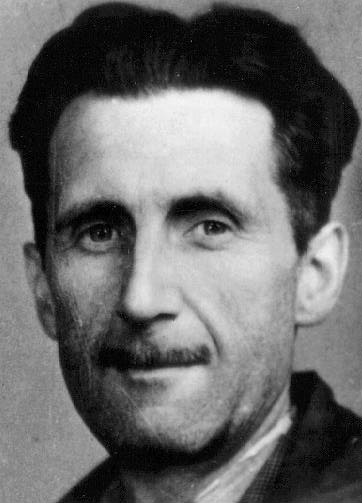
Orwell’s press card portrait, 1943

I know it is the fashion to say that most of recorded history is lies anyway. I am willing to believe that history is for the most part inaccurate and biased, but what is peculiar to our own age is the abandonment of the idea that history could be truthfully written. In the past people deliberately lied, or they unconsciously coloured what they wrote, or they struggled after the truth, well knowing that they must make many mistakes; but in each case they believed that “facts” existed and were more or less discoverable. And in practice there was always a considerable body of fact which would have been agreed to by almost everyone. If you look up the history of the last war in, for instance, the Encyclopaedia Britannica, you will find that a respectable amount of the material is drawn from German sources. A British and a German historian would disagree deeply on many things, even on fundamentals, but there would still be that body of, as it were, neutral fact on which neither would seriously challenge the other. It is just this common basis of agreement, with its implication that human beings are all one species of animal, that totalitarianism destroys. Nazi theory indeed specifically denies that such a thing as “the truth” exists. There is, for instance, no such thing as “Science”. There is only “German Science”, “Jewish Science”, etc. The implied objective of this line of thought is a nightmare world in which the Leader, or some ruling clique, controls not only the future but the past. If the Leader says of such and such an event, “It never happened” — well, it never happened. If he says that two and two are five — well, two and two are five. This prospect frightens me much more than bombs — and after our experiences of the last few years that is not a frivolous statement.

But is it perhaps childish or morbid to terrify oneself with visions of a totalitarian future? Before writing off the totalitarian world as a nightmare that can’t come true, just remember that in 1925 the world of today would have seemed a nightmare that couldn’t come true. Against that shifting phantasmagoric world in which black may be white tomorrow and yesterday’s weather can be changed by decree, there are in reality only two safeguards. One is that however much you deny the truth, the truth goes on existing, as it were, behind your back, and you consequently can’t violate it in ways that impair military efficiency. The other is that so long as some parts of the earth remain unconquered, the liberal tradition can be kept alive. Let Fascism, or possibly even a combination of several Fascisms, conquer the whole world, and those two conditions no longer exist. We in England underrate the danger of this kind of thing, because our traditions and our past security have given us a sentimental belief that it all comes right in the end and the thing you most fear never really happens. Nourished for hundreds of years on a literature in which Right invariably triumphs in the last chapter, we believe half-instinctively that evil always defeats itself in the long run. Pacifism, for instance, is founded largely on this belief. Don’t resist evil, and it will somehow destroy itself. But why should it? What evidence is there that it does? And what instance is there of a modern industrialized state collapsing unless conquered from the outside by military force?

Consider for instance the re-institution of slavery. Who could have imagined twenty years ago that slavery would return to Europe? Well, slavery has been restored under our noses. The forced-labour camps all over Europe and North Africa where Poles, Russians, Jews and political prisoners of every race toil at road-making or swamp-draining for their bare rations, are simple chattle slavery. The most one can say is that the buying and selling of slaves by individuals is not yet permitted. In other ways — the breaking-up of families, for instance — the conditions are probably worse than they were on the American cotton plantations. There is no reason for thinking that this state of affairs will change while any totalitarian domination endures. We don’t grasp its full implications, because in our mystical way we feel that a regime founded on slavery must collapse. But it is worth comparing the duration of the slave empires of antiquity with that of any modern state. Civilizations founded on slavery have lasted for such periods as four thousand years.

When I think of antiquity, the detail that frightens me is that those hundreds of millions of slaves on whose backs civilization rested generation after generation have left behind them no record whatever. We do not even know their names. In the whole of Greek and Roman history, how many slaves’ names are known to you? I can think of two, or possibly three. One is Spartacus and the other is Epictetus. Also, in the Roman room at the British Museum there is a glass jar with the maker’s name inscribed on the bottom, “Felix fecit“. I have a mental picture of poor Felix (a Gaul with red hair and a metal collar round his neck), but in fact he may not have been a slave; so there are only two slaves whose names I definitely know, and probably few people can remember more. The rest have gone down into utter silence.

George Orwell, “Looking back on the Spanish War”, New Road, 1943 (republished in England, Your England and Other Essays, 1953).

July 20, 2019

50th anniversary

Filed under: History, Space, Technology, USA — Tags: , , — Nicholas @ 11:41

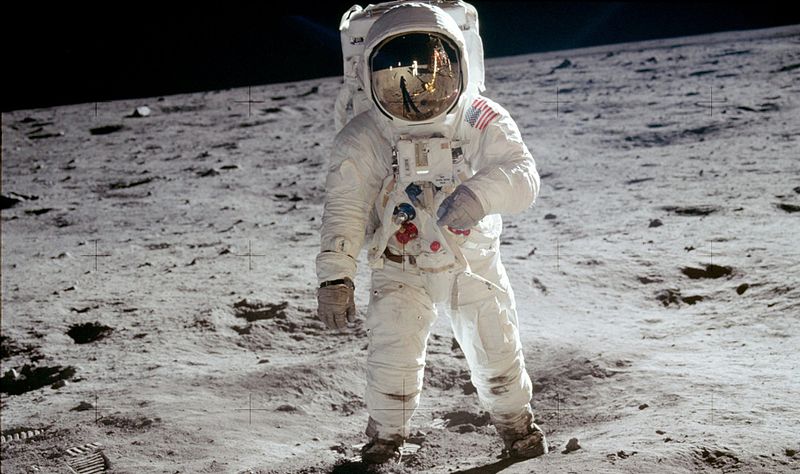
Astronaut Buzz Aldrin, lunar module pilot, stands on the surface of the moon near the leg of the lunar module, Eagle, during the Apollo 11 moonwalk. Astronaut Neil Armstrong, mission commander, took this photograph with a 70mm lunar surface camera. While Armstrong and Aldrin descended in the lunar module to explore the Sea of Tranquility, astronaut Michael Collins, command module pilot, remained in lunar orbit with the Command and Service Module, Columbia. *This is the actual photograph as exposed on the moon by Armstrong. He held the camera slightly rotated so that the camera frame did not include the top of Aldrin’s portable life support system (“backpack”). A communications antenna mounted on top of the backpack is also cut off in this picture. When the image was released to the public, it was rotated clockwise to restore the astronaut to vertical for a more harmonious composition, and a black area was added above his head to recreate the missing black lunar “sky”. The edited version is the one most commonly reproduced and known to the public, but the original version, above, is the authentic exposure.

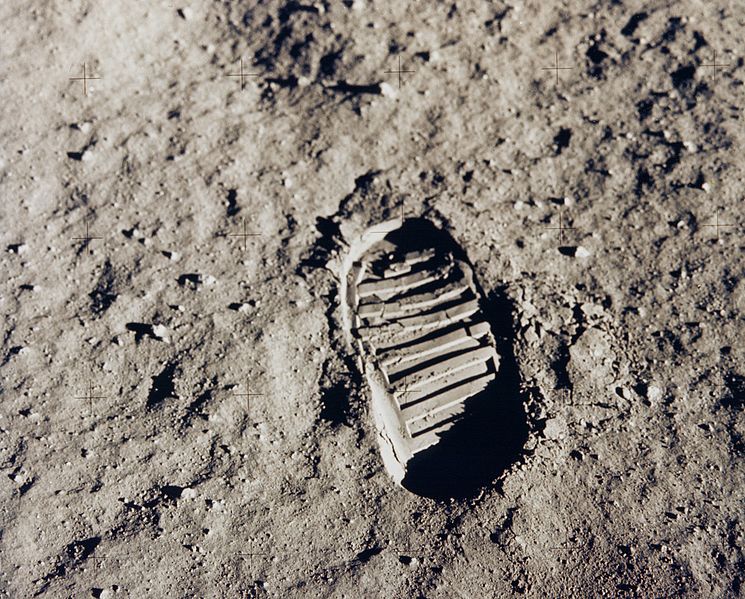
Bootprint in lunar dust created and photographed by Buzz Aldrin for the boot penetration (soil mechanics) task during the Apollo 11 moon walk.

A Bankrupt Germany Didn’t Create the Nazis | Between 2 Wars | 1928 Part 1 of 1

Filed under: Europe, Germany, History, Media — Tags: , , , , , — Nicholas @ 06:00

TimeGhost History
Published on 18 Jul 2019

When the world goes into economic overdrive in the second half of the 1920s, contrary to popular belief Germany rises with the tide – it is the Goldener Zwanziger, the Golden Twenties.

Join us on Patreon: https://www.patreon.com/TimeGhostHistory

Hosted by: Indy Neidell
Written by Francis van Berkel and Spartacus Olsson
Directed and Produced by: Spartacus Olsson and Astrid Deinhard
Executive Producers: Bodo Rittenauer, Astrid Deinhard, Indy Neidell, Spartacus Olsson
Creative Producer: Joram Appel
Post-Production Director: Wieke Kapteijns
Edited By: Daniel Weiss
Research by: Francis van Berkel

Sources:
Bundesarchiv, Photos from the Jonatan Myhre Barlien photo collection.

Colorization by Daniel Weiss
Thumbnail motive by Olga Shirnina
https://klimbim2014.wordpress.com/201…

A TimeGhost chronological documentary produced by OnLion Entertainment GmbH

“Boris Johnson is the only man alive who could convincingly turn The Emperor’s New Clothes into a one-man play”

Filed under: Britain, History, Media, Politics, Religion — Tags: , , , — Nicholas @ 05:00

In Spiked, Alaa al-Ameri says that Boris Johnson actually does have a valid point in his criticism of Islam:

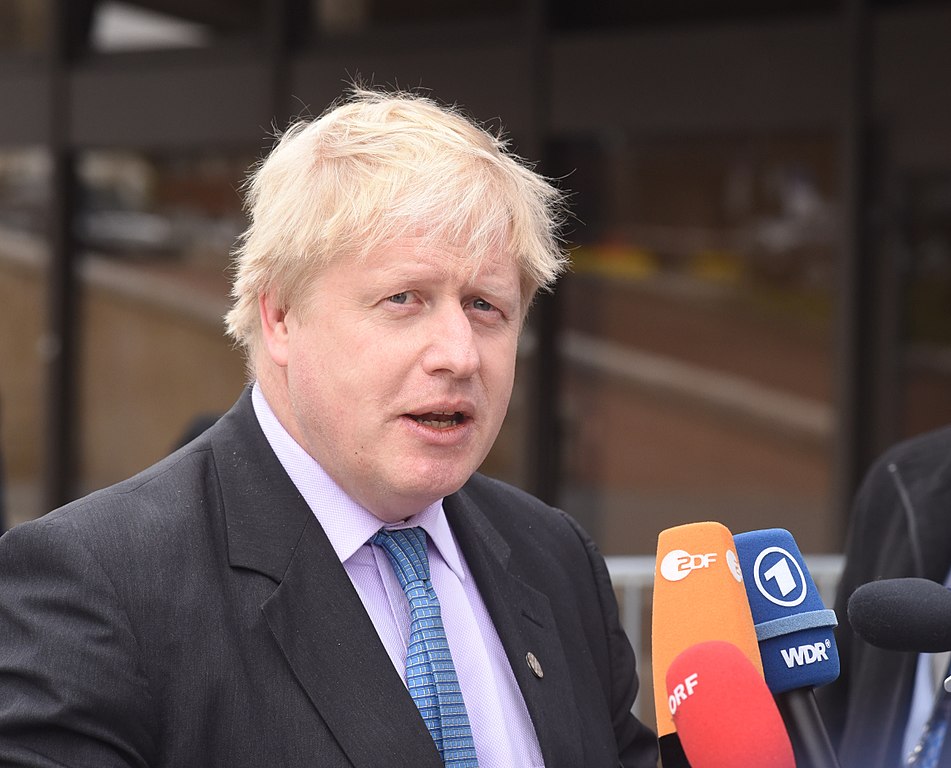
Boris Johnson, Secretary of State for Foreign and Commonwealth Affairs at an informal meeting of the Foreign Affairs Council on 15 February 2018.
Photo by Velislav Nikolov via Wikimedia Commons.

Boris Johnson is the only man alive who could convincingly turn The Emperor’s New Clothes into a one-man play. He’s perfect for every role – the pompous, bumbling, vain emperor; the barefaced conmen trafficking in audacious whoppers; and, most importantly, the little boy, unable to keep from blurting out the obvious, especially when everyone around him is busy parroting the convenient lie of the day.

Not for the first time, Johnson has offended polite society by suggesting that there might be something less than perfectly laudable about some aspects of Islam. Perish the thought. In particular, offence-miners at the Guardian have discovered that Johnson once wrote that Islam has held Muslim countries back by “centuries”.

A cursory look around the world is enough to conclude that there may be something to Johnson’s argument. A deeper look at Arab and Muslim history – both ancient and recent – might at least confirm the possibility that such a statement is something other than flat-out bigotry. Or so you might have thought, if you had recently awoken from a 30-year coma. In 2019, however, such thoughts are unthinkable.

We can moralise all day long about the evils of European colonialism. But it was a historical blink of an eye in comparison to the centuries of Arab and Muslim colonialism that produced the cultures to which Johnson was referring. We can wring our hands over the influence of literalist Christianity on American politics. But this is a drop in the ocean compared to the cultural and political leverage of Islam across the globe. We can lament the potential harm to Indian democracy posed by militant Hindu nationalism. But there is nothing questionable about entertaining the notion that centuries of Muslim global imperialism – which ended less than 100 years ago – might have left behind a less than a gleaming legacy.

Early American Ginger Beer – 18th Century Cooking

Filed under: Food, History, USA — Tags: — Nicholas @ 02:00

Townsends
Published on 2 Oct 2017

In this episode we make a simple and delicious, 18th century Ginger Beer. #townsendsgingerbeer

Our suggested books on brewing▶ http://www.townsends.us/book-recommen… ▶▶

Help support the channel with Patreon ▶ https://www.patreon.com/townsend ▶▶

Check Out Our Website! ▶ http://www.townsends.us/ ▶▶

July 19, 2019

“Long Live the King” – Swedish King Karl XII – Sabaton History 024 [Official]

Filed under: Europe, History, Media, Military, Russia — Tags: , , , , , , — Nicholas @ 06:00

Sabaton History
Published on 18 Jul 2019

The Sabaton song “Long Live the King” is about the aftermath of the Battle of Poltava in June 1709. The future of Sweden lay in the hands of the parliament at home while the King was in voluntary exile with the Ottomans. What followed was a dark time in Swedish history where everything was uncertain, with an unexpectedly dark ending.

Support Sabaton History on Patreon: https://www.patreon.com/sabatonhistory

Listen to Carolus Rex (where “Long Live the King” is featured):
CD: http://bit.ly/CarolusRexStore
Spotify: http://bit.ly/CarolusRexSpotify
Apple Music: http://bit.ly/CarolusRexAppleMusic
iTunes: http://bit.ly/CarolusRexiTunes
Amazon: http://bit.ly/CarolusRexAmz
Google Play: http://bit.ly/CarolusRexGooglePlay

Check out the trailer for Sabaton’s new album The Great War right here: https://www.youtube.com/watch?v=HCZP1…

Hosted by: Indy Neidell
Written by: Markus Linke and Indy Neidell
Directed by: Astrid Deinhard and Wieke Kapteijns
Produced by: Pär Sundström, Astrid Deinhard and Spartacus Olsson
Creative Producer: Joram Appel
Executive Producers: Pär Sundström, Joakim Broden, Tomas Sunmo, Indy Neidell, Astrid Deinhard, and Spartacus Olsson
Maps by: Eastory
Edited by: Iryna Dulka
Sound Editing by: Marek Kaminski

Eastory YouTube Channel: https://www.youtube.com/channel/UCEly…
Archive by: Reuters/Screenocean https://www.screenocean.com
Music by Sabaton.

An OnLion Entertainment GmbH and Raging Beaver Publishing AB co-Production.

Sources:
– Photo of the bullet
– Bairuilong on Wikimedia Commons,
– Swedish National Museum

© Raging Beaver Publishing AB, 2019 – all rights reserved.

From the comments:

Sabaton History
2 days ago
THREE MORE NIGHTS! I think that most of you expected this episode to be from the new album that will be released next Friday, but as we all like a little unexpected Sabaton every now and then, we went with the 18th century instead. While we (of course) will continue with these videos, it feels like we have been working towards the 19th of July ever since we started this channel in February this year. Thank you all for being a part of this journey! We mean it when we say that this wouldn’t have been possible without all of you who watch our videos and especially those who support us on Patreon!

Forgotten History: Musée de Plans-Reliefs (Paris)

Filed under: France, History, Military — Tags: , , , , — Nicholas @ 04:00

Forgotten Weapons
Published on 18 Jul 2019

http://www.patreon.com/ForgottenWeapons

Cool Forgotten Weapons merch! http://shop.bbtv.com/collections/forg…

Hidden away up on the 4th floor of the Paris Army Museum (in Les Invalides) is the rather unexcitingly-named Musée de Plans-Reliefs. Up here in the dark is a collection of strategic dioramas dating back some 350 years. French King Louis XIV created a workshop to build these 1:600 sale models of the major fortifications around the French coast as a tool for planning military actions. Napoleon resumed the practice in the 1800s, and today the collection includes some 100 different models. Not all of these are on display, but they are quite large and intricately detailed. Truly a hidden gem of military history in the attic of the museum. If you have an opportunity to visit the Paris Musée d’Armée, don’t miss the chance to take an hour or so to see these!

http://www.museedesplansreliefs.cultu…

Contact:
Forgotten Weapons
PO Box 87647
Tucson, AZ 85754

Swiss 1929 Simplified Luger (Yes, Swiss and Simplified)

Filed under: Europe, Germany, History, Military, Weapons — Tags: , , , — Nicholas @ 02:00

Forgotten Weapons
Published on 15 May 2019

http://www.patreon.com/ForgottenWeapons

Cool Forgotten Weapons merch! http://shop.bbtv.com/collections/forg…

Switzerland was the first nation to adopt the Luger as a service pistol, and they purchased them DWM in Germany from 1900 until 1914. World War One stopped deliveries, of course, and after the war the Swiss opted to begin their own production at Waffenfabrik Bern. These Swiss Lugers have become known as the model 06/24 by collectors, and were made until 1933. During that time, Bern was looking for ways to simplify and economize their production, and these efforts came together with the development of the Model 1929. It actually entered production in 1934, and was made until 1947 with a total of about 28,000 made for the military and about 1,900 made for the civilian market.

The main mechanical change to the 1929 pattern was a lengthening of the grip safety. Other changes included simplifying the profile of the front strap of the grip, removing knurling and serrations on the controls, and only serializing four parts. A production date stamp was also added to the inside of the frame, however.

Contact:
Forgotten Weapons
PO Box 87647
Tucson, AZ 85754

QotD: “Re-imagining” Notre-Dame de Paris

Filed under: Architecture, France, History, Quotations, Religion — Tags: , , , — Nicholas @ 01:00

The monstrous regiment of modernists was so quick off the mark with their hideous, egomaniacal plans to rebuild the roof of Notre-Dame — one could not call any of their proposals a restoration — that I began to suspect that the fire that destroyed the roof was the result of a conspiracy by them. Gone were my suspicions that it was either Muslim terrorists or degenerate smokers who had set the fire, and my new hypothesis was perfectly reasonable. Modernists, after all, have done far more damage in the long run to the urban fabric of Europe than even the Second World War did; and it stands to reason that they, the modernists, would not want anything to escape their attentions for long, lest anything remain intact to shame by painful comparison their own wretched efforts.

So far their proposals have included apiaries and swimming pools, and all of them look like greenhouses for the cultivation of marijuana. And why not? After all, Baudelaire wrote a book about les paradis artificiels, that is to say those induced by psychoactive substances, and is not a spire an arrow pointing up to heaven? All conceptions of paradise are artificial in the sense than none of us has any direct knowledge of such a location; perhaps, in the spirit of ecumenical multiculturalism, a kind of Muslim-style paradise could be created under the glass roof (I shall refrain from describing it because young people might read this).

Of course, there is no end to the uses to which this prime space might be put. There could, for example, be a three-Michelin-star restaurant there. Think of the rent it would pay, the prices it could charge! The French state (which is responsible for the upkeep of the building) would — or at least could — be relieved of financial anxiety about it.

This proposal might be objected to because it would not be socially inclusive enough; the Pope would not countenance it because it would exclude illegal immigrants (except, perhaps, as plongeurs). The customers would be mainly wealthy foreigners, Russian oligarchs, Gulf oil sheikhs, and the like, and while this might assist with France’s yawning commercial deficit, it would do little for social justice, the ultimate aim of human existence, by which is meant the reduction of everything to the lowest common denominator.

Theodore Dalrymple, “What to Do With Notre-Dame?”, Taki’s Magazine, 2019-05-25.

« Newer PostsOlder Posts »

Powered by WordPress