Foundation for Economic Education
Published 22 Dec 2020Support Out of Frame on Patreon: https://www.patreon.com/OutofFrameShow
Check out our podcast, Out of Frame: Behind the Scenes: https://www.youtube.com/channel/UCiS5…
As we enter peak holiday season, most people have their shopping done by now, but as always, many are scrambling last-minute for their purchases. And if you aren’t one of those early-birds fortunate enough to procure a PS5 or Xbox Series X, you can guarantee that you won’t be able to find one unless you’re willing to pay $1,200 to a scalper.
Many are understandably frustrated. How is it fair for people to buy up the consoles at $500 and sell for nearly double or triple the cost? “There ought to be a law” against that kind of thing — right?
Well, in short, there’s nothing wrong with scalping — and a few economic lessons will help explain why.
Scarcity is real and so is time-preference. Scalpers (and even bots) show that demand for some goods is so high that people are willing to pay several times the list price — which could provide a lot of information to Sony and Microsoft on how many consoles to produce and in what parts of the world. They could factor that information into the future, so there would be less problems with availability, but most retailers make this information exchange impossible.
______________________________
CREDITS:Produced by Sean W. Malone
Written by Jen Maffessanti & Sean W. Malone
Edited by Paul Nelson
Asst. Edited by Jason Reinhardt
December 23, 2020
No, Console Scalpers Aren’t Ruining Christmas
August 28, 2020
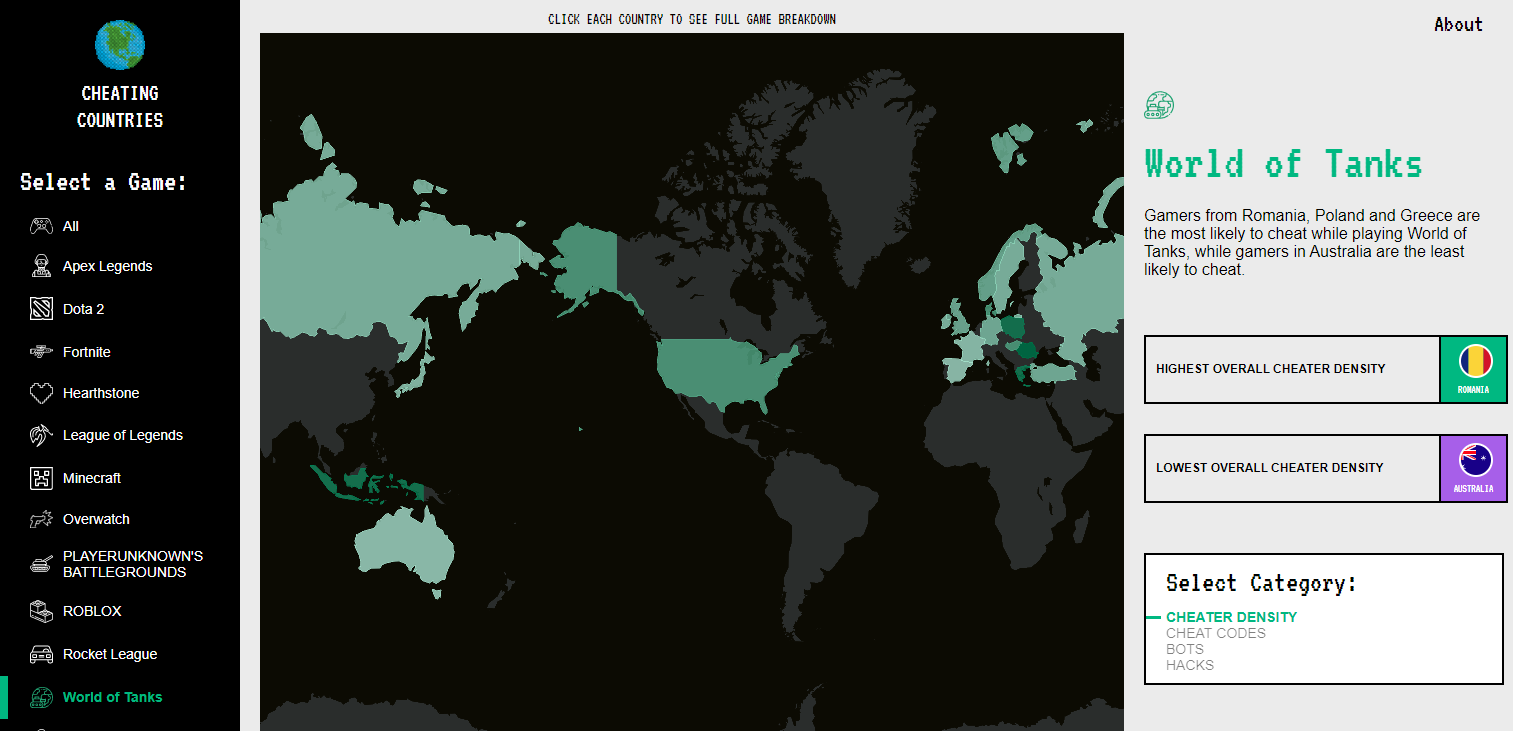
National “cheater density” for popular online games
Richard Currie summarizes the findings of Ruby Fortune’s cheater research (note that there’s no data on China because reasons):
Ever torn your keyboard from the desk and flung it across the room, vowing to find the “scrub cheater” who ended your run of video-gaming success? Uh, yeah, us neither, but a study into the crooked practice might help narrow down the hypothetical search.
The research, carried out by casino games outfit Ruby Fortune, has produced a global heatmap of supposed cheater density.
According to the website, this was done by analysing “search trend and search volume data to reveal where in the world is most likely to cheat while playing online multiplayer video games”. The report looks at the frequency of search engine queries for the most-played video games and measures them against searches for related cheat codes, hacks and bots, to show which country has the highest density of cheaters, and which cheat categories are the most popular in each location.
[…]
There is a massive hole in the data, however, thanks to the Great Firewall of China, which has a terrible reputation for ruining the experience of online games.
If there was any doubt that the Middle Kingdom would otherwise take Brazil’s crown, consider that Dell once advertised a laptop for the market by saying it was especially good for running PUBG plugins to “win more at Chicken Dinner”, a reference to the “Winner winner chicken dinner” message that comes up on a victory screen.
Data from the Battle Royale granddad’s anti-cheat tech provider, BattlEye, has also suggested that at one point 99 per cent of banned cheaters were from China.
May 12, 2020
QotD: A jaundiced view of science fiction conventions
When I went to my first science fiction convention […] I noticed a couple of things.
The first was that nobody at these gatherings, at least as far as I could tell, actually read science fiction, or much of anything else.
There were plenty of board gamers. (This was long before computer gaming or even Dungeons and Dragons; the hottest item on CRT was Pong, or early versions of Star Trek eating up mainframe time across the country.) There were plenty of self-proclaimed artists of one kind or another, and hordes of kids — of all ages — who loved to dress up in costumes.
Another thing I noticed was that these conventions, or “cons” as they were called, seemed to be the only social life most of their attendees had, a sort of portable soap opera migrating from city to city throughout the year. The atmosphere was heavy with prehistoric rivalries and hatreds, grudges and vendettas, sometimes going back decades.
Actually, the first thing I noticed — although I was too polite to put it first here — was that the vast bulk (and I use the term advisedly) of female attendees could have used a carload of deodorant and long-term memberships in Weight Watchers. Which, of course, was why events like these were the only social life they had. Nobody else wanted them hanging around.
L. Neil Smith, “The Security Syndrome”, The Libertarian Enterprise, 2005-01-15
January 20, 2020
Gaming India’s colonial and post-colonial history
In Quillette, Jonathan Kay looks at two wargames that deal with different aspects of Indian history:
… the peoples whom Europeans encountered in the Americas were skilled and inventive combatants who often put white men to flight (or worse) despite their enormous disadvantage in technology and (ultimately) manpower. In many cases, First Nations (as we now call them in Canada) fought fiercely with one another, too, and had well-developed military traditions that Europeans variously feared, admired and adopted. And they would make fitting protagonists for any modern boardgame designer willing to reject the current fashion of presenting indigenous peoples as holy elves of the forest.
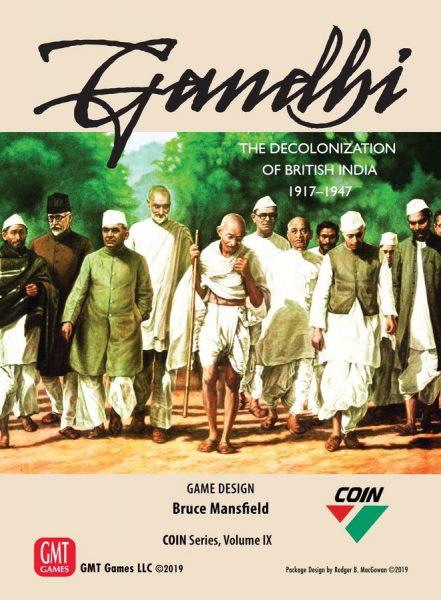
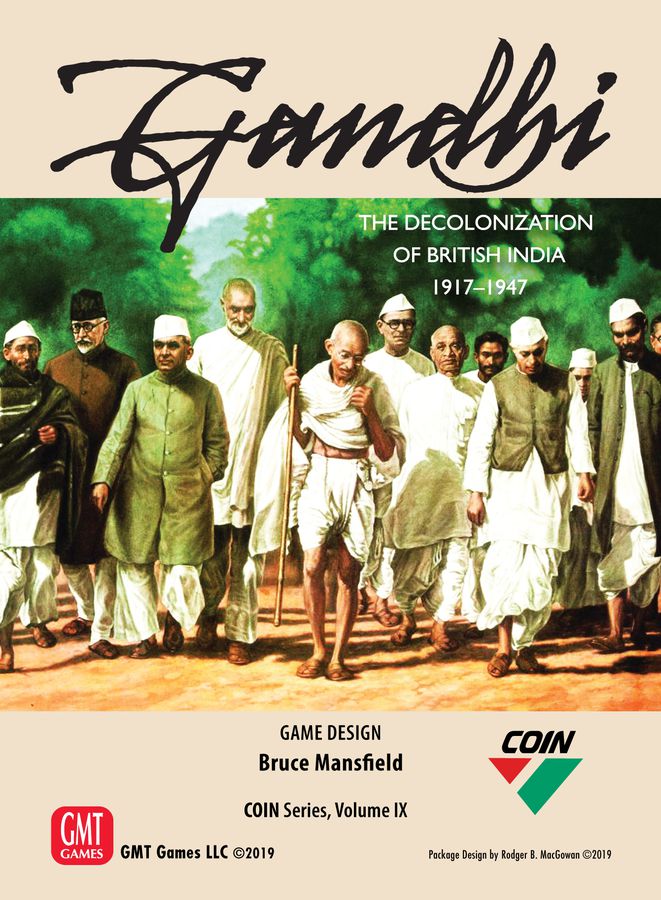
What would such a game look like? A good example comes to us in the form of GMT Games’ 2019 release, Gandhi: The Decolonization of British India. This is the latest entry in GMT’s COIN series, which is designed to model guerrilla wars and other unconventional conflicts through the use of cards that represent historical events. As in other games of the genre, such as Fire in the Lake (Vietnam), People Power (Insurgency in the Philippines, 1983-1986) and Colonial Twilight (The French-Algerian War, 1954-62), the game doesn’t present a simple narrative of good versus evil, but a more complex narrative in which all sides have at least some ulterior motives that are at odds with their official propaganda. In Gandhi, there are four players, one each controlling the Raj, the Indian National Congress, the Muslim League and the “Revolutionaries.” The latter three all share the goal of some kind of national independence, but each pursues its own (often mutually antagonistic) methods, with the Revolutionaries using violence to undercut the more pacifistic Congress, and the Muslim League playing off Congress, the Revolutionaries and the Raj in order to protect the interests of the country’s Islamic minority. (Historians of Canada would note that diplomacy and warfare with and among First Nations often was similarly complex.)
The game is unpredictable and complex, since each player will pursue different strategies in the country’s many different zones, making and breaking de facto partnerships depending on the circumstances. Amid all of this gaming chaos, the moral logic of decolonization remains a central theme of the game. But by the end of things, you realize that the ejection of the British from India was a big and messy project, as history typically is. While Spirit Island was created with the goal of mainlining anti-colonialism directly into the boardgame experience, Gandhi gets to the same theme obliquely by way of amoral realism, doing a better job pedagogically in the process.
A key aspect of Gandhi is that the Raj has agency: It is not reduced to the status of automaton-villain, as in Spirit Island. But there are limitations to the imaginative ecosystem that players inhabit: Every one of the four players has to take on their assigned role without questioning their underlying, game-dictated objective — including the Raj player, who must, start to finish, exert himself in defence of a colonial project that now is widely viewed as being on the wrong side of history. The other three factions likewise remain prisoners of their parochial regional, religious and doctrinal differences, which, historically, would contribute to millions of deaths in the chaos that accompanied the British exit.
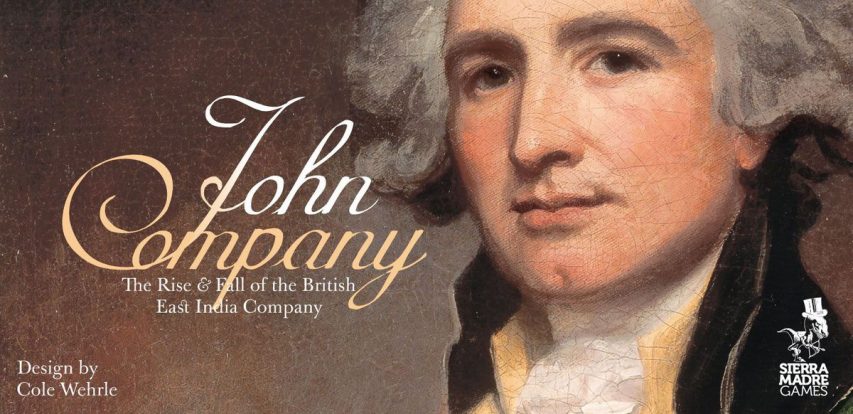
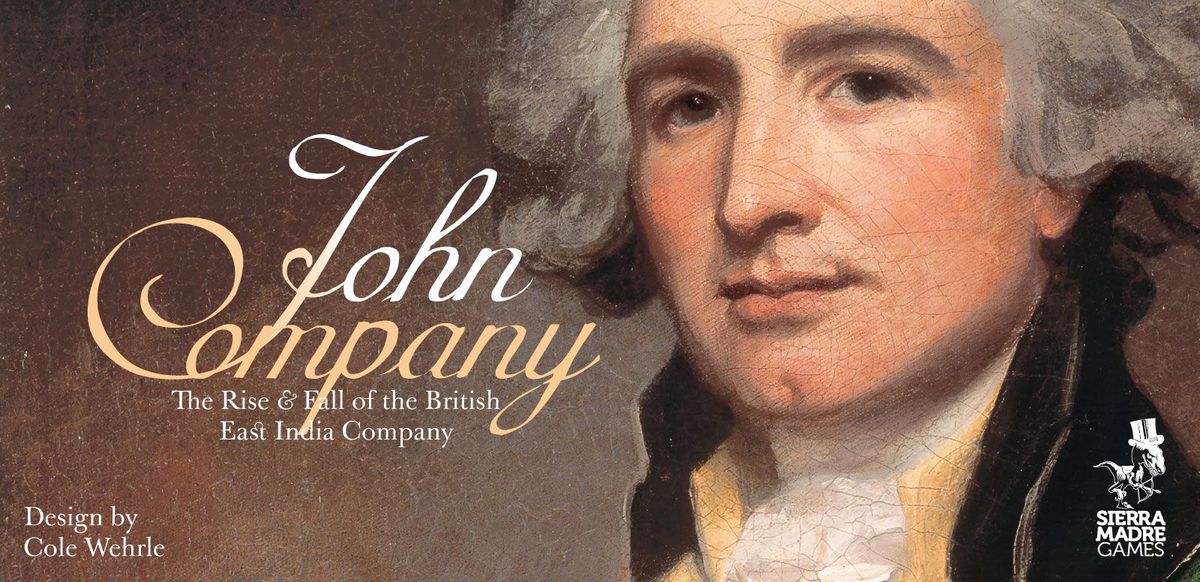
Which brings me to the fourth and final colonialism-themed game I will discuss: the acclaimed 2017 release John Company, by Indiana-based designer Cole Wehrle. In theory, John Company is also a game about British colonialism in India. But here’s the rub: The players all act as competing factions within the commercial innards of John Company (a nickname for the British East India Company). On one hand, the players have a co-operative goal — to keep the company afloat as it manages the enormous expense of creating and operating a colonial apparatus on the subcontinent. But I can attest that far more of players’ mental energy goes into fighting each other for the spoils of war and trade. Indeed, much of the game consists of exchanging favours and bribes among players, as each attempts to leverage positions of power within the company to extract revenues, plunder and positions of influence.
As the game progresses, you notice, almost as an afterthought, that great things are afoot within India: New trade routes are created, military battles are fought, whole regions go into revolt and are pacified, with many (fictional) lives hanging in the balance. But as a player, you barely notice any of this — except to the narrow extent these events can be exploited as a source of wealth, since the way you win the game is by accumulating enough cash and baubles to retire your functionaries into gilded clubs and country houses back in England.
And what of the actual Indians who lived and died under the Raj? They don’t appear at all in the game, for John Company‘s real play arc exists within the corrupt solipsism of intra-corporate deal-making. Which sounds horrifyingly amoral. But when the game’s over, you realize: That’s the whole point. The colonialists who ran India — like those who came to North America and every other place on the map, from South America to the Belgian Congo to China — typically weren’t motivated by a desire to destroy and subjugate. They were out to make a buck, either as lone freelancers in a canoe, or bureaucrats pulling levers within some gigantic corporate behemoth. The horrifying, often genocidal murder and mayhem was a by-product of greed. Which doesn’t make it better. But it does make the narrative more comprehensible in regard to governing our future behaviour as human societies — since we all are vulnerable to spasms of greed, while true evil for its own sake is a rare thing.
Games teach you about the forces of history not by listing a set of facts for you to memorize, but by creating a rules system that effectively pushes you to act in a certain way — whether as a colonialist, revolutionary or deity. If the game is well-designed, then those actions make a certain kind of internal sense. That dark logic is what stays with you — as an explanation of why people acted a certain way at a certain time. It’s always easy to judge historical figures. It’s harder, but ultimately more interesting and valuable, to understand them.

December 26, 2019
Top 12 Fictional Pseudo-Christmases
Overly Sarcastic Productions
Published 24 Dec 2019Happy holidays, one and all – even those of us from fictional universes where Christmas isn’t celebrated! Let’s celebrate by comparing twelve fictional Definitely Not Christmases and ranking them from lamest to best!
Our content is intended for teenage audiences and up.
PATREON: https://www.Patreon.com/OSP
MERCH LINKS: https://www.redbubble.com/people/OSPY…
OUR WEBSITE: https://www.OverlySarcasticProductions.com
Find us on Twitter https://www.Twitter.com/OSPYouTube
Find us on Reddit https://www.Reddit.com/r/OSP/
September 8, 2019
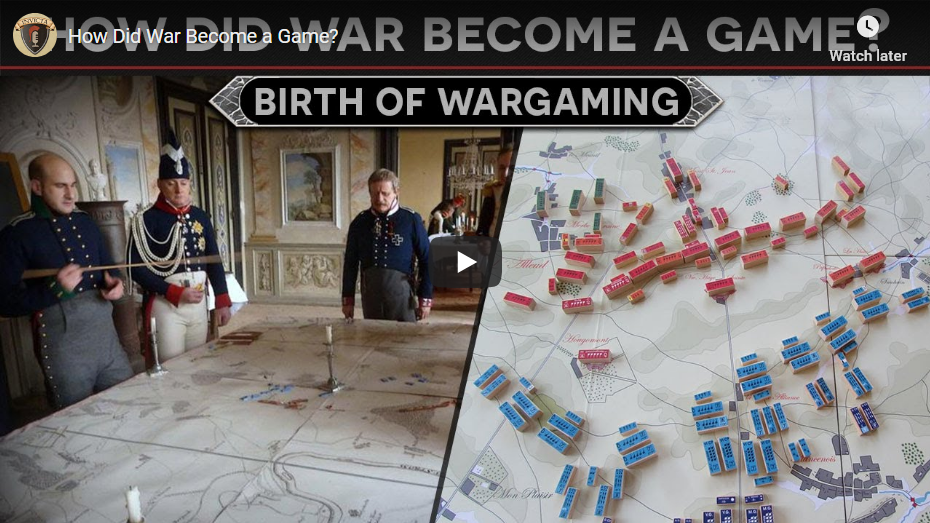
How Did War Become a Game?
Invicta
Published on 28 Jun 2019Get your first audiobook and two Audible originals when you try Audible for 30 days. Visit https://www.audible.com/Invicta or text “Invicta” to 500 500!
In this video we continue to take a look at the history of Kriegsspiel and explore the early days of wargaming that eventually gave rise to modern table top games such as Warhammer and Dungeons & Dragons.
Research: Jon Peterson
Script: Invicta
Narration: Invicta
Artwork: Gabriel Cassata
Editing: InvictaBibliography
Playing at the World by Jon Peterson
Debugging Game History: A Critical Lexicon by Henry Lowood
War Games: A History of War on Paper by Philipp von Hilgers
Pluie de Balles – Complex Wargames In the Classroom by Jorit Wintjes and, Steffen Pielstrom
September 7, 2019
Little Wars TV Talks to Lindybeige!
Little Wars TV
Published on 23 Jul 2019Nikolas Lloyd, known on YouTube as “Lindybeige,” was a guest speaker at Historicon 2019 and we had the chance to chat with him. His eclectic military history channel is one of our absolute favorites and we had a blast in this wide-ranging interview. We ask him about his favorite generals, how he started wargaming, which Hollywood movie is most faithful to history, and much more!
If you aren’t familiar with the channel, check out Lindybeige here: https://www.youtube.com/user/lindybeige
In this interview, we reference the video “The Wargamers Who Won a Real War,” about the Battle of the Atlantic. You can see that video here: https://www.youtube.com/watch?v=fVet8…
Thanks for watching, and we hope you’ll subscribe here for more of the best historical wargaming videos on YouTube!
August 19, 2019
Cooking With Carrow – Episode 02
Zombie Orpheus Entertainment
Published on 11 Jul 2019“Conjure Milk Raspberry Scones” with Brian Lewis and Christian Doyle, from the recipe by The Gluttonous Geek.
August 17, 2019
How Diablo was completely Reverse Engineered without Source Code | MVG
Modern Vintage Gamer
Published on Jul 1, 2019In 1996 Blizzard Entertainment released Diablo, an Action RPG that sold over 2.5 million copies and defined a genre. In 2018 a developer known as GalaXyHaXz almost completely reverse engineered the code in 4 months and released it as open source. How was this accomplished? Find out in this episode!
► Consider supporting me – https://www.patreon.com/ModernVintage…
Links
► DevilutionX (Open Source Diablo) https://github.com/diasurgical/devilu…
► My Nintendo Switch Port – https://github.com/lantus/devilution-nx
July 6, 2019
JourneyQuest Four – Now on Kickstarter!
Zombie Orpheus Entertainment
Published on 5 Jul 2019Campaign ends July 12, 2019. Pledge at http://kck.st/2EEFIY3
Missing new ZOE content? Watch for free on our new platform: http://thefantasy.network
New shows include….
• The Gamers: The Shadow Menace
• Strowlers (Three new episodes!)
• JourneyQuest Season 3.5
• Demon Hunters: Slice of Life
• And more!Want to share your thoughts? Join us on Discord (https://discordapp.com/invite/fhPckP7)
June 4, 2019
Missing Isle of Lewis chess piece discovered in Edinburgh
It’s always irritating when you lose a chess piece, but this one’s been missing for a long, long time:
A medieval chess piece that was missing for almost 200 years had been unknowingly kept in a drawer by an Edinburgh family.
They had no idea that the object was one of the long-lost Lewis Chessmen – which could now fetch £1m at auction.
The chessmen were found on the Isle of Lewis in 1831 but the whereabouts of five pieces have remained a mystery.
The Edinburgh family’s grandfather, an antiques dealer, had bought the chess piece for £5 in 1964.
He had no idea of the significance of the 8.8cm piece (3.5in), made from walrus ivory, which he passed down to his family.
They have looked after it for 55 years without realising its importance, before taking it to Sotheby’s auction house in London.
The Lewis Chessmen are among the biggest draws at the British Museum and the National Museum of Scotland in Edinburgh.
They are seen as an “important symbol of European civilisation” and have also seeped into popular culture, inspiring everything from children’s show Noggin The Nog to part of the plot in Harry Potter And The Philosopher’s Stone.
Sotheby’s expert Alexander Kader, who examined the piece for the family, said his “jaw dropped” when he realised what they had in their possession.
H/T to Colby Cosh for the link.
March 15, 2019
What Computer Games get Wrong about Tank Combat – with a Veteran
Military History not Visualized
Published on 12 Feb 2019In this video I talk with Martin Carr (Ex-Cavalry Officer Australian Defence Force) on what computer games get wrong about war. We particularly focus on Tank Combat, since a) we are standing on a Panzerkampfwagen V Panther in the Panzermuseum Munster (Germany) and b) we both played War Thunder, etc.
Games mentioned: War Thunder, World of Tanks & Post Scriptum.
Disclaimer: We were invited by the Panzermuseum Munster.
Special thanks to VonKickass for the Thumbnail!
»» SUPPORT MHV ««
» paypal donation – https://paypal.me/mhvis
» patreon – https://www.patreon.com/mhv
» subscribe star – https://www.subscribestar.com/mhv