
Quotulatiousness

November 23, 2013

The linguistic citadel under siege – Oxford and the selfie

Filed under: Books, Britain, Media — Tags: , — Nicholas @ 10:12

Tom Slater thinks it’s time we had a quiet word with the good folks who produce the Oxford Dictionaries:

What this year’s Word of the Year — indeed, the mere existence of this nine-year-old award — reveals is something equally as toxic: the cult of relativism that is laying siege to modern culture.

In recent years, a sentiment has emerged that the concept of ‘proper’ English as something precious which needs to be upheld and protected is painfully old hat, if not vaguely authoritarian. Those who speak out about the youth’s poor grasp of grammar or increasing ineloquence are deemed snobby, elitist and unduly judgemental. Even as universities continue to complain about undergraduates’ increasingly feeble grasp of the English language, many academics have said we should just give up. ‘Either we go on beating ourselves and our students up over this problem or we simply give everyone a break’, argued one such professor.

The reluctance to defend the English language against the whims of slang and contemporary standards of literacy is always garbed as a freewheeling acceptance that language is always changing, and the idea that enforcing standards only replicates a kind of linguistic class divide: placing well-spoken aristocrats on one side and slang-spouting serfs on the other. But in truth, this relativism about English belies a crisis of judgement in an elite riddled with class guilt. As Brendan O’Neill has pointed out previously on spiked, the outcome of all of this is that children, especially the poorest, are prohibited from mastering a language in its full richness, the mechanism by which they can best engage with society and, more importantly, change it.

Oxford Dictionaries’ celebration of a glorified slang word, that few people had even heard of a year ago, represents another strange development in this trend. Over the course of its nine-year run, the Word of the Year award itself has become little more than an exercise in dictionary compilers ingratiating themselves with the youth. The award seems to have begun life in the form of Susie Dent’s 2004 book, Larpers and Shroomers: The Language Report. Published by Oxford University Press, it offered a potted history of buzzwords, some of which had faded from use while others had established themselves in the everyday lexicon.
The power of the press in World War One

Filed under: Britain, History, Media, Weapons, WW1 — Tags: , , , , — Nicholas @ 08:55

The current issue of History Today includes an interesting article by Adrian Bingham on the British newspapers (especially the Daily Mail and the Times) during WW1:

When Britain declared war on Germany in August 1914 the widespread feelings of fear, uncertainty and patriotic determination were matched at the offices of the Daily Mail by a sense of vindication. The newspaper had been warning about the German threat for years, perhaps most notoriously when it serialised in 1909 a series of inflammatory articles by the journalist Robert Blatchford, which, when reprinted as a penny pamphlet, sold some 1.6 million copies. The Mail had, moreover, consistently demanded that the Royal Navy be reinforced. It was soon styling itself ‘the paper that foretold the war’. For its critics, the Mail’s irresponsible stoking of anti-German sentiment, driven above all by the paper’s owner, Lord Northcliffe, actually helped to create the conditions that enabled conflict to break out. ‘Next to the Kaiser’, wrote the esteemed editor and journalist A.G. Gardiner, ‘Lord Northcliffe has done more than any other living man to bring about the war.’

[…]

It was not long, however, before Northcliffe became frustrated with the strict censorship imposed on the British press when reporting events in Europe. ‘What the newspapers feel very strongly’, wrote Northcliffe to Lord Murray of Elibank, ‘is that, against their will, they are made to be part and parcel of a foolish conspiracy to hide bad news. English people do not mind bad news.’ Such censorship was particularly worrying when it risked hiding failures in the prosecution and management of the war. Drawing both on the experiences of his visits to the front and on private sources of information from his many correspondents, Northcliffe became increasingly convinced that several men in leading positions were not up to the job, including the prime minister, Asquith, the First Lord of the Admiralty, Winston Churchill, and the Secretary of State for War, Lord Kitchener.

The episode that crystallised this concern, over which Northcliffe put both his and the Mail’s reputation on the line, was the Shell Crisis of May 1915. Northcliffe had received letters from the front claiming that British military operations were being undermined by the lack of the right kind of shell and, after the Allies failed to capitalise on an initial breakthrough at Neuve Chapelle due to a lack of munitions, these criticisms began to be publicly aired. On May 15th, 1915 The Times (also owned by Northcliffe at the time) published a telegram from its respected military correspondent, Lieutenant-Colonel Repington, highlighting the problem and Northcliffe decided to go on the offensive. After some critical editorials, on May 21st the Mail published an incendiary piece written by Northcliffe himself and headlined ‘The Tragedy of the Shells: Lord Kitchener’s Grave Error’. Northcliffe pinned the blame for the shells scandal directly on Kitchener:

    Lord Kitchener has starved the army in France of high-explosive shells. The admitted fact is that Lord Kitchener ordered the wrong kind of shell … He persisted in sending shrapnel – a useless weapon in trench warfare … The kind of shell our poor soldiers have had has caused the death of thousands of them.

This direct public attack on such an esteemed figure at a time of national crisis was shocking and generated fury among many of Northcliffe’s critics. Members of the London Stock Exchange burned copies of both The Times and the Mail and anxious advertisers cancelled contracts. Thousands of readers stopped buying the papers. Northcliffe, though, was undaunted: at this point he was concerned not with circulation but with what he perceived as his national duty. ‘I mean to tell the people the truth and I don’t care what it costs’, he told his chauffeur. It was clear even to Northcliffe’s opponents, moreover, that there were indeed problems with Britain’s munitions supply. Northcliffe was soon vindicated. Although Kitchener survived in the short term, the Liberal government fell at the end of May 1915, to be replaced by a coalition administration: Asquith remained as prime minister, but Lloyd George was appointed as minister of munitions to address the supply problems.

November 22, 2013

Funding the Arthur C. Clarke award

Filed under: Britain, Media — Tags: , , — Nicholas @ 08:34

Charles Stross has just posted a link to a recent short story of his (from 2011) which was written as part of a fund-raiser to help keep the Arthur C. Clarke awards going and an explanation of why most short stories can be improved by adding dinosaurs and sodomy:

Now, I don’t write many short stories these days, but I’m a sucker for the right kind of charity approach. And besides, I had a hypothesis I wanted to test: that every short story can be improved by adding dinosaurs and sodomy.

No, seriously: click that link, it’s work-safe but side-splittingly funny if you’ve ever been to a writers’ workshop. And probably utterly incomprehensible if you haven’t, so I shall have to unpack it for you …

In Michael Swanwick’s oeuvre — and he’s one of the most perspicacious, indeed brilliant, exponents of the short story form in SF today — dinosaurs are a short-hand signifier for action, adventure, thrills, and chases: whereas sodomy is a placeholder representing introspection into the human condition, sensitivity to emotional nuance, and a great big bottle of lube.

So when he’s telling students they need to add dinosaurs to their work, he’s eliptically hinting that sensitive emotional nuance needs to be balanced by a bit of GRAAAH!! BITE!!! CHASE!!!!1!!!ELEVENTY (sorry, I got a bit carried away there). And when he tells them to add sodomy, he’s hinting that there may be too much focus on the performance stats of the space super-dreadnought and not quite enough insight into the emotional trauma the steel-jawed captain is grappling with from her seat on the bridge.

Yeah, right. But what happens if you take the advice literally? After all, SF is the genre of the literal space ship, eschewing ironic metaphor in favour of naive wonder at the immanent apprehension of the unreal.

So I was thinking about dinosaurs, and Sodomy, and the challenge of writing a story in the style of Arthur C. Clarke that applied Swanwick’s principles in a deliberately naive and unmetaphorical manner, when I saw this video (which is definitely not safe for work, unless you’re me — you have been warned).

November 19, 2013

People in glass battleships shouldn’t throw stones

Filed under: Britain, Military, USA — Tags: , — Nicholas @ 16:51

In his NFL column last week, Gregg Easterbrook had a bit of fun-poking at the Royal Navy’s expense, based on a rather silly story in the Daily Mail which reported that Britain had many times more captains than combat ships and asked his readers for the “vessels-to-admirals ratio of the once-mighty Royal Navy”. He follows up this week:

Many readers, including Stephanie Cummings-White of Torqauy, England, suggested I should be asking instead for the admirals-to-vessels ratio, citing this 2008 story noting 41 admirals supervising 40 warships. Nathan Green of Hempstead, Long Island, suggested matters were worse, citing this 2013 story reporting the Royal Navy has “15 times more commanding officers than ships,” with 260 captains and 40 admirals for 19 warships.

The “15 times more” story, from the Daily Mail, lists as warships only “major surface combatants” — destroyers, frigates and the Queen’s lone remaining flattop, a light aircraft carrier scheduled to be retired in 2014. The major-surface-combatants definition excludes support vessels plus the Royal Navy’s strategic nuclear submarines, which bear far more destructive power than all the navies of the world combined during World War II. Paul Meka of Buffalo, N.Y., notes that in total, the Royal Navy has 79 commissioned ships, two vessels for each admiral. Yoni Appelbaum of Cambridge, Mass., compared this to the United States Navy, which has 331 admirals for 285 ships in commission, a worse H.M.S. Pinafore ratio than under the Union Jack.

A common mistake among those who’ve never served in the military is to assume that the appointment as commanding officer of a ship also means that officer is a captain by rank. And the reverse is also assumed to be true: that every captain commands a ship. Modern navies don’t work that way (and probably never did). The rank structure does not imply anything about the command structure other than indirectly. The army always has more brigadier generals than brigades, and not every brigade commander is a brigadier general (although it’s usually the case).

Every western military force in the modern era has more staff in non-combat roles than on the front lines, as they perform essential tasks in ensuring that the warfighters are properly trained, armed, equipped, fed, transported, housed, paid, and have appropriate levels of medical care while they’re doing the fighting (or training). The tail-to-teeth ratio of modern armies is much higher than ever before … and that’s the nature of modern military organizations. Demanding more “teeth” and less “tail” doesn’t mean you’ll get a more capable military — it means you’ll get a less capable one.

Certain armed forces (especially in the Middle East) have relatively huge inventories of weapons and a table of organization implying a much higher “teeth-to-tail” ratio than Western forces. Such armies are not likely to do well in actual combat (and historically have not done well), because they are too brittle and incapable of function after taking some combat losses. The troops run of out ammunition (or water) almost immediately after going into combat, because they don’t have sufficient administrative support to ensure that fresh supplies can be moved to where they’re needed. In many cases, they can’t even move into combat because they don’t have enough vehicles in a fit state of repair and lack the trained mechanical staff to fix anything more serious than flat tires.

Some non-Western navies have relatively large fleets … tied up at the dock almost all the time. They don’t go to sea very often and aren’t able to remain at sea for extended periods. They may have all the outward trappings of a modern navy, but it’s all show and no go. Ships need regular maintenance and ships’ crews need regular training. Sitting in harbour, polishing the brass and looking ship-shape won’t cut it.

Anti-semitism on the rise in Europe

Filed under: Europe, Religion — Tags: , , — Nicholas @ 10:00

Cathy Young outlines the depressing findings from a recent study:

The evidence is especially compelling since it comes from a neutral source: the European Union Agency for Fundamental Rights (FRA). The agency surveyed nearly 6,000 self-identified Jews in eight European Union countries (Belgium, France, Germany, Hungary, Italy, Latvia, Sweden and the United Kingdom). While the online survey, publicized through Jewish community organizations and media outlets, did not have a random sample of respondents, it was designed with expert input to be as representative as possible.

A few findings:

  • Two-thirds of respondents said that anti-Semitism was a serious problem in their country; three out of four felt it had worsened in the past five years.
  • One in four said they had personally experienced anti-Jewish harassment in the past twelve months; while this included verbal attacks on the Internet, almost one in five had been harassed in person.
  • During the same period, three percent said they had been targets of anti-Semitic vandalism; four percent reported hate-motivated physical assaults or threats.
  • Nearly half worried about anti-Jewish harassment or violence; two-thirds of those with school-age children or grandchildren were concerned that the children might experience such harassment at school or on the way to school.
  • Close to a quarter said they sometimes refrained from visiting Jewish events or sites out of safety concerns. Nearly two out of five usually avoided public displays of Jewish identity such as wearing a Star of David.
  • Almost one in three had considered emigrating because they did not feel safe as Jews.

Even if the self-selected the pool of respondents was skewed toward those affected by or strongly concerned about anti-Semitism, these are still disturbing results.

QotD: Education and aptitude

Filed under: Britain, Education, Quotations — Tags: , — Nicholas @ 09:14

Every time a liberal sees someone behaving badly they sigh and say, “They just need education,” but the solution to America’s problems is less education, not more. If we got over this myth that everyone needs infinite academia, we would have less unemployment, more manufacturing, a stronger economy, less student debt, and less school tax. The economy would be stronger and we would all be happier. Ironically, in an effort not to hurt anyone’s feelings, we developed a system where everyone has to go to college, even the stupid people, until we all feel like shit.

When everybody’s special, nobody is. Getting everyone into college means you have to dumb down the curriculum until it is nothing but meaningless drivel that has no application in the real world. Colleges aren’t going to complain when you stick them with more customers. They just take the check, lower the bar, and say, “Come on in.” But getting a gold star on your math test does not a computer programmer make.

When my dad was a kid in Scotland, Britain was practicing a very successful exam system called 11-plus. Dad came from a huge working-class family and as is often the case, one of them had an IQ much higher than the others. They all took their 11-plus test at age 11. His brothers did fairly poorly and he did incredibly well. The brothers were then diverted from academia and put into trade schools, whereas my father got scholarships for private school and eventually got a degree in physics from Glasgow University. The brothers did very well working at a printing press and now lead fulfilled lives as proud tradesmen. My father went on to develop sonar equipment that called the Russians’ nuclear-submarine bluff and helped lead to the fall of communism. This was all thanks to the 11-plus system and it worked beautifully for over 30 years until 1976 when the egalitarians decided it was cruel to admit that some kids are simply not as smart as others.

Not only is this kind of thinking the stupidest. It’s stupidist. What’s the matter with not being smart? As Hemingway put it, “Happiness in intelligent people is the rarest thing I know.” Have you ever seen a genius at a water park? He’s miserable. The only time people with an IQ over 120 are really happy is when they’re at work. They’re basically our slaves. Dumb people ride ATVs with their sons, go bungee jumping, and laugh their heads off when somebody farts. Many of them are also rich.

Gavin McInnes, “A Nation of Working-Class Dropouts”, Taki’s Magazine, 2013-08-23.

November 17, 2013

The Anglosphere

Filed under: Britain, History, Liberty, USA — Tags: , , — Nicholas @ 11:27

In the Wall Street Journal, Daniel Hannan discusses exceptionalism and the Anglosphere:

We often use the word “Western” as a shorthand for liberal-democratic values, but we’re really being polite. What we mean is countries that have adopted the Anglo-American system of government. The spread of “Western” values was, in truth, a series of military victories by the Anglosphere.

I realize that all this might seem strange to American readers. Am I not diluting the uniqueness of the U.S., the world’s only propositional state, by lumping it in with the rest of the Anglosphere? Wasn’t the republic founded in a violent rejection of the British Empire? Didn’t Paul Revere rouse a nation with his cry of “the British are coming”?

Actually, no. That would have been a remarkably odd thing to yell at a Massachusetts population that had never considered itself anything other than British (what the plucky Boston silversmith actually shouted was “The regulars are coming out!”). The American Founders were arguing not for the rejection but for the assertion of what they took to be their birthright as Englishmen. They were revolutionaries in the 18th-century sense of the word, whereby a revolution was understood to be a complete turn of the wheel: a setting upright of that which had been placed on its head.

[…]

There was a fashion for florid prose in the 18th century, but the second American president, John Adams, wasn’t exaggerating when he identified the Anglosphere’s beautiful, anomalous legal system — which today covers most English-speaking countries plus Israel, almost an honorary member of the club, alongside the Netherlands and the Nordic countries — as the ultimate guarantor of freedom: “The liberty, the unalienable, indefeasible rights of men, the honor and dignity of human nature… and the universal happiness of individuals, were never so skillfully and successfully consulted as in that most excellent monument of human art, the common law of England.”

Freedom under the law is a portable commodity, passed on through intellectual exchange rather than gene flow. Anyone can benefit from constitutional liberty simply by adopting the right institutions and the cultural assumptions that go with them. The Anglosphere is why Bermuda is not Haiti, why Singapore is not Indonesia, why Hong Kong is not China — and, for that matter, not Macau. As the distinguished Indian writer Madhav Das Nalapat, holder of the Unesco Peace Chair, puts it, the Anglosphere is defined not by racial affinity but “by the blood of the mind.”

At a time when most countries defined citizenship by ancestry, Britain was unusual in developing a civil rather than an ethnic nationality. The U.S., as so often, distilled and intensified a tendency that had been present in Great Britain, explicitly defining itself as a creedal polity: Anyone can become American simply by signing up to the values inherent in the Constitution.

November 14, 2013

QotD: Prostitution

Filed under: Britain, Law, Quotations — Tags: — Nicholas @ 09:57

Society seems to have a confused and ambivalent relationship with prostitutes. On the one hand, some argue that prostitution is the last vestige of employment for women who have been entirely subjugated beneath the will of a patriarchal society. For these people, mostly contemporary feminists, prostitutes are a ‘symptom’ of some deep patriarchal disease; they’re women who have placed themselves at the mercy of the sexual marketplace because they have no other option.

On the other hand, prostitution is celebrated as a trendy new sexuality, a symbol of feminine empowerment. At a time when being intimate is variously seen as uncool, dangerous, or emotionally ‘too much’, the fact that people sell sex like they would sell a television is seen as a funky and positive approach to modern sexual interactions. The popularity of TV dramas like Secret Diary of a Call Girl, in which Billie Piper plays a high-class prostitute getting into all sorts of scrapes in the process of prostituting herself, shows that many are happy to embrace prostitution as part of a new era of contemporary sexuality.

[…]

Prostitution is not liberating, but nor is it a symbol of absolute oppression. It is definitely not a funky new form of sexuality. For those who choose to do it, it is simply a reality. By indulging mawkish fantasies about the vulnerability of prostitutes, our laws make life harder for those it purports to protect by precluding the possibility of establishing informal networks of self-regulation and protection in the world of prostitution. We should take prostitutes seriously enough to allow them to get on with it however they choose.

Luke Gittos, “Britain’s crazy prostitution laws: The UK’s array of prostitution laws only make things worse for sex workers”, Sp!ked, 2013-11-14

November 13, 2013

The end of the ASBO … and the start of something worse

Filed under: Britain, Law, Liberty — Tags: , — Nicholas @ 09:09

In sp!ked, Patrick Hayes talks about the new social control mechanism being introduced to replace the notorious ASBO, the Injunction to Prevent Nuisance and Annoyance:

It sounds like a joke, but IPNAs — introduced in Clause 1 of the Anti-Social Behaviour, Crime and Policing Bill, which received its second reading in the House of Lords last week — really do seem quite easy to enforce. Indeed, they make their predecessors, New Labour’s notorious Anti-Social Behaviour Orders (ASBOs), seem like a level-headed intervention into community life in comparison.

The bill says that in order for an IPNA to be granted, a court needs to be satisfied ‘on the balance of probabilities that the respondent has engaged or threatens to engage in conduct capable of causing nuisance or annoyance to any person’. Once satisfied, the court can issue an IPNA in order ‘to grant the injunction for the purpose of preventing the respondent from engaging in anti-social behaviour’.

It seems that for the Lib-Con coalition government, the problem with ASBOs was not that they circumvented the normal exercise of law by dishing out behaviour-controlling orders to people who hadn’t actually committed any crime, but rather that they only covered behaviour that might cause ‘harassment, alarm or distress’. So it has introduced IPNAs, which cover everyday nuisance and annoying behaviour, too. In fact, you don’t actually have to be annoying to get an IPNA — even the threat of behaving annoyingly can earn you one of these orders that do not require criminal-law standards of proof and can instead be handed out, to anyone over 10, at a court’s convenience. If you flout an IPNA, you face up to three months in prison.

November 11, 2013

“The Canadian Corps … had beaten 47 German divisions since Aug. 8”

Filed under: Cancon, Europe, France, Germany, History, Military, WW1 — Tags: , , , , — Nicholas @ 15:55

In the Globe and Mail, J.L. Granatstein wants us to remember the greatest military achievement of the Canadian Corps in World War One (and it isn’t the battle of Vimy Ridge):

On Aug. 8, 1918, the Canadian Corps had secretly moved into position in front of the French city of Amiens. The German army had been on the offensive since March, and the Amiens sector was rather lightly defended. The Canadians, British and Australians struck this sector a surprise hammer blow in the early morning, a hurricane of artillery fire clearing the way for the tanks and infantry that blasted through the defences. Thousands of Germans surrendered, more were killed and within a few hours, the Canadian advance was almost 15 kilometres. This, wrote the German army’s great strategist, General Erich Ludendorff, was “the black day” of the German Army.

Lt.-Gen. Currie’s troops then moved north to the Arras area, where, at the end of the month, they struck toward and then through the Drocourt-Quéant Line, an immensely strong extension of the Hindenburg Line defended by crack troops. In heavy fighting at high cost, the Corps broke the line, forcing the Germans back behind the Canal du Nord, their last position protecting the key supply point of Cambrai.

[…]

The Germans now were in full retreat, moving eastward as fast as they could go. The Canadians took Valenciennes, smashing the enemy defences with a massive artillery barrage, and then moved into Belgium. By Nov. 11, they were in Mons, the same small town where the men of the British Expeditionary Force had first faced the invading Germans in August, 1914.

The Canadian Corps, more than a hundred thousand strong, had fought its last battles. As Lt.-Gen. Currie noted proudly, it had beaten 47 German divisions since Aug. 8, a quarter of the German forces in the West. The Corps had accomplished this because of its great fighting spirit, its fine leadership at all levels and its effective reinforcement and logistics systems. The cost in lives and in wounded was terrible — 45,000 casualties, 20 per cent of the total of Canadian losses in the entire war — but for once, the campaign had achieved measurable gains on the ground. More than that, the Canadian shock troops had battered the enemy, forced them eastward and obliged them to seek an armistice that was a de facto capitulation. It had scored its greatest victory, the greatest battlefield triumph ever by Canadian troops.

In memorium

Filed under: Britain, History, Military, WW1, WW2 — Tags: , , — Nicholas @ 11:00

A simple recognition of some of our family members who served in the First and Second World Wars:

The Great War

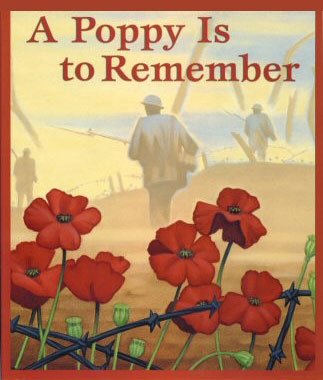
  • A Poppy is to RememberPrivate William Penman, Scots Guards, died 1915 at Le Touret, age 25

    (Elizabeth’s great uncle)
  • Private David Buller, Highland Light Infantry, died 1915 at Loos, age 35
    (Elizabeth’s great grandfather)
  • Private Walter Porteous, Northumberland Fusiliers, died 1917 at Passchendaele, age 18
    (my great uncle)
  • Corporal John Mulholland, Royal Tank Corps, died 1918 at Harbonnieres, age 24
    (Elizabeth’s great uncle)

The Second World War

  • Flying Officer Richard Porteous, RAF, survived the defeat in Malaya and lived through the war
    (my uncle)
  • Able Seaman John Penman, RN, served in the Defensively Equipped Merchant fleet on the Murmansk Run (and other convoy routes), lived through the war
    (Elizabeth’s father)
  • Private Archie Black (commissioned after the war and retired as a Major), Gordon Highlanders, captured at Singapore (aged 15) and survived a Japanese POW camp
    (Elizabeth’s uncle)
  • Elizabeth Buller, “Lumberjill” in the Women’s Land Army in Scotland through the war.
    (Elizabeth’s mother)

In Flanders fields the poppies blow
Between the crosses row on row,
That mark our place; and in the sky
The larks, still bravely singing, fly
Scarce heard amid the guns below.

We are the Dead. Short days ago
We lived, felt dawn, saw sunset glow,
Loved and were loved, and now we lie
In Flanders fields.

Take up our quarrel with the foe:
To you from failing hands we throw
The torch; be yours to hold it high.
If ye break faith with us who die
We shall not sleep, though poppies grow
In Flanders fields.

Lieutenant Colonel John McCrae, MD Canadian Army Medical Corps (1872-1918)

We will remember them

Filed under: Britain, Cancon, History, Military, WW1, WW2 — Tags: , — Nicholas @ 00:01

A Remembrance Day slideshow using Mark Knopfler’s wonderful “Remembrance Day” song from the album Get Lucky (2009). The early part of the song conveys many British images, but I have added some very Canadian images also which fit with many of the lyrics. The theme and message is universal… ‘we will remember them’.

November 10, 2013

Grave robbers of the western front

Filed under: Britain, Europe, France, History, Military, WW1 — Tags: — Nicholas @ 12:05

In the Telegraph, Willard Foxton explains why the growing interest in the centenary of the First World War is also giving a boost to the grave robbers:

Across the UK, there has been a rash of police finds of these First World War explosives, as the online trade in them has boomed. Dealers will often home defuse them, putting themselves and others at risk; some have been maimed doing so. […]

As dangerous as these unexploded devices are, perhaps the ugliest corner of the trade is the sale of other relics — especially dead soldiers’ identification marks. In particular, there’s a premium on British soldier’s spoons, which would often have their owner’s names embossed on them. Helmets can fetch high prices, too — including those bent out of shape by bullets or shells, which gives you some idea of what happened to the poor guy wearing it. As Andy Brockman, a leading conflict archaeologist told me:

“There is a market in all kinds of battlefield memorabilia and in the worst cases this can lead to the sale of identification tags and the removal of personal possessions like spoons and toothbrushes from battlefield burials. These objects can carry identifying marks and their loss can prevent authorities like the Commonwealth War Graves Commission from identifying the soldier concerned, robbing them of the chance of a marked grave.

“When it comes to the illegal removal of equipment and personal possessions from the remains of the missing to feed the collectors market, I would agree with Andy Robertshaw of the Royal Logistics Corps Museum who says that it’s like killing them twice.”

November 7, 2013

Children and the early industrial revolution

Filed under: Britain, Business, History, Law — Tags: , , , , , — Nicholas @ 11:35

Wendy McElroy talks about the plight of poor children in the early days of the industrial revolution in Britain:

Parish workhouses existed in Britain long before the Industrial Revolution. In 1601, the Poor Relief Act paved the way for parish officials to collect property taxes to provide for the “deserving poor.” In 1723, the Workhouse Test Act was passed to prevent false claims of poverty. Any able-bodied person who wished to receive poor relief was expected to enter a workhouse; its harsh conditions would presumably act as a deterrent. About the same time as the Industrial Revolution (circa 1760-1840), attitudes toward the poor underwent their own revolution. The Napoleonic Wars (1803-1815) not only bled Britain of money; they also created a flood of injured and unemployable men who returned from battle. Those men had families who were plunged into poverty. Between 1795 and 1815 the tab for Britain’s poor relief quadrupled. Meanwhile, the cost of mere subsistence soared because of political machinations such as the Corn Laws, a series of trade laws that artificially preserved the high price of grains produced by British agriculture. Many people could not afford a slice of bread.

But sympathy for the poor was in short supply. Historian Gertrude Himmelfarb’s definitive book The Idea of Poverty chronicles the shift in attitude toward the poor during that period; it turned from compassion to condemnation. An 1832 government report basically divided the poor into two categories: the lazy who sucked up other people’s money and the industrious working poor who were self-supporting. The Poor Law Amendment Act of 1834 instructed parishes to establish “Poor Law Unions” with each union administering a workhouse that continued to act as a deterrent by ‘virtue’ of its miserable conditions. Correctly or not, statesman Benjamin Disraeli called the act an announcement that “poverty is a crime.”

Pauper children were virtually imprisoned in workhouses. And nearly every parish in Britain had a “stockpile” of abandoned workhouse children who were virtually sold to factories. Unlike parents, bureaucrats did not view poor children as loved or otherwise valuable human beings. They were interchangeable units whose presence was a glut on the market because there would always be another poor child born tomorrow. Private businessmen who shook hands with government did not have clean fingers, either. Factory owners could not force free-labor children to take dangerous, wretched jobs but workhouse children had no choice and so they experienced the deepest horrors of child labor. The horror was not because of the free market or capitalism; those forces, along with the family, were among the protectors of children. Child laborers were victims of government, bureaucracy and businessmen who used the law unscrupulously.

November 6, 2013

“…the only real Doctor was William Hartnell”

Filed under: Britain, Media — Tags: , , — Nicholas @ 09:33

In the Telegraph, Tim Stanley discusses the original Doctor Who:

Everybody has a favourite Doctor, but the only real Doctor was William Hartnell. No one else came close to matching his authority and scariness. He was genuinely alien.

Hartnell the man was born in poverty to a single mother in 1908. His career took off in the 1940s, playing hard men and soldiers in cop shows and sitcoms. He was spotted by producer Verity Lambert playing a rugby talent scout in This Sporting Life and offered a part in a new sci-fi show called Doctor Who in 1963. Bill was reluctant at first to work on a mere kids programme — but it turned out to be rather more special than that.

The genius of that early series was that it was pitched perfectly between children and adults; it’s a testament to how much more “adult” children were treated back then. The real focus of the plot were two teachers, Ian and Barbara, who follow a precocious pupil home and find that she’s living in a police box. The police box turns out to be a time ship (rather roomier on the inside than out) and her “grandfather” — the Doctor — is less than thrilled to meet them. In fact, he’s so furious that he shuts the doors, presses a button and kidnaps them. Compare that with present-day Who where the Doctor only ever meets young women with regional accents who he instantly wants to bed but can’t because — I don’t know — he’s impotent or something. Everything about 60s Who was way more mature and sinister.

To be honest, Hartnell’s stories can be tough to re-watch. Each serial ran for upwards of 12 episodes a time, some of the scripts were plodding (I challenge you to sit through The Space Museum without slipping into a coma) and the effects shockingly poor. The Web Planet featured a cast of gay butterflies on strings, dancing ants and grubs on rollers that occasionally crashed into the camera. Bill sometimes let the side down by fluffing his lines (When invited to climb a hill: “My dear, I’m not a mountain goat and I prefer walking to any day.” Awkward pause. “And I hate climbing”). There are moments when he looks lost and helpless before the cameras, the line on the tip of his tongue but he can’t remember if it’s “Daleks” or “cabbages”.

« Newer PostsOlder Posts »

Powered by WordPress

