
The Great War
Published on 23 Jul 2018He is regarded as one of the greatest writers of the 20th century, but before that, he was an ambulance driver on the Italian Front in the Great War and also took part in the Spanish Civil War and World War Two.
July 24, 2018
A Farewell to Arms – Ernest Hemingway I WHO DID WHAT IN WW1?
Comments Off on A Farewell to Arms – Ernest Hemingway I WHO DID WHAT IN WW1?
July 23, 2018
Jeremy Clarkson is a maniac
Ove Bakken
Published on 19 Oct 2017
Comments Off on Jeremy Clarkson is a maniac
July 22, 2018
Trump and Putin … with all this smoke, there has to be a smoking gun, right?
Colby Cosh pours cold water on the still-smouldering hopes of the “smoking gun” enthusiasts:
If the president can be found guilty of “Treason, Bribery, or other High Crimes and Misdemeanors” that is another thing, but that would require courtroom-worthy evidence of action, as opposed to indications of presidential doctrine or feeling or even strong hints of compromised personal interest. Trump did behave in Helsinki like someone who is beholden to Russia, or who is anxious for a rapprochement with Putin’s state. Yet he was, and this could not have come as a surprise, quick to try reversing himself later — emphasizing how tough he has been with Russia and how tough he is prepared to continue to be. Grrr!
Since I’m not on a diet of television news, I tend to interpret this as Trumpian “leadership” technique. They are the actions of someone who is convinced that anything can be accomplished by means of erratic emotional style and business-literature verbal tactics. These include cheap personal praise for negotiating opponents, which has become a perfectly foreseeable theme of Trump as a diplomat. (The tactical corollary is that very popular or highly esteemed people are especially vulnerable to outbursts of surprise criticism, and that has been a feature of Trump, too.)
It does not really cost the United States anything for Trump to praise Putin as skilled and strong (as a tyrant, he has been effective at maintaining domestic moral legitimacy, even if judged by the cost in shed blood) or to portray Kim Jong Un as a young man coping with terrible responsibilities. (Trump’s distaste for NATO is more dangerous as rhetoric, but did the other member nations forget for a while that political legitimacy within the United States is a prerequisite for the organization’s existence? If in the long run we devote a little more attention to the necessary housekeeping, Trump may have done the world a service.)
[…] The midterm congressional elections will be held with a long-forgotten fact re-emerging in the American popular consciousness: that much of the president’s power to set foreign policy and foul up trade is actually the property of Congress, and could be reclaimed after a century of careless delegation.
Perhaps some Americans are beginning to consider that it does not matter most whether you are with the good guys in the Trump/anti-Trump drama. Which is not to say you do not want to be one of the good guys. But the opportunity for American millennials, considered as a generation on the cusp of electoral dominance, is not just to kick Trump out, but to renovate the presidency so that the republic can survive having an unsuitable or even compromised person as president. Everybody got that? Are we good? Eyes on the ball, people.
Comments Off on Trump and Putin … with all this smoke, there has to be a smoking gun, right?
Austro-Hungarian Artillery – Choctaw Code Talkers I OUT OF THE TRENCHES
The Great War
Published on 21 Jul 2018
Comments Off on Austro-Hungarian Artillery – Choctaw Code Talkers I OUT OF THE TRENCHES
July 21, 2018
QotD: Epicurus and Plato
Epicurus had reacted against the Platonic concepts of Reason with a capital R, the Good, the Beautiful, Duty, and other absolute concepts existing in themselves in some supernatural world. For Epicurus, what is moral is what brings pleasures to individuals in a context where there is no social strife. The Epicurean wise man will keep the covenant and not harm others not because he wishes to comply with some moral injunction being imposed from above, but simply because that’s the best way to pursue his happiness and keep his tranquility of mind.
Martin Masse, “The Epicurean roots of some classical liberal and Misesian concepts“, speaking at the Austrian Scholars Conference, Auburn Alabama, 2005-03-18.
Comments Off on QotD: Epicurus and Plato
July 20, 2018
2nd Battle Of The Marne – Turning Point On The Western Front I THE GREAT WAR Week 208
The Great War
Published on 19 Jul 2018The German Army launches an diversionary attack from the Rheims-Soisson salient and increases the pressure on Paris. But the Allies knew about the attack and for the first time, they effectively counter the German Stormtrooper tactics and even counter-attack along the line.
Comments Off on 2nd Battle Of The Marne – Turning Point On The Western Front I THE GREAT WAR Week 208
Tank Chats #33 Panzer III | The Tank Museum
The Tank Museum
Published on 11 Mar 2017The thirty-third Tank Chat, this time presented by Curator David Willey. Including a fascinating insight into pre-Second World War German tank production and how the Panzer III worked alongside its fellow Panzers.
To find out more, buy the new Haynes Panzer III tank manual. https://www.myonlinebooking.co.uk/tan…
The Panzer III was conceived in 1934 as the principle combat tank of the Panzer divisions. The Museum’s Panzer III went into action in the North African theatre of war and is believed to have been captured at the Battle of Alam Halfa.
Support the work of The Tank Museum on Patreon: ► https://www.patreon.com/tankmuseum
Or donate http://tankmuseum.org/support-us/donate
Comments Off on Tank Chats #33 Panzer III | The Tank Museum
July 19, 2018
Mucking around with Stonehenge
Many people are still under the impression that Stonehenge was built by the Druids (debunked in this video by Siobhan Thompson). At least as many people think that the modern day stone circle is an undisturbed historical relic, and that the stones are standing today as and where they have for thousands of years. All the way back in 2001, Emma Young did a quick debunking of that theory in New Scientist:
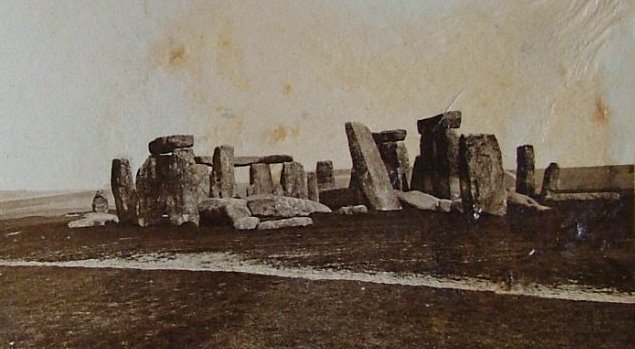
An early photograph of Stonehenge taken in July 1877 by Philip Rupert Acott
Via Wikimedia Commons
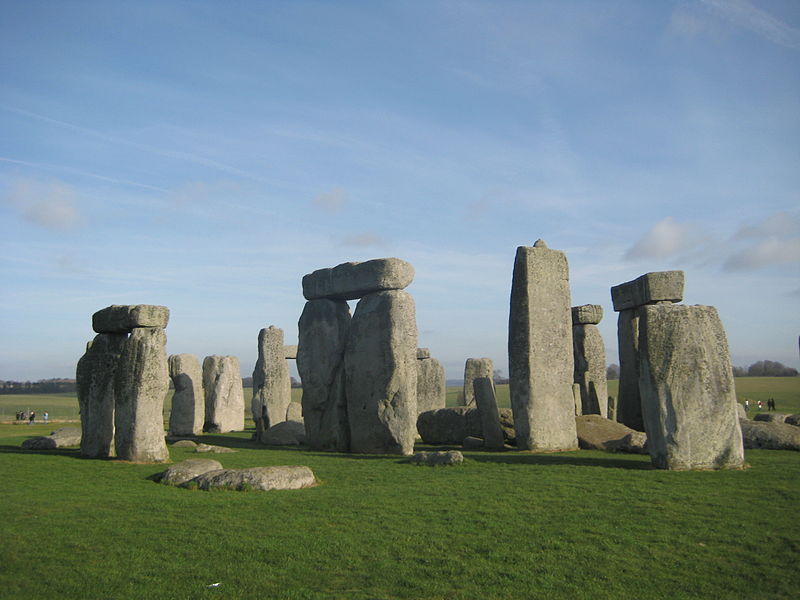
Photo from a similar angle in 2008 showing the extent of reconstruction.
Via Wikimedia Commons
Most of the one million visitors who visit Stonehenge on Salisbury Plain every year believe they are looking at untouched 4,000-year-old remains. But virtually every stone was re-erected, straightened or embedded in concrete between 1901 and 1964, says a British doctoral student.
“What we have been looking at is a 20th-century landscape, reminiscent of what Stonehenge might have looked like thousands of years ago,” says Brian Edwards, a student at the University of the West of England in Bristol.
Stonehenge isn’t the only ancient site to have been transformed in recent years, he says. “Even many of the local people in Avebury weren’t aware that a lot of the stones were put up in the 1930s,” he told New Scientist.
[…]
English Heritage says it is now considering covering the Stonehenge alteration programme in detail in the next edition of its official guidebook to the site. A decision not to include the work in official guides was taken in the 1960s, says Dave Batchelor, English Heritage’s senior archaeologist.
The first restoration project took place in 1901. A leaning stone was straightened and set in concrete, to prevent it falling.
More drastic renovations were carried out in the 1920s. Under the direction of Colonel William Hawley, a member of the Stonehenge Society, six stones were moved and re-erected.
Cranes were used to reposition three more stones in 1958. One giant fallen lintel, or cross stone, was replaced. Then in 1964, four stones were repositioned to prevent them falling.
The 1920s ‘restoration’ was the most “vigorous”, says Christopher Chippindale of the Cambridge University Museum of Archaeology and Anthropology. “The work in the 1920s under Colonel William Crawley is a sad story,” he says.
As I commented on a post back in 2010:
I imagine, given how many times Stonehenge has been mucked about with by earlier enthusiasts, there must be much misleading data has to be sifted and re-sifted before any definite discoveries can be announced. Stonehenge has been fascinating people for centuries and there are probably lots of amateur investigations that may well have made the situation more confusing (think of a sixteenth century equivalent of Indiana Jones or Lara Croft with a nose for treasure).
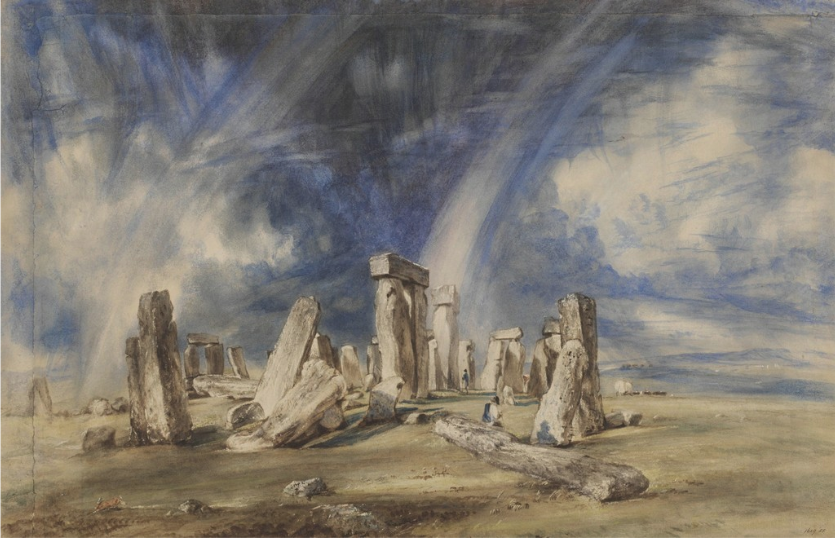
Atlas Obscura recently had a set of photos of Stonehenge taken in 1867 likely featuring the family of Colonel Sir Henry James, of the Ordnance Survey. There’s also a watercolour by John Constable from around 1835 showing a very different, more ruin-y monument:
Comments Off on Mucking around with Stonehenge
July 18, 2018
A great World Cup?
At Spiked, Mick Hume looks back at what we were told to expect from the hosting nation of the 2018 World Cup:
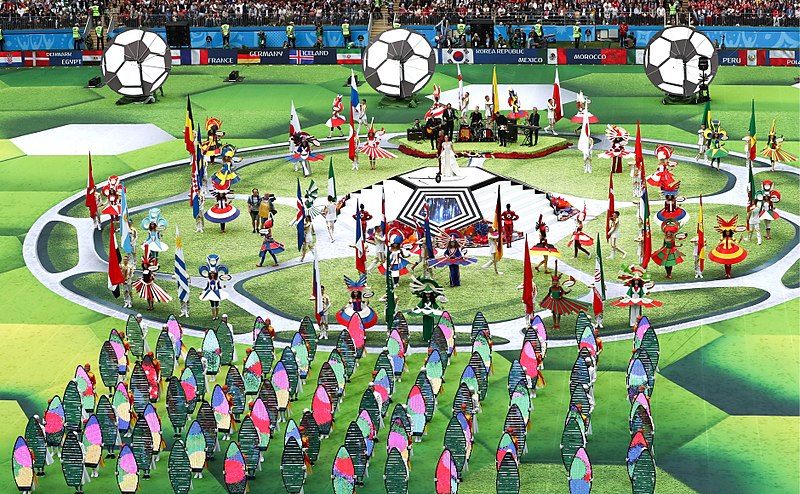
FIFA 2018 World Cup opening ceremony
Via Wikimedia Commons
Everybody agrees that the 2018 World Cup has been a roaring success. Yet remember how recently we were being warned that it would be the equivalent of a humanitarian disaster?
Before a ball was kicked we were assured that English and other international fans would all be beaten up, if not eaten alive, by armies of ‘neo-Nazi’ Russian hooligans, and that President Vladimir Putin would cynically exploit the World Cup ‘like Hitler did the 1936 Olympics’, as a tool in his plot for global domination and world war.
British government ministers and officials boycotted the tournament after the poisoning of Sergei and Yulia Skripal (the expense-account restaurants of Moscow might have missed their presence, but it’s unlikely anybody else did). And England squad member Danny Rose reportedly told his family ‘don’t come to Russia’, because of ‘fears that they would be racially abused’.
Questions were asked about why there were relatively few England fans at the team’s opening games in Russia. In the face of such sustained scaremongering, it might rather seem a wonder that anyone braved the journey.
Yet once the actual football kicked off, what happened? None of the above. Instead the World Cup immediately became a glorious, thrilling spectacle, capturing the imagination of fans worldwide amid a rolling party atmosphere across Russia.
This follows the similar reality gaps between political scaremongering and sporting success around other recent World Cups and Olympic games, notably London 2012. It should surely be a reminder to us all to ignore the agenda-driving doom-mongers in future and remember that, in the end, the game’s the thing. There is no chance of keeping politics out of sport, but we might at least try to keep sport out of politics and reject attempts to use our great sporting occasions as political footballs. (Rider: the idea of staging the next World Cup in Qatar still seems bonkers, but…)
Comments Off on A great World Cup?
July 17, 2018
Australian General John Monash I WHO DID WHAT IN WW1
The Great War
Published on 16 Jul 2018John Monash was one of the most capable commanders of World War 1 but his rise to fame didn’t come unopposed.
Comments Off on Australian General John Monash I WHO DID WHAT IN WW1
Women to be eligible to join British army Gurkha units in 2020
The BBC reports on a recently announced change in Gurkha recruiting:
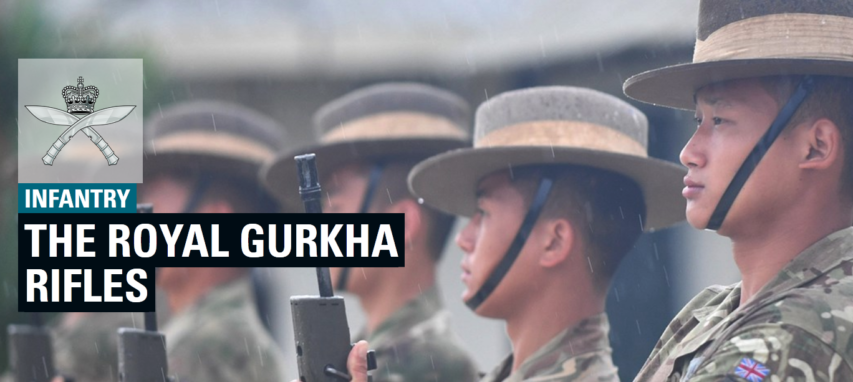
Screencap of the Royal Gurkha Rifles page at the British Army website
The Gurkhas will recruit women for the first time from 2020, and the selection process will be the same as for men.
Women hoping to join will have to pass gruelling physical tests – including racing 3.1 miles (5km) uphill carrying 55lb (25kg) of sand in a wicker basket.
Gurkhas, who are Nepalese, have been part of the Army for more than 200 years.
Defence Secretary Gavin Williamson said it was “right” women were given the chance to serve in “this elite group”.
The change in direction comes three years after Nepal – traditionally a male-dominated society – elected its first female president, Bidhya Devi Bhandari.
To be considered for the selection process, applicants must weigh more than 50kg (7.9 stone), be taller than 158cm (5ft 1in) and “be able to complete eight underarm heaves”, the Army website says.
The recruitment process takes place in Pokhara, central Nepal. Successful applicants are then flown to Catterick, North Yorkshire, for a 10-week training programme.
[…]
At its peak, during World War Two, 112,000 men were in the Gurkhas. More than 230,000 fought across both world wars, but their numbers have fallen dramatically since.
Currently, there are about 3,000 Gurkhas – most are in the infantry but some are engineers, logisticians or signals specialists.
The regiment, whose motto is “Better to die than be a coward,” still carry into battle their traditional weapon – an 18-inch (46cm) long curved knife known as a kukri.
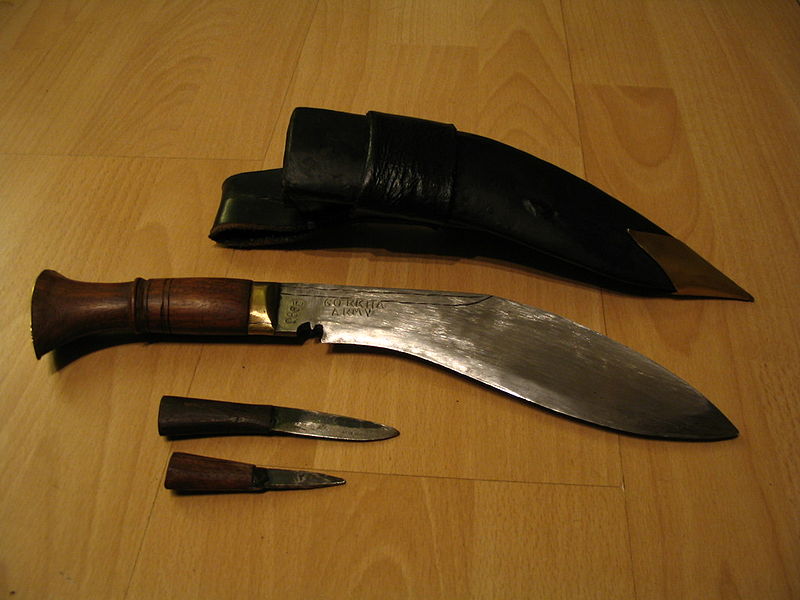
A Kukri (Top) with the traditional Karda (middle) and Chakmak (bottom). The Karda and Chakmak are used as a utility knife and a sharpening tool respectively
Via Wikimedia Commons.
Comments Off on Women to be eligible to join British army Gurkha units in 2020
July 16, 2018
Dublin theatres get a bit more egalitarian
Theodore Dalrymple on how the recent decision by the major theatres in Dublin to actively ensure that women are properly represented in the plays they put on:
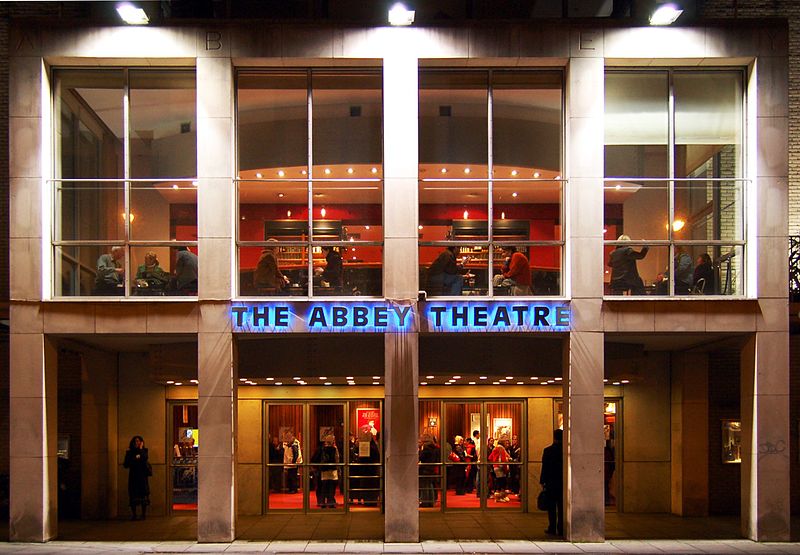
The exterior of the Abbey Theatre in Dublin, also known as the National Theatre of Ireland (Irish: Amharclann Náisiúnta na hÉireann)
Photo by Flickr user bjaglin via Wikimedia Commons.
Henceforth, apparently, the major theaters of Dublin are, as a matter of principle, to commission at least half their new plays from women. At least half of the characters in the plays, and the directors too, will be women. One can only applaud this commitment to equality and social inclusion.
However, without wanting to carp, it seems to me that the gesture does not go nearly far enough. What about the fat, for example? As we know, a high proportion of the population is now fat, and quite a number are grossly obese. Yet how often do you see plays written by the fat, acted by the fat, directed by the fat, and of interest to the fat? The theatrical professions as a whole are pervaded by slim-ism, but there is no intrinsic connection between being slim and literary or acting ability. There is abundant evidence of widespread prejudice against the fat, and it is surely time that this was overcome. My own view is that at least 10 percent of playwrights, actors, and directors ought to suffer from type 2 diabetes.
And then, of course, there is the matter of intelligence. The average IQ of the population is 100, and such is the normal distribution of intelligence that there are as many people of below-average intelligence as above it. Yet how often do you see a play written or directed by those with an IQ of, say, 80? It is true that a play may appear to have been written or directed by someone with an IQ of 80 or below, but in this case appearances are deceptive. A high IQ is perfectly compatible with all kinds of foolishness or worse, after all; but this does not affect the basic argument from social justice. It is about time that people of low IQ be given their chance in the theater.
Comments Off on Dublin theatres get a bit more egalitarian
Monty Python RAF Banter
bakerco502
Published on 30 Apr 2007secretly why I put a RAF impression together hahah
I’ve also disabled comments because people were starting to turn it into a pissing contest over who did what during the war.
Comments Off on Monty Python RAF Banter
July 15, 2018
1918 Flu Pandemic – Trench Fever – Extra History – #2
Extra Credits
Published on 14 Jul 2018The flu arrived in France. It found a pleasant home in the crowded wartime trenches, much to the dismay of the Allies who tried to keep the flu a secret. When it made its way to Madrid, not subject to wartime censorship, it picked up the nickname “Spanish flu.”
Comments Off on 1918 Flu Pandemic – Trench Fever – Extra History – #2
Alcibiades, the Athenian Byron
Not for poetry, but for the Byronian swathe he cut through a large portion of Classical Greece:
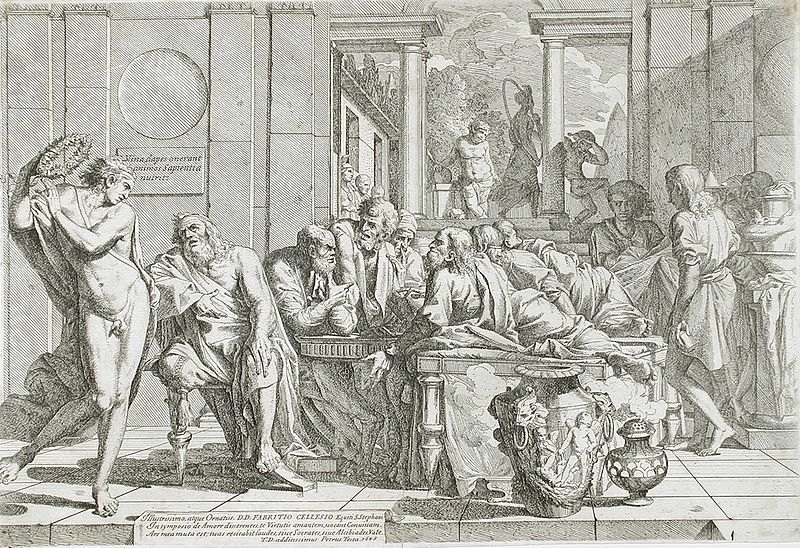
“Drunken Alcibiades interrupting the Symposium”, an engraving from 1648 by Pietro Testa (1611-1650)
Via Wikimedia Commons.
Of all personality traits, charisma is the hardest to appreciate at second hand. We read Cicero’s letters and can instantly tell that he was vain, insecure and ferociously clever; we read scraps of Samuel Johnson’s conversation in Boswell’s biography and know at once that he was magnificent, lovable and desperately unhappy. But as to what it was like to have Lord Byron turn the full force of his attention onto you – well, we have no conceivable way of knowing. We just have to trust his contemporaries that it felt like ‘the opening of the gate of heaven’.
This causes problems for a biographer of Alcibiades. On the face of it, the man was utterly insufferable. Born in around 450 BC into one of the oldest and richest families of ancient Athens, Alcibiades was the only Old Etonian (as it were) to play a leading role in the late-fifth-century radical democracy. The account of his childhood in Plutarch’s Life of Alcibiades suggests a bad case of antisocial personality disorder: biting during wrestling, mutilating dogs, punching his future father-in-law in the face for a dare. His later political career makes Boris Johnson seem like a man of firm and unbending principle. Exiled from Athens in 415 BC over some particularly odious Bullingdon Club antics, Alcibiades promptly sold his services to Sparta (where he seduced the king’s wife) before double-crossing both sides and wheedling his way into the court of a Persian satrap.
But Alcibiades, like Byron, clearly had that indefinable something. One catches a glimpse of it in the unforgettable last scene of Plato’s Symposium, when he crashes into the room, blind drunk, flirting with everything on legs, shouting about his love for Socrates. Thucydides captures it in his report of Alcibiades’s speech whipping up the Athenian assembly to vote for the disastrous Sicilian expedition of 415 BC – an extraordinary stew of egotistic bragging (about how successful his racehorses are), mendacious demagoguery and brilliantly acute strategic thinking. The unwashed Athenian masses, not usually prone to atavistic toff-grovelling, absolutely adored him: when Alcibiades finally returned to Athens in 407 BC after eight years of exile, sailing coolly into Piraeus on a ship with purple sails, they welcomed him back with paroxysms of joy.
Behind the Peloponnese-sized ego, Alcibiades was a general of spectacular genius – when he could be bothered. In 410 BC, shortly after his controversial reinstatement as admiral of the Athenian navy (on the back of a bogus promise of Persian support), he wiped out the entire Spartan fleet at the Battle of Cyzicus; two years later, through sheer chutzpah, he captured the city of Selymbria near Byzantium with only fifty soldiers, and without striking a blow. When things went wrong – as in 406 BC, after a disastrous campaigning season in the eastern Aegean – he showed an infuriating ability to wriggle out of trouble. His final years (406–404 BC) were spent once again in exile from Athens, holed up in a private castle on the Gallipoli peninsula. The circumstances of his death are still shrouded in mystery. One story tells that he died in the remote mountains of central Turkey at the hands of the brothers of a Phrygian noblewoman whom he had decided to seduce. This is, I fear, all too believable.
This is the introduction to a review by Peter Thonemann of a new biography of Alcibiades by David Stuttard in the Literary Review for July, 2018. H/T to Never Yet Melted for the link.
Comments Off on Alcibiades, the Athenian Byron


