Quotulatiousness

July 4, 2026

In the “early Victorian period … drinking whisky was the modern-day equivalent of licking hallucinogenic toads”

Filed under: Britain, History, Soccer, USA — Tags: , , , , , , , , — Nicholas @ 05:00

Scotland was terra incognita to the English for far longer than one might think, even though the two kingdoms shared a monarch as early as 1603. On his Substack, Ed West shows how modern day Scotland has long since emerged from the mysterious shadows of the past:

“Scotch whiskies” by Chris huh is licensed under CC BY-SA 4.0 .

In his highly entertaining history of alcohol and the British, Empire of Booze, Henry Jeffreys observed how one effect of the Napoleonic Wars was to make Scotland a popular destination for English holiday makers. What with the continent being isolated and everything, there weren’t many more exotic places for the richer, more adventurous traveller to visit.

The country was until then largely unknown to many people south of the border, something also true of its trademark drink. “Highland and lowland whisky in the early 19th century would have been a mystery to the majority of Englishmen”, Jeffreys writes: “In the literature of the Georgian and early Victorian period it’s apparent that drinking whisky while in Scotland was the modern-day equivalent of licking hallucinogenic toads while in the Amazon or eating rancid whale in Iceland”.

The conflict with revolutionary France proved to be a great boost to Brand Scotland, and not just because of the limits it placed on rival destinations, but also for the dash that the Scots cut on the field. This culminated with a momentous scene in which “the Highland regiments dazzled the French when the Allied armies marched into Paris”.

Here they wowed both friends and enemies alike, and Sergeant Thomas Campbell of the Grenadier Company recalled how the Tsar even personally “examined my hose, gaiters, legs, and pinched my skin, thinking I wore something under my kilt, and had the curiosity to lift my kilt up to my navel, so that he might not be deceived”. Thanks to the likes of the Black Watch and Gordon Highlanders, the Scots had arrived on the global stage, and no one would ever forget Die Damen aus der Hölle (Ladies from Hell) as German troops would later call Highlanders.

This period of upheaval and war – the birth pangs of true modernity — was marked by a growing craze for Highlandism, “a peculiar phenomenon where lowland Scotland, a predominantly settled mercantile society, took on the trappings of the Highlander as a way of differentiating themselves from Englishmen who they were now yoked to in the Union”.

Previously viewed as menacing, the Highlanders had been tamed by the defeat of the Jacobites and the Clearances that followed, making this once-feared Gaelic culture now safe for English speakers to adopt as their own. Much of this was driven by the romantic imagination of Edinburgh’s Walter Scott, who helped shape both Scottish national identity and the 19th century resurgence of medievalism. Perhaps more than literature, however, Highlandism was boosted by the region’s most famous export — whisky. As Jeffreys writes: “The growth of Scotch coincided with the birth of Highlandism”.

The development of Brand Scotland was also helped by a man widely regarded as Britain’s greatest buffoon and waste of space, the former Prince Regent. Historian John Plumb described a hugely influential visit by the now George IV in 1822, where: “He paraded Edinburgh in the kilt, resplendent in the Royal Stuart tartan and flesh-coloured tights, and yet managed to keep his dignity. The Scots loved it! Quaintly enough, George IV had struck the future note of the monarchy … Be kilted! Be sporans! Be tartans! Riding up Princess Street … To the roaring cheers of loyal Scots, he was showing the way that the monarchy would have to go if it were to survive an industrial and democratic society.”

It was the start of a beautifully symbiotic relationship, with the Royal Family immersing themselves in Highlandism ever since, spending much of their summer holidays there and helping to project an ideal of a region famed for its dramatic countryside, castles, distilleries and golf courses. They’re not alone: Donald Trump, whose mother hailed from the Isle of Lewis, has a noted fondness for the old country, even if this is not always reciprocated, and no doubt many more of his compatriots will be making the pilgrimage in the coming year thanks to the country’s newest brand ambassadors. These are, of course, another occupying force of Scots, the fans of the national football team who followed their country’s brief recent appearance at World Cup.

The Scots in Boston marched as proudly as their ancestors. Their bagpipers serenaded the opposition. Some even turned up at a wedding. They came to watch the Boston Red Sox, which one local described as “the best thing that’s happened in years”. They attracted many neutrals, including a duck. Folk songs were written about them. Everyone loved them, even if some struggled to understand them.

The Boston Globe published a full-page letter thanking them. One local reported how Scotland fans leaving Boston was “almost like a day of mourning for the Americans“. After they left, Massachusetts State Senator Paul Feeney made an emotional farewell, thanking them for visiting children’s hospitals and donating money to local charities: “You’ve been great, courteous guests, you’ve been polite and you’ve been fun and I don’t want that to end”. He invited them to return next year, by which time Glasgow will be twinned with Boston. Indeed, Scottish fans so impressed the Bostonians that the city changed its zoning laws, not an easy task in America. They may even have solved the fertility crisis. Indeed, the Tartan Army charm offensive in Boston has been so overwhelming that I half suspect it’s some sort of devious RICU operation.

June 30, 2026

A World Cup “first” – no new stadiums built just for WC matches

Filed under: Cancon, Soccer, USA — Tags: , , , , — Nicholas @ 03:00

The 2026 World Cup broke new ground in several different ways, not least of which was that none of the venues for matches were built just for the tournament:

The 2026 World Cup is one for the books, a tournament of firsts. The first to be hosted by three different countries—United States, Mexico, and Canada. The first to feature 48 teams. The first time a single country, Mexico, has hosted the World Cup three times. The first time one stadium, the Azteca, opens a World Cup for the third time. The first time the final will stage a halftime show. And the first time since USA 1994 that no stadiums were built exclusively for the occasion. And while many stories are worth covering with the World Cup, let’s talk about stadiums.

World Cups, like many major competitions, face backlash for their heavy government funding, because once the fans leave, the citizens are stuck footing the bill. For most of these international tournaments, the model is first to build stadiums for the sole purpose of hosting, and then to figure out what to do with them afterward—that’s where most of the funding goes. South Africa built Cape Town Stadium from scratch in 2010, and it barely survives today as a rugby and concert venue, rebranded DHL Stadium. Brazil, the 2014 host, spent more than $3 billion on 12 stadiums, with its priciest venue, the Mané Garrincha in Brasília, a city with no major club, ending up as a parking lot for buses. While 2026 seems to have broken the pattern, at least for now, 2030 and 2034 already have preparations underway and are, in fact, building stadiums. But this time, not one venue was built for the occasion. Every stadium already existed: NFL stadiums in the United States, soccer grounds in Mexico, multi-use venues in Canada. It almost seems like the responsible version.

Almost, because even when you don’t build a stadium, hosting still sends a bill. Take Monterrey, where the stadium is privately owned and was renovated by FEMSA. Public money went elsewhere. Governor Samuel García’s administration poured billions of pesos into the city’s metro — 25 billion pesos — for three new lines to carry fans from the airport to the stadium, but it won’t be finished until 2027, a year after the fans have gone home. And in the weeks before kickoff, the government raised walls along the avenues tourists would travel, in order to hide the poor neighborhoods. Regios called them the walls of shame. It is the whole logic of the tournament in miniature: cover what you would rather the world not see. This isn’t new; hiding the poor before the international crowds arrive is an old Olympic habit.

Most of the stadiums today carry a corporate name, and because of that, most assume that the money behind them was private, too, but it wasn’t. Most US venues for the World Cup are publicly owned, all three Mexican stadiums are private, and both Canadian venues are public. Of the 30 stadiums that normally host NFL teams, only three were built entirely with private money. The rest took public subsidies, even as the name on the façade says otherwise. This wasn’t always the model.

Through much of the last century, private money built and ran arenas, and public funding for them was almost unthinkable. The shift is fairly recent. As historian Frank Andre Guridy tells it in his book The Stadium, grounds that once carried the names of places and local stories became corporate billboards. This modern wave is usually traced to 1985, when Sacramento developer Gregg Lukenbill sold the naming rights to the Kings’ new home to the Atlantic Richfield Company, and ARCO Arena was born. Naming rights themselves go back further, to Rich Stadium in Buffalo in 1973, but it was only after ARCO that the practice became the rule. Today, nearly every arena in the country answers to a sponsor.

June 15, 2026

European World Cup tourists in the US

Filed under: Europe, Media, Soccer, USA — Tags: , , — Nicholas @ 03:00

On the social media site formerly known as Twitter, Larry Correia notes that Europeans’ reactions to visiting the United States changes once they get out of the big cities:

The posts from World Cup Europeans seeing actual America has been great. The shock and awe is hilarious.

I think it’s because their perspective has been based on TV shows (overwhelmingly set in LA or NYC, which get everything wrong about the rest of the nation because the writers are usually provincial liberal dorks who despise the rest of the country) and when they do come here as tourists it is to the same handful of tourist places. Which are always artificial, weird, and crowded.

It turns out that when you get away from our big stupid blue cities, and all the societal decay that comes from liberals not being able to govern worth a shit, America is actually really awesome.

I’ve been to 45 US states. I’ve enjoyed all of them. Even the blue ones, once I’m away from the parts that are entirely paved where lawless crazy people are allowed to shit in the streets and threaten everyone. It’s just a collapse of leadership, and democrats being inept, not giving a fuck as long as they’re still getting paid, or actively rooting for society’s destruction because they’re deluded morons who think they’re going to build a socialist utopia from the ashes.

America has managed to isolate that retarded shit tier philosophy mostly to our big blue city liberal enclaves, where lawless dumb shit can rule, while the rest of us live relatively normal lives, and our politics are primarily based on keeping those assholes away from our stuff as much as possible.

But the cool Europeans have been trapped on a continent where that philosophy rules EVERYWHERE. They’ve got nowhere to escape from their mediocre control freaks. Their shocking discovery that normal sane people can still just do things, and make things, and build, and have fun, and be safe, and raise their kids, is what’s making this whole thing fun.

I don’t follow soccer, futbol, whatever. But I am cheering on some Europeans right now. 😀

Update: Fixed broken link.

June 12, 2026

The mystical powers of climate change, is there anything it can’t do?

Filed under: Environment, Media, Soccer — Tags: , , , — Nicholas @ 04:00

In Canada, all problems are now blamed on US President Donald Trump. It’s a fantastic get-out-of-trouble move for politicans like Prime Minister Mark Carney, Ontario Premier Doug Ford, and even mayors of towns and cities across the Demented Dominion. But even the malign powers of the Bad Orange Man seem puny in comparison to the amazing powers of — gasp! — CLIMATE CHANGE:

Every now and then I suspect there is a game played by bored elites to see which of them can get away with the most asinine “climate change” claim. There have been some doozies: lack of UFOs, “climate change” anxiety, increased sugar consumption, engineering short people. On and on and on ad infinitum.

Today we meet what could be the winner in the contest. Experts are claiming World Cup matches could be slower. Now instead of ninety-plus minutes running around ending in zero-zero ties and dramatic shootouts, we’ll get ninety-plus minutes of somewhat slower running around ending in zero-zero ties and dramatic shootouts. Because “climate change”.

Seems to me, though, that if we really wanted to save time, we could have all matches begin at the shootouts. The whole tournament could be over in a day. Take that, “climate change”!

Here’s the claim, appropriately announced on a PR site, a site whose specialty is juicing dull and dubious headlines: “Climate Central finds climate change has increased the likelihood of heat that could slow players for 97 of the 104 matches, threatening game speed and fan safety.”

What will happen to the other 7 matches they don’t say. Probably they will end in shootouts.

Details:

    Previous research shows temperatures above 82.4°F can reduce sprint frequency, total distance covered, and recovery time, impacting not only player performance and safety, but also match tempo, tactics, and overall style of play.

Previous researchers discovered — and stay with me, here — that when it’s hot outside people outside in the heat act like people act when it’s hot out.

Where would we be without previous researchers?

[…]

As you have surmised, we don’t have to believe any of this: the scenarios are all silly, proving that the stunning new research is purely performative, a way to signal the vices and predilections of the researchers. As proof, we oblige the PR site which asks us to quote this:

    As global temperatures continue to rise, driven by the burning of fossil fuels, the 2026 World Cup could become another example of how climate change can disrupt sports and traditions people cherish, forcing a reevaluation of how the game is played.

This is all ridiculous, and only saved by the charge of falsity by adding that “could.” Meaning might, which also means might not.

They also provide this quote they ask us to re-quote:

    Alex Jacobs, professional player formerly with the Jamaican Premier League:
    Heat is not new. But extreme heat — made more likely by heat-trapping pollution driving climate change — might just be a difference maker in this summer’s edition of the biggest sporting event on the planet.

Way these quotes work is that either the PR firm, or the organization employing the PR firm, write them for victims, who are sought out and asked to sign on. The people allowing their names to be used are, of course, fully responsible for the words used, and even often believe them. But there’s no mistaking that stilted prose of the manufactured quote. Nobody talks like this. This prose is not conclusive, but whenever you see it, it’s a darn good reason to dismiss the claims made.

Of course, using a highly visible public event to advance the climate change agenda is nothing new, they’ve literally been doing it for decades now. Media outlets have always had a bias toward the most dramatic outcome, if only for marketing purposes — “if it bleeds, it leads” — but even the more skeptical outlets have drifted in the climate hysteria direction over time:

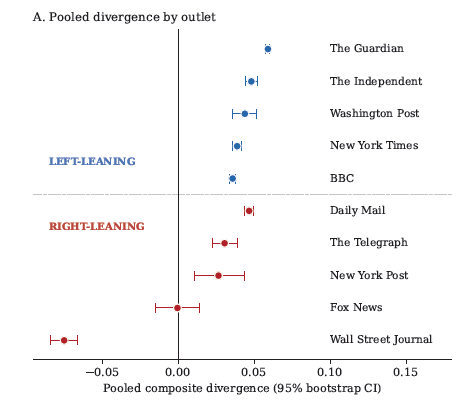
We have complained many times that the public is presented with a picture of climate science systematically biased towards alarmism. And it’s not just our anecdotal impression. We have data, in the form of a new study from the US National Bureau of Economic Research saying the government delegates who write the IPCC Summary for Policy Makers (SPM) overstate the science in the underlying report, and then the media further overstates what’s in the SPM. The study authors used multiple AI systems to extract key scientific statements in every IPCC Assessment Report since 1990, track how they were summarized and what the accompanying media coverage said. Using a statistical model they measured the way the statements get changed or twisted at each stage. There were some surprising results and some unsurprising. Unsurprisingly the data showed the UK Guardian has by far the most climate coverage of all major media outlets and is also the most biased. Another unsurprising result is that the overall media bias regarding the severity of climate change has been consistent over time. A surprising result (to many, but not to us) is that the only major media outlet exhibiting precisely zero bias was Fox News. Otherwise most right-leaning outlets adopted the left-leaning outlets’ alarmist bias as of 2007, again unsurprising to us. And there’s much more.

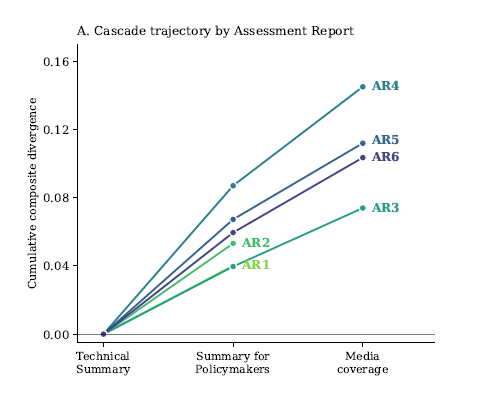
The authors identified three forms of bias: severity, in which a summary picks the upper end of a range of claims, uncertainty, in which a summary downplays caveats and qualifiers, and scenario in which worst-case scenarios get foregrounded. They used a numerical scale from -2 to +2 that captured bias in either direction: a positive number indicated that the summary was biased towards alarmism and a negative number indicated a bias in the opposite direction. Then they averaged the bias measures together and measured them at two stages in the game of telephone. The “TS-to-SPM” stage compared statements in the author-written Technical Summary to how they were worded in the government-written Summary for Policymakers. The “SPM-to-media” stage looked at how statements in the SPM were then reported in the press. The authors examined the TS-to-SPM stage for every IPCC Assessment Report from 1990 to 2023. They only looked at the SPM-to-media stage from the 2001 Third Assessment Report (AR3) because that’s as far back as their media library went.

[…]

That’s right, folks. Even the right-leaning outlets have also gone in for alarmist bias, at least since 2007. Indeed, the media’s bias converged in size and direction over time, as shown in this chart:

For the AR3 in 2001, right-leaning outlets on average understated the climate findings while left-leaning outlets overstated them. But thereafter both sides shared the alarmist bias. Which reflects the success of alarmist activists in the post-An Inconvenient Truth era (2006) driving skeptical voices out of the media. That campaign didn’t eliminate bias, it only replaced one form by another, with the result that the overall media landscape became entirely one-sided.

The uniformity of the bias can also be seen in this chart:

The right-leaning outlets in red are about as bad as the lefties in blue, except for Fox News which is the only outlet with no measurable bias and the Wall Street Journal which had an overall negative (anti-alarmist) bias.

June 15, 2019

13-0

Filed under: Soccer, USA — Tags: , , — Nicholas @ 05:00

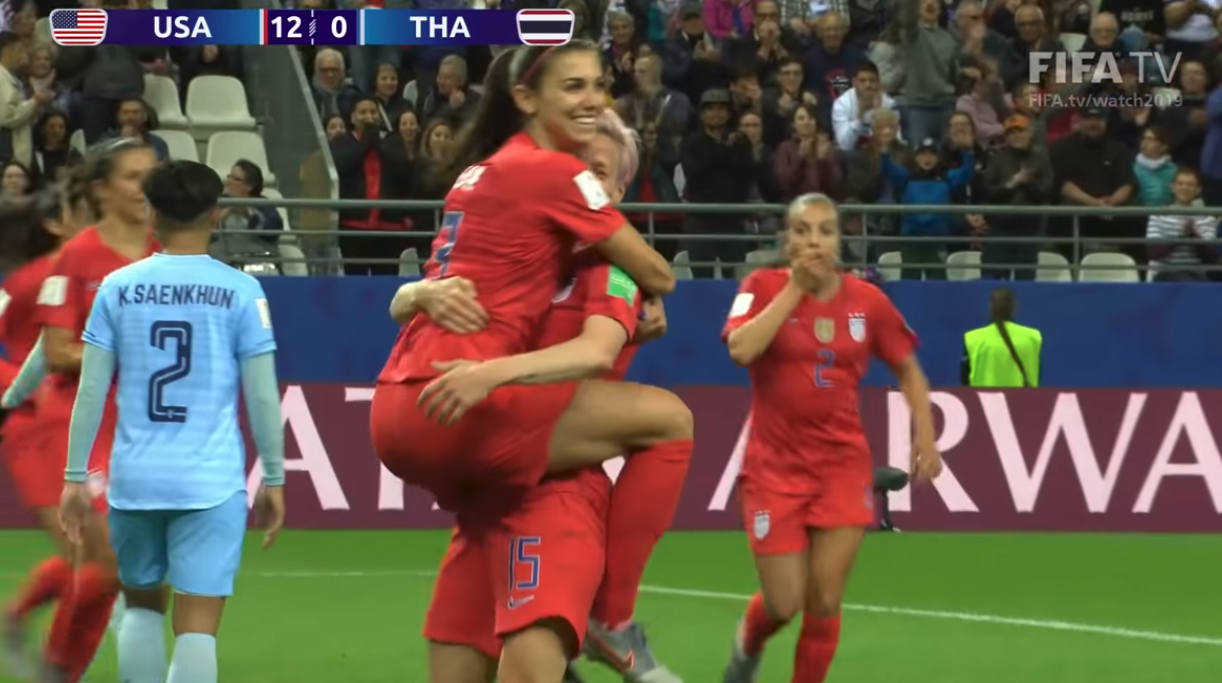
The US Women’s national soccer team eviscerated Thailand by an unheard-of 13-0 score in the group stage of the FIFA Women’s World Cup. It was not a great day for sportsmanship, as the American women celebrated every goal as if they’d just broken a 0-0 tie in injury time of the final:

A screen capture from the highlight video at YouTube. Amusingly, if you try to watch this clip on the official FIFA Women’s World Cup site, you get an error saying “This video contains content from FIFA, who has blocked it from display on this website”

At American Thinker, Jonathan Keiler recounts the reaction to the game and the counter-reaction that followed:

On Tuesday the U.S. Women’s National (soccer) Team (WNT) obliterated a hapless Thailand squad in a 13-0 rout. That’s about 91-0 in football terms, but in a sense even worse, given soccer’s relative dearth of scoring. It would not be worth noting, except that many present and former WNT players recently sued the U.S. Soccer Federation claiming disparate treatment and pay, and to the general championing of all things female in a supposed age of “toxic masculinity.”

The game and the result might cause a reasonable observer to question popular progressive views on these issues, not because the U.S. women won, but how they did it.

[…]

This lack of competitive edge to the women’s game affects it at all levels, from youth leagues to international soccer. It’s not the individual players’ fault, but it’s a fact. I coached soccer for years (boys and girls.) On the women/girls side, routs like what happened on Tuesday are relatively commonplace in many leagues, up to and including high school — and obviously even after. And while this happens on the boys/men’s side too, it is less common and exaggerated.

So even leaving aside the issue of whether the men’s game is better in terms of speed/skill/aggression, the fact is generally the men’s game is more interesting and competitive more often. That puts additional fannies in seats, people watching on TV, and generates greater income, which is reflected in pay. Non-soccer aficionados may pooh-pooh the game’s rhythms and low scoring generally, but the fact is, first round games in the Men’s World Cup are far more interesting and exciting than the female version. So the WNT did themselves no favor in their legal case by making a major shortcoming of the women’s game painfully obvious.

They also did themselves no favors winning over international fans (and a lot of on-the-fence Americans) by their graceless destruction of the Thailand ladies. It’s not just that the WNT ran up the score, it’s that as they did so they acted as if they were heroes doing the impossible, rather than seasoned pros essentially carving up an amateur squad. They screamed, danced, ran around crazily, slid on the ground and the like, after every one of those thirteen goals. They didn’t act like children — they acted worse than children.

July 18, 2018

A great World Cup?

Filed under: Media, Politics, Russia, Soccer — Tags: , , — Nicholas @ 08:38

At Spiked, Mick Hume looks back at what we were told to expect from the hosting nation of the 2018 World Cup:

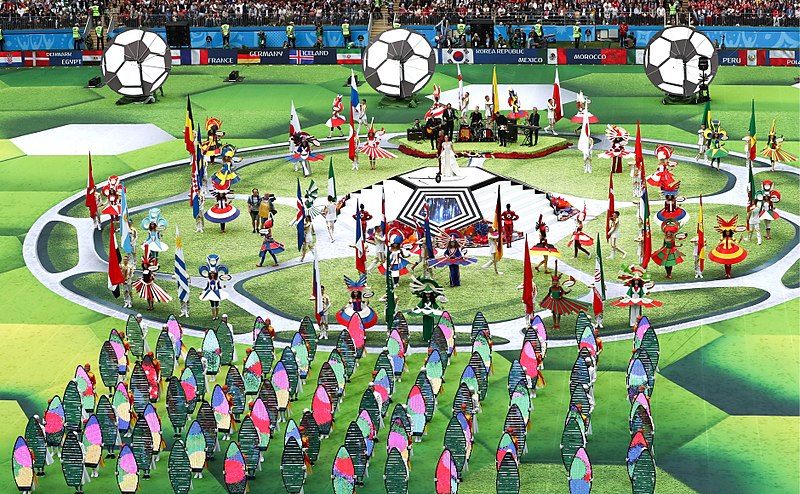
FIFA 2018 World Cup opening ceremony
Via Wikimedia Commons

Everybody agrees that the 2018 World Cup has been a roaring success. Yet remember how recently we were being warned that it would be the equivalent of a humanitarian disaster?

Before a ball was kicked we were assured that English and other international fans would all be beaten up, if not eaten alive, by armies of ‘neo-Nazi’ Russian hooligans, and that President Vladimir Putin would cynically exploit the World Cup ‘like Hitler did the 1936 Olympics’, as a tool in his plot for global domination and world war.

British government ministers and officials boycotted the tournament after the poisoning of Sergei and Yulia Skripal (the expense-account restaurants of Moscow might have missed their presence, but it’s unlikely anybody else did). And England squad member Danny Rose reportedly told his family ‘don’t come to Russia’, because of ‘fears that they would be racially abused’.

Questions were asked about why there were relatively few England fans at the team’s opening games in Russia. In the face of such sustained scaremongering, it might rather seem a wonder that anyone braved the journey.

Yet once the actual football kicked off, what happened? None of the above. Instead the World Cup immediately became a glorious, thrilling spectacle, capturing the imagination of fans worldwide amid a rolling party atmosphere across Russia.

This follows the similar reality gaps between political scaremongering and sporting success around other recent World Cups and Olympic games, notably London 2012. It should surely be a reminder to us all to ignore the agenda-driving doom-mongers in future and remember that, in the end, the game’s the thing. There is no chance of keeping politics out of sport, but we might at least try to keep sport out of politics and reject attempts to use our great sporting occasions as political footballs. (Rider: the idea of staging the next World Cup in Qatar still seems bonkers, but…)

July 10, 2014

Argentina’s economic woes – tourist edition

Filed under: Americas, Economics — Tags: , , , , — Nicholas @ 10:56

How bad is the Argentinian economy right now? So bad that middle class Argentine tourists in Brazil eat at soup kitchens, according to the Wall Street Journal‘s Miriam Jordan:

The state-funded Citizen Restaurant in downtown Rio is accustomed to serving a balanced meal at an unbeatable price to about 5,000 poor residents of this city each day. During the World Cup, however, this cafeteria has been catering to another clientele as well: middle-class Argentines.

“We serve homeless people, drug addicts, blue-collar workers and retirees,” said Jose Barbosa, Rio de Janeiro state coordinator for food security. “This World Cup we have been welcoming Argentine soccer fans, too.”

With the value of the Argentine peso deeply eroded amid the country’s economic woes, many Argentines who have flocked here to root for their soccer team […] say they’re counting every Brazilian real they spend — and hunting for bargains. On Monday, dozens of Argentines lined up alongside Brazilians to buy lunch at the cafeteria, where a meal of black beans, white rice, salad and choice of meatballs or chicken sausage cost 1 real, or about 40 U.S. cents.

“Rio is very expensive — that’s why I am here,” said Fernando Castillo, a 24-year-old bartender from Buenos Aires. With gusto, he dug into his plate of food, which sat on a plastic-blue tray beside a cup of guava juice and a fresh orange for desert, both included in the price. “This is perfect,” he said, “especially at this price.”

“The generous portion keeps us filled all day,” added his cousin, Thomas Castillo.

[…]

To save on accommodations and flights, many Argentines drove to Brazil. In Rio, their campers and cars occupied prime beachfront parking spots until the city evicted them.

It then allowed them to park vehicles and pitch tents in a vast parking lot downtown that abuts the permanent bleachers where Rio’s samba schools perform during the annual carnival celebrations.

Word spread quickly at these parking lots that Citizen Restaurant, within walking distance of the Argentine encampment, offered good Brazilian fare at a bargain-basement price in a clean, safe environment. “It started with 10 of them one day, then 50 of them came and now we’re seeing about 200 Argentines each day,” said Ricardo Chaves, the eatery’s administrator.

July 9, 2014

Thoughts on the “blitzkreig of Belo Horizonte”

Filed under: Americas, Europe, Germany, History, Soccer — Tags: , , — Nicholas @ 14:59

Colby Cosh, self described as having descended from “multiple generations of German-killers” explains why he’s content with Brazil’s soccer disaster at the hands of the German national team yesterday:

It’s already being called “The Mineiraço. Yesterday’s 7-1 slaughter of Brazil by Germany in the semifinals of the World Cup seemed an awful lot like a historical turning point, and the political ripples are already being discussed. Perhaps they are not even confined to Brazil, although the recriminations there are bound to be awesome: the government spent untold billions on a golden stage for Brazilian glory, and ended up with the sporting equivalent of the Challenger disaster, if Challenger had crashed intact into a packed stadium where the Pope was giving a homily.

What seems most remarkable to me is not the match itself but the prelude. I grew up in a colony of Anglo-Saxon Soccer World in which Germany was inevitably cast as a cartoon villain and Brazil was everybody’s second favourite national side. Brazil were what Canada fancies itself to be in hockey: the native “speakers” of the prestige dialect of the game — a national noblesse, possessing self-conscious power to establish, dictate, and impose its ideal form on lesser breeds. (Even Canadian children who played soccer were dimly aware of this: the rich ones would signify their coolness by wearing Brazil kit to practices, as I’m sure Bulgarian youth hockey players must signify to their mates by flaunting expensive Crosbiana.)

[…]

Anglo Soccer World seemed to be very much leaning toward Germany in the run-up to the Mineiraço. No doubt this is partly because we are getting ever further from the Second World War. Germany has been mostly tame, friendly, and progressive for 70 years, the Biblical specification of a human lifetime. The length of this period is approaching the duration of the trouble to which German hyper-German-ness subjected Europe between the Battle of Sedan and the Holocaust. It is hard to see any lingering trace of the old ills of the German national character in contemporary Germany.

Update: Compare the responses to yesterday’s game to the reaction after the 1954 West German team’s victory:

… the West German victory was hardly something that was welcome elsewhere in Europe, particularly to the authorities in East Berlin. Less than ten years after the end of a world war for which the Germans were held responsible, there was understandably little public enthusiasm in Britain and France at the outcome of the competition. Nonetheless the extent of the dismay and even vitriol at the time expressed in the media of both countries requires further explanation and points to deep-seated concerns in Britain and France about the speed of German economic recovery and re-armament in the mid-1950s.

For the East German regime, West Germany’s victory at the World Cup was the worst possible outcome. Communist leaders had been praying for a Hungarian win in order to prove the much-claimed ‘superiority of socialist sport’ and, by implication, the Communist form of government. Hungary’s defeat appeared to prove that the opposite was true, just at a time when East German leaders were trying to promote their state as the ‘progressive option’ for all Germans, as opposed to what they called the ‘Nazi successor state’ of the Federal Republic.

[…]

It was two events off the pitch – one immediately after the final and the other a few days later – that were to give ammunition to those keen to link the West German victory to allegations of resurgent German nationalism. First, as a rain-soaked Fritz Walter led his team up to collect the Jules Rimet trophy from the man whose name it bore and a Swiss band played the German national anthem, a boozy section of the German fans began singing the banned first verse of the national anthem – ‘Deutschland, Deutschland, über alles’ rather than the Federal Republic’s officially sanctioned third verse – ‘Einigkeit und Recht und Freiheit’ (unity, justice and freedom). Foreign journalists present immediately took note.

A few days later the damage was compounded by a speech given at the official victory celebration in a Munich beer cellar by the President of the German Football Association (Deutscher Fussball-Bund), ‘Peco’ Bauwens. In an atmosphere heavy with alcohol and emotion, Bauwens – who had joined the Nazi Party as early as 1933 – told the reportedly bemused players not only that they had been inspired by the spirit of the Nordic God, Wotan, but that victory had been made possible by their adherence to Der Führerprinzip. By this he appears to have meant unflinching obedience to a strategy worked out by the coach, Josef (Sepp) Herberger. The speech, which was being broadcast live by Bavarian Radio, was mysteriously cut short at this point and the tapes subsequently lost, but foreign reporters monitoring the coverage had already heard enough.

July 2, 2014

“Fixing” soccer games for fun and profit

Filed under: Business, Law, Soccer — Tags: , , , , , — Nicholas @ 08:49

Bill Barnwell discusses what we know (or what we’ve been told) about corruption in soccer matches all the way from Finland to Cameroon to the current World Cup fixtures in Brazil:

Late Monday night, FIFA’s worst nightmare began to break. The Cameroon Football Federation sent out an urgent press release announcing that they were investigating claims that several of Cameroon’s recent matches were fixed, most notably the country’s 4-0 loss to Croatia during the group stage of the World Cup. The allegations come from a story in German newspaper Der Spiegel, which reported that notable alleged Singaporean match fixer Wilson Raj Perumal told the paper in a pre-match Facebook chat that the African side would have a player sent off in the first half before losing 4-0. Both would later occur in the match. Perumal further alleged that the Cameroon team had “seven bad apples” and has been involved, to some extent, with fixing all three of its group stage matches before exiting the tournament.

Perumal has since issued a statement, via the co-authors of his biography, denying that he predicted the result.

Of course, allegations of fixed soccer matches aren’t anything new. What makes this so shocking and so meaningful is the idea that a World Cup match was fixed. It’s one thing for some third-division match under a rock in front of 40 people to be rigged. If a World Cup match can be manipulated with the globe watching, though, is there any match that can’t be fixed?

[…]

Perumal and an associate eventually found their way to Scandinavia, where they would fix matches at a number of clubs in Finland. Most notably, Perumal offered to invest more than a million Euros in struggling Finnish side Tampere United if they allowed him to invite several awful players from outside the country on the take to come play for the club. They took about half of the money and didn’t bother to play the players Perumal brought on; they’re also now banned from Finnish soccer. For some of his fixes, Perumal was actually able to issue instructions during matches to players on the pitch from the team bench.

Perumal suggests that he didn’t need influence over much of a team to fix a match, preferring to focus on the defense. “I prefer back-line players: the two central defenders, the last man stopper and the goalkeeper. If you can get three back-line players on your payroll then you can execute a fix because, when you want to lose, the attackers can’t help you,” he wrote.

[…]

As for Cameroon, well, it’s hard to say what will become of them. If there are seven players on the team who are proven to have fixed matches at the World Cup, their punishment will be severe, with permanent banishment from the sport a likely option. I’ll be intrigued to see what the investigation reveals, even if I’m very skeptical that an investigation conducted by the Cameroon FA and FIFA will be very thorough. They have little to gain from revealing their own corruption. I don’t know that Cameroon necessarily manipulated results during this World Cup, but I would be surprised if the entire tournament actually went untouched by match fixers. There’s simply too much to be gained and too little to stop it from occurring.

June 23, 2014

World Cup sour grapes for England

Filed under: Britain, Soccer — Tags: , , , — Nicholas @ 08:03

While the England team may not need to worry about what to do in the elimination round (because they’re not going to get that far), James Delingpole claims that this is the greatest World Cup ever, and offers five reasons he’s right:

1. Filthy, cheating foreigners are conforming satisfyingly to stereotype.

The reason England are already out of the competition, claimed Wayne Rooney over the weekend, is that we are far too nice. If ever we wish to win again at the game we invented, he suggested, then we will have to learn to cheat like all the filthy foreigners with their effeminate hairstyles, their casual fouling and their extravagant diving.

But obviously we can’t do that sort of thing because then we’d look like the kind of people who still live with their mothers and eat garlic on toast and ride around piazzas on mopeds.

Which is why we prefer to lose because it shows our national superiority. Anyway, football is fixed now — so really it’s not up to the players who wins any more anyway, it’s decided by the betting syndicates in India and Pakistan and Ghana.

[…]

3. It has given the Scots something not to grumble about

Nothing — not a warming draught of deep fried Irn Bru (copyright Michael Deacon) nor the skirl of pipes nor the reassuring “pit” of the latest welfare cheque landing on the floor of your council flat — gladdens a Scotsman’s heart quite so much as the sight of England losing in a major (or indeed minor) sporting event.

It’s quite possible that, had England won this World Cup, the backlash would have driven the whole of Scotland into voting “Yes” in the forthcoming referendum. Those of us who love the Scots and dearly wish them to remain part of the Union, therefore, should rejoice in Britain’s tactical defeat in the World Cup.

[…]

5. Nazi Pope Reefer Man

Do I really need to explain?

My favourite Twitter post from the start of the World Cup now seems prescient:

June 16, 2014

FIFA and the World Cup

Filed under: Americas, Bureaucracy, Football — Tags: , , , , , — Nicholas @ 07:29

H/T to Roger Henry for the link.

June 14, 2014

Spain meets Nemesis (wearing Netherlands team jerseys)

Filed under: Americas, Soccer — Tags: , , , — Nicholas @ 09:51

I didn’t watch this game, but apparently I missed quite the event. A Dutch friend of mine took to Twitter to express his joy through the course of the game:

June 11, 2014

Some interesting responses from World Cup audiences

Filed under: Soccer — Tags: , — Nicholas @ 09:59

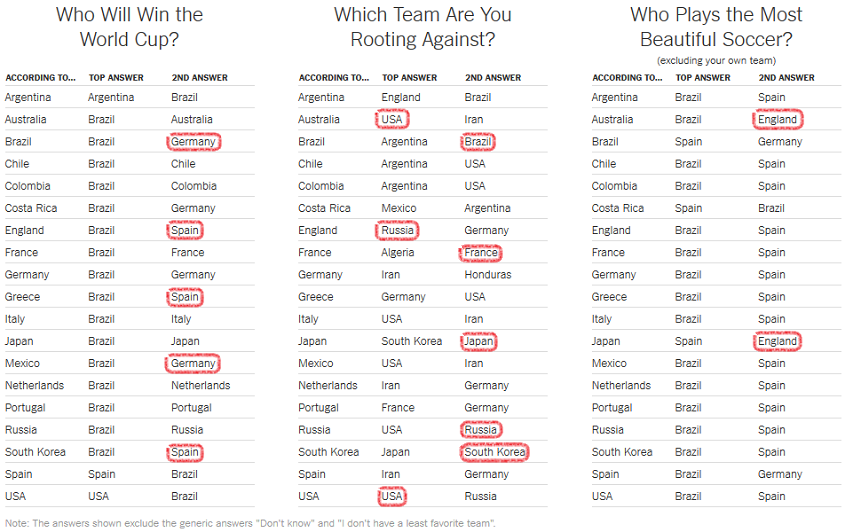
The New York Times posted some responses from fans about who will win the 2014 World Cup, who they root aagainst, and who plays “the most beautiful” soccer. I found some of the answers to be of interest, and I’ve highlighted them here:

World Cup 2014 opinions

Brazil is the almost-consensus pick to win it all, with only Argentinian, Spanish, and American fans liking their national team’s chances over Brazil. The surprises come with the second answers, where most pick their national side, but Spain and Germany get a higher-than-expected vote of confidence.

When asked who they’re cheering against, there were some odd answers … who knew that the Aussies were so anti-American? Even more amazing is how anti-American the American fans are. Brazilian, French, Japanese, South Korean, and Russian fans also display an oddly bipolar attitude toward their respective national teams. Argentina hates England, aka “Dog Bites Man”, yet the English don’t seem to be reciprocating any more with their dislikes now being Russia and “Don’t Mention The War”.

In the final column, one has to assume that Australian and Japanese fans need to get their collective eyes checked…

June 10, 2014

England’s World Cup team – where’s the hype?

Filed under: Britain, Soccer — Tags: , , , — Nicholas @ 09:57

BBC News Magazine has expatriot Scot Jon Kelly wondering where all the traditional pro-England hype has gone, compared to previous World Cup campaigns:

The flags are missing from the cars. British newspapers aren’t heralding imminent victory. In pubs from Penrith to Plymouth there’s a distinct lack of gaiety, optimism and hope.

I for one couldn’t be happier.

As a Scotsman resident in London, I’ve come to dread the wildly delusional over-confidence that grips my adopted homeland every time an international football tournament is staged.

The certainty of victory. The talk of a “golden generation”. The interminable references to 1966. And the inevitable splutterings of anguish when it’s eventually confirmed on the pitch that, actually, Germany or Argentina or Portugal are superior teams after all.

Now, don’t get me wrong. I like all things Anglo very much. While Scotland will always be the national side I support, in spite of our dependable rubbishness, I’ve always felt the Anyone-But-England tendency among some of my fellow Scots diminishes our status as a self-confident, modern nation.

1966 – it seems like only yesterday to many England fans

But the bellicose hysteria that envelops many in England — not to mention the irritating assumption by certain broadcasters, newspapers and advertisers that their audiences are comprised entirely of England fans — makes the team in white a difficult one for non-English folk to like, never mind cheer on.

And I say all this as someone who takes an interest in football. For those who dislike the game, it must be excruciating.

This year it’s different, however. No-one with more than a cursory knowledge of the international game seriously believes England will win.

That much is true: if they stick to the traditional formula, they’ll go out on penalties in the quarter-finals.

Invariably, a motley crew of psychologists, positive-thinking gurus and snake-oil sellers will be forming a queue outside FA headquarters, offering cures for the English penalty curse. I think there’s a simpler solution. Let’s campaign for spot kicks to be scrapped. We should use whatever arguments we think might work. I’d play the inclusion card. Penalty kicks clearly discriminate against the mentally frail. The English, who suffer from a collective, penalty-induced trauma, will always get a raw deal. How can that be fair? If FIFA wants a truly level playing field, the answer is to get rid of the pseudo-lottery of spot kicks. What we need is a proper lottery. We don’t want skill or nerve to play any part. Tossing a coin, rolling dice, drawing straws, a game of scissor-paper-stone — anything is better than a shootout. Come on Mr Blatter, give us chokers a chance.

Still one of my favourite World Cup comments (and I’m flying the English flag for the tournament):

May 31, 2014

Scott Feschuk: “How murdered might you get at the World Cup?”

Filed under: Americas, Humour, Soccer — Tags: , , , — Nicholas @ 10:10

Worried about your personal safety at the World Cup in Brazil? Scott Feschuk helps you to be as worried as you should be:

Has there been much corruption?

Define “much.” If you mean scattered incidents of price gouging to line the pockets of a few local firms and politicians, then yes. But if you mean a grandly orchestrated, systemic pilfering of hundreds of millions of dollars, then yes. Brazilian soccer legend Pelé describes it as a “disgrace.” (By the way, it is mandatory that Pelé be quoted in every World Cup article, no matter the topic: RAIN COMING WEDNESDAY ACCORDING TO ‘FEELING IN KNEE,’ LEGEND DECLARES.)

[…]

If I go to the World Cup, how murdered will I get?

British papers have been playing up the threat of violent crime, depicting the cities of Brazil as crime-infested hellscapes through which there is scant hope of safe passage. The way they tell it, Rio is like Gotham before Batman or Times Square before Applebee’s.

So concern is overblown?

Oh God, no. But listen: the people of Brazil are well aware of your fears. To their credit, they’ve taken substantive action to address the issue by, um, well … they published a brochure.

What — a guide on how to react when you’re mugged at gunpoint, haha?

Yep. Brazilians have a lot of interesting traditions. They speak directly. They touch one another lightly while talking. And their criminals like to kill people who make a fuss over getting robbed. They even have a word for a mugging that escalates into a murder: latrocinios. You know people are serious about something when they have a word or phrase for it. Just ask the people at McDonald’s about Kirstie Alley and second breakfast.

What does the brochure recommend?

Remain calm. Do your best not to cry out. If you stay largely motionless and don’t say a word, it will be over soon enough. Pretty much the same guidelines to follow when losing your virginity.

Older Posts »

Powered by WordPress