
I am old enough to remember when almost everyone believed that the Russians were, as Khrushchev put it, going to “bury” us. Even leading economists such as Paul Samuelson were taken in by such nonsense. Of course, no such burial occurred, because just producing vast quantities of concrete, steel, and H-bombs is no evidence that anything of genuine value is being produced. Later Japan became the Godzilla that was going to eat the U.S. and European economies with its bureaucratic setup for picking and subsidizing “winners.” Before long that setup too collapsed in a heap and gave way to perpetual stagnation. Now almost everyone quakes in his boots while beholding the mighty Chinese economy. Again the hysteria has no firm foundation. An economy shaped and guided by government bureaucrats and Communist bigwigs by means of tariffs, subsidies, state-controlled credit, and state-owned industries cannot be a real growth miracle for long. This too shall pass.
And when it does Americans will learn nothing from their most recent mistake. If people really understood sound economics, they would not continue to make this same mistake again and again.
Robert Higgs, “China — Americans’ Economic Bugaboo du Jour”, The Beacon, 2018-12-19.
October 14, 2021
QotD: Americans’ perception of foreign economic threats
October 13, 2021
Josip Broz Tito — The “Maharaja of the Balkans”
In The Critic, Thomas Gallagher looks at the man and the myth of Yugoslavia’s communist leader, known to the world as “Tito”:
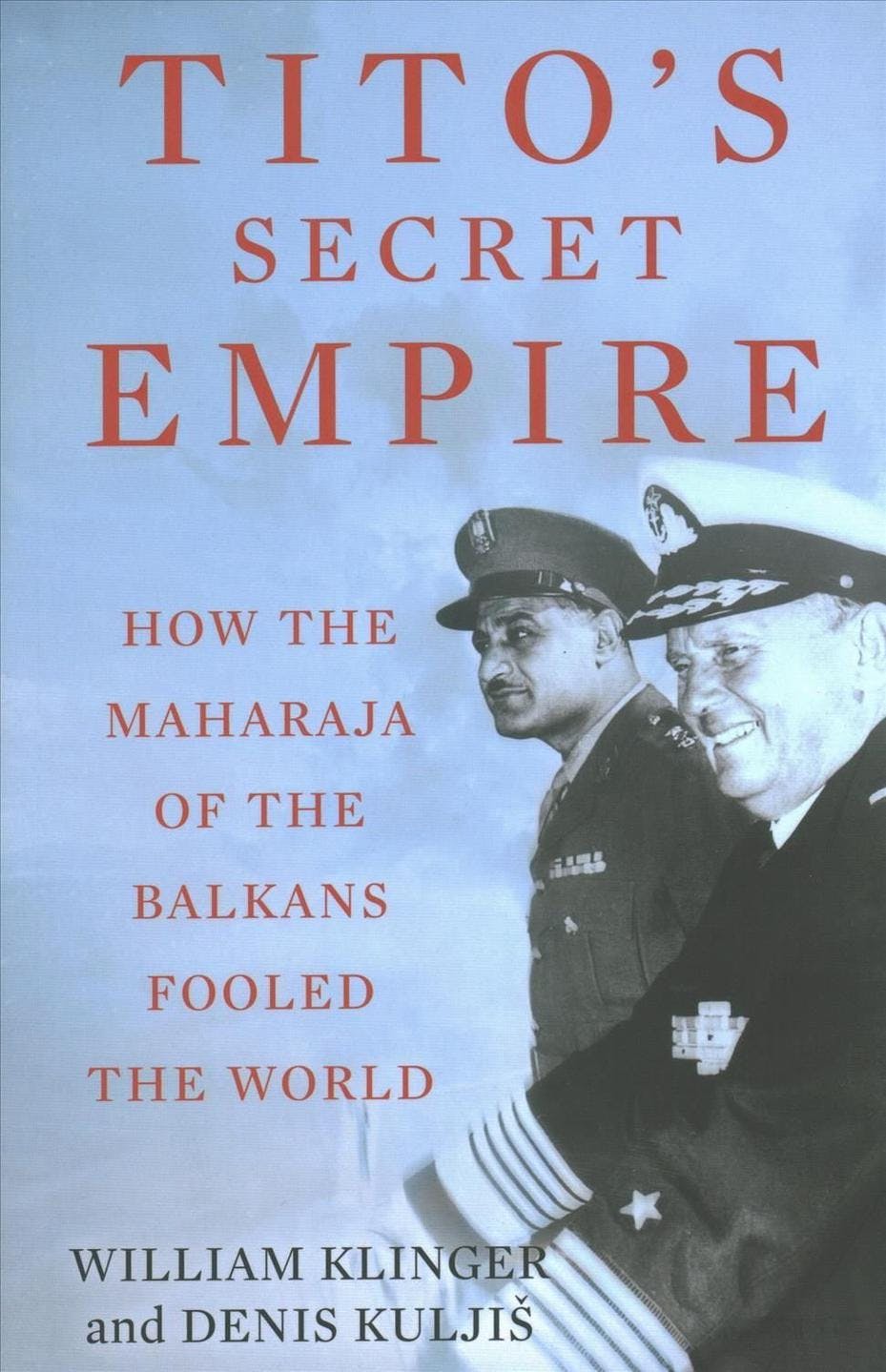
Decades after his death in 1980, Josip Broz Tito still casts a spell as a larger-than-life figure.
The legend portrays him as a famous military leader and anti-fascist guerrilla fighter who fought off the Nazis and defied Stalin. He then went on to be a champion of peace who stood up for various small nations snapping the coils of European overlordship. He was at home on imperial estates or, more often, on his secluded luxury home on the island of Brioni, with Old Masters adorning his walls and kings, emperors and fellow communist strongmen paying homage.
Despite clumsy language and hyperbole in places, as well as some avoidable errors, Tito’s Secret Empire seeks to debunk Tito’s legend and in several key respects it succeeds. The authors William Klinger and Dennis Kuljiš accord some honours to their subject.
He was a unique character well-equipped to surmount various obstacles during his 88-year life. For the British diplomat, Sir Fitzroy Maclean, he was “a fail-proof survivor”. In 1974 he was hailed by Germany’s Chancellor, Helmut Schmidt, as “the greatest of the winners of the Second World War”.
A benign image persisted, despite Tito being responsible for more acts of mass cruelty than any other European communist leader with the exception of the Soviets. He was admired as a wheeler-dealer in international affairs, from murky transactions to the most delicate undertakings in statecraft. This well-researched book deserves attention for those who wish to peer beyond the carefully cultivated image.
[…]
His 1954 state visit to then-royalist Greece, a regime which he had spent years trying to topple, was an unmistakable indication that he was placing himself at the head of a hybrid regime. Britain’s foreign secretary, Anthony Eden, had already visited him and urged the United States to prop up Tito financially. The favour was not returned. Evidence is provided that Tito played a major role in encouraging Egypt to nationalise the Suez Canal. He saw President Nasser as a kindred spirit, a populist unencumbered by ideology. Tito even more keenly sought to end French rule in Algeria, arming the rebels and offering diplomatic support.
In September 1961, he welcomed dozens of leaders from the promising new “non-aligned” bloc to a conference in Belgrade. Next year China invaded India and his soul-mate, Nehru, turned to the West for help. Thereafter, the non-aligned movement’s influence waned, as did Tito’s with it.
He increasingly became a pensioner of the Soviet Union. American ardour cooled as it became clear how reliant he was on Soviet arms and industrial licences which enabled this supposed ambassador of peace to export weapons to the Third World.
A War Without Hate? – The Officers and Gentlemen of North Africa – WW2 – Gallery 05
World War Two
Published 12 Oct 2021In the history of European-style warfare, there has always been the ideal of “rules of warfare”. The horrors of the Eastern Front and the Pacific prove how hollow this ideal can be, but there is one theatre where some officers are trying to maintain it: North Africa.
(more…)
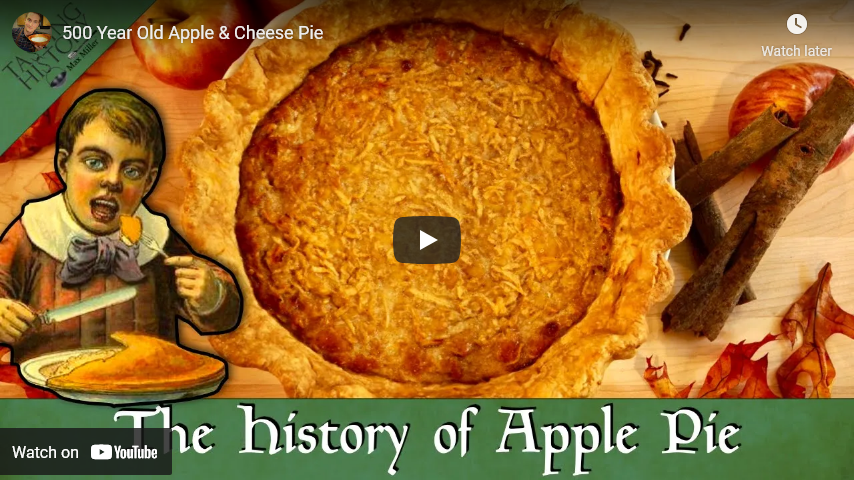
500 Year Old Apple & Cheese Pie
Tasting History with Max Miller
Published 12 Oct 2021Use my exclusive link here https://cen.yt/TradeTastingHistory4 to get your first bag from Trade Coffee for free.
Support the Channel with Patreon ► https://www.patreon.com/tastinghistory
Merch ► crowdmade.com/collections/tastinghistory
Instagram ► https://www.instagram.com/tastinghist…
Twitter ► https://twitter.com/TastingHistory1
Tiktok ► TastingHistory
Reddit ► r/TastingHistory
Discord ► https://discord.gg/d7nbEpy
Amazon Wish List ► https://amzn.to/3i0mwGtSend mail to:
Tasting History
PO Box 766
Burbank, CA 91503LINKS TO INGREDIENTS & EQUIPMENT**
Sony Alpha 7C Camera: https://amzn.to/2MQbNTK
Sigma 24-70mm f/2.8 Lens: https://amzn.to/35tjyoW
Emile Henry Pie Dish: https://amzn.to/3i5go19LINKS TO SOURCES**
Apple – A Global History by Erika Janik: https://amzn.to/3COmCui
Diary of Samuel Sewall: https://amzn.to/3AKDj9j
The Life and Repentance of Samuel Sewall by Eve LaPlante: https://amzn.to/3EUBUiU
Das Kochbuch der Sabina Welserin: http://www.daviddfriedman.com/Medieva…**Some of the links and other products that appear on this video are from companies which Tasting History will earn an affiliate commission or referral bonus. Each purchase made from these links will help to support this channel with no additional cost to you. The content in this video is accurate as of the posting date. Some of the offers mentioned may no longer be available.
Subtitles: Jose Mendoza | IG @worldagainstjose
PHOTOS
Tarte tatin: Loslazos, CC BY-SA 4.0 https://creativecommons.org/licenses/…, via Wikimedia Commons#tastinghistory #applepie
October 12, 2021
Richard Overy looks at the “Great Imperial War” of 1931-1945
I missed Rana Mitter‘s review of Richard Overy’s latest book when it was published in The Critic last week:
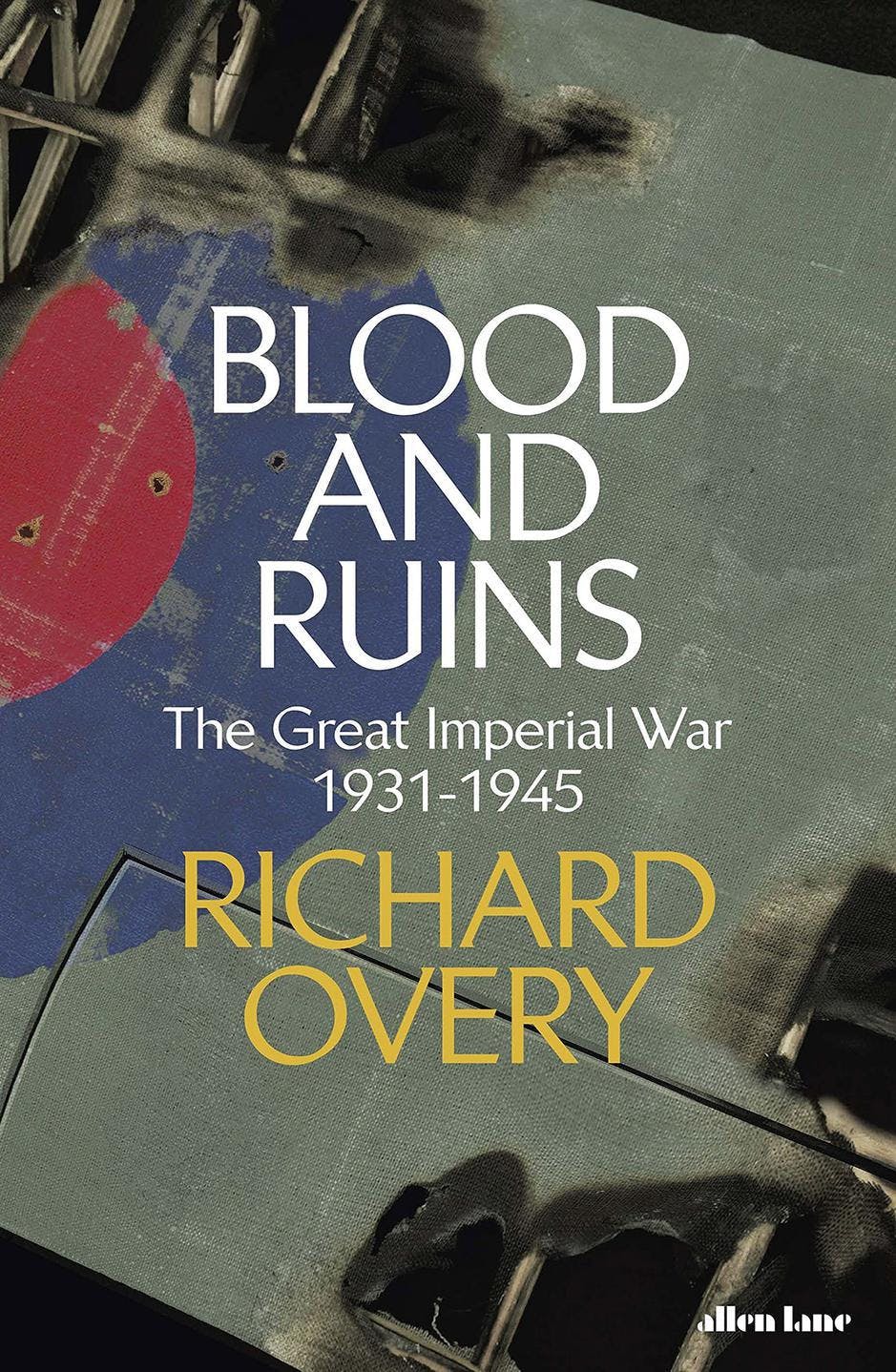
Imagine there’s no Hitler. It’s not that easy, even if you try, at least if you’re a westerner thinking about the Second World War. But for millions of Asians, those years of conflict had little to do with the horrors of Nazi invasion and genocide, and it is their experience that frames Richard Overy’s account of a seemingly familiar conflict. For most non-Europeans, the war was not a struggle for democracy, but a conflict between empires, and in this book, that imperial struggle begins not with the invasion of Poland by Germany in 1939 but the occupation of Manchuria by the Japanese in 1931.
Blood and Ruins is really two books in one. The first is perhaps the single most comprehensive account of the Second World War yet to appear in one volume. You might think that by reading extensively, you could construct a book like this one. You could not — unless you have Overy’s control over a staggering range of World War II scholarship, much of it drawn from his own decades of research on the economics of total warfare, the development of technology, from radar to aerial bombing, and the idea of the “emotional geography” of war, encompassing morale, hope, and despair. Then you’d need to go back and cover all those categories for each of the major Allied and Axis belligerents: Britain, the US, Japan, Germany, France, Italy and China among them.
The second book is an argument about what kind of conflict the Second World War really was. Overy is clear: on a global as opposed to European scale, it was not (just) a war about democracy, but about empires and their fate, although “the starting point in explaining the pursuit of territorial empire is, paradoxically, the nation.”
Overy points out what is generally lost to view when the European war is placed at the centre of the historiography: both Britain and France were undertaking an “awkward double standard” in their defence of democratic values, as their Asian and African possessions “rested on a denial of those liberties and the repression of any protest against the undemocratic nature of colonial rule”. While this argument has been made before (not least by figures such as Nehru and Gandhi in India at the time), Overy does something unusual and revealing: he compares the western empires with Japan’s justification for its own imperial project in the early twentieth century.
The book is scrupulously careful not to endorse or excuse the worldview of Tokyo’s imperialists, and gives full weight to the voices of the Chinese nationalists and communists who were bitterly opposed to Japan’s expansion on the Asian mainland. Still, the comparison of Japan’s pre-war and wartime empire to those of the western powers provides an important and original broadening of a contemporary debate.
There is ongoing public British (and to some extent French) argument about whether empire was a “good” or “bad” thing. Yet neither attackers nor defenders of the British empire tend to analyse it alongside the Japanese equivalent that lasted nearly half a century. Britain committed colonial massacres (Amritsar) and deadly repression (Mau Mau). So did Japan (the rape of Nanjing, invasion of Manchuria).
Britain’s empire also created an aspirational middle class full of cosmopolitan nationalists, and drew on ideas of loyalty to recruit its subjects to fight in world wars. All these things are also true of Japan, which like Britain was a multi-party democracy for much of its period as an overseas empire (between 1898 and 1932), and whose capital city was an intellectual hub for political activists from across Asia.
As a colony of Japan between 1895-1945, Taiwan developed a middle class that was Japanese-speaking and keen to draw on new economic opportunities brought by empire: Lee Teng-hui, the first democratically elected president of the Republic of China on Taiwan, always thought of Japanese as his mother tongue. Park Chung-hee, the American-sponsored dictator of Cold War South Korea, learned his political craft as an army officer in the Japanese Manchukuo Army that occupied Manchuria.
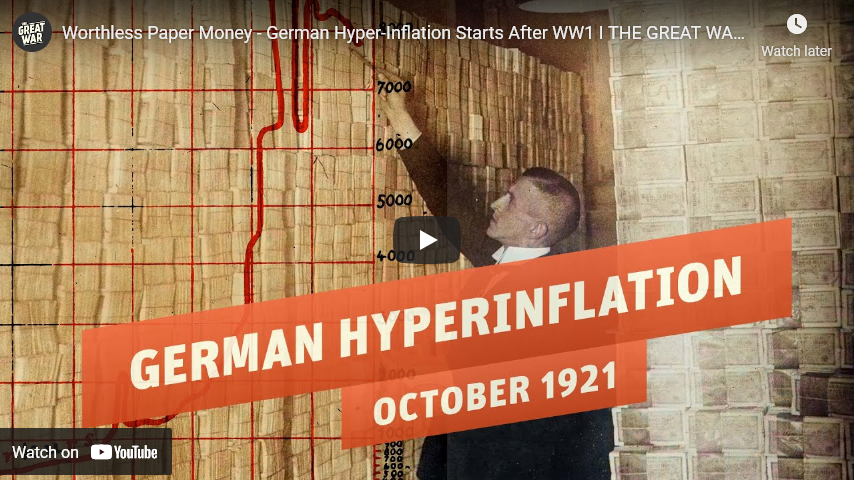
Worthless Paper Money – German Hyper-Inflation Starts After WW1 I THE GREAT WAR 1921
The Great War
Published 8 Oct 2021Sign up for Curiosity Stream and get Nebula bundled in and SAVE 26%: https://curiositystream.com/thegreatwar
The German post-WW1 economy was under pressure: the loss of territory, the war bonds issued during the war and the reparations under the Treaty of Versailles. All this lead to a downward spiral of rising inflation and living costs for German citizens.
» SUPPORT THE CHANNEL
Patreon: https://www.patreon.com/thegreatwar
Shop: https://www.realtimehistory.net» OUR PODCAST
https://realtimehistory.net/podcast – interviews with World War 1 historians and background info for the show.» BUY OUR SOURCES IN OUR AMAZON STORES
https://realtimehistory.net/amazon *
*Buying via this link supports The Great War (Affiliate-Link)» SOURCES
Feldman, Gerald: Vom Weltkrieg zur Weltwirtschaftskrise. Studien zur deutschen Wirtschafts-und Sozialgeschichte 1914-1932. 1984.Fergusson, Adam: Das Ende des Geldes. Hyperinflation und ihre Folgen für die Menschen am Beispiel der Weimarer Republik, 1975.
Grosch, Waldemar: Deutsche und polnische Propaganda während der Volksabstimmung in Oberschlesien 1919-1921. 2002.
Lewek, Peter: Arbeitslosigkeit und Arbeitslosenversicherung in der Weimarer republik 1918-1927. 1989.
Michalczyk, Andrezej: Celebrating the nation: the case of Upper Silesia after the plebiscite in 1921.
Neubach, Helmut: Die Abstimmung in Oberschlesien am 20. März 1921. 2002.
» MORE THE GREAT WAR
Website: https://realtimehistory.net
Instagram: https://instagram.com/the_great_war
Twitter: https://twitter.com/WW1_Series
Reddit: https://reddit.com/r/TheGreatWarChannel»CREDITS
Presented by: Jesse Alexander
Written by: Jesse Alexander
Director: Toni Steller & Florian Wittig
Director of Photography: Toni Steller
Sound: Toni Steller
Editing: Jose Gamez
Motion Design: Philipp Appelt
Mixing, Mastering & Sound Design: http://above-zero.com
Maps: Daniel Kogosov (https://www.patreon.com/Zalezsky)
Research by: Jesse Alexander
Fact checking: Florian WittigChannel Design: Yves Thimian
Contains licensed material by getty images
All rights reserved – Real Time History GmbH 2021
Pesto — You Suck At Cooking, episode 73
You Suck At Cooking
Published 28 Mar 2018The YSAC Cook Book is now available: http://hyperurl.co/yousuckatcooking
Pesto. It’s the besto.
http://instagram.com/yousuckatcooking
https://twitter.com/yousuckatcookin
Snapchat: @yousuckatcookin2 cups basil
Half cup olive oil
half cup parmesan
couple spoonfuls of pine nuts (you can use walnuts if you want)
a clove or two or garlic
a squeeze of lemon
you can salt it a bit more if the parmesan hasn’t done the trick

QotD: Titus Livius, better known as Livy
What little we know of the man himself suggests he was somehow financially well-off, independent, and reclusive. He was schooled in rhetoric, philosophy, and history. He never served in any public position, though apparently, he personally knew Augustus. Writing his massive history of Rome absorbed his adult life.
Though Romans at the time of his writing held his work in high regard, we know that some parts of Livy’s historical accounts were surely based on minimal records, old and dubious oral stories, and even legend. After all, he wrote 2,000 years ago about people and events of as much as eight centuries before his time. “I hope my passion for Rome’s past has not impaired my judgment,” he opined in his introduction to Ab Urbe Condita, “for I do honestly believe that no country has ever been greater or purer than ours or richer in good citizens and noble deeds.”
“The old Romans,” wrote Livy of his countrymen before the beginning of the Republic, “all wished to have a king over them because they had not yet tasted the sweetness of freedom.” But then in 508 BC, Romans mounted a truly historic revolution of both ideas and governance. They overthrew the monarchy and established a new order that ultimately included a Senate of nobles, popularly elected Assemblies, the dispersion of centralized power, term limits, a constitution, due process, habeas corpus, and the widest practice of individual liberty the world had yet seen. Before they lost it all less than five centuries later, they experienced a remarkable rise and fall. […]
From Livy, we learn about Rome’s pivotal wars against the Carthaginians, the Samnites, and other peoples of the Italian Peninsula. He also informs us of the rivalry between Sulla and Marius, the tumultuous last days of the Republic as strong men fought each other for power, the murder of Julius Caesar, and the self-serving machinations of Augustus. Livy celebrated the courage of his ancestors; in fact, he originated the phrase, “Fortune favors the brave,” which is still used commonly today as a maxim and a motto.
Lawrence W. Reed, “Lessons from Livy on How Great Civilizations Rise and Fall”, Foundation for Economic Education, 2021-06-28.
October 11, 2021
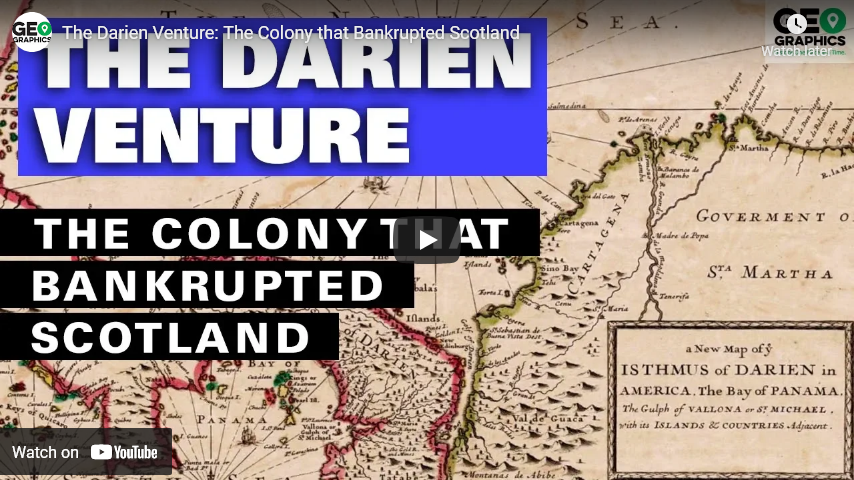
The Darien Venture: The Colony that Bankrupted Scotland
Geographics
Published 14 Nov 2019If a Nation’s wealth and power were to be measured in stubbornness, resilience, and inventiveness, rather than GDP, Scotland would be a top-5 superpower. The people that brought to you televisions, refrigerators, penicillin, and gin & tonic have gone through many a rough patch throughout their history. Very often, hard times were related to their rocky relationship with their Southern neighbours, the English.
Credits:
Host – Simon Whistler
Author – Arnaldo Teodorani
Producer – Jennifer Da Silva
Executive Producer – Shell HarrisBusiness inquiries to admin@toptenz.net
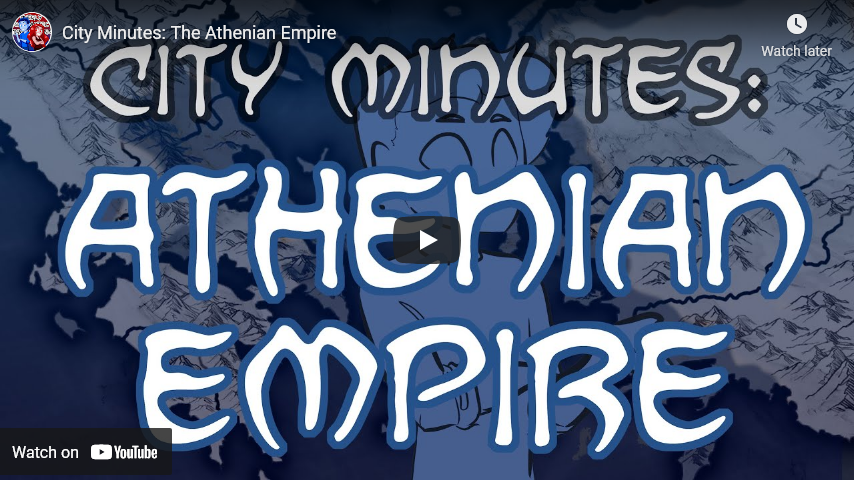
City Minutes: The Athenian Empire
Overly Sarcastic Productions
Published 25 Jun 2021Deja Vu? Only slightly! I’m re-imaging City Minutes, and this time the plan is to *Actually Make It Good*! With MULTIPLE CITIES per episode, and HORIZONTAL VIDEO!
I heard your feedback on the first run of the shorts loud and clear — City Minutes Good, Shorts Bad — so this will be the format going forward: networks of cities, with each getting a minute of spotlight.
We’re starting where I always start, in ancient Athens (I wanted to give you the proper version of the pilot), but we’ve got tons of other City Minutes planned!
SOURCES & Further Reading: Thucydides History of the Peloponnesian War, World History Encyclopedia (https://www.worldhistory.org/Athens): “Athens”, “Piraeus”, “Sounion”, “Delos”, “Corcyra”, “The Delian League” parts 3 & 4, and my degree in Classical Studies
Cities by timestamp:
00:00 — Athens
1:00 — Piraeus
2:01 — Sounion
3:03 — Delos
4:05 — Mytilene
5:03 — Korkyra
6:03 — ConclusionOur content is intended for teenage audiences and up.
PATREON: https://www.Patreon.com/OSP
PODCAST: https://overlysarcasticpodcast.transi…
DISCORD: https://discord.gg/osp
MERCH LINKS: http://rdbl.co/osp
OUR WEBSITE: https://www.OverlySarcasticProductions.com
Find us on Twitter https://www.Twitter.com/OSPYouTube
Find us on Reddit https://www.Reddit.com/r/OSP/
From the comments:
Overly Sarcastic Productions
43 minutes ago
Fun linguistic shenanigans: The island of Korkyra (commonly spelled Corcyra when referring to the ancient city) is known today as both Kerkyra and Corfu. The name Corfu comes from an Italianized version of the Byzantine name Korufo.I use the pronunciation of “Korkyra” with an O because it reflects the more common version of the name as listed in ancient accounts — adherence to the original ancient version is also why I’m using Ks in place of any Latinized Cs.
Essentially: I’m spelling everything the ancient way, but using modern Greek phonetics to sound out those words. It’s an uncommon way to go about, but it feels like the right balance of ancient authenticity and modern linguistic continuity.
-B
QotD: Columbus Day
But when Columbus landed on the Caribbean Island of San Salvador in the Bahamas, he set off a wave of exploration and colonization which the previous discoveries had not. The Viking and Chinese settlements did not last, but the post-Columbian ones did. And that is an incredibly significant historical event, no matter how you view history.
In the 1970s it became popular on the left to consider Columbus a monster, a villain who gave the innocent and peaceful natives diseases, enslaved them, wiped out their culture, and destroyed all that was good. This theory teaches that the American natives were all good and peaceful and wonderful and just and true and righteous. They all ate free trade non-GMO gluten free food and were perfectly multicultural and non-judgmental, free of war and with perfect gender equality. Columbus, an evil white European showed up and ruined it all. In short, Columbus he infected the Eden-like paradise of the Americas with his Euro-masculinity.
And the origin of this theory is that of the Noble Savage. There were people living outside the evil corrupting influence of White European Males, and Columbus found them and ruined everything. That’s why when you hear someone talking about this, they never mention the nearly-constant wars, cannibalism, human sacrifice, rape, pillaging, genocide, disease, poverty, and incredible lack of technical and scientific, artistic, and literary knowledge of the native peoples of America.
Columbus was a man of his time, and a particularly greedy one at that. He ripped off his own people, acting as the King’s supreme representative and authority in the Americas (which at the time was not known to be as vast as it is). He took credit for what others did, he took over what they developed, he took the riches they found, and so on. And yes, he and his men enslaved the local natives, and because of their culture of “free love” spread European venereal diseases among the natives they were not exposed to before. Entire tribes were wiped out by the infections they had no resistances to.
Of course, the natives spread disease among the Europeans they hadn’t been exposed to, either, such as Typhus and Syphilis, and the natives were murderous and killed Europeans but those are details that modern revisionist historians either ignore, gloss over, or present as a rough sort of justice: they had it coming for daring to set foot in the Eden of the Americas.
Objectively, neither side was particularly admirable, as one would expect if you understand innate and original sin. If what’s bad comes from within us rather than outside influences, then its spread evenly throughout all humanity without regard to creed, culture, race, or location. The natives were bad because people are bad. The Spaniards and Columbus (who was Italian) was bad, because people are bad.
Christopher Taylor, “Eden Ruined By Italian”, Word Around the Net, 2018-10-09.
October 10, 2021
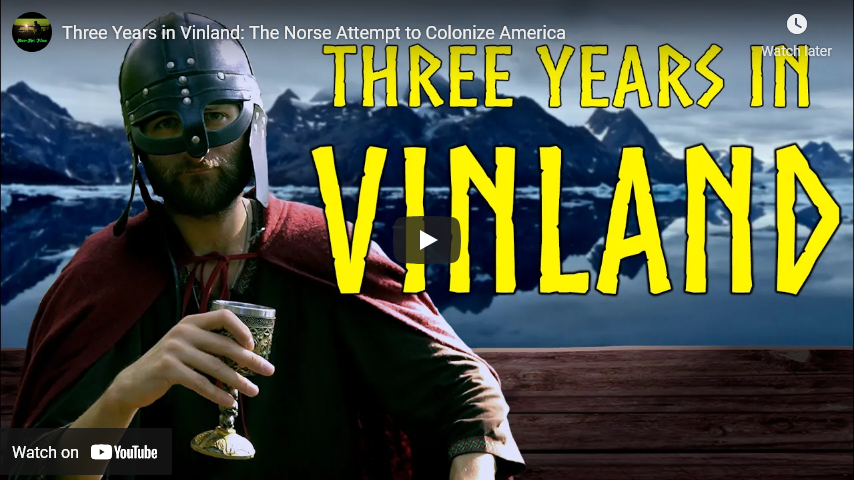
Three Years in Vinland: The Norse Attempt to Colonize America
Atun-Shei Films
Published 9 Oct 2021Happy Leif Erikson Day! Some time after Thorvald Erikson’s disastrous voyage to the mysterious lands west of Greenland, a wealthy Icelander named Thorfinn Karlsefni financed and led an expedition of his own, with the goal of establishing a permanent Norse settlement in Vinland. Karlsefni and his crew would spend three summers in the New World, where they would have to deal with internal division, hostile Native Americans, and (according to some) the wrath of demonic mythological creatures.
Support Atun-Shei Films on Patreon ► https://www.patreon.com/atunsheifilms
Leave a Tip via Paypal ► https://www.paypal.me/atunsheifilms
Buy Merch ► https://teespring.com/stores/atun-she…
#LeifErikson #Vinland #History
Original Music by Dillon DeRosa ► http://dillonderosa.com/
Reddit ► https://www.reddit.com/r/atunsheifilms
Twitter ► https://twitter.com/atun_shei~REFERENCES~
[1] Magnus Magnusson & Hermann Pálsson. The Vinland Sagas: The Norse Discovery of America (1965). Penguin Books, Page 7-43
[2] Birgitta Wallace. “Karlsefni” (2006). The Canadian Encyclopedia [https://www.thecanadianencyclopedia.c..].
[3] Lorraine Boissonault. “L’Anse Aux Meadows and the Viking Discovery of North America” (2005). JSTOR Daily https://daily.jstor.org/anse-aux-mead…
Stalingrad Thunderdome: Paulus vs. Chuikov! – WW2 – 163 – October 9, 1942
World War Two
Published 9 Oct 2021Things are looking pretty grim for Vassily Chuikov’s 62nd Army in Stalingrad this week, as the German 6th Army launches its biggest series of attacks so far. The Axis are unable to get anywhere in the Caucasus, though, and the American Marines win a local victory over the Japanese on Guadalcanal, but everyone’s thoughts there are on reinforcing and more reinforcing.
(more…)
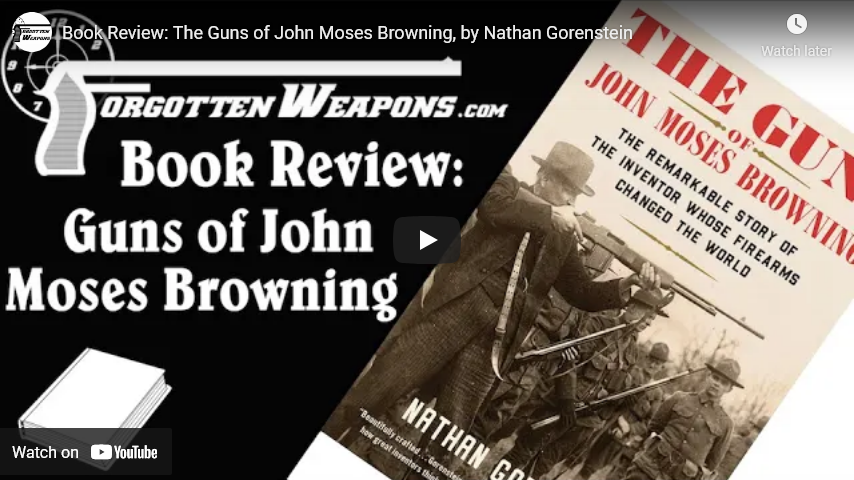
Book Review: The Guns of John Moses Browning, by Nathan Gorenstein
Forgotten Weapons
Published 24 Jun 2021http://www.patreon.com/ForgottenWeapons
https://www.floatplane.com/channel/Fo…
Cool Forgotten Weapons merch! http://shop.forgottenweapons.com
John Moses Browning is, without argument, the greatest firearms designer in history. While we have had many brilliant designers who had their names forever connected to guns (Maxim, Luger, Kalashnikov, …), Browning invented whole *categories* of firearms. Gorenstein’s new book The Guns of John Moses Browning is a welcome biography of the man, giving great insight into Browning’s life and work. The book is well researched, well written, and thoroughly engaging. It is also worth noting that Gorenstein is himself a competitive shooter, and understands the world that Browning operated in.
I think my back-cover blurb for the book (for which I received no compensation; full disclosure) sums it up well:
Following Browning from his birth in rural Utah to his death in urban Belgium, we see how a changing world shaped his inventions and how, in turn, his inventions shaped a changing world.
Browning began in the last years of the Wild West inventing lever action rifles, then became a major part of the blossoming of the automatic pistol, then invented the semiauto shotgun before designing the modern machine guns that become iconic to the United States’ involvement in two world wars. It is a tremendous story, and Gorenstein’s book lays it all out for the reader.
Available from Amazon here:
https://amzn.to/355eMxeContact:
Forgotten Weapons
6281 N. Oracle 36270
Tucson, AZ 85740
October 9, 2021
The USSR: A Conspiracy Disguised as a Country – WW2 – Spies & Ties 09
World War Two
Published 8 Oct 2021The Soviet Union is built on distrust and paranoia, giving birth to a system of intelligence and a huge spy network ran by agencies such as the GRU and NKVD. But what good is all that information if you don’t believe it?
(more…)


