Quotulatiousness

August 1, 2021

Not a Step Back! – Wehrmacht Closes in on Stalingrad – WW2 – 153 – July 31, 1942

World War Two
Published 31 Jul 2021

Operation Edelweiss opens with a blast, and as the Wehrmacht closes in on Stalingrad, Stalin issues that famous order. There aren’t just big actions in the East, the Japanese have landed in New Guinea, the Allies try one more offensive at El Alamein, and the Americans have locked in on Guadalcanal.
(more…)

Christopher Hitchens on George Orwell

DailyHitchens
Published 22 Jan 2010

Aug 7, 2009. Christopher Hitchens talks with EconTalk host Russ Roberts about George Orwell. Drawing on his book Why Orwell Matters, Hitchens talks about Orwell’s opposition to imperialism, fascism, and Stalinism, his moral courage, and his devotion to language. Along the way, Hitchens makes the case for why Orwell matters. For more videos, updates and info on Christopher Hitchens, please visit http://www.dailyhitchens.com

Crown Colony class – Guide 144

Filed under: Britain, History, Military, Weapons, WW2 — Tags: , , , — Nicholas @ 02:00

Drachinifel
Published 28 Sep 2019

The Crown Colony class cruisers of the Royal Navy, and many others, are today’s subject.

Want to support the channel? – https://www.patreon.com/Drachinifel​

Want a shirt/mug/hoodie – https://shop.spreadshirt.com/drachini…​

Want a medal? – https://www.etsy.com/uk/shop/Drachinifel​

Want to talk about ships? https://discord.gg/TYu88mt

Want to get some books? www.amazon.co.uk/shop/drachinifel

Drydock Episodes in podcast format – https://soundcloud.com/user-21912004

QotD: Rudolf Gaida’s convoluted military career

Filed under: Europe, History, Military, Quotations, Russia, WW1, WW2 — Tags: , , , , , — Nicholas @ 01:00

Rudolf Gaida, 1882-1948. Born in Montenegro (then a part of Austria-Hungary). Trained as a pharmacist in Bohemia. Conscripted into the army medical corps, July 1914. Deserted to a Montenegrin regiment, pretending to be an officer, 1915. Captured by the Russians, 1917. In May 1918, with the rank of Captain, he served in the Czechoslovak Corps, and favoured fighting the Bolsheviks. Colonel commanding the Czech forces in Central Siberia, July-October 1918. Supported Admiral Kolchak’s seizure of power at Omsk, November 1918. Promoted Major-General by Kolchak, November 1918. Commanded Kolchak’s Northern Army, June-July 1919, with the rank of Lieutenant-General. Dismissed by Kolchak, July 1919. Attempted unsuccessfully to seize power at Vladivostok, November 1919. Returned to Czechoslovakia, 1920. Chief of the Czech General Staff, 1926. Cashiered for trying to take part in a fascist putsch. Imprisoned for “Banditry”, 1931. Headed the Czech Fascist organization, 1939-45. Arrested as a collaborator, 1945, and subsequently shot.

Footnote in Martin Gilbert’s World in Torment: Winston S. Churchill 1917-1922, 1975.

July 31, 2021

Rowan Atkinson Live – With friends like these AKA the wedding from hell

Filed under: Britain, Humour — Tags: , — Nicholas @ 04:00

Rowan Atkinson Live
Published 24 Sep 2010

Also know as the wedding from hell, Rowan plays 3 very different but horribly hilarious characters including a priest who talks about fellatio …

English sea-borne trade in the early 17th century

Filed under: Africa, Americas, Asia, Books, Britain, Europe, History — Tags: , , , , , , — Nicholas @ 03:00

In the latest Age of Invention newsletter, Anton Howes reviews a book on English trade … a very old book:

I’ve become engrossed this week by a book written in 1638 by the merchant Lewes Roberts — The Marchant’s Mappe of Commerce. It is, in effect, a guide to how to be a merchant, and an extremely comprehensive one too. For every trading centre he could gather information about, Roberts noted the coins that were current, their exchange rates, and the precise weights and measures in use. He set down the various customs duties, down even to the precise bribes you’d be expected to pay to various officials. In Smyrna, for example, Roberts recommended you offer the local qadi some cloth and coney-skins for a vest, the qadi‘s servant some English-made cloth, and their janissary guard a few gold coins.

Unusually for so many books of the period, Roberts was also careful to be accurate. He often noted whether his information came from personal experience, giving the dates of his time in a place, or whether it came second-hand. When he was unsure of details, he recommended consulting with better experts. And myths — like the rumour he heard that the Prophet Muhammad’s remains at Mecca were in an iron casket suspended from the ceiling by a gigantic diamond-like magnet called an adamant — were thoroughly busted. Given his accuracy and care, it’s no wonder that the book, in various revised editions, was in print for almost sixty years after his death. (He died just three years after publication.)

What’s most interesting about it to me, however, is Roberts’s single-minded view of English commerce. The entire world is viewed through the lens of opportunities for trade, taking note of the commodities and manufactures of every region, as well as their principal ports and emporia. A place’s antiquarian or religious tourist sites, which generally make up the bulk of so many other geographical works, are given (mercifully) short shrift. Indeed, because the book was not written with an international audience in mind, it also passes over many trades with which the English were not involved, or from which they were even excluded. It thus provides a remarkably detailed snapshot of what exactly English merchants were interested in and up to on the eve of civil war; and right at the tail end of a century of unprecedented growth in London’s population, itself seemingly led by its expansion of English commerce.

So, what did English merchants consider important? It’s especially illuminating about England’s trade in the Atlantic — or rather, the lack thereof.

Roberts spends remarkably little time on the Americas, which he refers to as the continents of Mexicana (North America) and Peruana (South America). Most of his mentions of English involvement are about which privateers had once raided which Spanish-owned colonies, and he gives especial attention to the seasonal fishing for cod off the coast of Newfoundland — a major export trade to the Mediterranean, and a source of employment to many English West Country farmers, who he refers to as being like otters for spending half their lives on land and the other half on sea.

But as for the recently-established English colonies on the mainland, which Roberts refers to collectively as Virginia, he writes barely a few sentences. Although he reproduces some of the propaganda about what is to be found there — no mention yet of tobacco by the way, with the list consisting largely of foodstuffs, forest products, tar, pitch, and a few ores — the entirety of New England is summarised only as a place “said to be” resorted to by religious dissenters. The island colonies on Barbados and Bermuda were also either too small or too recently established to merit much attention. To the worldly London merchant then, the New World was still peripheral — barely an afterthought, with the two continents meriting a mere 11 pages, versus Africa’s 45, Asia’s 108, and Europe’s 262.

The reason for this was that the English were excluded from trading directly with the New World by the Spanish. It was, as Roberts jealously put it, “shut up from the eyes of all strangers”. The Spanish were not only profiting from the continent’s mines of gold and silver, but he also complained of their monopoly over the export of European manufactures to its colonies there. It’s a striking foreshadowing of what was, in the eighteenth century, to become one of the most important features of the Atlantic economy — the market that the growing colonies would one day provide for British goods. Indeed, Roberts’s most common condemnation of the Spanish was for having killed so many natives, thereby extinguishing the major market that had already been there: “had not the sword of these bloodsuckers ended so many millions of lives in so short a time, trade might have seen a larger harvest”. The genocide had, in Roberts’s view, not only been horrific, but impoverished Europe too (he was similarly upset that the Spanish had slaughtered so many of the natives of the Bahamas, known for the “matchless beauty of their women”).

July 30, 2021

The 100 Deadliest Days of the Holocaust Begin… – WAH 039 – July 1942, Pt .2

Filed under: Europe, Germany, History, Military, WW2 — Tags: , , , — Nicholas @ 06:00

World War Two
Published 29 Jul 2021

The extermination camps of Operation Reinhard are ready to start killing hundreds of thousands of inhabitants of the Warsaw Ghetto, starting the deadliest 100 days of the Holocaust.
(more…)

The British government reaches deep into the bag of “nudge” tricks yet again

Britain’s public health boffins have got the government agitated enough to try major incentives to encourage British shoppers to buy healthier, lower-calorie foods. Tim Worstall explains that, because those shoppers are human beings, this suite of incentives won’t do at all what Nanny expects them to do:

Now consider how it has to work. You go shopping, you present your DimbleCard and gain points for the healthiness of that shopping basket. Lettuce and carrots galore, super, free ticket to London on the choo choo.

So, where are the chocco biccies? If you buy them when presenting your card then no choo choo for you. What happens?

The lettuce and the carrots are bought on the card, the chocco biccies are not. Everyone simply does two transactions, with DimbleCard and sans. Lots of free choo choo and no change, whatsoever, in diet.

Yes, of course people will do this. For that’s what people do. Survey the landscape of incentives in front of them then maximise their utility, the outcome, in the face of them. It’s a restricted rationality, restricted by knowledge, but it is there. Everyone will fiddle the system because that’s what it is to be human. Collecting the fire from the lightning strike is fiddling the universe, that’s just what we do.

This being why so many clever schemes to encourage or deter this or that just don’t work. This being why those detailed plans for men, if not mice, gang aft into idiocy. Because we out here, hom sap, will play whatever system there is to our benefit.

No, this will not work out like supermarket loyalty cards. Yes, it’s true, most of us do use them. But the incentive is for us to do so. The more we do use them then the more discounts we gain, the better off we are, even at the cost of that data. How does this new government one work? The less we buy of certain things the better off we are. So, less of those things will be bought using the cards.

It is not possible to insist that people must use the card to buy things. Well, not unless we’re about to descend into the dystopia desired by Caroline Lucas it’s not. There might be a card reader at the point of purchase but the supermarkets will not demand that a sale can only happen when a card is read.

Therefore there will be those sales which gain points which make prizes. There will also be those DimbleCardless sales which do not gain points, or even demerits, and are done without their being registered in the system.

Imperial Roman army organization & structure

Filed under: Europe, History, Military — Tags: , , — Nicholas @ 02:00

Military History Visualized
Published 16 Jan 2016

Patreon: https://www.patreon.com/join/mhv

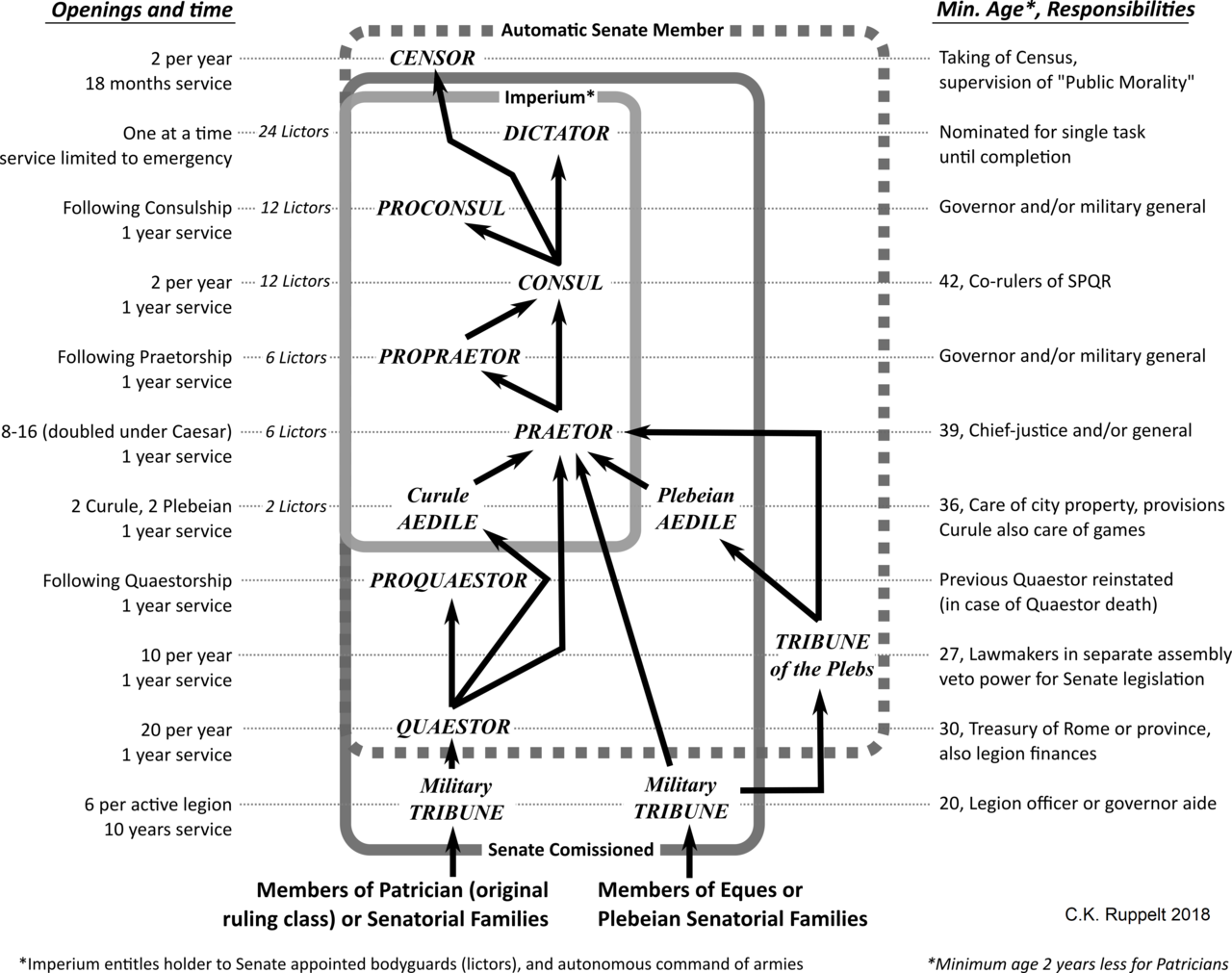
The Imperial Roman Army consisted of the provincial armies, the garrison in Rome and the Roman Navy.

The brunt of the forces was in the Provincial armies that were made up by the legions and their auxiliaries in total around 240k men. The Garrison in Rome was about 15k men, although few in numbers these units were the most powerful in political terms. Finally, the Navy consisted of about 45k men.

*Sources*
Le Bohec, Yann: The Imperial Roman Army

Webster, Graham: The Roman Imperial Army of the First and Second Centuries A.D

Nemeth, Eduard; Fodorean, Florin: Römische Militärgeschichte

Fields, Nic: The Roman Army of the Principate 27 BC – AD 117

Culham, Phyllis: “Imperial Rome at War”. In: The Oxford Handbook of Warfare in the Classical World

https://en.wikipedia.org/wiki/Imperia…

https://en.wikipedia.org/wiki/Praetor…

July 29, 2021

In The Shadow of Napoleon – The 2nd French Empire Before 1870 I GLORY & DEFEAT

realtimehistory
Published 12 Jul 2021

Support Glory & Defeat: https://realtimehistory.net/gloryandd…

After Napoleon I had conquered and then lost Europe, France went through multiple revolutions. In 1851, Napoleon’s nephew and French president Louis-Napoléon Bonaparte took control and in 1852 crowned himself Emperor Napoleon III. The new French Empire wanted to regain the glory of Napoleon’s uncle and together with his wife Empress Eugenie he ruled a state known for lavish balls and spending.

» OUR PODCAST
https://realtimehistory.net/podcast – interviews with historians and background info for the show.

» LITERATURE
Arand, Tobias: 1870/71. Die Geschichte des Deutsch-Französischen Kriegs erzählt in Einzelschicksalen. Hamburg 2018

Arand, Tobias/Bunnenberg, Christian (Hrsg.): Karl Klein. Fröschweiler Chronik. Kriegs- und Friedensbilder aus dem Krieg 1870. Kommentierte Edition. Hamburg 2021

Gouttman, Alain. La grande défaite de 1870-1871. Paris 2015

Herre, Franz: Eugénie. Kaiserin der Franzosen. Stuttgart, München 2000

Rieder, Heinz: Napoleon III. Abenteurer und Imperator. München 1998

» SOURCES
Bonaparte, Prince Napoléon-Louis: Des Idées Napoléoniennes. London 1839

Marx, Karl: Der achtzehnte Brumaire des Louis Napoleon. Hamburg 1869

Maupassant, Guy de: Bel-Ami. Paris 1901

N.N. (Hrsg): Fontane, Theodor. Aus den Tagen der Okkupation. Eine Osterreise durch Nordfrankreich und Elsaß-Lothingen 1871. Berlin (Ost) 1984

» OUR STORE
Website: https://realtimehistory.net

»CREDITS
Presented by: Jesse Alexander
Written by: Cathérine Pfauth, Dr. Tobias Arand, Jesse Alexander
Director: Toni Steller & Florian Wittig
Director of Photography: Toni Steller
Sound: Above Zero
Editing: Toni Steller
Motion Design: Philipp Appelt
Mixing, Mastering & Sound Design: http://above-zero.com
Maps: Battlefield Design
Research by: Cathérine Pfauth, Prof. Dr. Tobias Arand
Fact checking: Cathérine Pfauth, Prof. Dr. Tobias Arand

Channel Design: Battlefield Design

Contains licensed material by getty images
All rights reserved – Real Time History GmbH 2021

Buster Keaton, British Imperialism, and the Era of Spectacle | B2W: ZEITGEIST! I E.23 Spring 1924

Filed under: Britain, History, Media, USA — Tags: , , , , , , — Nicholas @ 04:00

TimeGhost History
Published 28 Jul 2021

There’s no business like show business and in the spring of 1924, you can see why. Buster Keaton and Hollywood as a whole are producing some iconic films, the British Empire is putting on a massive exhibition, and there is even talk of a death ray.
(more…)

Speakers’ Corner in London’s Hyde Park, the Mecca of free speech

Filed under: Britain, History, Liberty — Tags: , , , — Nicholas @ 03:00

In Tuesday’s NP Platformed, Colby Cosh pays tribute to one of the holy places of free speech, Speakers’ Corner:

“Speakers’ Corner – Hyde Park – London” by Manolo Blanco is licensed under CC BY-NC-SA 2.0

We detect a slightly surprising absence of international media commotion over a dreadful event that happened Sunday: a woman giving a critique of Islam at Speakers’ Corner in London’s Hyde Park was slashed in the face by a fanatic. The victim, 39-year-old Hatun Tash, is said to be a familiar figure at the Mecca of free speech. And, yes, NP Platformed uses this geographic metaphor intentionally.

Probably every country has sites consecrated to its distinctive political ideals. Speakers’ Corner is different: it represents the ideal of absolute free speech for, and to, the entire world. A non-American visiting the Lincoln Memorial is there to honour the memory of a great man; if he visits the Washington Monument, it’s probably for the purpose of making phallic-themed jokes. But for 150 years, non-Englishmen visiting Hyde Park, from Lenin to Bishop Tutu, have been awestruck by the freedom that radical speakers enjoy at the original among the world’s many Speakers’ Corners.

Few Londoners pay it much mind anymore — not since the 19th century, when the nigh-inviolable freedom of speech enjoyed on the corner actually served to endanger governments and give impetus to liberal social change. Since about 1900, it has mostly been a place, almost a rehearsal space, for the tireless cranks of any given moment: dietary Savonarolas, village atheists, suffragettes, Trots and syndicalists and Maoists. They have been joined by generations of Muslims preaching various Islamic doctrines or far-out varieties of the faith.

Foreigners, however, have often been astonished to discover that Speakers’ Corner mostly lives up to its ideals, or that any place could. The British state really lets those people say those things in public without locking them up. The park has seen plenty of affrays in its time, but fights have become rare as the ritual purpose of the space has become universally understood.

Rare, too, are the United Kingdom’s infringements on its inviolability. After the Bloody Sunday shootings of 1972, three Irish republicans were arrested under the Treason Felony Act of 1848 for having proposed war against Britain in Hyde Park. They were found guilty of lesser charges, sentenced to time served and sent back across the Irish Sea, but Irish nationalists rightly dined out on the incident for many years, and the criminal offence of “treason felony” has never since been heard of in any English courtroom.

MAT 49: Iconic SMG of Algeria and Indochina

Filed under: France, History, Military, Weapons — Tags: , , , , — Nicholas @ 02:00

Forgotten Weapons
Published 16 Jan 2018

http://www.patreon.com/ForgottenWeapons​

Cool Forgotten Weapons merchandise! http://shop.bbtv.com/collections/forg…​

The MAT-49 was developed by France after World War Two to satisfy the need for a more modern submachine gun to replace the MAS-38. The military had come around to standardizing on the 9x19mm cartridge for its pistols and subguns, and the 7.65mm MAS-38 was not feasible to convert. All three state arsenals and the Hotchkiss company submitted designs, and the Tulle arsenal won out with a gun that borrows substantially from the American M3 “Grease Gun”.

About 700,000 MAT-49s were produced between 1949 and 1979, when it (along with the MAS 49/56 rifle) was replaced by the FAMAS bullpup rifle. During that time it saw substantial combat in France’s colonial wars, notable Algeria and Indochina. Despite being a relatively heavy weapon, it came to be well liked by all who used it for its durability and reliability.

Many thanks to the anonymous collector who let me take a look at this piece and bring you a video on it!

If you enjoy Forgotten Weapons, check out its sister channel, InRangeTV! http://www.youtube.com/InRangeTVShow

QotD: An opera called Margaret

Filed under: Americas, Britain, History, Media, Quotations — Tags: , , , — Nicholas @ 01:00

Margaret Thatcher had a great deal of time for Andrew Lloyd Webber. In August 1978, while she was still Leader of the Opposition, her speechwriter Ronnie Millar took her to see Evita. “It was a strangely wondrous evening yesterday leaving so much to think about,” she wrote to Millar the next day. “I still find myself rather disturbed by it. But if they [the Peronists] can do that without any ideals, then if we apply the same perfection and creativeness to our message, we should provide quite good historic material for an opera called Margaret in thirty years’ time!”

Dominic Sandbrook, The Great British Dream Factory, 2015.

July 28, 2021

How Hitler Created the World’s Worst Traffic Jam – WW2 – 152B – July 27, 1942

Filed under: Germany, History, Military, Russia, WW2 — Tags: , , , , , — Nicholas @ 04:00

World War Two
Published 27 Jul 2021

“I said DAMN, this traffic jam … How I hate to be late, hurts my motor to go so slow. Time I get home my supper be cold. Damn, this traffic jam.” (James Taylor, the Eastern Front, 1942)
(more…)

« Newer PostsOlder Posts »

Powered by WordPress