
The modern pre-battle general’s speech is quite old. We can actually be very specific: it originates in a specific work: Thucydides’ Histories [of the Peloponnesian War] (written c. 400 B.C.). Prior to this, looking at Homer or Herodotus, commanders give very brief remarks to their troops before a fight, but the fully developed form of the speech, often presented in pairs (one for each army) contrasting the two sides, is all Thucydides. It’s fairly clear that a few of Thucydides’ speeches seem to have gone on to define the standard form and ancient authors after Thucydides functionally mix and match their components (we’ll talk about them in a moment). This is not a particularly creative genre.
Now, there is tremendous debate as to if these speeches were ever delivered and if so, how they were delivered (see the bibliography note below; none of this is really original to me). For my part, while I think we need to be alive to the fact that what we see in our textual sources are dressed up literary compressions of the tradition of the pre-battle speech, I suspect that, particularly by the Roman period, yes, such speeches were a part of the standard practice of generalship. Onasander, writing about the duties of a general in the first century CE, tells us as much, writing, “For if a general is drawing up his men before battle, the encouragement of his words makes them despise the danger and covet the honour; and a trumpet-call resounding in the ears does not so effectively awaken the soul to the conflict of battle as a speech that urges to strenuous valour rouses the martial spirit to confront danger.” Onasander is a philosopher, not a military man, but his work became a standard handbook for military leaders in Antiquity; one assumes he is not entirely baseless.
And of course, we have the body of literature that records these speeches. They must be, in many cases, invented or polished versions; in many cases the author would have no way of knowing the real worlds actually said. And many of them are quite obviously too long and complex for the situations into which they are placed. And yet I think they probably do represent some of what was often said; in many cases there are good indications that they may reflect the general sentiments expressed at a given point. Crucially, pre-battle speeches, alone among the standard kinds of rhetoric, refuse to follow the standard formulas of Greek and Roman rhetoric. There is generally no exordium (meaning introduction; except if there is an apology for the lack of one, in the form of, “I have no need to tell you …”) or narratio (the narrated account), no clear divisio (the division of the argument, an outline in speech form) and so on. Greek and Roman oratory was, by the first century or so, quite well developed and relatively formulaic, even rigid, in structure. The temptation to adapt these speeches, when committing them to a written history, to the forms of every other kind of oratory must have been intense, and yet they remain clearly distinct. It is certainly not because the genre of the battle speech was more interesting in a literary sense than other forms of rhetoric, because oh my it wasn’t. The most logical explanation to me has always been that they continue to remain distinct because however artificial the versions of battle speeches we get in literature are, they are tethered to the “real thing” in fundamental ways.
Finally, the mere existence of the genre. As I’ve noted elsewhere, we want to keep in mind that Greek and Roman literature were produced in extremely militarized societies, especially during the Roman Republic. And unlike many modern societies, where military service is more common among poorer citizens, in these societies military service was the pride of the elite, meaning that the literate were more likely both to know what a battle actually looked like and to have their expectations shaped by war literature than the commons. And that second point is forceful; even if battle speeches were not standard before Thucydides, it is hard to see how generals in the centuries after him could resist giving them once they became a standard trope of “what good generals do.”
So did generals give speeches? Yes, probably. Among other reasons we can be sure is that our sources criticize generals who fail to give speeches. Did they give these speeches? No, probably not; Plutarch says as much (Mor. 803b) though I will caution that Plutarch is not always the best when it comes to the reality of the battlefield (unlike many other ancient authors, Plutarch was a life-long civilian in a decidedly demilitarized province – Achaea – who also often wrote at great chronological distance from his subjects; his sense of military matters is generally weak compared to Thucydides, Polybius or Caesar, for instance). Probably the actual speeches were a bit more roughly cut and more compartmentalized; a set of quick remarks that might be delivered to one unit after another as the general rode along the line before a battle (e.g. Thuc. 4.96.1). There are also all sorts of technical considerations: how do you give a speech to so many people, and so on (and before you all rush to the comments to give me an explanation of how you think it was done, please read the works cited below, I promise you someone has thought of it, noted every time it is mentioned or implied in the sources and tested its feasibility already; exhaustive does not begin to describe the scholarship on oratory and crowd size), which we’ll never have perfect answers for. But they did give them and they did seem to think they were important.
Why does that matter for us? Because those very same classical texts formed the foundation for officer training and culture in much of Europe until relatively recently. Learning to read Greek and Latin by marinating in these specific texts was a standard part of schooling and intellectual development for elite men in early modern and modern Europe (and the United States) through the Second World War. Napoleon famously advised his officers to study Caesar, Hannibal and Alexander the Great (along with Frederick II and the best general you’ve never heard of, Gustavus Adolphus of Sweden). Reading the classical accounts of these battles (or, in some cases, modern adaptations of them) was a standard part of elite schooling as well as officer training. Any student that did so was bound to run into these speeches, their formulas quite different from other forms of rhetoric but no less rigid (borrowing from a handful of exemplars in Thucydides) and imbibe the view of generalship they contained. Consequently, later European commanders tended for quite some time to replicate these tropes.
(Bibliography notes: There is a ton written on ancient battle speeches, nearly all of it in journal articles that are difficult to acquire for the general public, and much of it not in English. I think the best possible place to begin (in English) is J.E. Lendon, “Battle Description in the Ancient Historians Part II: Speeches, Results and Sea Battles” Greece & Rome 64.1 (2017). The other standard article on the topic is E. Anson “The General’s Pre-Battle Exohortation in Graeco-Roman Warfare” Greece & Rome 57.2 (2010). In terms of structure, note J.C. Iglesias Zoida, “The Battle Exhortation in Ancient Rhetoric” Rhetorica 25 (2007). For those with wider language skills, those articles can point you to the non-English scholarship. They can also serve as compendia of nearly all of the ancient battle speeches; there is little substitute for simply reading a bunch of them on your own.)
Bret Devereaux, “Collections: The Battle of Helm’s Deep, Part VII: Hanging by a Thread”, A Collection of Unmitigated Pedantry, 2020-06-12.
April 6, 2023
QotD: The general’s pre-battle speech to the army
April 5, 2023
PTRS 41: The Soviet Semiauto Antitank Rifle (aka an SKS on Steroids)
Forgotten Weapons
Published 14 Dec 2022Prior to World War Two, the Soviet Union had a rather lackluster interest in antitank rifles — a series of guns were developed, but slowly and without all that much success. The Barbarossa invasion gave a very immediate need for just this sort of weapon, however, to give Soviet infantry units an organic anti-armor capability. Two star Soviet designers were tasked with designing AT rifles, Degtyarev and Simonov. The cartridge they were to use was the new 14.5x114mm, a high-velocity monster using a tungsten carbine cored projectile.
After a shockingly fast development period, the guns from both design bureaus were accepted. The Degtyarev became the PTRD-41, a single-shot auto-ejecting design that was extremely cheap and fast to produce. The Simonov design became the PTRS-41, a 5-shot semiauto offering more firepower but also taking longer to produce. The Degtyarev entered service first, with the first substantial deliveries of PTRS rifles arriving in 1942.
Both designs would serve through the war, with hundreds of thousands being made. Many were put into storage in 1945, and they are still seen today in Ukraine periodically. The PTRS would go on to be the basis for Simonov’s 7.62x39mm infantry rifle, adopted as the SKS.
(more…)
QotD: Harry Flashman’s adventures were not intended as “covert anticolonialism”
In their insistence on judging the value of a work of art principally in terms of its moral qualities, the publishers of today are heirs to a tradition of puritanism going back to Plato. But there has long been an anti-puritanical argument available too, the most notorious of them being the one articulated by Oscar Wilde: that to assess art in moral terms is to commit some sort of category mistake. “There is no such thing as a moral or an immoral book. Books are well-written, or badly written. That is all.” But that argument was never very persuasive by itself, and contains a large non sequitur. Why should that be “all”? Why can’t it be that part of what we’re saying in calling a book well-written is that it is morally exemplary? Surely it is those who call on us to leave our moral values at the door who have some explaining to do.
George MacDonald Fraser himself sometimes seemed to take Wilde’s view of the matter. He zealously repudiated, in his non-fiction, all attempts to defend his fiction as covertly anti-colonial, taking great pleasure in mocking critics who “hailed it as a scathing attack on British imperialism”. Was he “taking revenge on the 19th century on behalf of the 20th”? “Waging war on Victorian hypocrisy”? Were the books, as one religious journal was supposed to have claimed, “the work of a sensitive moralist” highly relevant to “the study of ethics”? No, he said, The Flashman Papers were to be taken “at face value, as an adventure story dressed up as the memoirs of an unrepentant old cad”.
Is Fraser’s avowed amoralism the whole story? In one respect, the Flashman books are certainly amoral: they embody no systematic view that colonialism was wrong, illegitimate, unjust. (Nor, come to it, do they embody the view that it was right, legitimate and just.) As Fraser appears to see it in his fiction, empire was simply the default mode of political life in much of the world. This indeed was the case for much of human history. To be colonised was generally a misfortune for the colonised, but the individual coloniser was neither hero nor villain, just a self-interested actor acting on what he believed to be the necessities of his time and place.
We live in a world where we are constantly exercised by the problem of complicity. We wonder: am I complicit in climate change because I just put on the washing machine? In a sufficiently inclusive sense of the word “complicit”, of course I am: one of countless agents whose everyday actions add a tiny bit more carbon to the atmosphere. But outside an ethics seminar, what I’d tell you is that I was just doing my laundry because the clothes were beginning to stink.
Fraser was a deft enough writer to force his characters to confront the larger, what we today might call “structural” questions, in terms that belong to their own times, not to ours. At a pivotal moment in Flash for Freedom, Flashman is enslaved himself in America. Thrown into a cart with a charismatic slave called Cassy, he gets to hear her relish the irony of his position: “Well, now one of you knows what it feels like … Now you know what a filthy race you belong to.” Is there any hope of escape, he asks her desperately. None, she replies, “there isn’t any hope. Where can you run to, in this vile country? This land of freedom! With slave-catchers everywhere, and dogs, and whipping-houses, and laws that say I’m no better than a beast in a sty!” Flashman has the grace to be silent; what can he say?
Nikhil Krishnan, “Harry Flashman’s imperial morality”, UnHerd, 2022-12-26.
April 4, 2023
When the steam engine itself was an “intangible”
In the latest Age of Invention newsletter, Anton Howes explains why the steam engine patent of James Watt didn’t immediately lead to Watt and his partner Matthew Boulton building a factory to create physical engines:
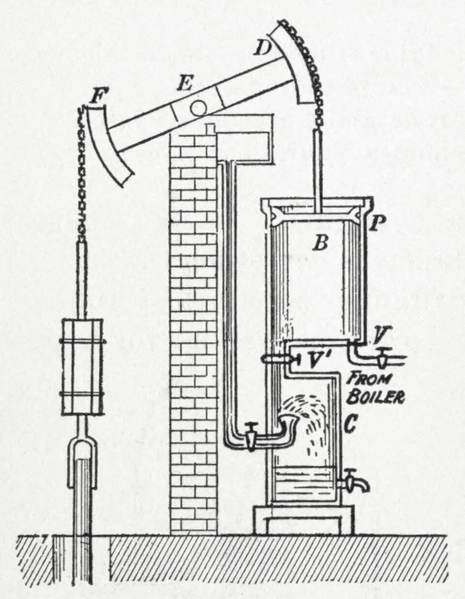
Diagram of a Watt steam engine from Practical physics for secondary schools (1913).
Wikimedia Commons.
… one of the most famous business partnerships of the British Industrial Revolution — that between Matthew Boulton and James Watt from 1775 — was originally almost entirely based on intangibles.
That probably sounds surprising. James Watt — a Scottish scientific instrument-maker, chemist and civil engineer — became most famous for his improvements to the steam engine, an almost archetypal example of physical capital. In the late 1760s he radically improved the fuel efficiency of the older Newcomen engine, and then developed ways to regulate the motions of its piston — traditionally applied only to pumping water — so that it could be suitable for directly driving machinery (I’ll write more on the invention itself soon). His partnership with Matthew Boulton, a Birmingham manufacturer of buttons, candlesticks, metal buckles and the like — then called “toys” — was also based from a large, physical site full of specialised machinery: the Soho Manufactory. On the face of it, these machines and factories all sound very traditionally tangible.
But the Soho Manufactory was largely devoted to Boulton’s other, older, and ongoing businesses, and it was only much later — over twenty years after Boulton and Watt formally became partners — that they established the Soho Foundry to manufacture the improved engines themselves. The establishment of the Soho Foundry heralded James Watt’s effective retirement, with the management of this more tangible concern largely passing to his and Boulton’s sons. And when Watt retired formally, in 1800, this coincided with the full depreciation of the intangible asset upon which he and Boulton had built their business: his patent.
Watt had first patented his improvements to the steam engine in 1769, giving him a 14-year window in which to exploit them without any legal competition. But his financial backer, John Roebuck, who had a two-thirds share in the patent, was bankrupted by his other business interests and struggled to support the engine’s development. Watt thus spent the first few years of his patent monopoly as a consultant on various civil engineering projects — canals, docks, harbours, and town water supplies — in order to make ends meet. The situation gave him little time, capital, or opportunity to exploit his steam engine patent until Roebuck was eventually persuaded to sell his two-thirds share to Matthew Boulton. With just eight years left on the patent, and having already wasted six, Boulton and Watt lobbied Parliament to grant them an extension that would allow them to bring their improvements into full use. In 1775 Watt’s patent was extended by Parliament for a further twenty-five years, to last until 1800. It was upon this unusually extended patent that they then built their unusually and explicitly intangible business.
How was it intangible? As Boulton and Watt put it themselves, “we only sell the licence for erecting our engines, and the purchaser of such licence erects his engine at his own expence”. This was their standard response to potential customers asking how much they would charge for an engine with a piston cylinder of particular dimensions. The answer was, essentially, that they didn’t actually sell physical steam engines at all, so there was no way of estimating a comparable figure. Instead, they sold licences to the improvements on a case-by-case basis — “we make an agreement for each engine distinctly” — by first working out how much fuel a standard, old-style Newcomen engine would require when put to use in that place and context, and then charging only a third of the saving in fuel that Watt’s improvements would provide. “The sum therefore to be paid during the working of any engine is not to be determined by the diameter of the cylinder, but by the quantity of coals saved and by the price of coals at the place where the engine is erected.” They fitted the licensed engines with meters to see how many times they had been used, sending agents to read the meters and collect their royalties every month or year, depending on the location.
This method of charging worked well for refitting existing Newcomen engines with Watt’s improvements — in those cases the savings would be obvious. It also meant that Boulton and Watt incentivised themselves to expand the total market for steam engines. The older Newcomen engines were mainly used for pumping water out of coal mines, where the coal to run them was at its cheapest. It was one of the few places where Newcomen engines were cost-effective. But for Watt and Boulton it was at the places where coals were most expensive, and where their improvements could thus make the largest fuel savings, that they could charge the highest royalties. As Boulton wrote to Watt in 1776, the licensing of an engine for the coal mine of one Sir Archibald Hope “will not be worth your attention as his coals are so very cheap”. It was instead at the copper and tin mines of Cornwall, where coal was often expensive, having to be transported from Wales, that the royalties would be the most profitable. As Watt put it to an old mentor of his in 1778, “our affairs in other parts of England go on very well but no part can or will pay us so well as Cornwall”.
History Summarized: the Ancient Greek Post-Apocalypse
Overly Sarcastic Productions
Published 31 Mar 2023Turns out the “Studio Ghibli Post-Apocalypse” aesthetic has a historical basis in ancient Greek history’s Bronze Age Collapse, long Dark Age, and slow re-emergence into the Polis Age. I don’t know if I’d call the process pleasant, but it sure as hell is a vibe.
GO READ THE ILIAD: https://bookshop.org/p/books/the-ilia… — We enjoy the Fagles translation, as it’s the typical classroom and library standard, but if you want a real treat, try the Alexander Pope edition from the 1700s that’s written entirely in RHYME. THE DAMN THING RHYMES!!!
SOURCES & Further Reading:
“The Age of Heroes” and “Delphi and Olympia” from Ancient Greek Civilization by Jeremy McInerney – “Dark Age and Archaic Greece” from The Foundations of Western Civilization by Thomas F. X. Noble – “Dark Age and Archaic Greece” from The Greek World: A Study of History and Culture by Robert Garland “The Greeks: A Global History” by Roderick Beaton, “The Greeks: An Illustrated History” by Diane Cline, Metropolitan Museum “Geometric Art in Ancient Greece” https://www.metmuseum.org/toah/hd/grg… also have a degree in Classical Studies
(more…)
“We can at least appreciate the irony of an Indian and Pakistani coming to blows over the issue of partitioning Britain”
Ed West on the historical oddity of the three leaders of Eire, Scotland, and the United Kingdom all being of south Asian descent:

Irish Taoiseach Leo Varadkar and British Prime Minister Rishi Sunak
Composite image from extra.ie
There’s a joke going around Irish WhatsApp that goes like this: “An Irishman, Englishman and Scotsman sit down for a historic summit regarding their ancient grievances.” The image shows the Taoiseach Leo Varadkar, British Prime Minister Rishi Sunak and Humza Yousaf, newly elected First Minister of Scotland.
That three men of South Asian ancestry now lead those three nations is something which even ten years ago would have seemed implausible; a generation further back simply bizarre. And that doesn’t take into account Britain’s most senior directly elected politician, London Mayor Sadiq Khan.
What makes it stranger is that Mr Yousaf, of Pakistani origin, and Sunak, of Indian descent – although both via British East Africa – will be engaged in deciding the future of the Union. As one wit put it, “We can at least appreciate the irony of an Indian and Pakistani coming to blows over the issue of partitioning Britain.”
Yet although both Scotland and England are now led by men with roots in the subcontinent, that is where the comparisons between the two countries end. Yousaf might like to mimic American race talking points, but he presides over a country which is overwhelmingly white and will remain so (although we’re still awaiting the latest census results); the southern kingdom is in contrast now very multiracial, and projected to get more so – a process accelerated by the Tory Government.
Britain has undergone a demographic revolution since the Second World War, a transformation into a multicultural society. Out of the ashes of the British Empire the country’s rules ended up creating a new empire at home, one where this time they could be the good guys. Just like the first British Empire, this one might be called Anglo-Indian, with the two leading parties partly aligning along old divisions between Hindu and Muslim. Like the first empire, this new diverse rainbow of nations entails strict new blasphemy codes, even if now dressed up as hate speech.
Yet this great change has hardly affected Scotland. The two countries have diverged along different paths, and this is perhaps one reason why it may prove hard to hold our multicultural empire together, although it’s a cause liberal defenders of Britishness are loath to admit. Where once the countries were brought together by Protestantism, the English language and empire, now the new “good” British Empire drives them apart, while the English language is a global source of division.
Tank Chats Reloaded | Challenger 1 | The Tank Museum
The Tank Museum
Published 16 Dec 2022In the first episode of Tank Chats Reloaded we hear from Major General Patrick Cordingley who both commanded Challenger 1 during the First Gulf War and was involved in its design. Also introducing our new presenter Chris Copson, host of the new Tank Chats Reloaded series — where we’ll be revisiting old favourites from Tank Chats.
(more…)
April 3, 2023
Goodbye Manstein… Hello Model – WW2 – Week 240 – April 1, 1944
World War Two
Published 1 Apr 2023As the Allies prepare to close in on Germany from all fronts, a shake up of the German military leadership can only achieve so much…
(more…)
The poison garden of Alnwick
Tom Scott
Published 29 May 2017Inside the beautiful Alnwick Garden, behind a locked gate, there’s the Poison Garden: it contains only poisonous plants. Trevor Jones, head gardener, was kind enough to give a guided tour!
For more information about visiting the Castle, Garden, and poison garden: https://alnwickgarden.com/
(And yes, it’s pronounced “Annick”.)
(more…)
April 1, 2023
“The Spaghetti Harvest” (1957) | Panorama | Classic BBC clips | BBC Archive
BBC Archive
Published 31 Mar 2022Panorama reports from Switzerland, where the combination of a mild winter and the virtual disappearance of pests like the spaghetti weevil, has resulted in a bumper spaghetti crop.
This clip is believed to be one of the first televised April Fools pranks – the original fake news, if you will. The narrator of the film is the highly respected journalist Richard Dimbleby. Back in 1957, some viewers failed to see the funny side and criticised the BBC for airing the spoof news item on what is supposed to be a serious factual programme. Others, however, were so intrigued that they wrote in to the BBC asking where they could purchase their very own spaghetti bush.
Originally broadcast 1 April, 1957.
(more…)
QotD: P.G. Wodehouse and Sir Oswald Mosley
There was one exception. The object of Wodehousian scorn was the moustachioed leader of Britain’s black-shirted Fascists, Sir Oswald Mosley, 6th Baronet. A fencing champion at school, dashing war record in the Flying Corps, and a Member of Parliament, he was the recipient of an inherited title, with a family tree that stretched back to the 12th century, a country house and a Mayfair residence. In Wodehouseland, Mosley is transformed into the equally aristocratic Roderick Spode, 7th Earl of Sidcup.
Plum was intolerant of even the vaguest of threats to the established order of things. He voiced his dislike of Spode through Bertie Wooster, likening the fascist leader to one of “those pictures in the papers of dictators, with tilted chins and blazing eyes, inflaming the populace with fiery words on the occasion of the opening of a new skittle alley”. Plum focussed his gaze on the Spode/Mosley moustache, which was “like the faint discoloured smear left by a squashed black beetle on the side of a kitchen sink”, describing its owner as “one who caught the eye and arrested it”.
The proto-dictator appeared, thought Wodehouse, “as if Nature had intended to make a gorilla but had changed its mind at the last moment”. Every reader would have known it was Mosley in the crosshairs, because Spode was the leader of a fascist group called the “Saviours of Britain, also known as the Black Shorts”. The transition of attire is because, as another of Wodehouse’s masterful creations, Gussie Fink-Nottle, observed, “by the time Spode formed his Association, there were no black shirts left in the shops”.
A different Wodehouse character warned, “Never put anything on paper … and never trust a man with a small black moustache.” Indeed, anyone “whose moustache rose and fell like seaweed on an ebb-tide” was best avoided. Plum could have been referring to Mosley or Hitler. The former, as leader of Britain’s real-life black shirts, was an unashamed admirer of the latter, and he interned in Holloway prison during the war. Afterwards, as an advocate of what we today would call Holocaust denial, he moved to Paris where he died in 1980. His political journey was interesting. Mosley started as a Conservative, drifted leftwards into the Labour Party, then further left into his own independent party, which evolved into the right-wing British Union of Fascists.
Modelled on the Italian and German fascist movements, Mosley and his supporters came to believe that “Jewish interests commanded commerce, the Press, the cinema, dominated the City of London, and killed British industry with their sweatshops”. Fascism lurking in the upper classes troubled Plum Wodehouse so greatly that Spode and his Black Shorts appeared in five of his works between 1938–74.
Peter Caddick-Adams, “Coups and coronets”, The Critic, 2022-12-13.
March 30, 2023
FN’s Millionth Pistol: Presented to John Browning; Saved by a Belgian Cop
Forgotten Weapons
Published 28 Nov 2022Fabrique Nationale was formed as a consortium of small gunmakers to produce Mauser rifles for the Belgian Army, and when that work was complete the company basically had nothing else to do … until they met John Browning. Browning had a new pistol design and needed a manufacturer — and FN happened to be a manufacturer in need of a new design. The resulting partnership would last until Browning’s death decades later, and essentially created the modern FN that we know today.
FN produced its one millionth Browning pistol on July 15th, 1912 and decided to throw a huge party in recognition of the achievement. It would take 18 months to get everything arranged, and the gala was held on January 31st, 1914. John Browning attended, along with his son Val, several Belgian government ministers, and FN’s international sales agents. As part of the festivities, a number of Baby Browning pistols marked “Un Million” were presented to VIPs, and Browning himself was given this Model 1900 with a gold engraved serial number “1,000,000”. It’s worth noting that FN did not actually make a million Model 1899/1900 pistols — those only reached about 725,000. The one million number included production of later models, like the Baby Browning and FN 1910.
Browning was not particularly interested in commemorative guns, and gave the pistol to his notary in Bruges when he left to return to the US. It remained with that man until his death, when it because his widow’s property. When the Belgian government passed a gun registration law in 1945, she duly registered it — and that record remains. It was registered again in 1985 in the new computerized Belgian system (listed as a revolver; gun registries are always notoriously full of errors). In 2006 Belgian gun laws changed again, and many guns had to be surrendered to the police. This pistol was one of them; handed in for destruction to a local police office. Fortunately, the officer who received it recognized that it was a historically significant piece, and was able to arrange its preservation.
(more…)
March 29, 2023
The Grauniad something something glass houses something something throwing stones
In UnHerd, Ashley Rindsberg recounts the details we know so far about the Guardian‘s embarassing historical project to find out about the newspaper’s links to the slave trade:
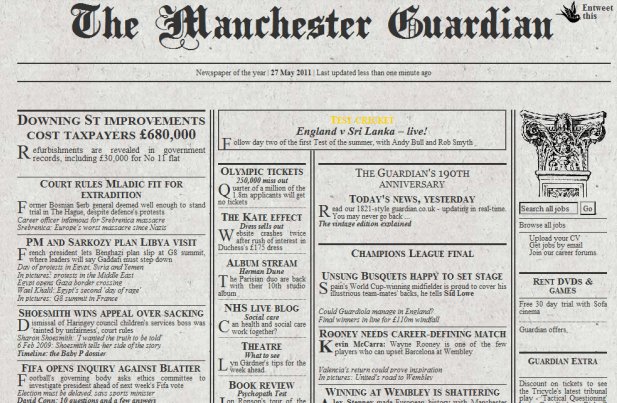
The Guardian prides itself on being one of the most Left-leaning and anti-racist news outlets in the English-speaking world. So imagine its embarrassment when, last month, a number of black podcast producers researching the paper’s historic ties to slavery abruptly resigned, alleging they had been victims of “institutional racism”, “editorial whiteness”, “microaggressions, colourism, bullying, passive-aggressive and obstructive management styles”. All of this might smack of progressive excess, but, in reality, it merely reflects an institution incuriously at odds with itself.
Questions about The Guardian‘s ties to slavery have been circulating since 2020, when, amid the media’s collective spasm of racial conscience following the murder of George Floyd, the Scott Trust announced it would launch an investigation into its history. “We in the UK need to begin a national debate on reparations for slavery, a crime which heralded the age of capitalism and provided the basis for racism that continues to endanger black life globally,” journalist Amandla Thomas-Johnson wrote in a June 2020 Guardian opinion piece about the toppling of a statue of 17th-century British slaver Edward Colston. A month later, the Scott Trust committed to determining whether the founder of the paper, John Edward Taylor, had profited from slavery. “We have seen no evidence that Taylor was a slave owner, nor involved in any direct way in the slave trade,” the chairman of the Scott Trust, Alex Graham, told Guardian staff by email at the time. “But were such evidence to exist, we would want to be open about it.” (Notably, Graham, in using the terms “slave owner” and “direct way”, set a very specific and very high bar for what would be considered information worthy of disclosure.)
The problem is that the results of the investigation, conducted by historian Sheryllynne Haggerty, an “expert in the history of the transatlantic slave trade”, have never been made public. When contacted with questions about what happened to the promised report, Haggerty referred all inquiries to The Guardian‘s PR, which has remained silent on the matter. (The Guardian was asked for comment and we were given the stock PR response The Guardian gave following the podcaster’s letter.) But what we do know is this: according to Guardian lore, a business tycoon named John Edward Taylor was inspired to agitate for change after witnessing the 1819 Peterloo Massacre, when over a dozen people were killed in Manchester by government forces as they protested for parliamentary representation. Two years later, Taylor, a young cotton merchant, with the backing of a group of local reformers known as the Little Circle, founded the paper.
“Since 1821 the mission of The Guardian has been to use clarity and imagination to build hope,” The Guardian‘s current editor, Katharine Viner, proudly proclaims on the “About us” page of the paper’s website. Part of this founding myth concerns one of the defining social and political issues of the day, slavery, which the Little Circle members, including Taylor, vigorously opposed as a moral affront. “The Guardian had always hated slavery,” Martin Kettle, an associate editor, wrote in a 2011 apologia on why during the Civil War the paper had vociferously condemned the North while equivocating on the South.
That may be true, but it also presents an incomplete picture. The Manchester Guardian, as the paper was then known, was founded by cotton merchants, including Taylor, who were able to pool the money needed to launch the paper by drawing on their respective fortunes. While none of these men, many of whom were Unitarian Christians, is likely to have engaged in slavery, they didn’t just benefit from but depended upon the global slave trade that provided virtually all of the cotton that filled their mills. As Sarah Parker Remond, an African American abolitionist, said upon visiting Manchester in 1859: “When I walk through the streets of Manchester and meet load after load of cotton, I think of those 80,000 cotton plantations on which was grown the $125 million worth of cotton which supply your market, and I remember that not one cent of that money ever reached the hands of the labourers.”
Will Finland Leave the War? – WW2 Special
World War Two
Published 28 Mar 2023The Finns have been fighting the Soviet Union since the Winter War. But now, Marshal Mannerheim and Prime Minister Risto Ryti look like they might pull out of the Eastern Front commitments they agreed upon with their Axis allies. German-Finnish relations seem to be at breaking point, and Red Army troops are threatening the borders. How long will Finland stay in this war?
(more…)
The obscure Polish banker who foresaw the carnage and deadlock of the First World War
Jon Miltimore on one of the few people to realize the increased deadliness and growing size of modern armies foreclosed any possibility of a quick, glorious war that would have the troops “home for Christmas”:
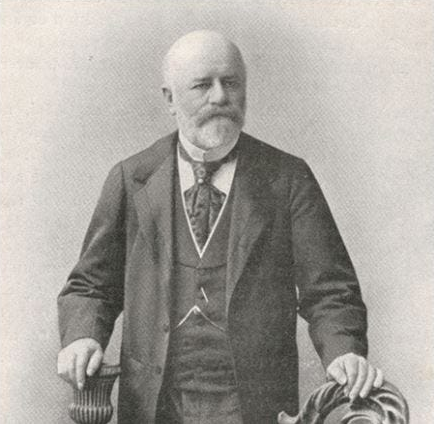
Jan Bloch, author of The War of the Future in its Technical, Economic and Political Relations (1898).
One man who did portend the carnage was Jan Bloch, a Polish banker and railroad baron who moonlighted as a military theorist. In 1898, Bloch published a little-noticed six-volume work titled The War of the Future in its Technical, Economic and Political Relations. The following year, the work was re-published in a single volume under a new title: Is War Now Impossible?
In the work, Bloch, who had closely studied Britain’s campaign in Africa during the Boer War, explained that modern weaponry had become so deadly that it had fundamentally changed warfare. Bayonet charges and cavalry flanking maneuvers were obsolete in an era defined by sophisticated earthworks and precision projectiles, he suggested.
Everybody will be entrenched in the next war. It will be a great war of entrenchments. The spade will be as indispensable to a soldier as his rifle. The first thing every man will have to do, if he cares for his life at all, will be to dig a hole in the ground. War, instead of being a hand-to-hand contest in which the combatants measure their physical and moral superiority, will become a kind of stalemate, in which neither army is able to get at the other, threatening each other, but never being able to deliver a final and decisive attack.
War would be “impossible” in the sense that it would be suicidal. Neither side would be able to gain a decisive advantage, battles along massive contiguous fronts would continue indefinitely.
Was Bloch suggesting that modern man had vanquished war by making it so deadly and terrible? Hardly. He argued that humans would be slow to realize the changes, and the results would be catastrophic.
At first there will be increased slaughter — increased slaughter on so terrible a scale as to render it impossible to get troops to push the battle to a decisive issue. They will try to, thinking that they are fighting under the old conditions, and they will learn such a lesson that they will abandon the attempt forever. Then, instead of war fought out to the bitter end in a series of decisive battles, we shall have as a substitute a long period of continually increasing strain upon the resources of the combatants. The war, instead of being a hand-to-hand contest, in which the combatants measure their physical and moral superiority, will become a kind of stalemate, in which neither army being willing to get at the other, both armies will be maintained in opposition to each other, threatening the other, but never being able to deliver a final and decisive attack …
That is the future of war — not fighting, but famine, not the slaying of men, but the bankruptcy of nations and the breakup of the whole social organization …
First World War generals don’t get much credit for their varied efforts to break the trench warfare deadlock, and later historians certainly piled on for the leaders’ collective failure to resolve the problem, but as Bret Devereaux pointed out, there was no easy solution. Artillery wasn’t the answer, nor were the famed German Stoßtruppen, nor the technical innovation of tanks, nor air power (either tactical or strategic). The technology of the day provide no one answer, but the leaders tried everything they could and the bleeding went on.


