
Tasting History with Max Miller
Published 11 Apr 2023
(more…)
April 12, 2023
French Onion Soup from 1651
Comments Off on French Onion Soup from 1651
Miniature Railway (1959)
British Pathé
Published 13 Apr 2014Romney, Kent.
L/S of a lovely looking train locomotive. A man stands next to it and one realises how small the train is. It is one third of an ordinary train size — says voiceover. However, this is not a toy but a regular public railway, smallest in the world. It is officially known as the Romney Hythe and Dymchurch Railway, it runs between Romney and Dungeness and its passengers are children. This tiny railway must conform to the same Ministry of Transport regulations as any other trains. M/S of a driver Mr Bill Hart, checking the train. C/U shot of a plaque reading “Winston Churchill”. This is the engine’s name. Several shots of Mr Hart checking the train. Mr Hart enters his cabin and starts shovelling coal into the boiler. C/U shot of the coal being thrown in and a little door closed. This train takes one third of the coal needed for a regular size train. The train starts moving.
L/S of the two men turning locomotive on turntable to place it on rails. M/S of a woman cleaning windows along the train. Children arrive and station master, Reg Marsh, directs them to their coaches. M/S of the group of girls entering the train. M/S of the station master Mr Marsh blowing a whistle as a sign that train leaves the station. M/S of an elderly man looking at a huge pocket watch on a chain, and afterwards, in direction of the train. He is Captain Howey, a man responsible for having the line built. C/U shot of the watch — Roman numerals. M/S of Mr Howey as he puts the watch in his pocket. C/U shot of Mr Howey’s face.
M/S of the little train moving. C/U shot of its little chimney with a smoke coming out. M/S of the Rose family from Sanderstead, Surrey with their dog Trixie enjoying the ride C/U shot of driver’s face with the smoke covering it up to the point it becomes invisible. Another little train passes it going in different direction. Several shots of the two little trains moving. A car stops to wait for the train to pass. L/S of the little train as it approaches the station.
Note: Another driver appearing in the film is Peter Catt. Combined print for this story is missing.
(more…)
Comments Off on Miniature Railway (1959)
April 11, 2023
Canada’s colonial past
Peter Shawn Taylor talks to Nigel Biggar, author of the recent book Colonialism: A Moral Reckoning:

C2C Journal: Explain what you mean by a “moral reckoning” for colonialism – and how does that differ from the now-standard historians’ view that it was a shameful era characterized by exploitation, racism and violence?
Nigel Biggar: My first degree from Oxford is in history but professionally I am a theologian and ethicist. An ethicist is in the business of thinking about rights and wrongs and complicated moral issues. As I have previously written about the morality of war, I wanted to bring that ethical expertise to the very complicated historical phenomenon of empire.
And while my critics claim I am not an historian, they are not ethicists. My book is not a chronology. Each chapter deals with a different moral issue: motives, violence, racism, slavery, et cetera. Then I try to bring it to a conclusion with an overall view of the record of British imperialism, morally speaking. There are the evils of the British Empire, and there are its benefits as well.
[…]
C2C: One of your chapters takes a close look at Canada’s Indian Residential Schools. Take us through an ethicist’s view of a topic that has come to be considered this country’s greatest sin.
NB: The motivation for establishing residential schools was basically humanitarian. That is, they were meant to enable pupils to survive in a world that was changing radically. Notwithstanding any abuses and deficiencies that may have come later, we have to deal with the fact that native Canadians were asking for these schools in the beginning. They lobbied for them in treaties. And this was because they recognized that for their people to survive, they needed to adapt. They wanted their young people to learn English or French and how to farm. They recognized that the old ways could not be sustained any longer.
A lot of people today have a hard time coming to grips with the fact that the past was a very different place. For most people, the 19th century was pretty damn brutal. When we consider the conditions in residential schools today, we are horrified. But what is horrifying are the conditions in which most people of that time had to live. It is true mortality among native kids in these schools was generally higher and conditions were poorer. Sexual abuse was also a problem, but mostly by fellow pupils. I don’t want to sweep any of that under the table. Maybe the Canadian government should have spent more money on residential schools. But to make that case you need to identify what the government of the day should have spent less on. And I haven’t seen that argument made anywhere.
The Truth and Reconciliation Commission has many lurid tales about kids being seized from their parents. No doubt that, after education became compulsory in the 1920s, some children were distressed at being taken away. But this too has to be understood in light of the fact that the idea all children must have a certain level of education was gaining tremendous traction in Canada, Britain and throughout Europe at this time. So compulsory education for native children must be considered in that regard. And what might people say today if the Government of Canada had refused to educate Indigenous children?
Again, I don’t want to downplay the defects of residential schools. But we need to provide context in order to understand these things in proportion. It must also be considered significant that since the early 1990s, Canadian media have declined to give voice to many natives who want to offer positive expressions of residential schools, as J.R. Miller points out in his authoritative history of the residential school system, Shingwauk’s Vision. According to Miller, the verdict for the schools must be given in “muted and equivocal terms”. The wholesale damnation of residential schools is overwrought and unfair.
Comments Off on Canada’s colonial past
LeMat Centerfire Pistol and Carbine
Forgotten Weapons
Published 27 Nov 2014Colonel LeMat is best known for his 9-shot muzzleloading .42 caliber revolver with its 20 gauge shot barrel acting as cylinder axis pin — several thousand of these revolvers were imported and used in the field by Confederate officers during the US Civil War (and modern reproductions are available as well). What are less well-known are the pinfire and centerfire versions of LeMat’s revolver, and the carbine variants as well.
In this video I’m taking a look at a centerfire LeMat revolver and a centerfire LeMat carbine, both extremely rare guns. They use the same basic principles as the early muzzleloading guns, but look quite different. In these guns, the shotgun remains 20 gauge but uses a self-contained shell loaded from the rear, and the 9 rifles shots are designed for an 11mm (.44 caliber) cartridge very similar to that used in the French 1873 service revolver.
(more…)
Comments Off on LeMat Centerfire Pistol and Carbine
April 10, 2023
The Crimean Naval War at Sea – Battleships, Bombardments and the Black Sea
Drachinifel
Published 5 Apr 2023Today we take a look at most of the naval theaters of the Crimean War on conjunction with the fine people @realtimehistory find their video here: Last Crusade or F…
(more…)
Comments Off on The Crimean Naval War at Sea – Battleships, Bombardments and the Black Sea
1970: Welcome to SEALAND | Nationwide | Voice of the People | BBC Archive
BBC Archive
Published 18 Dec 2022Nationwide‘s Bob Wellings is winched up to meet the Bates, the first family of the Principality of Sealand.
Formerly HM Fort Roughs, Sealand is a concrete and iron platform in the North Sea about seven miles off the Suffolk coast. What has drawn the family to this remote place? How does living in such an unusual environment effect their day-to-day life? What are their plans for it?
Originally broadcast 19 March, 1970.
(more…)
Comments Off on 1970: Welcome to SEALAND | Nationwide | Voice of the People | BBC Archive
April 9, 2023
New Offensive in the Crimea – WW2 – Week 241 – April 8, 1944
World War Two
Published 8 Apr 2023The Soviets are finally going to try and push the Axis out of Sevastopol and the Crimea. They also continue to drive the Axis back in Transnistria. Over in Burma and Northeastern India, the Japanese have the Allies under siege at not one, but two towns, and are also attacking Imphal from several points, but the Japanese have way bigger future plans up their sleeves in China.
(more…)
Comments Off on New Offensive in the Crimea – WW2 – Week 241 – April 8, 1944
USMC units in the American Expeditionary Forces (AEF) in France
Another interesting excerpt from John Sayen’s Battalion: An Organizational Study of United States Infantry currently being serialized on Bruce Gudmundsson’s Tactical Notebook discusses the role of the US Marine Corps on the Western Front as part of Pershing’s AEF:
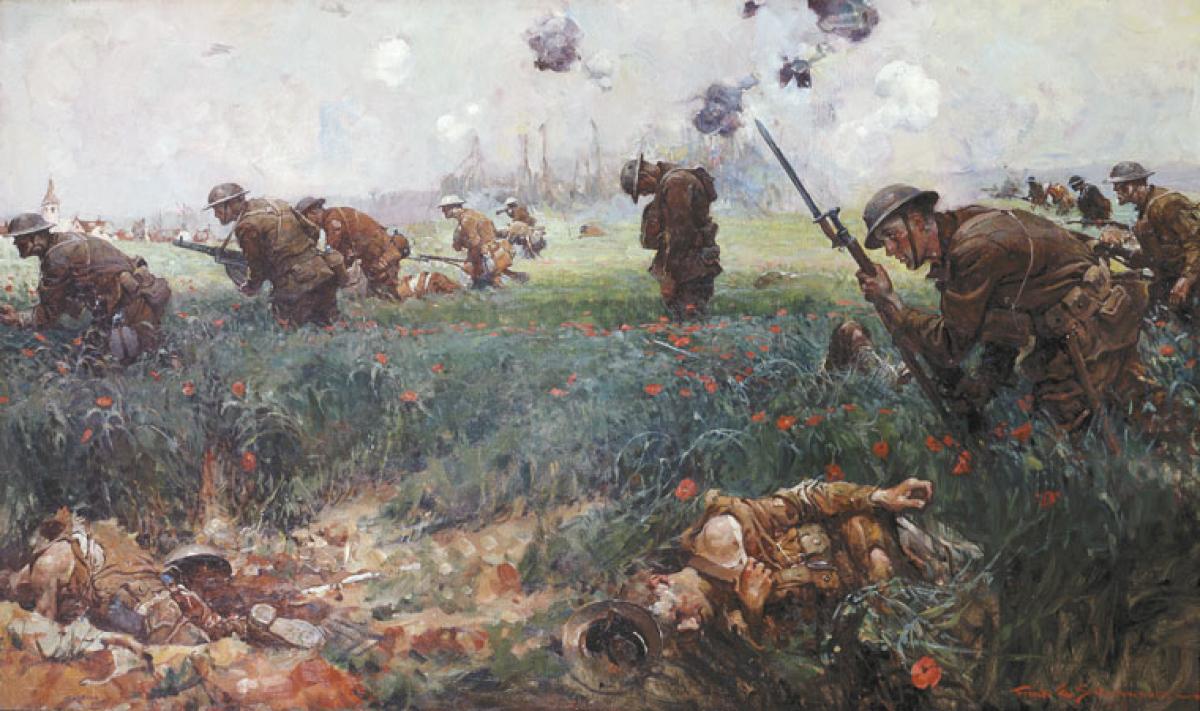
“How Twenty Marines Took Bouresches” by Frank E. Schoonover.
Originally published in the Ladies’ Home Journal Vol. 24 No. 1, via Wikimedia Commons
The Fifth Regiment arrived in France in July 1917. Being the fifth regiment of a four-regiment division, it soon found itself relegated to the sidelines and stuck with all the odd jobs such as providing military police details, couriers, and guards. Correctly reasoning that a larger unit would not be so easily pigeonholed, General Barnett [the Marine Corps Commandant] in October 1917 augmented the Fifth Regiment with the newly formed Sixth Regiment and Sixth Machinegun Battalion. The whole force constituted the AEF Fourth Brigade, or half the infantry of the AEF 2nd Division.*
Although the organization of the Fourth Brigade’s infantry regiments was supposed to be the same as that of all the other AEF infantry regiments, it did in fact differ in some details (see Appendix 2.6). Every Marine rifle and machinegun company had two additional sergeants to serve as gas NCOs and the Marines added gas officers to each battalion headquarters. Whether this helped reduce the number of gas casualties is unclear.
Marine enlisted men also tended to be given higher ranks than their Army counterparts. In a Marine regiment a platoon sergeant was not just the senior sergeant in a platoon, he was a gunnery sergeant, ranking as an Army sergeant first class (a rank that the Army awarded only to specialists) and well above a sergeant. Sergeants commanded all four sections in a Marine rifle platoon and this allowed an additional sergeant per half-platoon. The rifle section included two men trained equipped as snipers (enough for one sniper per half-platoon). Two more snipers were in company headquarters. Since 1887 when test results had exposed their poor marksmanship, the Marines had made rifle shooting into even more of a fetish than it had been in the Army. In contrast to the many soldiers sent into battle without even having fired their rifles, no Marine was even allowed overseas if he had not qualified as an expert rifleman or sharpshooter.
To give extra promotion, pay, and recognition (but not leadership responsibility) to the best shots the Marines introduced the rank of corporal (technical). The rank was also given to mechanics, horseshoers, saddlers, teamsters, and five senior operators in the telephone section of the regimental signal platoon to reward technical proficiency. However, despite their important but difficult and thankless duties, Marine cooks only ranked as privates.
[…]
The Marine AEF regiments differed from their Army counterparts in more than just structural details. They had a huge advantage in manpower quality. Except for about 7,100 draftees accepted during the war’s last weeks, the nearly 79,000 Marines who served in the war were all volunteers. About one sixth of these men had joined prior to the war. This was several times the Army’s percentage of pre-war men, even if those who had only National Guard service are included. Many Marine wartime volunteers were college men and included a lot of athletes.
The large number of officer-quality enlisted men persuaded General Barnett to direct on 4 June 1917 that, in future, all officers be appointed from the ranks. This move had the strong backing of Secretary Daniels who favored the practice of commissioning enlisted men. Such a system would be more in line with what the Germans and French were doing. Even the college men would have to have several months’ enlisted service before they could hope for a commission. By then their leadership potential could be properly evaluated. In addition, many pre-war enlisted men of greater age and experience but less education and growth potential could also become officers. Better still, the Marines were mostly infantry. Unlike the Army, they had few service or technical positions into which their best and brightest could be drained. Instead of getting the dregs, Marine infantry regiments got all the best officers and men. They were always kept at full strength with fully trained replacements, despite heavy casualties.**
The high quality men that the Marines were able to contribute to the AEF provoked a good deal of jealousy within the Army in general and from General Pershing in particular. The latter praised the Marines in private but refused to do so in public. Although Pershing had accepted the Fourth Marine Brigade into the AEF, he rebuffed every offer to send Marine artillery to France. The presence of both Marine infantry and artillery in France would have paved the way for the formation of a Marine AEF division. That would have given the Marines much more publicity at Army expense.
Late in the war Pershing relented enough to accept another Marine infantry brigade, the Fifth, which reached France in September 1918. However, although nearly all these Marines had qualified as expert marksmen, he employed them in menial jobs in the rear areas. At the same time, Pershing was rushing thousands of untrained Army recruits into front line combat where they were routinely and needlessly slaughtered.***
* Major David N. Buckner USMC, A Brief History of the Tenth Marines (Washington DC, Historical Div. HQMC; 1981) pp. 16-17.
** Heinl pp. 191-228; and J. Robert Moskin, The Story of the U.S. Marine Corps (New York, Paddington Press Ltd. 1979) pp. 138-139; LtGen William K. Jones USMC(Ret) A Brief History of the 6th Marines (Washington DC, History and Museum Div. HQMC 1987) p 1.
*** Heinl pp. 194-195 and 208-210; Allan R. Millett, Bullard op cit p. 321.
Comments Off on USMC units in the American Expeditionary Forces (AEF) in France
April 8, 2023
The underlying philosophy of J.R.R. Tolkien’s work
David Friedman happened upon an article he wrote 45 years ago on the works of J.R.R. Tolkien:
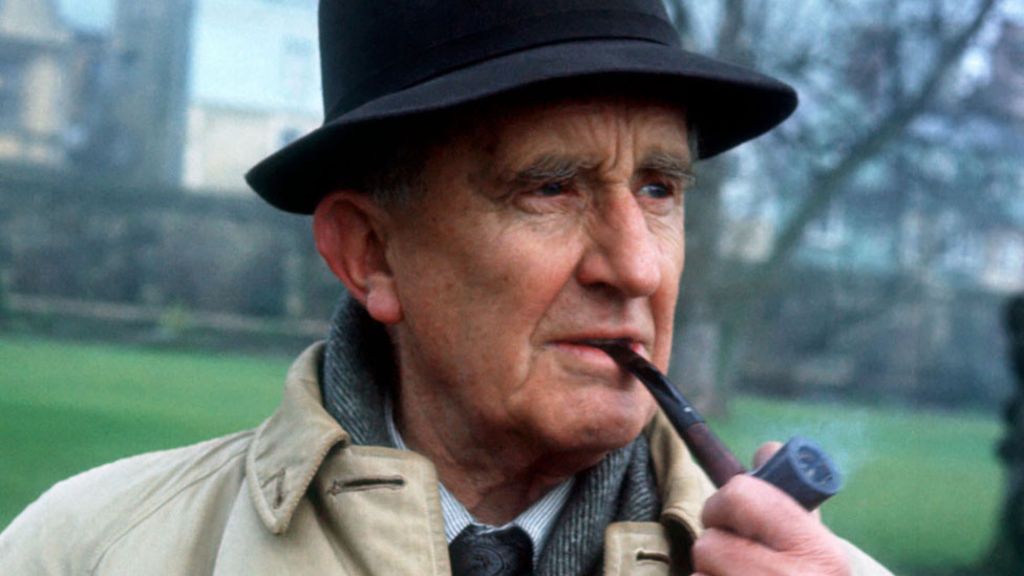
The success of J.R.R. Tolkien is a puzzle, for it is difficult to imagine a less contemporary writer. He was a Catholic, a conservative, and a scholar in a field-philology-that many of his readers had never heard of. The Lord of the Rings fitted no familiar category; its success virtually created the field of “adult fantasy”. Yet it sold millions of copies and there are tens, perhaps hundreds, of thousands of readers who find Middle Earth a more important part of their internal landscape than any other creation of human art, who know the pages of The Lord of the Rings the way some Christians know the Bible.
Humphrey Carpenter’s recent Tolkien: A Biography, published by Houghton Mifflin, is a careful study of Tolkien’s life, including such parts of his internal life as are accessible to the biographer. His admirers will find it well worth reading. We learn details, for instance, of Tolkien’s intense, even sensual love for language; by the time he entered Oxford, he knew not only French, German, Latin, and Greek, but Anglo-Saxon, Gothic and Old Norse. He began inventing languages for the sheer pleasure of it and when he found that a language requires a history and a people to speak it he began inventing them too. The language was Quenya, the people were the elves. And we learn, too, some of the sources of his intense pessimism, of his feeling that the struggle against evil is desperate and almost hopeless and all victories at best temporary.
Carpenter makes no attempt to explain his subject’s popularity but he provides a few clues, the most interesting of which is Tolkien’s statement of regret that the English had no mythology of their own and that at one time he had hoped to create one for them, a sort of English Kalevala. That attempt became The Silmarillion, which was finally published three years after the author’s death; its enormous sales confirm Tolkien’s continuing popularity. One of the offshoots of The Silmarillion was The Lord of the Rings.
What is the hunger that Tolkien satisfies? George Orwell described the loss of religious belief as the amputation of the soul and suggested that the operation, while necessary, had turned out to be more than a simple surgical job. That comes close to the point, yet the hunger is not precisely for religion, although it is for something religion can provide. It is the hunger for a moral universe, a universe where, whether or not God exists, whether or not good triumphs over evil, good and evil are categories that make sense, that mean something. To the fundamental moral question “why should I do (or not do) something”, two sorts of answers can be given. One answer is “the reason you feel you should do this thing is because your society has trained you (or your genes compel you) to feel that way”. But that answers the wrong question. I do not want to know why I feel that I should do something; I want to know why (and whether) I should do it. Without an answer to that second question all action is meaningless. The intellectual synthesis in which most of us have been reared — liberalism, humanism, whatever one may call it — answers only the first question. It may perhaps give the right answer but it is the wrong question.
The Lord Of The Rings is a work of art, not a philosophical treatise; it offers, not a moral argument, but a world in which good and evil have a place, a world whose pattern affirms the existence of answers to that second question, answers that readers, like the inhabitants of that world, understand and accept. It satisfies the hunger for a moral pattern so successfully that the created world seems to many more real, more right, than the world about them.
Does this mean, as Tolkien’s detractors have often said, that everything in his books is black and white? If so, then a great deal of literature, including all of Shakespeare, is black and white. Nobody in Hamlet doubts that poisoning your brother in order to steal his wife and throne is bad, not merely imprudent or antisocial. But the existence of black and white does not deny the existence of intermediate shades; gray can be created only if black and white exist to be mixed. Good and evil exist in Tolkien’s work but his characters are no more purely good or purely evil than are Shakespeare’s.
Comments Off on The underlying philosophy of J.R.R. Tolkien’s work
Russia’s Last Crusade – The Crimean War 1853-1856
Real Time History
Published 7 Apr 2023The Crimean War between the Ottoman Empire and Russia (and later the UK and France) has been called the last crusade and the first modern war at the same time.
(more…)
Comments Off on Russia’s Last Crusade – The Crimean War 1853-1856
Błyskawica: The Polish Home Army’s Clandestine SMG
Forgotten Weapons
Published 23 Dec 2022The Błyskawica (“Lightning”) is an SMG developed in occupied Poland to be issued out to Home Army units during Operation Tempest: the liberation uprisings planned for the advance of the Red Army into Poland.
The gun was developed starting in September 1942 by two engineers, Wacław Zawrotny and Seweryn Wielanier. Both were smart and talented, but neither had previous experience in arms design. The design they created is both innovative in some areas and inferior in others as a result, with major inspiration coming from the Sten and the MP40. Production was undertaken in the harshest conditions of occupied Warsaw, where just possession of cutting tools required German military permission.* It is a credit to the skill and dedication of the Home Army team that some 750 Błyskawica guns were made; the largest mass production of any underground weapon that I am aware of.
Ultimately, Operation Tempest did not come to full fruition, as the NKVD’s treatment of Polish fighters as collaborators destroyed Home Army interest in cooperation. The Błyskawica guns were never issued as planned, with only the few dozen last made being used in the Warsaw Uprising. The remaining 700-odd examples have never been found — perhaps they remain in long-forgotten caches still to this day?
For the full story of the Błyskawica, see Leszek Erenfeicht’s excellent article:
https://www.forgottenweapons.com/subm…Many thanks to the Polish Army Museum for giving me access to film this exceptionally rare item for you! Check them out at: http://www.muzeumwp.pl/?language=EN
* This created some interesting situations in which a shop might take a contract to make material for the Wehrmacht as a way to get access to the tools needed for Błyskawica component production. To those who did not know the whole story, such a shop was collaborationist.
Comments Off on Błyskawica: The Polish Home Army’s Clandestine SMG
QotD: Rome’s “excess labour” problem
Back when historians actually cared about the behavior of real people, they looked at big-picture stuff like “labor mobility”. Ever wonder why all that cool shit Archimedes invented never went anywhere? The Romans had a primitive steam turbine. Why did it remain a clever party trick? Romans were fabulous engineers — these are the guys, you’ll recall, who just built a harbor in a convenient spot when they couldn’t find a good enough natural one. Surely their eminently practical brains could spot some use for these gizmos …?
The thing is — as old-school historians would tell you if any were still alive — technology is all about saving labor. Physical labor, mental labor, same deal. Consider the abacus, for instance. It’s a childishly simple device — it’s literally a child’s toy now — but think about actually doing math with it, when the only alternative is scratch paper. How much time do you save, not having to jot things down (remember where you put the jottings, etc.)?
I’m sure you see where this is going. The Romans did NOT lack for labor. They had, in fact, the exact opposite problem: Far, far too much labor. It’s almost a cliché to say that a particular group in the ancient world didn’t qualify as a “civilization” until they started putting up as ginormous a monument as they could figure out. They raised monuments for lots of reasons, of course, but not least among them was the excess-labor problem. What else are you supposed to do with the tribe you just conquered? Unless you want to wipe them out, to the last old man, woman, and child, slavery is the only humane solution.
If that’s true, then the opposite should also hold — technological innovation starts with a labor shortage. Survey says … yep. There’s a reason the Scientific Revolution dates to the Renaissance: The massive labor shortage following the Black Death. That this is also the start of the great age of exploration is also no accident. While the labor (over-)supply was fairly constant in the ancient world, once technological innovation really got going, the labor-supply pendulum started swinging wildly. The under-supply after the Black Death led to over-supply once technological work-arounds were discovered; that over-supply was exported to the colonies, which were grossly under-supplied, etc.
In short: If you want to know what kind of society you’re going to have, look at labor mobility.
Severian, “Excess Labor”, Rotten Chestnuts, 2020-07-28.
Comments Off on QotD: Rome’s “excess labour” problem
April 7, 2023
Stormtroopers – The German Elite of WW1 – Sabaton History 119
Sabaton History
Published 6 Apr 2023By the middle of the Great War, several nations had begun to experiment with shock troops, and Germany was one of them. The Sturmtruppen were a revolution on the battlefield, for sure, but what did they actually do? What equipment did they carry and use? What were the men actually like? Today we’ll look at all that.
(more…)
Comments Off on Stormtroopers – The German Elite of WW1 – Sabaton History 119
Manpower shortages in the American Expeditionary Forces (AEF) during WW1
This is an excerpt from Battalion: An Organizational Study of United States Infantry, an unpublished book by the late John Sayen which is being serialized at Bruce Gudmundsson’s Tactical Notebook on Substack. While I haven’t read a lot on the AEF, as I’ve concentrated much more on the Canadian Corps as part of the British Expeditionary Force, I was aware that the American divisions were organized quite differently from either British or French equivalents. The significanly larger division organization — 28,000 men compared to about half that in other allied armies — was intended to give US Army units greater staying power in combat, but it didn’t work out as planned for many reasons:
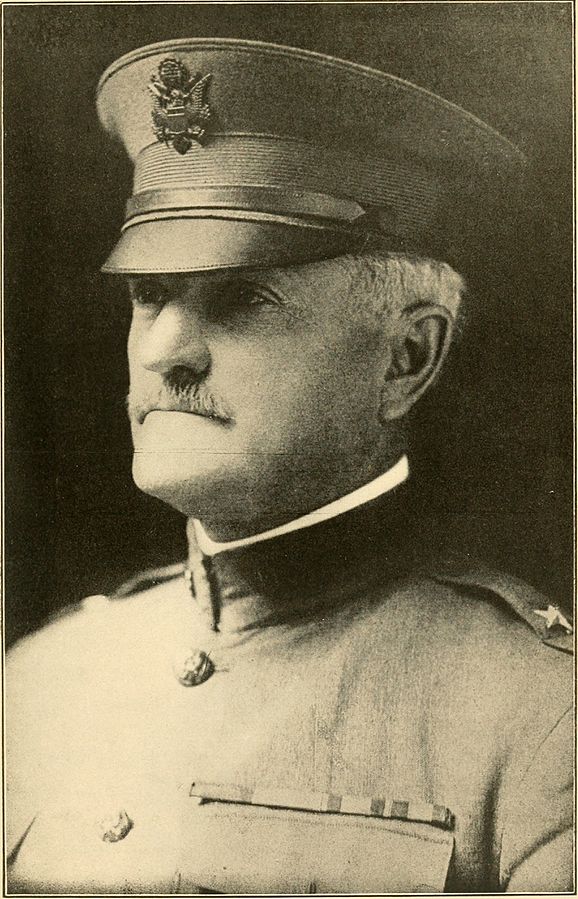
General John J. “Black Jack” Pershing, Commander-in-Chief of the American Expeditionary Forces in France during the First World War.
Image via Wikimedia Commons.
The basic tactical concept behind the square AEF divisions under which the two regiments holding the division’s front line could be relieved by two more regiments to their rear was seriously undermined. The two regiments that were supposed to be resting were the ones that had to man all the work details. When it came time for them to relieve the front-line regiments it was, as historian Allan Millett described it, often a question “of replacing exhausted troops who had suffered casualties with exhausted troops who had not”.
It had certainly not been intended that the infantry serve as labor troops. Such tasks were supposed to have been carried out by separate regiments of pioneers modeled on those used by the French. In the French Army, pioneer regiments were lightly armed infantry serving under corps and army headquarters. They tended to consist of older men and were not the elite assault troops that filled the pioneer platoons in the infantry regiments. Though they could fight when necessary, their main function was to furnish the bulk of the semi-skilled and unskilled labor in the forward areas.
In imitation of this system the War Department raised 37 AEF pioneer regiments. These were organized as AEF infantry regiments without machinegun companies or sapper-bomber, pioneer, or one-pounder gun platoons. Only two of the 29 pioneer regiments to reach France did so before the last three months of the war. One regiment was supposed to go to each army corps and several to each army. However, the AEF pioneers proved to be so badly trained and led (even by AEF standards) that after front line service involving a mere 241 battle casualties most of the pioneers were pulled out of combat to serve as unarmed laborers far to the rear.
It wasn’t just combat casualties that reduced US divisional effectiveness:
Early planning had called for one third of all divisions to serve as replacement depots or field-training units charged with keeping the remaining combat divisions filled with men. The system broke down, however, as heavy losses forced the intended depot divisions to be used as combat units instead. Only six of the 42 AEF divisions to reach France before the Armistice (three more arrived soon afterwards) actually served as replacement or training depots instead of the 14 that were needed.
As an emergency measure, five combat divisions, and later two of the depot divisions, were skeletonized to immediately create urgently needed replacements but, of course, this rendered them useless for either combat or depot duty. Another division had to be fragmented to provide men for rear area support duties and yet another was broken up to flesh out three French divisions. Even in February 1918, (before the AEF had seen serious combat) the four combat divisions in the AEF I Corps were 8,500 men short (mostly in their infantry regiments). The 41st Division, which was the corps’ depot division and charged with supplying those missing men was itself 4,500 men short. By early October 1918, AEF combat units needed 80,000 replacements but only 45,000 were expected before 1 November. At the end of October, the total shortfall had reached 119,690, including 95,303 infantrymen and 8,210 machine gunners. Only 66,490 replacement infantrymen and machine gunners would be available any time soon. For most of the war, AEF combat divisions were typically short by 4,000 men. After August 1918, even divisions fresh from the United States usually needed men. Too many divisions had been organized too quickly.
Of course, the root cause of the manpower problem was even more basic. Men were being used up faster than they could be replaced. The AEF suffered most of its battle casualties between 25 April and 11 November 1918, a period of less than seven months. These combat losses amounted to between 260,000 and 290,000 officers and men, of whom some 53,000 were killed in action or died of their wounds. The rest were wounded or gassed but 85% of these subsequently returned to duty. About 4,500 AEF prisoners of war were repatriated after the Armistice. Five thousand others became victims of “shell shock.” Accidental casualties, including those known to have been caused by “friendly fire” (total friendly fire losses must have been considerable, given the poor state of infantry-artillery coordination), or disease or self-inflicted wounds, far exceeded those sustained in battle.
Two thirds of the more than 125,000 Army and Marine Corps deaths between April 1917 and May 1919 occurred overseas and nearly half (57,000) were from disease. Pneumonia and influenza-pneumonia, which produced the infamous “swine flu” epidemic of 1918, were the chief killers but many victims who became ill before the Armistice did not actually die until after it. Between 14 September and 8 November 1918 some 370,000 cases were reported in the United States alone. Within less than two years between one quarter and one third of the men serving in the US Army had died or became temporarily or permanently disabled by battle, disease, accident, or misconduct. Had such losses continued, the United States might soon have begun to experience the same war weariness and manpower “burnout” that had been plaguing the British, French, and Germans.
With regard to the infantry, the woes of the AEF replacement and training system were much increased by the prevailing belief that because an infantryman needed few technical skills he had little to learn and could be quickly and easily trained from very average human material. Technical arms such as the engineers, signal corps, artillery, and, more significantly, the air corps got the pick of the AEF’s manpower.
The infantry soon became the repository for those deemed unfit for anything better. Many infantrymen saw themselves, and were seen, as cannon fodder. Morale and cohesion were further undermined by the practice of stripping new divisions of men (often before they had even left the United States) to fill older ones. The better men and officers avoided infantry duty to seek less demanding “technical” jobs. Of course, training suffered grievously.
As demands for replacements became more insistent, men who supposedly had received several months’ training were appearing in the front lines not knowing how to load their rifles. Others proved to be recent immigrants who could not speak English. Infantrymen of small physique who might have rendered useful service in non-infantry roles, soon collapsed under the physical burdens placed on them and became liabilities rather than assets. Losses among even good infantry were heavy enough but mediocre infantry melted away at an astonishing rate. Indiscipline, disorganization, and ignorance inevitably increased losses by what must have seemed like a couple of orders of magnitude. These losses were likely to be replaced, if at all, by men of even lower caliber.
Straggling was an especially pernicious problem, which the military police had only limited success in controlling. Even more than actual casualties, it caused some units to simply evaporate. During the Meuse-Argonne offensive, for example, one division reported that it was down to only 1,600 effective men. However, soon after it arrived at a rest area, it reported 8,400 men in its infantry regiments alone.
Comments Off on Manpower shortages in the American Expeditionary Forces (AEF) during WW1
April 6, 2023
Tikka T3x Arctic / Canadian Rangers C19 Rifle, 7.62 / .308 Win
Bloke on the Range
Published 29 Mar 2019Bloke unboxes and takes a first look at the Tikka T3x Arctic rifle, adopted as the C19 rifle for the Canadian Rangers in 7.62 NATO / .308 Winchester. Is the hype real? Oh yes! Yes, it really is!
(more…)
Comments Off on Tikka T3x Arctic / Canadian Rangers C19 Rifle, 7.62 / .308 Win


