Quotulatiousness

May 6, 2018

Justin Trudeau may (or may not) delay the legalization date for marijuana

Filed under: Cancon, Government, Politics — Tags: , , — Nicholas @ 05:00

It’s just another day in Liberal Ottawa, as the Prime Minister briefly appears to wobble on the one election promise he’s close to fulfilling before the next election cycle begins. Colby Cosh manfully avoids a few drug-related jokes while recounting the latest “goffe” (as Gary Johnson actually said):

The legislative scenes preceding the three-quarters-legalization of marijuana in Canada continue to have an unreal, hallucinatory quality for which I am determined not to use the obvious metaphor. On Tuesday the Senate Aboriginal Peoples Committee presented the government with a demand that its vague summer legalization deadline be delayed by “up to one year” because Indigenous groups were not consulted closely enough on the effects of making it lawful to have a plant.

The prime minister, after some hemming and hawing, reiterated that legalization will happen on time, whatever the particular date happens to end up being. This will certainly come as a relief to the people who have poured zillions of dollars into a new horticultural and retail industry on the premise that it would, y’know, exist. Seeing how many of them are former Conservative politicians, perhaps they can be persuaded to buy a novena or two for a Liberal government that has — despite the unique moral pressure that Indigenous Canadians are capable of exercising, and in arguable defiance of its own history — decided to stick to an electoral promise.

Even as it is, the promise is taking most of the life of a Parliament to fulfill. Perhaps the conscience of Justin Trudeau, the little cartoon angel that perches on his shoulder and whispers progressive maxims in his ear, would have preferred to relent and toe the legalization deadline forward a year. Unfortunately, on the list of Trudeau’s political problems, “not being able to get stuff done in Canada” ranks alarmingly high at the moment.

In an ideal world, going along with the Senate committee and inflicting a wrestler’s piledriver on the economy for the sake of a principle might have been tempting. May 2018 is, alas, not really the time to be asking for that. It is precisely because so many interest groups and subnational governments have had to be negotiated with and appeased that pot legalization has taken so long — long enough that another election is in sight, with other elements of the Liberal program already in smithereens by the wayside.

May 5, 2018

Canada is #1 in the world! In the ripping-off-the-wireless-user sweepstakes!

Filed under: Business, Cancon, Technology — Tags: , , , — Nicholas @ 05:00

This is the sort of thing that isn’t really surprising — if you’re a Canadian wireless data user — but puts it into a sad, sad perspective:

The sad state of Canadian wireless pricing is old news for consumers and the government, but a new report graphically demonstrates how Canadians face some of the least competitive pricing in the developed world. The Rewheel study measured pricing in EU and OECD markets by examining how many gigabytes of 4G wireless data consumers get for the equivalent of 30 euros. This chart from Rewheel says it all:

Canada is at the far left of the chart with consumers getting less for their money than anyone else. While many countries offer unlimited mobile data at that price, the report says Canadian carriers offer a measly 2 GB. The smartphone data plans aren’t much better, with nearly all countries offering better deals and many shifting to unlimited data at that price.

[…]

In addition to outrageously expensive wireless data plans, Canadians also face huge overage charges (more than a billion dollars per year generated in the wireless overage cash grab) and steadily increasing roaming charges. Yet when it came to introducing greater resale competition, the CRTC rejected new measures that it admitted could result in some improvement to affordability.

May 3, 2018

I’m sure just calling him “Ontario’s Trump” will be a fantastic winning strategy in June…

Filed under: Cancon, Politics — Tags: , , — Nicholas @ 03:00

Chris Selley on Ontario Progressive Conservative leader Doug Ford’s on-again, off-again plans for the Greenbelt:

Thus far, for want of many specific Progressive Conservative policy proposals, the Liberal line on Doug Ford has essentially been to brace for catastrophe: trust that no matter what he says, he will fire everyone and cut everything and destroy all that you hold dear, because he’s Doug Ford and that’s what Doug Ford does. Oh also he’s Donald Trump. The Liberals know no other way of campaigning. They were comparing Patrick Brown to Trump way back in October.

On Monday, though, Ford unveiled a specific, bold, novel and controversial policy approach on the major issue of affordable housing in the Greater Toronto Area — something wonks and pundits and opposition politicians could really sink their teeth into. Sadly it was a tremendously dumb policy: to develop “a big chunk” of the Greenbelt, while somehow tacking other compensatory bits of land onto it to ensure it didn’t shrink in overall size.

It was the worst of all things Ford: uninformed (there is no need for this); confusing (where exactly are they going to find all this replacement land?); a bit sketchy (the Liberals released a video of Ford saying the idea came from big developers); and ultimately not worth the napkin it was drawn on the back of. On Tuesday afternoon, citing public feedback, Ford abandoned the plan and promised to be the greenbelt’s fiercest protector.

“I govern through the people, not through government,” he explained in a statement. (He is running to lead Canada’s second-largest government.) Campaign spokesperson Melissa Lantsman was reduced to characterizing it as a great leadership moment.

May 1, 2018

Sikh separatists (and even terrorists) are being protected by the federal government

Filed under: Cancon, Government, India, Politics, Religion — Tags: , , , — Nicholas @ 03:00

There’s no reason that Canadian Sikhs can’t agitate for their fellow Sikhs in India to create a separate country in the Punjab, but that freedom must not include active support for terrorists. The Canadian government is looking particularly bad on this front, and it isn’t just because of Justin Trudeau’s farcical adventures on his recent trip to India. None of the major federal parties want to appear to be anti-Sikh, as Sikh voters cluster in several key swing ridings around the country, and any criticism of the terrorists is spun as an attack on all Sikhs. At Quillette Terry Milewski details the government’s unwillingness to deal with the problem:

The Sikh faith, created in what is now northern India by the 15th-century Guru Nanak, remains obscure to many in the West. Turbaned Sikh men are sometimes confused with Muslims, and some have been assaulted by confused thugs following Islamist terrorist attacks. Like the United States, Britain and other Western countries, Canada has been home to emigrant Sikhs for generations—the vast majority of them living peaceably in their adopted homeland.

In the 1980s, however, a powerful spasm of separatist militancy shook India and spread to the Sikh diaspora. In June, 1984, two months before the Madison Square Garden convention, Prime Minister Gandhi and her government set out to end a killing spree by Sikh militants who had turned the Sikhs’ holiest site — the Golden Temple at Amritsar — into an armed camp. The Indian army wrecked the temple complex and took many lives. Revenge came on October 31, 1984, when Gandhi was gunned down in her garden by two of her Sikh bodyguards. Hindu mobs immediately took revenge for the revenge, slaughtering thousands of Sikhs in hellish reprisals that were aggravated by official complicity. The police looked the other way. The horrors of 1984 won’t be forgotten by either side.

Soon, Canada and its Sikh community were dragged into the thick of the struggle. In June of 1985, Parmar’s Babbar Khalsa placed suitcase bombs on two planes leaving Vancouver. One brought down Flight 182, a massacre that remained, until 9/11, the deadliest terrorist attack in the history of aviation. The second bomb, intended to destroy another Air India plane simultaneously, exploded on the ground at Narita Airport in Japan, killing two baggage handlers. The reverberations from the attack were so profound in Canada that even today, 33 years later, a striking emblem of the Khalistani dream survives: a large “martyr” poster honouring Talwinder Parmar, sword in hand, permanently fixed to the exterior of an important Sikh gurdwara in Surrey, British Columbia. Tens of thousands gather beneath it each spring for an annual Sikh parade. In American terms, the poster is equivalent to a public veneration of Osama Bin Laden.

[…]

Today, the parents who lost their children [on Air India Flight 182] are old, the orphaned children have their own children and the Sikh struggle for independence is moribund in India. Last year, in fact, Sikh voters overwhelmingly supported a united India and were key to the election of the Congress Party — the party of Indira Gandhi — to govern the Sikh homeland of Punjab. Support for Congress was especially strong in majority-Sikh districts. And Punjab’s Chief Minister is a strongly pro-unity Sikh, Amarinder Singh, who has alleged separatist influence in the Canadian government.

Harjit Sajjan, a Sikh who is Canada’s Minister of National Defence, firmly denied the claim. And on Justin Trudeau’s visit to India this year, Singh agreed to a photo-op including Sajjan. But the Chief Minister let it be known that he’d handed over a list of Canadians he suspects of fundraising for Punjab’s few remaining separatist Sikh militants.

The listed suspects amount to a tiny subculture among Canada’s 450,000 Sikhs, the vast bulk of whom seek no return to the bloody 1980s and 1990s, when the battle for Khalistan took some 20,000 lives in India, most of them Sikh. But the hardliners are a well-organized political force, still raising the cry of “Khalistan Zindabad!” — long live Khalistan — in some Canadian gurdwaras where “martyred” Sikh assassins are memorialized as models for the young. These include the two bodyguards who machine-gunned Indira Gandhi. Khalistani fervour is alive on social media and a 2018 tweet from “George” (@PCPO_Brampton) declared: “Indira’s assassins are HEROES. Sikhs should glorify them.”

The endurance of such attitudes in Canada reflects the weak record of its justice system in deterring violence. For years, it seemed, Canadian courts were where terrorism cases went to die.

April 25, 2018

Ontario’s ongoing guaranteed annual income experiment

Filed under: Cancon, Economics, Government — Tags: , , , , — Nicholas @ 05:00

Finland may have given up on their guaranteed annual income pilot, but Ontario’s similar program is still getting positive reviews from GAI fans like Andrew Coyne at the National Post. Colby Cosh isn’t quite as impressed with the program or the chances of it being expanded beyond its current small scale:

The Ontario plan is giving randomly selected low-income working-age individuals $16,989 a year in free money. That’s the basic story, with the detail that couples are eligible for a combined $24,027. This amount replaces provincial welfare, employment insurance, or early Canada Pension Plan payments, dollar-for-dollar; Canada Child Benefit cheques are strictly separate, however, and if study members go out and earn some income, their payment is reduced by 50 cents for every dollar they make until the supplement hits zero.

This is the “negative income tax” model of guaranteed income, intellectually pioneered by the Austria-Mont Pelerin-Chicago strain of economic thought that is my personal heritage and Coyne’s alike. The conclusion of the PBO paper is that the total cost of such a program for the entire country, applied to this year’s economy, would come to about $76 billion.

[…]

Kevin Milligan, a UBC economist who is skeptical of GAI, often points out that GAI advocates face the challenge of reconciling three conflicting elements of such a program: we want it to have a reasonable overall cost, we want it to be generous enough to bother with, and we want it to impose a low “clawback” rate on earned income so as not to discourage that.

The “Ontario model” sort of resolves the “trilemma” by being soggy on all three fronts. The $17,000 basic amount was chosen specifically to come to 75 per cent of Statistics Canada’s “low-income measure”: it is a guaranteed not-even-low income. (At the same time, I notice that the basic personal exemption on federal income tax forms is just $11,809 this year. Before we hurl ourselves headlong at a new social program of a relatively untested nature, maybe we could explicitly just stop taxing the poor first?)

Three points of GST may seem like a reasonable overall cost, if it could be realized, but an entitlement such as this is bound to be a one-way street: by the time we decide we do not like the effects, it will have become the next thing to a sacrament. (Canada’s guaranteed federal income defines us as a country!) Meanwhile, the 50-per-cent clawback in the Ontario model is fairly dramatic, and, moreover, under the model, couples who begin cohabiting would stand to lose up to $10,000 a year of GAI payments between them.

April 24, 2018

Canada suffers a bad case of Grey Owl nostalgia

Filed under: Cancon, Government, History, Religion — Tags: , , , , — Nicholas @ 06:00

Jonathan Kay on the odd ways that the “noble savage” imaginary model is holding back actual First Nations people in Canada:

A few months ago, I spoke at a small academic conference in Toronto about the future of Canada. As with many events of this type in my country, it began with sacred rituals. An Ojibway elder, described to us as a “keeper of sacred pipes,” took to the podium and showed us a jar of medicine water. In her private rituals, the elder explained, she would pray with this water, and talk to it as she smoked her pipes. After this, she instructed us to join her in “paying respect to the four directions” — which required that we stand up and face the indicated compass point, moving clockwise from north to west as she performed her rituals. “With this sacred water, we smudge this space,” she said. “Let us live the lesson of being in harmony with all creatures.”

Then the elder instructed us to bend down, touch the floor, and say migwetch — thank you, in her Ojibway language — to signal our gratitude. The room was full of middle-aged former politicians who, like me, did not want to seem impolite. But after turning in place on command, this floor-touching business seemed a little much. Nevertheless, the men and women around me began hunching downward, extending palms toward the floorboards, until the whole room resembled a congregation at prayer. There were only perhaps a half-dozen of us who hesitated slightly, and were now anxiously casting eyes about the room for co-conspirators.

I tried to look nonchalant as I remained upright. But I wondered whether some conference official would call me out for this act of defiance. Or perhaps someone would snap a picture and put it on Twitter. I felt like Cosmo Kramer from Seinfeld, when confronted by a pair of strangers after refusing to wear a ribbon during an AIDS walk.

But there also was something more serious at play — for the whole scene was a microcosm of a larger cultural phenomenon that’s been playing out in Canadian society for generations. How did it come to be, I wondered, that this room full of intellectuals and policy-makers, plucked from among one of the most secular nations on earth, should be called upon to genuflect en masse to animist spirits?

Ask this question on social media, and culture warriors on both sides will provide plenty of snappy answers. But to answer properly, and constructively, requires at least some understanding of the distorted way in which white Canadians — and Westerners, more generally — have come to conceive of Indigenous peoples. And these distortions are producing disastrous effects on the very Indigenous societies that we’re all trying to help.

If you’re not familiar with the Grey Owl referenced in the headline:

Both Canada and the United States eventually imposed policies aimed at annihilating Indigenous cultural practices and languages. Yet, paradoxically, these same white-dominated societies would also lionize individual Indigenous chiefs, warriors, spiritual leaders, artists and writers. In Canada, none would become more famous than the self-proclaimed “Wa-Sha-Quon-Asin, Grey Owl, North American Indian, champion of the Little People of the Forests.” During the 1930s, in fact, Grey Owl would become the most famous Indigenous writer in the world — despite the fact that (as the world learned after his death) he was actually a British immigrant from Hastings, England named Archibald Stanfield Belaney.

Grey Owl was a gifted, if somewhat didactic, middlebrow writer who produced sentimental narratives about the Canadian wilderness he roamed throughout his adult life. Even if he’d been honest about his identity as a white man, he might well have made a successful living from his books. But the ingredient that made him a true literary star — both in Canada and internationally — was his allegedly Indigenous bloodline, which editors and readers alike believed gave him special insight into the secrets of nature and the animal kingdom. Having grown up as an English schoolboy fascinated by First Nations and their habitats, Grey Owl knew exactly what his readers wanted: gauzy sketches of a simpler, more noble, more sacred world than the smog-choked cities they inhabited. Sadly, the simplistic and infantilizing stereotypes he peddled persist to this day.

Canadians now take for granted the portrayal of Indigenous peoples as conscientious, pacifistic stewards of the earth. But as University of Alberta literature professor Albert Braz has noted, this conception of Indigenous life didn’t become popularized until the early twentieth century. Prior to that, it was just as common to hear tales of Indigenous hunters (and fighters) performing wanton slaughter, annihilating other tribes, or whole species of animals. It was Grey Owl, a white man, who led the campaign to rebrand Indigenous peoples as innocent children of the forest. He even went so far as to suggest that it would be preferable for Indigenous peoples to disappear from the planet rather than be “thrown into the grinding wheels of the mill of modernity, to be spewed out a nondescript, undistinguishable from the mediocrity that surrounds him, a reproach to the memory of a noble race.”

April 22, 2018

Planes, Guns and Automobiles I BETWEEN 2 WARS I 1919 Part 1 of 4

Filed under: Cancon, History, Media, Technology — Tags: , , , — Nicholas @ 06:00

TimeGhost History
Published on 21 Apr 2018

The year 1919 was the year when the world took the first step into the age of mass communication. Wartime developments now create the aviation industry, mass produced cars, broadcast media and … more guns.

Join the TimeGhost Army at https://timeghost.tv

Or on Patreon: https://www.patreon.com/TimeGhostHistory

Hosted by: Indy Neidell
Written by: Spartacus Olsson and Indy Neidell
Directed by Spartacus Olsson
Produced by: Astrid Deinhard
Executive Producers: Bodo Rittenauer, Astrid Deinhard, Indy Neidell, Spartacus Olsson

A TimeGhost chronological documentary produced by OnLion Entertainment GmbH

April 17, 2018

The trap Trudeau carefully laid for himself

Filed under: Business, Cancon, Environment, Government, Politics — Tags: , , , , — Nicholas @ 05:00

Andrew Coyne on the interminable “negotiations” for the Kinder Morgan pipeline:

Whatever anyone’s concerns — economic, environmental, Aboriginal or other — that is the process by which those concerns are adjudicated. And that is the process that approved the pipeline: the NEB, the cabinet and the courts, all ruling in its favour (though not every legal appeal has been exhausted: a case is still before the Federal Court of Appeal on behalf of seven First Nations arguing they were not adequately consulted).

Why, then, do so many feel entitled, not merely to disagree, or to protest, as is their democratic right, but to substitute their own authority for that prescribed by law: to defy the courts, to threaten disorder, and to deny federal jurisdiction?

Much of the blame should be attached to the current custodians of lawful authority, the governments of Canada and British Columbia. It was Justin Trudeau who, campaigning for office, gave his imprimatur to the extralegal, anti-democratic doctrine of “social licence,” telling pipeline opponents that “governments might grant permits, but only communities can grant permission.”

It was Trudeau, too, who lent support to the notion that Aboriginal communities have, not merely a constitutional right to be consulted on projects affecting lands to which they have title, as the courts have found they have, but an absolute veto. And it was Trudeau who legitimized those who, because they did not like the NEB’s decision, had dismissed it as biased or negligent, with his promise of a special panel to review the project.

Likewise it was John Horgan who, campaigning for office, famously promised to “use every tool in the toolbox” to stop the pipeline from being built. We know now that his government has known since at least the time it took office that it had no constitutional authority to do so. But if Horgan had hoped to walk back the promise, in the grand tradition of Canadian politics, after he was elected, he finds his way blocked by his partners in power, the Green Party.

So he has instead opted to stall for time, delaying permits, threatening legislation, and — someday, maybe — referring the whole business to the courts, hoping the project’s sponsor, Kinder Morgan, will give up in frustration. As, at length, it has declared it will do if Horgan’s government is not brought to heel, with spectacular effect: it has spurred the Trudeau government to state, in terms that allow no retreat, that “the pipeline will be built.”

But reasserting lawful authority, after so many years of disuse, will not be as easy as all that. It is not only the Trudeau or Horgan governments, after all, that have played this game: before Horgan, there was Christy Clark and her constitutionally odious “five conditions” for “approving” the Northern Gateway pipeline, and before Trudeau there were decades of federal governments that allowed the provinces to run the jurisdictional table against them, in the name of “co-operative federalism.”

April 16, 2018

QotD: The Canadian media

Filed under: Cancon, Media, Quotations — Tags: , , , — Nicholas @ 01:00

Ezra Levant, who now runs the Rebel Media online empire as a successor to the deceased Sun News TV network, has a long-running joke/critique about a “Media Party” that croons in unison on every public issue. Every time he mentions the “Media Party,” we, the Media Party, all fall into the same cross and scornful mood. We commiserate ironically with all our old co-workers at rival titles or channels about how there’s totally no such thing as a Media Party.

Ezra knows how to market, whatever else you want to say about him. He is out to devour our audiences and show, if mostly by loud assertion, that we in the Party are all lazy and lily-livered. He is not afraid to say that all the parts of the Star-Globe-Post-CBC-Maclean’s ecosystem are inferior to his thingamabob. We don’t compete with each other like he does: we lack the spirit of the feud. We all sense there might actually be some kind of unified, monstrous Star-Globe-Post-CBC-Maclean’s publication one day. And we want to be able to work for it. So even Posties are reluctant to say that the Globe on most days appears to have been edited by a dead Tory prime minister and printed on cobwebs, or that the Star sometimes seems to regard personal nastiness as a social-democratic credential.

The National Post was born in a spirit of newspaper war. If you tried to start such a war today it would seem absurdly counterproductive, almost suicidally stupid; and maybe it was. Now we are all just hanging on for dear life.

Colby Cosh, “Go ahead, hate the media – we deserve it”, National Post, 2016-07-25.

April 15, 2018

Canada’s military – the difference between fighting wars in the 20th Century and fighting wars today

Filed under: Cancon, History, Military — Tags: , , , , — Nicholas @ 05:00

In a post from earlier this week about defence spending priorities for the Canadian military, Ted Campbell looks at how wars changed between the first half of the 20th century and the post-Cold War situation we face today:

Is the 2% goal wrong?

No … it’s a pretty sensible level of defence spending for countries that really want to maintain a world at peace, as opposed to those, like Canada and many of its allies, that just want to hope for peace. But 2% is not a magic bullet … 1.5% of GDP, spent carefully, will do more than 2% spent as a job creation slush fund. But spending too little, cutting defence spending again and again and again just because it is unpopular can leave a country with what I have described as a Potemkin Village, a military that is more show than force.

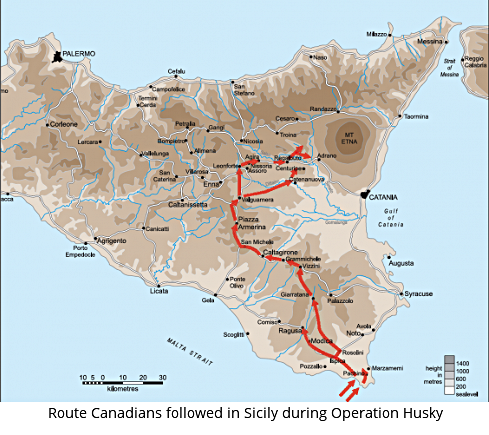
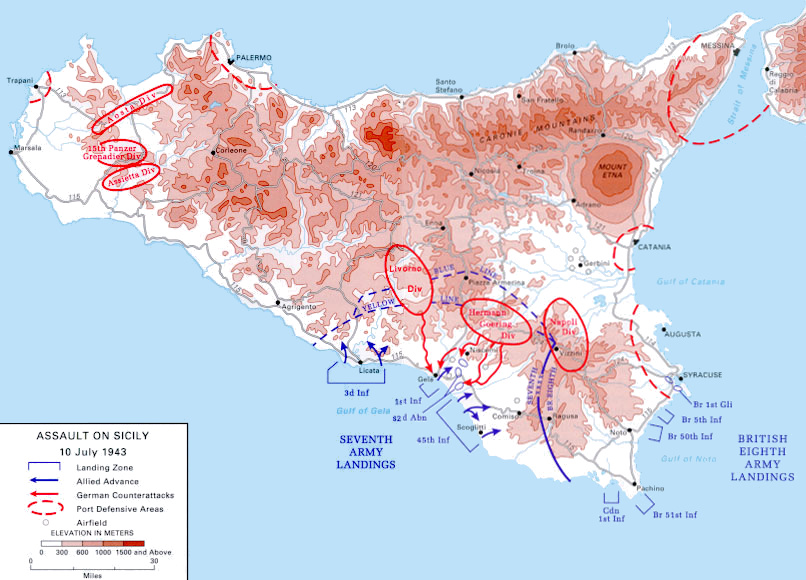
The advent of a nuclear face-off circa 1950 changed the strategic calculus for the rest of the 20th century. We suddenly had the “come as you are war” which meant having regular, professional forces in being and not being able to rely upon time and space to give us time, as we had in past wars, to mobilize our reserves. We would do well, 101 years after the battle of Vimy Ridge, to recall that it, in April 1917, was the first time since war was declared (in the summer of 1914) that the full Canadian Corps, of four infantry divisions, was in battle as a corps ~ it took us over 30 months to get from a tiny standing army backed by small but eager reserves to a full corps composed of about 100,000 of the Canadians who served overseas during that war. We went to war again in the late summer of 1939 and it was not until the summer of 1943, over 40 months later, that we had a small corps, of only two divisions and an independent armoured brigade, in battle, in Italy. It takes a long time to mobilize and equip and train an army. The operational doctrine of the long and expensive cold war said that we could no longer have that time.

It is not clear that we must or even should still have small reserves and a relatively larger permanent force. Perhaps the time has come to re-examine the assumptions that underlie our force structure ideas. Maybe we need 150,000 uniformed people but, maybe, the split should be 50/50 or 75,000 full time and 75,000 part time sailors, soldiers and air force members. Maybe a country like Canada, with a population that will, in 2050, approach 40 million, should have a larger force: say 75,000 full time and even 150,000 part time military members … maybe our reserve force “regiments’ should have 500 or 750 soldiers and be required to “generate” a trained company (125 soldiers) rather than having only 150 soldiers and being hard pressed to “generate” a platoon of only 30 soldiers. I have my own ideas, but someone who has the necessary information at their disposal needs to look ahead at our strategic situation and develop a force model and a sane budget for 2050. That should be a job for skilled civil servants in the defence policy staff.

Our strategic priorities for the next 30 years or more need to be:

  1. Containing and reducing threats to global peace and security by helping to maintain alliances like NATO and groupings like AUSCANNZUKUS and supporting global peacemaking and peacekeeping efforts, even the generally worthless United Nations efforts;
  2. Confronting current threats to peace ~ like Russia ~ and deterring (by matching the growth in military power of) potential future threats ~ like China;
  3. Cooperating with the USA in the protection of North America; and
  4. Securing the land we claim as our own, the waters contiguous to it and the airspace over both.

When we work out the costs, of people, above all, but also of ships, tanks, guns and aircraft, and of ammunition, food and fuel and everything else, of doing those four things ~ and of doing them well enough ~ then we will know what what sort of forces we need and how much we must budget to build and maintain them. But no matter what the size and what the cost, I guarantee that people will still be the biggest single expense if we keep our priorities straight: and the overarching priority is that people cost more than machines because they matter more than machines.

Stalin in WW1 – Quebec – Scottish Home Rule I OUT OF THE TRENCHES

Filed under: Britain, Cancon, History, Military, Russia, WW1 — Tags: , , , , , — Nicholas @ 04:00

The Great War
Published on 14 Apr 2018

Chair of Wisdom Time!

April 14, 2018

Andrew Coyne asks “Why do we need a Senate?”

Filed under: Cancon, Government, Politics — Tags: , — Nicholas @ 05:00

And the answer for anyone who’s lived through previous constitutional mud-wrestling is almost certainly going to be a variant of “We don’t, but to change it in any way means re-opening the entire constitution for revision and re-negotiation … thanks, but no thanks … we’ll put up with the Red Chamber of Irrelevance”:

More than two years after the Trudeau government introduced its system of “independent, merit-based” appointments to the Senate, transforming — so it was said — the Other Place from a house of patronage and partisanship to a house of virtue, the government’s “representative” in the Senate has given some thought to how it will all work.

In a 51-page discussion paper, Peter Harder offers his views on what role the Senate should play, as one of the last remaining appointed legislatures among the world’s democracies — and the most powerful, on paper — particularly in light of its changed circumstances. It makes for a fascinating, not to say hallucinatory read.

In Harder’s estimation, the past two-and-a-bit years have been something of a golden age of Senate legitimacy, a period in which it has rebuilt its credibility after what he plainly views as the dark age of partisanship that preceded it: a dark age that precisely coincides with the period of Conservative government.

The expense scandals, the epic confusion that followed the government’s half-considered reforms, the repeated episodes of brinksmanship as the newly envirtued Senate threatened to defeat this or that bill, these rate barely a mention, in Harder’s account, beside the Senate’s “robust bicameralism,” its “positive track record” and contributions that have been “effective, policy-oriented and always respectful of the role of the representative House of Commons.”

Ah yes. About that: if the Senate were so “always respectful” of their respective roles, it’s curious Harder should feel the need to spend 51 pages explaining what those roles are. But then, that is because it is so exquisitely complicated, so delicately subtle, requiring such a delicate balance.

April 13, 2018

From Billions to Zero in 50 Years – The Extinction of the Passenger Pigeon

Filed under: Cancon, Environment, History, USA — Tags: — Nicholas @ 02:00

Today I Found Out
Published on 23 Aug 2017

Book: A Feathered River Across the Sky: The Passenger Pigeon’s Flight to Extinction

In this video:

Martha was a very lonely bird. She had once been part of a pair, with her male counterpart George, but he had died several years before. So, for the final years of her life, Martha sat in her one-bird cage alone. The Cincinnati Zoo offered a thousand dollar reward (about $23,000 today) to anyone who could track down a mate for Martha. Unfortunately, there were no mates left for her.

April 12, 2018

“Bernier was accused, variously, of naivete, hypocrisy, vanity, divisiveness and sour grapes”

Andrew Coyne covers the “revelations” (that anybody who’d been paying attention already knew) about how the federal Conservative leadership race was won and lost from Maxime Bernier’s upcoming book, Doing Politics Differently: My Vision for Canada.

You would think this would be something of a scandal. The leadership race was hijacked by members of a vested interest who not only had no prior involvement with the party, but most likely wished it ill: what in civilized countries are called “entryists.” The winner of the race, the party’s current leader, sold himself and the party, not just to the highest bidder, but to a particularly venal bidder at that, with a direct financial interest in the outcome.

The result was to leave the party hitched to what is widely acknowledged as an indefensible policy, one that takes food off the table of the country’s poorest families for the benefit of a dwindling number of wealthy quota-owners. That the policy — combining internal supply quotas, sky-high external tariffs, and heavy doses of government regulation — makes a mockery of every principle for which the party allegedly stands is probably worth mentioning as well.

So naturally the response of party supporters, on being lately reminded of all this, was fury … at the guy who pointed it out.

That would be Bernier. In his forthcoming book, the plangently titled Doing Politics Differently: My Vision for Canada, a chapter of which was released this week, the former industry minister recalls how Scheer’s campaign courted the dairy industry’s “fake Conservatives,” who were “only interested in blocking my candidacy and protecting their privileges.” He notes the ballooning of party membership in Quebec just before the vote, from 6,000 to 16,000, and its collapse back to 6,000 shortly afterward.

And that’s about it. He does not attribute his defeat solely to his stand on supply management: indeed he thinks he won more votes than he lost over it. Neither does he question the legitimacy of Scheer’s victory — indeed he acknowledges that Scheer’s tactic is “fair game in a democratic system.” He merely points out that this sort of squalid trading of votes for favours is “why so many people are so cynical about politics.”

Canadian Music Policy Coalition pushes to revive the idea of an “iPod tax”

Filed under: Cancon, Law, Media — Tags: , , , — Nicholas @ 05:00

Michael Geist on one particular rent-seeking submission to the federal government pushing for changes to Canadian copyright law:

The long-awaited Canadian copyright review is set to kick off hearings next week as a House of Commons committee embarks on a year-long process that will hear from a wide range of stakeholders. My Globe and Mail op-ed notes that according to documents obtained under the Access to Information Act, however, one stakeholder – the Canadian Music Policy Coalition, an umbrella group representing 17 music associations – got an early start on the review process last fall by quietly submitting a 30-page reform proposal to government officials.

The proposal, titled “Sounding Like a Broken Record: Principled Copyright Recommendations from the Music Industry”, calls for radical changes that would spark significant new consumer fees and Internet regulation. The plan features new levies on smartphones and tablets, Internet service provider tracking of subscribers and content blocking, longer copyright terms, and even the industry’s ability to cancel commercial agreements with Internet companies if the benefits from the deal become “disproportionate.”

The coalition, which includes the Canadian Council of Music Industry Associations, the Canadian Music Publishers Association, and copyright collectives such as SOCAN, asks the government to follow three main principles as part of its reform process: real-world applicability, forward-thinking rights, and consistent rules.

But the coalition proposal largely avoids discussing the current state of the industry, perhaps with the intent of leaving some with the impression that file sharing remains a significant problem. The reality is the music industry in Canada, led by the massive growth of authorized music streaming services, has enjoyed a remarkable string of successes since the last time copyright law was overhauled in 2012.

The Canadian music market is growing much faster than the world average, with Canada jumping past Australia last year to become the sixth largest music market in the world. Music collective SOCAN, a coalition member, has seen Internet streaming revenues balloon from $3.4 million in 2013 to a record-setting $49.3 million in 2017.

Moreover, data confirms that music piracy has diminished dramatically in Canada. Music Canada reports that Canada is below global averages for “stream ripping”, the process of downloading streamed versions of songs from services such as YouTube. Last month Sandvine reported that file sharing technology BitTorrent is responsible for only 1.6 per cent of Canadian Internet traffic, down from as much as 15 per cent in 2014.

Yet despite the success of Internet streaming services and the marginalization of file sharing activity, the coalition has crafted a reform proposal that would be more at home in 2008 than in 2018. For example, the industry is now calling for new fees to be set by the Copyright Board on all smartphones and tablets to compensate for personal copying. The revival of the so-called “iPod tax” would today go far further than just digital music players, as the coalition is asking the government to amend the Copyright Act to allow for fees to be imposed on all devices.

« Newer PostsOlder Posts »

Powered by WordPress