
I would be very surprised if careful research of the history of this Oregon statute did not reveal a producer group — or producer groups — who benefitted materially from the minimum-wage-induced stifling of competition.
The logic of such rent-creating legislation is plain: producer group A competes for many of the same customers against producer group B. Producer group A, however, uses for its production a mix of inputs (most importantly, capital and labor) that differs from the mix used by producer group B. Also, producer group B might compete most effectively against producer group A not by producing outputs as nearly identical as possible to that of A but, instead, by producing “substitute” goods or services that sell at prices lower than those charged by producer group A.
For example, producer group A might consist of locally owned restaurants with tablecloths and serving food freshly prepared by skilled chefs, while producer group B consists of chain restaurants serving food less exquisite but priced much lower. Members of producer group A are upset that producer group B is competing successfully for some diners who would likely otherwise eat more frequently at the restaurants of producer group A. What are the members of producer group A to do?
They could accept the fact that competition is not tortious — indeed, that economic competition is healthy for the economy at large — and do nothing other than compete harder to win more consumer patronage. That’d be the honest and honorable path to take. But government is in the picture, standing ready to escort those with little interest in honesty and honor down the rent-seeking path.
“So just pass legislation outlawing chain restaurants in our state,” suggests the leader of producer group A.
“Wish I could,” responds Sen. Slimey, “but that’s too blatant. Plus, it might not pass muster with the courts. But I’ve got an alternative plan that’s just as good.”
“Do tell!” exclaims the leader of producer group A.
“Well, I understand,” replies Sen. Slimey, “that the restaurants run by producer group B use many more low-skilled workers in their kitchens than your restaurants use.”
“That’s correct. We serve only fine food, so we hire experienced, high-skilled chefs, whose market wages are high.”
“So,” observes Sen. Slimey, “let’s enact a statute that raises the minimum wage above the average wage now paid to the average worker in producer group B’s restaurants, but lower than the average wage paid to workers in your — producer group A’s — restaurants.”
“Brilliant!” declares the leader of producer group A, who sees immediately that, while the minimum-wage legislation will on its face — de jure — apply to all restaurants, it will in fact have a differentially harsh effect on the restaurants in producer group B. The minimum wage will artificially raise producer group B’s costs of operation, causing them to reduce their outputs. One consequence of producer group B’s reduced outputs will be artificially increased demand for meals served at producer group A’s restaurants.
Sen. Slimey smiles, knowing that the news media, as well as most of the intellectuals in town, will applaud him for his apparent humanity and “Progressive” values. It’s a win-win for Sen. Slimey and for members of producer group A. And too few people will pay close-enough attention to the members, workers, and customers of producer group B to suspect that Sen. Slimey is anything other than a socially conscious public servant.
Don Boudreaux, “Doing Bad By Pretending to Do Good”, Café Hayek, 2018-05-13.
August 20, 2020
QotD: Manipulating minimum wage laws to harm your competitors
August 19, 2020
He calls it “unintended consequences”. I disagree … these consequences are very much intended
Brad Polumbo is being far too generous to Californian politicians by saying the impending collapse of the state’s entire gig economy was not the intended result of passing “worker protection” laws that penalized success:

UBER 4U by afagen is licensed under CC BY-NC-SA 2.0


This Friday, Uber and Lyft are set to entirely shut down ride-sharing operations in California. The businesses’ exit from the Golden State will leave hundreds of thousands of drivers unemployed and millions of Californians chasing an expensive cab. Sadly, this was preventable.
Here’s how we got to this point.
In September of 2019, the California state legislature passed AB 5, a now-infamous bill harshly restricting independent contracting and freelancing across many industries. By requiring ride-sharing apps such as Uber and Lyft to reclassify their drivers as full employees, the law mandated that the companies provide healthcare and benefits to all the drivers in their system and pay additional taxes.
Legislators didn’t realize the drastic implications their legislation would have; they were simply hoping to improve working conditions in the gig economy. The unintended consequences may end up destroying it instead.
Here’s why.
AB 5 went into effect in January, and now, a judge has ordered Uber and Lyft to comply with the regulation and make the drastic transformation by August 20. Since compliance is simply unaffordable, the companies are going to have to shut down operations in California.
Their entire business model was based upon independent contracting, so providing full employee benefits is prohibitively expensive. Neither Uber nor Lyft actually make a profit, and converting their workforce to full-time employees would cost approximately $3,625 per driver in California. As reported by Quartz, “that’s enough to boost Uber’s annual operating loss by more than $500 million and Lyft’s by $290 million.”
Essentially, California legislators put these companies in an impossible position. It makes perfect sense that they’d leave the state in response. It’s clear that despite the good intentions behind the ride-sharing regulation, this outcome will leave all Californians worse off.
August 12, 2020
CGP Grey was WRONG
CGP Grey
Published 11 Aug 2020‣ What Was TEKOI? (original version): https://www.youtube.com/watch?v=PCeMC…
‣ What Was TEKOI? (corrected version): https://www.youtube.com/watch?v=PCeMCwxayp0
‣ TEKOI Commentary: https://www.youtube.com/watch?v=ufsYK…
## CrowdfundersBob Kunz, John Buchan, Nevin Spoljaric, Donal Botkin, BN-12, Chris Chapin, Richard Jenkins, Phil Gardner, Martin, Steven Grimm, سليمان العقل, David F Watson, Colin Millions, Saki Comandao, Ben Schwab, Jason Lewandowski, Marco Arment, Shantanu Raj, rictic, emptymachine, George Lin, Henry Ng, Thunda Plum, Awoo, David Tyler, Fuesu, iulus, Jordan Earls, Joshua Jamison, Nick Fish, Nick Gibson, Tyler Bryant, Zach Whittle, Oliver Steele, Kermit Norlund, Kevin Costello, Derek Bonner, Derek Jackson, Mikko , Orbit_Junkie, Ron Bowes, Tómas Árni Jónasson, Bryan McLemore, Alex Simonides, Felix Weis, Melvin Sowah, Christopher Mutchler, Giulio Bontadini, Paul Alom, Ryan Tripicchio, Scot Melville, Bear, chrysilis, David Palomares, Emil, Erik Parasiuk, Esteban Santana Santana, Freddi Hørlyck, John Rogers, Leon, Peter Lomax, Rhys Parry, ShiroiYami, Tristan Watts-Willis, Veronica Peshterianu, Dag Viggo Lokøen, John Lee, Maxime Zielony, Julien Dubois, Elizabeth Keathley, Nicholas Welna
## Music
David Rees: http://www.davidreesmusic.com

QotD: The circle of recycled life
2. As soon as they are completed millions of these colorful and compelling 100% recyclable advertising supplements are shipped by truck to the various regional receiving centers of the U.S. Post Office.
3. From those centers, any number of allocated pallets of these colorful and compelling 100% recyclable advertising supplements are broken out, put on U.S. Post Office trucks and delivered to local postal carrier destinations inside northern California.
4. My personal Paradise postal carrier and hundreds of others report for work at local postal carrier centers throughout northern California and load up their vans with enough of these colorful and compelling 100% recyclable advertising supplements to deliver one or more to each and every house on their route.
5. My very polite personal Paradise postal carrier parks her van at the end of my block and loads her sack with these colorful and compelling 100% recyclable advertising supplements.
6. She comes up my walk, up the porch stairs, and deposits my full share of these colorful and compelling 100% recyclable advertising supplements into my mailbox with a clang every day between one and three in the afternoon.
7. Hearing the clang I sigh and wend my weary way to the front door and open my mailbox and pluck out said colorful and compelling 100% recyclable advertising supplements.
8. With a heavier sigh I go back in, trudge through my house, out my back door to the alley, and place the colorful and compelling 100% recyclable advertising supplements into my Recycling bin with the rest of the week’s mound.
9. Tomorrow the huge, lumbering Paradise Waste Management Recycling garbage truck will stop and empty my Recycling bin into its maw and haul all the colorful and compelling 100% recyclable advertising supplements off to the Chico California Recycling and Brand New Mountain of Garbage center.
10. The collected colorful and compelling 100% recyclable advertising supplements will then be shipped, by truck, to the center for turning recyclable paper into … recycled paper which will then be used by a concerned and responsible corporation for their twice-weekly colorful and compelling advertising supplements printed on 100% recycled paper.
Wash. Rinse. Repeat. Next year, as sure as spring brings septic system failures to Paradise, postage will increase because the U.S. Postal Colorful and compelling 100% recyclable advertising supplements “Service” will need more money to keep The Recycled Circle of life going.
Gerard VanderLeun, “The Circle of Recycled Life”, American Digest, 2018-06-01.
August 9, 2020
Canadian Art magazine’s “woke suicide pact”
As a cultural barbarian and all-around Neanderthal, it will come as little surprise to both my readers that I’d never even heard of Canadian Art magazine. As a result, the recent decision to cease publication due to the unresolved (and almost certainly unresolvable) issues of needing to be funded by rich white people:

These evils were explained in a long article published by Canadian Art‘s former editor-in-chief, David Balzer (self-described “gay, fag, queer. Ambivalent Libra“), in which he complains that the progressive agenda of the magazine he edited was forever being undercut by the need to solicit funds from wealthy white donors. Or, as he describes it, the pursuit of: “white, liberal money — the champagne socialists.”
Shockingly, these donors are not especially fond an incessant slew of articles with titles such as Drop the Charges and Defund the Police, Says New Artists’ Letter for Black Lives, Give Us Permanence — Ending Anti-Black Racism in Canada’s Art Institutions, and A Crisis of Whiteness in Canada’s Art Museums.
Balzer’s analysis of the growing tension between establishment donor and do-good editor is spot on:
Most boards, which are also majority white, are [interested] in going to where they believe the money is. So the argument goes: It takes a certain talent, panache, to be president, director, or CEO, to open those pocketbooks, and without these skills, culture cannot run. This argument implies that culture cannot run if its backrooms are not white … Many corporate partners make possible the lavish, yearly fundraising galas that cultural organizations host: ostentatious displays of whiteness and wealth that are the public-facing versions of the aforementioned work done by white presidents, directors and CEOs.
It’s a problem that every charity, art outlet, and activist organization in Canada will face. Supporting the arts is rarely an act of pure altruism. It has always been a status flex by the well-connected barons and baronesses of privilege. At its most cynical, arts funding is a high-class game of reputation laundering.
August 8, 2020
Andrew Sullivan – “[T]he Kendi test: does the staff reflect the demographics of New York City as a whole?”
In his latest Weekly Dish, Andrew Sullivan looks at an earnest diversity initiative of The Newspaper Guild of New York:

I’m naming this after Ibram X. Kendi because his core contribution to the current debate on race is the notion that “any measure that produces or sustains racial inequity between racial groups” is racist. Intent is irrelevant. I don’t think many sane people believe A.G. Sulzberger or Dean Baquet are closet bigots. But systemic racism, according to Kendi, exists in any institution if there is simply any outcome that isn’t directly reflective of the relevant racial demographics of the surrounding area.
The appeal of this argument is its simplicity. You can tell if a place is enabling systemic racism merely by counting the people of color in it; and you can tell if a place isn’t by the same rubric. The drawback, of course, is that the world isn’t nearly as simple. Take the actual demographics of New York City. On some measures, the NYT is already a mirror of NYC. Its staff is basically 50 – 50 on sex (with women a slight majority of all staff on the business side, and slight minority in editorial). And it’s 15 percent Asian on the business side, 10 percent in editorial, compared with 13.9 percent of NYC’s population.
But its black percentage of staff — 10 percent in business, 9 percent in editorial — needs more than doubling to reflect demographics. Its Hispanic/Latino staff amount to only 8 percent in business and 5 percent in editorial, compared with 29 percent of New York City’s demographics, the worst discrepancy for any group. NYT’s Newsroom Fellowship, bringing in the very next generation, is 80 percent female, 60 percent people of color (including Asians), and, so far as I can tell, one lone white man. And it’s why NYT‘s new hires are 43 percent people of color, a definition that includes Asian-Americans.
But notice how this new goal obviously doesn’t reflect New York City’s demographics in many other ways. It draws overwhelmingly from the college educated, who account for only 37 percent of New Yorkers, leaving more than 60 percent of the city completed unreflected in the staffing. It cannot include the nearly 19 percent of New Yorkers in poverty, because a NYT salary would end that. It would also have to restrict itself to the literate, and, according to Literacy New York, 25 percent of people in Manhattan “lack basic prose literary skills” along with 37 percent in Brooklyn and 41 percent in the Bronx. And obviously, it cannot reflect the 14 percent of New Yorkers who are of retirement age, or the 21 percent who have yet to reach 18. For that matter, I have no idea what the median age of a NYT employee is — but I bet it isn’t the same as all of New York City.
Around 10 percent of staffers would have to be Republicans (and if the paper of record nationally were to reflect the country as a whole, and not just NYC, around 40 percent would have to be). Some 6 percent of the newsroom would also have to be Haredi or Orthodox Jews — a community you rarely hear about in diversity debates, but one horribly hit by a hate crime surge. 48 percent of NYT employees would have to agree that religion is “very important” in their lives; and 33 percent would be Catholic. And the logic of these demographic quotas is that if a group begins to exceed its quota — say Jews, 13 percent — a Jewish journalist would have to retire for any new one to be hired. Taking this proposal seriously, then, really does require explicit use of race in hiring, which is illegal, which is why the News Guild tweet and memo might end up causing some trouble if the policy is enforced.
And all this leaves the category of “white” completely without nuance. We have no idea whether “white” people are Irish or Italian or Russian or Polish or Canadians in origin. Similarly, we do not know if “black” means African immigrants, or native black New Yorkers, or people from the Caribbean. 37 percent of New Yorkers are foreign-born. How does the Guild propose to mirror that? Ditto where staffers live in NYC. How many are from Staten Island, for example, or the Bronx, two places of extremely different ethnic populations? These categories, in other words, are incredibly crude if the goal really is to reflect the actual demographics of New York City. But it isn’t, of course.
My point is that any attempt to make a specific institution entirely representative of the demographics of its location will founder on the sheer complexity of America’s demographic story and the nature of the institution itself. Journalism, for example, is not a profession sought by most people; it’s self-selecting for curious, trouble-making, querulous assholes who enjoy engaging with others and tracking down the truth (at least it used to be). There’s no reason this skillset or attitude will be spread evenly across populations. It seems, for example, that disproportionate numbers of Jews are drawn to it, from a culture of high literacy, intellectualism, and social activism. So why on earth shouldn’t they be over-represented?
And that’s true of other institutions too: are we to police Broadway to make sure that gays constitute only 4 percent of the employees? Or, say, nursing, to ensure that the sex balance is 50-50? Or a construction company for gender parity? Or a bike messenger company’s staff to be reflective of the age demographics of the city? Just take publishing — an industry not far off what the New York Times does. 74 percent of its employees are women. Should there be a hiring freeze until the men catch up?
August 6, 2020
Congress legislating on high tech is like your Grampa telling you how to play your favourite online game
Brad Polumbo on the notion that the politicians in Washington (or Ottawa, or London, or Canberra, …) are in any way capable of sensibly regulating the high tech sector:

While many principled small-government conservatives, such as Sen. Rand Paul, still back a free-market approach to tech policy issues, Hawley is not an outlier by any means.
Indeed, President Trump has also backed the regulation of social media companies to combat perceived anti-conservative bias. And the most popular conservative media personality in the country, Fox News host Tucker Carlson, regularly rails against Big Tech — even agreeing with progressive proposals to use the heavy hand of government antitrust regulation to break up companies such as Facebook and Google.
So, if major figures from both parties can agree on regulating Big Tech, it must be a good idea, right? Not so fast.
From left to right, the intentions behind these regulatory proposals are often good. After all, most reasonable people would likely share Democrats’ desire to see Big Tech better handle misinformation, “fake news,” and foreign election interference, while conservative Republicans’ calls for political neutrality online are no doubt appealing in the abstract.
Unfortunately, in their haphazard rush to score political points through government action, would-be regulators from both parties are forgetting the inevitable “knowledge problem” that plagues any central planners who try to dictate the minutiae of complicated industries from the halls of Washington, DC.
Economic philosopher Friedrich A. Hayek diagnosed this fatal flaw of government control in his seminal work “The Use of Knowledge in Society.”
“If we can agree that the economic problem of society is mainly one of rapid adaptation to changes in the particular circumstances of time and place,” Hayek wrote. “It would seem to follow that the ultimate decisions must be left to the people who are familiar with these circumstances, who know directly of the relevant changes and of the resources immediately available to meet them.”
“We cannot expect that this problem will be solved by first communicating all this knowledge to a central board which, after integrating all knowledge, issues its orders,” he continued. “We must solve it by some form of decentralization. But this answers only part of our problem. We need decentralization because only thus can we insure that the knowledge of the particular circumstances of time and place will be promptly used.“
QotD: Selling booze to the immature
I am, by the way, fully aware of how innovation works — that most of civilization has occurred because someone, somewhere said: “Y’know, I bet if we just changed …” — but that’s confusing improvement with extension. Tinned fruity-flavored gin is not an improvement.
I know that raspberry-flavored beer may have caused more people to take to beer drinking, but that’s changed things, and not for the better. Go into any bar and look at what beers are on tap these days. Barely a drinkable one available, and worse, they’ve pushed all the decent beers into bottles (or out of stock) while hipsters and chickies are catered to with the latest fad, Strawberry IPA [pause to be sick].
Basically, booze manufacturers are changing their products to appeal to people who don’t like booze. In the old days of marketing, we used to call that pointless endeavor “catching eels” (try catching an eel in mid-air when someone tosses it in your direction and you’ll see what I’m talking about). Not only is it pointless, it’s mercurial because what’s popular today won’t be popular tomorrow as your fickle new customers chase after the next “Flavor Of The Month”, and you’ll have gone from catching one eel to catching multiple eels. That’s something they don’t teach in the Marketing section of the typical MBA course because MBAs are all about theory (“line extension”, “product enhancement”, etc.). And don’t tell me I’m talking nonsense because I’ve seen the curricula.
Kim du Toit, “Gilding the Lily #268”, Splendid Isolation, 2018-05-24.
August 3, 2020
Recycling is a SCAM!
J.J. McCullough
Published 29 Jun 2019Recycling is a disaster. This video was sponsored by Loonie Politics! Sign up using the code word “McCullough” for 25% off! https://looniepolitics.com/register/
Visit the channel of guest star Demetrios: https://www.youtube.com/channel/UCNKV…
An in-depth look at Canadian recycling:
https://globalnews.ca/news/5199883/ca…The Vice video I mentioned:
https://www.youtube.com/watch?v=Pv1UP…FOLLOW ME:
🇨🇦Support me on Patreon! https://www.patreon.com/jjmccullough
🤖Join my Discord! https://discord.gg/3X64ww7
🇺🇸Follow me on Instagram! https://www.instagram.com/jjmccullough/
🇨🇦Read my latest Washington Post columns: https://www.washingtonpost.com/people…
🇨🇦Visit my Canada Website http://thecanadaguide.com

August 1, 2020
Why incompetent people think they’re amazing – David Dunning
TED-Ed
Published 9 Nov 2017Check out our Patreon page: https://www.patreon.com/teded
View full lesson: https://ed.ted.com/lessons/why-incomp…
How good are you with money? What about reading people’s emotions? How healthy are you, compared to other people you know? Knowing how our skills stack up against others is useful in many ways. But psychological research suggests that we’re not very good at evaluating ourselves accurately. In fact, we frequently overestimate our own abilities. David Dunning describes the Dunning-Kruger effect.
Lesson by David Dunning, directed by Wednesday Studio, music and sound by Tom Drew.
Thank you so much to our patrons for your support! Without you this video would not be possible!
Juan, Jordan Tang, Kent Logan, Alexandra Panzer, Jen, Ellen Spertus, Ryan Mehendale, Mary Sawyer, Scott Gass, Ruth Fang, Mayank Kaul, Hazel Lam, Tan YH, Be Owusu, Samuel Doerle, David Rosario, Katie Winchester, Michel Reyes, Dominik Kugelmann, Siamak H, Stephen A. Wilson, Manav Parmar, Jhiya Brooks, David Lucsanyi, Querida Owens.
July 26, 2020
QotD: Bureaucracy at its heart
Bureaucracy is a construction designed to maximize the distance between a decision-maker and the risks of the decision.
When something goes wrong, the bureaucrats play the blame-shifting game. Musical chairs will begin, and some poor fool will be stuck without a chair. When something goes right, of course, executive management will take credit. Your job as a bureaucrat is to be an implicitly political creature; to make your boss look good and, for yourself, to evade blame.
Bureaucracies become much worse when they are divorced from the profit motive. At least a large corporation must theoretically serve its customers in some positive manner, or they won’t remain in business for long. So while the internal politics of a large corporation are likely to suck like a Hoover, the external face of the company is often still somewhat pleasant for the customer.
With government bureaucracy, even that small consolation is lost. Go to the DMV, or any large government bureau. Long lines, smelly “customers”, and agents with extremely unpleasant attitudes abound. The motive is not to serve citizens well, or even to serve them quickly, but rather to meet the bare minimum necessary to avoid blame — and sometimes not even that.
Thales, “Bureacracy is Designed to Suck”, The Declination, 2018-05-02.
July 24, 2020
Orchestras encouraged to ditch blind auditions for reasons of diversity
Tal Bachman responds to a recent New York Times article by Tony Tommasini demanding that musical organizations ignore the relative quality of a potential musician’s play in order to ensure more visible minority players get hired:
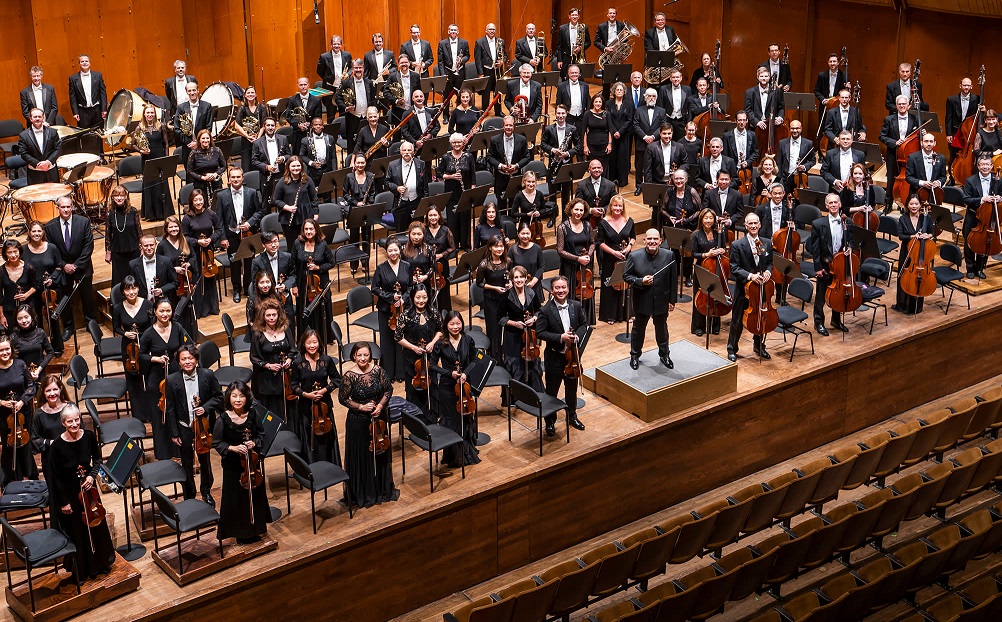
The New York Philharmonic Orchestra, detail from a group portrait in 2018.
Photo from the New York Philharmonic Orchestra website.
Tommasini begins his piece, entitled “To Make Orchestras More Diverse, End Blind Auditions”, by decrying the racism and sexism which, he claims, kept the orchestras of yesteryear predominantly white and male. He then pays tribute to the simple practice that helped erase that racism and sexism from orchestra hiring procedures: the blind audition. Starting in the late 1960s, orchestras began ditching traditional face-to-face auditions in favour of auditions that took place behind screens. With orchestra administrators no longer able to see the race or sex of the orchestra applicant, conscious and unconscious bias in hiring choices became impossible. Musical skill became the sole criterion for winning one of those prized professional playing positions.
This meritocratic turn, Tommasini argues, proved especially beneficial to female players. Whereas in 1970, women made up only 6% of orchestras, they now make up somewhere between a third and half of an average orchestra.
I add that audiences also benefited from meritocratic hiring processes as orchestras played increasingly brilliant renditions of the classics. Those improved performances also showed greater reverence for the original composers themselves. In short, the blind audition was a big win for all lovers of musical excellence – players, living composers, and fans alike.
So why on earth would anyone now call for their abolition?
Tommasini answers this way:
Blind auditions changed the face of American orchestras. But not enough. American orchestras remain among the nation’s least racially diverse institutions, especially in regard to black and Latino artists … Ensembles must be able to take proactive steps to address the appalling racial imbalance that remains in their ranks. Blind auditions are no longer tenable.
In other words, the low number of black and Latino classical musicians means orchestras need to re-institute the old-time racial discrimination Tommasini began his article by decrying. Orchestras need to know which applicants are white and Asian precisely so they can refuse to hire them on that basis, no matter how skilled they are. Blind auditions make racial discrimination impossible, so they must be scrapped. American orchestras, writes Tommasini, should stop “passively waiting for representation to emerge from behind the audition screen”. Instead, they must realize that “removing the screen is a crucial step”.
To summarize: For Tommasini, it’s not just that justice requires injustice. It’s that justice is injustice (injustice in the form of racial discrimination). And if that reminds you of the official slogan of Orwell’s Ministry of Truth in 1984 – war is peace, freedom is slavery, ignorance is strength – you’re not alone.
July 23, 2020
QotD: Herbert Hoover in Australia and China
After a few months, he finds a position as a clerk at a top Bay Area mining firm. One year later, he is a senior mining engineer. He is moving up rapidly – but not rapidly enough for his purposes. An opportunity arises: London company Berwick Moreing is looking for someone to supervise their mines in the Australian Outback. Their only requirement is that he be at least 35 years old, experienced, and an engineer. Hoover (22 years old, <1 year experience, geology degree only) travels to Britain, strides into their office, and declares himself their man. The executives “professed astonishment at Americans’ ability to maintain their youthful appearance” (Hoover had told them he was 36), but hire him and send him on an ocean liner to Australia.
[…]
After a year, Hoover is the most hated person in Australia, and also doing amazing. His mines are producing more ore than ever before, at phenomenally low prices. He scouts out a run-down out-of-the-way gold mine, realized its potential before anyone else, bought it for a song, and raked in cash when it ended up the richest mine in Australia. He received promotion after promotion.
Success goes to his head and makes him paranoid. He starts plotting against his immediate boss, Berwick Moreing’s Australia chief Ernest Williams. Though Williams didn’t originally bear him any ill will, all the plotting eventually gets to him, and he arranges for Hoover to be transferred to China. Hoover is on board with this, since China is a lucrative market and the transfer feels like a promotion. He travels first back to Stanford – where he marries his college sweetheart Lou Henry – and then the two of them head to China.
China is Australia 2.0. Hoover hates everyone in the country and they hate him back […] The same conflicts are playing itself out on the world stage, as Chinese resentment at their would-be-colonizers boils over into the Boxer Rebellion. A cult with a great name – “Society Of Righteous And Harmonious Fists” – takes over the government and encourages angry mobs to go around killing Westerners. Thousands of Europeans, including Herbert and Lou, barricade themselves in the partly-Europeanized city of Tientsin to make a final last stand.
In between dodging artillery shells, Hoover furiously negotiates property deals with his fellow besiegees. He argues that if any of them survive, it will probably because Western powers invade China to save them. That means they will soon be operating under Western law, and people who had already sold their mines to Western companies would be ahead of the game and avoid involuntary confiscation. Somehow, everything comes up exactly how Hoover predicts. US Marines arrived in Tientsin to liberate the city (Hoover marches with them as their local guide) and he is ready to collect his winnings.
Problem: it turns out that “Whatever, sure, you can have my gold mine, we’re all going to die anyway” is not legally ironclad. Hoover, enraged as he watches apparently done deals slip through his fingers, reaches new levels of moral turpitude. He offers the Chinese great verbal deals, then gives them contracts with terrible deals, saying that this is some kind of quaint foreign custom and if they just sign the contract then the verbal deal will be the legally binding one (this is totally false). At one point, he literally holds up a property office with a gun to get the deed to a mine he wants. Somehow, after consecutively scamming half the population of China, he ends up with the rights to millions of dollars worth of mines. Berwick Moreing congratulates him and promotes him to managing director. He and Lou sail for London to live the lives of British corporate bigshots.
As you might also predict, Hoover manages to offend everyone in Britain. Soon he is signing off on a “mutually agreeable”, “amicable” dismissal from Berwick Moreing. They agree to let him go on the condition that he does not compete with them – a promise he breaks basically instantly. He goes into banking, and his “bank” funds mining operations in a way indistinguishable from being a mining conglomerate. Eventually he abandons even this fig leaf, and just does the mining directly.
In other ways, his tens of millions of dollars are mellowing him out. Over his years in London, he develops hobbies besides making money and crushing people. He starts a family; he and Lou have two sons, Herbert Jr and Allen. He even hosts dinner parties, very gradually working on the skill of getting through an entire meal without mortally offending any guest…
Scott Alexander, “Book Review: Hoover”, Slate Star Codex, 2020-03-17.
July 22, 2020
QotD: Urban decline
Intelligent mayors could prevent, halt and perhaps reverse their city decline by paying more attention to efficiency than equity. That might be politically difficult. Regardless of any other goal, mayors must recognize that their first order of business is to retain what economists call net positive fiscal residue. That’s a fancy term for keeping those people in the city who put more into the city’s coffers, in the form of taxes, than they take out in services. To do that might require discrimination in the provision of city services — e.g., providing better street lighting, greater safety, nicer libraries, better schools and other amenities in more affluent neighborhoods.
As one example, many middle-class families leave cities because of poor school quality. Mayors and others who care about the viability of a city should support school vouchers. That way, parents who stay — and put a high premium on the education of their children — wouldn’t be faced with paying twice in order for their kids to get a good education, through property taxes and private school tuition. Some might protest that city service discrimination is unfair. I might agree, but it’s even more unfair for cities, once the magnets of opportunities for low-income people, to become economic wastelands.
Walter E. Williams, “A Mayor’s Most Important Job”, Townhall, 2018-04-18.
July 16, 2020
QotD: The young Herbert Hoover
His father died when he is 6, his mother when he is 10. The orphaned Hoover and his two siblings are shuttled from relative to relative. He spends one summer on the Osage Indian Reservation in Oklahoma, living with an uncle who worked for the Department of Indian Affairs. Another year passes on a pig farm with his Uncle Allen. In 1885, he is more permanently adopted by his Uncle John, a doctor and businessman helping found a Quaker colony in Oregon. Hoover’s various guardians are dutiful but distant; they never abuse or neglect him, but treat him more as an extra pair of hands around the house than as someone to be loved and cherished. Hoover reciprocates in kind, doing what is expected of him but excelling neither in school nor anywhere else.
In his early teens, Hoover gets his first job, as an office boy at a local real estate company. He loves it! He has spent his whole life doing chores for no pay, and working for pay is so much better! He has spent his whole life sullenly following orders, and now he’s expected to be proactive and figure things out for himself! Hoover the mediocre student and all-around unexceptional kid does a complete 180 and accepts Capitalism as the father he never had.
His first task is to write some newspaper ads for Oregon real estate. He writes brilliant ads, ads that draw people to Oregon from every corner of the country. But he learns some out-of-towners read his ads, come to town, stay at hotels, and are intercepted by competitors before they negotiate with his company. Of his own initiative, he rents several houses around town and turns them into boarding houses for out-of-towners coming to buy real estate, then doesn’t tell his competitors where they are. Then he marks up rent on the boarding houses and makes a tidy profit on the side. Everything he does is like this. When an especially acrimonious board meeting threatens to split the company, a quick-thinking Hoover sneaks out and turns off the gas to the building, plunging the meeting into darknes. Everyone else has to adjourn, the extra time gives cooler heads a change to prevail, and the company is saved. Everything he does is like this.
(on the other hand, he has zero friends and only one acquaintance his own age, who later describes him to biographers as “about as much excitement as a china egg”.)
Hoover meets all sorts of people passing through the Oregon frontier. One is a mining engineer. He regales young Herbert with his stories of traveling through the mountains, opening up new sources of minerals to feed the voracious appetite of Progress. This is the age of steamships, skyscrapers, and railroads, and to the young idealistic Hoover, engineering has an irresistible romance. He wants to leave home and go to college. But he worries a poor frontier boy like him would never fit in at Harvard or Yale. He gets a tip – a new, tuition-free university might be opening in Palo Alto, California. If he heads down right away, he might make it in time for the entrance exam. Hoover fails the entrance exam, but the new university is short on students and decides to take him anyway.
Herbert Hoover is the first student at Stanford. Not just a member of the first graduating class. Literally the first student. He arrives at the dorms two months early to get a head start on various money-making schemes, including distributing newspapers, delivering laundry, tending livestock, and helping other students register. He would later sell some of these businesses to other students and start more, operating a constant churn of enterprises throughout his college career. His academics remain mediocre, and he continues to have few friends – until he tries out for the football team in sophomore year. He has zero athletic talent and fails miserably, but the coach (whose eye for talent apparently transcends athletics) spots potential in Hoover and asks him to come on as team manager. In this role, Hoover is an unqualified success. He turns the team’s debt into a surplus, and starts the Big Game – a UC Berkeley vs. Stanford football match played on Thanksgiving which remains a beloved Stanford football tradition.
Scott Alexander, “Book Review: Hoover”, Slate Star Codex, 2020-03-17.


