… an accurate and intelligent account of Nietzsche’s ideas, by one who has studied them and understands them, is, as Mawruss Perlmutter would say, yet another thing again. Seek in What Nietzsche Taught, by Willard H. Wright, and you will find it. Here in the midst of the current obfuscation, are the plain facts, set down by one who knows them. Wright has simply taken the eighteen volumes of the Nietzsche canon and reduced each of them to a chapter. All of the steps in Nietzsche’s arguments are jumped; there is no report of his frequent disputing with himself; one gets only his conclusions. But Wright has arranged these conclusions so artfully and with so keen a comprehension of all that stands behind them that they fall into logical and ordered chains, and are thus easily intelligible, not only in themselves, but also in their interrelations. The book is incomparably more useful than any other Nietzsche summary that I know. It does not, of course, exhaust Nietzsche, for some of the philosopher’s most interesting work appears in his arguments rather than in his conclusions, but it at least gives a straightforward and coherent account of his principal ideas, and the reader who has gone through it carefully will be quite ready for the Nietzsche books themselves.
These principal ideas all go back to two, the which may be stated as follows:
- Every system of morality has its origin in an experience of utility. A race, finding that a certain action works for its security and betterment, calls that action good; and, finding that a certain other action works to its peril, it calls that other action bad. Once it has arrived at these valuations it seeks to make them permanent and inviolable by crediting them to its gods.
- The menace of every moral system lies in the fact that, by reason of the supernatural authority thus put behind it, it tends to remain substantially unchanged long after the conditions which gave rise to it have been supplanted by different, and often diametrically antagonistic conditions.
In other words, systems of morality almost always outlive their usefulness, simply because the gods upon whose authority they are grounded are hard to get rid of. Among gods, as among office-holders, few die and none resign. Thus it happens that the Jews of today, if they remain true to the faith of their fathers, are oppressed by a code of dietary and other sumptuary laws — i.e., a system of domestic morality — which has long since ceased to be of any appreciable value, or even of any appreciable meaning, to them. It was, perhaps, an actual as well as a statutory immorality for a Jew of ancient Palestine to eat shell-fish, for the shell-fish of the region he lived in were scarecly fit for human food, and so he endangered his own life and worked damage to the community of which he was a part when he ate them. But these considerations do not appear in the United Sates of today. It is no more imprudent for an American Jew to eat shell-fish than it is for him to eat süaut;ss-und-sauer. His law, however, remains unchanged, and his immemorial God of Hosts stands behind it, and so, if he would be counted a faithful Jew, he must obey it. It is not until he definitely abandons his old god for some modern and intelligible god that he ventures upon disobedience. Find me a Jew eating oyster fritters and I will show you a Jew who has begun to doubt very seriously that the Creator actually held the conversation with Moses described in the ninteenth and subsequent chapters of the Book of Exodus.
H.L. Mencken, “Transvaluation of Morals”, The Smart Set, 1915-03.
April 16, 2020
QotD: Nietzsche’s ideas
April 14, 2020
Curator at Home | Tanks: 100 Years of Evolution | The Tank Museum
The Tank Museum
Published 12 Apr 2020Join The Tank Museum’s Curator, David Willey, at home, as he reviews the book: Tanks – 100 Years of Evolution by Richard Ogorkiewicz.
Support the work of The Tank Museum on Patreon: ► https://www.patreon.com/tankmuseum
Visit The Tank Museum SHOP & become a Friend: ► https://tankmuseumshop.org/Twitter: ► https://twitter.com/TankMuseum
Instagram: ► https://www.instagram.com/tankmuseum/
Tiger Tank Blog: ► http://blog.tiger-tank.com/
Tank 100 First World War Centenary Blog: ► http://tank100.com/
The role of disease and climate change in the fall of the western Roman Empire
In Quillette, Jaspreet Singh Boparai reviews a new book by Kyle Harper that tries to incorporate what we have learned about epidemics and climate change into the narrative on the decline of Rome:
Why did the Roman Empire fall? The classic answer is given by Edward Gibbon (1737 — 1794), in chapter 38 of the third volume of The History of the Fall and Decline of the Roman Empire (1776 — 1789):
The decline of Rome was the natural and inevitable effect of immoderate greatness. Prosperity ripened the principle of decay; the causes of destruction multiplied with the extent of conquest; and as soon as time or accident had removed the artificial supports, the stupendous fabric yielded to the pressure of its own weight.
Kyle Harper, Senior Vice President and Provost of the University of Oklahoma, seeks to complement Gibbon’s account by emphasising the role of nature, and specifically climate change and infectious disease, in the fall of Rome in his provocative, exceptionally well-written book The Fate of Rome: Climate, Disease and the End of an Empire. Is Harper correct? Were plagues and climate events fatal for Rome?
Harper accepts the conventional view that Rome’s civilizational collapse began in the later second century AD, accelerated amidst chaos and bloodshed during the third century, and culminated in the humiliations of the fifth century, when Rome was famously sacked by barbarians, and the last, weak, insignificant Roman Emperor was pushed off the throne in AD 476.
[…]
Harper begins The Fate of Rome with a description of Rome as it advertised itself in AD 400. Contemporary inventories record: 28 libraries, 19 aqueducts, two circuses, 37 gates, 423 neighborhoods, 46,602 blocks of flats, 1,790 grand houses, 290 granaries, 856 public baths, 1,352 cisterns, 254 bakeries, 46 brothels, and 144 public latrines. The population is estimated at 700,000 or so. This figure diminished rapidly after August 24th, AD 410, when Rome was sacked by an army of Goths.
The traditional date of Rome’s fall is September 4th, AD 476, when the 16-year-old Emperor Romulus Augustus, the son of a former secretary to Attila the Hun, was forced to abdicate the throne by a barbarian warlord, and dismissed to spend the rest of his days at a seaside villa near Naples. His date of death is not recorded; he was too unimportant to fear assassination. At this point, the city of Rome’s population was still as high as 400,000.
Rome was invaded and sacked a few times over the centuries; more and more of it was abandoned; by the 10th century it was a suburb to nowhere surrounded by malarial swamps, and may have had only 9,000 inhabitants. Most of the economy was related to religious pilgrimages; the city was controlled by gangsters and petty warlords. What was left amidst the ruins was sacked again in AD 1084 by an army that outnumbered residents by as much as three to one.
April 13, 2020
QotD: Foucault’s “Ship of Fools”
And so, Foucault tells us, in the fifteenth century there is a sudden emergence of a complex of artistic and philosophical themes linking madmen, the sea, and the terrible mysteries of the world. These culminate in the “Ship Of Fools”:
Renaissance men developed a delightful, yet horrible way of dealing with their mad denizens: they were put on a ship and entrusted to mariners because folly, water, and sea, as everyone then knew, had an affinity for each other. Thus, “Ships of Fools” crisscrossed the seas and canals of Europe with their comic and pathetic cargo of souls. Some of them found pleasure and even a cure in the changing surroundings, in the isolation of being cast off, while others withdrew further, became worse, or died alone and away from their families. The cities and villages which had thus rid themselves of their crazed and crazy, could now take pleasure in watching the exciting sideshow when a ship full of foreign lunatics would dock at their harbors.
This was such a great piece of historical trivia that I was shocked I’d never heard it before. Some quick research revealed the reason: it is completely, 100% false. Apparently Foucault looked at an allegorical painting by Hieronymus Bosch, decided it definitely existed in real life, and concocted the rest from his imagination.
Foucault apologists try to rescue this, say that he was just being poetic in some way. He wasn’t. Page 8 in my copy: “Of all these romantic or satiric vessels, the Narrenschiff [Ship Of Fools] is the only one that had a real existence — for they did exist, these boats that conveyed their insane cargo from town to town.” He really, really doubled down on this point. As far as I can tell, this is just as bad a failing of scholarship as it sounds – and surprising, since everything else about the book gives the impression of Foucault as an incredibly knowledgeable and wide-ranging scholar.
Scott Alexander, “Book review: Madness and Civilization”, Slate Star Codex, 2018-01-04.
April 8, 2020
QotD: Iliad, Odyssey, and Anabasis
I read the trio in the order listed above and the reading got better with each title.
The Iliad is epically epic, rendered in a stiff dactylic hexameter with many, many, many repeating phrases. Between “rosy-fingered dawn” and “the wine-dark sea,” Homer’s epithets lull the reader into a trance, which I suppose was the point in oral storytelling. As a result, the myriad battles and names start blending together.
But, man, those battles are brutal. The semi-divine soldiers are walking Cuisinarts, leading to lovely vignettes like this:
Next Erymas was doom’d his fate to feel,
His open’d mouth received the Cretan steel:
Beneath the brain the point a passage tore,
Crash’d the thin bones, and drown’d the teeth in gore:
His mouth, his eyes, his nostrils, pour a flood;
He sobs his soul out in the gush of blood.Spoiler alert: Erymas didn’t make it. As you can see, I read the older translations of these works; the above is Alexander Pope’s translation. I wanted the feel of the original, so I didn’t hunt down the modern versions. All three books are decidedly un-“woke.”
For The Odyssey, I chose the Harvard Classics version translated by Samuel Butler. This epic was far more interesting (and fun!) than the grim, brain-splattered Iliad. Ulysses slides into a Mediterranean port, feasts on great food, charms exotic women, grabs a pile of loot, and is off to the next isle.
Granted, the fellow gets in a few scrapes along the way, even being forced into love slavery by an eternally gorgeous nymph (poor guy), but returns home after 20 years to wreak vengeance on the cads trying to bed his wife. (Monogamy was pretty much a one-way street in ancient Hellas.)
After reading both of Homer’s works, I think The Iliad is geared toward young men, especially those of a military mindset. It’s all heroism, glory, and honor. I really should have tackled this in my Navy days.
The Odyssey is an even better adventure, but its themes of home, wisdom, fatherhood, and marriage are aimed squarely at those of us with more mileage on the drivetrain. The heroes still kill their share of monsters and men, but Ulysses always chooses brains before brawn.
The real revelation for me was Anabasis by Xenophon. How Hollywood hasn’t released a trilogy of this epic is beyond me. (No, The Warriors doesn’t count.) Here are the Cliffs Notes for this real-life tale:
Cyrus the Younger wants to topple his brother Artaxerxes II from the Persian throne, so he recruits 10,000 Greek mercenaries (including Xenophon) to help. They march 1,500 miles from the east coast of modern-day Turkey to the middle of modern-day Iraq and, in the first big battle, Cyrus is killed.
Uh oh.
Now, the entire Persian army opposes the Greeks. The pro-Cyrus Persians say, “No actually, we were for Artaxerxes the whole time!” and turn against the Greeks. The Hellenic generals ask the King for safe passage … and he murders them.
Xenophon is more a philosopher than soldier, but he gives an inspiring speech, the troops elect him leader, and they all hightail it due north while anyone, everyone, and everything tries to kill them.
They cross deserts and rivers and mountains through searing heat, waist-deep snow, and constant attacks from ahead and behind by an ever-hostile collection of bronze-age barbarians. Upon hitting Turkey’s north shore, they finally enter a Greek colony. Happy ending, right? Well, that’s when the soldiers start turning on each other.
Granted, Anabasis is an amazing war story, but it also serves as a history, an ancient travel guide, and a primer in leadership, group dynamics, and human nature.
If you haven’t read any of these three books, you should make up that deficit.
Jon Gabriel, “My Month in Ancient Greece”, Ricochet, 2018-01-23.
April 7, 2020
Classics Summarized: Beowulf
Overly Sarcastic Productions
Published 28 Aug 2015Beowulf! The tale of the baddest Geat to ever Geat.
Tolkien said that the Dragon in Beowulf is one of only two *true* dragons in all of literature — the other being Fafnir. The influence of both these dragons is very visible in a lot of our more modern fantasy: for instance, where Beowulf’s Dragon inspired Smaug, o chiefest and greatest of calamities, Fafnir inspired C. S. Lewis to include that cursed bracelet thing that turned Eustace into a dragon in Voyage of the Dawn Treader. And I think we all know the badder of those two dragons, so I guess Tolkien — and, by extension, Beowulf — wins this round.
Where was I? Right. BEOWULFFFFF
PATREON: https://www.patreon.com/user?u=4664797
MERCH LINKS:
Shirts – https://overlysarcasticproducts.threa…
All the other stuff – http://www.cafepress.com/OverlySarcas…Find us on Twitter @OSPYouTube!
April 5, 2020
Book Review: The Martini Henry, For Queen and Empire
Forgotten Weapons
Published 8 Dec 2019Get your copy direct from IMA: https://www.ima-usa.com/products/the-…
Or from Amazon here: https://amzn.to/2O7ZGOY
Don’t miss Alpinshaw’s own website: http://www.martinihenry.org
One of the perennial challenges facing authors of firearms reference books is balancing the very technical nit-pickery with the broad historical view of a gun and its context in world events. The emphasis is usually tending towards the technical, but Neil Alpinshaw has done an excellent job of balancing the two, and made the development of the Martini-Henry an engaging story at the same time (a rare feat in this genre!). His new book The Martini-Henry: For Queen and Empire mixes vivid descriptions of British troops fighting across the far-flung corners of the world with their trusted Martinis with a history of the development and modernization of the rifles (and carbines).
Most interesting to me personally was the section on the Martini-Enfield, which was to be the improved version of the Martini-Henry. Chambered for a smaller-bore .402 caliber cartridge and fitted with sights for rapid close-in combat as well as long-range volley fire and sporting a quick-loading magazine attached to the receiver, this is a fascinating look at the highest evolution of the single-shot black-powder military rifle. Its development was dashed by the bolt action Lee and the development of smokeless powder, and the many thousands initially produced were converted into other patterns before seeing service.
Aspinshaw also tackles many of the long-standing myths about the Martini, and particularly its weaknesses. He takes his information directly from period investigations and after-action reports, and avoids the common hearsay. He does not let his own personal passion for the subject prevent him from articulating the true problems the rifles had, but clears away the misconceptions that have become prevalent (like the impossible-to-open ammunition boxes).
Published by International Military Antiques, the cover price is $60, and it is worth every penny for anyone interested in the grand Victorian British Empire or the Martini as a firearms family.
http://www.patreon.com/ForgottenWeapons
Cool Forgotten Weapons merch! http://shop.bbtv.com/collections/forg…
Contact:
Forgotten Weapons
6281 N. Oracle #36270
Tucson, AZ 85704
April 1, 2020
The Orient Express: King of Trains, Train of Kings
Geographics
Published 29 Nov 2019The journey to the Express was not a simple one. For upper class travellers to enjoy a luxury, non-stop train ride across seven nations, it would take the dream of a lovesick Belgian engineer, with his rather interesting supporting cast: an American industrialist, the inventor of US tabloid journalism, the Prince of Wales, and one of the most prolific mass murderers of the 19th and 20th Centuries.
Credits:
Host – Simon Whistler
Author – Arnaldo Teodorani
Producer – Jennifer Da Silva
Executive Producer – Shell HarrisBusiness inquiries to admin@toptenz.net
March 31, 2020
Jane Austen: Behind Closed Doors (English Literature Documentary) | Timeline
Timeline – World History Documentaries
Published 31 Dec 2019Lucy Worsley explores the different houses in which Jane Austen lived and stayed, to discover just how much they shaped Jane’s life and novels.
On a journey that takes her across England, Lucy visits properties that still exist, from grand stately homes to seaside holiday apartments, and brings to life those that have disappeared. The result is a revealing insight into one of the world’s best-loved authors.
Content licensed from Beyond Distribution to Little Dot Studios. Any queries, please contact us at: owned-enquiries@littledotstudios.com
March 25, 2020
QotD: The broken feedback mechanism that brought down the chain bookstores
… the push-model of book sales. Long before there was an Amazon, chain bookstores had cozy deals with publishers that sent most indie bookstores (now beloved in effigy by the left) out of business.
And then the left dominated publishing establishment had a brilliant idea. For decades they’d been trying to forecast failure and success, and failings. Books they pushed out the wazzoo (A river in Sundon’tshine) died on the vine when bookstores refused to stock them because the owners had read them. The books they had designated as to be ignored caught someone’s fancy, and suddenly were all over.
This was inefficient. It caused way too much printing that never got distributed, and much last minute rushed reprinting. (Even leaving aside how often people chose to read the WRONG things, something that started to matter more and more in the last two decades.)
So they came up with the push model. It was, from a certain perspective, brilliant.
That perspective is the one where the real world doesn’t really exist, so you don’t need to hear from it.
Because the managers of the big corporate bookstores ALSO didn’t read, they took instruction beautifully. So the publishers could say “you’ll take 100 of x and 2 of y” and they DID.
For a little while it worked beautifully, in the sense that there were no surprise bestsellers, (and publishing houses hated those. I know someone who unexpectedly sold out her print run in a week. The publishing house took the book out of print. No, seriously.) and the books that got seen and talked about were picked by the publisher. (BTW this wasn’t even always or primarily political. Sure, that existed too sometimes, but mostly it was the crazy fads that publishing convinced itself of. For instance, sometime in the mid two thousands they convinced themselves no one wanted historical mysteries — they weren’t selling, true, probably because they were on NO shelves — but everyone wanted “chick-lit mysteries” that had covers with lots of shoes and dresses and whose plots were “Sex in the City with murder.” I remember trying to find something to read, giving up and going to the used bookstore (then a hundred miles away in Denver) for my mystery fix.)
Of course, they sold less. In fact, as time went on and people got out of the habit of going to the bookstore, because there was never anything they could find to read. I mean, I remember being chased from Science Fiction to Mystery to finally History, to at last the sort of “utility” book you find in the discount bins you know “a chart of history” type of thing just to find something to buy on our bookstore night.
Then we gave up.
Eventually the broken feedback mechanism gave us the demise of Borders — and B & N is not feeling so good itself — and a yawning, desperate chasm in customers’ need for books that meant the way was wide open for Indie and Amazon. Even the early badly proofed indie books were like a breath of fresh air because for the first time I could read outside the trends being pushed.
Sarah Hoyt, “Breaking the Gears”, According to Hoyt, 2018-01-03.
March 21, 2020
Modern Classics Summarized: Stranger In A Strange Land
Overly Sarcastic Productions
Published 20 Mar 2020This book is:
10% Mike
20% stars
15% concentrated power of mars
5% water
50% cult
and 100% topics that are very adultThis video was requested by our longtime patron Joshua A. Demic!
Can you use the “product of the times” defense if the book was wildly controversial for its time? Asking for a comment section…
Our content is intended for teenage audiences and up. No, seriously. We REALLY MEAN IT.
PATREON: https://www.Patreon.com/OSP
MERCH LINKS: https://www.redbubble.com/people/OSPY…
OUR WEBSITE: https://www.OverlySarcasticProductions.com
Find us on Twitter https://www.Twitter.com/OSPYouTube
Find us on Reddit https://www.Reddit.com/r/OSP/
Discord: https://discord.gg/h3AqJPe
March 18, 2020
A classic “dirty book” of the late Middle Ages
I’m not well read in the classics, being much more of a history reader myself, so I didn’t know anything about The Decameron. Arthur Chrenkoff provides a helpful thumbnail of the book:

“A Tale from the Decameron” by John William Waterhouse (1916).
Image from the Lady Lever Art Gallery via Wikimedia Commons.
Giovanni Boccaccio had written The Decameron in the aftermath of the Black Death pandemic of 1348, which carried away somewhere around one third of the European population. The book is set in a monastery, where seven young women and three young men, the Millennials of the day, self-quarantine themselves for ten days to avoid the plague and while away their days (there was no internet in those days, you see) telling each other stories, ten each day, all based around a chosen theme, such as love that ends happily or the tricks that women play on men. Many of the stories are a bit dirty, which is why The Decameron was put on the Catholic Church’s index of prohibited books; more interestingly, it was also banned in Australia until 1973, on pretty similar grounds.
March 15, 2020
QotD: The latest breakthrough in psychological therapy
All therapy books start with a claim that their form of therapy will change everything. Previous forms of therapy have required years or even decades to produce ambiguous results. Our form of therapy can produce total transformation in five to ten sessions! Previous forms of therapy have only helped ameliorate the stress of symptoms. Our form of therapy destroys symptoms at the root!
All psychotherapy books bring up the Dodo Bird Verdict – the observation, confirmed in study after study, that all psychotherapies are about equally good, and the only things that matters are “nonspecific factors” like how much patients like their therapist. Some people might think this suggests our form of therapy will only be about as good as other forms. This, all therapy books agree, would be a foolish and perverse interpretation of these findings. The correct interpretation is that all previous forms of therapy must be equally wrong. The only reason they ever produce good results at all is because sometimes therapists accidentally stumble into using our form of therapy, without even knowing it. Since every form of therapy is about equally likely to stumble into using our form of therapy, every other form is equally good. But now that our form of therapy has been formalized and written up, there is no longer any need to stumble blindly! Everyone can just use our form of therapy all the time, for everything! Nobody has ever done a study of our form of therapy. But when they do, it’s going to be amazing! Nobody has even invented numbers high enough to express how big the effect size of our form of therapy is going to be!
Consider the case of Bob. Bob had some standard-issue psychological problem. He had been in and out of therapy for years, tried dozens of different medications, none of them had helped at all. Then he decided to try our form of therapy. In his first session, the therapist asked him “Have you ever considered that your problems might be because of [the kind of thing our form of therapy says all problems are because of]?” Bob started laughing and crying simultaneously, eventually breaking into a convulsive fit. After three minutes, he recovered and proceeded to tell a story of how [everything in his life was exactly in accordance with our form of therapy’s predictions] and he had always reacted by [doing exactly the kind of thing our form of therapy predicts that he would]. Now that all of this was out in consciousness, he no longer felt any desire to have psychological problems. In a followup session two weeks later, the therapist confirmed that he no longer had any psychological problems, and had become the CEO of a Fortune 500 company and a renowned pentathlete.
Not every case goes this smoothly. Consider the case of Sarah. Sarah also has some standard-issue psychological problem. She had also been in and out of therapy for years, tried dozens of different medications, none of them had helped at all. Then she decided to try our form of therapy. In her first session, the therapist asked her “Have you ever considered that your problems might be because of [the kind of thing our form of therapy says all problems are because of]?” Sarah said “No, I don’t think they are.” The therapist asked “Are you sure you’re not just repressing the fact that they totally definitely are, for sure?” As soon as Sarah heard this, she gasped, and her eyes seemed to light up with an inner fire. Then she proceeded to tell a story of how [everything in her life was exactly in accordance with our form of therapy’s predictions] and she had always reacted by [doing exactly the kind of thing our form of therapy predicts that she would], only she was repressing this because she was scared of how powerful she would be if she recovered. Now that all of this was out in consciousness, she no longer felt any desire to have psychological problems. In a followup session two weeks later, the therapist confirmed that she no longer had any psychological problems, and had become the hand-picked successor to the Dalai Lama and the mother of five healthy children.
Previous forms of therapy have failed because they were ungrounded. They were ridiculous mental castles built in the clouds by armchair speculators. But our form of therapy is based on hard science! For example, it probably acts on synapses or the hippocampus or something. Here are three neuroscience papers which vaguely remind us of our form of therapy. One day, neuroscience will catch up to us and realize that the principles of our form of therapy are the principles that govern the organization of the entire brain – if not all of multicellular life.
Scott Alexander, “Book Review: All Therapy Books”, Slate Star Codex, 2019-11-21.
March 14, 2020
“The people who write such things are thinking with their epidermis and genitalia, which is to say they’re not thinking at all”
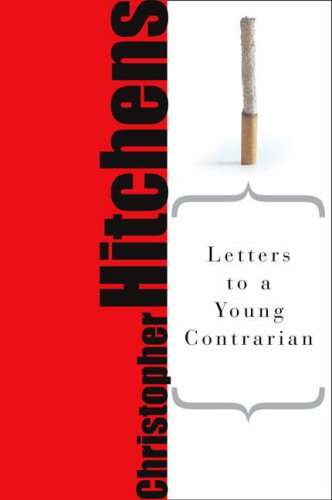
In Quillette, Matt Johnson remembers the great anti-identitarian writer and speaker, Christopher Hitchens:

Christopher Hitchens speaking at The Amaz!ng Meeting held at the Riviera Hotel, Las Vegas, Nevada on 20 January 2007.
Photo detail by ensceptico via Wikimedia Commons.
Hitchens thought fearlessly. As Martin Amis put it, he liked “the battle, the argument, the smell of cordite.” This is why he told the publisher of God is Not Great: How Religion Poisons Everything to organize a book tour that ran through the pulpits of the American South instead of remaining confined to the coasts. It’s why he relished every opportunity to lambaste Bill and Hillary Clinton in front of liberal audiences. It’s why he went after Mother Teresa and Princess Diana. He was an inveterate iconoclast — if there was a bloated reputation to puncture or a cherished dogma to deflate, he saw it as a duty and a pleasure to do so.
It’s no surprise that this oppositional inclination, coupled with blistering rhetorical ability, made Hitchens a deadly debater. After his death in December 2011, countless tributes and articles about Hitchens emphasized what a force he was in the studio and on the debate stage — his erudition and wit, his fluency, his seemingly superhuman memory. Hitchens is unforgettable for all these reasons, but people don’t miss him because he could turn a phrase or win an argument on CNN — they miss him because he thought for himself and refused to apologize for it. He didn’t want to write and speak as the representative of a community: “My own opinion is enough for me,” he told the audience at a debate on free speech in 2007, “and I claim the right to have it defended against any consensus, any majority.”
“Unpopular ideas can be silenced, and inconvenient facts kept dark, without the need for any official ban,” Orwell wrote in his original introduction to Animal Farm (which was, ironically, suppressed). He continued: “Anyone who challenges the prevailing orthodoxy finds himself silenced with surprising effectiveness.” While there was far more official censorship in Orwell’s time, we’re living through an era of pervasive self-censorship, and as Packer explains, this type of silencing is “more insidious than the state-imposed kind, because it’s a surer way of killing the impulse to think, which requires an unfettered mind.”
[…]
Hitchens detested tribal and parochial feelings of any kind, which is why he was dismayed when he witnessed the emergence of identity as a catalyst for political mobilization in the late 1960s and early 1970s. In his memoir, Hitch-22, Hitchens attacked radicals who thought it was “enough to be a member of a sex or gender, or epidermal subdivision, or even erotic ‘preference,’ to qualify as a revolutionary.” When Hitchens first heard the expression “the personal is political,” he knew “as one does from the utterance of any sinister bullshit that it was — cliché is arguably forgivable here — very bad news.” As he put it in a 2008 article:
People who think with their epidermis or their genitalia or their clan are the problem to begin with. One does not banish this specter by invoking it. If I would not vote against someone on the grounds of ‘race’ or ‘gender’ alone, then by the exact same token I would not cast a vote in his or her favor for the identical reason.
It’s easy to imagine what Hitchens would have thought about a recent New York Times headline that declared “The Next President Should Not Be a Man” or a prominent writer and activist who announced that she “will not support white male candidates in the Dem primary.” The people who write such things are thinking with their epidermis and genitalia, which is to say they’re not thinking at all. You don’t have to bother defending candidates’ principles and positions when gender and race are the only relevant variables.
March 11, 2020
A Bridge Too Far | Military History Book Review
TIK
Published 22 Feb 2016The classic history book looking at the battle of Arnhem and Operation Market Garden. Cornelius Ryan’s A Bridge Too Far.
Have you seen my popular Operation Market Garden Documentary?
https://youtu.be/vTUC79o4KmcAlso, if you haven’t done already, follow me on Twitter!
https://twitter.com/TIKhistory