… the entire left seems determined to go around pretending that the intention is the action. That is, they believe whatever they intended to do is what will come about, and there will be no glitch, no second-order effects, nor will people adjust their behavior in ways unanticipated by the left.
The results can be uproariously funny, like the “push model” in publishing leading eventually to the success of indie ebooks. (The short explanation is this: the push model is where, in dealing with chain bookstores, the publishers, who are overwhelmingly leftist, realized they could push them to stock whatever books they wanted to succeed, and then the customers would have to buy them because they were the only thing available. The end result was a nosedive in book sales, the death of Borders, and eventually the success of indie-published ebooks.) However, even there, on the way there, there was the tragedy of people not being able to find good things to read for a long time. (I remember us calling bookstore trips “going to be disappointed by Barnes and Noble.”)
Other times, their carefully laid plans are foiled by new technology — see, for instance, their slow-crawl through news reporting and other institutions being nullified by the internet and blogs, and a bunch of us bums working in their pajamas. […]
But often the tragic/comic effects of their action lead directly to their undoing, in a beautiful, almost Shakespearean effect.
Sarah Hoyt, “Nobody Expects These Predictions”, PJ Media, 2017-12-31.
March 8, 2020
QotD: The essential difference between intentions and results
March 7, 2020
KidLit is woke, woke, woke
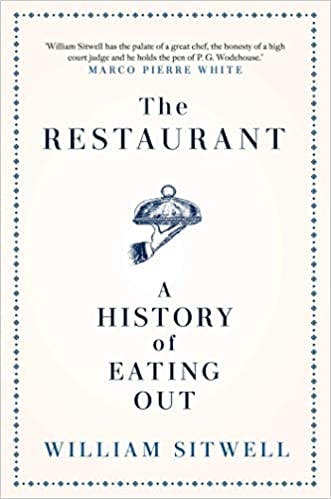
Ed West on the amazing amount of propaganda that has been pumped into books for children:

“New Spin on YA” by Salem (MA) Public Library is licensed under CC BY-NC-ND 2.0
When my daughters were around six and seven, they started French classes at a children’s library in our borough; I had been to our local library countless times but had mainly confined myself to the infant section, and older children’s books were something of a revelation. The entire front desk area was made up of hagiographies of Barack Obama and Nelson Mandela.
And hagiography is the most accurate term: these books were just like the ones I used to read in church. Here Blessed Nelson forgave his jailors, here St Barack healed America of its racial sins – and these are just a couple of examples.
It was a bit of a surprise — learning just how much the tone of kids’ books had changed since I was young and we wore onions on our belts. Nowadays, progressive politics is ever-present in children’s books. Which is fine, if you’re a believer; but if you’re a conservative, you’re faced with raising your children in a culture which is filled with messages you disagree with — sometimes misleading, sometimes anecdotally true but not representative, often just anti-wisdom, giving children the worst possible advice in life. And it’s becoming worse: since about 2016, children’s books have grown way more explicitly political.
Last month, a friend went to Tate Modern and took a picture of the young children’s section. Among the books on display are biographies of Greta Thunberg, something called Queer Heroes, another work called The Rainbow Flag, books about refugees, the bestselling Good Night Book for Rebel Girls — and its countless imitators. Whether you support it or not, this is propaganda; the aim is to raise a generation of progressives just as those Lives of the Saints were designed to bring forth young Christians.
And it works. Conservative ideas are very much in retreat, the subject of a brilliant new book I recently read (which, admittedly, I also wrote).
From a very young age, children are read books and shown films that teach them the core progressive messages: that we are all basically good and only behave badly because of circumstances; that borders and barriers are bad, stereotypes are wrong and girls ought to adopt traditional male gender roles if they want to be respected.
Stereotype inaccuracy is a popular idea — and a false one; in so many kids’ stories the unusual stranger or alien or wild animal who turns up in the neighbourhood will defy the small-minded pessimist who expects the worst. When it comes to gender politics, no self-respecting children’s book in the 21st century has girls aspiring towards being a princess and living happily ever after; to the post-ironic upper-middle-class parents who are the publishers’ main audience, that would just be lame.
March 6, 2020
Some of the early influences on Terry Pratchett’s writing
That is, the books that made him love reading and how he incorporated those early works into his own style. This is from a very late interview with Tom Chivers published after his death in 2015:
“I wasn’t particularly interested in books,” he says. “And my mum, God bless her, she rolled up her sleeves and gave me a penny per page, and it worked beautifully. I think she only gave me about thruppence, because the third book was The Wind in the Willows.” He was so enthused after this, she no longer needed to pay him. Indeed, Pratchett got a job in Beaconsfield library. “You’re talking to a man who thinks, mostly, that his school days assisted him not at all, but the library did, in spades.” He looks at me sharply. “You, when you were young, read lots of books, didn’t you? A –” he pauses, and chooses his next word carefully – “a —-load, I believe?” I did, I reassure him. “A library boy. I recognise the kind. I was the same.” He had an indifferent time at school – he grumbles about the “death or glory” nature of the 11-plus (he passed easily), and about old teachers who had a grudge against him at the High Wycombe Technical High School (“sort of half a grammar school. A big woodwork place”). But the fire kindled by Kenneth Grahame, and Ratty, Mole and Badger, grew, and blazed.
Pratchett’s own sense of humour, a sort of gentle, English, observational thing, stems from this period. “Wodehouse, obviously, but also I tore my way through the Just William books. Richmal Crompton was a very good writer. I think it was from her that I learnt irony. It took me a while to work it out.” Do you think you could define irony, I ask him. “Sort of like iron.” I deserved that, I acknowledge. “When you get hit on the head with it, you know it.”
He also fell in love with RJ Yeatman and WC Sellar, authors of 1066 and All That (“in the Thirties, when the middle classes were getting richer, the two of them really got as much fun out of that as you could. The Thirties were an awful lot of fun. Or at least until the end. Bad ending, the decade, admittedly”) and fell out with his headmaster for “bringing in a copy of Mad magazine. How horrible! And a copy of Private Eye. Seditious.” But it was the now defunct satirical magazine Punch which really formed the comic voice in which he now speaks. “I read my way through all the bound Punches. It was the best way to read history; you got it without granny looking over your shoulder, and it was just astonishing.
“And just about any writer of distinction, anywhere in the English language, worked for Punch. Mark Twain. Jerome K Jerome. And they spoke with the same voice, which opened the door for me – the same kind of slightly satirical, people-are-rather-silly-but-they’re-not-that-bad voice, friendly about humanity, fond of its foibles.” Apart from the books, the other influences of his youth are clear in his own writing – especially the later Ankh-set works, in which he frequently extols the virtues of the poor-but-respectable people living in tiny, tidy terraced houses, and of the self-made men and women. “There used to be a sort of dignity in labour,” he says. “I don’t think there is now.”
He has spoken, often, of how his time on local newspapers made him. He started at 16, in high dudgeon at his headmaster: “On my last day at the school, I left all my stuff behind and phoned up the editor of a local newspaper. He actually used some cliché like, ‘I like the cut of your jib, young man’, or something.” It is the stuff of legend that he saw his first dead body the next day, “work experience really meaning something in those days”, as he put it in his author’s bio in his books.
“Truthfully, without over-egging it, as I often do,” he says, “the library and journalism, those things made me who I am. Journalism makes you think fast. You have to speak to people in all walks of life. Especially local journalism. London journalism can p— in someone’s face and they can’t do anything about it. Try that in local journalism, and someone’s down to complain. Everyone should have one local journalism job in their lives, especially if they’re a nosy parker.” He talks of local journalists in the same way he does his parents, with a sense of quiet heroism. “I interviewed an elderly journalist who’d worked in a small town for a very, very long time. I asked: is it boring? And he said: over there, that’s where a couple pushed their daughter into the attic because she’d had a black baby. And over there, that’s where a man was caught in flagrante delicto with a barnyard fowl. And he’d said to the magistrates, ‘Well, it was my fowl’. Even those small moments, they make you realise the world is not as you thought.”
March 3, 2020
Arnhem by Antony Beevor Book Review
TIK
Published 18 Jun 2018Antony Beevor’s book Arnhem is good — but it contains a flawed argument. So flawed, that there’s a ton of counter evidence that shows it doesn’t work. Here, I will explain the events of the Nijmegen battle, what Beevor’s incorrect statement is, why he has to say it like he did, and how he could have done things differently.
Check out the pinned comment below for more information, notes, links, and sources.
Don’t forget to subscribe if you like history or gaming! And hit the little bell icon to be notified when videos like this are uploaded.
Please consider supporting me on Patreon and help make more videos like this possible https://www.patreon.com/TIKhistory
From the comments:
TIK
1 year agoSelected Bibliography/Sources
Brereton, L. The Brereton Diaries: The War in the Air in the Pacific, Middle East and Europe, 3 October 1941-8 May 1945. Kindle, 2014.
Frost, J. A Drop Too Many. Kindle, 2009.
Hastings, M. Armageddon. Pan Books, 2004.
Robert J. Kershaw, It Never Snows in September. Ian Allan Publishing, 2007.
Mead, R. General Boy: The Life of Lieutenant General Sir Frederick Browning. Kindle, 2010.
Middlebrook, M. Arnhem 1944: The Airborne Battle, 17-29 September. 2009.
Neillands, R. The Battle for the Rhine 1944. Kindle, 2014.
Poulussen, R.G. Lost at Nijmegen. Kindle, 2011.
Ryan, C. A Bridge Too Far. Kindle, 1974
Urquhart, R. Arnhem. Kindle, 1958.
Sosabowski, S. Freely I Served. Kindle, 1982.Links
My “REAL Operation Market Garden” documentary https://youtu.be/vTUC79o4Kmc
“The BAD BOY of Operation Market Garden” A video on General ‘Boy’ Browning https://youtu.be/Dvv8GQIRYVU
The “Who to Blame? John Frost on Operation Market Garden’s Failure” video https://youtu.be/7C_HoMVhKAI
My discussion of Market Garden’s True Purpose using Monty vs Eisenhower’s Memoirs https://youtu.be/f79KgQVL3MM
A video on Kampfgruppen where I talk about some of the Market Garden Kampfgruppen https://youtu.be/zKWczZkQ130
My Book review of It Never Snows in September https://youtu.be/-RRdWCyHpG8
My A Bridge Too Far Book Review video https://youtu.be/D6vDlbsOkQEAdd me on Twitter @TIKhistory
Thanks for watching, bye for now!
March 2, 2020
History-Makers: Anna Komnena
Overly Sarcastic Productions
Published 28 Feb 2020She’s a Princess! She’s a Poet! She’s a Historian! She’s Anna Komnena — the COOLEST writer in the Byzantine Empire! On this episode of History-Makers, jump into the reign of Alexios Komnenos from the perspective of his daughter Anna, and learn about the emperor who saved the Byzantines from certain doom, as well as the traits that make Anna’s Alexiad a masterpiece.
This video was edited by Sophia Ricciardi, AKA “Indigo”.
Our content is intended for teenage audiences and up.Sources & Further Reading: The Alexiad — obviously, what are you waiting for? (Also Norwich’s Byzantium)
PATREON: https://www.Patreon.com/OSP
DISCORD: https://discord.gg/h3AqJPe
MERCH LINKS: https://www.redbubble.com/people/OSPY…
OUR WEBSITE: https://www.OverlySarcasticProductions.com
Find us on Twitter https://www.Twitter.com/OSPYouTube
Find us on Reddit https://www.Reddit.com/r/OSP/
February 29, 2020
QotD: Perceived causes of madness during the Renaissance
Eventually the Renaissance became less of an impending threat and more of a fait accompli, and people’s worries died down a bit. Madness began to be treated more as ordinary immorality. This didn’t necessarily mean people freely chose to be mad – the classical age didn’t think in exactly the same “it’s your fault” vs. “it’s biological” terms we do – but it was considered due to a weakness of character in the same way as other failures.
In some cases, it was the result of an excess of passions, flightiness, or imagination: the most famous example is Don Quixote, who went crazy after reading too many fiction books. This was actually considered a very serious risk by practically all classical authorities, especially for women. Foucault quotes Edme-Pierre Beauchesne:
In the earliest epochs of French gallantry and manners, the less perfected minds of women were content with facts and events as marvelous as they were unbelievable; now they demand believable facts yet sentiments so marvelous that their own minds are disturbed and confounded by them; they then seek, in all that surrounds them, to realize the marvels by which they are enchanted; but everything seems to them without sentiment and without life, because they are trying to find what does not exist in nature.
And a newspaper of the time:
The existence of so many authors has produced a host of readers, and continued reading generates every nervous complaint; perhaps of all the causes that have harmed women’s health, the principal one has been the infinite multiplication of novels in the last hundred years … a girl who at ten reads instead of running will, at twenty, be a woman with the vapors and not a good nurse.
Novels weren’t the only danger, of course. There were other hazards to watch for, like waking up too late:
The moment at which our women rise in Paris is far removed from that which nature has indicated; the best hours of the day have slipped away; the purest air has disappeared; no one has benefited from it. The vapors, the harmful exhalations, attracted by the sun’s heat, are already rising in the atmosphere.
Also, freedom:
For a long time, certain forms of melancholia were considered specifically English; this was a fact in medicine and a constant in literature … Spurzheim made a synthesis of all these analyses in one of the last texts devoted to them. Madness, “more frequent in England than anywhere else,” is merely the penalty of the liberty that reigns there, and of the wealth universally enjoyed. Freedom of conscience entails more dangers than authority and despotism. “Religious sentiments exist without restriction; every individual is entitled to preach to anyone who will listen to him”, and by listening to such different opinions, “minds are disturbed in the search for truth.”
These are a very selective sampling of quotes from just one of Foucault’s many chapters, and some of them are separated by centuries from others, but the overall impression I got was that conformity/wholesomeness/clean living was salubrious, and deviations from these likely to cause madness. Essentially, if you deviate from your humanity a little bit of the way – by failing to be a godly, sober-living, and industrious person – then that can compound on itself and make you lose practically all of your humanity. You will end up a feral madman, little different from a beast.
Scott Alexander, “Book review: Madness and Civilization”, Slate Star Codex, 2018-01-04.
February 28, 2020
QotD: Greek and Roman views of markets
The debate over the Polanyi and Finley view of ancient economic organisation — or perhaps over the Marx and Weber and Polanyi and Finley views — does not seem to have been followed with much attention by libertarians and conservatives. It is worth following, even so. Beyond a very basic level, history is as much about the present as the past. Gibbon’s Decline and Fall of the Roman Empire is a masterpiece of pure history. But it is also an account of what he saw as the long night of reason — and its attendant nightmares — between the golden age of the Antonines and his own age, and an anxious search for reassurance that there would be no second sleep. Macaulay’s History of England is in part an attempt to legitimise the Victorian settlement as the culmination of historical processes that had their local origin in the 1680s. How readers can be brought to think about the past will insensibly affect how they see the present.
Now, if it could be shown that the Aztecs had no concept of market behaviour, and that they were motivated by considerations wholly different from our own, it would be of little consequence. Everything we know about Aztec civilisation raises doubts whether it was worth calling a civilisation. The Aztecs had no writing and were ignorant of metal working and wheeled transport. Their cultural values were expressed in ritual torture, mass human sacrifice and cannibalism. The Mayans and Toltecs and all the others of their sort seem to have been no better. We may deplore the brutality of the Spanish conquest, but still conclude that it was, on balance, a blessing for the peoples of South America.
But it is different with the empires of the ancient Near East — and very different with the Greeks and Romans. These latter races are our intellectual fathers. Everything we ourselves have achieved is built on the foundations they laid. They gave us the names of all our arts and sciences. Eighty per cent of the English vocabulary is derived from Greek or Latin. Knowledge of these languages may be less widely diffused than it was until a century ago. But the general prestige of the Greeks and Romans is barely less now than it was among the mediaeval pilgrims who gaped at the crumbling remains of the Colisseum and the Baths of Diocletian. If it can be shown that they were wholly unlike us in their economic motivations, that would surely place in doubt the notion that market behaviour is natural to us.
And if few people outside the relevant university departments have read Polanyi and Finley, their conclusions are transmitted through popular histories and newspaper articles and television documentaries, and through large numbers of students who, however superficially, are exposed to these conclusions.
Sean Gabb, “Market Behaviour in the Ancient World: An Overview of the Debate”, 2008-05.
February 25, 2020
“… and men like you will teach the kids. Not poems and rubbish; SCIENCE! So we can get everything working!”
Apparently “the Artilleryman” from Jeff Wayne’s musical interpretation of War of the Worlds has taken over some important post at Oxford:
The Classics Faculty at the University of Oxford is considering whether to remove from its undergraduate courses the compulsory study in their original languages of Homer and Vergil. The reasons given are that students from independent schools, where some classical teaching is kept up, tend at the moment to do better in examinations than students from state schools, and that men do better than women. I regard this as the most important news of the week. I do so partly because I make some of my living from these languages, and so have a financial interest in their survival. I do so mainly because I see the proposal as a further enemy advance in the Culture War through which we have been living for at least the past two generations.
I could make this essay into another attack on the cultural leftists. I will come to these, as they are among the villains. They are not, however, the main villains. These are people who sometimes regard themselves, and are generally regarded by others, as conservatives. They once looked to Margaret Thatcher as their political champion, and then to Tony Blair. They were some of the most committed advocates of our departure from the European Union. They now look to the Johnson Government for the final triumph of their agenda. For these people, a nation is barely more than a giant economic enterprise – Great Britain plc. For them, the main, or perhaps the sole, purpose of education is to provide sets of skills that have measurable value in a corporatised market.
These people have been around for a long time. They were satirised by Charles Dickens in Hard Times, where Thomas Gradgrind explains his philosophy of education:
Now, what I want is, Facts. Teach these boys and girls nothing but Facts. Facts alone are wanted in life. Plant nothing else, and root out everything else. You can only form the minds of reasoning animals upon Facts: nothing else will ever be of any service to them. This is the principle on which I bring up my own children, and this is the principle on which to bring up these children. Stick to Facts, sir!
[…]
I agree that state education had become a joke where almost nothing of any kind was taught. As continued by Tony Blair, the Thatcher reforms did eventually drive up standards of literacy and numeracy. But this has been at a terrible cost. Any modern school that wants to be thought desirable must focus on its place in the league tables. This involves working the children like slaves – stuffing them in class with facts that can be regurgitated in tests and therefore graded, then handing out reams of homework that leaves no time for personal development.
The universities continue this conveyor belt approach. Around half of school leavers are pressured into “higher” education. Those who go into the “STEM” subjects – Science, Technology, Engineering, Mathematics – follow a narrow and specialised curriculum that leaves them ignorant of nearly everything outside their own subject. The rest sign up for largely worthless subjects – anything with the words “business” or “studies” in the name. There, they are kept busy with three-hour lectures. I know the value of these, as I used to give them. I fell asleep in one of them, and the students were happy when my voice finally trailed off. Progress in these subjects is measured by coursework that is increasingly plagiarised or ghost-written, or through examinations where the grades are fiddled. At the end of this, graduates – and everyone does graduate – are qualified for nothing better than employment in one of those bureaucracies of management or control that fasten on the actually productive like mistletoe on a tree. The universities look at rising numbers and the fact that graduates do find paid employment, and call this a great success. No one thinks it a disgrace if students never take up a book not on their worthless reading list, or that, having graduated, they never open another book.
Or school leavers at the bottom end are herded into courses in plumbing or hairdressing. I was once invited to teach a module in a Parking Studies degree – this for the certification of traffic wardens. I suppose people are needed to keep the roads clear, and I suppose they should be given some idea of their legal rights and duties. I am not at all sure if they need to have degrees. I am sure that skilled trades of undoubted value are best taught, as they always used to be, through private apprenticeships or informally on the job.
February 22, 2020
Classics Summarized: Dante’s Paradiso
Overly Sarcastic Productions
Published 28 Jun 2015At last! The thrilling conclusion!
Oh god this took so long D:
February 21, 2020
Classics Summarized: Dante’s Purgatorio
Overly Sarcastic Productions
Published 24 Apr 2015Funny story: That half-second-long scream? Took me about four hours to record. I’m really bad at screaming and/or laughing on demand, so I sat down with some videos of the Game Grumps playing horror games and recorded my reactions to use whenever I need them. I now have a fifteen-second sound file of laughter and screams with varying degrees of shameful girliness.
Part 2 of the centuries-old trilogy has finally been summarized! Surely you’ve awaited this moment with bated breath. As always, I am happy to oblige.
February 19, 2020
Classics Summarized: Dante’s Inferno
Overly Sarcastic Productions
Published 21 Mar 2015I’m back, baby!
For this week’s venture into literature, we take a broad look at The Inferno. Hold onto your butts.
PATREON: https://www.patreon.com/user?u=4664797
MERCH LINKS:
Shirts – https://overlysarcasticproducts.threa…
All the other stuff – http://www.cafepress.com/OverlySarcas…Find us on Twitter @OSPYouTube!
February 15, 2020
Theodore Dalrymple on the death penalty
From the New English Review:

“Tombstone Courthouse State Historic Park” by August Rode is licensed under CC BY-NC-SA 2.0
I happened to read a book published in 1965, the year Britain legislated to end the death penalty, titled Murder Followed by Suicide, by the distinguished criminologist, D.J. West. For forty years up to that date, about a third of homicides had been followed by the suicide of those who committed them.
Most people who committed homicide followed by suicide were highly disturbed psychologically, if not outright mad. For example, in killing their families they imagined that they were saving them from a worse fate. They were not the kind of people who would be deterred by anything, including the death penalty.
Here was a natural experiment. I hypothesized that if the death penalty acted as a deterrent, the homicide rate would increase but the proportion of homicide followed by suicide, which in absolute numbers would remain more or less the same, would decrease. My friend, the criminologist David Fraser, looked at the actual figures and found that this was indeed the case. Some sane people who might otherwise be inclined to kill managed to control themselves knowing that they might be executed if they did.
For the death penalty to deter, it was not necessary for it to be applied in every case. Although the death penalty for murder was mandatory in Britain, it was commuted in nine cases out of ten. All that was necessary for it to deter was that execution was a real possibility. We shall never know whether the death penalty would have deterred even more if it had been applied more rigorously.
Does its deterrent effect, then, establish the case for the death penalty, at least in Britain? No, for two reasons. First, effectiveness of a punishment is not a sufficient justification for it. For example, it might well be that the death penalty would deter people from parking in the wrong place, but we would not therefore advocate it. Second, the fact is that in all jurisdictions, no matter how scrupulously fair they try to be, errors are sometime made, and innocent people have been put to death. This seems to me the strongest, and perhaps decisive, argument against the death penalty.
Against this might be urged the undoubted fact that some convicted murderers who have been spared death have gone on to kill again, and this will continue to be so. Victims of those who murder a second time are probably more numerous than those executed in error. Therefore, utilitarians might argue, even if mistakes are sometimes made, that the death penalty overall would save lives. (Let us disregard the fact that those murderers who go on to murder a second time would not necessarily have been executed after their first murder, for nowhere are all murderers executed.)
The argument holds only if utilitarianism is accepted as a true ground of ethics. But few of us would accept that it is. It might be that hanging the wrong person after the commission of a terrible crime would have a better social outcome than hanging no one at all, provided only that it was never publicly known that the wrong person had been hanged: but we would still be horrified at the prospect. Moreover, in practice, the execution of the innocent, once it is known, serves disproportionately to undermine faith in the justice system. And surely it is true that for the state to kill an innocent man is peculiarly horrific.
February 12, 2020
Guderian – Myth & Reality
Military History Visualized
Published 24 Apr 2018Heinz Guderian, the father of the German Panzerwaffe, is one of the best known German generals from the Second World War. He is also known for his opposition to the Battle of Kursk (Operation Zitadelle) and the early deployment of the Panzerkampfwagen V Panther, yet some historians noted recently that many of Heinz Guderian’s claims are not backed up by archives. Well, time to take a closer look.
»» SUPPORT MHV ««
» patreon – https://www.patreon.com/join/mhv
» paypal donation – https://www.paypal.com/cgi-bin/webscr…»» MERCHANDISE – SPOILS OF WAR ««
» shop – https://www.redbubble.com/people/mhvi…»» SOCIAL MEDIA ««
» twitter – https://twitter.com/MilHiVisualized
» twitch – https://www.twitch.tv/militaryhistory…
» minds.com – https://www.minds.com/militaryhistory…» SOURCES «
Pöhlmann, Markus: Der Panzer und die Mechanisierung des Krieges: Eine deutsche Geschichte 1890 bis 1945 (Zeitalter der Weltkriege)
Corum, James S.: The Roots of Blitzkrieg. Hans von Seeckt and German Military Reform
Macksey, Kenneth: “Generaloberst Heinz Guderian”; in: Ueberschär (Hrsg.) Gerd R.: Hitlers militärische Elite – 68 Lebensläufe (3. Auflage), S. 351-358
Guderian, Heinz: Panzer Leader (English Version of Erinnerungen eines Soldaten)
Guderian, Heinz: Erinnerungen eines Soldaten
Munzel, Oskar: Die deutschen gepanzerten Truppen bis 1945
Schacter, Daniel L.: The Seven Sins of Memory: How the Mind Forgets and Remembers
Citino, Robert M.: The German Way of War. From the Thirty Years’ War to the Third Reich
Citino, Robert M.: The Wehrmacht Retreats: Fighting a Lost War, 1943
» CREDITS & SPECIAL THX «
Song: Ethan Meixsell – “Demilitarized Zone”#ww2 #panzergeneral #Guderian