Quotulatiousness

August 10, 2019

Trump as the American Commodus

Filed under: Government, History, Media, Politics, USA — Tags: , , , , — Nicholas @ 05:00

In the New York Review of Books, Tom Holland explains that America isn’t Rome, even if the current President does rather remind him of the Emperor Commodus:

The Course of Empire – Destruction by Thomas Cole, 1836.
From the New York Historical Society collection via Wikimedia Commons.

When Edward Gibbon embarked on his great history of the decline and fall of the Roman Empire, he began his narrative with the accession of Commodus. Marcus Aurelius, the father of the new emperor, was a man who, in the noblest traditions of the Roman people, had combined the attributes of a warrior, a statesman, and a philosopher; Commodus was none of these.

“The influence of a polite age, and the labour of an attentive education,” Gibbon wrote sternly, “had never been able to infuse into his rude and brutish mind, the least tincture of learning; and he was the first of the Roman emperors totally devoid of taste for the pleasures of the understanding.” Instead, Commodus delighted in trampling on the standards by which the Roman political class had traditionally comported themselves. Most shockingly of all — as everyone who has seen Gladiator will remember — he appeared in the arena. His reward for this spectacular breach of etiquette was the cheers of the plebs and the pursed-lipped horror of the senatorial elite. To fight before the gaze of the stinking masses was regarded by all decent upholders of Roman morality as the most scandalous thing that a citizen could possibly do — but Commodus reveled in it. So it was, as Gibbon put it, that he “attained the summit of vice and infamy.”

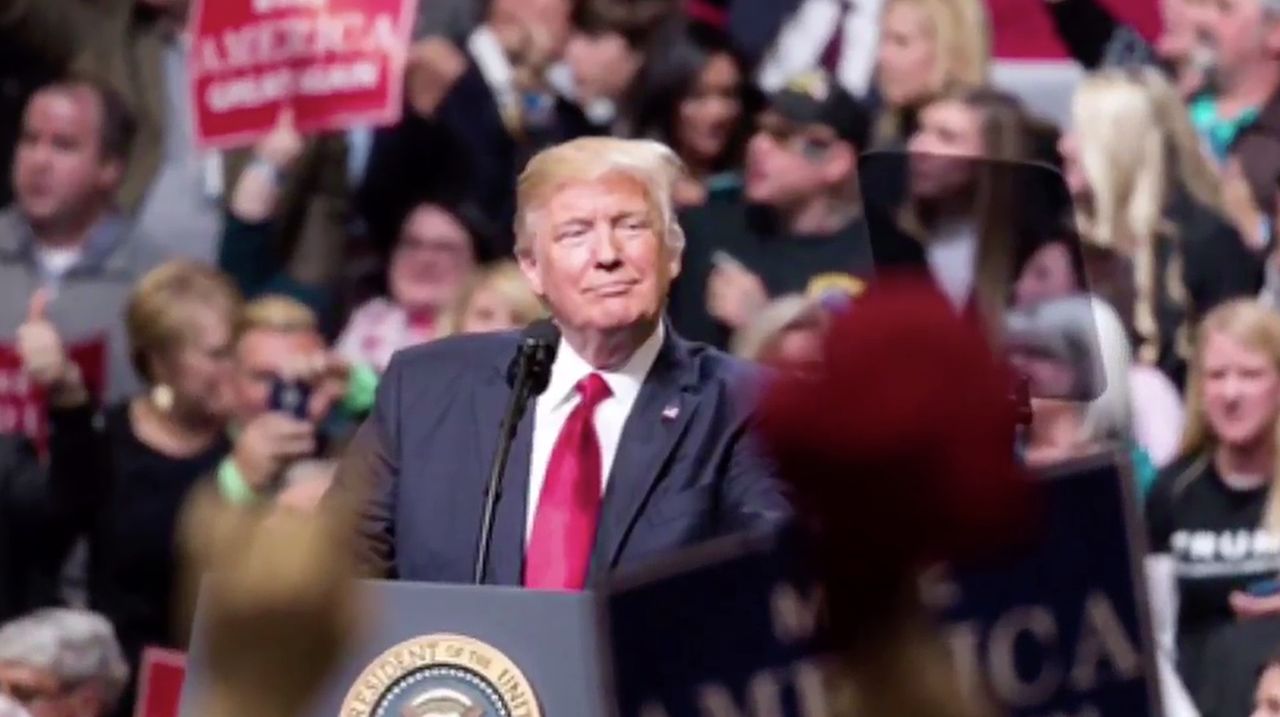
Today, when conservatives contemplate a leader who, far from being merely an enthusiast for World Wrestling Entertainment, has long been an active and flamboyant participant in it, they may experience a similar shudder. Donald Trump, the only president of the United States ever to have been inducted into the WWE Hall of Fame, boasted that he had won “the highest ratings, the highest pay-per-view in the history of wrestling of any kind.” The Battle of the Billionaires — a proxy wrestling match fought in 2007 between Trump and Vince McMahon, the owner of WWE — had culminated in a victorious Trump strapping McMahon to a barber’s chair and shaving him bald. A decade later, Trump made clear just how much of an influence the theatrical violence of WWE had had on his approach to politics when he tweeted a video of himself body-slamming and repeatedly punching McMahon.

It was in a similar spirit, perhaps, that Commodus might have posed after decapitating an ostrich. Trump, smacking home his point, made sure before he tweeted the video to specify who his real target was. Clumsily superimposed over McMahon’s face was the CNN logo. “FraudNewsCNN” ran the hashtag. “The speed with which we’re recapitulating the decline and fall of Rome is impressive,” the conservative intellectual and former editor of the Weekly Standard Bill Kristol tweeted in response. “What took Rome centuries we’re achieving in months.”

The conviction that Trump is single-handedly tipping the United States into a crisis worthy of the Roman Empire at its most decadent has been a staple of jeremiads ever since his election, but fretting whether it is the fate of the United States in the twenty-first century to ape Rome by subsiding into terminal decay did not begin with his presidency. A year before Trump’s election, the distinguished Harvard political scientist Joseph Nye was already glancing nervously over his shoulder at the vanished empire of the Caesars: “Rome rotted from within when people lost confidence in their culture and institutions, elites battled for control, corruption increased and the economy failed to grow adequately.” Doom-laden prophecies such as these, of decline and fall, are the somber counterpoint to the optimism of the American Dream.

H/T to Niall Ferguson for this and the preceding Roman-related link.

August 3, 2019

The unexpected rise of Tulsi Gabbard in the Democratic race

Filed under: Media, Politics, USA — Tags: , , , , , — Nicholas @ 05:00

Brendan O’Neill says that Tulsi Gabbard is the Democratic candidate who is worth supporting:

Tulsi Gabbard speaks at the “People’s Rally” in Washington DC on 17 November, 2016.
Photo by Lorie Shaull via Wikimedia Commons.

The liberal establishment is so scared of Tulsi Gabbard that they’ve convinced themselves she’s an unwitting stooge of Russia, being pushed by Putin’s evil online robots to destroy America from within.

Yes, in the febrile, conspiracist, Russian-bot-obsessed brains of the increasingly unhinged liberal elite, Ms Gabbard, the Democratic congresswoman for Hawaii and easily the most impressive 2020 presidential candidate, is the fave of those dastardly bots whose ultimate aim is to screw over the USA. Following this week’s Democratic candidates’ debate in Detroit, in which Gabbard made mincemeat of the California Democrat Kamala Harris on the issue of judicial authoritarianism, an actual New York Times writer said: “Beware the Russian bots and their promotion of Tulsi Gabbard and sowing racial discord, especially around Kamala Harris.”

This idea that Gabbard – the most principled critic of military interventionism to have emerged in the US mainstream in decades – is in the ascendant because Russian bots and other evil online forces are doing her bidding is becoming widespread among centrists. Newsweek columnist Seth Abramson says “there’s a concerted far-right effort (possibly involving foreign actors) to bolster Tulsi Gabbard”. He based this nuts claim on the fact that, during the Detroit debate, Ms Gabbard was the most-searched name online in every state in the US. Erm, isn’t it possible that viewers who weren’t entirely sure who Ms Gabbard is, but who were impressed by her articulate takedown of Harris and other candidates, took to the web to find out more? Surely that’s a more rational explanation than the idea that a Russian troll army and loads of fascists are on the web promoting Gabbard as chief wrecker of the United States.

It’s ceaseless. “Russia’s propaganda machine discovers 2020 Democratic candidate Tulsi Gabbard”, declares NBC News. What all this nonsense reveals is that Russophobic conspiracy theories play a really important role for dazed Hillary-era centrists. They are now the main means through which these people try to make sense of a political world that no longer conforms to their tastes or their ideology. So just as they used the Russian-bots rubbish to explain why Trump beat Hillary, now they use it to explain why a candidate who, horror of horrors, is opposed to US military intervention overseas is proving popular with viewers and voters. Given that Gabbard’s worldview runs so counter to theirs – on war, on free speech, even on identity politics – the only way they can explain her presence in politics is as a result of foreign, fascistic meddling. That tells us far more about their own political arrogance than it does about Gabbard’s Russian fanbase.

In a sense, they’re right to be scared of Gabbard. She feels like a genuinely fresh force in Democratic politics. A former soldier who served in Iraq, and now the Democratic member of the House of Representatives for the 2nd congressional district of Hawaii, she represents a challenge both to the old militaristic US establishment and to the newer, more woke wing of the establishment.

QotD: The 1968 election and the schizoid break of the American media

… in hindsight 1968 was obviously the country’s schizoid break. The Democratic Party didn’t go completely off the rails — cf. all the candidates they ran, 1972-2004, who were the definition of anodyne — but The Media sure as hell did. 1968 was also the year of the Tet Offensive, you’ll recall, with Walter Cronkite proclaiming the war unwinnable. It doesn’t matter if Cronkite was right or not (of course he wasn’t); nor does it matter if his proclamation actually made everyday Americans lose faith in the war. What matters is that The Media believed it, with all their hearts and souls. No profession is dumber, or more addicted to singing hosannas to itself, than journalism. And then they “got” Richard Nixon, and that’s all she wrote — from there on out, The Media decided they were the country’s real rulers, and what they want, they get.

Fortunately for the Democrats, what The Media wanted and what the Democratic Party wanted were in the same ballpark for most of the next three decades. But then Bill Clinton happened, as my students would write. He played The Media’s Messiah fantasies for all they were worth, such that every bobblehead in the country was still defending him as Liberalism’s avatar even as he was governing (in the few odd moments he bothered) as Newt Gingrich’s mini-me and acting like a frat boy on nickel beer night at the strip club.

You just don’t get over something like that.

Which brings us to the elections of 2000 and 2004. Boy do these look different in hindsight! […] I knew The Media was all-in on the Democrat, like they always are. But at the time, I thought that was a tactical decision. That is, I really believed that their attacks on W. were calculated political moves, designed to drag Gore and especially Kerry over the finish line. I thought that only the Mother Jones types were delusional, Iranian mullah-style fanatics.

Nope. The Media — ALL of them — really did see W. as the antichrist, the Twelfth Invisible Hitler (as the Z Man likes to put it) come to destroy the world. So when despite all their sacrifices to Moloch the Chimperor won, The Media went full retard. Like UFO cultists who keep the faith by telling themselves only their fervent prayers staved off the apocalypse, The Media convinced themselves that only more Social Justice would do …

Severian, “The Spirit of ’68”, Rotten Chestnuts, 2019-07-01.

July 21, 2019

The humble egg – wonder food or deadly poison?

Filed under: Food, Health, Media, Science — Tags: , , , , , — Nicholas @ 03:00

If you’ve paid any attention to popular reporting on nutrition studies over the years, you’ll have noticed how just about any advice on food has not only changed, but has often been completely the opposite of advice offered just a few years earlier. During my teenage years, the egg was pushed (thanks in part to the “Egg Marketing Board”, one of Canada’s supply management bureaucracies) as “the perfect food”. During the next decade, as newer nutrition studies were published, suddenly the wonderful, nutritious egg was now a huge risk to your cardiovascular health and even one egg per week might be enough to kill you. Rinse and repeat for so many other foods and you either stop eating altogether or, more sensibly, stop paying any attention at all to mainstream media interpretations of nutrition studies.

It’s been a tortuous path for the humble egg. For much of our history, it was a staple of the American breakfast — as in, bacon and eggs. Then, starting in the late 1970s and early 1980s, it began to be disparaged as a dangerous source of artery-clogging cholesterol, a probable culprit behind Americans’ exceptionally high rates of heart attack and stroke. Then, in the past few years, the chicken egg was redeemed and once again touted as an excellent source of protein, unique antioxidants like lutein and zeaxanthin, and many vitamins and minerals, including riboflavin and selenium, all in a fairly low-calorie package.

This March, a study published in JAMA put the egg back on the hot seat. It found that the amount of cholesterol in a bit less than two large eggs a day was associated with an increase in a person’s risk of cardiovascular disease and death by 17 percent and 18 percent, respectively. The risks grow with every additional half egg. It was a really large study, too — with nearly 30,000 participants — which suggests it should be fairly reliable.

So which is it? Is the egg good or bad? And, while we are on the subject, when so much of what we are told about diet, health, and weight loss is inconsistent and contradictory, can we believe any of it?

Quite frankly, probably not. Nutrition research tends to be unreliable because nearly all of it is based on observational studies, which are imprecise, have no controls, and don’t follow an experimental method. As nutrition-research critics Edward Archer and Carl Lavie have put it, “‘Nutrition’ is now a degenerating research paradigm in which scientifically illiterate methods, meaningless data, and consensus-driven censorship dominate the empirical landscape.”

Other nutrition research critics, such as John Ioannidis of Stanford University, have been similarly scathing in their commentary. They point out that observational nutrition studies are essentially just surveys: Researchers ask a group of study participants — a cohort — what they eat and how often, then they track the cohort over time to see what, if any, health conditions the study participants develop.

H/T to Marina Fontaine for the link.

July 15, 2019

QotD: The Canadian Broadcasting Corporation

Filed under: Bureaucracy, Business, Cancon, Media, Quotations — Tags: , , — Nicholas @ 01:00

The public broadcaster is a sticky wicket, admittedly. If every privately held media outlet in the land wound up business there would still be CBC News, providing some very serviceable-to-excellent coverage of cities, provinces, territories and their governments across this land. It reduces the private organs’ leverage. But Britain’s private media competes just fine against the BBC, and ours compete just fine against CBC today in the world of television and online news — and well they might.

CBC’s television and online news departments are a haunted museum of bloat, larding tons of valuable content with tiresome victim-mongering; endless why-didn’t-the-government-prevent-this stories; Trudeau propaganda snaps beamed straight in from the Prime Minister’s Office; a dumb, tawdry nightly newscast; an opinion section that pays writers way over market (though, ahem, nothing more than what’s fair!); Canadian Press wire copy of which a lavishly resourced public broadcaster has no earthly need; and an entire clickbait department that’s stealing digital advertising revenue from private-sector outlets. It has no clear mandate to do much of this in the first place — indeed, the Heritage Committee recommended getting CBC out of digital revenue altogether — and unlike CBC Radio and SRC, I’m not aware of a single human being who supports the TV/online status quo.

Chris Selley, “Federal government should stop trying to help private media and fix the CBC”, National Post, 2017-06-20.

July 10, 2019

Fake news, whacky conspiracy theories, and the arrest of Jeffrey Epstein

Filed under: Law, Media, Politics, USA — Tags: , , , , — Nicholas @ 05:00

In The Week, Matthew Walther uses the Epstein case to illustrate why many so-called “low information voters” tend to believe all sorts of odd things like Pizzagate:

The arrest of the apparent billionaire investor Jeffrey Epstein at a New Jersey airport on Saturday on federal charges for crimes he was accused of during the Bush administration should not be surprising to anyone who has followed the news carefully. He may have escaped in 2008 with a ludicrous one-year stint in a county jail that he was allowed to leave six days a week, but his name has never quite been out of the headlines. Between 2008 and 2015 Epstein reportedly settled more than a dozen lawsuits from Jane Does alleging sexual assault; the youngest of his alleged victims was 14 years old.

Mug shot of Jeffrey Epstein made available by the Palm Beach County Sheriff’s Department, taken following his indictment for soliciting a prostitute in 2006.
Image via Wikimedia Commons.

The only question is why did it take this long? Why was the ludicrous deal that gave Epstein and his fellow conspirators immunity in exchange for a slap-on-the-wrist jail sentence ever allowed to go through in the first place?

[…]

We should keep all of this in mind the next time we feel inclined to sneer at so-called “low-information voters,” especially the kookier sort. You know the people I mean. Wackos. Gun nuts. 8channers. Conspiracy theorists in Middle America who watch InfoWars (one of the few journalistic outlets to discuss the issue of pedophilia regularly) and post about QAnon and “spirit cooking” and the lizard people. The news that a globalized cabal of billionaires and politicians and journalists and Hollywood bigwigs might be flying around the world raping teenaged girls will not surprise them in the least because it is what they have long suspected. For the rest of us it is like finding out that the Jersey Devil is real or turning on cable news and finding Anderson Cooper and his panel engaged in a matter-of-fact discussion of Elvis’s residence among the Zixls on the 19th moon of Dazotera.

Among other things, the Epstein case forces us to ask ourselves some uncomfortable questions about the real meaning of “fake” news. There is, or should be, more to being informed than fact-checking formalism. If you have spent the last few years earnestly consuming mainstream left-of-center media in this country you will be under the impression that the United States has fallen under the control of a spray-tanned Mussolini clone who is never more than five minutes away from making birth control illegal. If you watch Fox News and read conservative publications, you no doubt bemoan the fact that Ronald Reagan’s heir is being hamstrung by a bunch of avocado toast-eating feminist witches. Meanwhile, Alex Jones’s audience will tell you that America, like the rest of the world, is ruled by a depraved internationalist elite whose ultimate allegiance is not to countries or political parties or ideologies but to one another. These people believe in nothing. They will safeguard their wealth and privilege at any cost. They will never break rank. And they will commit unspeakable crimes with impunity, while anyone who dares to speculate openly is sued or hounded out of public life as a kook.

July 1, 2019

A new Blackadder?

Filed under: Britain, Humour, Media — Tags: , , — Nicholas @ 03:00

Colby Cosh retweeted a link to British Comedy Guide:

BBC promotional photo for Blackadder Goes Forth.
Photo via http://www.bbc.co.uk/comedy/content/images/2007/02/22/trench_1600_1600x1200.jpg

The stars of Blackadder have reportedly agreed to reunite for a new episode or series, after having met up in London to discuss the idea of bringing back the hit sitcom.

The Sun reports Rowan Atkinson, Tony Robinson, Stephen Fry and Hugh Laurie agreed on a return, after meeting together at the Soho House members club in London.

A source told the newspaper: “They were all having a great laugh and they are all old friends. So they just said, ‘Yes, let’s do it’. It is being written now. Rowan has been saying he is extremely excited.”

The new series will reportedly be set in the modern day, with Blackadder as a university lecturer.

Speaking in a recent newspaper interview, co-writer Richard Curtis said: “The thing about Blackadder was, it was a young man’s show criticising older people, saying how stupid those in authority were. So I did once think, ‘If we ever did anything again, it should be Blackadder as a teacher in a university, about how much we hate young people’.”

June 11, 2019

“[I]t may suddenly occur to you that Mazin has turned a deadly epochal disaster into … a buddy-cop movie”

Filed under: Environment, Health, History, Media, Russia — Tags: , , , , — Nicholas @ 05:00

I haven’t watched Chernobyl, but a lot of sensible people, including Colby Cosh, insist that it’s well-worth the watching:

It looks as though HBO’s miniseries Chernobyl will take the title as the prestige TV event of the first half of 2019. This is pretty remarkable, all things considered. The writer of the series, Craig Mazin, is still described on Wikipedia as “an American screenwriter and film director best known for writing Identity Thief, The Hangover Part II, The Hangover Part III, and The Huntsman: Winter’s War.” The director, Johan Renck, is a Swede who got his start as a Eurodance performer with the nom de guerre “Stakka Bo.” For the zillionth time, HBO has spread its patented secret sauce over unpromising ingredients and delivered superb television.

I am being something of a jerk about these people, of course. Screenwriters don’t have much control over which of their scripts get made and what happens to those scripts on the set, and Mazin is admired as a critic and teacher. (Unusual respect for writers is an obvious component of that HBO magic.) As for Renck, he got from trashy music to HBO through an apprenticeship in music video — the same kind of apprenticeship that brought us David Fincher, Spike Jonze and Michel Gondry. He may, in this regard, be the last gasp of a noble tradition.

It is not that the Chernobyl series doesn’t have elements of hackiness. After spending a couple of hours watching Jared Harris’s austere scientist and Stellan Skarsgård’s smarter-than-he-looks apparatchik warm to each other while trying to save Eastern Europe from obliteration, it may suddenly occur to you that Mazin has turned a deadly epochal disaster into … a buddy-cop movie. Set aside the wonderful visual poetry, the period detail and the fine soundtrack, and the spine you’re left holding is a whodunit. It’s the Case of the Exploding Reactor.

I think Mazin would probably admit this, if he hasn’t already, but if it’s not clear enough, the whole thing winds up in the last episode with a contrived courtroom drama, one which does not quite resemble anything that ever happened in connection with Chernobyl.

Here is the funny and admirable thing: the solution that Mazin’s “cops” work out is highly technical and involved, is explained in careful detail, and is more or less the real solution to the mystery of Chernobyl. Mazin, who is my age and was therefore a teenager when the reactor went kablooie, is not some Jordan Peterson-esque Soviet-history nerd or someone who wanted to turn Chernobyl into a metaphor. It just seems to have occurred to him one day, quite recently, that he knew the word “Chernobyl,” and remembered that Chernobyl was very bad, but wasn’t sure what exactly had happened. When he found out he realized there was a movie in it.

Between the accidents at Chernobyl and Three-Mile Island (in 1979), the nuclear power industry was set back literally decades … despite being one of the best — and safest — answers to the problem of generating enough electricity to keep modern industrial countries humming along while also reducing production of carbon dioxide in the atmosphere. Maybe someone will produce a TV mini-series to de-mystify the American nuclear accident soon, and debunk the half-truths, quarter-truths, and outright lies that still bedevil any discussion of nuclear power in the western world.

May 31, 2019

Basil Fawlty’s “John Cleese” moment

Filed under: Britain, Politics — Tags: , , , , — Nicholas @ 03:00

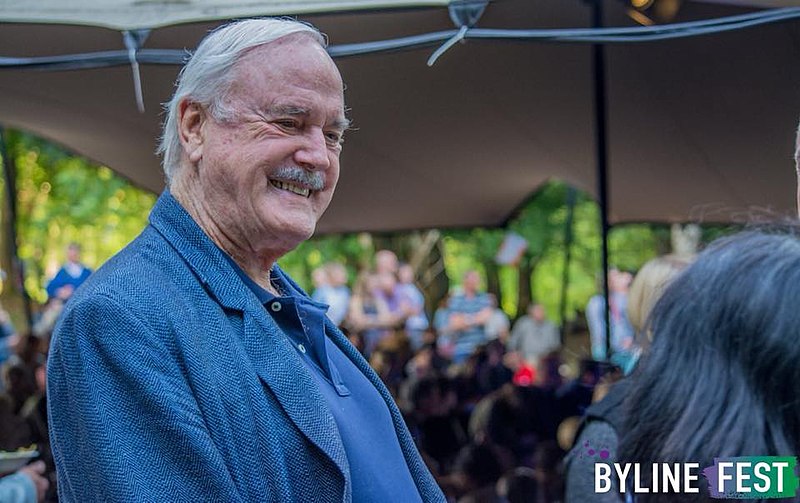
Renowned English comedian Basil Fawlty had a thinko the other day when he (accidentally?) tweeted in the character of noted racist, sexist, white supremacist, homophobe, transphobe, neo-Nazi, etc., etc., “John Cleese”:

Arthur Chrenkoff somehow mistakes the actor for his character (because no real life person like “John Cleese” could possibly exist in post-Cool Brittania, could they?).

As you can imagine, this sentiment didn’t go down very well. The mayor of London, Saddiq Khan, tweeted back “These comments make John Cleese sound like he’s in character as Basil Fawlty. Londoners know that our diversity is our greatest strength. We are proudly the English capital, a European city and a global hub.” Don’t mention the culture war, I guess. Needless to say, various other worthies have joined in to chide Cleese, including questioning what is Englishness anyway?

That’s a good question. Cleese no doubt had in mind the ethnic English, or people who come from the Anglo-Saxon or at least the Anglo-Celtic stock and heritage, who for the great majority of the past millennium and more have constituted the great, if not the overwhelming, majority of the inhabitants of England, and who, again over the course of centuries, have created what we know and understand as the English culture, tradition and institutions. Yes, there have always been migrants arriving and contributing to the mix – Normans, French Huguenots, Jews – but they have been relatively small in number and by and large ethnically and culturally similar. But Cleese’s definition is increasingly at odds with the post-nation state view of belonging. As TV presenter Anila Chowdhry replied to the Monty Python alumnus, “John Cleese, your comment is not only ironic as you live in the Caribbean, but it fails to recognise the benefits of multiculturalism AND that people of different colour in London may actually be English too! I was born & bred in England. I’m brown, English & proud. #ThisIsMyHome”, which of course can be true too, if anything as a legal and cultural matter. This is also coincidentally while it is easier to “become” an American or an Australian or another -an of one of the historically migrant countries where the “-anness” is built on shared civic ideas rather than ethnicity.

(For the record, over 40 per cent of London residents have been born overseas, which is one of the highest proportions in the world, and if you consider major cities, over one million in population, only Toronto, Sydney and Melbourne have more first-generation migrants. Whatever you think, and whatever you think of it, the London of today is certainly not the London of Cleese’s childhood or even his middle age.)

May 26, 2019

HBO’s Chernobyl reviewed by Slava Malamud

Filed under: History, Media, Russia — Tags: , , — Nicholas @ 03:00

Colby Cosh linked to Slava Malamud’s thread, rolled up here courtesy of Thread reader:

May 23, 2019

QotD: “Prestige” TV shows

Filed under: Media, Quotations — Tags: , — Nicholas @ 01:00

Just a bugaboo of mine: These “Prestige” TV show seem to think that a bore-you-to-tears pacing is a de facto marker of “quality writing and deep characterization,” and most TV critics aren’t hip enough to get the con. A lot of these shows’ very slow pace suggests to me they are being written with a target audience of people “multitasking” on the computer as they half-watch in mind. I guess when you’re mostly reading Instagram while the TV is on, you maybe don’t notice that nothing has happened in the past three minutes. And I guess if you’re one of the one-eye-on-tv-one-eye-on-twitter crowd, you need nothing to happen for long stretches, or else you’ll be missing important stuff.

Ace, “Does ‘Prestige TV’ Just Mean Slow, Tedious, Unpleasant and Dimly-Lit?”, Ace of Spades H.Q., 2017-05-15.

April 30, 2019

James May explains the time he nearly killed Jeremy Clarkson

Filed under: Americas, Humour, Media — Tags: , , , , — Nicholas @ 02:00

DRIVETRIBE
Published on 31 Mar 2019

With the Grand Tour trio having been on camera together for over 16 years now, you can forgive them for getting annoyed at each other every once in a while. James May tells us the story of a night in Argentina that put his friendship with Jeremy Clarkson to the test. One piece of advice for everyone out there – don’t let the fire go out.

April 24, 2019

The west is being haunted by the spectre of the “far right”

Filed under: Media, Politics — Tags: , , , , , , — Nicholas @ 05:00

Back in my younger days, I attended a seminar — I think it was Marshall Fritz presenting — that discussed the need to “define, or be defined” as a political tool. If you allow your critics or opponents to set the terms of the debate, you’ve already lost. Arthur Chrenkoff knows this well:

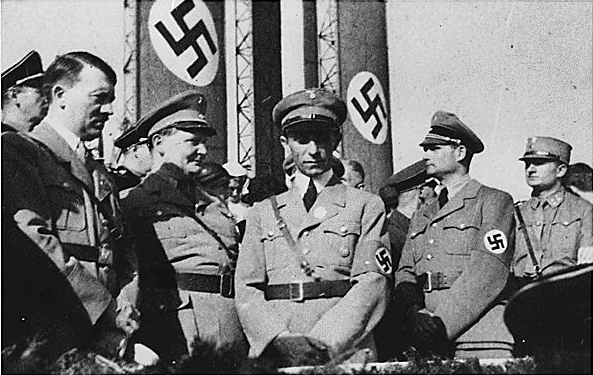
It was not Orwell’s original idea that those who control the language control the society and determine its nature. In any case, the left hardly ever needed inspiration from critics on how to achieve their agenda. They are instinctively good at manipulating speech and cultural expression. Watch out, therefore, for the current pattern of marginalising and delegitimising mainstream ideas they are hostile to by associating them with political fringes.

[…] we increasingly live in a world where, if you believe the media, everywhere you turn there’s the “far right”. Mainstream centre-right ideas and concerns are now being redefined as being somehow associated with and tainted by extremism. If you are worried about the violence against and the persecution of Christians you might be far right. If you value the cultural and philosophical heritage of the Western civilisation you might be far right. If you don’t believe in an open borders immigration policy you might be far right. If you prefer local democracy to transnational institutions you might be far right. If you are defending your country from an armed invasion by another country you might be far right too. If these are all to be the indicators of far right extremism, then what exactly is the “normal” right right now?

This effort to use language as a cudgel has several sinister implications. It delegitimises perfectly normal political ideas through guilt by association. It also creates the impression that the (genuine) far right is much bigger, more influential and more threatening and dangerous than it actually is. This in turn is used to downplay and minimise the dangers of Islamist and far-left extremism and terrorism. But perhaps the scariest aspect of it all is that the left, by manufacturing the far right monster, are actually genuinely contributing to the growth of far-right extremism. The relentless flood of identity politics, grievance and victimhood, and shaming and guilting entire sections of population based on their skin colour and culture is genuinely radicalising some misfits into fascism, like the Christchurch terrorist, for example. For every action there is eventually an equal and opposite reaction. The left might think it’s courageously defanging the fascist dragon but instead it’s just sowing its teeth.

April 23, 2019

David Warren’s musings on the Notre-Dame de Paris fire

Filed under: Architecture, France, Media, Religion — Tags: , , — Nicholas @ 05:00

There have been other incidents since the fire, most pressingly the horrific bombing attacks on Easter Sunday in Sri Lanka, but David Warren would still like us to remember what happened a week ago in Paris:

A week has passed since the fire in, or on, Notre Dame de Paris; let me be the last to comment on a story that is stale-dated by any meejah standard. It dominated international mindwaves for only two days, but left images that viewers may be able to recall many decades from now.

“The church is on fire,” is a commonplace thought, when a church is visibly on fire, and I who am commonplace was thinking that while turning to the news. As an old meejah hack, who happens to know a little about Gothic architecture, I was prepared to discount the “fake news” that would be disseminated in “live time.” For instance, when told that the roof had collapsed, with strong hints that the building was now a write-off, I reflected that the roof is a hat, only. Stone vaulting lies underneath it, except the circle much of the spire fell through (as burnt offering onto the altar). Stone doesn’t burn easily; and even fallen vaulting can be repaired, having been erected with technology we would consider primitive today.

A spectacle: to see the ancient oak timbers, of great girth, burning up like matchsticks. But the craft masons of Notre Dame — far, far in advance of our modern Lego builders — expected fire and lived in a time so simple that they knew oak doesn’t burn without help. It isn’t big matchsticks. The idea that you need some serious accelerants to make it burn, and that only the accelerants would flame like that, was among my initial thoughts. We’ll see what comes of investigations. I also recalled two recent attempts to torch the cathedral, associated with terrorism.

Instead, the explanation of a clumsy accident by restoration workers was immediately accepted by the talking heads, and even Fox News hung up on a guest who had another theory. In favour of the politically correct, plausible account, I learnt that a fire alarm had sounded 23 minutes before the blaze itself was spotted. Paradoxically, this showed the ruinous consequences of depending exclusively on modern technology: the computers directed the first responders to the wrong place, away from the actual heat source.

I can easily believe in electrical short circuits as a fire hazard, especially since having had myself to flee a building where a cost-cutting landlord was having an elevator repaired by what I characterized as “a Romanian comedy team.” (They buzz-sawed through a live electrical cable, then themselves fled the scene of their handiwork as smoke shot up the shaft through the building. Luckily this smoke warned all tenants to evacuate; the building’s siren alone would have been taken by everyone as yet another false alarm.)

April 20, 2019

The damage to (and the PR spin about) Notre-Dame de Paris

Filed under: France, Media — Tags: , , , , — Nicholas @ 03:00

At Never Yet Melted, some quick analysis from Matthew Keogh (posted originally to Facebook) are quoted on the carefully curated public information made available about Notre-Dame de Paris, even while firefighters were still busy trying to contain the blaze:

Notre Dame Cathedral Fire, a few facts you should know courtesy of the mainstream media:

1. The exact cause of the blaze is still unknown.

2. The exact cause of the blaze is still unknown, but it has been ruled an accident (despite the fact that the exact cause of the blaze is still unknown).

3. The exact cause of the blaze is still unknown, but Islam is the real victim here.

4. The exact cause of the blaze is still unknown which means the damage has not been thoroughly assessed, but it’s not arson.

5. The exact cause of the blaze is still unknown which means the damage has not been thoroughly assessed, but Macron is setting up an international appeal for funding to rebuild despite not knowing how much is needed because the damage has not been thoroughly assessed.

This is the sort of information you get when journalists are in bed with the politicians.

« Newer PostsOlder Posts »

Powered by WordPress