Quotulatiousness

October 13, 2025

Communism, Socialism, and Star Trek

Filed under: Economics, Media, Politics — Tags: , , , , , , — Nicholas @ 02:00

Feral Historian
Published 23 May 2025

There’s a long history of Star Trek being equated with communism, both in praise and condemnation. But is it really mappable to modern politics, given that it assumes a different set of socioeconomic conditions? More to the point, is socialism (in the Marxist transitional sense) just a dead-end?

00:00 Intro
00:51 What’s Capitalism?
04:00 Communist, not Socialist
07:14 Theory and Practice
08:51 Goals and Process

πŸ”Ή Patreon | patreon.com/FeralHistorian
πŸ”Ή Ko-Fi | ko-fi.com/feralhistorian
Obligatory shameless plug for Ninti’s Gate
πŸ”Ή https://www.amazon.com/dp/B0CYXH9BWD

October 10, 2025

A POSWID analysis of the contention that “Canada is broken”

It’s my strong opinion that Canada is indeed “broken”, and much but not all the blame for that goes to former Prime Minister Justin Trudeau and increasingly to current PM Mark Carney. It hasn’t all been the direct action or deliberate inaction of the Liberal party and their bureaucratic minions in the civil service, but their fingerprints are on a lot of the damage. Eberhard Englebrecht analyzes Canada using POSWID framing and concludes that “the Purpose Of Canada is What It Does”:

Now, one of the core criticisms made of POSWID by its opponents is that it leans heavily on a consequentialist interpretation of events, completely discarding the roles human intention, error, and agency play in how things transpire.

However, these critiques only hold validity if you take POSWID and make it your singular mode of analysis β€” something that I don’t encourage, nor intend on doing myself. Rather, POSWID should be understood and used as a specific tool with a specific purpose β€” that is, to peel back the noxious platitudes, gaslighting, and wishful thinking that envelop our politics, and hinder our ability to view our present situation with clarity and honesty.

And, unfortunately for the citizenry of Canada, Canadian politics is β€” and has been for some time β€” a domain chock full of the misguided idealism and obfuscation that POSWID seeks to erase.

It is why many Canadians β€” despite their country having experienced a precipitous decline in both general prosperity and the integrity of the common social fabric β€” remain willfully blind to such an absurd degree.

POSWID, as I will be applying it, can tackle many of the polite pleasantries and mindless incantations that have become embedded in Canada’s “consensus” of acceptable political discourse, exposing them as misaligned with reality. This will take one of two forms: the first is to demonstrate that a common belief in the trope in question has led to results contrary to the intentions of those who originally pushed the trope; the second is that the trope was always purely abstract and aspirational, never described reality, and any attempts to align reality with said trope have failed miserably.

Many of these tropes are sacred cows of Canada’s political establishment β€” ideas that they would insist define “what it means to be Canadian” or are things that “we all believe”. Going against them, or merely questioning their validity or suitability, would be considered “UnCanadian”. These tropes have, in many cases, dictated the direction of Canadian society since the 1960s and created the foundations for the paradigms that currently define Canadian politics. Therefore, the deconstruction of these tropes constitutes the deconstruction of these paradigms β€” something that would have cascading ramifications for our country.

It is worth noting, however, that my intention in writing this piece is not to make granular policy prescriptions. My job is merely to provide a clear-eyed account of how three of the values and policy programmes of Canada’s chattering class (you could substitute “chattering class” with “professional-managerial class” or “Laurentian Elite”) are out of step with how this country actually exists β€” a reality felt and experienced at an intuitive level by many, but rarely articulated in public.

October 1, 2025

“Sean Fraser, the current minister of justice and attorney general, has made two major mistakes of late”

If you’re at all interested in Canadian affairs, you should subscribe to The Line … even a free subscription will definitely provide you with some excellent non-propagandistic coverage of what is happening in the dysfunctional dominion. For instance, last weekend’s weekly post from the editors included this segment about Sean Fraser, who is perhaps the worst of Mark Carney’s cabinet (and that takes some doing):

Sean Fraser, as Minister of Immigration, Refugees & Citizenship, during day one of Collision 2023 at Enercare Centre in Toronto, Canada.
Photo by Vaughn Ridley via Wikimedia Commons

We at The Line contend that Sean Fraser, the current minister of justice and attorney general, has made two major mistakes of late.

The first was in deciding not to rescind his decision to spend more time with his friends and family when it became clear that Justin Trudeau was no longer an anchor on his electoral chances. After failing to fix Canada’s housing problem and proving himself integral to blowing apart a pan-partisan consensus on immigration that was once the envy of the world, the man had a real opportunity to leave office on a high note. But, no.

Instead, after hitching his bloated baggage to Mark Carney’s trunk, Fraser decided that Canada needed more of him.

And so, as justice minister, instead of addressing petty stuff like, oh, bail reform, or fixing prisons, or getting crime under control, he turned his attention to … Section 33 of the Charter of Rights and Freedoms. The notwithstanding clause.

You may recall that Quebec’s contentious Bill 21 β€” which prohibits public-service employees in positions of authority, and teachers, from wearing religious symbols while on the job β€” is currently before the Supreme Court of Canada. Despite numerous mixed rulings on the law, Quebec moved forward with its stance on secularism by invoking Section 33, which allows parliaments to temporarily override judicial rulings.

Section 33 was placed in the Charter for precisely this kind of situation; one in which the courts and parliament disagree about governance. As we still live in a democracy, and are still nominally governed by representatives we elect, the clause was always a bit of a compromise gesture intended to preserve parliamentary supremacy after granting the courts broad powers to basically reinterpret law according to an expansive and ever-expanding understanding of both their jurisdiction, and of the concept of “rights” writ large.

Section 33, nonetheless, has maintained a heavy odour about it, which has generally limited its application, especially outside Quebec. Among the Sean Fraser set, and the largely Liberal collection of lawyers who will insist that the Supreme Court isn’t remotely political, and how dare we entertain the thought, Section 33 was only ever intended as a symbolic right.

But as the definitely-not-political Supreme Court has edged ever deeper into the territory of override and governance, so too have provincial parliaments responded with a very not-symbolic application of the clause.

We do think there’s some blame to be placed at everyone’s door, here. But we also never really took much issue with Section 33. That’s because, at heart, we at The Line believe in, well, democracy. We believe that the people we elect should be able to decide our laws; and we believe that while the Supreme Court of Canada serves as an important check on Parliamentary power, that power doesn’t and should never override the will of the people.

And that’s basically where we part ways with Fraser and many of his β€” dare we say it? β€” Laurentian Consensus ilk. Because the unstated critique of the use of Section 33 is basically always the same: these people dislike the application of the clause because they think politics is icky, and that politicians fundamentally cannot be trusted.

In other words, these people don’t actually want a democracy.

They want a technocracy. One in which the smartest and ablest individuals (as defined by them, of course) are the ones who actually get to set the rules and guardrails for society writ large. One in which parliament really is as theatrical, symbolic and pointless as it often regards itself.

There’s an obvious illogical inconsistency here β€” Fraser and his colleagues are politicians. We aren’t sure if this desire to go out and limit the ability of he and his fellow parliamentarians to do the best jobs they can for the citizens reflects mere self-loathing, or a particular brand of Liberal blindspot, one that leads them to believe that they alone among politicians are exempt from anything as crass political considerations and/or motivations. Those moral failures are apparently for the other guys. But in any case, we have an elected official making the case that unelected courts should have the ability to override legislators, and that the legislators should have no recourse. However Fraser rationalizes this to himself, it’s where we are.

We think the people who have issues with Section 33 are generally not being honest with themselves in that regard; we also think that their instinctual aversion to politics (or their exemption of themselves from it) tends to make them naive. If you vest all the real power of governance in a “non-partisan” Supreme Court, what you’ll get is not a dispassionate government, but rather a heavily politicized Supreme Court. We need only look at what has happened in the U.S. over the past 30 years to see how that pans out in the long run.

Look, we at The Line don’t like Bill 21. It’s a bad law. It needlessly tramples on minority rights. But there’s a very obvious way to get that law repealed that doesn’t involve flirting with a full-blown constitutional crisis in the midst of, you know, all of the other crises going on right now.

Elect a government that will repeal that law.

That’s what democracies do.

To me, one of the most puzzling things about the Carney government’s recent actions is the overall incoherence of them. They are going ahead with one of the worst policies inherited from the Trudeau years with the “gun buyback” program that the minister responsible has openly admitted is almost completely a sop to voters in Quebec. Okay, that makes cynical sense as the Liberal vote is about as “efficient” as it possibly can be so losing just a few seats in Quebec would make it impossible for the Liberals to get re-elected. Fine. Scummy as hell, but fine. Yet the challenge to Section 33 is guaranteed to piss off far more Quebec voters — and stir up controversy across the country to boot — and you’re going to stage a pitched battle against pretty much all the provinces before the Supreme Court? Are you sure about that?

September 24, 2025

Zardoz: A Technocratic Parody

Filed under: Britain, Environment, Media — Tags: , , , , , , , — Nicholas @ 02:00

Feral Historian
Published 30 Jun 2023

After another viewing, I now think of Zardoz as an unintentional parody of the technocratic mindset that was congealing in the 1970s. It’s a strange film, a sometimes tedious film, but it’s worth a look if only because there’s nothing else quite like Zardoz.

I keep saying “Immortals” when I mean “Eternals” and I had to recut this one a bit due to some semi-random copyright issues so I apologize for any perceptible jank.

The tip jar at Ko-Fi helps keep Feral Historians in the woods and off the streets.
πŸ”Ή Ko-Fi | ko-fi.com/feralhistorian

September 21, 2025

“What do you remember of the summer when the English awoke?”

Filed under: Britain, History, Media, Politics — Tags: , , , , , , — Nicholas @ 03:00

In The Critic, David Shipley says that the rapid, visible rise in English nationalism is a new and positive thing in Britain:

“Union Jacks and crosses of St George” by Ben Sutherland is licensed under CC BY 2.0 .

What do you remember of the summer when the English awoke? The summer of arguments over what “English” means, hotel protests, and of “flagging”. Overnight the England flag was everywhere. On lampposts, on bridges over motorways, and even painted on roundabouts, the St George’s cross appeared, as a challenge to the old regime, and a threat, or promise, of something new.

For this is new, make no mistake. In my lifetime, England’s flag has only been seen in force during football tournaments and at the rugby. Political figures of the left have seized upon this novelty as they have tried to resist the challenge. The Green Party leadership candidate Ellie Chowns insisted that “it’s traditionally not part of British culture to hang flags”, while Zack Polanski, the party’s new leader, said he wouldn’t fly the flag outside of football tournaments because “of what it represents to people who worry about that problematic history”, before going on to say he’s “worried that we’re importing fascism”. Meanwhile John McTernan, former advisor to Tony Blair insisted that flag flying isn’t an expression of “national pride”, but rather “being used to other people” (my italics).

Notionally sensible centrists, The News Agents suggested that the flag should be redefined as representing “tolerance, liberalism, democracy and Shakespeare” and that would deter “right-wing thugs” from using it. The propagandists of the regime recognise that it is in danger, and seem to believe that “British Values” are enough to hold back the tide.

York Council went ever further, saying that flagging has “coincided with a rise in racist incidents” and have decided to remove hundreds of England and Union flags, to which York’s “Flag Force” responded by announcing they would promptly replace every flag which was removed.

England’s flag was everywhere at the hotel protests too β€” standing for resistance against a Westminster regime that continues to force migrants upon communities which do not want them.

At the end of the summer, as the Last Night of the Proms coincided with the “Unite the Kingdom” march, the flag divide could not have been wider. On the streets of London that Saturday a sea of Union and St George flags, while at the Albert Hall it seemed one could wave any nation’s flag but England’s.

A Times cartoon from July caught the year’s mood. It depicted a group of unthreatening families protesting, holding signs saying We’re not far right – we’re worried about our kids and Deport Foreign Criminals. Beneath them, buried in the earth lurks a bald, beefy man with H A T E tattooed on his knuckles, and Made in England alongside the red cross of St George tattooed on his shoulder. Here, in the favoured paper of the British establishment, we see their fear that a deeper, more dangerous Englishness threatens to rise up, and threaten, or even destroy their order.

September 20, 2025

QotD: Why modern dishwashers suck

    The current standards for dishwashers took effect in 2013. The standards, which were based on a consensus agreement between manufacturers and efficiency advocates, specify minimum energy and water efficiency levels. The standards require that standard-size dishwashers use no more than 307 kWh per year and 5.0 gallons of water per cycle.

    In 2024, DOE finalized amended standards for dishwashers based on a joint recommendation from manufacturers and efficiency advocates. The new standards for dishwashers will cost-effectively reduce energy consumption by 15% relative to the current standards while also cutting water waste. Dishwashers

It is a general problem, but what started me thinking about it was being told by my dishwasher that it would take three and a half hours to wash the dishes. That seems, judging by a quick search online, to be longer than average but still within the normal range. I have not been able to find figures online for how long dishwashers took twenty or thirty years ago but, by what I remember, it was substantially less β€” and the dishes ended up dry, which ours don’t.

The explanation is in the final word of the quote above, “waste”. The owners of dishwashers pay for water and power, so if making them more efficient in those dimensions was costless, did not require giving up something else, there would be no need for the Department of Energy to make the manufacturers do it. I conclude that it was not costless, that it either made dishwashers cost more or do their job less well β€” take longer, not dry the dishes as well, not clean them as well. Using more power or water to do a better job is not waste.

David Friedman, “Optimizing On A Single Variable”, David Friedman’s Substack, 2025-06-02.

September 18, 2025

Broken feedback paths lead to broken organizations … like government

Lorenzo Warby on the ever-increasing dysfunction of most western governments due to the deliberate sabotage of what used to be functional feedback paths:

That institutions within Western democracies have deteriorated in recent decades is clear. That the march of progressivism through the institutions is at the heart of this deterioration is also clear.1

This has been progressives acting like progressives, with all the perverse relationship with information that is at the heart of progressivism. A perverse relationship that leads directly to their degradation of institutions.

Progressives use the imagined future as their benchmark of judgement, but there is no information from the future, so there is no reality-test in their benchmark of judgement. The imagined future can, however, be as glorious as one likes.

Conversely, anything actually created by humans will have downsides and even sins attached. This gives progressives a great rhetorical advantage over anyone who attempts to defend anything humans have actually built. All of the painful history of human achievement is rendered as naught, as mute, in the face of the splendours in their head.

Arnold Kling’s Three Languages of Politics model.

If a group is disproportionately successful, that is not an example to emulate but a sign of their oppressor status. If they are comparatively unsuccessful, that is not a warning about what to avoid, but a sign of their oppressed status. This is an outlook deeply hostile to learning from what does, and does not, work.

For using the glorious imagined future as the benchmark of judgement creates the basis for denigrating anything that comes from the past: which is all the information we have about what works and does not. This includes denigrating the embedded learning in institutions. Even fundamental questions about what is required to sustain a social order get written out of acceptable discourse as not fitting with their imagined-future benchmark of judgement, with the splendours in their heads.

Using the imagined future as one’s benchmark of judgement also naturally leads to concluding that one owns morality, as any opposition to the glorious imagined future is clearly immoral. This leads to, at best, comprehensive disengagement with, and at worse, systematic denigration and delegitimisation of, those who disagree. A systematic denigration and delegitimisation that often involves systematic misrepresentation of those who disagree. The consequence of all this is to block feedback about one’s political projects.

The most extreme instance of this has been the UK, where the BlairBrown Governments of 1997-2010 took power away from elected officials (apart from the PM) and handed it to “experts” in quangoes, to judges via human rights legislation and to the EU. Those with the “correct” understandings could do their thing, insulated from voters. This made the UK a state, a polity, with broken feedbacks.

Modern Western civilisation is a civilisation with broken feedbacks β€” as I discuss here, here, here, here and here β€” but the Blair-Brown constitutional vandalism extended that pattern of broken feedbacks systematically to the British state. The consequences have become grimly obvious. Massive waves of unwanted migrants as part of a massively dysfunctional British state.

If you systematically kill feedbacks from voters, you systematically kill accountability. Of course dysfunction will spread across the organs of the state, as it has. (See here for a discussion of aspects of that horrifying dysfunction.)


  1. Feminisation of institutions has also been a corrosive factor, but that is deeply intertwined with the march of progressivism through the institutions.

Update, 19 September: Welcome, Instapundit readers! Please do have a look around at some of my other posts you may find of interest. I send out a daily summary of posts here through my Substack – https://substack.com/@nicholasrusson that you can subscribe to if you’d like to be informed of new posts in the future.

August 5, 2025

High tech and lust for power are a bad combination

Spaceman Spiff discusses the malign confluence of technocrats and amoral power-seekers (BIRM):

Today’s technocrats, assisted by billionaire tech bros, want to implement a digital surveillance grid that will eradicate any notion of anonymity or privacy forever.

Every major country, including the United States, is working on this with enthusiastic support from governments and their many agents.

The sales pitch is primarily platitudes about protecting people from harm, especially children.

What they seek is the end of the internet as it currently is, which means it will look a lot more like licensed corporate TV than the current free for all. From here their goal is to extend their surveillance operation into every aspect of our lives, from the energy we consume to the food we are permitted to eat.

This will probably cause a lot of damage, but it will ultimately fail.

Tech bro arrogance meets managerial control freakery

We are witnessing a partnership between the technocratic elite, with a limited understanding of technology, and silicone valley titans, who are blinded by the promise of technology.

Each group believes draconian surveillance systems combined with fancy data analysis will solve many societal problems and usher in a new era with them at the helm.

To the technocrats it promises full-spectrum control of all our choices. The food we eat, the material we consume, the ability to travel.

They are salivating at the thought of the ultimate control, the issuing of government-controlled digital currencies they can deactivate on a whim. No steak for the memelords, and no road trips for those without the right carbon profile.

They have been discussing these things for many years with a degree of enthusiasm bordering on mania.

The technologists see a chance to keep in with the powerful, to join the club. If they can be the trusted partner of the visionaries currently wrecking our world they will cash in and perhaps be spared from the concentration camps.

The technologists have powerful tools that promise amazing things. Machine learning, predictive programming, behavioural modelling.

Spotting patterns within trillions of data points is appealing to society’s tinkerers, all the better to predict problematic behaviours and to spot trends. Combined with nudge units and related horrors of social engineering this promises to be the holy grail for a technocratic managerialist regime absolutely convinced it can steer society in enlightened directions, just like they imagine they did during Covid.

It is all very futuristic, and it has clearly impressed our technology gurus as well as those who love control.

But along with the outsized data stores will come outsized cockups they cannot properly plan for.

Climate modelling has promised immense benefits and accuracy for decades and we have yet to see a single successful prediction. Indeed, some of the most famous climate predictions are almost comically wrong but nonetheless trigger endless rounds of funding, chatter, conferences and hubris. Such is the lure of anything that can be adapted to enforce top-down social control.

There have been many attempts to harness technology to predict the stock market, another obvious target. None of them worked either. It doesn’t seem to matter. No one is checking the track record. It is sold on its promise and that works because of who is buying. Or, rather, the type of person who embraces these schemes.

Digital surveillance, digital currencies, digital voting, digital IDs. Everything we do tracked and stored. Such absolute total control would make our superiors into gods as they exploit these powerful tools to direct us towards better versions of ourselves.

There is a delusion at play here. Those closest to this seem lost in their fantasies. They are blind.

August 4, 2025

The EU still dominates in one key area – over-regulation

At the Foundation for Economic Education, ClΓ‘udia AscensΓ£o Nunes identifies the one area that the EU has carved out a unique niche for itself … and it’s global in scope:

EU regulations delenda est

In a world where global power is measured by military strength, technological innovation, or cultural influence, it is striking that the European Union, without housing major tech giants or centers of disruptive innovation, has turned bureaucracy into a tool of global power. It shapes the behavior of global companies, including American big tech firms, which adapt their products to comply with European norms. This phenomenon is known as the “Brussels Effect” and has positioned the EU as the world’s regulatory superpower, fueling growing tensions, particularly with the United States following the re-election of Donald Trump.

The European market comprises 450 million consumers with significant purchasing power, making it an essential destination for global companies. However, access to this attractive market comes with detailed regulations based on the precautionary principle, ostensibly prioritizing consumer and environmental protection, and enforced by an efficient bureaucracy capable of implementing and enforcing rules with precision. This combination encourages companies to align their global operations with European standards, as maintaining different product versions for each region is costly and complex. In practice, this exports European standards worldwide.

American big tech companies such as Apple, Google, and Meta exemplify the impact of the “Brussels Effect,” as they face the requirements of legislations like the Digital Markets Act (DMA) and the Digital Services Act (DSA). These laws have forced companies to overhaul their business models, often at high cost and with significant implications. The DMA, for instance, forced Apple to allow alternative app stores and third-party payment systems on iOS, leading the company to announce, in 2024, global changes to its app policy affecting users even outside Europe, with cost estimates in the billions of dollars to restructure its infrastructure and address revenue losses from the App Store.

Google, under the same regulation, was required to offer alternatives to its search engine on Android and to unbundle services such as YouTube, impacting its global strategy and requiring significant investments in new operating systems and interfaces. The company faced potential fines of up to 10% of its global revenue for non-compliance.

Meanwhile, Meta, under the DSA, was required to invest billions in content moderation systems, a serious imposition that openly seeks to control freedom of expression on a global scale. Operational costs increased by around 20%, according to market analysts. These costly adjustments are ultimately coercive due to the weight of the European market, demonstrating how Brussels shapes corporate behavior on a global scale.

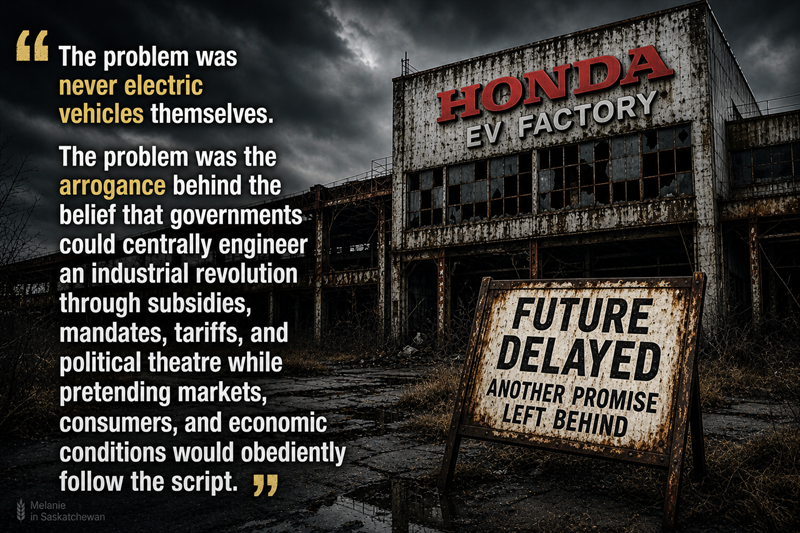
These successive impositions and forced adaptations illustrate precisely Friedrich Hayek’s warning about the dangers of central planning. By replacing spontaneous order with top-down, uniform rules imposed by a technocratic authority, the capacity for local adaptation and respect for market complexity is lost. In this scenario, the European Union increasingly takes on the features of a regulatory Leviathan, a body concentrating disproportionate power in the hands of bureaucrats far removed from citizens, reducing freedom of choice and stifling innovation.

August 2, 2025

Canada’s PM “… has a job which, like that of most politicians, requires low intelligence and moral vacuousness”

At Essays in Idleness, David Warren explains why Canadian political leadership is so desperately uninspiring … except to our enemies and ill-wishers:

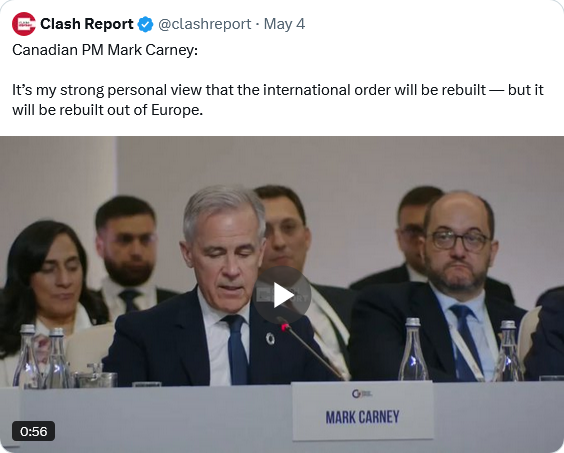
The Canadian prime minister β€” currently Mr Mark Carney β€” has a job which, like that of most politicians, requires low intelligence and moral vacuousness. At his cleverest he may exhibit a species of rat cunning. His views on Israel and the Middle East are quite uninteresting, for no rat cunning is required. He simply observes that an anti-Semitic policy is necessary, now that Muslim immigration exceeds the Jewish vote.

Not one good thing has come out of the Liberal Party since Louis St-Laurent was defeated in 1957. He, at least, achieved mediocrity. But what can we do? Canada’s population is one with the Liberals.

What happened on October 7th, 2023 β€” the slaughter of huge numbers of mostly unarmed Jews when Palestinians got outside the Gaza perimeter β€” can happen again and again. It will happen as long as Palestinians are, from childhood, taught or brainwashed to kill Jews throughout their education and social systems. I also protest against the disproportionate Israeli response. I think the Israelis have been much too restrained.

My model for “Palestine” would be Germany, or Japan. These formerly vicious nations became harmlessly bourgeois after they unconditionally surrendered to the United States and allies. It is ludicrous to think we should have offered them a peace deal, instead.

Damian Penny points out the sad truth that we get more obstinate even in support of a terrible idea when someone tries to bully us out of it:

… I find myself torn between being frustrated with my own government and simultaneously outraged by another government trying to bully us out of a policy decision with which I disagree.

I don’t expect most other Canadians to feel so conflicted, however. Trump may not realize it (nor care one bit even if he does understand it) but he just made it more likely that Canadian voters will rally around the flag.

This flag, specifically.

Nothing, and I mean nothing, has the motivational power of your opponent pushing back against you. That social media has given us a new and effective way to yell at and insult each other across partisan lines is part of the reason partisanship has become so much more entrenched in recent years.

And that includes me. During the last election campaign it was when I argued with Liberals on Facebook that I found myself feeling less like a Conservative voter and more like a Conservative militant, and my sparring partners likely felt the same way, only in the opposite direction.

Now, replace political partisanship with nationalism, and the effect becomes that much stronger.

Of course, hardcore supporters of either side won’t be moved. (That Carney is placing any conditions at all on Palestinian statehood, and saying a two-state solution remains the ultimate goal, makes him a filthy Zionist genocidaire as far as that crowd is concerned.) But sometimes it’s easy to forget that most people simply don’t pay as much attention to, and aren’t nearly as emotionally invested in, this conflict as much as we very online types are.

July 28, 2025

“According to elite theory our world is controlled by a ruling class”

Spaceman Spiff explores the notions of “elite theory”, which in one variant or another seems to be a bedrock belief of most dissidents in the west:

Elite theory is based on an important observation; small groups can more easily organize than large groups.

A modest number of wealthy individuals with common goals will easily run rings around a whole town, region or country because the masses cannot easily organize.

This infers enormous advantages, not the least of which is a small group can discuss and agree a strategy and then stick to it. Because of this some imagine elites as more able than they really are.

But power is tricky. All the money and all the clout in the world means nothing if you can’t project it far.

And our powerful, wealthy elites have one great weakness, they must work through others.

A hierarchy therefore exists which we occasionally glimpse adding to our confusion when we use words like “elites.”

Global rulers are ostensibly at the top. They sit above nation-states. They are truly post-national, controlling central banks and international finance. They are the closest thing we have to world controllers. Some seem to hold power over huge swathes of the globe, like gigantic economic zones.

In addition, all nations have visibly important people; kings, dictators, presidents and others. National elites are those whose power is largely confined to a territory. They lack the international reach of global elites.

The media represent power too. They are there to shape the narratives that govern our perceptions. Most traditional media outlets serve elite goals although some of their members wield tremendous power themselves.

The political class are the obvious lackeys of the powerful. Voters seem constantly amazed politicians never really improve anything once in power, but that is because they don’t serve those below them, only those above. Once you see this their behaviour makes much more sense. They dance to the tune of their paymasters. Their primary job is to pretend democracy works.

The corporate leaders are a less visible example of the same thing. They manage the commercial wing of elite interests while pretending to be businessmen.

Blackrock and others have almost completely abandoned anything resembling capitalism. They are gamers of systems, not the innovators of yesteryear. Just one reason our economies are struggling.

It is the major corporations who have helped establish diversity and climate goals, for instance, so they matter for furthering elite ambitions.

Local and regional elites exist too. Everything is replicated at ever smaller scales, including public sector employees and corporate managers.

These are the foot soldiers often oblivious to any elite goals. They just respond to the incentives and disincentives they are aware of at their level.

There is more, including academia and the major institutions. But the key idea is this is the hierarchy the powerful must work with to get anything done.

Projecting power downwards

At each stage there are numerous problems conveying information and taking action. Running the world is a demanding hobby. Power means nothing unless you can implement your schemes.

Communication is an ever-present issue. Things are misinterpreted. People misunderstand goals and aspirations.

There are probably no written plans. A lot of influence is achieved via think tanks and talking shops like the World Economic Forum, so is open to misinterpretation. It must be like herding cats as these grand ideas cascade down the hierarchy and are misunderstood or overlooked.

This process is further retarded by quotas and ideological capture. Woke brings many distortions; just ask the declining universities. Hiring for alignment does not select for the best. Elite need for control therefore leaves them with reduced options.

We’ve all seen some new appointee take over a position of authority and promptly run it into the ground. Imagine having to rely on that process to get anything done?

The lower down the totem pole we go the less able the people as a general rule. Specifically, in these benthic depths far from the centres of power, the minor lackeys run the grave risk of actually believing the claptrap used to control the masses which can be a real impediment to progress.

Those near the bottom generally lack the intellectual vigour to question anything which makes for obedient slaves, albeit dangerously detached from strategic awareness or understanding of the purpose of the narratives they uncritically embrace.

Such devotion is handy at first, it can provide real energy to make changes. Covid policies were established quickly thanks to this phenomenon. The implementation units were clearly unable to assess evidence or think for themselves; man on TV said wear mask and sit in back garden, so they did.

The price for such mindlessness is confusion and this is where control can be lost.

Anti-white animus gestated on university campuses was useful for the powerful to keep the most dangerous demographic down, and therefore less likely to form a counter-elite, but has now morphed into anti-Israel and pro-Palestine sentiment. It is evident many in academia, oblivious to the purpose of “decolonization,” have now misapplied this ethnic weapon to Israelis and Jews more generally to the horror of the powerful with plans of their own.

We see similar effects with climate zealots in positions of authority, especially in politics and media circles. It can be galling to realize some prominent person you once thought was capable actually thinks we only have twelve years to save the planet or wants to end cheeseburgers to help the coral reefs. Can they really be that impressionable?

What is frustrating for us must be maddening to the powerful as they watch brainwashed clowns misunderstand their goals. When your tools include the gullible things can get out of hand quickly.

That’s why many of the doom and gloom predictions based on some omniscient Illuminati are so off the mark despite their elevated position in society.

Projecting power is akin to shooting people in swimming pools. You can see them under the water, often very clearly, but it doesn’t necessarily help.

You fire off your rounds, but they quickly lose force as they enter some new medium of which you know very little, plus they can whizz away in unexpected directions, entirely missing their mark.

All that money and influence but you have to rely on dancing monkeys to get anything done. What use are trillions when Glenda in HR actually thinks her purpose in life is to root out systemic racism or heal the planet? Her initial zeal can quickly become a liability as ultimately happened during Covid when many began to wake up after the clownshow became too absurd to continue.

July 22, 2025

Bitter reality is coming for the laptop class

Spaceman Spiff foretells the end of the managed paradise of the “unsophisticated sophisticates” of the privileged laptop class who have been able to keep their dream alive at the expense of everyone outside their rarefied and protected bubbles:

There seems to be a section of society populated with gullible conformists who believe many of the manufactured narratives designed to manage society.

Most are the credentialed products of universities. The laptop class of professionals who operate the corporations, institutions and key organizations.

Their worldview is comprised of stories which are downloaded and stored as mental models. Adhering to these narratives can then devolve into belief systems that are placed beyond criticism. This in turn can easily degenerate into a kind of fanaticism.

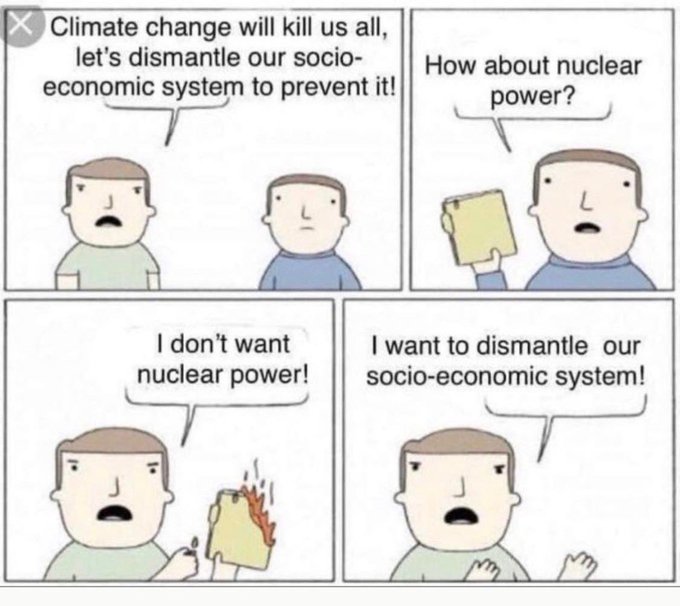
Ideas like mass migration and the destruction of reliable energy sources are crazy and yet they are primarily in existence thanks to the efforts of this layer of society, the professionals who implement policies desired by the ruling class.

While some among them are cynically exploiting today’s fads for their own ends, many seem to be true believers.

How can they believe these things so completely? What is going on?

Rebels searching for causes

Most of today’s great crusades seem to have the same characteristics. They are easily downloaded and consumed, they are socially rewarded within some circles, and they are not immediately obvious as issues at all.

The most popular are pre-prepared to an almost comical degree and thoroughly focus-grouped to ensure minimal friction among their consumers.

Many even come with slogans attached. Diversity is our strength is every bit as artificial as two weeks to flatten the curve, but it goes down easily with no thought required, which is the point.

The ideas that stick are the ones most useful to demonstrate virtue. Showing off to your peers you are non-sexist, non-racist and non-homophobic helps secure your place in many professional hierarchies where visible in-group membership matters.

The most prized causes appear to be non-obvious where the conclusions are not reachable with the evidence available.

This confusing aspect makes many question some new idea or policy, but in the laptop class often triggers a sense of smugness that they see beyond the obvious to the obscure thanks to their impressive intellects. Criticism can then be dismissed as simplistic providing a rewarding sense of superiority.

Much of the above is evident in the belief systems of today’s professional classes.

[…]

What to make of all this?

Does any of this matter? Yes it does. It is this section of society that ultimately puts in place the ruinous ideas of the ruling class.

They are in the corporate offices, the local councils and the schools. They are running the television stations and the publishing houses. They are captured by groupthink. Everyone they know thinks as they do. All criticism is easily dismissed.

Very little can penetrate this bubble. Except one thing.

Over time reality intrudes. Models should be updated to accommodate new findings and observations, but that is challenging when they have been uncritically downloaded to satisfy psychological needs.

Contrary evidence threatens one’s sense of self so scrutiny is avoided. When these avoidances ultimately fail some dig even deeper. Magical thinking seems to be everywhere.

The ultimate effect is either a reassessment of one’s worldview, or a psychotic break from reality. We see examples of the latter; Trump Derangement Syndrome is one well known borderline psychosis but there are others.

July 1, 2025

QotD: Canadian measuring “systems”

Filed under: Cancon, Government, History, Quotations, WW1 — Tags: , , — Nicholas @ 01:00

There’s a section in a book about First World War that’s been called the most Canadian paragraph ever written. It’s in the book At the Sharp End by historian Tim Cook, and he’s describing the way Canadian soldiers built trenches. Writes Cook, “the front-line trenches were ideally some six feet deep, and surmounted by another half to full meter of parapet”. If you’re Canadian, you probably didn’t notice anything off about that. But what Cook did was to casually mix two measurement systems in a single paragraph: He starts off by measuring the trench in feet, and then switches to meters for no particular reason. And Canadians do this all the time. Most of the world uses the metric system. The Americans use imperial. And then Canada uses an unholy amalgam of both. It’s one of our weirdest national traits – and one of the first things that immigrants notice when they come here.

We measure weather and room temperature in Celsius, but we still bake in Fahrenheit. Your weight is in pounds, but your car’s weight is in kilograms. You drink alcohol by the ounce, but soda by the millilitre. The phenomenon was summed up in an imaginary dialogue by Canadian comedian Janel Comeau. Scene: An American, a European and a Canadian. The American says “I use miles and pounds”. The European says “I use kilometres and kilograms”. The Canadian takes an assortment of global measuring systems, crushes them into a powder, and snorts them like cocaine before declaring, “I’m 5’3, I weigh 150lbs, horses weigh 1000kgs, I need a cup of flour and 1L of milk”.

And none of this is an accident. Canada’s bizarre system of half-imperial, half-metric represents the truce lines of a culture war battle whose scale and ferocity is all but forgotten today. There were people in the 1970s who wanted to purge this country of any memory of the imperial system. Feet, inches and gallons were a relic of a backwards, colonial age, and the future belonged to rationalist, scientific metrication. A small army of bureaucrats armed with meter sticks and one-litre jugs were dispatched to spread the metrication gospel. And if you didn’t comply with the new metric zeitgeist, you could face severe consequences. For example, if you were a gas station continuing to sell gas by the gallon instead of by the litre, you could be fined.

But this grand plan to reprogram the Canadian psyche was thwarted, and thwarted forever. And when you buy beef by the pound or do your carpentry with inches and feet, you are the unwitting legacy of a populist, anti-government protest movement that hated the metric system and went all-out to stop it. We’re talking protests. Lawsuits. Civil disobedience. This story will literally feature a group of pissed-off Conservative MPs opening a “freedom” gas station to defy federal mandates to sell gasoline by the litre.

Tristin Hopper The metric schism | Canada Did What?”, National Post, 2025-03-11.

June 25, 2025

H.G. Wells’ Things To Come: Through The Eyes of its Time

Feral Historian
Published 10 Jan 2025

H.G. Wells’ Things To Come played much differently in 1936 than it does today. So much so that it offers us an insight into the politics of the period if we can step back from our post-WWII understanding and look at it on its own terms.

Link to the Coupland essay.
http://digamoo.free.fr/coupland2000.pdf

00:00 Intro
02:08 Revolution Envy
05:15 The Gulf of Time
06:32 Wells and the BUF
08:02 Empire and Establishment
12:11 The World State
15:18 To Understand the Past …

June 8, 2025

Managerialism – threat or menace?

Filed under: Bureaucracy, Business, Government, USA — Tags: , , , , — Nicholas @ 05:00

In the New York Times (don’t worry … link is to an archived version), Nathan Levine explains to NYT readers why there is such a push back against the over-mighty technocratic organizations that have been running more and more of our fading civilization:

It is the culmination of a once marginalized, now transformative strand of political thought about who really holds power in the modern American system. Namely, that our democracy has been usurped by a permanent ruling class of wholly unaccountable managers and bureaucrats.

Anti-managerialism is back. Well positioned to answer decades of frustration with mainstream conservatives’ failure to deliver results, this old idea has become the central principle of the new right.

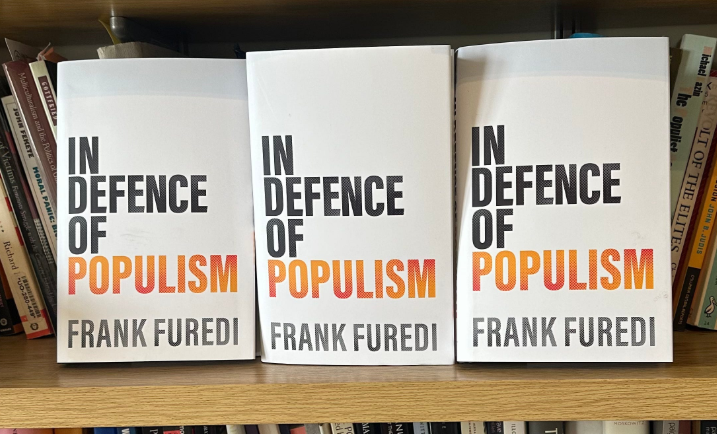
In fact, much of what is commonly called “populist” politics can be more accurately described as part of an anti-managerial revolution attempting to roll back the expansion of overbearing bureaucratic control into more and more areas of life.

Though it has so far met with limited success amid stiff resistance, grasping the nature of this anti-managerialism is essential to understanding the Trump administration’s effort to transform America’s institutional landscape, from government to universities and major corporations.

The idea’s intellectual history begins with the political philosopher James Burnham, who argued in his seminal 1941 book, The Managerial Revolution, that the aristocratic capitalist class was in the process of being overthrown by a revolution β€” just not, as the Marxists predicted, by the working class.

Instead, the exponential growth of mass and scale produced by the Industrial Revolution meant that in both corporation and state it was now those people cleverest at applying techniques of mass organization, procedure and propaganda β€” what he called the managerial class β€” who effectively controlled the means of production and would increasingly come to dominate society as a new technocratic oligarchy.

The book made an especially significant impression on George Orwell, who remarked that a managerial class consisting of “scientists, technicians, teachers, journalists, broadcasters, bureaucrats, professional politicians: in general, middling people”, hungry for “more power and more prestige”, would seek to entrench “a system which eliminates the upper class, keeps the working class in its place, and hands unlimited power to people very similar to themselves”.

Orwell was particularly struck by Burnham’s observation that the major political systems of the day β€” fascism, Communism and New Deal-era social democracy β€” were fundamentally similar in their turn toward the bureaucratic management of society. He observed that everywhere “laissez-faire capitalism gives way to planning and state interference” and “the mere owner loses power as against the technician and the bureaucrat”. Believing that accelerating managerial control risked dragging every society inexorably into totalitarianism, Orwell made Burnham’s ideas the basis of his novel 1984.

While the Cold War persisted, the view that America’s government might share some traits with the Soviet Union unsurprisingly proved unpopular, especially among Washington’s conservative establishment.

Nonetheless, the managerial class continued to grow, regardless of which political party controlled the government. Cold War defense budgets drove a relentless expansion of security state bureaucracy and the military-industrial complex. The advent of Great Society welfare programs and the Civil Rights Act demanded a re-engineering of social relations, prompting a dramatic proliferation of lawyers, regulatory bureaucrats and corporate compliance officers throughout much of public and private life. An ever-greater proportion of Americans began funneling through the credentialing machinery of higher education, inflating demand for yet more upper-middle-class managerial jobs.

« Newer PostsOlder Posts »

Powered by WordPress