
MoAn Inc.
Published 31 Oct 2024A Bit About MoAn Inc. — Trust me, the ancient world isn’t as boring as you may think. In this series, I’ll talk you through all things Cicero. I hope you guys enjoy this wonderful book as much as all us nerds do.
(more…)
November 4, 2024
Cicero 101: Life, Death & Legacy
Comments Off on Cicero 101: Life, Death & Legacy
October 29, 2024
QotD: The Roman Republic after the Social War
The Social War coincided with the beginning of Rome’s wars with Mithridates VI of Pontus – the last real competitor Rome had in the Mediterranean world, whose defeat and death in 63 BC marked the end of the last large state resisting Rome and the last real presence of any anti-Roman power on the Mediterranean littoral. Rome was not out of enemies, of course, but Rome’s wars in the decades that followed were either civil wars (the in-fighting between Rome’s aristocrats spiraling into civil war beginning in 87 and ending in 31) or wars of conquest by Rome against substantially weaker powers, like Caesar’s conquests in Gaul.
Mithridates’ effort against the Romans, begun in 89 relied on the assumption that the chaos of the Social War would make it possible for Mithridates to absorb Roman territory (in particular the province of Asia, which corresponds to modern western Turkey) and eventually rival Rome itself (or whatever post-Social War Italic power replaced it). That plan collapsed precisely because Rome moved so quickly to offer citizenship to their disgruntled socii; it is not hard to imagine a more stubborn Rome perhaps still winning the Social War, but at such cost that it would have had few soldiers left to send East. As it was, by 87, Mithridates was effectively doomed, poised to be assailed by one Roman army after another until his kingdom was chipped away and exhausted by Rome’s far greater resources. It was only because of Rome’s continuing domestic political dysfunction (which to be clear had been going on since at least 133 and was not a product of the expansion of citizenship) that Mithridates lasted as long as he did.
More than that, Rome’s success in this period is clearly and directly attributable to the Roman willingness to bring a wildly diverse range of Italic peoples, covering at least three religious systems, five languages and around two dozen different ethnic or tribal identities and forge that into a single cohesive military force and eventually into a single identity and citizen body. Rome’s ability to effectively manage and lead an extremely diverse coalition provided it with the resources that made the Roman Empire possible. And we should be clear here: Rome granted citizenship to the allies first; cultural assimilation only came afterwards.
Rome’s achievement in this regard stands in stark contrast to the failure of Rome’s rivals to effectively do the same. Carthage was quite good at employing large numbers of battle-hardened Iberian and Gallic mercenaries, but the speed with which Carthage’s subject states in North Africa (most notably its client kingdom, Numidia) jumped ship and joined the Romans at the first real opportunity speaks to a failure to achieve the same level of buy-in. Hannibal spent a decade and a half trying to incite a widespread revolt among Rome’s Italian allies and largely failed; the Romans managed a far more consequential revolt in Carthage’s North African territory in a single year.
And yet Carthage did still far better than Rome’s Hellenistic rivals in the East. As Taylor (op. cit.) documents, despite the vast wealth and population of the Ptolemaic and Seleucid states, they were never able to mobilize men on the scale that Rome did and whereas Rome’s allies stuck by them when the going got tough, the non-Macedonian subjects of the Ptolemies and Seleucids always had at least one eye on the door. Still worse were the Antigonids, whose core territory was larger and probably somewhat more populous than the ager Romanus (that is, the territory directly controlled by Rome), but who, despite decades of acting as the hegemon of Greece, were singularly incapable of directing the Greeks or drawing any sort of military resources or investment from them. Lest we attribute this to fractious Greeks, it seems worth noting that the Latin speaking Romans were far better at getting their Greeks (in Southern Italy and Campania) to furnish troops, ships and supplies than the Greek speaking (though ethnically Macedonian) Antigonids ever were.
In short, the Roman Republic, with its integrated communities of socii and relatively welcoming and expansionist citizenship regime (and yes, the word “relatively” there carries a lot of weight) had faced down a collection of imperial powers bent on maintaining the culture and ethnic homogeneity of their ruling class. Far from being a weakness, Rome’s opportunistic embrace of diversity had given it a decisive edge; diversity turned out to be the Romans’ “killer app”. And I should note it was not merely the Roman use of the allies as “warm bodies” or “cannon fodder” – the Romans relied on those allied communities to provide leadership (both junior officers of their own units, but also after citizenship was granted, leadership at Rome too; Gaius Marius, Cicero and Gnaeus Pompey were all from communities of former socii) and technical expertise (the Roman navy, for instance, seems to have relied quite heavily on the experienced mariners of the Greek communities in Southern Italy).
Like the famous Appian Way, Rome’s road to empire had run through not merely Romans, but Latins, Oscan-speaking Campanians, upland Samnites, Messapic-speaking Apulians and coastal Greeks. The Romans had not intended to forge a pan-Italic super-identity or to spread the Latin language or Roman culture to anyone; they had intended to set up systems to get the resources and manpower to win wars. And win wars they did. Diversity had won Rome an empire. And as we’ll see, diversity was how they would keep it.
Bret Devereaux, “Collections: The Queen’s Latin or Who Were the Romans, Part II: Citizens and Allies”, A Collection of Unmitigated Pedantry, 2021-06-25.
Comments Off on QotD: The Roman Republic after the Social War
October 24, 2024
QotD: From the OG Pontifex Maximus to the Pope
The Protestants might be happy to hear Misanthrope claim this would make you sick, because they’d correctly state that absolutely none of this is in the Bible. The entire liturgical structure of the Catholic Church is pagan, an inherited but corrupted structure from classical antiquity. Thus, a great majority of historic Christianity is syncretic. You might even say haphazardly pagan. The very idea of a high priest who would oversee the spiritual and religious duties is copped by the Pope’s role in Catholicism. The vestments worn by Catholic clergy, the use of incense (especially frankincense, the main herb used by invocations in Hellenism), chants, the sanctification of holy spaces, and the very architecture of Catholic cathedrals are derived from religious practices of pagan Rome. Let’s not get into art. The processions, the veneration of saints (akin to the Roman household gods or Lares), ancestor worship (which Catholics pretend they don’t do), and the hierarchical structure all reflect a continuity from Rome’s Hellenic pagan past. The Catholic Church’s liturgy, with its detailed rituals and sacraments is a direct continuation of the Greco-Roman pagan way of embedding religious practice into every aspect of public and private life. The transformation of its pantheon of gods into a multitude of saints, each with specific roles and domains is indistinguishable from how they interacted with their deities.
Fortissax, “Spiteful Mutant Christians”, Fortissax is Typing, 2024-07-19.
[NR: Glossary links added.]
Comments Off on QotD: From the OG Pontifex Maximus to the Pope
October 16, 2024
Roman Historian Rates 10 Ancient Rome Battles In Movies And TV | How Real Is It? | Insider
Insider
Published Jun 18, 2024Historian Michael Taylor rates depictions of ancient Rome in Gladiator, Spartacus, and Indiana Jones and the Dial of Destiny.
(more…)
Comments Off on Roman Historian Rates 10 Ancient Rome Battles In Movies And TV | How Real Is It? | Insider
October 10, 2024
HBO’s Rome – Ep. 2 “How Titus Pullo brought down the Republic” – History and Story
Adrian Goldsworthy. Historian and Novelist
Published Jun 26, 2024A look at episode 2 of the first series/season of HBO’s Rome drama. Once again we talk about the actual history and how the characters, events and institutions are presented in the series. This time this includes Antony becoming tribune of the plebs, as well as a meeting of the Senate and Julius Caesar crossing the Rubicon.
Vidcaps taken from the dvd edition, so copyright belongs to HBO.
Comments Off on HBO’s Rome – Ep. 2 “How Titus Pullo brought down the Republic” – History and Story
September 30, 2024
Sulla, civil war, and dictatorship
Adrian Goldsworthy. Historian and Novelist
Published Jun 5, 2024The latest instalment of the Conquered and the Proud looks at the first few decades of the first century BC. We deal with the final days of Marius, the rise of Sulla, the escalating spiral of civil wars and massacres as Rome’s traditional political system starts breaking down.
Primary Sources – Plutarch, Marius, Sulla, Pompey, Crassus, Cicero and Caesar. Appian Civil Wars and Mithridatic Wars.
Secondary (a small selection) –
P. Brunt, Social Conflicts in the Roman Republic & The Fall of The Roman Republic
A. Keaveney, Sulla – the last Republican
R. Seager, Pompey the Great: A political Biography
Comments Off on Sulla, civil war, and dictatorship
September 29, 2024
QotD: Pyrrhus, King of Epirus
This week, we’re going to look at Rome’s first experience of that military system, delivered at the hands of Pyrrhus, King of Epirus (r. 297-272). The Pyrrhic Wars (280-275) are always a sticking point in these discussions, because they fit so incongruously with the rest. From 214 to 148, Rome will fight four “Macedonian Wars” and one “Syrian War” and utterly demolish every major Hellenistic army it encounters, winning every single major pitched battle and most of them profoundly lopsidedly. Yet Pyrrhus, fighting the Romans some 65 years earlier manages to defeat Roman armies twice and fight a third to a messy draw, a remarkably better battle record than any other Hellenistic monarch will come anywhere close to achieving. At the same time, Pyrrhus, quite famously, fails to get anywhere with his victories, taking losses he can ill-afford each time (thus the notion of a “Pyrrhic victory”), while the Roman armies he fights are never entirely destroyed either.
So we’re going to take a more in-depth look at the Pyrrhic Wars, going year-by-year through the campaigns and the three major battles at Heraclea (280), Ausculum (279) and Beneventum (275) and try to see both how Pyrrhus gets a much better result than effectively everyone else with a Hellenistic army and also why it isn’t enough to actually defeat the Romans (or the Carthaginians, who he also fights). As I noted last time, I am going to lean a bit in this reconstruction on P.A. Kent, A History of the Pyrrhic War (2020), which does an admirable job of untangling our deeply tangled and honestly quite rubbish sources for this important conflict.
Believe it or not, we are actually going to believe Plutarch in a fair bit of this. So, you know, brace yourself for that.
Now, Pyrrhus’ campaigns wouldn’t have been possible, as we’ll note, without financial support from Ptolemy II Philadelphus, Antigonus II Gonatus and Ptolemy Keraunos. So, as always, if you want to help me raise an Epirote army to invade Italy (NATO really complicates this plan, as compared to the third century, I’ll admit), you can support this project on Patreon.
Bret Devereaux, “Collections: Phalanx’s Twilight, Legion’s Triumph, Part IIIb: Pyrrhus”, A Collection of Unmitigated Pedantry, 2024-03-08.
Comments Off on QotD: Pyrrhus, King of Epirus
September 23, 2024
QotD: On Roman Values
Now, of course it isn’t surprising to see Roman exemplars mobilized in support of this or that value system, as people have been doing that since the Romans. But I think the disconnect between how the Romans actually thought and the way they are imagined to have thought by some of their boosters is revealing, both of the roman worldview and often the intellectual and moral poverty of their would-be-imitators.
In particular, the Romans are sometimes adduced by the “RETVRN” traditionalist crowd as fundamentally masculine, “manly men” – “high testosterone” fellows for whom “manliness” was the chief virtue. Romans (and Greeks) are supposed to be super-buff, great big fellows who most of all value strength. One fellow on Twitter even insisted that the chief Roman value was VIRILITAS, which was quite funny, because virilitas (“manhood, manliness”) is an uncommon word in Latin, but when it appears it is mostly as a polite euphemism for “penis”. Simply put, this vision bears little relation to actual Roman values. Roman encomia or laudationes (speeches in praise of something or someone) don’t usually highlight physical strength, “high testosterone” (a concept the Romans, of course, did not have) or even general “manliness”. Roman statues of emperors and politicians may show them as reasonably fit, but they are not ultra-ripped body-builders or Hollywood heart-throbs.
Bret Devereaux, “Fireside Friday, March 29, 2024 (On Roman Values)”, A Collection of Unmitigated Pedantry, 2024-03-29.
Comments Off on QotD: On Roman Values
September 22, 2024
History and story in HBO’s Rome – S1E1 “The Lost Eagle”
Adrian Goldsworthy. Historian and Novelist
Published Jun 12, 2024Starting a series looking at the HBO/BBC co production drama series ROME. We will look at how they chose to tell the story, at what they changed and where they stuck closer to the history.
Comments Off on History and story in HBO’s Rome – S1E1 “The Lost Eagle”
September 5, 2024
QotD: Common misunderstandings about the title of “Dictator” in the Roman Republic
The nearest equivalent to this I can think of would be if Olaf Scholz suddenly announced that he was reviving the position of Deutscher Kaiser (German Emperor) for himself, except without the legal structure of that title (e.g. the Prussian crown acting as the permanent president of a federation of monarchs) or the constitutional limits it used to have. We would rightly regard that as a new office, using the title of the old one.
This point is often missed in teaching Roman history because Roman history is very long and so gets very compressed in a classroom environment. Even in a college course focused entirely on the history of Rome, the gap between the end of the old dictatorship and the start of the new one might just be a couple of weeks, so it is easy for students to accept the new dictators as direct continuations of the old ones, unless the instructor goes out of their way to stress the century-long discontinuity. This is, of course, all the more true if the treatment is in a broader European History (or “Western Civ”) course or in a High school World History course – which might be able to give the Roman Republic as a whole only a week of class time, if even that much. In that kind of compressed space, everything gets mushed together. Which in turn leads to a popular view of the Roman dictatorship that this office was always a time-bomb, ready to inevitably “go off” as soon as it fell into the hands of someone suitably ambitious, because the differences and chronological gap between the old, customary dictatorship and the new irregular one are blurred out of vision by the speed of the treatment.
Just as a side note, this is generally a problem with the Roman Republic. Popular treatments of how the Republic worked – much less pop-culture representations of it – are almost always badly flawed […] The opening minutes, for instance, of the Crash Course video on the Romans is a series of clear errors, one after another, in describing how the Republic functioned as a matter of law and practice. If for some reason you want to not be wrong about the structure of Roman government, the book to read – though it is more than a bit dry and quite pricey – is A. Lintott, The Constitution of the Roman Republic (1999). I keep thinking that, as a future series, I might take a look at the basic structures of Greek and Roman civic government (“How to Polis, 101″ and “How to Res Publica, 101″) – especially if I can talk a colleague into providing a companion treatment of medieval Italian commune government – both as a historical exercise but also for the world builders out there who want to design more realistic-feeling fictional pre-modern governments that aren’t vassalage/manorialism systems.
Bret Devereaux, “Collections: The Roman Dictatorship: How Did It Work? Did It Work?”, A Collection of Unmitigated Pedantry, 2022-03-18.
Comments Off on QotD: Common misunderstandings about the title of “Dictator” in the Roman Republic
August 24, 2024
QotD: How did the Romans themselves view the change from Republic to Empire?
Overall the various Romans who contemplated reform were in a way hindered by the tendency of Roman elites to think in terms of the virtue of individuals rather than the tendency of systems. You can see this very clearly in the writings of Sallust – another Roman writing with considerable concern as the republic comes apart – who places the fault on the collapse of Roman morals rather than on any systemic problem.
We also get a sense of these feelings from the literature that emerges after Augustus takes power in 31, and here there is a lot of complexity. There is quite a lot of praise for Augustus of course – it would have been profoundly unwise to do otherwise – but also quite a lot of deep discomfort with the recent past, revealed in places like Livy’s deeply morally compromised legends of the founding of Rome or the sharp moral ambiguity in the final books of Vergil’s Aeneid. On the other hand, some of the praise for Augustus seems to have been genuine. There was clearly an awful lot of exhaustion after so many years of disruption and civil war and so a general openness to Augustus’ “restored republic”. Still, some Romans were clearly bothered by the collapse of the republic even much later; Lucan’s Pharsalia (65 AD) casts Pompey and Cato as heroes and views Caesar far more grimly.
We have less evidence for feeling in the provinces, but of course for many provincials, little would have changed. Few of Augustus’ changes would have done much to change much for people living in the provinces, whose taxes, laws and lives remained the same. They were clearly aware of what was going on and among the elite there was clearly a scramble to try to get on the right side of whoever was going to win; being on the wrong side of the eventual winner could be a very dangerous place to be. But for most regular provincials, the collapse of the Roman Republic only mattered if some rogue Roman general’s army happened to march through their part of the world.
Bret Devereaux, “Referenda ad Senatum: August 6, 2021: Feelings at the Fall of the Republic, Ancient and Medieval Living Standards, and Zombies!”, A Collection of Unmitigated Pedantry, 2021-08-06.
Comments Off on QotD: How did the Romans themselves view the change from Republic to Empire?
August 19, 2024
Bret Devereaux on Nathan Rosenstein’s Rome at War (2004)
Although Dr. Devereaux is taking a bit of time away from the more typical blogging topics he usually covers on A Collection of Unmitigated Pedantry, he still discusses books related to his area of specialty:
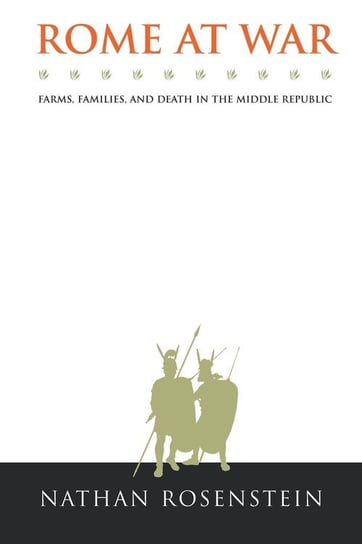
For this week’s book recommendation, I want to recommend N. Rosenstein, Rome at War: Farms, Families and Death in the Middle Republic (2004). This is something of a variation from my normal recommendations, so I want to lead with a necessary caveat: this book is not a light or easy read. It was written for specialists and expects the reader to do some work to fully understand its arguments. That said, it isn’t written in impenetrable “academese” – indeed, the ideas here are very concrete, dealing with food production, family formation, mortality and military service. But they’re also fairly technical and Rosenstein doesn’t always stop to recap what he has said and draw fully the conclusions he has reached and so a bit of that work is left to the reader.
That said, this is probably in the top ten or so books that have shaped me as a scholar and influenced my own thinking – as attentive readers can no doubt recall seeing this book show up a lot in my footnotes and citations. And much like another book I’ve recommended, Landers, The Field and the Forge: Population, Production and Power in the Pre-Industrial West (2003), this is the sort of book that moves you beyond the generalizations about ancient societies you might get in a more general treatment (“low productivity, high mortality, youth-shifted age profile, etc.”) down to the actual evidence and methods we have to estimate and understand that.
Fundamentally, Rome at War is an exercise in “modeling” – creating (fairly simple) statistical models to simulate things for which we do not have vast amounts of hard data, but for which we can more or less estimate. For instance, we do not have the complete financial records for a statistically significant sample of Roman small farmers; indeed, we do not have such for any Roman small farmers. So instead, Rosenstein begins with some evidence-informed estimates about typical family size and construction and combines them with some equally evidence-informed estimates about the productivity of ancient farms and their size and then “simulates” that household. That sort of approach informs the entire book.
Fundamentally, Rosenstein is seeking to examine the causes of a key Roman political event: the agrarian land-reform program of Tiberius Gracchus in 133, but the road he takes getting there is equally interesting. He begins by demonstrating that based on what we know the issue with the structure of agriculture in Roman Italy was not, strictly speaking “low productivity” so much as inefficient labor allocation (a note you will have seen me come back to a lot): farms too small for the families – as units of labor – which farmed them. That is a very interesting observation generally, but his point in reaching it is to show that this is why Roman can conscript these fellows so aggressively: this is mostly surplus labor so pulling it out of the countryside does not undermine these households (usually). But that pulls a major pillar – that heavy Roman conscription undermined small freeholders in Italy in the Second Century – out of the traditional reading of the land reforms.
Instead, Rosenstein then moves on to modeling Roman military mortality, arguing that, based on what we know, the real problem is that Rome spends the second century winning a lot. As a result, lots of young men who normally might have died in war – certainly in the massive wars of the third century (Pyrrhic and Punic) – survived their military service, but remained surplus to the labor needs of the countryside and thus a strain on their small households. These fellows then started to accumulate. Meanwhile, the nature of the Roman census (self-reported on the honor system) and late second century Roman military service (often unprofitable and dangerous in Spain, but not with the sort of massive armies of the previous centuries which might cause demographically significant losses) meant that more Romans might have been dodging the draft by under-reporting in the census. Which leads to his conclusion: when Tiberius Gracchus looks out, he sees both large numbers of landless Romans accumulating in Rome (and angry) and also falling census rolls for the Roman smallholder class and assumes that the Roman peasantry is being economically devastated by expanding slave estates and his solution is land reform. But what is actually happening is population growth combined with falling census registration, which in turn explains why the land reform program doesn’t produce nearly as much change as you’d expect, despite being more or less implemented.
Those conclusions remain both important and contested. What I think will be more valuable for most readers is instead the path Rosenstein takes to reach them, which walks through so much of the nuts-and-bolts of Roman life: marriage patterns, childbearing patterns, agricultural productivity, military service rates, mortality rates and so on. These are, invariably, estimates built on estimates of estimates and so exist with fairly large “error bars” and uncertainty, but they are, for the most part, the best the evidence will support and serve to put meat on the bones of those standard generalizing descriptions of ancient society.
Comments Off on Bret Devereaux on Nathan Rosenstein’s Rome at War (2004)
August 17, 2024
Caesar Marches on Rome – Historia Civilis Reaction
Vlogging Through History
Published Apr 23, 2024See the original here –
• Caesar Marches on Rome (49 B.C.E.)
See “Caesar Crosses the Rubicon” here –
• Caesar Crosses the Rubicon – Historia…#history #reaction
Comments Off on Caesar Marches on Rome – Historia Civilis Reaction
August 11, 2024
QotD: Greek and Roman notions of courage
I would not rate a man worth mention or account
either for speed of foot or wrestling skill,
not even if he had a Cyclops’ size and strength
or could outrun the fierce north wind of Thrace;
I would not care if he surpassed Tithonus’ looks,
or Cinyras’ or Midas’ famous wealth,
or were more royal than Pelops son of Tantalus,
or had Adrastus’ smooth persuasive tongue,
or fame for everything save only valour: no,
no man’s of high regard in time of war
unless he can endure the sight of blood and death,
and stand close to the enemy and fight.
This is the highest worth, the finest human prize
and fairest for a bold young man to win.
It benefits the whole community and state,
when with a firm stance in the foremost rank
a man bides steadfast, with no thought of shameful flight,
laying his life and stout heart on the line,
and standing by the next man speaks encouragement
This is the man of worth in time of war.This is not a daring courage, but a stoic (in the general sense) courage – the courage of standing a place in the line. And note for Tyrtaeus, that courage is more important than skill, or strength or speed; it matters not how well he fights, only that he “bides steadfast” “with a firm stance”. There is no place for individual exploits here. Indeed, when Aristodemus (another Spartan), eager to regain his honor lost by having survived the Battle of Thermopylae, recklessly charged out of the phalanx to meet the Persian advance at the Battle of Plataea, Herodotus pointedly notes that he was not given the award for bravery by the Spartans who instead recognized those who had held their place in line (Hdt. 9.71; Herodotus does not entirely concur with the Spartan judgement).
This was a form of courage that was evolving alongside the hoplite phalanx, where either shameful retreat or a reckless charge exposed one’s comrades to danger by removing a shield from the line. While, as Lendon is quick to note, there was still a very important aspect of personal competition (seeking to show that you, personally, had more bravery to hold your position than others), this is a fundamentally collective, not individual style of combat and it has values and virtues to match. Indeed, the Greeks frequently disparaged the fighting style of “barbarians” who would advance bravely but retreat quickly as cowardly.
And so the man who holds his place in the group and does not advance recklessly is the bravest of Greeks, but among the Crow Native Americans would seem a coward, while the bravest Crow who cleverly and daringly attacked, raided and got away before the enemy could respond would in turn be regarded by the Greeks as a reckless coward, unworthy of honor. These notions of courage aren’t merely different, they are diametrically opposed demanding entirely different actions in analogous circumstances!
The translator will call both of these ideas “courage”, but clearly when one gets down to it, they demand very different things. And these are just two examples. As Lendon notes (op. cit.), the virtus of the Roman was not the same as the andreia of the Greek, though both words might well be translated as “courage” or “valor” (and both words, etymologically mean “manliness”, lest we forget that these are very gender-stratified societies). Roman virtus was often expressed in taking individual initiative, but always restrained by Roman disciplina (discipline), making that system of military values still different from either the Crow or the Greek system.
Bret Devereaux, “Collections: The Universal Warrior, Part IIa: The Many Faces of Battle”, A Collection of Unmitigated Pedantry, 2021-02-05.
Comments Off on QotD: Greek and Roman notions of courage
August 4, 2024
Caesar Crosses the Rubicon – Historia Civilis Reaction
Vlogging Through History
Published Apr 22, 2024See the original here – Caesar Crosses the Rubicon (52 to 49 …
#history #reaction
Comments Off on Caesar Crosses the Rubicon – Historia Civilis Reaction


