Quotulatiousness

March 1, 2022

What was lost when the Library of Alexandria burned?

Filed under: Africa, Books, Education, Greece, History — Tags: , , , , — Nicholas @ 02:00

Kings and Generals
Published 18 Nov 2021

⚔️Myth of Empires is out in Early Access on Steam, check it out and make sure to wishlist it https://click.fan/KingsGenerals-MoE

Kings and Generals’ historical animated documentary series on the history of Ancient Civilizations and Ancient Greece continue with a video on the Library of Alexandria, as we ask what was lost when the library burned.

Support us on Patreon: http://www.patreon.com/KingsandGenerals or Paypal: http://paypal.me/kingsandgenerals … We are grateful to our patrons and sponsors, who made this video possible: https://docs.google.com/document/d/1o…

The video was made by animator Waily Romero and illustrator Simone González, while the script was researched and written by David Muncan. This video was narrated by Officially Devin (https://www.youtube.com/user/OfficiallyDevin).

✔ Merch store ► teespring.com/stores/kingsandgenerals
✔ Podcast ► Google Play: http://bit.ly/2QDF7y0 iTunes: https://apple.co/2QTuMNG
✔ Twitter ► https://twitter.com/KingsGenerals
✔ Instagram ► http://www.instagram.com/Kings_Generals

Production Music courtesy of EpidemicSound

#Documentary #AncientGreece #Alexandria

February 20, 2022

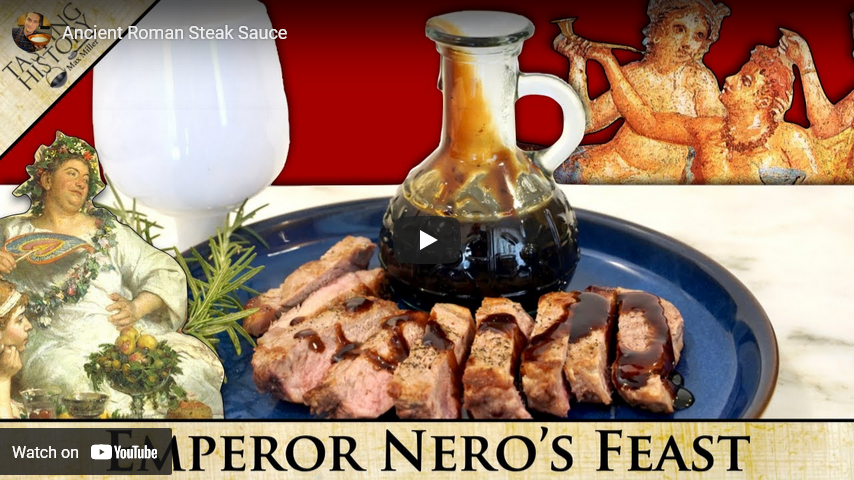
Ancient Roman Steak Sauce

Filed under: Europe, Food, History — Tags: , , , , , — Nicholas @ 02:00

Tasting History with Max Miller
Published 9 Nov 2021

Support the Channel with Patreon ► https://www.patreon.com/tastinghistory
Merch ► crowdmade.com/collections/tastinghistory
Instagram ► https://www.instagram.com/tastinghist…
Twitter ► https://twitter.com/TastingHistory1
Tiktok ► TastingHistory
Reddit ► r/TastingHistory
Discord ► https://discord.gg/d7nbEpy

Send mail to:
Tasting History
PO Box 766
Burbank, CA 91503

LINKS TO INGREDIENTS & EQUIPMENT**
Sony Alpha 7C Camera: https://amzn.to/2MQbNTK
Sigma 24-70mm f/2.8 Lens: https://amzn.to/35tjyoW
Flor de Garum: https://amzn.to/3EEXs27
Saba: https://amzn.to/3EHnz8G
Long Pepper: https://amzn.to/3EK3oqq
Juniper Berries: https://amzn.to/3GLB8FP

LINKS TO SOURCES**
De re coquinaria (Apicius): https://amzn.to/3BIidI8
A Taste of Ancient Rome by Ilaria Giacosa: https://amzn.to/3nZ7PqV

**Some of the links and other products that appear on this video are from companies which Tasting History will earn an affiliate commission or referral bonus. Each purchase made from these links will help to support this channel with no additional cost to you. The content in this video is accurate as of the posting date. Some of the offers mentioned may no longer be available.

Subtitles: Jose Mendoza – IG @worldagainstjose

PHOTO CREDITS
Apicius: By Bonho1962 – Own work, CC BY-SA 3.0, https://commons.wikimedia.org/w/index…
Domitian: By I, Sailko, CC BY 2.5, https://commons.wikimedia.org/w/index…
Cartwright, Mark. “Mushrooms, Roman Mosaic.” World History Encyclopedia, 23 Jan 2016. Web. 01 Nov 2021.
Agrippina crowning her young son Nero: By Carlos Delgado, CC BY-SA 3.0, https://commons.wikimedia.org/w/index…

#tastinghistory

February 5, 2022

City Minutes: The Roman Empire

Overly Sarcastic Productions
Published 4 Feb 2022

The funny thing about Empire is that ~*Rome*~ includes far more than just the City of Rome. Spread out across every corner of the Mediterranean — and then some — Roman Civilization was always adapting to local circumstances and changing over time. Today we’ll look at 5 cities that show the diversity of just how much “Rome” could really mean in the days of the empire.

The Great Cities In History by John Julius Norwich, “A Wonder of the World – Ephesus” from The Great Tours: Greece and Turkey, from Athens to Istanbul by John R. Hale, “Ephesus”, “Leptis Magna”, “Roman Britain”, “Pompeii” from World History Encyclopedia https://www.worldhistory.org/ephesos/, https://www.worldhistory.org/Lepcis_Magna, https://www.worldhistory.org/Roman_Britain, https://www.worldhistory.org/pompeii/. “Ephesus”, “Leptis Magna” “London”, “Pompeii” from Britannica https://www.britannica.com/place/Ephesus, https://www.britannica.com/place/Leptis-Magna, https://www.britannica.com/place/Lond…, https://www.britannica.com/place/Pompeii. I also have a degree in Classical Studies.

Chapters:
0:00 — Rome
0:58 — Ephesus
2:00 — Leptis Magna
3:03 — Londinium
4:12 — Pompeii
5:17 — Conclusion

Our content is intended for teenage audiences and up.

PATREON: https://www.Patreon.com/OSP

PODCAST: https://overlysarcasticpodcast.transi…

DISCORD: https://discord.gg/osp

MERCH LINKS: http://rdbl.co/osp

OUR WEBSITE: https://www.OverlySarcasticProductions.com
Find us on Twitter https://www.Twitter.com/OSPYouTube
Find us on Reddit https://www.Reddit.com/r/OSP/

January 8, 2022

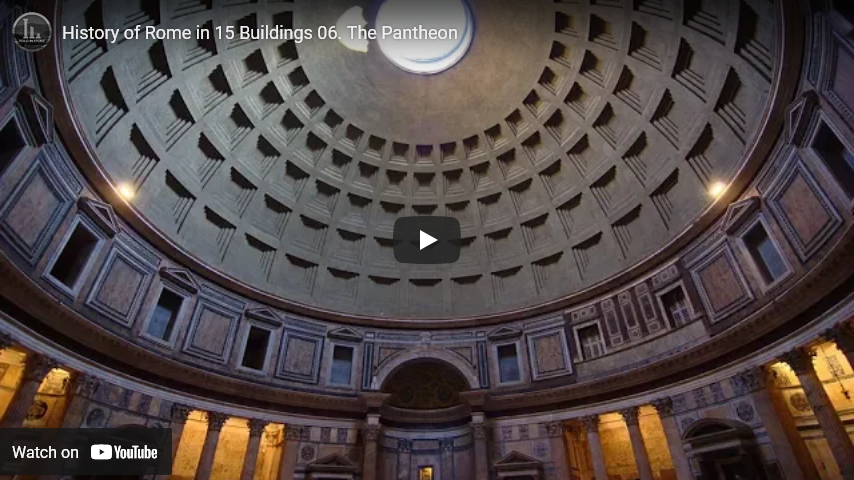
Antique Antics: The Pantheon

Overly Sarcastic Productions
Published 7 Jan 2022

It’s a good dome, simple as that.

SOURCES & Further Reading: The Great Courses lectures: “The Most Celebrated Edifice – The Pantheon” from Understanding Greek and Roman Technology by Stephen Ressler, and “Roman Art and Architecture” from The Roman Empire: From Augustus to The Fall of Rome by Gregory Aldrete. “The Pantheon” by Chris Legare via ATouchOfRome https://www.atouchofrome.com/the_pant…. Additionally, I have a university degree in Classical Studies.

Our content is intended for teenage audiences and up.

PATREON: https://www.Patreon.com/OSP

PODCAST: https://overlysarcasticpodcast.transi…

DISCORD: https://discord.gg/osp

MERCH LINKS: http://rdbl.co/osp

OUR WEBSITE: https://www.OverlySarcasticProductions.com
Find us on Twitter https://www.Twitter.com/OSPYouTube
Find us on Reddit https://www.Reddit.com/r/OSP/

December 18, 2021

Saturnalia

Filed under: Europe, History, Religion — Tags: , , , , , — Nicholas @ 02:00

Historia Civilis
Published 17 Dec 2016

Io, Saturnalia!

Patreon | http://historiacivilis.com/patreon
Donate | http://historiacivilis.com/donate
Merch | http://historiacivilis.com/merch
Mailing List | http://historiacivilis.com/mailinglist
Twitter | http://historiacivilis.com/twitter
Website | http://historiacivilis.com

Music is:
“I //\\ I,” by Discount Fireworks

December 12, 2021

How They Did It – Pet Dogs in Ancient Rome

Filed under: Europe, History — Tags: , , , — Nicholas @ 02:00

Invicta
Published 12 Sep 2018

Our history with man’s best friend stretches far into the past. Today we take a look at the lives of dogs in ancient Rome; how they named, trained, and raised them.

Bibliography:
Xenophon and Arrian: On Hunting (1999) translated by A. A. Phillips and M. M. Willcock
Metamorphoses Book III by Ovid
Names of Dogs in Ancient Greece by Adrienne Mayor
Greek and Roman Household Pets by Francis D. Lazenby

Artwork:
Beverly Johnson (https://www.behance.net/bevsi)

Music:
“Strings and Drums Comedy” by 8th Mode Music
“Emotional” by 8th Mode Music

#RomanHistory
#HowTheyDidIt

December 10, 2021

Was Constantine’s conversion a form of reaction to societal decadence?

Filed under: Europe, History, Religion — Tags: , , , , , , — Nicholas @ 03:00

At his new place, Severian makes a case for Emperor Constantine’s conversion to Christianity being a reaction to (and attempted cure for) civilizational decadence:

The Vision of Constantine the Great by Stylianos Stavrakis (1709-1786). “The emperor, depicted mounting and dressed in decorated military uniform, appears to gaze at the Inscription ΕΝ ΤΟΥΤΩ ΝΙΚΑ ΚΩΝΣΤΑΝΤΙΝΕ/ In hoc signo vinces, that is written around a cycle of stars enclosing a cross. The scene is set in front of the harbour of a town, probably Constantinople, with low hills and pine slopes.”
Byzantine Museum via Wikimedia Commons.

The legend says that as Constantine the Great was preparing to fight the Battle of Milvian Bridge, he saw a cross in the sky and the words “In Hoc Signo Vinces” — “in this sign you shall conquer”. He converted to Christianity on the spot, won the battle, and made Christianity the official religion of the now-reunified Roman Empire.

If any of that is true is, of course, impossible to know. He’d been at least favorable to Christianity for some time, helping to promulgate the Edict of Milan that extended toleration to Christianity across the parts of the Empire where his writ ran. However it happened, Constantine’s conversion story — the myth that has come down to us — carries a lesson we Dissidents should study.

Constantine came up at the tail end of the Crisis of the Third Century, in which the Roman Empire all but collapsed. It’s traditional to say that the CTC “ended” with Diocletian (r. 284-305), but obviously the ructions continued, as the Battle of Milvian Bridge was one of several in a new round of civil wars. I’m no scholar of Late Antiquity, but I can boil down all the many overlapping causes of the CTC to a word: Decadence.

The Roman Empire after Aurelius was simply too decadent to go on. Your Marxist would point to serious and irreparable class divisions within the Empire, and he’d be right. Other Marxist-flavored historians would point out the collapse of the currency, the rudimentary and laughably flawed taxation system, and so forth, and they’d be right, too. Military historians would say that the Empire simply lacked sufficient manpower, or at least, sufficient high-quality manpower, for the tasks at hand, exacerbated by the other stuff we just discussed … and they, too, would be right. Let’s not forget the Antonine Plagues, of course, which older historians argued were horrible but, as I understand it, a new generation of bio-archaeologists are proving were far worse than we suspected …

All that played its part, but above all, the Empire was just tired. Bored. Worn out. Overstuffed. Made sick by its own excesses. In a word, decadent.

That’s where Constantine’s conversion comes in. Marcus Aurelius, the last good Emperor, was the world’s most famous Stoic, then as now. Stoicism is indeed proof against decadence … but Stoicism is a harsh, cold philosophy. It’s not just “suppressing your emotions and acting like a hardass all the time,” as so many young men on the internet seem to think — far, far from that — but the Stoic lives by reason. His whole goal in life is to live “in conformity to nature,” and on the Stoic view, “Reason” and “Nature” are one and the same.

For all Stoic discipline seems to focus on the body, then, it’s really in the mind where true Stoics are made. If it’s a religion – and I’d argue that it is, but that’s irrelevant — then it’s the most cerebral creed ever devised. You don’t have to be a brainiac to be a Stoic — no less a Stoic than Marcus frequently upbraids himself for being a bit slow on the uptake — but you do have to live, and have an overwhelming desire to live, entirely inside your own head.

December 2, 2021

“Good idea, Judith. We shall fight the oppressors for your right to have babies, brother. Sister. Sorry.”

Filed under: History, Humour, Media, Politics, USA — Tags: , , , , , , — Nicholas @ 03:00

The power of Python compelled Stephen Green to write this:

Stan: “I want to be a woman. From now on, I want you all to call me ‘Loretta’.”
Still from Monty Python’s Life of Brian, 1979.

Of all the jokes, gags, and barbs thrown in every direction, Jesus is the only figure shown respect. Monty Python trouper Eric Idle later said of Jesus, “What he’s saying isn’t mockable, it’s very decent stuff.”

For a non-believing, take-no-prisoners comedian like Idle, that’s practically a whole-hearted endorsement.

Instead, the film — Python’s only real film, the others were basically collections of sketches, even Holy Grail — is anti-authoritarian, anti-fanaticism, anti-nihilism, and anti-humorless prigs.

Life of Brian is, however, very pro-funny.

The Pythons even saved their sharpest barbs for political extremists and self-deluded lefties.

Case in point on that last observation: The classic Colosseum conversation between the would-be revolutionaries of the Judean People’s Front.

Or was that the People’s Front of Judea?

Regardless, take two minutes (clip below!) to bask in the comedic good sense that would get the cast and entire production crew canceled in our times.

The postmodern Left should probably cancel everyone who laughed at this scene, just to be safe.

Anyway, point-by-point, Monty Python satirically dissected the then-nascent cultural trends that have since come to dominate not only our culture, but also our politics and even our private lives.

Enjoy … although I will admit that re-watching this today, the laughs were a bit more bitter than they were when I first watched Life of Brian nearly 40 years ago.

November 29, 2021

Why was the Roman Legionary’s equipment so good?

Filed under: Europe, History, Military, Weapons — Tags: , , , — Nicholas @ 02:00

Epimetheus
Published 3 Nov 2019

Arms & Armor of the Imperial Roman Legionary

The Ancient Roman legionary’s clothing, arms, armor, and equipment (Top 10 items) mini-documentary
#Legionary #documentary #Rome

This video is sponsored by my patrons on Patreon
https://www.patreon.com/Epimetheus1776

From the comments:

Epimetheus
1 year ago (edited)

Check Out my video on Republican Roman Infantry:
https://youtu.be/APuh6rokd_w

Additional info/and sources
Rounded metric Conversion for units mentioned:
Typical March: 20-30 miles(32-48 km) in a day
Training march distance and load: 22 miles = 35 km, 45 pounds = 20 kg
Full campaign max carried load per Legionary: 65-100 lbs = 27-45 kgs

One thing I wrote in the script, recorded and edited out by accident was that … when a Roman Legionary was dishonorably discharged (thrown out of the legion for bad behavior) his belt was confiscated by the legion which did not want him to be associated with the Roman State.

Sources:
Roman Military Clothing by Graham Sumner
Greece and Rome at War by Peter Connolly
Roman Legionary by Ross Cowan
The Legionary by Peter Connolly
The Gladius (The Roman short sword) by MC Bishop
Warfare in the Classical World by John Warry
Caesar’s Legions by Sekunda, Northwood and Simkins

Misspelled Inches as inces and Cohort as Chohort

November 22, 2021

Geiseric & The Kingdom of The Vandals

Filed under: Africa, Europe, History, Military — Tags: , , , , — Nicholas @ 04:00

History Time
Published 5 Sep 2017

A brief look at Geiseric and the Vandals

Further reading:-
Edward Gibbon, The Decline and Fall of the Roman Empire
Walter Goffart, Barbarian & Romans
Peter Heather, The Fall of the Roman Empire
Andrew Merrills, The Vandals

Music:-
Morning Light – “Deep Thoughts” https://www.youtube.com/watch?v=1tXOL…
Peter Gundry – “Víðbláinn” https://www.youtube.com/watch?v=ZnCML…
Kevin MacLeod – “Ossuary 2: Turn” https://www.youtube.com/watch?v=e6jZS…

If you liked this video and have as little as a dollar to spare then please consider supporting me on Patreon for more and better content in the future:-
http://www.patreon.com/historytimeUK

Are you a budding artist, illustrator, cartographer, or music producer? Send me a message! No matter how professional you are or even if you’re just starting out, I can always use new music and images in my videos. Get in touch! I’d love to hear from you.

I’ve also compiled a reading list of my favourite history books via the Amazon influencer program. If you do choose to purchase any of these incredible sources of information, many of which form the basis of my videos, then Amazon will send me a tiny fraction of the earnings (as long as you do it through the link) (this means more and better content in the future) I’ll keep adding to and updating the list as time goes on — https://www.amazon.com/shop/historytime

I try to use copyright-free images at all times. However if I have used any of your artwork or maps then please don’t hesitate to contact me and I’ll be more than happy to give the appropriate credit.

—Join the History Time community on social media:-
Patreon — https://www.patreon.com/historytimeUK
Instagram — https://www.instagram.com/historytime…
Twitter — https://twitter.com/HistoryTimePete

History of Wine: Ancient Rome

Filed under: Europe, History, Wine — Tags: , , — Nicholas @ 02:00

History of Wine
Published 20 Apr 2014

How was wine was made in Ancient Rome?
What did wine taste like in Ancient Rome?
Convivium and customs of drinking.
Wine Tasting.

October 4, 2021

History Summarized: Sicily

Overly Sarcastic Productions
Published 1 Oct 2021

The plot twist of Medieval Italian History is that the main event was happening in the South — In the centuries before the Renaissance, Sicily and southern Italy were sporting one of the most spectacular cultures in the world, combining the greatest hits of Mediterranean history in one place. It’s way cool, you guys.

SOURCES & Further Reading: Sicily: An Island at the Crossroads of History by John Julius Norwich, The Great Cities in History by John Julius Norwich, Great Courses Lectures “Muslims in the Court Of Roger II – 1130” from Turning Points in Middle Eastern History by Eamonn Gerron and “Renaissance Italy’s Princes and Rivals” from Renaissance: The Transformation of the West by Jennifer McNabb

This video’s topic was requested by our patron Salvatore Corasaniti. Thank you for supporting our channel!

Our content is intended for teenage audiences and up.

PATREON: https://www.Patreon.com/OSP

PODCAST: https://overlysarcasticpodcast.transi…

DISCORD: https://discord.gg/osp

MERCH LINKS: http://rdbl.co/osp

OUR WEBSITE: https://www.OverlySarcasticProductions.com
Find us on Twitter https://www.Twitter.com/OSPYouTube
Find us on Reddit https://www.Reddit.com/r/OSP/

From the comments:

Overly Sarcastic Productions
2 days ago
I can’t even begin to describe how much Ancient Sicily Content™ I had to cut for time.
Fear not, Magna Graecia will get the spotlight it deserves in another video.
-B

September 26, 2021

I finally made GARUM | Ancient Rome’s favorite condiment

Tasting History with Max Miller
Published 9 Jun 2020

In nearly every recipe we have from Ancient Rome, a key ingredient is Garum or Liquamen; fermented fish sauce. While it usually takes two months to make, I use an ancient recipe for same day garum which gave me plenty of time to look at the history of Ancient Rome’s favorite condiment.

Help Support the Channel with Patreon: https://www.patreon.com/tastinghistory

Follow Tasting History with Max Miller here:
Instagram: https://www.instagram.com/tastinghist…
Twitter: https://twitter.com/TastingHistory1

LINK TO COLATURA DI ALICI: https://amzn.to/30o2Dmg

LINKS TO SOURCES**
The Roman Cookery Book by Elizabeth Rosenbaum: https://amzn.to/2zg73QV

Tasting Rome by Katie Parla and Kristina Gill: https://amzn.to/2Affi01

Ferment by Holly Davis: https://amzn.to/37bDtIK

https://coquinaria.nl/en/roman-fish-s…

The rise and reorganization of the Pompeian salted fish industry – Steven Ellis: https://www.academia.edu/678386/The_r…

**Amazon offers a small commission on products sold through their affiliate links, so each purchase made from this link, whether this product or another, will help to support this channel with no additional cost to you.

LINK TO Making A Cure for the Black Plague | Galen and the Four Humors: https://www.youtube.com/watch?v=jtCKA…

GARUM
ORIGINAL RECIPE From The Geoponica
If you wish to use the garum at once — i.e. not expose it to the sun, but boil it — make it in the following manner: Take brine and test its strength by throwing an egg into it to see if it floats; if it sinks it does not contain enough salt. Put the fish into the brine in a new earthenware pot, add oregano, put it on a good fire until it boils — i.e., until it begins to reduce. Some people also add defrutum. Let it cool and strain it two or three times, until the liquid is clear. Seal and store it away.

MODERN RECIPE
INGREDIENTS (Amounts are approximate)
– 2 Quarts (1900ml) Water
– 1lb (450g) Sea Salt
– 2 Teaspoons Dried Oregano
Defrutum or Honey
– 2lbs (900g) Whole Fish (oily)

METHOD
1. Add salt to the water and stir to dissolve. You may not need the full amount, so start with about 3/4s. Place an egg in the water and if the egg floats, stop adding salt.
2. Add the whole fish and the oregano (and defrutum if you are using any) to the water and place over medium-high heat and boil for 30 – 40 minutes. Every ten minutes, mash with a spoon to break up the fish.
3. Once the water has reduced to about half the amount, remove the pot from the heat and allow to cool.
4. First, pass through a colander and then strain through a kitchen cloth or paper towel until the garum is free of particles. Then bottle in a sterile bottle and refrigerate.

Music Credit
“Gigue” From 3rd Cello Suite
Exzel Music Publishing (freemusicpublicdomain.com)
Licensed under Creative Commons: By Attribution 3.0
http://creativecommons.org/licenses/b…

Photo Credits
chef PNG Designed By CHENXIN from https://pngtree.com/
Garum Mosaic – Claus Ableiter / CC BY-SA (https://creativecommons.org/licenses/…)
Adana Mosaic – Dosseman / CC BY-SA (https://creativecommons.org/licenses/…)
Galen – Wellcome Collection / CC BY (https://creativecommons.org/licenses/…)
Snails Mosaic – Carole Raddato from FRANKFURT, Germany / CC BY-SA (https://creativecommons.org/licenses/…)
Seneca & Nero – By Eduardo Barrón – Own work, CC BY-SA 3.0, https://commons.wikimedia.org/w/index…

#tastinghistory #garum #ancientrome #foodhistory

August 17, 2021

QotD: The “Crisis of the Third Century”

You can find huge shelves of books analyzing this, attributing it to every conceivable thing, from the ol’ “lead in the water pipes” to massive structural defects stretching into remote antiquity. There’s probably something to all of them, but the biggest proximate cause is probably one the Romans themselves had identified, as early as Sallust, way back in the last century BC: lack of purpose. Having defeated Carthage and salted the earth where once she stood, the Roman “security state” — the largest and most comprehensive ever assembled to that point — simply ran out of reasons to exist.

If you’ve read much about (or especially by) them, you know that the Romans were, for lack of a better term, paranoid. It was simply incompatible with the Roman psyche to have any large, organized group of non-Romans anywhere near the Empire’s borders … so the Empire kept expanding, first reducing, then Romanizing, every conceivable threat. They kept doing this long past the point of negative returns, such that the Empire collapsed under the strain of trying to hold itself together.

Stop me if this sounds familiar: A “government” whose only claim to legitimacy is naked force. A large, increasingly rapacious, increasingly class-conscious military with no obvious enemies to fight, and no ability to subdue the ones it settles for. A large, increasingly rapacious, increasingly caste-conscious bureaucracy that views the whole “Imperial” project as one big tax farming operation. Massive, ever-increasing wealth disparities that can only be very temporarily alleviated by debasing the currency, because structural reform is culturally impossible from above, and physically impossible from below. And to top it all off, a weird, apocalyptic religious cult totally destroying the few pan-imperial cultural institutions, including the military.

The history of the Third Century is insanely complex, not well understood in many respects even by field specialists, but the gist of it is clear enough: Some general somewhere decides he’d like to have a crack at emperorizing, so he gets his troops to throw a purple toga on him and proceeds to take on the incumbent. Some other general thinks that’s a pretty nifty idea, so he does the same thing, taking on both the incumbent and the pretender. Not wanting to be left out of the fun, the incumbent’s main general murders the incumbent and takes the crown for himself, fighting whoever’s left, plus whichever of his subordinate commanders decide they want a shot at the big chair. The Senate rubber-stamps one of these clowns, or some other general who decides he’d like to throw his toga into the ring, and civil war follows civil war until one of them temporarily triumphs … only for the same thing to happen again once the shine is off the new guy (usually in less than a year or two).

They called ’em the “Barracks Emperors” for a reason, y’all. And it’s actually worse than that, since lots of times the rebel generals didn’t bother going for the big prize back in Italy. Lots of them decided they’d do just fine ruling, say, Britain, or parts of Gaul, or Asia Minor or Egypt or what have you, while the other guys slugged it out for the increasingly marginalized, if not totally meaningless, “official” title. Declare yourself the Emperor of ___, issue some slapped-together coins with your picture on them, and go nuts. The “Gallic Emperors” had a run of nearly half a century like that — not bad at all for Late Antiquity.

Severian, “The Crisis of the Third Decade”, Rotten Chestnuts, 2021-03-18.

July 30, 2021

Imperial Roman army organization & structure

Filed under: Europe, History, Military — Tags: , , — Nicholas @ 02:00

Military History Visualized
Published 16 Jan 2016

Patreon: https://www.patreon.com/join/mhv

The Imperial Roman Army consisted of the provincial armies, the garrison in Rome and the Roman Navy.

The brunt of the forces was in the Provincial armies that were made up by the legions and their auxiliaries in total around 240k men. The Garrison in Rome was about 15k men, although few in numbers these units were the most powerful in political terms. Finally, the Navy consisted of about 45k men.

*Sources*
Le Bohec, Yann: The Imperial Roman Army

Webster, Graham: The Roman Imperial Army of the First and Second Centuries A.D

Nemeth, Eduard; Fodorean, Florin: Römische Militärgeschichte

Fields, Nic: The Roman Army of the Principate 27 BC – AD 117

Culham, Phyllis: “Imperial Rome at War”. In: The Oxford Handbook of Warfare in the Classical World

https://en.wikipedia.org/wiki/Imperia…

https://en.wikipedia.org/wiki/Praetor…

« Newer PostsOlder Posts »

Powered by WordPress