Quotulatiousness

June 4, 2020

Tank Chats #71 M3 Stuart Hybrid | The Tank Museum

Filed under: Britain, History, Military, USA, Weapons, WW2 — Tags: , , , — Nicholas @ 02:00

The Tank Museum
Published 29 Mar 2019

David Fletcher talks about the Second World War M3 Stuart and why this particular version is a hybrid.

The M3 Stuart was built by the USA for WW2 and went into service in 1941. The tank in this video was gifted to The Tank Museum by the Brazilian Army.

Support the work of The Tank Museum on Patreon: ► https://www.patreon.com/tankmuseum

Visit The Tank Museum SHOP: ► https://tankmuseumshop.org/
Twitter: ► https://twitter.com/TankMuseum
Tiger Tank Blog: ► http://blog.tiger-tank.com/
Tank 100 First World War Centenary Blog: ► http://tank100.com/ #tankmuseum #tanks #tankchats

May 28, 2020

Why Halftracks? Why limited to WW2 only? (Featuring Tank Fest 2018)

Filed under: Germany, History, Military, USA, Weapons, WW2 — Tags: , , , , — Nicholas @ 02:00

Military History not Visualized
Published 6 Jul 2018

Disclaimer: I was invited to Tank Fest by the Tank Museum.

Why were half-tracks used in the first place? Why not trucks, fully-tracked vehicles or something else? Also, why after the Second World War did the half-track disappear? Why were there no new types produced by major powers?

Big thank you to green_goblin_z for sending me 2 books from my amazon wishlist!

»» SUPPORT MHV ««
» patreon – https://www.patreon.com/mhv
» paypal donation – https://www.paypal.com/cgi-bin/webscr…

»» MERCHANDISE – SPOILS OF WAR ««
» shop – https://www.redbubble.com/people/mhvi…

Military History not Visualized is a support channel to Military History Visualized with a focus personal accounts, answering questions that arose on the main channel and showcasing events like visiting museums, using equipment or military hardware.

» SOURCES «

Spielberger, Walter; Doyle, Hilary Lous, Jentz, Thomas L.: Halbkettenfahrzeuge des deutschen Heeres
Spielberger: Halftracked Vehicles of the German Army 1909-1945
(Spielberger German Armor and Military Vehicle)

Zaloga, Steven J.: M3 Infantry Half-Track. 1940-73. Osprey Publishing: Oxford, UK (1992 / 2002).

Citino, Robert M.: The German Way of War. From the Thirty Years’ War to the Third Reich. University Press of Kansas: USA, 2005.

Krapke, Paul-Werner: Armor, in: Margiotta, Franklin D. (Executive Editor): Brassey’s Encyclopedia of Land Forces and Warfare. Brassey’s: Washington, USA (1996), p. 42-53

Pöhlmann, Markus: Der Panzer und die Mechanisierung des Krieges: Eine deutsche Geschichte 1890 bis 1945 (Zeitalter der Weltkriege)

Munzel, Oskar: Die deutschen gepanzerten Truppen bis 1945

Fleischer, Wolfgang: Die motorisierten Schützen und Panzergrenadiere des deutschen Heeres: 1935-1945 – Waffen, Fahrzeuge, Gliederung, Einsätze

Felberbauer, Franz: Waffentechnik I – Band 2: Geschütze, Waffen in Entwicklung, Nichttödliche Waffensysteme, Ballistik, Physikalische Grundlagen (Truppendienst)
https://www.truppendienst.com/td-buec…

May 21, 2020

The Great Exhibition of 1851 also served (for some) as the 19th century equivalent of the “Missile Gap” controversy

In the latest edition of his Age of Invention newsletter, Anton Howes discusses the changing role of the British government and how the Great Exhibition was also useful as subtle domestic propaganda for a more active role for government in the British economy:

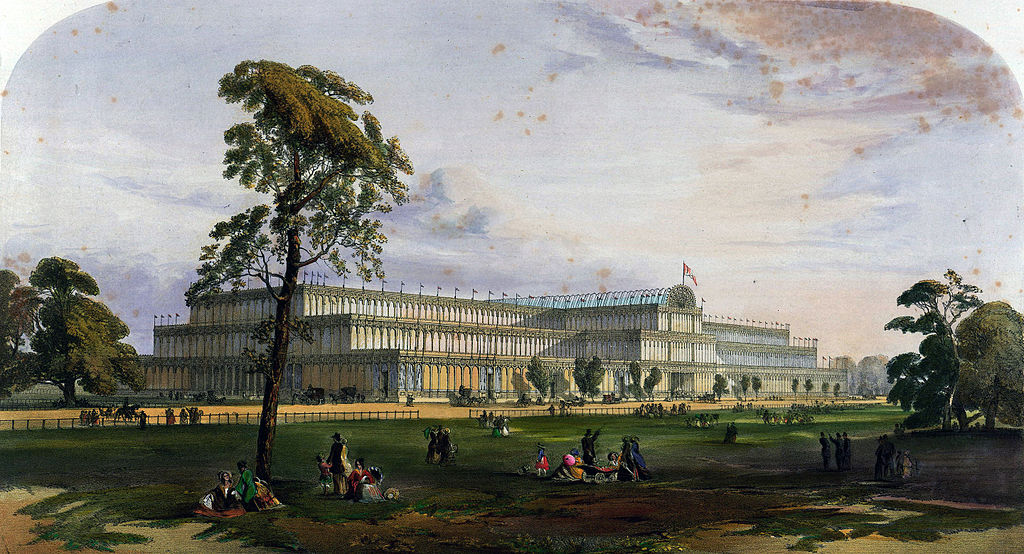
The Crystal Palace from the northeast during the Great Exhibition of 1851, image from the 1852 book Dickinsons’ comprehensive pictures of the Great Exhibition of 1851
Wikimedia Commons.

… a whole new opportunity for reform was provided by the Great Exhibition of 1851. As I explained in the previous newsletter, an international exhibition of industry functioned as an audit of the world’s industries. It, and its successors, the world’s fairs, gave some indication of how Britain stood relative to rival nations, especially France, Prussia, and the United States. And whereas some people saw the Great Exhibition as a clear mark of Britain’s superiority, for would-be reformers it was a chance to expose worrying weaknesses. Thus, Henry Cole and the other original organisers of the exhibition at the Society of Arts exacerbated fears of Britain’s impending decline, giving them an excuse to create the systems they desired.

They identified two areas of worry: science and design. Britain of course had many eminent scientists and artists — some of the best in the world — but other countries seemed to have become better at diffusing scientific training and superior taste throughout the workforce as a whole. Design skills were an issue because France appeared to be catching up with Britain when it came to the mechanisation of industry; if it caught up on machinery while maintaining its lead in fashion, then Britain would not be able to compete. And scientific training appeared more useful than ever, with the latest scientific advances “influencing production to an extent never before dreamt of”. Visitors to the Great Exhibition had marvelled at the recent inventions of artificial dyes, a method of processing beetroot sugar, and the latest improvements to photography and the electric telegraph. Thus, for Britain to maintain its lead, it would need to improve the education of its workers.

The reformers’ scare tactics worked. The aftermath of the Great Exhibition saw the creation of a government Department of Science and Art under the direction of Henry Cole, who in turn oversaw the agglomeration of various museums, design schools, and other cultural institutions to what is now the “Museum Mile” in South Kensington. (Curiously, the area was originally called Brompton, but when Cole opened a museum of design and industry there, he named it the South Kensington Museum. Kensington was a much more aristocratic area nearby, though it had no “south” at the time. The museum evolved, rather complicatedly, into what is now the Victoria & Albert Museum. But unlike so many top-down area re-brands, the name South Kensington stuck.)

And that was just the beginning. Cole and his allies then oversaw a dramatic expansion of the state into education, largely through the use of examinations. Although state-funding for education had initially centred on building new schools, getting any more involved was a highly contentious issue. Most schools were controlled and funded by religious organisations, but were split between the established Anglican church and dissenters. When the government first became involved in schools, it was thus bitterly opposed by many dissenters as they feared that their children might become indoctrinated to Anglicanism. And naturally, the government could not teach dissenting religions. Yet the proposed compromise of teaching no religion at all was unacceptable to both sides. Schools were crucial, the groups believed, to keeping religion alive.

So the utilitarians came up with a workaround. Rather than getting the state too involved directly in managing the schools themselves, it would instead influence the curriculum. By holding examinations, and then paying teachers based on the outcomes of the tests, they could incentivise the teaching of certain subjects and leave the schools free to teach whatever religious beliefs they pleased. Indeed, by diverting more and more time towards teaching particular subjects, the reformers saw it as a secularising blow “against parsonic influence”. The tactic was initially applied to adult education. The Society of Arts would first trial out examinations without payments, to test their viability. Then Cole would have his department take over the examinations, first for drawing, and later for science, using his budget to fund payment-by-results. The effects were dramatic. The Society’s relatively popular examinations in chemistry, for example, rarely had more than a hundred candidates a year. But when the department instituted its payments, it soon drew in thousands. By 1862, when the government wanted to improve the teaching of reading, writing, and arithmetic in schools, they adopted Cole’s suggestion that they also use payment-by-results.


Tank Chats #70 Sherman M4A4 | The Tank Museum

Filed under: Britain, History, Military, USA, Weapons, WW2 — Tags: , — Nicholas @ 02:00

The Tank Museum
Published 23 Mar 2019

In Tank Chat #70, David Fletcher talks through the Sherman M4A4. The M4A4 is a relatively new addition to The Tank Museum, which is on long term loan.

Used and loved by the British, find out what makes this tank different from other types of Sherman in The Tank Museum.

Support the work of The Tank Museum on Patreon: ► https://www.patreon.com/tankmuseum

Visit The Tank Museum SHOP: ► https://tankmuseumshop.org/
Twitter: ► https://twitter.com/TankMuseum
Tiger Tank Blog: ► http://blog.tiger-tank.com/
Tank 100 First World War Centenary Blog: ► http://tank100.com/ #tankmuseum #tanks #tankchats

May 13, 2020

Tank Chats #69 Ram Mark II | The Tank Museum

Filed under: Cancon, History, Military, USA, Weapons, WW2 — Tags: , — Nicholas @ 02:00

The Tank Museum
Published 15 Mar 2019

David Fletcher talks about the WW2 Ram Mark II tank, built by Canada during the Second World War.

It was based upon the American Medium M3 (Lee) and many components were supplied by the United States.

Support the work of The Tank Museum on Patreon: ► https://www.patreon.com/tankmuseum

Visit The Tank Museum SHOP: ► https://tankmuseumshop.org/
Twitter: ► https://twitter.com/TankMuseum
Tiger Tank Blog: ► http://blog.tiger-tank.com/
Tank 100 First World War Centenary Blog: ► http://tank100.com/ #tankmuseum #tanks #tankchats

May 3, 2020

How To… Drink Tea in a Tank | The Tank Museum

Filed under: Britain, Food, History, Military, Weapons, WW1, WW2 — Tags: , , — Nicholas @ 06:00

The Tank Museum
Published 30 Apr 2020

In the 1st episode of The Tank Museum’s brand new “How To” series, Wargaming’s Richard Cutland and historian James Holland explore how British tank crews managed to drink tea, while in a tank!

Download World of Tanks for free and claim your exclusive £15 starter kit: https://tanks.ly/2SiJPje
You can also share the invite code 1TANKIE with your friends.
Starter kit: Matilda Black Prince Tier V tank, 7 days of World of Tanks premium account & T-34-85M rental. Valid for new players only.

Using a WW1, WW2 and modern tank from The Tank Museum’s collection, the duo will discover how tea was made while soldiers were at war.

Support the work of The Tank Museum on Patreon: ► https://www.patreon.com/tankmuseum
Visit The Tank Museum SHOP & become a Friend: ► https://tankmuseumshop.org/

Twitter: ► https://twitter.com/TankMuseum
Instagram: ► https://www.instagram.com/tankmuseum/
Tiger Tank Blog: ► http://blog.tiger-tank.com/
Tank 100 First World War Centenary Blog: ► http://tank100.com/

April 29, 2020

Curator’s Tour of The Tank Museum | Blitzkrieg | WW2: Part 1

Filed under: Britain, Europe, France, Germany, History, Military, Weapons, WW2 — Tags: , , , , — Nicholas @ 04:00

The Tank Museum
Published 25 Apr 2020

Join Curator David Willey as he takes you on a tour of The Tank Museum’s Tank Story Hall, which houses over 30 key vehicles from Little Willie to Challenger 2. In this section he looks at early Second World War vehicles and gives you a potted history of the Blitzkrieg.

Support the work of The Tank Museum on Patreon: ► https://www.patreon.com/tankmuseum
Visit The Tank Museum SHOP & become a Friend: ► https://tankmuseumshop.org/

Twitter: ► https://twitter.com/TankMuseum
Instagram: ► https://www.instagram.com/tankmuseum/
Tiger Tank Blog: ► http://blog.tiger-tank.com/
Tank 100 First World War Centenary Blog: ► http://tank100.com/
#tankmuseum #tanks #MuseumFromHome

April 28, 2020

Tank Chats #68 T-34 | The Tank Museum

Filed under: History, Military, Russia, Weapons, WW2 — Tags: , , , , , — Nicholas @ 02:00

The Tank Museum
Published 9 Mar 2019

The T-34 is an iconic Soviet Second World War tank. It was the most produced tank of WW2 and remains a symbol of Russian sacrifice in the Great Patriotic War.

David Willey talks about both the T-34/76 and T-34/85 variants, used in World War Two.

Many thanks to RecoMonkey for providing many of the modern images of the T-34 https://www.recomonkey.com/

Support the work of The Tank Museum on Patreon: ► https://www.patreon.com/tankmuseum

Visit The Tank Museum SHOP: ► https://tankmuseumshop.org/
Twitter: ► https://twitter.com/TankMuseum
Tiger Tank Blog: ► http://blog.tiger-tank.com/
Tank 100 First World War Centenary Blog: ► http://tank100.com/ #tankmuseum #tanks #tankchats

April 21, 2020

The Curator at Home | Film Review: Kelly’s Heroes | The Tank Museum

Filed under: Europe, Germany, History, Italy, Media, Military, USA, WW2 — Tags: , , , — Nicholas @ 04:00

The Tank Museum
Published 19 Apr 2020

Join Curator David Willey at Home, as he reviews the classic film: Kelly’s Heroes.
https://tankmuseumshop.org/products/k…

Support the work of The Tank Museum on Patreon: ► https://www.patreon.com/tankmuseum
Visit The Tank Museum SHOP & become a Friend: ► https://tankmuseumshop.org/

Twitter: ► https://twitter.com/TankMuseum
Instagram: ► https://www.instagram.com/tankmuseum/
Tiger Tank Blog: ► http://blog.tiger-tank.com/
Tank 100 First World War Centenary Blog: ► http://tank100.com/

April 14, 2020

Curator at Home | Tanks: 100 Years of Evolution | The Tank Museum

Filed under: Books, History, Military, Weapons — Tags: , , , — Nicholas @ 06:00

The Tank Museum
Published 12 Apr 2020

Join The Tank Museum’s Curator, David Willey, at home, as he reviews the book: Tanks – 100 Years of Evolution by Richard Ogorkiewicz.

Support the work of The Tank Museum on Patreon: ► https://www.patreon.com/tankmuseum
Visit The Tank Museum SHOP & become a Friend: ► https://tankmuseumshop.org/

Twitter: ► https://twitter.com/TankMuseum
Instagram: ► https://www.instagram.com/tankmuseum/
Tiger Tank Blog: ► http://blog.tiger-tank.com/
Tank 100 First World War Centenary Blog: ► http://tank100.com/

April 13, 2020

Curator’s Tank Museum Tour: Tank Story Hall – Inter-War | The Tank Museum

Filed under: Britain, History, Military, Weapons — Tags: , , , , — Nicholas @ 06:00

The Tank Museum
Published 11 Apr 2020

Join Curator David Willey as he takes you on a tour of The Tank Museum’s Tank Story Hall, which houses over 30 key vehicles from Little Willie to Challenger 2. In this section he looks at the inter-war vehicles and gives you a potted history of the time period between the two World Wars.

Support the work of The Tank Museum on Patreon: ► https://www.patreon.com/tankmuseum
Visit The Tank Museum SHOP & become a Friend: ► https://tankmuseumshop.org/

Twitter: ► https://twitter.com/TankMuseum
Instagram: ► https://www.instagram.com/tankmuseum/
Tiger Tank Blog: ► http://blog.tiger-tank.com/
Tank 100 First World War Centenary Blog: ► http://tank100.com/

April 12, 2020

Tank Chats #67 Covenanter | The Tank Museum

Filed under: Britain, History, Military, Weapons, WW2 — Tags: , , , — Nicholas @ 02:00

The Tank Museum
Published 22 Feb 2019

Historian David Fletcher MBE talks through the Second World War British Cruiser tank, the Covenanter. Otherwise known as Tank Cruiser Mark V** A13.

Support the work of The Tank Museum on Patreon: ► https://www.patreon.com/tankmuseum

Visit The Tank Museum SHOP: ► https://tankmuseumshop.org/
Twitter: ► https://twitter.com/TankMuseum
Tiger Tank Blog: ► http://blog.tiger-tank.com/
Tank 100 First World War Centenary Blog: ► http://tank100.com/ #tankmuseum #tanks #tankchats

April 3, 2020

Tank Chats #66 Leopard 2 | The Tank Museum

Filed under: Germany, History, Military, Weapons — Tags: , , , , , — Nicholas @ 02:00

The Tank Museum
Published 8 Feb 2019

Curator David Willey gives chapter and verse on the German Main Battle Tank, Leopard 2, which first entered service with West Germany during the Cold War.

The Leopard 2 Main Battle Tank was kindly temporarily loaned to The Tank Museum by the Historic Collection of the Royal Netherlands Army.

Some stills and footage: © All rights reserved. (AR2011-0034-009, PA01-2016-0139-076, IS2010-3030-24, IS2011-1021-15, IS14-2017-0003-049, B11-ATHENA-020) reproduced with the permission of DND/CAF (2019)

At 8:55 Leopard 2 from The Arsenalen Museum, Sweden.

Support the work of The Tank Museum on Patreon: ► https://www.patreon.com/tankmuseum

Visit The Tank Museum SHOP: ► https://tankmuseumshop.org/
Twitter: ► https://twitter.com/TankMuseum
Tiger Tank Blog: ► http://blog.tiger-tank.com/
Tank 100 First World War Centenary Blog: ► http://tank100.com/ #tankmuseum #tanks #tankchats

April 1, 2020

Curator’s Tank Museum Tour: Tank Story Hall – WW1 | The Tank Museum

Filed under: Britain, Europe, France, Germany, History, Military, WW1 — Tags: , , , , , — Nicholas @ 05:00

The Tank Museum
Published 31 Mar 2020

Join Curator David Willey as he takes you on a tour of The Tank Museum’s Tank Story Hall, which houses over 30 key vehicles from Little Willie to Challenger 2. In this section he looks at the First World War vehicles and gives you a potted history of WW1.

Support the work of The Tank Museum on Patreon: ► https://www.patreon.com/tankmuseum
Visit The Tank Museum SHOP & become a Friend: ► https://tankmuseumshop.org/

Twitter: ► https://twitter.com/TankMuseum
Instagram: ► https://www.instagram.com/tankmuseum/
Tiger Tank Blog: ► http://blog.tiger-tank.com/
Tank 100 First World War Centenary Blog: ► http://tank100.com/
#tankmuseum #tanks

March 20, 2020

Tank Chats #65 T-26 | The Tank Museum

Filed under: History, Military, Russia, Weapons, WW2 — Tags: , , , , — Nicholas @ 02:00

The Tank Museum
Published 28 Jan 2019

This particular T-26 tank, at The Tank Museum, was a T-26A and, after capture by the Finns, modified to T-26B configuration. It was used by Soviet forces in the war against Finland in the winter of 1940/41. It was captured and used by the Finnish Army, in whose markings it is seen.

Find out more about the Winter War from the WW2 Channel and David Willey. https://youtu.be/Etfhio8vrXE

Support the work of The Tank Museum on Patreon: ► https://www.patreon.com/tankmuseum

Visit The Tank Museum SHOP: ► https://tankmuseumshop.org/
Twitter: ► https://twitter.com/TankMuseum
Tiger Tank Blog: ► http://blog.tiger-tank.com/
Tank 100 First World War Centenary Blog: ► http://tank100.com/ #tankmuseum #tanks #tankchats

« Newer PostsOlder Posts »

Powered by WordPress