
In the English speaking world, it has become common to “blackwash” movies and television shows. This is the process of removing white characters and replacing them with non-white characters. The stated claim is that popular entertainment needs to reflect the changing nature of the audience. Of course, the reason the audience is changing is that the same people blackwashing films and television shows are ethnically cleansing white societies with mass immigration.
For a long time now, Hollywood has been taking great care to make the good characters black and the bad ones white. For a short while, the bad guys could be Arab terrorists, but now bad guys are white again. If they need to be foreign baddies, then they are neo-Nazis from eastern Europe or Russian gangsters. Of course, the smartest characters are black or female. If we’re lucky, the brainiac is a black lesbian. Every computer hacker is now non-white or female.
On occasion the blackwashing gets ridiculous. Some figure from white history is played by a black actor. A black guy in a show about medieval Europe could be amusing, but that’s not how it is done. Instead, we get black cowboys saving a white town or a black playing King Lear. It will not be long before we have historical dramas in which well-known figures from white history are played by black actors as black people. Imagine Ben Franklin played by Morgan Freeman.
The Z Man, “Blackwashing”, The Z Blog, 2020-10-02.
May 25, 2026
QotD: Modern movie casting
May 24, 2026
Hollywood took the wrong lessons from Joss Whedon’s work
I was a huge fan of the TV show Firefly, which I think was Joss Whedon’s best work — perhaps more so because it was cancelled before any of his typical tics and quirks took the show in overtly progressive directions. On the social media site formerly known as Twitter, Devon Eriksen responds to a comment on yesterday’s post about writers needing empathy to fully portray the characters they create:

Koko (literal gorilla) @Mark68002312
I think Joss Whedon did great at writing characters in the Joss Whedon universe. At least through Firefly.
I don’t understand how people — even people who don’t write for a living — think the character and the context/universe they live in are independent
Joss Whedon wrote the characters in Firefly the way he did because they were:
1. Rebels and iconoclasts, thus irreverent.
2. Broken people, thus inclined to hide deep pain behind shallow humor.
3. Familiar with each other already, thus more likely to banter.The style worked in Firefly because it created a sense of character and setting, which it was appropriate to.
Joss was no master of individualizing character voice, but he at least managed to get the group dynamics right.
However, Hollywood, sack of narcissistic overfunded retards that they are, managed to learn the wrong lesson from the show’s resonance with audiences.
“Oh, the people want light, quippy dialogue with a joke to interrupt every tense moment with a laugh. They are not interested in drama, pathos, gravitas, or emotional weight”, they concluded, and proceeded to pack every damn film with snark for the next twenty years, like Pacific islanders making landing strips and control towers out bamboo, enacting rituals to bring the “cargo” back.
The lesson they should have learned is that audience want, will always want, dialogue that illustrates and enhances character and setting.
Banter is a good tool, sometimes, but it is one good tool in a toolbox of many, and an author must select the right one to do character voice correctly.
“He will run. A vampire can run throughout the night, untiring. Verdammnis, is there no metal in this room larger than the buckles on braces? Were we women, at least we would have corset stays …”
“Here.” Asher sat suddenly on the lid of the coffin and pulled off one of his shoes with his good hand. He tossed it to the startled vampire, who plucked it out of the air without seeming to move. “Is your strength of ten men up to ripping apart the sole leather? Because there should be a three-inch shank of tempered steel supporting the instep. It’s how men’s shoes are made.”
“Thus I am served,” Ysidro muttered through his teeth, as his long white fingers ripped apart the leather with terrifying ease, “for scorning the arts of mechanics.”
Don Simon Ysidro doesn’t say “Well excuuuuuse me for not knowing all about shoes”, because Don Simon Ysidro is a three hundred year old Spanish nobleman turned vampire, not a homosexual Las Vegas nightclub DJ.
And when he remarks upon his own deficiency in knowledge, he says “mechanics”, not “tradesmen”, or “blue-collar workers”, because to a nobleman of the renaissance, a “rude mechanical” is not an impolite robot, he is an uncultured man who works at physical labor or crafts, rather than social or intellectual pursuits.
May 21, 2026
QotD: “Theory” in film interpretation
[Camille Paglia] What has been called “theory” since the arrival of deconstruction in elite U.S. universities in the 1970s is in my view one of the most pointless and pretentious movements in modern cultural history. The catastrophic results should be obvious by now: the humanities are in ruin and have lost public respect and even internal support in academe, where budget reduction has come to the fore. I would refer those seeking greater specifics to my long attack on poststructuralism, Junk Bonds and Corporate Raiders: Academe in the Hour of the Wolf, published by Arion in 1991. Seven years ago, I did a follow-up assessment of current “theory” when the Chronicle of Higher Education asked me to review three new academic books by women about the bondage and domination trend. My unhappy response was “Scholars in Bondage”, which laments the damage done to promising young professors by a tyrannical academic establishment still chained to the bleached-out corpse of “theory”.
My approach to art is grounded in the sensory. Art is not philosophy. Art by definition refracts meaning through some medium of the material world. Hence my interpretation of art is grounded in the five senses. Perhaps the only theorist who fully grasped this issue was Gaston Bachelard in his 1957 book, The Poetics of Space, animated by a phenomenology that partly aligns with my own practice. It is no coincidence that I have spent most of my teaching career at art schools, where the body remains front and center in most art forms. Digital genres are certainly spreading and flourishing, but dance, music, and theater remain grounded in physicality — which is partly why art schools are finding it so difficult to adapt to the harsh, distancing realities of the virus crisis.
May 17, 2026
QotD: Battlefield morale and cohesion in movies/games versus real history
Actual armies have far more than two states of morale and behaved in far more dynamic, unpredictable and interesting ways!
The first problem with this “binary model” of morale is that it assumes just a single factor (“leadership” or “morale”) but in practice we ought to be thinking about at least two different ingredients here: morale and cohesion.
Morale is the commitment the combatants have to their leadership and their cause. To simplify a bit, we might say that soldiers with good morale believe three things: that their cause is a worthy one, that they are on the road to success and that their leaders have a good (enough) plan to achieve final victory. Poor morale can result from a breakdown in any of those three elements: troops might for instance believe both in their goal and its eventual possibility but not in their leaders to produce it (this seems to have been the case, for instance, in the French Mutiny of 1917). On the other hand, regardless of the charisma of leaders, few people come to a war intending to die in it; if the cause appears impossible, morale will sink regardless. And armies that do not believe in the cause at all are extremely difficult to motivate by other means.
On the other hand cohesion is the force that holds a specific unit together through the power of the bonds holding the individual combatants to each other and/or to their (generally junior or non-commissioned) officers. There are a lot of ways to build that cohesion: people are generally unwilling to abandon neighbors, close friends and relatives, for one. They are also reluctant to expose themselves to shame at home for having done so; shame is one of the few things people fear as much, if not more than, death. For armies that can’t rely on that sort of organic cohesion, it can be built by reconstructing the soldier’s unit as his primary social group. Drill can do this: it creates an experience of shared suffering and achievement which bonds the soldiers together creating strong “artificial” cohesion.
These two ingredients have different roots, but they also function differently. The formulation that has always stuck with me is one from James McPherson’s For Cause and Comrades: Why Men Fought in the Civil War (1998): morale (McPherson discusses it under the heading of “the Cause”) will get men into uniform, it will sustain them on large marches and cold nights and it will get them to the battle, but it will not get them through the battle. Instead, cohesion (the “comrades” of the title) gets men through the terror of actual combat, when fear has driven “the cause” far from mind. But of course cohesion isn’t enough on its own either, since it provides no reason to advance or attack or really to do anything at all except stick together.
Adding further complication to this, morale and cohesion are not, as they often exist in games, inherent properties of a unit, but rather emergent properties of the interactions of a whole bunch of individuals. In a strategy game, units exist primarily as extension of the player’s will; in film units typically exist as extensions of their commander’s or the main character’s will (note how common it is that right as the hero begins winning his duel with the villain, so too his army begins winning the battle). But of course actual armies are composed of lots of humans, each with their own individual will and agency.
Those humans are continually making calculations about risks, goals and survival. It’s not hard here to see why, by the by, morale won’t carry troops through high risk conditions: if your only goal is to survive to experience the end-state of the war, then it is always in your interest to let someone else do the dying; it doesn’t serve your end to stay in a high risk position. By contrast, if you are held there by the fear of shame if your close comrades see you run, that still applies. Thus these calculations get progressively more “primal” as the sense of danger rises (fear makes a mess of those higher brain functions), but they do not stop.
Bret Devereaux, “Collections: Total Generalship: Commanding Pre-Modern Armies, Part IIIC: Morale and Cohesion”, A Collection of Unmitigated Pedantry, 2022-07-01.
April 26, 2026
South Korea’s switch from an exporting heavyweight to a cultural juggernaut
In the latest SHuSH newsletter, Kenneth Whyte looks at the importance of a South Korean government report to changing the structure of the South Korean economy and making the country far more visible culturally on the world stage:
South Korea, in the latter half of the twentieth century, was building its economy almost entirely by exporting manufactured goods, everything from home electronics to ships to automobiles. That changed, as the story goes, when the country’s Presidential Advisory Board on Science and Technology released a report on digital technology in May 1994. It noted that a single Hollywood film, Jurassic Park, with its computer-generated dinosaurs, generated the same amount of foreign sales as 1.5 million Hyundai cars. The darling of Korean industry, Hyundai was exporting 640,000 cars a year in 1994. So one film was worth more than two years of heavy industrial production requiring enormous plant, equipment, capital investment.
The report stunned Koreans — “literally sent shock waves across the country”, writes Doobo Shim, a Seoul-based professor of media and communication. At the time, culture and entertainment were viewed as ephemeral and unlikely to contribute to Korea’s core mission of “improving the material conditions of the people”. The country decided it needed to change its game in order to thrive in the twenty-first century economy.
It wasn’t a straight line from the Presidential Advisory Report to Parasite, Squid Game, BTS, Blackpink, and Han Kang’s Nobel prize, but it’s straighter than you might think. Seoul is now a top-five world cultural center, and arguably top two if we’re talking pop culture and anything that appeals to under-thirties. How it happened tells us a great deal about Canada’s relative failure to develop home-grown cultural and entertainment industries.
The Presidential Advisory Board report alone did not alter Korea’s strategy. The country was starting from way behind. First came democratic reforms and media deregulation. That birthed new commercial TV channels and a variety of independent publications. Now with an independent (from government) domestic media sector, Korea tried to protect it by limiting the amount of foreign cultural product in its market. That didn’t work. In 1993, 90 of the top 100 video rentals in the country were from Hollywood; only five were domestic. Sound familiar, Canada?
Protection wasn’t going to work, anyway. Another factor at play was the Uruguay Round, an international accord negotiated between 1986-1994 that decisively liberalized the global economy, forcing all 123 signatory countries to open their markets for a vast range of goods and services, including communications services and entertainment product. It was clear to Korea that efforts to protect heritage and culture by shutting out the world had no future. It needed to upgrade its efforts in the cultural sphere if it wanted to avoid being swamped by content from multinational companies, and not just American ones. Satellite television services out of Japan and Hong Kong were already making inroads in Korea.
Another thing: Korea had noticed that Japan, its nearest rival in the home electronics sector, was making investments in content. Sony had bought Columbia pictures and CBS records. It was the nineties, the age of synergy, or vertical integration. Companies making devices — video players, portable music players — also wanted to own what played on them. Korean firms such as Samsung and Daewoo, makers of TVs and VCRs, felt a need to be vertically integrated, too.
So the Presidential Advisory Report landed on fertile ground. Korean businesses felt an imperative to pay attention to content. The Korean government felt itself under siege from foreign cultural and entertainment product. “Gone are the days”, said one expert interviewed in the newspaper Dong-A Ilbo, “when the government could appeal to the people to watch only Korean programs out of patriotism”.
All that notwithstanding, the report mostly resonated because it presented culture as an opportunity. It asked Koreans to recognize the potential of arts and entertainment to improve the material conditions of the people. Instead of resisting the emerging global marketplace, the power of multinational corporations and platforms, and the free movement of talent, it needed to master this new system, compete commercially, and take Korean culture to the world.
April 17, 2026
The Chronicles of Riddick: a Treatise on Political Machinery
Feral Historian
Published 28 Nov 2025The Chronicles of Riddick probably isn’t on anyone’s “top 10 science fiction” list, but it’s a remarkably astute study of how ideologies lead to systems, and how those systems co-opt people within them.
And of course it has a great cast that seems to have had fun with their roles.
00:00 Intro
01:04 Perception of Enemies
03:12 The Underverse
04:59 Plotting and Scheming
07:47 Superposition
08:20 Institutional Inertia
(more…)
April 5, 2026
“Easter remains one of the major annual high holy days of confectionery derangement”
At The Freeman, Nicole James remembers her early chocolate obsessions:

Roald Dahl’s chocolate river was the economic policy of my childhood. Dripping with glossy abundance, and available to any enterprising glutton with a low sense of self-preservation. I never looked at Augustus Gloop and thought, “There goes a cautionary tale about excess”. I thought, “There goes a boy with initiative”. I wanted the river. I wanted the factory. I wanted an Oompa Loompa or two, ideally unionized and living in a tasteful outbuilding, making me truffles on demand. I wanted a world in which everything was edible and slightly mad. While everyone else was apparently learning moral lessons, I was busy fantasizing about a life in which I could plunge both arms into a molten tributary of cacao and come up glistening, like some sort of deranged dessert otter.
Easter seemed to offer the nearest thing to this ideal. It was the one annual moment when adults, in a dramatic collapse of judgment, agreed that children should be handed industrial quantities of wrapped chocolate and told to go hard. Easter had tiny eggs hidden in pot plants and larger ones with enough packaging to survive atmospheric re-entry. It was capitalism in a bunny suit.
Then adulthood arrived, lugging excellent literary references. Along came Like Water for Chocolate, with its sexy sorrow and culinary melodrama, and suddenly chocolate was not just a childhood frenzy but a vehicle for yearning and seduction. It could communicate things one would never dream of saying aloud at a suburban dinner party. Chocolate had range.
And this is why the present state of it feels so personally offensive because what is happening to chocolate is a slow-motion mugging. Cocoa is being shaved out. Bars are shrinking. Prices are soaring. Palm oil and vegetable fats are barging into flavor. Chocolate flavor. Not real chocolate, but a cheap mockery of the original deity.
And yet Easter remains one of the major annual high holy days of confectionery derangement. According to Cargill, in the United States, people are expected to plough through around 73 million pounds of chocolate over the Easter season. Around 90 million chocolate bunnies are produced, with — fun fact — 78% being devoured from the ears first.
Easter spending in the US has in recent years hovered around the $23 billion mark, with candy doing much of the heavy lifting. Chocolate, marshmallow Peeps, baskets, flowers, brunches, the whole pastel circus. Christianity may supply the headline act, but the event itself has clearly been workshopped by a mall.
But beneath the cellophane gaiety lies an increasingly grubby truth. Cocoa prices have surged, largely because harvests in West Africa have been hammered. Ghana and Côte d’Ivoire, which together produce the bulk of the world’s cocoa, have been clobbered by poor weather, crop disease, supply chain fragility, deforestation, and the sort of labor abuses that make any cheerful Easter ad feel criminal. The global appetite for chocolate remains immense, but the cacao tree itself is having a nervous collapse.
Update, 19 April: To the surprise of many who’ve latched on to the “woe, woe, mankind bad” chorus, there are now reports of a bumper crop of cocoa and the market prices are dropping:
It all seemed to kick off in March 2024 with the BBC’s chief climate headbanger Justin Rowlatt noting that “climate change” was one of the reasons for chocolate Easter eggs getting more expensive. Experts are said to have claimed that “human-induced” climate change had made extreme heat “10 times more likely” in the main cocoa bean-growing areas of West Africa. The story has had excellent fearmongering legs with a couple of years of bad weather-related harvests sending the world price of cocoa soaring. As late as October last year, the New York Times was stating that higher cocoa prices pushed up by climate change had led to companies changing their chocolate confectionary concoctions. Alas, sadly missing in recent chocolate climate claptrap is that an improved recent harvest (no weather-adjusting humans thought to be involved) has led to a massive 75% slump in global cocoa prices from the peak reached in January last year.
Like coral, polar bears and Arctic ice, any narrative-disturbing news is ignored. The media barkers promoting the Net Zero fantasy simply move onto the next promising climate porn project that can be ramped up to Armageddon level. The Great Choccy Catastrophe is a classic of its kind, but it is just the latest in a long and increasingly tedious line of crying wolf climate tantrums.
[…]
They get a lot of weather in the tropics, particularly in countries like Ivory Coast which accounts for up to 45% of world cocoa bean production. Dry periods alternate with wetter conditions, and there is some short-term variability in decadal temperatures. But according to World Bank climate figures, the average temperature since 1900 has risen just 1°C, while rainfall totals have remained remarkably stable. The average annual total since 1900 is around 1,354 mm. This is nearly identical to the 1,283 mm recorded in 2023, and similar to the 1,239 mm that fell in the supposedly drought conditions in 2024. Neighbouring Ghana is the world’s second largest cocoa producer and its 125 year precipitation average is 1,236 mm. This is a little higher than the 2024 ‘drought’ total of 1,181 mm, and a tad lower than the 1,278 mm in 2023.
The tropics have provided good pickings for climate and Net Zero agitators. Temperatures and rainfall can vary widely over individual years and decades. For instance, Ghana had record low rainfall in 1983 of 851 mm compared with a record high of 1,775 mm in 1968. As we have repeatedly seen over the last few years, any departure from the norm becomes the basis for a politicised junk science prediction that the climate is in crisis.
March 27, 2026
The reason you feel detached from most modern art, movies, and music
Ted Gioia explains what he calls the “Four steps to Hell” that have replaced the aesthetic values of the past and shows why everything in entertainment is being actively enshittified:

MGM’s lion and the Ars Gratia Artis motto (Art for Art’s Sake). But the lion is screaming in pain today.
Smart people have recently asked: What is the aesthetic vision of the 21st century? What are the stylistic markers of our time? What are the core values driving the creative process? What is our zeitgeist?
At first glance, that’s a hard question to answer. We are more than a quarter of the way through the century, and very little has changed since the 1990s.
- Music genres have barely shifted in that time. The songs on the radio sound like the hits of yesteryear — in many instances they are the hits of yesteryear, played over and over ad nauseam.
- Movies are in even worse shape. Hollywood keeps extending the same tired brand franchises you knew as a child. SoCal culture feels like an antiquated merry-go-round where the same tired nags keep coming around in an endless circle.
- Publishers still put out new novels, but when was the last time you read something really fresh and new? Even more to the point, when was the last time you went to a social gathering and heard people discussing contemporary fiction with enthusiasm?
- The same obsession with the past is evident in video games, comic books, architecture, graphic design, and almost every other creative sphere. Everything is a reboot or retread or repeat.
It’s not aesthetics, it’s just arteriosclerosis.
Even so, I see a new dominant theory of art — and it’s sweeping away almost everything in its wake. It already accounts for most of the creative work of our time, and is still growing. Nothing else on the scene comes close to matching its influence.
So if you’re seeking the most influential aesthetic vision on the 21st century, this is it. It’s simple to describe — but it’s ugly as sin.
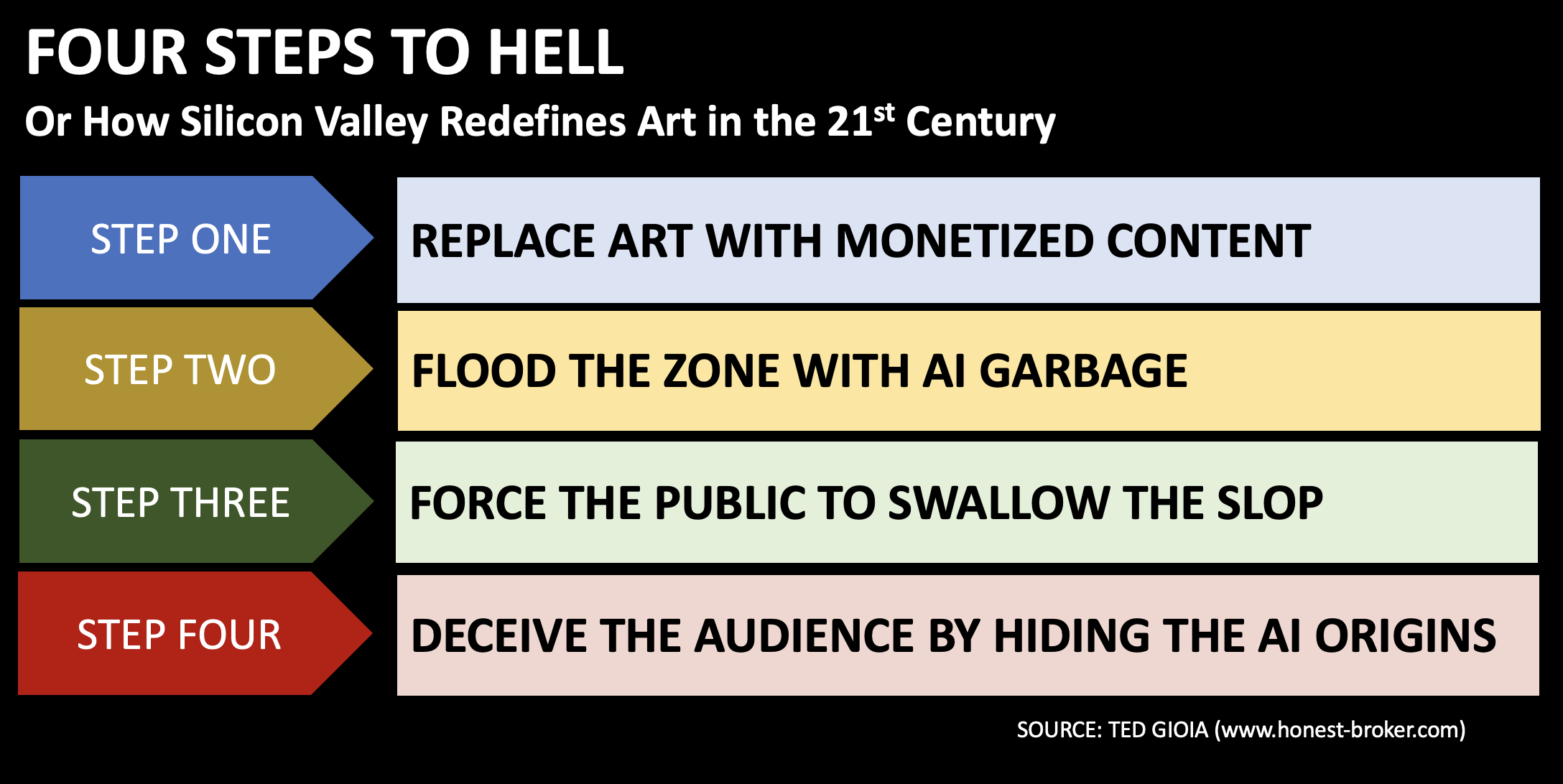
I call it Flood the Zone. It happens in four steps. […]
Do read the whole thing, but in case it’s a case of tl;dr, he also summarizes it for you:
March 19, 2026
District 9 and the Story of “Race”
Feral Historian
Published 14 Nov 2025Modern society has become a bit obsessed with the idea of race. District 9 subverts some of these assumptions and points at some of the ways that the entire concept of race is a product of the modern era. This one meanders a bit, but I suppose there’s no way around that.
00:00 Intro
02:45 Meet Wikus
05:42 Subverting Race
08:35 Bacon’s Rebellion and Trans-Racial Wikus
12:32 Let’s Talk About Rhodesia
14:48 Perspectives and Narratives
(more…)
March 14, 2026
What a Mickey Mouse idea!
In my far-distant youth, a “Mickey Mouse idea” would be a way of disparaging someone’s notions and hopes, belittling and ridiculing it to prevent it from being realized. In spite of that somewhat dubious association, Ted Gioia has a Mickey Mouse idea to save Disney, and it might just work … except that the studio seems to think their most famous creation is somehow tainted and disreputable:
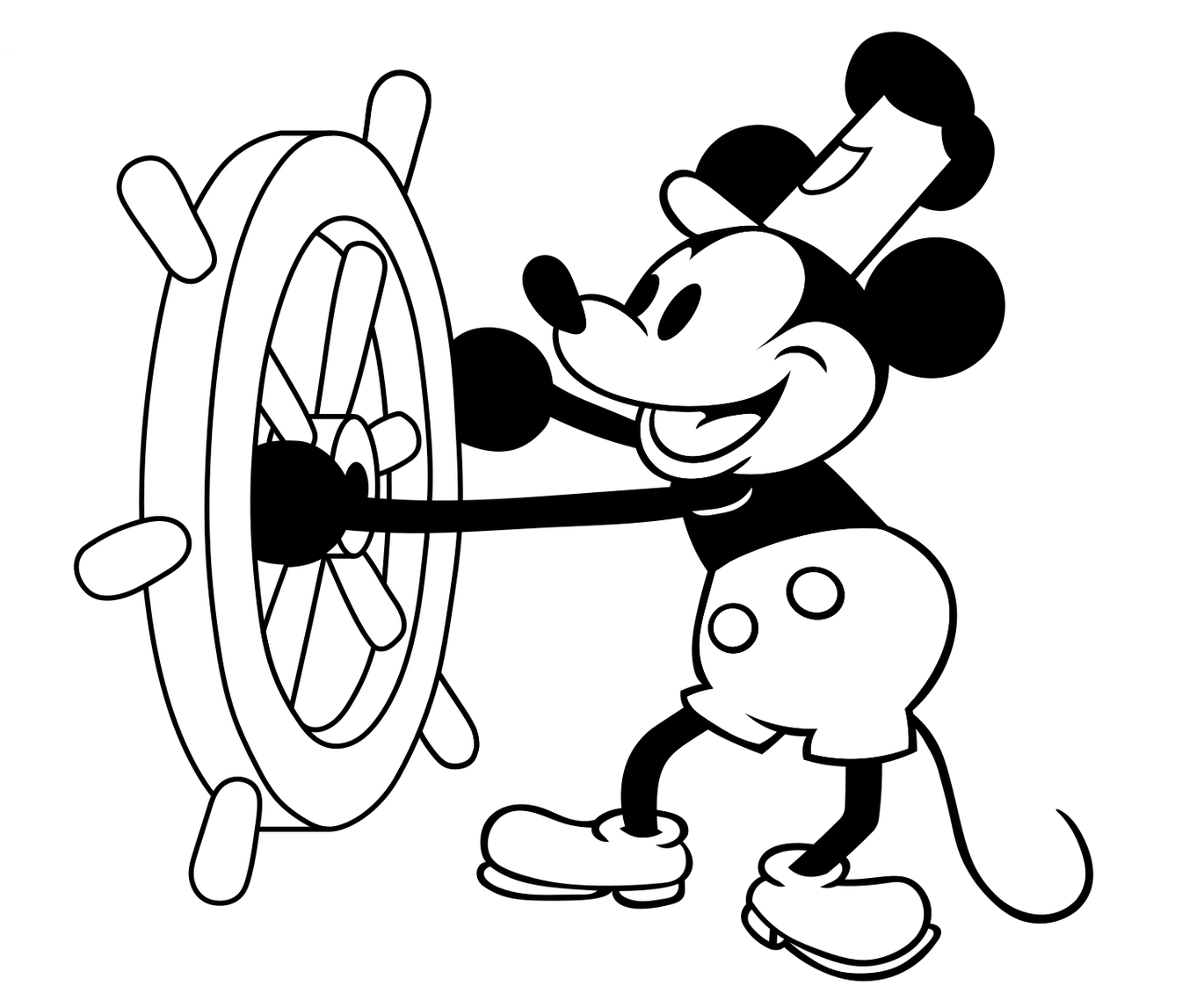
Do aging sports stars still get hired to shake hands with tourists at Las Vegas casinos? It happened to Joe Louis. It happened to Mickey Mantle. What a sad final chapter to such illustrious careers.
Once they were great. Now they merely greet.
I fear this is Mickey Mouse’s fate today. He does his meet-and-greet routine at the theme park, then goes home to a trailer park in Orlando. Here he gripes to Minnie that he deserves better than this Walmart-ish door-tending gig. She tells him to stop whining and take Pluto for a walk.
Ah if I ran Disney I’d bring Mickey Mouse back from exile. I’d give him a movie contract, a record deal, and a tickertape parade down Main Street USA.
I’d tell the shareholders: Watch out K-Pop Demon Hunters, the Mouse is Back!
But that’s just my dream, not reality. This little fella is just as charming as ever, but his corporate overseers don’t want what he has to offer. Disney is pushing ahead on hundreds of projects right now, but none of them involve Mickey Mouse.
Back in 2002 there was some buzz about a new Disney full-length animated film entitled The Search for Mickey Mouse. This was a big deal. It would be the studio’s 50th animated feature film, and release was scheduled for Mickey’s 75th anniversary.
But the studio pulled the plug. Two years later, Disney tossed a few cheese scraps in Mickey’s direction via a 68-minute reunion with Donald Duck — but they sent the film straight to DVD after a few showings in a Hollywood theater.
It was a low-budget affair. But the theater was packed to the brim, and audiences loved the movie. That didn’t matter. The studio had other priorities.
That was our beloved mouse’s last moment of glory. Since then Mickey has appeared in a 6-minute cartoon — back in 2013 — and been granted a few on-screen cameos in low-profile short films. I’m tempted to say That’s All Folks as I contemplate Mickey’s prospects for future, but Bugs Bunny owns that line. So I’ll simply note that this is what extinction looks like when it happens onscreen.
Why is he getting cancelled?
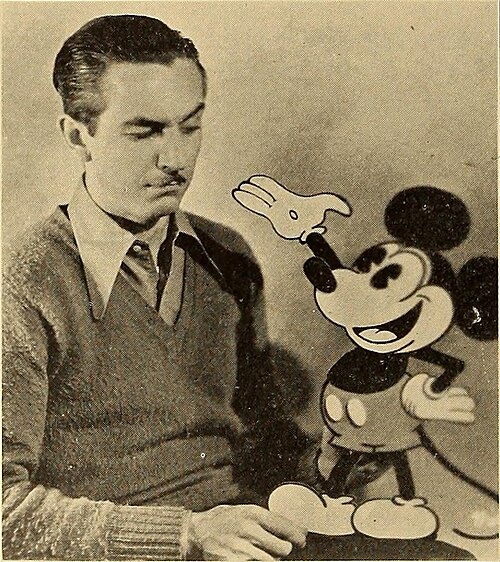
Walt Disney with Mickey Mouse (Source)
Not long ago, Mickey Mouse was the most famous storytelling character in the world. Time magazine claimed that he was better known than even Santa Claus. Everybody in the world recognized his face — not even Winston Churchill or Greta Garbo could make that claim.
Mickey’s exile is, of course, due to his problematic copyright status. Some aspects of Mickey are entering the public domain, and even though Disney could protect his more updated modern look, it’s possible that some outsiders might earn a few coins from a Mickey Mouse resurgence.
Disney would rather go mouse-less than let that happen. That’s a bad decision — a triumphant return of Mickey would go along way toward charming audiences and fixing Disney’s tarnished reputation. He is, after all, the most beloved character in the company’s entire history.
In two years, Mickey Mouse will have reached the ripe ago of one hundred. That would be a great time for a comeback — not just for Mickey but for the whole Disney brand.
March 2, 2026
Ghostbusters: Ignore the Rules, Save the World
Feral Historian
Published 31 Oct 2025It’s a comedy classic, and even funnier when you realize that it’s about shady small-businessmen saving the world by ignoring government regulations.
(more…)
February 20, 2026
Sci-Fi, Satire, and the Post-WWII Mythos
Feral Historian
Published 17 Oct 2025The caricature of fascism as the arch-evil, born in WWII propaganda and endlessly re-imagined in popular entertainment ever since, has served both as an inoculation against that particular brand of tyranny and blinders to many others. Is it still relevant? Or has it become one of our culture’s foundational archetypes that will live on for centuries disconnected from its roots? Let’s explore a bunch of facets and ask some odd, sometimes difficult questions along the way.
00:00 Intro
03:02 Myth of Singular Evil
06:06 Andor and Now
09:18 Fading Narratives
12:01 Iron Sky
16:21 What Comes Next?
(more…)
February 15, 2026
The smartphone as a tool to create a real-life Idiocracy
Not being much of a film fan, I’d never seen the movie Idiocracy, but based on the description in Christopher Gage’s rant against the smartphone, I might not need to watch it as it’s happening all around us:

Transport for London, the mythical entity alleged to manage the city’s Tube, has revealed its campaign to tackle the smartphone scourge: sickly posters splashed in kindergarten colours.
The campaign targets the “disruptive behaviour” of passengers who were evidently raised by a pack of snarling hyenas. They blast reels, videos, music. They FaceTime their cackling friends. Not so long ago, a fellow passenger revealed to us — her captive audience — that someone named Sarah had caught the clap from someone named Travis. Syphilis? How literary.
Miraculously, researchers at Transport for London discovered a rare tribe thought to be long extinct: Londoners who communicate with their fellow human beings by making noises with their mouths — one thousand of them, in fact.
Researchers approached these strange beings with a mixture of wonder and trepidation. They prodded them with a stick. That didn’t work. After jabbing them with a cattle prod, they looked up from their phones. Several members landed in Accident and Emergency, complaining of neck strain injuries.
Seventy percent of those surveyed said the constant noise screaming out of smartphones drove them crazy. One responder suggested offenders receive forty lashings in public. That is a bit much. Ten should do the trick.
TFL wavered from such brutal and effective methods. Campaign posters politely ask passengers to wear headphones.
I’m afraid that TFL’s well-meaning campaign hasn’t quite restored sanity on the London Underground.
Last week, I sat next to a grown man grinning at his phone like a Hindu cow. On the screen was a captivating spectacle. Someone, somewhere, makes it their daily business to buy gigantic, waist-height glass bottles of soda. This clearly well-adjusted person then rolls the bottles down a flight of concrete steps. Our friend dissolved the journey between Hammersmith and Leicester Square in a trance. Bottle. Roll. Smash. Bottle. Roll. Smash.
This reminded me of the satirical film, Idiocracy. The plot follows U.S. Army librarian Luke, and prostitute Rita.
After signing up for a hibernation experiment, the two awake in America, year 2500. Mountains of trash litter the landscape. Planes fall out of the sky. The citizens drag their gormless faces between Starbucks (which is now a coffee-serving brothel) and shopping malls even more dementing than those today. Over centuries, the dumb have biologically outgunned the smart.
The citizens of this moronic inferno drain their days glued to hyperactive screens. Their favourite content includes the Masturbation Channel and a reality TV show called “Ow! My Balls!” That show follows a hapless man as he gets whacked in the testicles.
They cultivate high culture, too. The profound film, Ass, zooms in on a pair of bare bum cheeks. The sophisticated audience fizzes with laughter as the bum, for two hours, passes wind.
Back in 2006, Idiocracy was a well-done satire which stretched logical extremes. Today, I’m not so sure it is as ridiculous as it once seemed. Just spend ten minutes on the Tube, inhaling the noxious TikTok fumes spewing from smartphones.
Transport for London has a point. But it is far too late. We are a nation of dopamine addicts. Those dopamine crack pipes stitched to our palms are quite literally designed to suck away as much of our time and attention as possible. An intervention, at this late hour, must be drastic.
How about a campaign outlining the terrifying effects of watching brain-rot content for hours and hours each day? A growing body of research suggests today’s smartphone is tomorrow’s lobotomy. Am I rioting in hyperbole? No.
One study found that watching short-form video is more harmful to our brains than soaking them in booze. At least, the latter indulgence might get you laid.
Several studies link smartphone culture with declines in comprehension, literacy, and the ability to reason. Others link smartphones with rising narcissism and collapsing social capital. And then there’s the nascent research suggesting that smartphone addiction may trigger ADHD and Autism-like symptoms in the addicted.
February 11, 2026
The rise and fall of the “Western” on TV and in movies
Ted Gioia reconsiders his childhood loathing of the TV western (because of massive over-exposure to the genre):
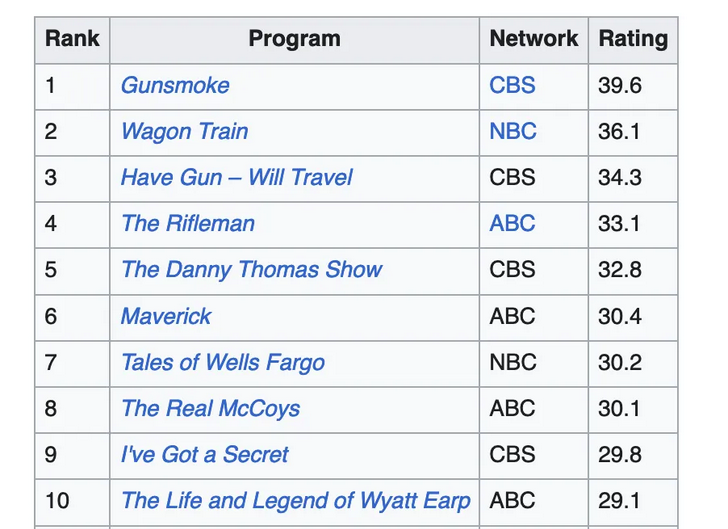
I hated cowboys when I was a youngster. Not real cowboys — I never met a single gunslinger, cowpoke, or desperado in in my urban neighborhood. My loathing was reserved for cowboys on TV.
And they were everywhere.
At one point, eight of the top ten shows on the flickering tube were westerns. And it got worse from there — Hollywood kept churning out more and more cowboy movies and TV series. I tried to avoid them, as did many of my buddies, but it was like dodging bullets in Dodge. There was nowhere to hide.
That’s because our parents loved these simple stories of frontier justice. They couldn’t get enough of them. And when they weren’t watching them on TV, they dragged us off to movie theaters to see The Magnificent Seven (128 minutes), The Alamo (138 minutes) or How the West Was Won (an excruciating 164 minutes).
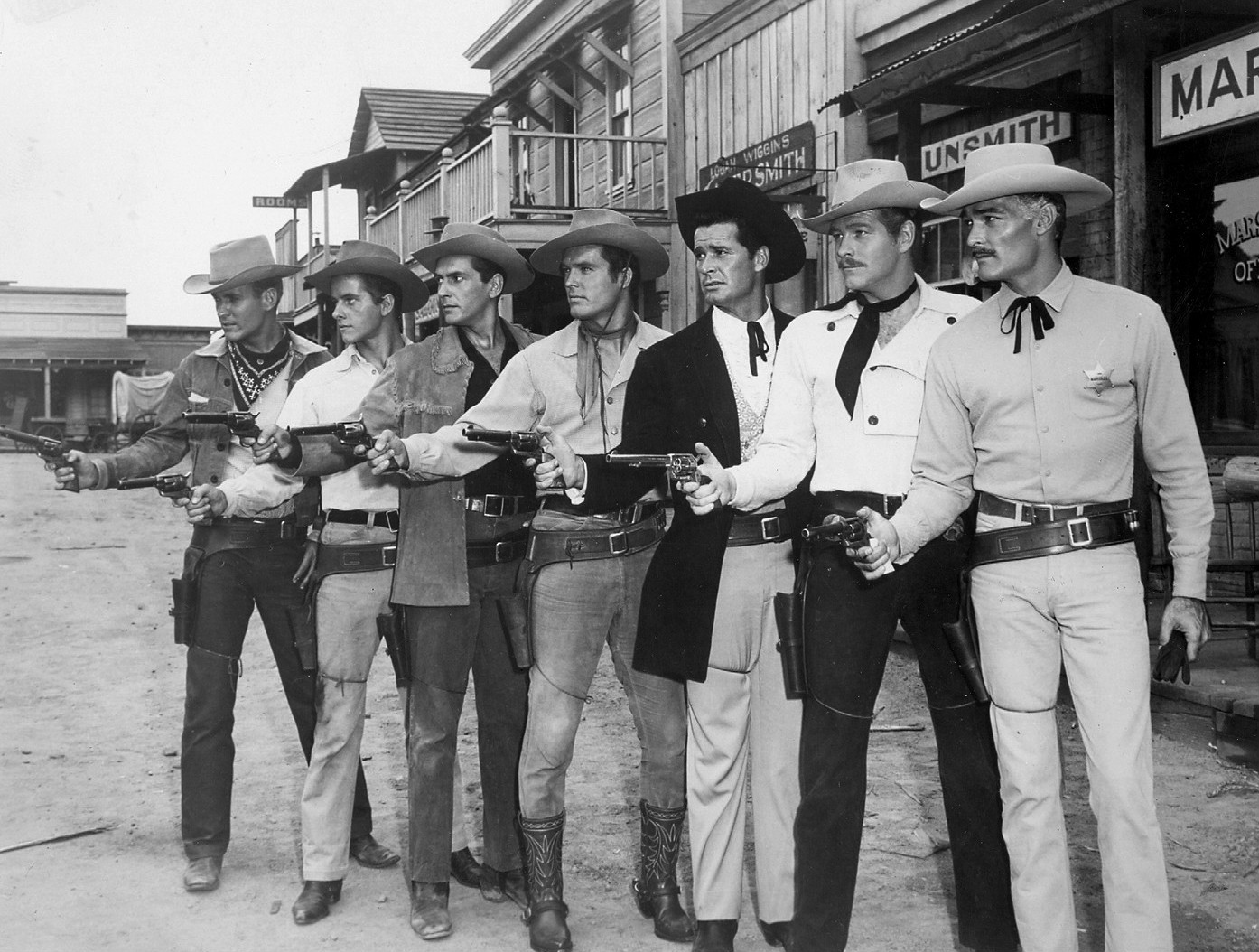
In 1959, Warner Bros posed some of their TV cowboy stars in a single photo (Source)
[…]
Many aspects of these films still put me off. I struggle with the clichés and tired formulas. But I’ve gradually acquired an affection for the genre — or maybe an affection for the audiences of an earlier day who could put such trust and faith in a sheriff or US marshal or gunslinger for hire.
Do any of us have that kind of faith in any authority figure nowadays? I doubt it. But I wish we could. And that’s impressed powerfully on my mind when I see Gary Cooper take on outlaws in the deserted western street of High Noon. Or James Stewart confront the dangerous Liberty Valance. Or John Wayne battle with a gang of desperadoes in Rio Bravo.
So forget all the shootouts and cattle drives and fancy roping. The real foundation of the western genre was moral authority. And Hollywood never let you forget it — that’s why heroes wore white hats and villains dressed in black.
The audience didn’t even have to think about it.
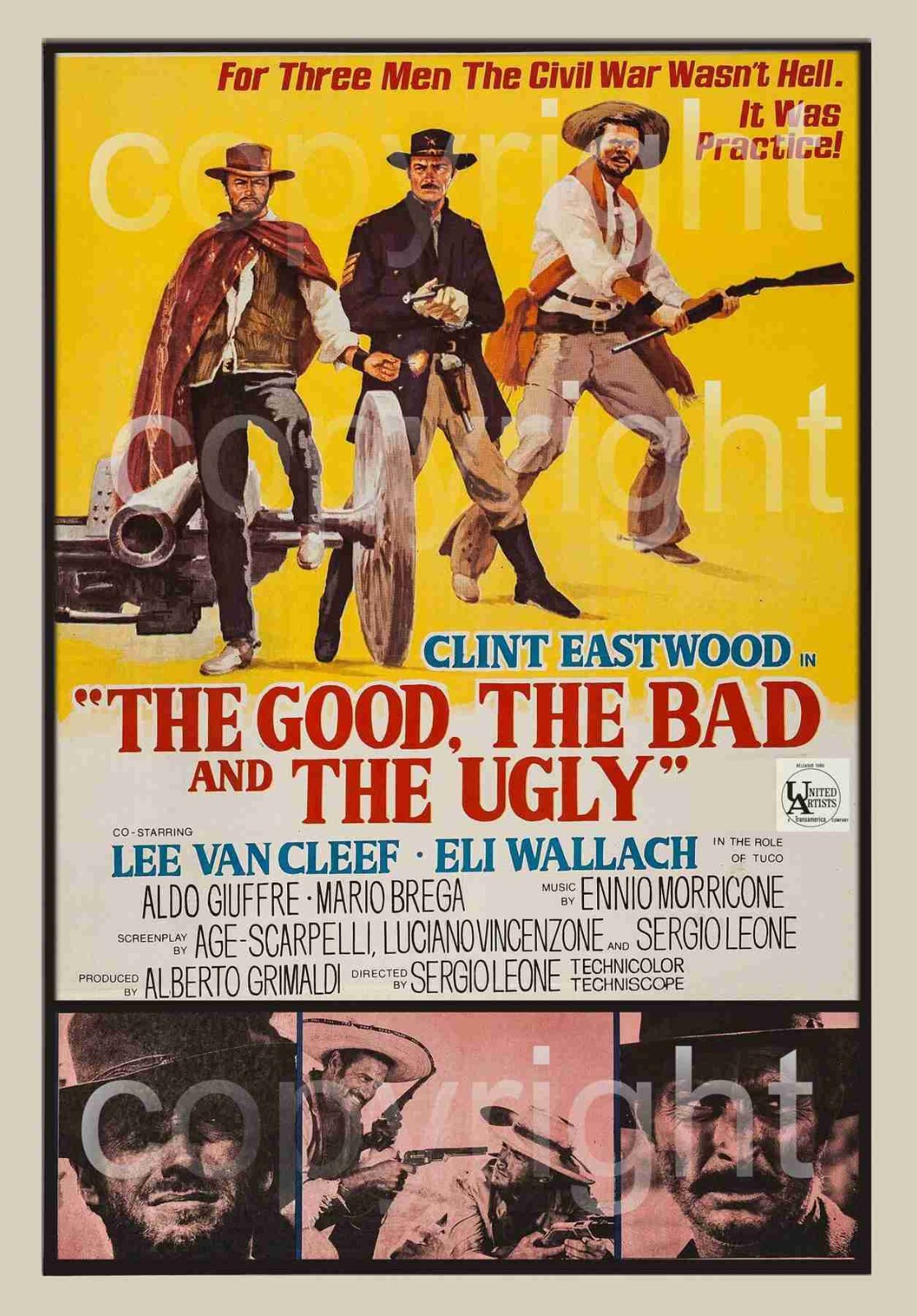
[…]Because that’s exactly what happened to the western. Just consider the unsettling film The Good, the Bad and the Ugly — which came out around the time the western genre died. Despite the movie’s title, it’s hard to identify any character in this film as good — instead they merely differ in their degrees of badness and ugliness.
And the same is true of The Wild Bunch or Once Upon a Time in the West and so many other films from that era. There are no heroes on display here, only various pathways into nihilism.
So long John Wayne. Hello Friedrich Nietzsche.
But this made perfect sense. The entire US of A was traumatized by the Vietnam War, and then Watergate — along with assassinations, riots, sex, drugs, and rock & roll. The moral sureness of the Eisenhower years, along with the complacent righteousness of so much of the public started to erode. At first it happened slowly, and then rapidly.
The classic western could not survive this.
February 9, 2026
Why This Is The Greatest Lord Of The Rings Scene Ever
The Critical Drinker
Published 6 Feb 2026Since its the 25th anniversary of the trilogy, I figured I’d reminisce about my favourite ever scene from all three movies. And explain why I’m objectively right about it.


