
Lindybeige
Published on 16 May 2009In which I ramble for a bit making a series of near-random points about chainmail, or mail, or whatever you prefer to call it.
There is much on mail on my website. Please check there first before writing to me asking questions on this topic.
November 6, 2017
Chainmail – some points about
Comments Off on Chainmail – some points about
October 26, 2017
How A Man Shall Be Armed: 15th Century
Royal Armouries
Published on 20 Feb 2017The 15th Century was the highpoint of the armourers craft, with knights across Europe taking to the field of battle in elaborate and almost impregnable suits of plate armour. Discover how a knight of the 15th Century would arm themselves for combat.
Comments Off on How A Man Shall Be Armed: 15th Century
October 25, 2017
Crusader helmets
Lindybeige
Published on 4 Sep 2014Here I show you three common styles of crusader helmet, and I comment upon them.
Thanks to Dr David Tetard for the loan of his helmets. These particular ones were bought here:
www.getdressedforbattle.co.uk
http://www.kovexars.cz/index.php (HL 007 and 103)Lindybeige: a channel of archaeology, ancient and medieval warfare, rants, swing dance, travelogues, evolution, and whatever else occurs to me to make.
Comments Off on Crusader helmets
October 21, 2017
Can You Move in Armour?
Medievalists
Published on 30 Jun 2016“Moving in harness”, a short film by Daniel Jaquet, realised by Vincent Deluz. On display at the exhibition “Armatus Corpus” at the Military Museum, Castle of Morges, Switzerland – The issue of mobility in armour is addressed there with striking images of actual armour pieces to demonstrate the range of movement allowed when worn. Today, our contribution follows the same goals, but with other technological means and approach. In this video we have put in images the deeds of the famous knight Jean le Maingre, known as Boucicaut, which were put in writing in the early 15th century. It includes a well-known passage where his training in armour is described in some details, outlining what you could actually do in a late medieval armour.
Learn more at http://www.medievalists.net/2016/07/can-you-move-in-armour-an-experiment-in-mythbusting/
Comments Off on Can You Move in Armour?
October 9, 2017
The Centuries-Old Debt That’s Still Paying Interest
Tom Scott
Published on 25 Sep 2017In the archives of Yale University, there’s a 367-year-old bond from the water authority of Lekdijk Bovendams, in the Netherlands. And it’s still paying interest.
Thanks to:
Prof. Geert Rouwenhorst for his time and explanation
All the team at the Beinecke Rare Book and Manuscript Library
Michelle Martin (@mrsmmartin) for editing the interview
and Leendert van Egmond for telling me about the bond!
Comments Off on The Centuries-Old Debt That’s Still Paying Interest
September 18, 2017
5 Medieval Dynasties That Still Exist Today
Published on 18 Aug 2017
The medieval period produced a lot of powerful dynasties which fought for influence and wealth in Europe. These families where once the most powerful people on the planet, but who and where are they today? Here are 5 Medieval dynasties that still exist today.
Comments Off on 5 Medieval Dynasties That Still Exist Today
September 17, 2017
Why are some people left-handed? – James May’s Q&A (Ep 39) – Head Squeeze
Published on 20 Sep 2013
“Once thought to be in league with the devil, left-handed people, while not especially evil, are indeed special in many ways. James May explains all in this Head Squeeze video.
In mediaeval times lefties were believed to be in league with Beelzebub himself, this gave rise to the word sinister from the Latin ‘sinistra’ meaning of the left. Later on scientists proposed that left-handed people had their brains wired differently, which turned out to be only partially true.
Most of us, between 75 to 90 percent use the left hemisphere of our brains to speak and understand language. The other hemisphere is used to control our dominant hand. Research has shown however that only 30 per cent of left-handers have reversed brain lateralisation, or indeed no dominant side at all.
Genetics play a big part in your dominant hand. If you have two left-handed parents, there is 26 per cent chance that you will be too. This is double the average odds.
There are some statistical advantages and disadvantages to being left-handed. Schizophrenia, dyslexia and ADHD are more prevalent. However susceptibility to arthritis and ulcers is less.
Left-handed people do well in sport and fighting, as the majority of people are not used to going up against such opponents. There is evidence that they are more creative too with a disproportionate amount of artists painting with their left hand.
In terms of famous left-handed people, four out of the last seven presidents have been – President Obama, Clinton, Bush senior and Ford.
However as only those who are true lefties know, the world is stacked against them. Dozens of daily household items we take for granted, from corkscrews to scissors, even books, are designed for the right-handed majority.
Comments Off on Why are some people left-handed? – James May’s Q&A (Ep 39) – Head Squeeze
September 16, 2017
“Mead” – The Drink That Fell From Favor
Published on 31 Aug 2017
Mead was a very popular drink during the 17th century and before, but fell out of favor by the 18th century due to the rise of Beer and Ale. Nevertheless, recipes for Mead can be found in books written in the 1700’s and today Jon goes in depth on this fascinating drink.
Comments Off on “Mead” – The Drink That Fell From Favor
September 3, 2017
Medieval Castles – Elements of Fortifications
Published on 17 Jan 2017
This episode covers the various elements of castle fortification elements like towers, walls, moats, loopholes, gates, gatehouses, portcullises, battlements, hoardings, draw bridges, etc.
Military History Visualized provides a series of short narrative and visual presentations like documentaries based on academic literature or sometimes primary sources. Videos are intended as introduction to military history, but also contain a lot of details for history buffs. Since the aim is to keep the episodes short and comprehensive some details are often cut.
» SOURCES & LINKS «
Kaufmann, J.E; Kaufmann, H.W.: The Medieval Fortress – Castles, Forts, and Walled Cities of the Middle Ages.
Piper, Otto: Burgenkunde. Bauwesen und Geschichte der Burgen.
Toy, Sidney: Castles – Their Construction and History
Comments Off on Medieval Castles – Elements of Fortifications
September 2, 2017
[Medieval] Castles – Functions & Characteristics (1000-1300)
Published on 30 Sep 2016
» SOURCES & LINKS «
France, John: Western Warfare in the Age of the Crusades 1000-1300#
Ohler, Norbert: Krieg & Frieden im Mittelalter
Contamine, Philippe: War in the Middle Ages
Pounds, Norman J. G. Pounds: Medieval Castle in England & Wales: A Political and Social History
http://faculty.goucher.edu/eng240/early_english_currency.htm
http://www.ancientfortresses.org/medieval-occupations.htm
https://www.britannica.com/technology/castle-architecture#ref257454
http://www.castrabritannica.co.uk/texts/text04.html
https://en.wikipedia.org/wiki/Harlech_Castle
Comments Off on [Medieval] Castles – Functions & Characteristics (1000-1300)
July 26, 2017
April 29, 2017
If Walls Could Talk The History of the Home Episode 4: The Kitchen
Published on 2 Feb 2017
Comments Off on If Walls Could Talk The History of the Home Episode 4: The Kitchen
April 16, 2017
If Walls Could Talk The History of the Home Episode 3 The Bedroom
Published on 1 Feb 2017
Comments Off on If Walls Could Talk The History of the Home Episode 3 The Bedroom
April 5, 2017
If Walls Could Talk The History of the Home Episode 2: The Bathroom
Published on 31 Jan 2017
Comments Off on If Walls Could Talk The History of the Home Episode 2: The Bathroom
April 4, 2017
Archaeological evidence of corpse mutilation in deserted medieval village of Wharram Percy
A bit of gruesome post-death ritual from the middle ages in Wharram Percy:
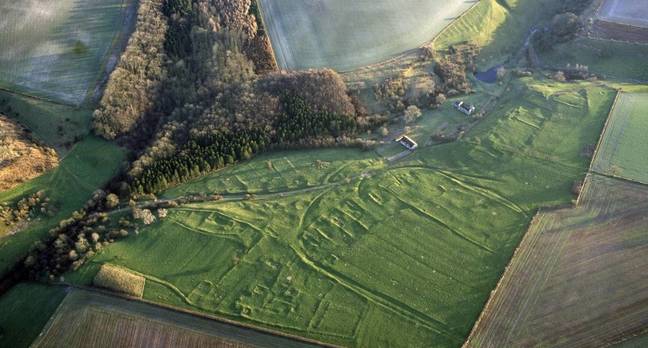
Wharram Percy, aerial view © Wharram Research Project/Historic England
Archaeologists investigating human bones excavated from the deserted mediaeval village of Wharram Percy in North Yorkshire have suggested that the villagers burned and mutilated corpses to prevent the dead from rising from their graves to terrorise the living.
Although starvation cannibalism often accounts for the mutilation of corpses during the Middle Ages, when famines were common, researchers from Historic England and the University of Southampton have found that the ways in which the Wharram Perry remains had been dismembered suggested actions more significant of folk beliefs about preventing the dead from going walkabout.
Their paper, titled A multidisciplinary study of a burnt and mutilated assemblage of human remains from a deserted mediaeval village in England, is published today in the Journal of Archaeological Science.
Located in the Yorkshire Wolds, Wharram Percy was continuously occupied for about 600 years, and was probably founded in the 9th or 10th century, but had become deserted by the early 16th century as a result of gradual abandonment and forced evictions. The ruined church is the last-standing mediaeval building, beside it remaining the grassed-over foundations of two manors and about 40 peasant houses and their outbuildings.
Since 1948 the settlement has been the focus of intensive research, which has made it Europe’s best-known deserted mediaeval village, and in what may be the first good archaeological find regarding the practice, human remains from the site suggest the predominance of folk beliefs regarding revenants in 11th-13th century England.
Comments Off on Archaeological evidence of corpse mutilation in deserted medieval village of Wharram Percy


